Manufacturers worldwide consume more than 6.5 million metric tons of ABS resin each year. The material powers dashboards in electric vehicles and exists in power tool housings and LEGO bricks which children use for play. Procurement managers face a basic problem because they need to find appropriate ABS plastic pellets which meet their requirements for budget and quality and application purposes.
The guide helps readers understand the situation better. The guide provides complete instructions on how to obtain ABS resin pellets which include material specifications and grade selection and drying parameters and supplier evaluation. The technical specifications and procurement information needed to make an informed choice about virgin ABS pellets for high-gloss electronics housings and recycled ABS pellets for sustainable product lines are available to you.
What Are ABS Plastic Pellets?
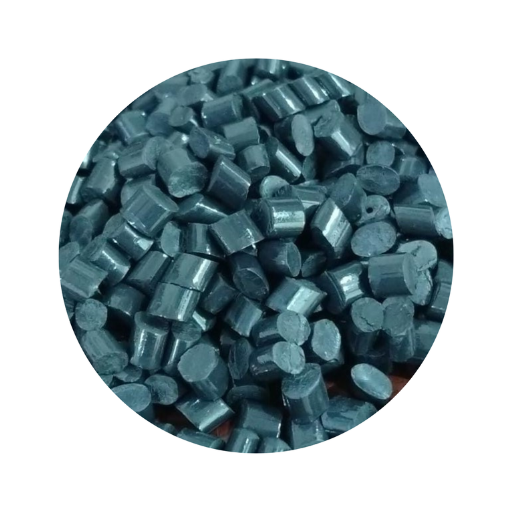
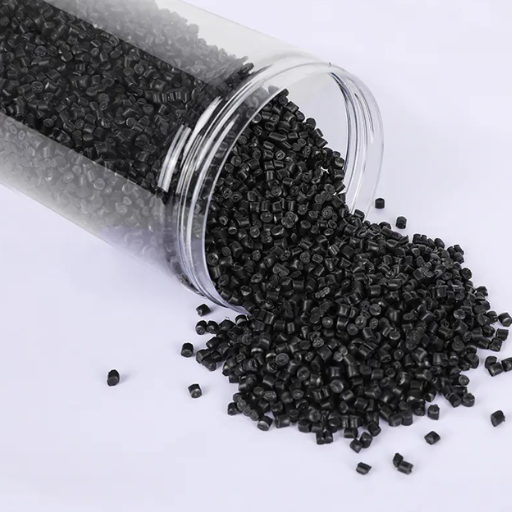
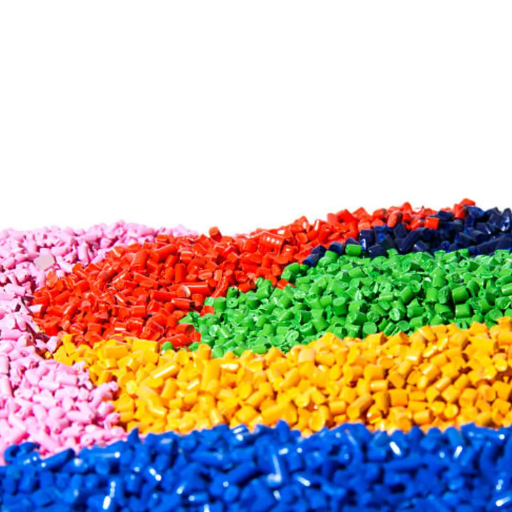
The small uniform ABS plastic pellets consist of acrylonitrile butadiene styrene which is a thermoplastic terpolymer that manufacturers develop for its strength and processing efficiency and material versatility. The pellet form matters because it feeds consistently into injection molding machines, extruders, and 3D printing systems, which enables operators to maintain exact temperature settings while producing identical parts at high quality.
The material combines three monomers, each contributing a distinct property:
- Acrylonitrile delivers chemical resistance, thermal stability, and surface hardness.
- Butadiene provides toughness, impact strength, and low-temperature resilience.
- Styrene contributes rigidity, gloss, and excellent processability.
The balanced chemical composition of ABS material establishes itself as one of the most preferred engineering resins used in present-day manufacturing processes.
Key Properties of ABS Plastic Pellets
The properties of ABS plastic materials need to be understood because they enable you to select the right resin for your specific needs while preventing expensive molding errors. The following three main characteristics create industrial market needs:
- High impact resistance. ABS maintains its structural integrity under physical impacts and drops when exposed to low temperature conditions. The material uses Butadiene rubber particles which distribute through the polymer matrix to create an energy-absorbing material that serves as protective housings and automotive bumper components.
- Excellent surface finish. The glossy surface of ABS plastic which results from Styrene gives it ability to hold various surface treatments including paint and plating and textured finishes. Manufacturers choose ABS when appearance matters, such as consumer electronics or interior automotive trim.
- Good dimensional stability. ABS maintains its shape together with its operational tolerances during all temperature conditions within its defined operational range. Molded parts maintain their original shape under moderate loads which is important for snap-fits and threaded inserts and precision assemblies.
- Electrical insulation. Electronics manufacturers select ABS material for monitor housings and power tool bodies and appliance enclosures because it provides strong dielectric protection.
- Moderate heat resistance. The heat deflection temperature (HDT) of standard ABS grades ranges between 80°C and 125°C because different formulations exist. The typical processing temperature range extends from 180°C to 270°C where 220–250°C represents the most suitable molding temperature range.
- Chemical resistance limitations. ABS material shows resistance against diluted acids and alkalis and aliphatic hydrocarbons which include oils and diesel fuel. Strong solvents and ketones and esters cause the material to break down. The material degrades due to UV exposure when no stabilizers exist so outdoor applications that last long periods require either UV-protected grades or different materials.
ABS Pellet Grades: Which One Do You Need?
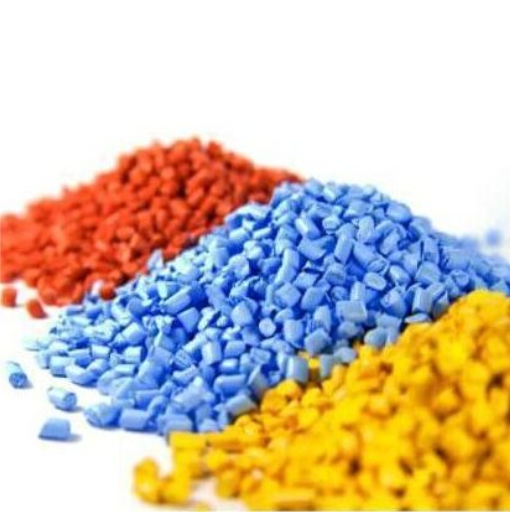
Different ABS pellet types exist throughout the market. Manufacturers create particular grades through the process of compounding base polymer materials with additional substances and reinforcing elements and fire-resistant materials. The selection of an inappropriate grade results in three consequences which include part malfunction and failure to meet regulations and excessive expenses. The following explanation presents the most typical ABS pellet grades together with their optimal application areas.
General-Purpose ABS
General-purpose ABS is the volume leader, accounting for over 2.9 million metric tons of global consumption annually. This material provides engineers with the most affordable option that maintains essential properties through its combination of impact resistance and rigidity and processing capabilities.
The best uses for this product include appliance housings and toys and luggage shells and kitchen utensils and various consumer products.
High-Impact ABS
High-impact ABS contains a higher rubber content than general-purpose grades, boosting toughness at the expense of some stiffness. This grade absorbs more energy before fracture, which matters for safety-critical or drop-prone parts.
The best applications for this product include automotive bumpers and helmet shells and sports equipment and power tool housings and protective gear.
Flame-Retardant ABS (FR V0)
The flame-retardant ABS market segment represents the fastest-growing market section, which experiences an annual growth rate of approximately 6.6%. These grades achieve a UL94 V0 rating, meaning they self-extinguish within 10 seconds when exposed to flame. Fire safety regulations require their use in electronics components and automotive safety systems and all products that fall under fire safety regulations.
Television and monitor housings and laptop enclosures and printer casings and automotive interior trim and electrical junction boxes represent the best applications of this product.
Transparent ABS (MABS)
Methyl methacrylate-acrylonitrile-butadiene-styrene, or MABS, is a transparent variant of ABS that retains much of the toughness and processability of standard grades while allowing light transmission. It does not match the clarity of polycarbonate, but it costs less and is easier to mold.
Best applications: Cosmetic packaging, display cases, illuminated switches, and medical device housings where partial transparency is acceptable.
Glass-Fiber-Reinforced ABS
Manufacturers add 10%, 25%, or 30% glass fiber to ABS which results in improved tensile strength and dimensional stability and enhanced heat resistance. These grades feel stiffer and warp less under load, but they lose some of the surface gloss that makes standard ABS attractive.
Best applications: Structural automotive parts, industrial machinery housings, and under-the-hood components which require rigid materials that do not need to look attractive.
ABS Pellet Grades at a Glance
|
Grade |
Key Property |
Typical Applications |
Relative Cost |
|---|---|---|---|
|
General-Purpose ABS |
Balanced strength and processability |
Toys, appliances, luggage |
$ |
|
High-Impact ABS |
Superior toughness |
Automotive bumpers, helmets, sports gear |
$$ |
|
Flame-Retardant ABS |
UL94 V0 fire resistance |
Electronics housings, automotive trim |
$$$ |
|
Transparent ABS (MABS) |
Optical clarity + ABS toughness |
Displays, cosmetics packaging |
$$ |
|
Glass-Fiber-Reinforced ABS |
High stiffness, low warpage |
Structural automotive, industrial parts |
$$$ |
Major Industrial Applications
The market for injection molding which uses ABS pellets shows that these pellets account for more than half of all ABS material consumed worldwide. The product combines mechanical strength with visual attractiveness which makes it suitable for multiple industrial applications at an affordable price.
Automotive Components
In 2023 the automotive industry used more than 1.3 million metric tons of ABS plastic throughout the world. Manufacturers use ABS materials for creating interior panels and dashboard assemblies and door trims and center consoles because these materials make vehicles lighter than metal materials while providing an upscale surface appearance. Electric vehicle manufacturers need lightweighting solutions because it helps them enhance driving range and ABS has become the standard material for non-structural interior components which need to be lightweight.
Electronics and Appliances
The electronics and appliances sector consumed between 28 to 30 percent of total global ABS material during 2024. The material appears in television housings, computer monitors, vacuum cleaners, food processors, and power tools. The sector uses flame-retardant grades as its main materials because most plugged-in devices need to meet UL94 V0 regulatory requirements.
Consumer Goods and Toys
The world knows LEGO bricks as one of the most famous plastic products which use ABS material. The resin maintains precise dimensions during molding processes while resisting color loss and withstanding years of use at play without breaking into small pieces. ABS material manufacturers create products which include luggage shells kitchen utensils cosmetics packaging and musical instruments.
3D Printing and Rapid Prototyping
ABS serves as a fundamental material for both fused deposition modeling (FDM) and pellet-extrusion 3D printing processes. The material creates durable prototypes and production parts which users can prepare for professional presentation through sanding and painting or acetone smoothing methods. The same pellets which injection molding companies use for their processes can be transformed into filament or used directly in industrial pellet-extrusion systems.
Construction and Industrial
ABS material functions in construction projects through its use in piping systems and drainage components and sanitary fixtures.
How to Choose the Right ABS Pellets for Your Project
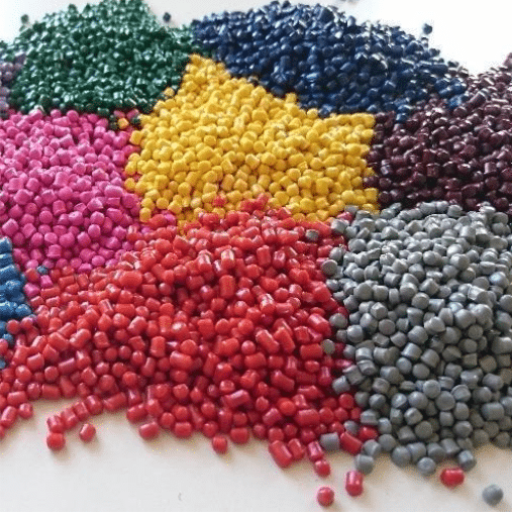
The process of selecting ABS resin pellets requires more than just choosing between different grade names. The procurement team together with engineers needs to first review all specifications and certifications and supplier options before they start ordering goods.
Match the Grade to the Application
The end-use environment should serve as the starting point for your analysis. Will the part face high impact? Choose high-impact ABS. Does it need to survive a flame test? Specify FR V0. Will it sit under the hood of a car where temperatures spike? Consider glass-fiber-reinforced ABS or an alternative material. The practice of matching grade to application prevents unnecessary design work while maintaining budget limits for needed materials.
Verify Technical Specifications
- The supplier needs to provide you with a technical data sheet (TDS) which should contain these essential parameters. The Melt Flow Index (MFI) measures how easily the material flows when melted. Higher MFI values suit thin-walled parts and complex molds. Lower MFI values provide better mechanical strength but require higher injection pressure.
- The values for tensile strength and impact resistance need to match your structural requirements. Standard ABS ranges from 22 MPa to 74 MPa in tensile strength depending on grade.
- Heat Deflection Temperature (HDT): The material needs to maintain its rigid form at all maximum service temperatures which your part will experience.
Check Certifications
Reputable suppliers provide documentation which proves their compliance with industry standards. The common certifications which apply to ABS pellets include the following:
- ISO 9001: Quality management systems
- SGS / ROHS / REACH: Restrictions on hazardous substances
- UL94: Flame-retardant ratings (for FR grades)
- FDA / Food-Grade: For applications involving incidental food contact
Evaluate Supplier Consistency
The highest grade product will fail when there are changes in batch quality. The supplier should provide information about their process for inspecting incoming raw materials and conducting in-process tests and performing outgoing quality control. The consistent production of pellets with uniform size and moisture content and melt flow characteristics results in fewer mold defects and less manufacturing downtime.
Handling and Processing Best Practices
Factory managers and processing engineers should treat ABS pellets with the same care they give precision tooling. Proper handling techniques stop moisture-related defects while handling processes create maximum part quality results.
Drying Requirements
ABS exhibits hygroscopic behavior because it absorbs moisture from the environment. Even small amounts of water cause silver streaking and bubbles and create weak welds during molding. Always dry ABS pellets before processing.
The recommended drying parameters require:
- Temperature: 80–85°C
- Time: 2–4 hours
- Target moisture content: Below 0.1%
A desiccant dryer delivers better results than a hot-air dryer because it operates with greater consistency in humid environments.
Storage Conditions
ABPellets should be stored inside sealed containers or bags which protect them from direct sunlight and moisture. When a bag is opened it should be resealed without delay. Pellets exposed to ambient humidity for extended periods require longer drying cycles before molding.
Common Processing Defects and How to Avoid Them
- Silver streaking: This defect occurs when moisture enters the system or when the resin degrades. Solution: dry pellets thoroughly and avoid overheating.
- Warping: This issue occurs when the cooling process becomes unbalanced or when the mold experiences extreme temperature variations. Solution: optimize cooling channels and maintain consistent mold temperatures between 50°C and 80°C.
- Low nozzle temperature combined with draft conditions in the build chamber creates poor layer adhesion during 3D printing. Solution: print at 220–250°C with an enclosed printer and a heated bed.
ABS Pellets vs. Alternative Materials
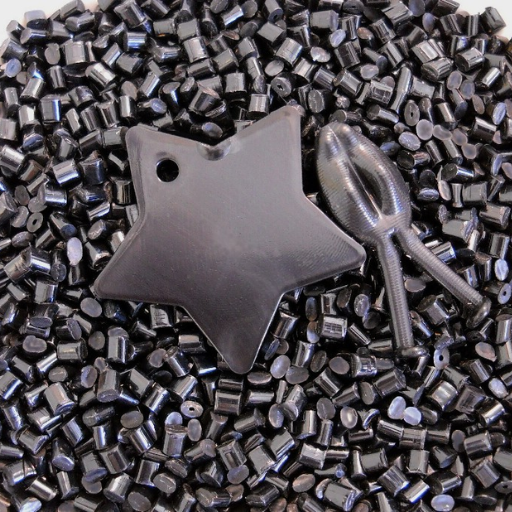
The analysis of ABS pellets by procurement managers shows that they compare ABS pellets with various engineering resins. The following comparison shows how ABS performs against three widely used materials.
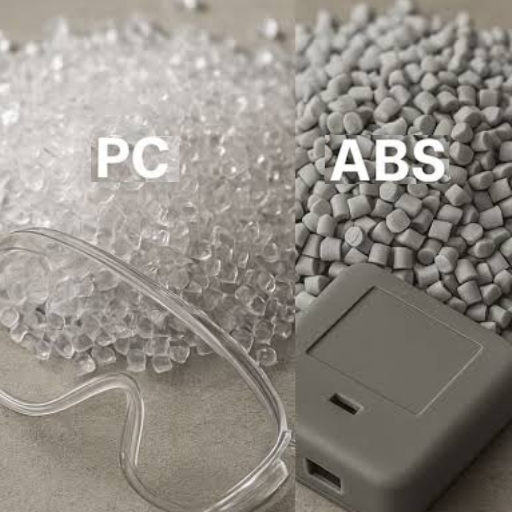
ABS vs. Polycarbonate (PC) Pellets
Polycarbonate offers superior impact resistance, higher heat deflection (~135°C), and optical transparency. The essential processing requirements for PC include mandatory pre-drying at 110–120°C for 4–6 hours which makes its cost 20–40% higher than ABS. Choose PC for safety-critical transparent parts. Choose ABS for cost-sensitive, opaque housing which needs only moderate heat resistance.
ABS vs. HDPE Pellets
High-density polyethylene (HDPE) is cheaper than ABS and offers excellent chemical resistance and outdoor weatherability. ABS provides higher rigidity and better surface gloss and improved dimensional stability compared to HDPE. The material exhibits greater shrinkage during the molding process. Choose HDPE for outdoor pipes, tanks, and packaging. Choose ABS for rigid, aesthetic consumer and automotive parts.
ABS vs. PP Pellets
Polypropylene (PP) is a lightweight material which provides chemical resistance and flexible properties. The material performs effectively in living hinges and automotive interior components The surface finish and paint adhesion and impact strength of ABS exceeds the performance of PP. Choose PP for cost-driven, flexible applications. Choose ABS when appearance, rigidity, and toughness matter more.
Quick Material Selection Guide
|
Requirement |
Best Choice |
|---|---|
|
Lowest cost + outdoor use |
HDPE |
|
Rigid, glossy consumer products |
ABS |
|
Extreme impact + transparency |
PC |
|
Flexible, chemical-resistant parts |
PP |
|
High heat + moderate cost |
ABS-PC blend |
Pricing and Sourcing Considerations
You need to learn about ABS plastic pellets pricing because it enables you to create an effective budget that prevents unexpected expenses.
The standard grades of Virgin ABS pellets trade between 1,200 and 1,200 and 1,800 per metric ton FOB China which leads to a price range of 1.20 to 1.20 to 1.80 per kilogram. The price of specialty grades which include flame-retardant and glass-fiber-reinforced ABS typically falls between 3.20 and 4.00 per kilogram. Recycled ABS pellets provide a budget-friendly option because they cost much less than virgin material yet maintain 75 to 85 percent of the mechanical characteristics found in virgin materials.
Your final cost gets determined by various elements:
- Grade and additives: FR V0 and GF-reinforced grades cost more than general-purpose ABS.
- Order volume: Bulk orders of hundreds of metric tons receive better per-kilogram pricing than small lots.
- Customization: The company charges engineering fees for color matching and custom MFI adjustments and proprietary formulations.
- Certifications: GRS-certified recycled ABS or FDA food-grade approval may carry a small premium.
- Logistics: FOB and CIF and DDP terms determine which party assumes responsibility for shipping and insurance and customs expenses.
China produces 72 percent of global ABS output while manufacturing more than 4.2 million metric tons of ABS in 2023. Manufacturers who source directly from recognized Chinese suppliers gain access to competitive product pricing and suppliers with high production capacity and multiple material grades. The best suppliers possess ISO-certified facilities which include documented quality control processes and proven success in delivering exports on time.
Sustainability: Virgin vs. Recycled ABS Pellets
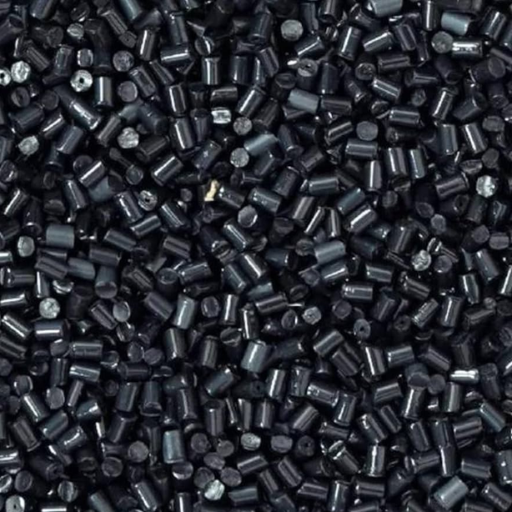
Manufacturers must now adopt sustainable practices because they have become essential. The need for recycled ABS pellets has increased because of ESG obligations and customer demands and environmental protection laws.
Recycled ABS material undergoes a process that begins with cleaning and shredding of post-industrial or post-consumer ABS waste followed by the creation of new pellet products. Modern recycling facilities can produce regrind pellets that retain approximately 75–85% of virgin tensile strength and impact resistance. These grades perform well in electronics housings automotive trim and non-structural consumer goods which require minimal re-tooling.
The Global Recycled Standard (GRS) certification process establishes that recycled materials meet both chain-of-custody requirements and environmental standards. By choosing GRS-certified recycled ABS pellets you establish credible sustainability for your products which can be exported to markets with environmental regulations.
When should you choose recycled ABS? Consider it for applications where the part does not bear critical structural loads, where surface appearance requirements are moderate, and where your customers or regulators value recycled content. For safety-critical or highly aesthetic parts, virgin ABS or a virgin-recycled blend may be the safer choice.
Conclusion
The ABS plastic pellets serve as a highly adaptable and budget-friendly engineering resin which engineers use throughout various design projects. The appropriate ABS grade provides all required mechanical strength and surface appearance and manufacturing process capabilities which your production needs.
Three principles determine success. The first principle requires matching the grade to the application while the second principle needs verification of technical specifications and certifications. The third principle requires businesses to select partners who execute rigorous quality control processes between different product batches.
Suzhou Yifuhui New Material Co., Ltd. provides manufacturers worldwide with virgin and recycled and custom-compounded ABS pellets. The engineering team conducts tests on each batch to determine melt flow and impact strength and dimensional stability because these tests ensure your production line operates from the first shot until the last.
Ready to source your next batch of ABS plastic pellets? Contact our materials team today for a custom quote tailored to your volume, grade, and delivery requirements.