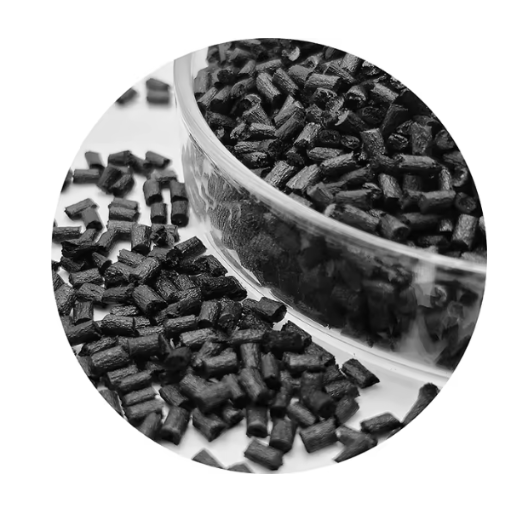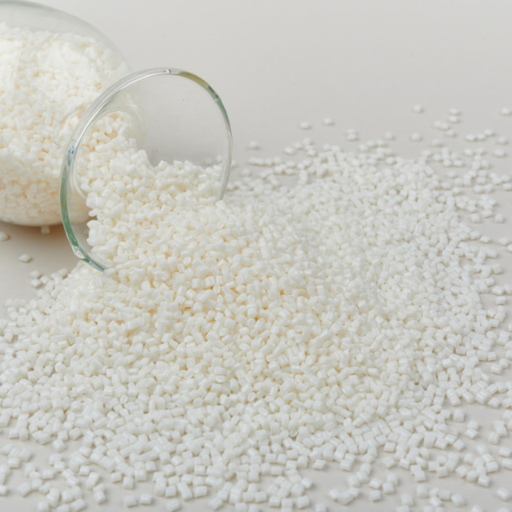
Ask for Hytrel 7246 and you will usually get one answer: 72D. The datasheet’s measured hardness is 64D. Both numbers are correct, and knowing why tells you most of what you need to know about this grade.
The gap causes real problems: engineers reject lots that meet the specification, buyers compare quotes for materials that are not quite the same, and molders set temperatures from pages that copied an old DuPont sheet.
This guide covers what the grade is, how it behaves, when it beats Hytrel 5526, how to process it, when not to use it, and what to confirm before buying. Figures come from the current Celanese datasheet unless stated otherwise.
Definition: Hytrel® 7246 is a high-modulus thermoplastic polyester elastomer (TPEE, ISO designation TPC-ET) with a nominal 72 Shore D hardness. It combines rubber-like flexibility with engineering-plastic stiffness and is used for tubing, cable jackets, gears, sprockets and oil field parts. It processes by injection molding and extrusion.
What Is Hytrel 7246?
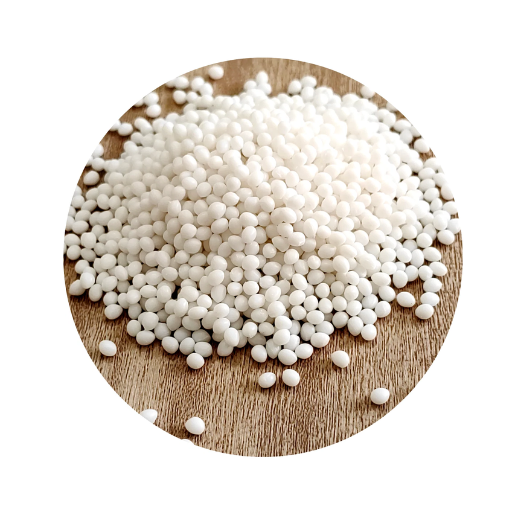
Hytrel 7246 is one grade in the Hytrel TPC-ET family. The polymer is a block copolymer: hard crystalline polybutylene terephthalate (PBT) segments and soft amorphous polyether segments. Their ratio sets the hardness, modulus and elasticity of each grade.
In 7246, the balance leans toward stiffness. The grade is plasticizer free, contains a non-discoloring stabilizer, and ships as pellets. It isn’t a filled compound or a generic SEBS-based TPE. If you are weighing it against TPE and TPV materials, modulus and temperature behavior are the main differences.
A High-Modulus TPEE Grade
The result holds shape under load better than softer TPEE grades while still flexing and recovering like an elastomer. That combination explains its use in tubing, cable jackets, gears, sprockets and oil field parts, and its premium price: TPEE keeps modulus and load-bearing capacity at temperatures where TPU and generic TPE soften.
72D Nominal vs 64D Measured
The Celanese datasheet calls 7246 a “high modulus grade with nominal hardness of 72D.” A note explains that the 72 Shore D value comes from a legacy method and is still used for grade identification.
The measured value is different. Under ISO 48-4 and ISO 868, the grade reads Shore D 64 at 15 seconds, with a maximum of 68. That is what incoming inspection will see.
Neither number is wrong. One identifies the grade; the other reports a test result. If your drawing says 72D, put the test method and tolerance in the specification; correct 7246 can still read 64D on your gauge.
The same logic applies to modulus. The datasheet lists 550 MPa tensile modulus (ISO 527) and 550 MPa flexural modulus (ISO 178). Older sheets show 518 to 570 MPa; treat that as revision and test-method difference, not a different material.
Picture a tooling engineer named Elena. She approved a 72D TPEE for a cable jacket, then inspection reported Shore D 64 and she nearly rejected the lot. The supplier sent the current datasheet, which explained the nominal label and the measured value. She added the test method to her specification, and the dispute ended.
If you are checking a lot against a 72D drawing, send us the specification and test method and we will confirm the grade before shipment.
Who Makes Hytrel 7246 Today?
Hytrel is a Celanese brand. Celanese acquired DuPont’s Mobility & Materials business for $11.0 billion, announced in February 2022 and closed that November. Current datasheets come from Celanese, but many distributor pages still say DuPont and some PDFs are a decade old. Check the revision date before qualifying a lot; JPT/SPE covered the acquisition if you need the timeline.
Hytrel 7246 Properties and Data Sheet Summary
The table covers the data sheet values that matter for specification and incoming inspection. It is a summary, not a replacement for the full Celanese data sheet.
| Property | Typical value | Test method |
|---|---|---|
| Nominal hardness | 72 Shore D (grade identification) | Legacy method |
| Measured hardness | 64 Shore D at 15 s; 68 max | ISO 48-4 / ISO 868 |
| Density | 1.26 g/cm³ | ISO 1183 |
| Tensile modulus | 550 MPa | ISO 527-1/-2 |
| Flexural modulus | 550 MPa | ISO 178 |
| Tensile stress at break | 50 MPa | ISO 527-1/-2 |
| Melting temperature | 218 °C | ISO 11357 |
| HDT at 1.8 MPa | 50 °C | ISO 75 |
| HDT at 0.45 MPa | 100 °C | ISO 75 |
| Vicat softening, 10 N | 205 °C | ISO 306 |
| Melt mass-flow rate | 13 g/10 min at 240 °C / 2.16 kg | ISO 1133 |
| Water absorption, 24 h | 0.3% | Similar to ISO 62 |
Mechanical Properties
Modulus is the headline. At 550 MPa, 7246 is roughly three times stiffer than Hytrel 5526 at about 190 MPa, which suits tubing, cable jackets and parts that resist deflection.
Toughness survives at that stiffness: notched Izod is 38 kJ/m² at 23 °C and 7 kJ/m² at −40 °C, and tear strength is 180 kN/m parallel and 170 kN/m normal. Creep resistance is another reason engineers pick TPEE: 360 MPa at 1 hour and 310 MPa at 1,000 hours.
Thermal Properties
Melting is 218 °C, and the glass transition is 32 °C at 1 Hz. Don’t confuse melting with load-bearing heat resistance. HDT is 50 °C at 1.8 MPa and 100 °C at 0.45 MPa, while Vicat is 205 °C at 10 N. Vicat is not a load-bearing measure.
Chemical, Fluid and Weather Resistance
The grade resists many oils, fuels, hydraulic fluids and solvents, with low fuel permeability. Water is the exception: polyester elastomers hydrolyze above roughly 70 °C, and risk rises with temperature and hardness. The material is light stabilized, not UV-proof; test outdoor parts in the final color and wall thickness.
Physical and Electrical Properties
Density is 1.26 g/cm³. Water absorption is 0.3% in 24 hours and 0.6% on a 2 mm specimen, which is why drying matters.
Electrical properties are respectable for an elastomer. Dielectric strength is 20 kV/mm, CTI is 600, and volume resistivity is around 2E10 Ω·m. Flammability is UL 94 HB at 1.5 mm, with an oxygen index of 23%. Use the UL Prospector listing for variant data, or ask for the current datasheet and batch COA.
7246 vs 5526: Which Grade Fits Your Part?
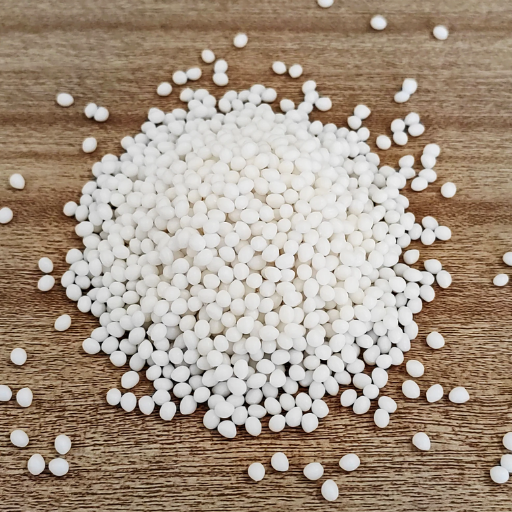
Yifuhui stocks both grades. The short version: 5526 is flexible, tough and easy to mold. 7246 is stiff, heat resistant and fluid resistant.
| Property | Hytrel 7246 | Hytrel 5526 |
|---|---|---|
| Nominal hardness | 72D | 55D |
| Measured hardness, 15 s | 64D | 51 to 52D |
| Tensile modulus | 550 MPa | 190 MPa |
| Flexural modulus | 550 MPa | 200 MPa |
| Density | 1.26 g/cm³ | 1.19 g/cm³ |
| Melting temperature | 218 °C | Roughly 202 to 211 °C |
| Water absorption, 24 h | 0.3% | About 0.6% |
| Best fit | Stiffness, heat, fluids, low permeability | Flexibility, impact, thin walls, seals |
Stiffness, Heat and Fluid Resistance
Choose 7246 when the part must hold shape, resist deflection or carry load at temperature. Tubing, cable jackets, gears and oil field parts fit.
Flexibility, Impact and Thin-Wall Molding
Choose Hytrel 5526 when the part must bend, absorb impact or fill a thin wall. Seals, gaskets, packing, gears and bearings fit. The lower modulus is more forgiving in complex molds.
The grades aren’t interchangeable. Switching 5526 to 7246 stiffens the part and can change sealing force, feel and fatigue life. Switching back may fix cracking but lose load-bearing performance.
Picture a hose manufacturer, Northline Fluid Systems, testing 5526 for a hydraulic return line. The tube extruded easily but lost stiffness at 100 °C. The team moved to 7246, kept the die, and passed the pressure test at a 235 °C melt.
If you are comparing the two for a current project, contact our technical team and we will match the grade to load, temperature and fluid.
Variants: 7246HS and ECO-B 452
Hytrel 7246HS adds heat-ageing protection in natural (NC010) and black (BK320), for film, sheet and profiles. Property values differ slightly, so qualify the exact variant.
Hytrel 7246 ECO-B 452 is bio-based with UV stabilization. Supplier listings claim up to 72% renewable content; verify that against the current Celanese document before specifying it.
Base 7246 is the starting point for fluid and mechanical parts. Move to HS for heat ageing, and to ECO-B when renewable content is a requirement.
Key Applications of Grade 7246
Tubing and Hose
Fuel, hydraulic and pneumatic tubing, including automotive under-hood lines, is the largest fit, combining modulus, fluid resistance, low permeability and routable flexibility. Continuous hot water needs a hydrolysis review.
Wire and Cable Jackets
Jackets need abrasion, cut-through and flex resistance. 7246 delivers those at higher stiffness than 5526; test both if bends are tight.
Gears, Sprockets and Mechanical Components
Modulus and creep resistance suit gears and sprockets. Check tooth load and loaded HDT; lubrication and mating material matter too.
Oil Field and Industrial Parts
Fluid resistance and dimensional stability drive use here. Every field chemical and temperature cycle needs checking.
Film, Sheet and Profiles
7246 extrudes into film, sheet and profiles. Start with HS for heat ageing, and control drying and melt as in molding.
Processing 7246: Injection Molding and Extrusion
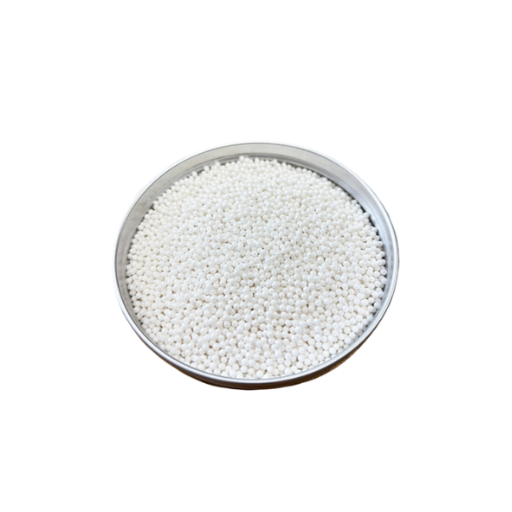
The grade runs on conventional equipment; moisture and melt temperature are the hard parts.
Drying and Moisture Control
Dry at 110 °C for 2 to 3 hours in a dehumidified dryer, and keep molding moisture at or below 0.08%. Sealed barrier bags may not need it, but harder grades release moisture slowly.
Injection Molding Parameters
| Parameter | Recommended value |
|---|---|
| Drying temperature | 110 °C |
| Drying time | 2 to 3 hours |
| Processing moisture | ≤0.08% |
| Melt temperature, minimum | 235 °C |
| Melt temperature, optimum | 245 °C |
| Melt temperature, maximum | 255 °C |
| Mold temperature, minimum | 45 °C |
| Mold temperature, optimum | 50 °C |
| Mold temperature, maximum | 55 °C |
| Hold pressure | Up to 70 MPa |
| Ejection temperature | 149 °C |
Some distributor guides quote 240 to 260 °C; the grade datasheet is the safer authority.
Extrusion Parameters
Dry at 100 to 120 °C for 2 to 3 hours and keep moisture at or below 0.06%. Run 225 to 245 °C, optimum 235 °C, with a gradual-transition screw and no sharp shear zones.
Shrinkage, Regrind and Melt Sensitivity
Shrinkage is 1.6% parallel and normal; design the tool around that and confirm it on the first shot. Melt viscosity is temperature sensitive, so a sloppy controller causes short shots or flash. Regrind waste at a limited fraction and monitor melt flow rate.
Limitations, Cost and Buying
Hot-Water Hydrolysis
Polyester elastomers hydrolyze in hot water, and risk rises above roughly 70 °C, especially in harder grades. Continuous hot-water tubing, steam and some water-glycol loops need a dedicated qualification or another polymer.
Load-Bearing Heat Resistance
Melting is 218 °C and Vicat is 205 °C, which can suggest load-bearing heat resistance. HDT at 1.8 MPa is only 50 °C; under load, the part deflects long before it melts. Design to loaded HDT, not melting point.
UV, Compression Set and Cost
Light stabilization helps color and short exposure, not years outdoors. Compression set is around 63% for TPEE in one study, versus about 23% for NBR and 33% for EPDM; rubber still wins many static seals.
Cost is the last limitation. TPEE costs more than generic TPE and TPU. The premium pays when you need modulus, heat, fluids and low permeability together, and is wasted when a softer grade meets the duty.
What Drives the Price
Variant, volume, documentation, packaging, freight and tax all move the number. Base 7246, 7246HS and ECO-B 452 don’t trade at the same price.
In October 2026, public listings in China ranged from about RMB 33 to 59 per kg, with export offers around US$6.79 to 9.03 per kg FOB. Treat them as indicators, not quotes.
What to Confirm Before Ordering
Ask for four things before a production order:
- A current Celanese datasheet with a revision date.
- A batch certificate of analysis with lot traceability.
- The exact grade code, including HS or ECO-B suffixes.
- Packaging, MOQ, lead time and shipping terms in writing.
Take a buyer named Marcus who received two quotes for the same grade, 30% apart. The cheaper supplier had no batch COA or dated TDS. The higher quote included traceability, so he chose it and avoided a failed qualification.
Ready to confirm grade and availability? Request a Hytrel 7246 quote with your application, annual volume and required documentation. We respond within 24 hours.
Frequently Asked Questions
What is Hytrel 7246?
Hytrel 7246 is a high-modulus thermoplastic polyester elastomer (TPEE, TPC-ET) with a nominal 72 Shore D hardness, used for tubing, cable jackets, gears, sprockets and oil field parts.
What is the hardness of Hytrel 7246?
Nominal hardness is 72 Shore D for grade identification; measured hardness is 64 Shore D at 15 seconds, 68 maximum, under ISO 868 and ISO 48-4.
Is Hytrel 7246 72D or 64D?
Both. 72D is the legacy grade label; 64D is the measured value at 15 seconds. Put the test method and tolerance in your specification.
What is Hytrel 7246 used for?
Typical uses are fuel, hydraulic and pneumatic tubing, wire and cable jackets, gears and sprockets, oil field parts, and extruded film, sheet and profiles.
What is the difference between Hytrel 7246 and 5526?
7246 is the high-modulus grade at 550 MPa and nominal 72D; 5526 is the medium-modulus grade at about 190 MPa and 55D. Choose 7246 for stiffness, 5526 for flexibility.
What is Hytrel 7246HS?
Hytrel 7246HS adds heat-ageing protection in natural (NC010) and black (BK320), for film, sheet and profiles with long-term heat exposure.
What is Hytrel 7246 ECO-B?
Hytrel 7246 ECO-B 452 is a bio-based, UV-stabilized version. Supplier listings claim up to 72% renewable content; confirm the current Celanese figure before specifying it.
What is the melting point of Hytrel 7246?
Melting is 218 °C by ISO 11357 at 10 °C per minute. That is not the load-bearing service temperature; HDT at 1.8 MPa is 50 °C.
Is Hytrel 7246 food safe?
Base 7246 is not a food-contact grade. Compliance is grade-specific, so ask for a food-contact datasheet if the part touches food. Is TPE plastic safe? covers the wider material question.
Is Hytrel 7246 UV resistant?
The grade is light stabilized, which supports color retention and short exposure. Long-term outdoor use should be tested in the final color and thickness.
Who makes Hytrel 7246?
Hytrel is a Celanese brand; Celanese acquired DuPont’s Mobility & Materials business in 2022 and issues current datasheets. Yifuhui supplies the pellets.
Can Hytrel 7246 be recycled?
Properly handled production waste can be recycled. End-of-life options depend on local regulations. Hytrel isn’t biodegradable.
Conclusion
Hytrel 7246 earns its place when a part needs stiffness, heat resistance and fluid resistance at the same time. The grade label says 72D. The measured hardness is 64D. Both are correct, and both belong in a clear specification.
Use the grade for modulus and fluid performance. Choose 5526 when flexibility and thin-wall molding matter more. Process it dry, keep the melt near 245 °C, and design around 1.6% shrinkage.
Respect the limits. Hot water above 70 °C, heavy loads at elevated temperature, long-term UV and static sealing are not the strong points of this material. A supplier who says so is more useful than one who only quotes a datasheet.
If you need Hytrel 7246 pellets with current documentation and batch traceability, request a quote. Tell us the application, annual volume and specification, and we will confirm the grade before shipment. To gain a deeper understanding of Hytrel Material: The Complete Guide to TPEE, please refer to our accompanying guide.