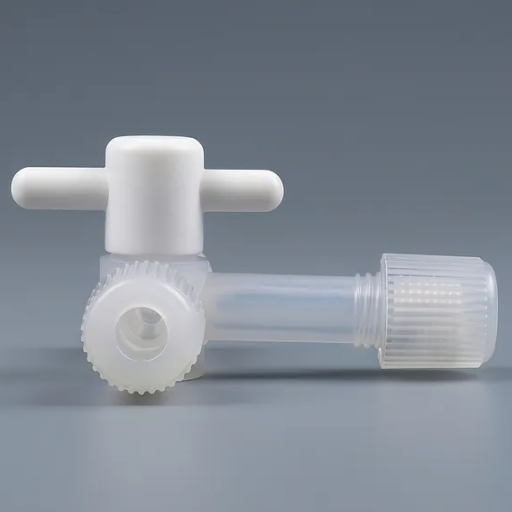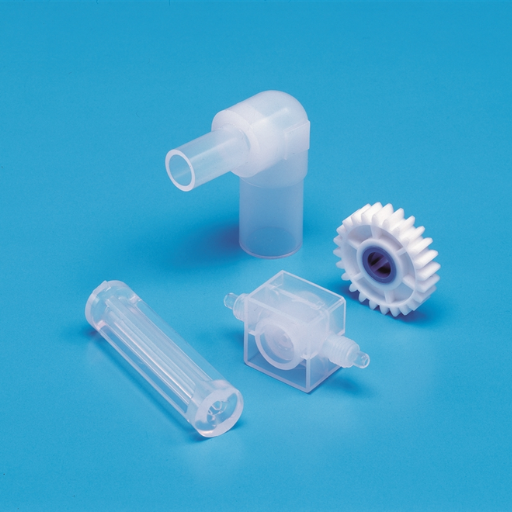
The fastest route to a short-run PFA part is not a mold. It is a block of extruded stock and a CNC program.
Priya learned that the hard way. She is a process engineer at a specialty chemical plant, and one Monday her transfer line went down when twelve pump gaskets failed at once.
The pump maker quoted ten weeks and a tooling charge for molded replacements. Priya couldn’t wait ten weeks, and she didn’t want to pay for a mold she would use once. She bought a sheet of PFA plastic instead, handed a drawing to a local machine shop, and had the gaskets back in four days.
That is what makes pfa plastic sheets, rods and machined parts worth understanding. Stock shapes turn a material question into a fabrication decision you can act on this week.
We supply the PFA grades that become sheet, rod and machined parts, and we stock more than one brand. So this is the cross-brand guide to PFA stock forms you would normally have to assemble from a stack of single-supplier catalogs.
By the end you’ll know which forms exist, what sizes they come in, how tightly PFA machines, which applications each form serves, and how to pick a grade that meets the standard your part has to pass.
If you are still choosing the material rather than the form, our guide to what PFA is and where it is used covers the chemistry first.
Need a stock grade quoted against a drawing? Tell us the part, the medium and the volume, and our team will confirm the form and grade. We answer every technical inquiry within 24 hours.
What Is PFA Sheet?
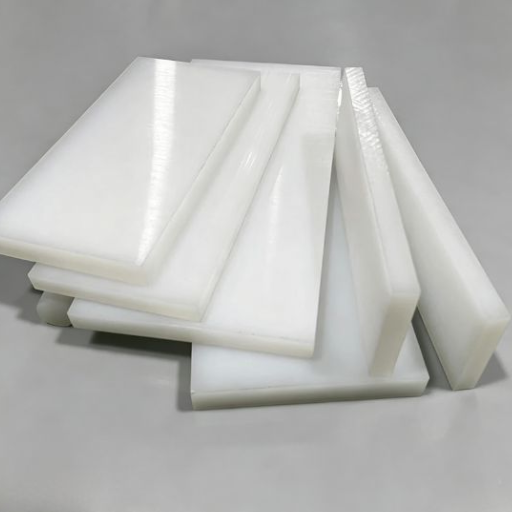
PFA sheet is a melt-processable fluoropolymer sheet made from perfluoroalkoxy resin. It carries a continuous service temperature of 260 °C, resists almost every industrial chemical, and can be machined or welded into finished parts. Because PFA melts, the sheet can be compression-molded or extruded into flat stock rather than only skived or sintered the way PTFE is.
That single property is why PFA stock exists as a fabrication material at all. You can weld it, so a fabricated tank liner or a large panel is possible. You can machine it, so a short-run part needs no tooling. And you keep PTFE-level chemical and thermal performance while gaining a form you can work with ordinary shop equipment.
For the purity and temperature limits behind these forms, see PFA material properties.
PFA Plastic Sheets, Rods and Other Stock Forms
PFA comes in five stock forms, plus the finished parts you cut from them. The table below consolidates what you can actually buy. Treat every size as typical, because PFA sheet and rod dimensions are set by the supplier, not by a single industry standard.
| Stock form | Typical size range | How it is made | Representative grade | What you fabricate |
|---|---|---|---|---|
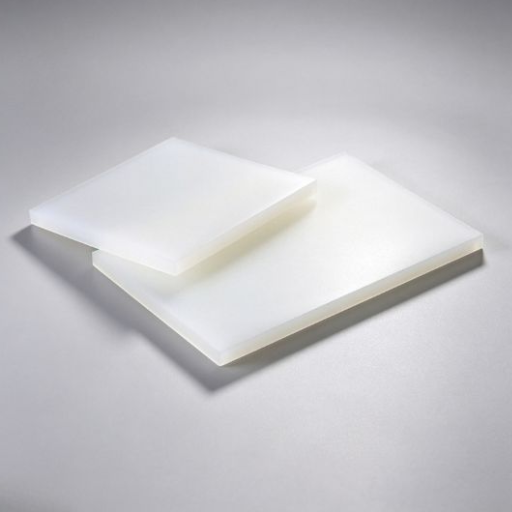
| Sheet / plate | ~0.5 to 25 mm thick; plates to ~12.7 mm (0.5 in) common; widths to 1200 to 1500 mm | Compression-molded or extruded | Teflon PFA 340 / 440 / 450 HP; Neoflon AP-231SH | Gaskets, linings, partitions, tank and fixture stock |
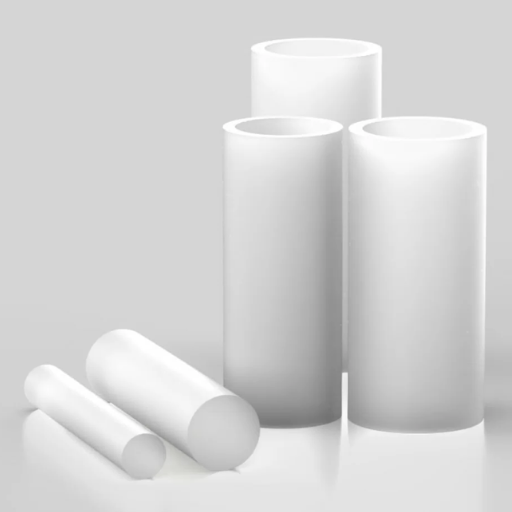
| Rod | ~5 to 150 mm dia (extruded to ~90 mm; molded to ~300 mm) x ~1000 to 3000 mm | Extruded or compression-molded | Teflon PFA 440 / 450 HP; Neoflon AP-230 / 231SH | Valve seats, bushings, pump parts, sealing rings |
| Tube | Extruded to ~100 mm; molded to ~1200 mm dia | Extruded or molded | High-purity grades | Lined pipe, sleeves, sight sections |
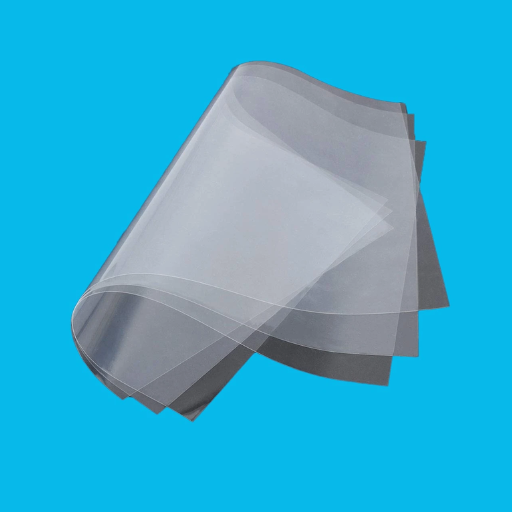
| Film | Thin gauges, micrometers to low millimeters | Skived or extruded | High-purity grades | Diaphragms, liners, thin gaskets |
| Welding rod | ~3 to 4 mm dia | Extruded | PFA 450 HP weld rod | Fusion joints; PFA welds, PTFE does not |
| Machined finished parts | To your drawing | Cut from sheet or rod stock | PFA HP / HP Plus | Gaskets, packing, seals, valve seats, wafer carriers |
Three practical points sit on top of this table.
First, sheet thickness drives the process. Thin sheet is often skived or extruded; thick plate is compression-molded, and compression molding keeps the low melt flow rate that gives a part its stress-crack resistance.
Second, rod diameter decides the grade. Large-diameter rod favors low-MFR grades because melt strength matters more than flow when a thick section has to cool evenly.
Third, PFA is weldable and PTFE is not. If your design has a joint, that single fact often decides the material for you.
Suppliers publish their own capacities rather than a shared dimension table. One manufacturer, for example, lists extruded rod to 90 mm and molded rod to 300 mm, with sheet to 500 x 500 x 40 mm. Others list sheet thicknesses from 0.05 mm to 12.7 mm and rod from 3 mm to 76 mm. The range is broad, but the point is simple: know the size you need before you ask, because not every form and grade is stocked in every dimension.
Where Machined PFA Beats Molded PFA
Every PFA part is either molded or machined. For PFA machined parts, the choice is mostly economics plus geometry.
Machining wins when you need ones or tens of parts, when the geometry is complex or changes, or when you need a prototype before committing to tooling. Cutting from rod or sheet carries no tooling charge, so the first part and the hundredth part cost about the same.
Molding wins when you need hundreds of parts with simple geometry. Injection molding spreads a large tooling cost across a high volume, so the per-part price falls sharply once the tool exists. The break-even sits somewhere in the tens of parts. One widely cited example puts it near 55 pieces, where machining’s higher unit price stops being worth avoiding the tooling charge.
That example compares machined PTFE against molded PFA, so read it as the shape of the decision rather than an exact number. The logic holds either way: below a few dozen parts, machine; above a few hundred, mold.
Tomás runs a small machine shop that serves valve and pump makers. His rule of thumb is blunt. “If it is twelve parts, I cut it. If it is twelve hundred, I tell the customer to call a molder.” That instinct matches the economics, and it is why machined PFA parts stay common even though molding is cheaper at scale.
For the process itself, our guide to how PFA is extruded, molded and machined covers the equipment and setpoints that produce the stock you buy.
Machining PFA: Tolerances and Reality
PFA machines cleanly, but it machines differently from metal, and the difference is what separates a good part from a rejected one.
CNC turning, milling, drilling, reaming, threading and surface grinding all work on PFA. Precision polymer shops hold tolerances around ±0.025 mm on demanding parts, with semiconductor sealing edges sometimes specified near ±0.02 mm. That is tight enough for most fluid-handling work. To get there, three realities of the material have to be managed.
- PFA is soft. Its low modulus means clamping force and cutting force deflect the part, especially thin walls. Use light passes, sharp tooling and steady support.
- PFA traps heat. Its low thermal conductivity keeps cutting heat at the edge, and overheating leaves a smeared or galled surface. Sharp, polished carbide or diamond tooling and a coolant or air blast keep the cut clean.
- PFA moves. Its coefficient of thermal expansion is about 13 x 10⁻⁵ /K, and plastics expand up to ten times more than metals. A part that measures perfectly on a cold bed can fall out of tolerance when it reaches service temperature. Measure at a stated temperature.
There is one more variable that is a purchase decision, not a machining technique. Extruded and compression-molded stock is directional. It is not uniform through its thickness, so a flex-critical part such as a diaphragm has to be taken from the correct cutting direction relative to how the stock was formed. Our molding guide explains the mechanism in full; the takeaway here is that you should tell your machinist which direction the part flexes before the stock is cut.
Still picking a grade for your stock? We stock Neoflon PFA AP-231SH alongside Teflon grades, so a recommendation is never tied to one brand.
Applications of Machined PFA Components
Machined PFA shows up wherever a part has to survive aggressive chemistry at temperature while staying pure. Four application families cover most of it.
Gaskets, seals and diaphragms
These are the classic machined PFA parts. A gasket cut from PFA sheet replaces a molded one in short runs, and a diaphragm cut from PFA film flexes through millions of cycles. Because the part sits in the process stream, the same chemical resistance that protects a pipe protects the seal. Our PFA chemical resistance reference lists how the material behaves against common media.
PFA packing and valve sealing
PFA packing is valve stem packing made from PFA, and it’s the least understood part on this list. The packing is the ring that seals the stem of a valve, keeping the process fluid inside the body.
PFA earns that job for a physical reason. Under load, PTFE packing tends to creep, so the seal relaxes and starts to leak. PFA has better creep resistance, and because it melts, thin PFA layers inside a packing set can flow to refill the sealing interface as it wears. That is why PFA appears in valve packing ring sets, sometimes as mid-layers a few thousandths of an inch thick, in high-temperature service that meets standards like API 622 and ISO 15848.
If you searched for “PFA packing” expecting a gasket, that’s the answer. The other meaning, plastic tower packing for distillation columns, is a different, dimensionally-formed product.
Semiconductor and ultrapure components
Machined PFA is everywhere in a fluid-handling fab, from wafer carriers to machined valve bodies. This is where tolerance and surface finish stop being a preference and become a requirement. A machined PFA component in ultrapure service is tested against SEMI F57, which sets a surface-roughness ceiling for machined parts of Ra ≤0.60 µm, tighter than the limit on molded or extruded parts. In other words, a machined semiconductor part has to be finished better than the stock it came from.
Chemical processing, pharmaceutical and food contact
PFA sheet and rod are common in chemical plants, pharmaceutical suites and food lines, but the compliance you need depends on the grade, not the shape. A food-contact or medical part requires a grade listed to FDA 21 CFR 177.1550 or USP Class VI. You specify that when you buy the stock, because compliance is a property of the material, not something a machinist can add at the cut.
PFA vs PTFE for Machined Parts
Both materials are machined from stock, and the choice between them is narrower than people expect.
Choose PFA when purity, weldability, melt-processing or creep resistance matters. PFA gives you a smoother, void-free part, it welds so you can fabricate assemblies, and it holds a seal better over time because it creeps less than PTFE. You also pay more for it.
Choose PTFE when lowest friction, longest flex life or lowest cost matters more than purity. PTFE has the lower coefficient of friction and the better folding endurance, it is cheaper, and it is the classic machined material for valve seats and gaskets. What PTFE can’t do is weld, so any fabricated assembly pushes you back to PFA.
A useful split: high-purity fluid contact and welded assemblies go to PFA; dry-running wear parts and cost-sensitive seals go to PTFE. We compare the two in full in PFA vs PTFE.
Standards and Grade Selection for PFA Sheet and Rod
Two things decide whether your machined part is acceptable: the standard it must meet, and the grade you cut it from.
Start with the resin. PFA grades are ordered to ASTM D3307, the standard specification for PFA molding and extrusion materials. That specification is what a supplier certifies against, and it is the first document to ask for when you buy stock.
From there, the standard follows the application:
| Application | Standard that applies | Set at |
|---|---|---|
| General chemical and fluid handling | Resin grade baseline | Grade level |
| Semiconductor ultrapure | SEMI F57 (incl. machined Ra ≤0.60 µm) | Finished component |
| Food contact | FDA 21 CFR 177.1550 | Grade level |
| Pharmaceutical and medical | USP Class VI | Grade level |
| Cleanroom fire safety | FM 4910, UL94 V-0 | Sheet and stock |
With the standard set, the grade follows the melt flow rate. Low-MFR grades give melt strength and stress-crack resistance, which is what thick sheet, large rod and compression-molded stock need. Higher-MFR grades flow better and suit thinner sections. Purity grades with fully fluorinated end-groups cut extractables for semiconductor and pharmaceutical work.
Our PFA resin grade table maps every major grade by melt flow rate and application, and our Teflon PFA 340 resin and the full PFA fluoropolymer range list the stock we hold.
Ordering stock against a standard? Send us the drawing, the medium, the temperature and the compliance requirement, and we will match a grade you can document.
Sourcing PFA Sheet, Rod and Machined Parts That Fit Your Drawing
The whole point of PFA stock forms is that they turn a long lead time into a short one. A sheet, a rod and a machine shop can solve in days what a mold would take weeks to quote.
Run through this before you order:
- Name the form first. Sheet, rod, tube, film or welding rod, each with a size range you can actually buy.
- Decide machine versus mold on volume. Ones and tens go to machining; hundreds of simple parts go to molding.
- Respect what PFA does under a cutter. Soft, heat-trapping and thermally expansive, so plan the tolerances and measure at temperature.
- Fix the standard, then the grade. ASTM D3307 for the resin, plus SEMI F57, FDA, USP Class VI or FM 4910 as the application demands.
Priya’s line was back up in four days because the fix was a sheet and a drawing, not a mold and a ten-week wait. That is the practical case for keeping PFA plastic sheets and rod in your spec book.
Tell us the part, the medium and the volume, and we will confirm the form and the grade for your drawing, whether that is Teflon PFA 340, Neoflon PFA AP-231SH, or a domestic grade that does the job for less. Our team answers every technical inquiry within 24 hours.
Contact our team for a PFA stock quote →
Frequently Asked Questions
What is PFA sheet used for?
PFA sheet is used for gaskets, linings, partitions and precision parts that must resist chemicals at high temperature. It is machined into short-run components and welded into larger fabricated assemblies such as tank liners.
What thicknesses does PFA sheet come in?
Typically from about 0.5 mm to 25 mm, though suppliers vary and thick plate is usually quoted per project. There’s no single industry-standard thickness range, so confirm the gauges your supplier stocks before you design to a size.
Can PFA be machined?
Yes. PFA rod and sheet are turned, milled, drilled and ground into gaskets, packing, seals and precision parts. Expect tolerances near ±0.025 mm on demanding work, and account for the material’s softness, heat retention and thermal expansion.
What is PFA packing?
PFA packing is valve stem packing made from PFA. It seals the stem of a valve so process fluid stays inside the body, and PFA is chosen because it creeps less than PTFE and can flow to refill the seal as it wears.
Is PFA sheet food safe?
It depends on the grade. Food-contact PFA sheet is certified to FDA 21 CFR 177.1550, and medical grades are rated to USP Class VI. Specify the compliant grade when you buy the stock, because compliance is set by the material.
Is machined PFA better than molded PFA?
Neither is better in general. Machining avoids tooling and suits short runs and complex geometry. Molding is cheaper for hundreds of parts with simple shapes. The break-even is usually a few dozen pieces.
Can PFA sheet and rod be welded?
Yes. PFA is melt-processable, so it can be fusion welded, and the welding rod used is PFA. PTFE cannot be welded, which is one of the main reasons PFA is chosen for fabricated assemblies.