Last updated:
To dry PA66 pellets before molding, follow the exact grade’s instructions and check the remaining moisture with an agreed test. Protect the resin as you transfer it to the machine. A dryer log records the process. A moisture test helps show whether the resin meets the agreed limit.
The practical question is how to dry PA66 pellets and demonstrate readiness at the point of use. Link the grade document to the dryer log, sample, test and release decision.
Key takeaways
- Use the full producer grade designation to find the applicable drying and moisture recommendations.
- Keep dryer temperature, drying-air condition and measured pellet moisture as separate records.
- Connect each result to an identified batch and documented sampling procedure.
- Protect dried resin from moisture uptake, and reassess when handling or operating conditions change.
Use this guide to connect those records before you release resin to the press. If you’re preparing a material inquiry, start with the PA66 procurement checklist and gather the full grade designation. It gives the producer and your quality team a specific material to discuss.
1. Start with the exact PA66 grade
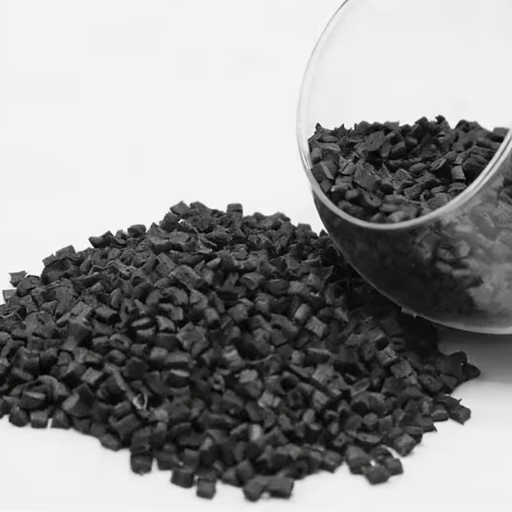
Record the producer, full grade and lot number. Note any filler or additive and the state of the bag.
“PA66” and “nylon 66” name the polymer family. You still need the full grade to find its process limits. For broader purchasing context, see our PA66 nylon pellets guide.
Obtain the current processing document for that exact material. Identify three separate items:
- The moisture limit before molding.
- The dryer type and settings that go with that limit.
- The water-content test method or agreed lab procedure.
Also record the document revision. Is the moisture limit or test method unclear? Ask the producer and your quality team before you set the batch release rule. A property table may list water absorption at equilibrium.
That value isn’t the pre-molding moisture limit. When you file the document, mark which value governs processing and which describes later water absorption. If the grade name on the bag differs from the sheet, leave the instruction unconfirmed until the producer resolves the mismatch. A familiar trade name is not enough to close that gap.
A grade-specific example, not a universal recipe
BASF identifies A3EG3 as PA66-GF15. Its September 2026 A3EG3 processing sheet gives the following drying advice:
| Item | A3EG3 recommendation in that document |
|---|---|
| Moisture before processing | 0.03–0.06% |
| Dryer | Dry-air dryer |
| Drying temperature | 80°C |
| Drying time | 4 hours, subject to the conditions below |
The sheet says drying time depends on the starting moisture, drying temperature and air dew point. Poor storage, such as open bags, may call for a longer cycle. It also warns that too much drying can raise melt viscosity (resistance to flow). These conditions belong with the numbers whenever the example is used.
Use this example to link the grade, moisture limit and dryer settings. Do not transfer the values to another PA66 grade or assume that a four-hour cycle proves the result. The example is not a stock offer from Yifuhui.
Illustrative scenario: A buyer has two nylon grade documents on the desk. One calls for pre-drying. The other allows use straight from a sound sealed bag, if its stated conditions are met. Which sheet matches the grade and bag you received?
Ask that before you choose a rule.
Keep the two sets of advice apart until the match is clear.
Put the full grade beside each instruction. Add the document date and any footnote. Don’t average different moisture limits or pair one producer’s temperature with another producer’s drying time. Does the order allow a substitute grade?
Get its process sheet before you use the same cycle.
2. How to dry PA66 pellets: check the dryer conditions
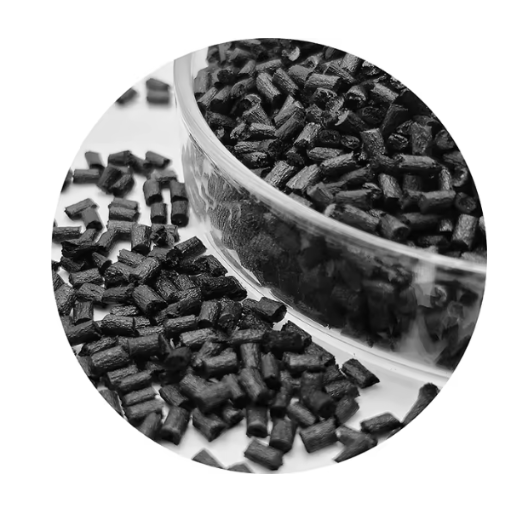
Nylon pellets absorb moisture from surrounding air. Toray’s AMILAN guidance links water uptake to nylon type, filler, pellet shape, heat and air humidity. It also describes how humid intake air can limit ordinary hot-air drying. The heat setting doesn’t tell you the whole story.
Keep these records distinct:
| Record | What it describes |
|---|---|
| Dryer temperature and time | Thermal conditions and duration recorded for the drying process |
| Drying-air condition, including dew point where applicable | The air used by the drying equipment |
| Pellet water-content result | The tested sample’s measured moisture under the stated method |
Air dew point is not a pellet water-content measurement. The timer can’t tell you the starting moisture. Nor does it record exposure after drying.
Toray describes surface and property problems from processing nylon with too much moisture. Use the agreed test to decide if the resin is ready. A good-looking part doesn’t replace that test. Not every molding defect has a moisture cause.
A dryer review should cover airflow as well as air temperature, dew point and time. The producer-authored Zytel and Minlon molding guide identifies these as separate variables for dry-air systems. Use these points to review the dryer. Follow the current sheet for your exact grade when you set the process.
Use the equipment procedure to separate the chosen setting from the actual reading. For example, record where you measured the air. An unlabelled display number leaves that unclear.
If the dryer log has a gap, note the gap and the affected material. A later reading cannot recreate an earlier operating record. A complete dryer log and a pellet test answer different questions; keep both beside the grade instruction when reviewing release.
3. Set up and document PA66 pellet drying
Use equipment suited to the grade instructions. Check that it works as required by the equipment maker’s procedure. Does the grade call for a dry-air dryer? The heat setting alone doesn’t prove that the air meets its needs.
Before you start, record how much resin you will dry and which dryer you will use. Add the planned settings and bag history. Note whether the bag was newly opened, partially used, damaged or exposed during a stoppage. Follow the producer’s rules for cold packs.
The A3EG3 sheet says to bring cold containers to room temperature before opening. This helps avoid water condensing on the pellets.
During drying, record actual readings as well as setpoints. Include heat, air condition or dew point where needed, time, resin flow and stops. For a continuous feed, record how long the resin stays in the dryer. Follow the proven process and equipment instructions.
Time since dryer startup doesn’t show the stay time for each batch.
If operating conditions change, record the change and follow the established response procedure. Avoid treating extra heat or an indefinitely longer cycle as the default correction. The A3EG3 footnotes explain why both too little and too much drying need care.
Trace the material through a continuous hopper
For a continuous feed, connect the loading record to the material being consumed. Note additions, grade changes and stops so the process owner can review the relevant residence history. Don’t calculate readiness from the dryer start time alone. Use your equipment and process rules to check how the resin moves.
This guide does not set a hopper-size or flow-rate formula.
Illustrative scenario: At a shift handoff, the next operator finds a partially used bag beside a running dryer. The grade label is readable, but nobody has recorded when the bag was opened or whether its contents entered the hopper. A running dryer doesn’t answer either question.
Mark the uncertain material separately and ask the quality owner to define the next check. If the grade instructions are missing, request the exact processing document from the producer before choosing a new cycle.
The handoff should state what is known, what remains unknown and which material is affected. Avoid replacing the missing opening time with the shift start time. If the team cannot recover the history, record that fact and the agreed hold or assessment action. No production outcome is assumed in this example.
4. Sample and verify PA66 moisture content
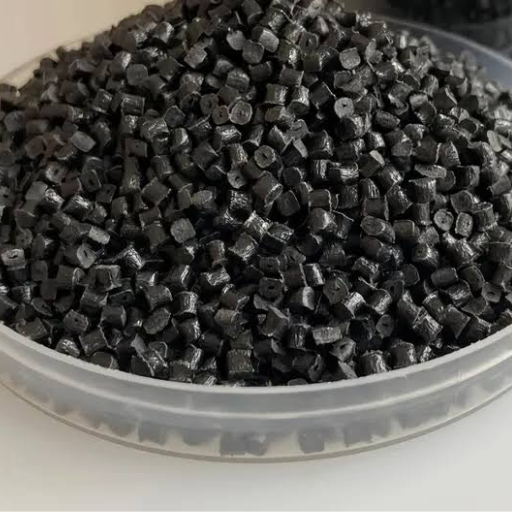
Agree on a suitable measurement method
The public abstract of ISO 15512:2019, Plastics: Determination of water content lists water-content tests. These include methods that heat the sample and use Karl Fischer measurement. The standard separates water-content tests from water absorption tests under ISO 62. It does not set one PA66 moisture limit.
Use an agreed test method checked for the specific material and moisture range. Ask the lab to define how to prepare the sample, set up and check the instrument, and report the result. A label such as “moisture analyzer” doesn’t prove that a device suits the job. The lab must also check that its specific Karl Fischer setup suits the sample.
This article is a production-record guide, not a laboratory method. Use the lab procedure for sample mass, heat, time and equipment checks. A generic PA66 recipe cannot fill those gaps.
Preserve sample identity and handling history
Collect and handle the sample under the agreed laboratory procedure. Record the grade, lot, sample point and time. Add the container, any exposure and the test time. Use the sealed sample container and handling rules set by the lab.
Record any departure so the lab can assess its effect.
Choose a sampling point that represents the production decision. Resin at the dryer outlet has one history. Resin held in an open bin has another. Keep that distinction visible instead of labeling both simply “batch moisture.”
Illustrative scenario: A technician samples pellets at the dryer outlet and records the collection time. The remaining resin is then moved to an open bin while the machine is stopped. The outlet result describes the collected sample; it does not document the later bin conditions. Ask the quality owner whether the sample still supports the intended feed decision.
The example does not assume that moisture rose by any set amount. The missing evidence is the handling record between the outlet and the press. Record the route and the stop. State where a new sample would match the resin in use.
Keep the original result rather than relabelling it as a test at the feed point.
Compare the result with the applicable criterion
Record the measured value and units, the method reference and the criterion used. Apply the rule set by your quality team. Include test uncertainty where it affects the decision. Record release, hold or further checks.
Name the person who made the decision.
If a result fails the limit, hold the affected resin. Check both the test and the drying and handling log. Get advice for the exact grade before treating it again. Another cycle does not prove that damaged or dirty resin has been restored.
For other batch checks, use our plastic pellet quality-control guide. Keep other batch checks beside the moisture record. Label what each check covers.
5. Protect the measured condition through transfer and restart
Plan protected transfer before drying finishes. The A3EG3 sheet advises closed conveying. Toray says to limit air exposure and protect leftover pellets. Follow the applicable producer and equipment instructions for the route from dryer to machine.
Record what happens after sampling: any holding container, transfer arrangement, open handling and interruption. A result obtained before later exposure may no longer represent the resin reaching the feed point. Our resin pellet storage guide provides broader storage context.
Set review triggers in your approved process. These might include an open bin, dryer alarm, unplanned stop, grade change or change in feed conditions. The response and test schedule depend on the grade and process. Don’t set one air-exposure time limit for all PA66 operations.
Before you restart, check the last test and what happened since the sample was taken. If the material stayed in a protected system, document that route. If an operator opened a container or changed the feed arrangement, record the event for assessment under your procedure. Neither a new timer entry nor a previous passing result closes that question by itself.
For the open-bin scenario above, the next action is to assess the affected resin and choose a representative check. It is not to assume that the original outlet result failed, or that all material in the lot must be discarded. Keep the scope of the decision tied to the actual exposure and the agreed procedure.
A practical drying and verification record
Use the following blank template to connect the process and material records. Adapt it to your own rules. It is a suggested worksheet, not an ISO form or a resin release limit.
| Field | Entry to complete |
|---|---|
| Material identity | Producer, full grade, formulation identifier and lot |
| Source document | Processing document title, revision/date and applicable section |
| Acceptance basis | Moisture criterion, units, method and approved decision rule |
| Incoming condition | Packaging condition, opening time and known exposure history |
| Drying equipment | Dryer identity and applicable operating procedure |
| Operating record | Temperature, air condition/dew point where applicable, time and material flow |
| Exceptions | Interruptions, alarms, changes and actions taken |
| Sample traceability | Sampling point, collection time, container and handling history |
| Measurement | Method/settings reference, test time, result and units |
| Decision | Release, hold or investigate; responsible person and time |
| Transfer and restart | Protected feed arrangements and reassessment triggers |
Fill each entry from real plant and lab records. Keep the test result linked to the material it represents, and preserve any exceptions that affected the decision.
Choose record owners before using the worksheet. Production can record the dryer, loading and stops. The lab can record the sample and test. The quality owner can record release.
Assign each task to its real owner; one signature need not cover the whole record. If production and the lab use separate systems, record the shared sample or lot reference on both. The reviewer should be able to trace the test back to the resin without guessing which bag, hopper or shift it represents.
Return to the shift-handoff example: the grade field can be completed from the bag, but the opening-history field remains unknown. The record should retain that gap, identify the affected material and state who will assess it. A worksheet that simply says “drying completed” would leave the original question unanswered.
To close a hold, attach the evidence required by the approved decision. You may need a clearer grade sheet, an alarm review or a test that matches the resin in use. Record what changed and why the new evidence supports the decision. Have your plant and quality team adapt this workflow.
It does not change the supplier specification.
Frequently asked questions
Can I mold PA66 straight from an unopened bag?
Follow the exact producer and grade instructions. Toray describes when its sealed material can be used straight after opening. The A3EG3 sheet calls for pre-drying regardless of how it was stored. Each instruction has its own scope.
Neither is a rule for every unopened PA66 bag.
Where do I find the right moisture limit before molding?
Start with the current grade sheet and agreed process specification. Ask for help if the limit or test method is unclear. Do not substitute a generic nylon limit or an equilibrium absorption property.
Can I simply dry PA66 for longer?
Only within grade-specific guidance and the established process. Starting moisture and storage history can change the time needed. The A3EG3 sheet also warns about too much drying. Investigate the reason for a failed check before changing the cycle.
Does the absence of splay mean the pellets are dry enough?
Use the applicable moisture criterion and test result to make that decision. You cannot measure water content by looking at a part.
Does a passing drying check explain a part that changes size or shape?
No. A pellet moisture result does not establish finished-part dimensional acceptance. If a molded part changes size or shape, don’t assume that more pellet drying will solve it. Compare the inspected part state and process history, then use our PA66 shrinkage and warpage diagnostic guide to plan the separate investigation.
Is post-molding moisture conditioning the same as pellet drying?
No. Pellet drying addresses the material condition before melt processing. Post-molding conditioning concerns moisture uptake in the finished part. For that separate production stage, read our nylon moisture conditioning after molding guide.
Keep its finished-part requirements separate from the pellet-drying instructions.
To discuss PA66 sourcing with Yifuhui, visit our PA66 material category and send the full grade, intended use and documents you need with your inquiry. Confirm the exact-grade instructions before you dry a batch for production.