Just last March, based on price Chen Wei, the Procurement Manager of a second-tier automotive supplier in Jiangsu, approved a PA66 pellets shipment before checking out glass-fiber content; he should have asked for a lot-to-lot consistency certificate but didn’t. Within three weeks, 12,000 intake manifolds failed dimension tolerance checks. The resin back exhibited an 18% variance in tensile strength. This resulted in losses of $47,000 just for scrap, rework, and delay in production, which had a negative impact on their OEM customer.
If you have ever faced a similar situation, you are not alone. The global engineering plastics market is valued at over $130 billion and spans more than 100 resin grades across dozens of polymer families, according to Grand View Research. Procurement teams and manufacturing engineers routinely struggle to find one reliable source that compares all major options from a sourcing perspective.
The guide addresses this quandary by presenting details of ten crucially important engineering polymers, along with procurement-linked data like cost per kilogram, availability, certificate requirements, and pellet quality indicators. Afterward, you should have comprehensively learned to put a framework in place for selecting the appropriate resin, approving your supplier, and working on your material budget.
What this guide on engineering plastics puts forth for you: one, a clear delineation of engineering plastics as distinct from commodity grades; two, a master table comparing ranked strengths, heat resistances, and price prospects; three, some application pointers for automotive, medical, and electronic areas; four, procurement guidelines covering certifications, minimum order quantities, and quality verification; and last but not least, some processing essentials-don’t dry your materials for the first time incorrectly!.
What Are Engineering Plastics?
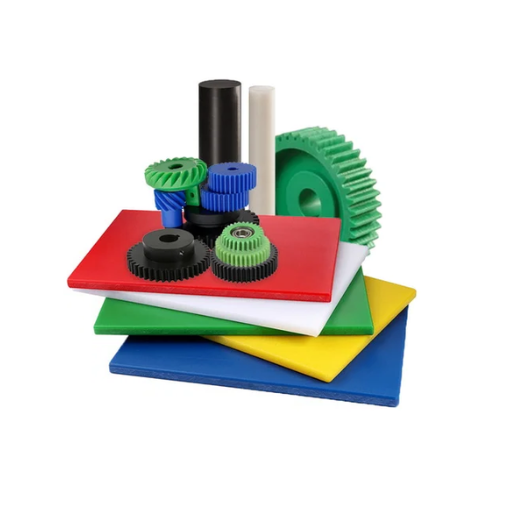
Engineering Plastics are overlaid high performance polymer based resin possessing mechanical strength, thermal stability, and chemical resistance far more than the so-called commodity plastics of PP or PE, etc., in applications that feature continuous temperatures of over 100°C. Subsequently, they sustain their shape under heavy load and are major critical manufacturing sectors for automotive, medical, and aerospace industries.If you want a clearer sourcing-focused breakdown of this distinction, see Engineering Plastics vs Commodity Plastics: A Buyer’s Guide to Material Selection.
It is common to use the term “engineering resin” and “engineering plastics” interchangeably. Both refer to similar groups of materials; there is no clear physical distinction. The only differentiating sheer verbal one is that the word for the raw material is “resin,” and “plastic” is the processed material so protected. However, in the mind of a buyer, this is minuscule because all that maters is the performance set forth in the technical data sheet.
There is a predominance of commodity plastics: polyethylene, polypropylene, and polystyrene in terms of a quantity of production. These plastics are worth more, and resin handling is easier for these. However, they lack required mechanical and thermal properties in demanding applications. Engineering plastics provide a medium for bridging this gap while displaying properties close to polymeric as well as metal/ceramics.
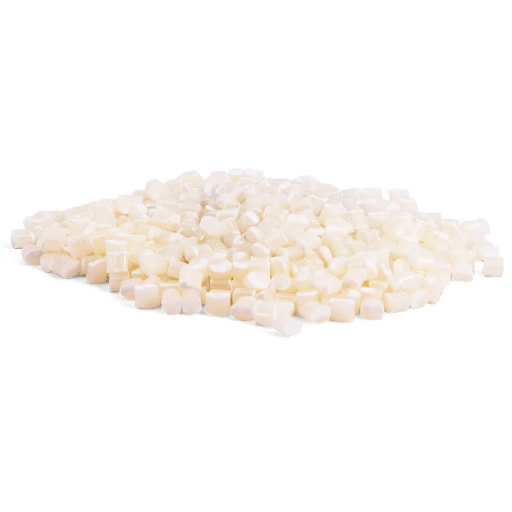
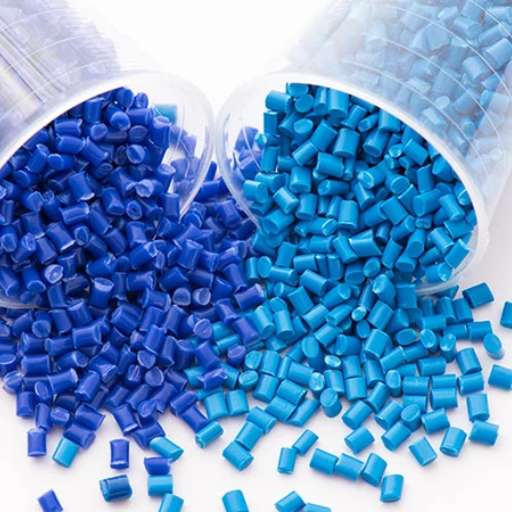
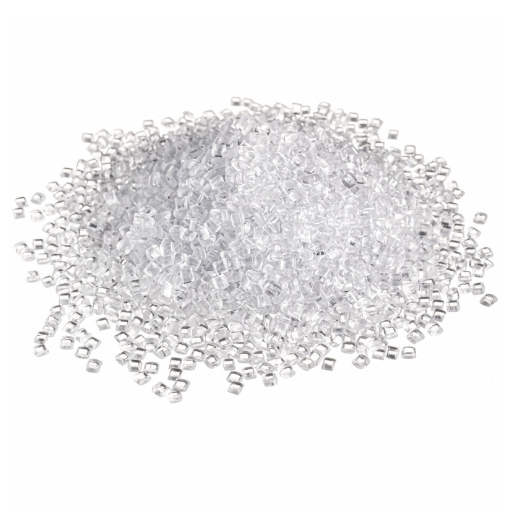
How does the supply of engineered plastics appear? Most suppliers receive their materials as pellets, almost always in the engineered resins form. This pellet quality directly impacts the injection molding process and is crucial for the purchased grades. Virgin pellets ensure consistent melt flow and color stability. Regrind is made up of recycled sprue and runner. It is cheaper but shows more variation. Some buyers prefer to specify a virgin to regrind ratio to balance cost and consistency. Then other specialization forms such as powder and pre-compounded are available to them, yet pellets are the standard for injection molding and extrusion.
Engineering Plastics Comparison Table
Choosing between engineering resins becomes simpler when you compare types of engineering plastics side by side. The table below ranks nine common types of engineering plastics by tensile strength, heat deflection temperature (HDT), maximum continuous service temperature, and approximate cost per kilogram. Property data is sourced from the MatWeb material database and supplier technical data sheets.
|
Material |
Tensile Strength |
HDT |
Max Temp |
Cost/kg |
Best For |
|---|---|---|---|---|---|
|
PEEK |
90-100 MPa |
315°C |
260°C |
$80-150 |
Extreme conditions |
|
PEI (Ultem) |
105-110 MPa |
217°C |
170°C |
$40-80 |
Medical/aerospace |
|
PPS |
80-90 MPa |
260°C |
220°C |
$15-30 |
Chemical resistance |
|
PA66 (Nylon) |
55-80 MPa |
70-90°C |
100-150°C |
$3-6 |
General engineering |
|
POM (Acetal) |
60-70 MPa |
110-136°C |
90-120°C |
$3-5 |
Precision gears |
|
PC |
60-72 MPa |
132-138°C |
115-125°C |
$4-5 |
Transparent parts |
|
ABS |
30-50 MPa |
97-102°C |
80-100°C |
$2-3 |
Housings, cost-sensitive |
|
TPE |
15-30 MPa |
60-120°C |
60-135°C |
$4-8 |
Flexible seals |
|
TPV |
10-25 MPa |
55-100°C |
55-135°C |
$3-6 |
Automotive seals |
How to read this table for your project? Again, look at temperature. If your part has to withstand 150°C continuously, you can immediately get rid of ABS, TPE, TPV, standard PA66, and POM. Your shortlist now consists of PC, PEI, PPS, and PEEK. For broader screening of these higher-heat options, you can also review High Temperature Engineering Plastics: 2026 Selection Guide for Engineers and Buyers.
Next, consider the effect of the mechanical load. A load-bearing gear or bearing under continuous strain has to have a high tensile strength and low friction. Here, POM and PA66-GF do really well. A structural bracket is going to need stiffness and impact resistance. PC, or a glass-filled PA66 is what one should consider.
Cost compared with performance is the next concern. PEEK displays an incredibly large thermal and chemical resistance. And, of course, it is 20-50 times the price of ABS. Fill-grade, PA66, or PPS can compete quite easily over a hundred-plus resin. One must focus on the resin that provides the biggest performance for the tiniest cost and not fall for chasing the state-of-the-art resin.
Top Engineering Plastics by Application
High-Load Mechanical Parts
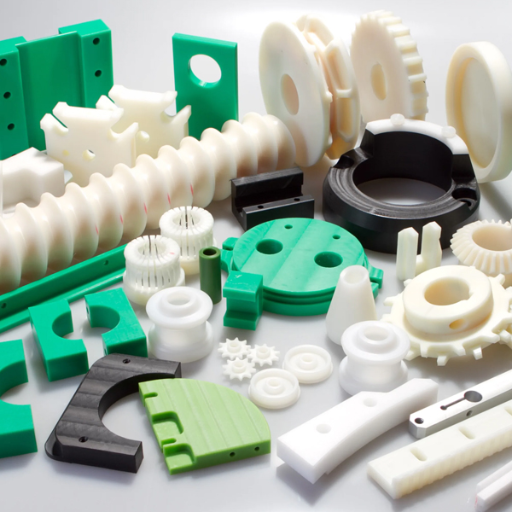
Gears, bearings, bushings, and cam followers require low friction, high fatigue resistance, and dimensional stability. POM (acetal) is leading this category. Its coefficient of friction is on par with that of PTFE. PA66 with 30% reinforcement of glass fiber is earning positive scrutiny for its application in structural brackets and housings. Both will not burn a hole in one’s pocket, with costs ranging from $3-6 per kilogram. Therefore, they are suitable for high production runs.
High-Temperature Applications
Under-hood automotive components, electrical connectors, and industrial oven parts require materials that will maintain required properties in excess of 150°C. PPS works at 220°C continuously, plus it is resistant toward automotive fluids. PEI (Ultem) is particularly valued for medical autoclave applications at 170°C. PEEK is suitable for oil-and-gas and aerospace components, working up to 260°C. The jump noticed in each of the material cost ranges between doubles and triples because of the higher temperature required.
Chemical-Resistant Components
Acids, bases, and solvents come into contact with pumps, valves, and chemical processing equipment. Such chemicals usually deteriorate the majority of polymeric material under the conditions of such mixed-and-matched environmental degradation. PPS demonstrates high resistance to virtually all automotive fluids, strong acids, and alkaline solutions. PEEK combines superior chemical resistance with much higher mechanical strength. Therefore, mostly these two resins are the only possible choices for use in the most aggressive environments.
For Medical and Food-Contact Parts
Biocompatibility and sterilization resistance is essential for surgical instruments, drug-delivering devices, and food-processing machines. For Ultem or PEI, there are USP Class VI certifications. Sterilization through autoclave, gamma, and ethylene oxide are generally acceptable. PEEK is in direct accordance with implant-grade applications for long-term bodily exposure. PC and, of lower cost, some ABS serve as locations for non-implant housings. If your project falls in this segment, refer to Engineering Plastics for Medical Devices: The 2026 Material Selection Guide for a more focused review of compliance and material fit.
Automotive Under-Hood Components
Three extreme environmental factors will outright belabor engine compartments; vibrations, heat, and chemicals; materials selection is flamed once all factors are conditioned with electrical components, housings, and other components. For example, PA66-GF components are mostly found in the intake manifolds and engine covers. The anti-metal selections include PPS parts in the thermostat housings and water pumps. PEEK-molded is deployed in extreme temperature applications for parts built with turbocharger components, bearing cages, and some more. But even as significant improvements in thermal management systems and battery modules are set, this demand will mostly stay confined to high-performance areas. For more application-specific sourcing examples in this sector, see Engineering Plastics for Automotive: Material Selection and Sourcing Guide.
Housing for Electrical and Electronic Components
Another feature for these connectors, switches, and enclosures is insulation, dimensional stability, and in many cases, flame retardations. PC with excellent dielectric strength and transparency at the same time is extensively used. PC/ABS blends with great improvement of efficient impact capacities, given the processability advantages. In situations with rising temperature demands, PPS affords the maximum demands.
Transparent Impact-Resistant Parts
When you are working with plastic materials incorporated in some kind of rigid lens, lens shield, or display housing, the material must be one that can combine clarity and toughness. When clear PC was placed side by side with acrylic and glass, the latter would be shattered by impacts that did not even reach the PC. For those applications where cost is more important than optical clarity, transparent ABS suggests an economy alternative.
Flexible Seals and Gaskets
Certain engineering applications need materials that can accommodate some amount of deformation. TPE and TPVs are rubberized materials with thermoplastic processing capability. These materials, which are used to seal joints, resist vibration and provide soft grips, are particularly suited to this kind of material. TPE can overmold a rigid substrate such as PA or ABS in automotive and consumer goods. TPV excels in under-hood seals that demand heat and oil-resistant capabilities. For grade selection, overmolding, and sourcing details, see TPE TPV Material: The Complete Procurement Guide for Rubber-Replacement Manufacturing.
Material Deep Dives
By referring K now to dedicated guides for each material family, one may see these summaries as milestones to further investigating the grade for production.
PEEK: The Ultimate High-Performance Polymer
PEEK (polyetheretherketone) is at the summit of the high response to polymer material. It keeps strength and chemical resistance till 260°C. UNfilled grades would cost $80-150 per kilogram. The Glass-filled and Carbon-filled grades would be engineered for stiffer material with an added form of wear in bearing and gear sector applications. PEEK pellets would need to be dried at 150°C for three or more hours before processing. It generally takes around eight weeks to deliver due to the low material production following global misuse. For full buying and processing considerations, review PEEK Plastic Pellets: The Complete Procurement Guide for High-Performance Manufacturing.
PA66: The Workhorse Nylon
PA66 takes up around 27.7% of the total volume of the engineering plastics market. There’s no parallel in properties offered by the combination of strength, toughness, and cost. Standard unfilled PA66 sells around $3-6 per kilogram, while glass-filled grades (GF15, GF25, GF30) improve tensile strength and heat resistance for automotive and electrical applications. PA66 absorbs moisture, causing swelling and lost strength. Dry the material at 80°C for four to six hours before processing. If PA66 is on your shortlist, our PA66 Nylon Pellets: Complete Procurement Guide for Engineering Manufacturing goes deeper into grade selection and sourcing checkpoints.
POM (Acetal): Precision and Low Friction
POM has the lowest coefficient of friction of any of the common engineering plastics. It machines well and holds close tolerances. Homopolymer grades offer higher strength. Copolymer grades are offered for improved chemical resistance and thermal stability. POM pellets sell around $3-5 per kilogram and process at melt temperatures between 190°C and 230°C. Overheating should be avoided because POM degrades to formaldehyde gas above 240°C. For additional procurement notes and processing windows, see POM Acetal Pellets: Complete Procurement and Processing Guide.
PEI (Ultem): Medical-Grade Performance
PEI (Polyetherimide) is transparent with good heat resistance and flame-retardant properties, thus becoming an ideal material for applications in autoclave and high-temperature electric power. The medical grades are certified with full FDA and USP class VI documentation. Other good properties of PEI include it good transperancy and is suited in areas like autoclave electronics. Therefore, PEI pellets require aggressive drying at 150°C for sixteen or more hours. Nonetheless, the material justifies its price between $40 to $80 per kilogram, which is used in aerospace and life-critical parts. For a more detailed sourcing reference, read PEI Ultem Plastic: Complete Procurement Guide for High-Performance Manufacturing.
PPS-Chemical and Heat Resistance
PPS (Polyphenylene sulfide) has excellent Chemical resistance and a continuous-use temperature of 220°C. PPS replaces metals in pump housings, valve bodies, and underhood automotive parts. The cost of standard PPS without additional fillers is in the range of $15 to $30 per kilogram. Filled grades contain 40% or 65% glass and mineral reinforcement to its stability of dimensionality and to reduce creep. PPS has the processing at high melt temperatures (300-340°C) and needs hard-steel molds for peak abrasion resistance. For resin grades, certifications, and supply considerations, see PPS Plastic Resin: The Complete Procurement Guide for High-Performance Manufacturing.
TPE/TPV: Flexible Engineering Solutions
TPEs and TPVs fill the spacing between rubber and rigid plastics. They overmold onto PA, POM, and ABS substrates without adhesives. Shore A hardness ratings range from 35 (very soft) to 90 (firm). TPE sometimes costs in the area of $4-8/kg, while TPV performs well in automotive seal applications (offering superior heat and oil resistance) at $2.5-4/kg. Being shear-sensitive, both materials require careful screw designs during the extrusion or molding process.
Sourcing Engineering Plastic Pellets: A Procurement Guide
In 2024 Dr. Sarah Lin was carrying out research on the new casing for a surgical device which constituted the material. Her team initially leaned toward using PEEK for its strength but discovered that PEI (Ultem) could withstand the same sterilization requirements at about one-third the expense for the material. By specifying PEI 1010 grade with full USP Class VI documentation, material cost had been reduced by 34% without compromising performance. The right specification will always be the superior resin.
This section exists to provide a framework around which one could make such decisions. These frameworks concern, among other things, a few quality margins and material certifications to look out for.
What Are the Main Quality Indicators?
Melt flow index (MFI) tells you how easily a resin is able to flow while being injected and filled into molds. Every material has an acceptable range for MFI. When a manufacturing batch falls outside the acceptable range, it may cause short shots, flash or dimensional variations. Always ask for the MFI value and the test method (usually ISO 1133 or ASTM D1238) from the certificate of analysis.
What matters in plastics isnt the best single batch but rather consistency from lot to lot. A manufacturer delivery MFI within 5% batch after batch is good compared to one who may hit with perfection once only to miss with 15% the next time. Ask the supplier to provide the last ten CoA data as a condition to a major contract.
Virgin-to-regrind ratio greatly affects cost and performance. Virgin pellets offer processing and color-consistency assurance. Use of regrind lowers material cost by 20-40% and increases process variability accordingly. Many precede an 80/20 or 90/10 ratio for color splits institutionally. Document this in your purchase order.
Masterbatch quality and compliancy in the pellets’ dispersion are cited as the causes of color-band consistency. A supplier may mold white or another reference color in a buyer’s part so that the color masterbatch doesn’t have to mask the resin color. Natural pellets with color pre-blended offer maximum flexibility in color band choice. Pre-blended colors decrease handling time, but the buyer is locked into one supplier’s proprietary mix. If appearance is a concern, specify Delta E color-tolerance limits in the contracts.
Certifications and Compliance
Observing RoHS and REACH is a starting point for the business, electronics, and inspection of goods in the EU. In fact, maximum engineers supplant the course of a certificate of conformity already.) Please check the certificate’s date. Age-restricted substances updated periodically.
FDA and ISO 10993 documentation is essential for medical and food-contact applications. Not all grades within a polymer family carry these certifications. A standard PEI 1000 grade may lack USP Class VI approval. The medical-grade variant costs more but carries the documentation you need for regulatory submission.
What the automotive suppliers need is a comprehensive check on IATF 16949 conformance at the resin producer’s level. Traceability, change control, and defect prevention and the likes are compliance measures governing such certification within the quality management systems. The use of AS9100 is a domain specifically meant for aerospace application. The cost of the certification weighs more than the risk of not being recognized for tier 1 and tier 2 suppliers.
Elements for the Supplier Evaluation Criteria
Good suppliers are distinguished from traders trading whatever goods at any time through batch testing. Inquire if the supplier tests each lot for MFI, moisture content, and mechanical properties. Could they commit or retain samples of each batch for at least six months? Are they able to offer spectroscopic analysis on request?
Considering lead time and material availability is fundamental in determining safety stock requirements. Team up with a business partner who stocks PA66 and POM so that local delivery takes no less than a week. Those customers desiring PEEK or PEI ordered from an overseas source have to wait for about six to eight weeks. Welding two or more resin families through the partnership helps contribute to freeing up your capital that would otherwise have gone into the material cost. Engineering support differentiates material traders from partners.
Can a supplier actually recommend a grade based on part geometry and loading conditions? Does your supplier support for mold design in terms of gate placement and venting? They even should provide you with processing parameter sheets in the language of your choice? When they do, they eliminate the expensive trial-and-error on the production floor.
Minimum order quantities are related to unit economics and hence volume pricing letters. Specialty resins, like PEEK, are often at 500 kg MOQs, while commodity engineering plastics, such as PA66 and POM, can be available for as low as 25 kg MOQs. If your consumption is predictable, then negotiate volume price agreements at the very beginning rather than buying on a spot basis. Frequently, the suppliers will offer a 5-15% discount on quarterly or end-year volumes agreed upon.
Ready to evaluate your current supplier against these criteria? Contact our engineering team for a free material audit. We review your specifications, test your current pellets, and recommend optimized grades with full certification packages.
Cost Optimization Strategies
It is generally a better-value-for-money proposition to get filled grades instead of the unfilled ones. A 30% glass-filled PA66 may cost around 20% more compared to the PA66 without the filler, but it will provide double tensile strength and heat resistance. In other words, with the glass-filled resin in a lower proportion, you would be doing more with less from a cost-lateral position than using unfilled grades. This switching of cost-per-part members are notably rewarded.
Blended resins make available lower prices with some decent middle of the road performances. PC/ABS blends blend PC’s heat resistance and ABS’s processability and low cost, as well as where a pure PC would be over-engineered and a pure ABS might not be enough. You may request custom blends if the standard grades fail to meet your requirements.
Through consolidating supplies, the company can reduce administrative overhead and stay on the lookout for leverage. E.g. when a single customer buys PA66, POM, and PPS from a single counterparty, it has one purchase order, one delivery schedule, and only one person to contact for technical sound advice. This arrangement also renders the buyer strong in negotiations for volume breaks on the full material basket.
For a broader overview of resin types and pricing structures, review our plastic resin pellets guide.
Processing Considerations for Engineering Plastics
Even the most finest quality pellets can produce a defective part if the processing parameters are wrong. The level of forgiveness between the two varies: engineering resins are less forgiving than commodity plastics. Moisture, temperature, and mold design mistakes cause impregnation, degradation, and dimensional failure.
Drying Requirements
Most engineering plastics pick up moisture during storage and transport. This material absorbs moisture from the atmosphere. But anyway, running wet pellets through an injection molding machine produces every sort of ugly process other than what you set out to achieve. Splay, bubbles, and hydrolytic degradation are some of the outcomes.
Nylon 66 should be dried at 80°C for four-six hours. PEEK needs 150°C for three hours, but the question of running time should be three or more most probably, that is, it could be anywhere between 10 to 24 hours or maybe more. PEI is, of course, the most rugged: its drying specification-16 hr 150°C-should produce acceptably dry stock of below 0.02%. POM can endure shorter drying cycles, usually at 80-100 °C for two-four hours. Always employ a desiccant dryer, given that hot-air ovens rarely, if ever, hit the required dew points that engineering plastics stipulate.
Melt Temperature Ranges
Every group of resins does have a narrow process window. PA66 processes from 270°C to 290°C. POM, on the other hand, melts at 190-230°C, with obvious decomposition occurring at 240°C and above. PEEK needs temperatures between 360 and 400 °C. PPS sets slightly lower temperatures at 300 to 340°C ideal for processing, but still within the same use band. Furthermore, conditions (i.e., overtemperature) kill the chain bonds, which will have an accompanying breakdown in colour and mechanical properties. Cold material has bubbles, and tunnel-and-lamp welds look like rags. Check for temperature profiles first with the data sheet of your raw material supplier before starting production.
Mold Design Considerations
The variation in shrinkage is quite wide. Unfilled PA66 varies between 1.2 and 1.8% shrinkage! The glass-filled PA66 has only 0.3-0.6% shrinkage in the flow direction, while POM ranges between1.8 and 2.5% when it shrinks. Such differences have a big influence on the size of cavities and cores. So mostly, design molds for the specific grade, not the generic polymer family.
For a high-viscosity resin like PEEK and PPS, gate design is of paramount importance. It is believed that restrictive gate designs which have been adopted too often would cause such excessive thermal efficiency than would allow for shear burnout and pipe. Stick with a full-round or fan-type gate design; land length has also to be factored in. Vent quality has to be fantastic, as much is demanded as far as the injection speed is concerned. If trapped air finds its way back into the mold; then it will most likely simply burn into the mold surface.
For detailed sheets on each specific kind of injection molding parameter by resin family, contact our tech team or review our in-process documentation.
Sustainability in Engineering Plastics
Material specifications have been, and are being, redefined by mounting pressures in sustainability. European automotive OEMs are now requiring recycled content in non-structural components. Medical device makers are auditing supply chains for carbon footprint data. Procurement teams are struggling to balance environmental targets with performance output.
Recyclable engineering plastics allow for post-industrial regrind from sprues and runners to be introduced back to the same grade with minimal property sacrifice. Post-consumer recycling is more difficult as mixed plastic streams tend to undermine mechanical properties. PA66 and POM seem to work fairly well with higher recycled contents than PEEK or PEI, where things must be kept in purity.
Bio-based engineering plastics form a very petite sector but are gaining importance. Bio-PA66 made from castor oil competes with petroleum-sourced grades in automotive and textile applications. Bio-based PC and ABS are new players, but they priced a little too high. Within the current landscape, recycled content represents the most effective pathway for achieving sustainability goals.
Recycling of high-performance resins goes through economic hiccups. For example, waste PEEK costs a lot of money for scrap – $40/80 per kilo. Technically it can be reclaimed; however, the cost is a consideration for most cases when compared to virgin materials. The exception is the large-volume processors who produce the type of continuous, clean scrap stream that necessitates cleanup and blending onsite.
Changing the environment is also facilitated. These EU Directives contain an obligation for recycling. Californian Senate Bill 54 implements targets of recycling for the plastics packaging generators. While this strengthens targets on consumer packaging, the regulatory momentum will also filter through to translate into engineering plastics selection. Preference for recyclable or recycled-content grades by current moulders means an active safety policy for future exemptions for who they do business with in the marketplace.
For context on how commodity plastics compare in recycling and sustainability, see our breakdown of HDPE vs LDPE processing and environmental profiles.
Conclusion
Engineering plastics are nothing of a mystery. They are simply a specified set of materials with definite properties, clear costs, and clear processing requirements. The real challenge is not the chemistry. Rather, the main difficulty is selecting the most appropriate resin for your application keeping in mind the cost constraints and supply demands.
Remember these five criteria, when specifying the engineering plastic. First is the temperature: know the continuous service temperature of your piece, and look for a resin having a safety factor of at least 20°C. Second is the mechanical load: make sure the tensile strength and stiffness match the forces your part will bear. Thirdly, chemical exposure: ensure resistance to every fluid, solvent, or cleaner that your part contacts. Regulatory requirements are fourth: look for certifications before committing to the grade. Finally, the all-important criterion of cost: optimize the total cost for the part-overall cost, not just per kilo of material.
After years of juggling the activities of managing five separate resin partners, the middle-sized engineering plastic molder from Dongguan finally came to the point of success by selecting one single partner in 2024. Lead times slashed, disputes over quality reduced by 80%, and finally, the procurement team had only one point of contact for the best technical assistance for PA66, POM, and PPS grades. The magic behind consolidation is having inventory maintained by the supplier, technical assistance, and certification with each and every batch delivered.
If you’re specifying engineering plastics for any upcoming project, do draw up a comprehensive list of requirements, and then look at the table of correspondences to provide a quick check for a start. Request technical data sheets and few pellets for molding trials. Always verify certifications before committing to a purchase order.
Contact Yifuhui today for material samples, technical data sheets, and custom quotes. Our engineering team will review your application requirements and recommend the most cost-effective grade from our stocked inventory. We deliver certified engineering plastics with batch consistency you can trust.