Last October, Maria Chen received an urgent call from the plant floor that a set of a new bath of containers had warped while cooling and that the failure reached 18%.
The defect was as simple as the procurement team sourcing LDPE pellets for a rigid box application rather than the HDPE version. The shamble set the company back by $34,000 in scrap alone while causing a delay in the major client’s order by two weeks.
The pressure is really felt when it comes to sourcing polyethylene resins. The engineering team is often not clear in their request, just asking for “polyethylene” without any mention of the grade. And suppliers quoting on your requirement offer it under a cryptic number.
Making a random resin choice is unfortunate all around. First, it would affect the level of quality of the product. Next comes the hole in the budget and the drag in the production schedule. Lastly is the extremely important benefit of spoiling relationships with the client.
In this guide, You will find a simplified procedure to confidently opt for HDPE or LDPE in the given circumstances. It should help you have an understanding of property differences and actual functioning of each material in real manufacturing, with a checklist for spot-checking suppliers. In the end, You will know what polyethylene you require for your application and how to get a reliable source for it.
What Is HDPE?
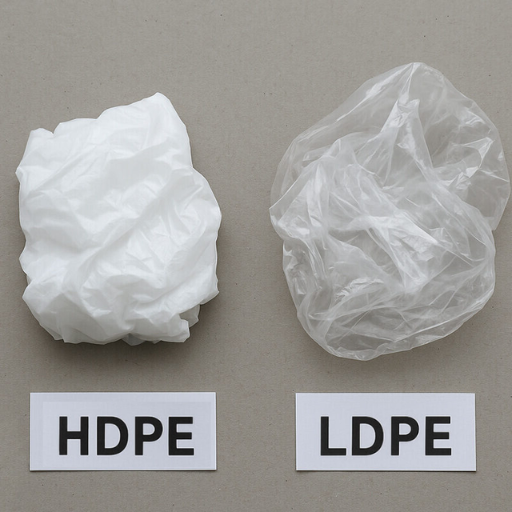
HDPE stands for high-density polyethylene. It is an amorphous polymer that has been obtained through polymerization of ethylene. HDPE does not have branches along its molecular structure. This enables the polymer chains to pack to each other in this tight fashion to give HDPE its high rigidity, good strength, and relatively higher density range of 0.941-0.965 g/cm³.
Key Properties of HDPE
HDPE stands out for characteristics that are highly suitable for several demanding applications, including:
- High tensile strength: HDPE typically has a tensile strength of 30 to 35 MPa, making it one of the stronger polyolefins.
- Excellent chemical resistance: Withstands acids, bases, and organic solvents across a wide pH range
- Low moisture absorption: Less than 0.01% of water absorption, making it crucial for food and medical applications
- Good temperature performance: Maintains its properties [from -50°C to 110°C] in continuous use
- Stiffness and rigidity: With a high E-modulus, loads can be carried along with posts or in such cases.
- UV resistance: Will do well in outdoor applications, given the right stabilizers.
Common HDPE Applications
When we talk about a good combination of rigidity and toughness, manufacturers have recurrently chosen HDPE. Common applications include:
- Rigid containers: Milk jugs being contained in them, detergent bottles, industrial drums
- Pipe systems: Municipal water supply, gas distribution, agricultural irrigation
- Industrial packaging: Crates, pallets, bulk containers
- Automotive components: Fuel tanks, reservoirs, structural liners
- Construction materials: Geomembranes, decking, weather barrier
HDPE Processing Characteristics
HDPE processes well under conditions of injection molding, extrusion, and blow molding. Melt temperature typically ranges from 180°C to 260°C. Its high melt strength supports large-part blow molding, yet the high viscosity requires special attention to mold design. Without proper design, thin-walled parts show flow lines and warpage.
Need help selecting the right HDPE grade for your application? Our materials engineers analyze your specifications and recommend pellets that match your exact processing requirements.
What Is LDPE?
Low-density polyethylene (LDPE) C₂H₄ has the same chemical formula as in HDPE. However, the molecular structure differs significantly, as LDPE has enormous long-chain branching. As a result, the branches consist of preventing the polymer chains from dying.
Ultimately, it produces a density range of 0.910-0.940 g/cm³, thereby creating flexibility for LDPE.
Key Properties of LDPE
Extremely flexible with very good elongation: Might be stretched quite a lot until it breaks, the main reason for extensive usage in film applications.
- Good toughness: Saps enough energy without fracture; even at low temp
- Very clear: High grades available for applications of packing where the visibility of the product matters
- Very low density: Lower weight, dimensional to HDPE; relates with huge savings in shipment for film goods
- Very good electrical insulation: The dielectric properties make it highly suitable for coatings of cables and wires
- Low fusion point: Normally around 105°C to 115°C, thus allowing less processing temperature
Common LDPE Applications
LDPE dominates applications where flexibility and conformability are essential:
- Flexible films: Stretch wrap, shrink film, and agricultural greenhouse film
- Packaging: Plastic bags, squeezable bottles, and food wrap
- Coatings and liners: Protective layers for paper, cardboard, and textiles
- Medical devices: Disposable tubing, IV bags, and sterile packaging
- Electrical insulation: Cable jackets and wire coatings
LDPE Processing Characteristics
The three main ways for extrusion are plastic to blown film, plastic to cast film, and plastic to undergo a form of plastic injection into a particular mold. The polymer has a lower melting point, cutting down the energy costs. It can flow easily even into dramatically shaped matrices. The only hindrances are that it doesn’t really material hardens and stinks to requirements. Wherever DLPE material is usually molded in automated lines designed for somewhat rigid polymeric materials will usually experience some difficulty fitting LDPE parts.
Marcus Okafor opened his flexible packaging line in Lagos in the year 2003. He performed his selection on the basis of price only, which pointed to the possibility of his high LDPE. His films extruded into tough sheets which instead of deforming, broke up during the process of roll-up.
Upon switching to LDPE, his failure rate dropped from 22% to below 3% by mass. It was slightly more expensive kilogram. But the total output greatly increased. His cost per finished roll decreased by 19%. To summarize, species recognition of material properties in terms of the application results in savings high enough to offset small variations in chip prices.
HDPE vs LDPE: Head-to-Head Comparison
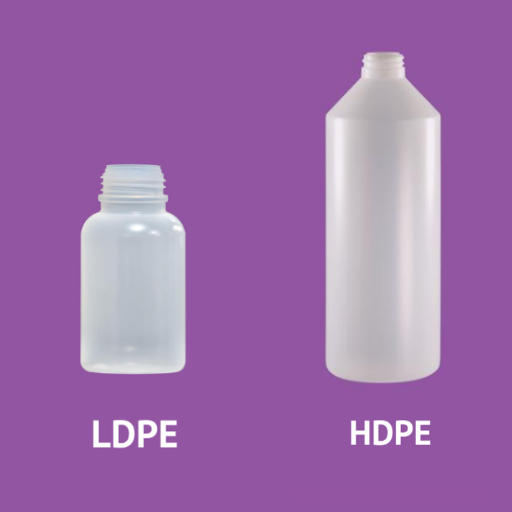
It is intriguing to unravel the differences between HDPE and LDPE to assess these affects of performance in use. Comparing these differences explains how the decision-making process in manufacturing is often undertaken.
Property Comparison Table
|
Property |
HDPE |
LDPE |
Better Choice |
|---|---|---|---|
|
Density |
0.941 to 0.965 g/cm³ |
0.910 to 0.940 g/cm³ |
Depends on weight requirements |
|
Tensile Strength |
30 to 35 MPa |
8 to 10 MPa |
HDPE |
|
Elongation at Break |
500 to 1,000% |
400 to 800% |
LDPE for flexibility |
|
Flexural Modulus |
1.0 to 1.4 GPa |
0.15 to 0.25 GPa |
HDPE for rigidity |
|
Melting Point |
130°C to 137°C |
105°C to 115°C |
Depends on temperature exposure |
|
Chemical Resistance |
Excellent |
Good |
HDPE |
|
Moisture Barrier |
Excellent |
Good |
HDPE |
|
Impact Resistance |
Good |
Excellent |
LDPE |
|
Clarity |
Translucent to opaque |
Transparent to translucent |
LDPE |
|
Typical Cost |
Lower per kg for rigid grades |
Slightly higher for film grades |
HDPE for rigid apps |
Strength and Durability
HDPE blessedly wins tensile strength over raw materials by a considerable amount. Its category of strength ranging between 30 and 35MPa qualifies it for uses wherein it is exposed to loading like crates, tubes, and structural components. LDPE, with an 8-10 MPa range, cannot handle the same mechanical strains.
However, LDPE enjoys better impact resistance and thus is superior for flexible applications. Therefore, if a loaded HDPE crate falls on concrete, it is likely to be cracked, while LDPE specifically designed to absorb the impact, not cause such damage, would be merely dented and subsequently regained its shape. The issue of durability depends solely on whether an application would require rigid or flexible performance.
Chemical and Temperature Resistance
Both materials provide substantial resistance to chemicals with HDPE demonstrating much better capability against aggressive substances. HDPE is practically irreplaceable under the aggressive circumstances of concentrated acids, bases, and organic solvents that would eventually crack the LDPE. As such, it goes without saying that HDPE suits chemical containers engineered for use against possibly harmful substances.
The temperature limit has been determined to be 110°C MPDS for use in application (HDPE). Besides, the material can be used in environments of continuous above 110°. As stated above, a major disadvantage of LDPE is the melting in the range of 80°C. Due to this, HDPE ensures great benefit for hot-fill applications against local heat sources, thereby providing extended grave safety measures.
Cost Considerations
Concerning the HDPE variety of commercial plastics that offer high-grade performance, certain consumptions are larger-than-life at different times. On the other hand, LLDPE films are available in grades of very low densities, like the HDPE in question. So, the cast analyses of the comparison shall engage:
- With energy matters: LDPE has low melting temperatures for energy savings.
- Requirement of higher yield: The material selected heavily influences the defect rates.
- Weights of parts: Less density in case of LDPE is equal to lighter alternatives from the point of view of equal volumes.
- Wear and tear of toolings: Some HDPEs have an abrasive filler that heightens the costs of the mold maintenance.
Ready to compare HDPE and LDPE pricing for your specific volume and grade requirements? Request a detailed quote and our team will provide options tailored to your production schedule.
Recyclability and Sustainability
Both HDPE and LDPE are recyclable thermoplastics. HDPE is identified with a resin ID code “2” while LDPE ignites with a code “4”.
HDPE exhibits higher recycling rates on a broad scale, counting its increased flexural modulus and enhanced ability to be collected and separated easily. One of the largest drawbacks in recycling LDPE film, on the other hand, mainly results from extraneous material entering the recycle stream.
Many manufacturing concerns are now setting targets as regards recyclate content. Post-consumer recycled HDPE is plentifully available for non-food applications. Post-consumer recycled LDPE is also available, but in very limited quantity. HDPE has now emerged as the preferred HDPE for products derived from the sustainability-driven category.
How to Choose: HDPE or LDPE?
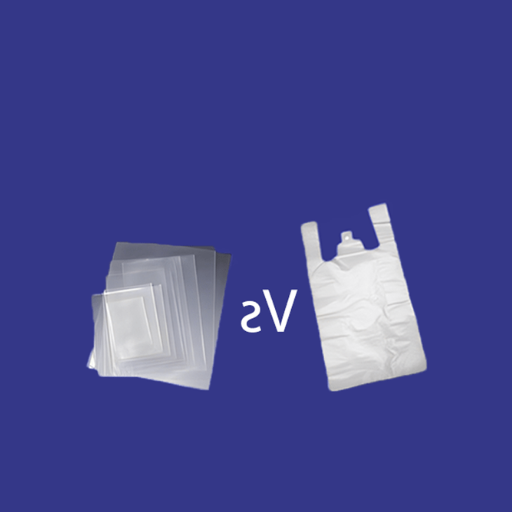
Five key criteria can provide you with a framework through which one can rank LDPE and HDPE side-by-side for use in PE films. The group has gone far into simplifying the decision based simply upon feel and intuition.
The Five-Factor Decision Framework
1. Mechanical Requirements
Instead used to support weight, maintain shape under load, or resist the deformation of objects; go for the HDPE. If the objective is to bend space, stretch, absorb impact, conform to irregular shapes; choose the LDPE.
2. Environmental Exposure
Will the product face chemicals, UV radiation, or high temperatures? HDPE gives a broader resistance. Will it face repeated flexing, folding, or low-temperature impact? LDPE performs better.
3. Processing Method
Are you running injection molding for rigid parts, extruding pipes, or blow molding containers? HDPE fits these methods. Do you want to produce film, sheet, or flexible extrusions? LDPE offers advantages for any such process.
4. Regulatory Requirements
Food applications will work for either with the correct certification. Medical applications usually require certain LDPE in the specific grades due to flexibility. Industrial chemical containment always requires HDPE.
5. Total Cost Target
Regulations must stipulate that all polyolefins do not emit heavy metals when subject to acidic wet and dry leachants.
When to Choose HDPE
Select HDPE when your application requires:
- Rigid structural integrity
- High chemical resistance
- Temperature exposure above 80°C
- Long-term durability in outdoor environments
- Cost efficiency for thick-walled or heavy parts
- Easy recycling and post-consumer content integration
When to Choose LDPE
Select LDPE when your application requires:
- Flexibility and conformability
- High impact absorption
- Transparent or crystal-clear appearance
- Lower processing temperatures for energy savings
- Film, sheet, or coating applications
- Squeeze or conformable packaging designs
In a Dongguan plant for medical devices, HDPE was suggested by the engineering department for even IV connectors housing. The force was needed. To make a cheaper purchase, the procurement team bought the lower density of the same HDPE grade though not consulting the engineering department.
Autoclaving under a sterilizing 121°C, this deformed the connectors, which started to leak. The grade had its melting point at 128°C cooled very close to sterilization temperatures. Once the switch was made over to high-molecular-weight HDPE, which has a 135°C melting point, the problem disappeared. The total cost incurred was $12,000, out of which $6000 was wasted on injection-molded pieces. Prior to and on every ordered occasion, temperature margins are till now henceforward validated by the team.
Industry-Specific Application Guide
Different industries favor one polyethylene over the other based on unique operational demands.
Packaging Industry
Next to such industries that consume the most polyethylene worldwide, the packaging trade tops the list. Rigid packaging is king in HDPE. Think milk jugs, juice containers, detergent bottles, and personal care products. Its structural strength permits dense-wall designs. This is how manufacturers have minimized material amounts rather than shape strength.
LDPE covers flexible packaging. It provides adhesion to film, such as stretch film, shrink film, coated film, bags, and pouches. It is fairly translucent and visually appealing at store shelves. Its sealability efficiently closes under heat-sealing. The combination of packaging uses HDPE structures with LDPE film liners.
Automotive Components
HDPE material is highly utilized in automotive sectors. Fuel tanks, washer fluid reservoirs, air ducts, underbody shields all require, and heavily rely on, the rigidity, chemical resistance, and temperature performance of HDPE. Some interior trim pieces use LDPE for soft-touch surfaces, but HDPE handles the structural loads.
Construction and Infrastructure
In construction, HDPE rules. HDPE geomembranes in the landfill liner, pipes for water and gas distribution, and decking materials all use these materials for their durability and chemical resistance. The HDPE tube system in buried applications offers the intended life span of more than 50 years.
In the construction industry, LDPE is used as vapor barrier materials, temporary protective films; and coverings for insulation. Basically leveraging the fact of its flexibility and moisture resistance in these applications than strength per se.
Medical Devices
Medical applications are divided along the lines of sterilization versus flexibility requirements. HDPE is used for stiff containers, instrument trays, and parts to be gamma or autoclave-sterilized. On the other hand, LDPE is the preferred material where flexibility is required. For example, tubing, IV bags, specimen collection containers, and sterile-packaging films.
It’s not just a matter of whether HDPE or LDPE is chosen for medical-grade applications. The specific material grade and adherence to ISO 10993 biocompatibility standards are vital for such applications.
Consumer Goods
According to user interaction, consumer product designers choose. HDPE is the stuff from which rigid toys, storage containers for food items, and generic household furnishings are made. LDPE is for making squeezable bottles, itsy-bitsy flexible lids, and soft-grips; many products use them both in a multi-component design.
Sourcing HDPE and LDPE: What Procurement Teams Should Verify
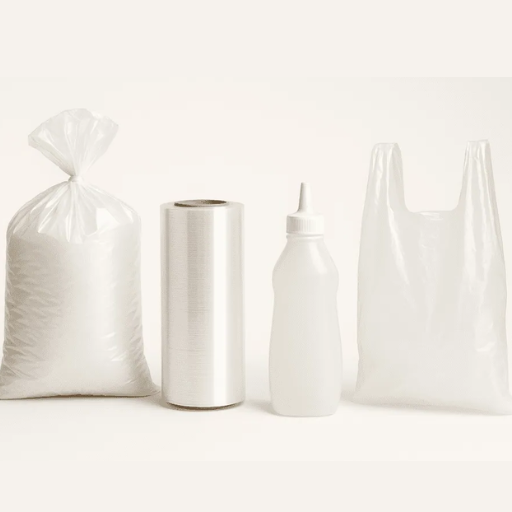
It all boils down to choosing the right material. Above it comes choosing the right vendor. Under all circumstances, it is always quite off to have resin quality not right. This is why there should be an agreement on the purchasing terms to prevent the supplier from ship shifting.
Require These Quality Certifications
Reputable suppliers provide documentation for every batch. Request:
- Material data sheets with certified property values, not typical ranges
- RoHS compliance certificates for electronics and consumer goods applications
- FDA or EU food contact compliance for packaging and food service items
- ISO 9001 certification from the supplier’s quality management system
- Batch test reports showing actual melt flow index, density, and tensile strength measurements
Verify Batch Consistency
Ask suppliers how they control batch-to-batch variation. Reliable suppliers maintain:
- Tight melt flow index tolerances, typically within 10% of nominal value
- Density specifications within 0.003 g/cm³ of target
- Color consistency measured by Delta E values below 2.0 for natural grades
- Documented change control procedures for formulation adjustments
Evaluate Supply Chain Reliability
Production stops cost more than resin price differences. Assess suppliers on:
- Inventory depth: Do they stock your grades or order on demand?
- Lead time consistency: Can they commit to and meet your delivery schedule?
- Order flexibility: Will they handle split shipments or adjusted volumes?
- Communication: Do they notify you proactively about delays or specification changes?
Understand Pricing Factors
Polyethylene prices track crude oil and ethylene feedstock markets. However, your landed cost depends on more than commodity pricing. Clarify:
- Whether quotes include delivery or exclude freight
- Minimum order quantities and volume discount tiers
- Packaging options: 25 kg bags, bulk boxes, or silo truck delivery
- Payment terms and any currency fluctuation provisions
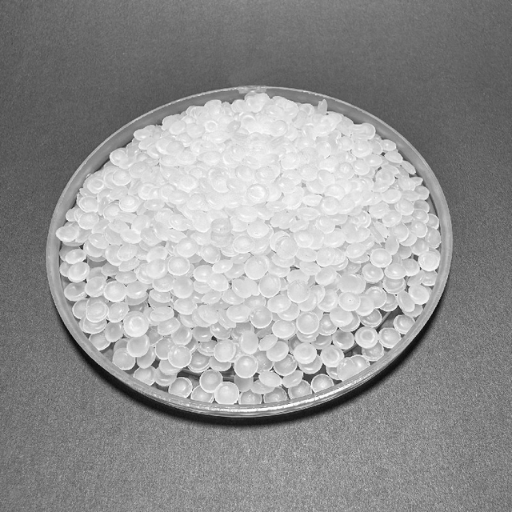
Looking for a reliable polyethylene supplier with transparent pricing and consistent batch quality? Contact our procurement team for competitive quotes on HDPE and LDPE pellets delivered to your production schedule.
Conclusion
The decision of HDPE against LDPE does not necessitate a degree in material sciences. What you need is a clear understanding of the mechanical, thermal, and chemical requirements of the application. HDPE offers rigidity, strength, and resistance to chemicals for structural and durable applications. LDPE provides flexibility, impact energy absorption, as well as benefits in process efficiency in film and conformable products.
Remember five points to look at while pondering the decision: mechanical requirements, environmental exposure, processing method, regulatory requirements, and cost. Then, compare our side-by-side property profiles and the right decision should become crystal clear.
Here are some of the key takeaways:
- HDPE provides higher tensile strength, rigidity, and temperature resistance for structural applications
- LDPE allows for improved flexibility, impact resistance, and clarity for film and packaging
- Choose the right material because choosing the wrong one costs you much more than price difference in the resin through defects and delays.”
- Verify all the credentials and suitability of the supplier before placing bulk orders.
- The two materials recycle well, with various post-consumer recycled constituents available presently for HDPE.
The material dictates the manufacturing aspect. Quality material from a reliable supplier enables manufacturing to happen uninterrupted. For your requirement for HDPE rigid components or LDPE flexible applicative uses, we supply specification grade polyethylene pellets, with the necessary batch paperwork and technical assistance, thus not falling short of the manufacturing commitments.
Request your sample batch today. Our engineering team will help you validate material selection before you commit to production volume.