In March 2026, Li Wei, a procurement director at a Shanghai-based automotive parts manufacturer, faced a decision that would reshape his entire materials budget. Virgin polypropylene resin had jumped 30% in six weeks as oil crossed $115 per barrel. His sustainability team demanded recycled content to meet new OEM scorecards.
But his production engineers warned that recycled pellets might cause warping in the dashboard trim components they supplied to European automakers. Li Wei needed a clear framework to compare virgin vs recycled plastic pellets across cost, performance, and compliance. He was not alone.
Manufacturing procurement teams worldwide are caught in the same tension. The EU Packaging and Packaging Waste Regulation (PPWR) now mandates minimum recycled content. Carbon accounting under the Corporate Sustainability Reporting Directive (CSRD) makes every kilogram of virgin resin a liability on balance sheets. Yet production managers still worry about batch consistency, mechanical strength, and defect rates when switching to recycled feedstock.
This article delivers the data-driven comparison those teams need. You will learn the real differences in cost, tensile strength, and thermal performance between virgin and recycled plastic pellets. You will see exactly which applications demand virgin material, which can run on recycled, and how blending both delivers the best outcome for most manufacturers. You will also get a procurement checklist to evaluate suppliers with confidence.
Want to see how specific pellet grades perform in your application? Contact our engineering team for material specifications and sample requests →
What Are Virgin and Recycled Plastic Pellets?
Virgin Plastic Pellets
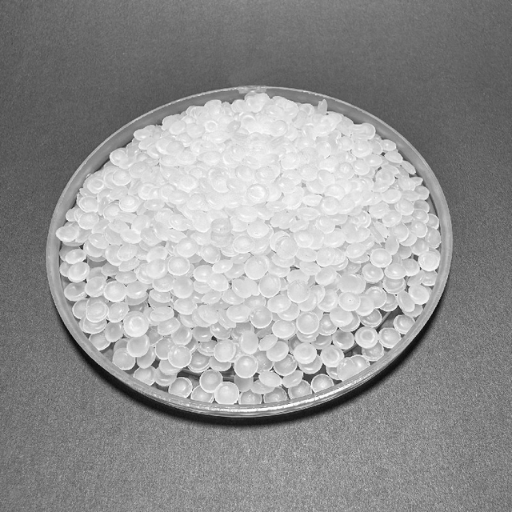
Virgin plastic pellets are produced directly from petrochemical feedstocks such as crude oil, natural gas, or naphtha. These pellets have never been molded, processed, or used in a finished product. Their polymer chains remain fully intact, delivering predictable melt flow, consistent color, and uniform mechanical properties batch after batch.
For manufacturers, virgin pellets offer two non-negotiable advantages. First, they meet FDA and EU food-contact standards by default, making them essential for medical devices, pharmaceutical packaging, and food-grade containers. Second, their molecular consistency means injection molding parameters stay stable across production runs, reducing defect rates and downtime.
Recycled Plastic Pellets
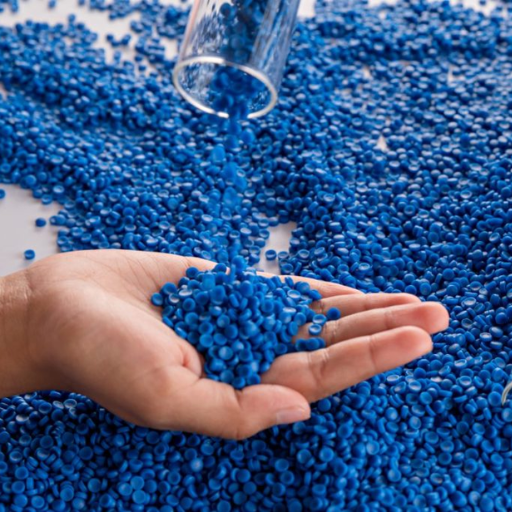
Recycled plastic pellets are manufactured from post-consumer (PCR) or post-industrial (PIR) plastic waste. The mechanical recycling process involves collection, sorting by resin type, washing to remove labels and adhesives, shredding into flakes, drying, melting and extrusion, filtration, and finally pelletizing into uniform granules.
The quality of recycled pellets depends heavily on feedstock purity and processing rigor. Post-industrial recycled pellets, derived from clean manufacturing scrap of known origin, typically offer consistency approaching virgin-grade material. Post-consumer recycled pellets, sourced from used bottles and packaging, carry higher variability in color, odor, and contamination risk.
At Suzhou Yifuhui, we classify recycled pellets by their source stream and certification level. This transparency helps buyers match the right grade to their application rather than treating all recycled material as a single commodity. If you want a deeper breakdown of each resin family, our guide to the Types of Recycled Plastic Pellets: Complete Guide to rPET, rHDPE, rPP & More explains how rPET, rHDPE, rPP, and other grades differ in properties and typical uses.
Side-by-Side Comparison: Virgin vs Recycled Plastic Pellets
| Factor | Virgin Plastic Pellets | Recycled Plastic Pellets |
|---|---|---|
| Raw material | Petrochemicals (oil, gas) | Post-consumer or post-industrial plastic waste |
| Typical cost | Higher; tied to oil volatility | 20-50% lower; more price stable |
| Tensile strength | Baseline (100%) | 85-95% of virgin |
| Impact resistance | Baseline (100%) | 75-85% of virgin |
| Heat deflection | Baseline (100%) | ~93% of virgin |
| Color consistency | High; predictable batch-to-batch | Variable; often darker or mixed |
| Energy to produce | Baseline | 75-88% less energy |
| CO2 emissions | Baseline | 58-79% lower |
| Food-contact ready | Yes, by default | Only with super-clean certification |
| Best for | Medical, food, structural automotive | Packaging, construction, non-structural parts |
Data sources: APR LCA study; IMTEC Mould 2026 Automotive Benchmark
Cost Analysis
Virgin resin pricing tracks crude oil markets with painful precision. When Brent crude spiked above $115 per barrel in early 2026, European virgin PP and HDPE prices surged approximately 30% within one quarter. Procurement teams with annual contracts suddenly faced budget overruns and supplier surcharges.
Recycled pellet pricing operates on a different curve. While collection and sorting costs create a floor, recycled material is largely decoupled from oil volatility. In 2026, recycled pellets typically trade 20-50% below virgin equivalents for general industrial grades. However, food-grade and super-clean recycled pellets can command premiums that match or exceed virgin pricing due to intensive decontamination processing.
The total cost equation has shifted. Under the EU plastic levy framework, non-recycled packaging incurs penalties around €0.80 per kilogram. For a manufacturer consuming 500 tonnes annually, that levy adds €400,000 to the virgin resin bill before a single pellet reaches the injection molding machine. Recycled content eliminates that levy while simultaneously reducing Scope 3 emissions for CSRD reporting.
Mechanical and Thermal Performance
The 2026 IMTEC Mould Automotive Mechanical Performance Benchmark provides the clearest picture of how recycled resins perform against virgin standards. High-quality recycled ABS retains approximately 85% of virgin tensile strength. Recycled PP with 30% glass fiber retention sits closer to 90%. Heat deflection temperature shows the smallest gap, with recycled PP maintaining roughly 93% of virgin performance.
The real production challenge is not average strength. It is batch-to-batch consistency. Virgin pellets from a reputable supplier deliver melt flow index (MFI) variation of less than ±5%. Recycled pellets from less rigorous sources can swing ±15-20%, causing short shots, flash, or dimensional drift in precision components.
For non-critical applications such as drainage pipes, pallets, and outdoor decking, that variability is manageable. For automotive structural supports or medical device housings, it is unacceptable.
Purity and Regulatory Compliance
Virgin pellets are inherently compliant with FDA food-contact notifications and EU Regulation 10/2011 for plastic materials in contact with food. No additional testing or challenge studies are required.
Recycled pellets enter a more complex regulatory landscape. General industrial recycled grades are suitable for construction, textiles, and non-food packaging. Food-contact recycled pellets must undergo super-clean mechanical recycling or advanced chemical recycling, followed by migration testing and EFSA compliance documentation. The certification burden adds 100% or more to the material cost, which is why most food packaging still relies on virgin or blends with limited recycled content.
When to Choose Virgin Plastic Pellets
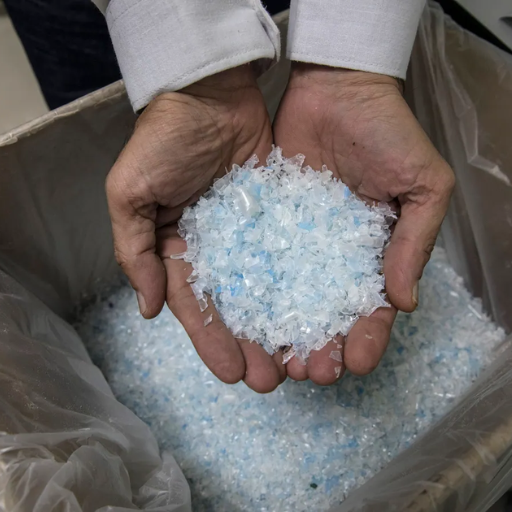
Virgin material remains the only responsible choice for applications where purity, traceability, and peak performance are mandatory.
Medical devices and pharmaceutical packaging. Syringes, IV components, and surgical trays demand absolute biocompatibility and sterilization stability. Virgin polycarbonate, ABS, and PP pellets meet ISO 10993 standards without question.
Food-contact applications. Water bottles, clear food containers, and beverage caps require migration testing compliance that only virgin or super-clean certified recycled pellets can satisfy. The regulatory risk of using uncertified recycled material far outweighs any cost savings.
High-stress automotive structural components. Under-the-hood parts such as intake manifolds, battery housings, and structural brackets must endure heat, vibration, and impact across a 15-year service life. Virgin PA66, PPS, and glass-filled PP deliver the consistent fatigue resistance these applications demand.
High-precision electronics. Connectors, switch housings, and circuit board enclosures require tight dimensional tolerances and stable dielectric properties. Virgin materials provide the batch uniformity that keeps Cpk values within specification.
Applications requiring exact color matching or optical clarity. Virgin pellets accept colorants predictably. Recycled pellets often carry a gray or yellow base tone that makes achieving brand-specific colors difficult without heavy pigment loading.
When to Choose Recycled Plastic Pellets
Recycled pellets shine in applications where performance requirements are moderate, sustainability targets are firm, and cost control matters. For a closer look at how these materials perform sector by sector, see our Recycled Plastic Pellets Applications: Industry-by-Industry Manufacturing Guide.
General rigid packaging. Crates, bins, and non-food containers perform reliably with 100% recycled HDPE or PP. The material is durable, chemical-resistant, and perfectly suited for logistics and storage applications.
Construction materials. Decking boards, drainage pipes, geomembranes, and fencing profiles use recycled HDPE and mixed-polymer blends with excellent long-term weathering performance. These thick-walled products tolerate the minor inconsistencies that would doom a thin-walled medical component.
Non-structural automotive interior components. Dashboard trim, door panels, seat backs, and carpet backing are ideal candidates for recycled PP and ABS. OEM sustainability scorecards increasingly require 20-30% recycled content in these visible but non-load-bearing parts.
Industrial containers, pallets, and dunnage. These workhorse products need impact resistance and low cost more than optical perfection. Recycled pellets deliver both.
ESG-focused consumer goods. Brands targeting environmentally conscious consumers increasingly specify recycled content for housings, handles, and enclosures where performance requirements are forgiving.
The Hybrid Approach: Blending Virgin and Recycled Pellets
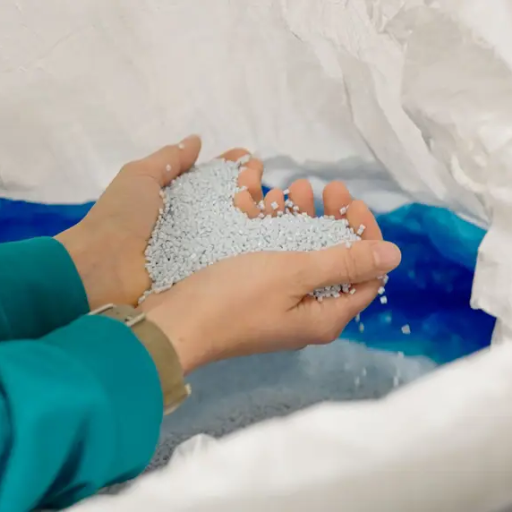
The most common strategy among experienced manufacturers in 2026 is not choosing one material over the other. It is blending them to capture cost savings and sustainability benefits without sacrificing critical performance.
A typical automotive interior component might use a 70/30 virgin-to-recycled PP blend. The virgin portion ensures surface finish quality, color stability, and heat resistance. The recycled portion cuts raw material costs by 15-20% and satisfies OEM sustainability quotas.
For pipe manufacturing, co-extrusion offers an elegant solution. The outer skin of the pipe uses virgin HDPE for a smooth, glossy surface and consistent color. The inner core uses 100% recycled HDPE for bulk strength at significantly lower cost. The finished product meets all pressure and durability standards while the manufacturer reports substantial recycled content.
Processing blended materials requires minor adjustments. Drying becomes more critical because recycled feedstock often carries higher moisture content. Mold temperature profiles may need slight elevation to accommodate broader MFI ranges. Some processors add chain extenders to restore molecular weight and improve impact strength in heavily recycled blends.
The key is defining your application criticality. For cosmetic surfaces and structural loads, keep virgin content above 70%. For hidden, thick-walled, or non-structural parts, ratios of 50/50 or even 30/70 become viable with the right supplier quality controls.
Ready to test blended formulations for your production line? Request a sample batch and technical data sheet from our team →
2026 Regulatory and Market Considerations
The regulatory environment is rewriting the virgin vs recycled calculation faster than most procurement teams expected.
The EU Packaging and Packaging Waste Regulation (PPWR), fully effective August 2026, mandates minimum recycled content percentages across multiple packaging categories. Non-compliance does not just risk fines. It risks market access. Manufacturers exporting to the EU must now document recycled content percentages in their supply chain or face the €0.80 per kilogram plastic levy on non-recycled material.
The UK Plastic Tax already levies £210 per tonne on packaging with less than 30% recycled content. Similar frameworks are expanding across Asia-Pacific markets. For procurement teams, this means virgin resin is no longer just a materials cost. It is a tax liability.
CSRD reporting adds another layer. Large enterprises must now disclose Scope 3 emissions, including purchased goods and services. Virgin plastic carries a carbon footprint roughly 3-5 times higher than mechanically recycled equivalents. Switching even a portion of feedstock to recycled pellets creates measurable, reportable emissions reductions that satisfy investor and regulatory scrutiny.
Brand owner pressure amplifies the trend. Major automotive OEMs, consumer electronics brands, and retailers now embed recycled content requirements into supplier contracts. The question for procurement is no longer whether to use recycled pellets, but how much and which grade.
How to Evaluate Suppliers: A Procurement Checklist
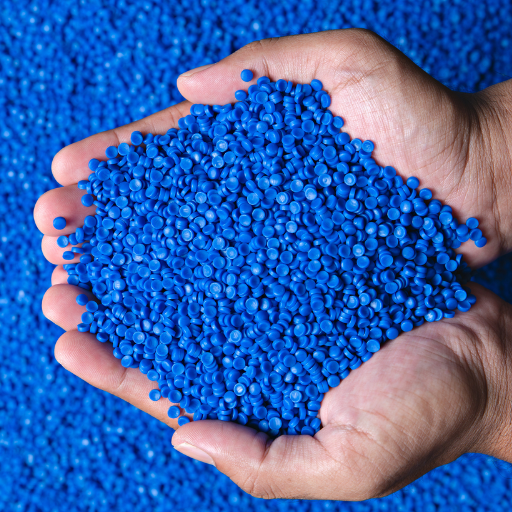
Choosing the right partner is just as important as choosing the right material. If you want a step-by-step sourcing framework, our guide on Recycled Plastic Pellets Suppliers: How to Source Reliable Feedstock in 2026 walks through vetting, contracts, and quality assurance in detail.
For Virgin Pellet Suppliers
- Request a Certificate of Analysis (COA) for every lot. The COA should list MFI, density, tensile strength, impact resistance, and heat deflection temperature with test method references.
- Verify batch consistency guarantees. Reputable suppliers maintain MFI variation within ±5% lot-to-lot. Ask for historical data across the last 12 months.
- Confirm regulatory documentation. For food-contact or medical applications, demand FDA master file numbers, EU 10/2011 compliance letters, or ISO 10993 biocompatibility summaries.
- Review technical data sheet accuracy. Cross-reference published specifications against third-party test reports.
For Recycled Pellet Suppliers
- Demand feedstock traceability. Know whether the material is post-consumer (PCR) or post-industrial (PIR). PIR generally offers cleaner, more consistent feedstock.
- Request contamination screening protocols. Ask about sorting technology, melt filtration mesh size, and visual inspection standards.
- Set MFI tolerance windows. Specify that MFI must fall within ±10% of the target value. Wider variation signals inadequate process control.
- Review color consistency standards. Establish acceptable Delta E values and request retained samples from previous lots for visual comparison.
- Verify certification documentation. For sustainability claims, request ISO 14021 environmental labels, REACH compliance statements, and chain-of-custody records.
Red Flags to Avoid
- Suppliers who cannot provide COAs or test reports
- Unverified claims of food-grade compliance without challenge testing documentation
- MFI variation exceeding ±10% across consecutive lots
- Pellets with visible contamination, odor, or moisture issues
- Pricing that seems too low relative to market benchmarks
At Suzhou Yifuhui, we provide full COAs, batch traceability, and technical support for every pellet grade we supply. Our quality control process tests MFI, moisture content, and visual consistency on every production lot before release.
Conclusion
The choice between virgin and recycled plastic pellets is not about universal superiority. It is about application suitability, total cost of ownership, and regulatory alignment.
Virgin pellets remain essential for medical devices, food-contact packaging, high-stress automotive parts, and precision electronics where purity and consistency cannot be compromised. Recycled pellets deliver compelling cost savings, carbon reductions, and regulatory compliance for construction, general packaging, non-structural automotive interiors, and industrial containers.
For most manufacturers in 2026, the optimal strategy is a blended approach. A 70/30 or 80/20 virgin-to-recycled ratio balances performance with sustainability targets. Co-extrusion and targeted grade selection extend those benefits even further.
The manufacturers who thrive will be those who stop treating this as an either/or decision. They treat it as a procurement engineering problem instead.
Define your criticality requirements. Model your total cost including levies and carbon accounting. Vet your suppliers against clear tolerance standards. Then choose the material mix that keeps your production lines running, your customers satisfied, and your compliance reports clean. To learn more about Recycled Plastic Pellets, please click to view our accompanying guide: Recycled Plastic Pellets: Complete Sourcing & Application Guide for Manufacturers
Need help selecting the right pellet grade for your application? Contact Suzhou Yifuhui New Material today for material specifications, blending recommendations, and competitive quotations. Our engineering team responds within 24 hours with data you can act on.