If you have a lone kilogram of raw resin, one kilogram of the wrong PEEK resin would probably have to be more than the average cost of a high-end smartphone. PEEK is priced at between 50 and 200 meaning that mistakes with estimating such a material should not be made. Even just small errors like using the wrong grade or buying from a supplier who is not properly qualified can cause production to be stopped, drive costs of operations to mount into the thousands of dollars, and cause certification to fall by the wayside.
For procurement managers or manufacturing engineers just getting to grips with new spaces in vacuum casting or PEEK plastic molding, it can be really hard to find a broad range of these thermoplastic pellets at decent prices. This guide will tell you about different grades of PEEK pellet, will present some price norms as per diameters, will clarify processing parameters, and will expound on how to identify a prospective supplier. By the time you are through with this post, you will have identified which grade is best suited to your application, what certificates these resins should be able to show upon delivery, and what other booby-traps could really push up costs along one’s planned road to successfully using this great material.
Need a quick quote for your project? Our materials team at Suzhou Yifuhui can match you to the right PEEK grade based on your temperature, chemical, and mechanical requirements. Contact us today for pricing and technical data sheets.
What Are PEEK Plastic Pellets?
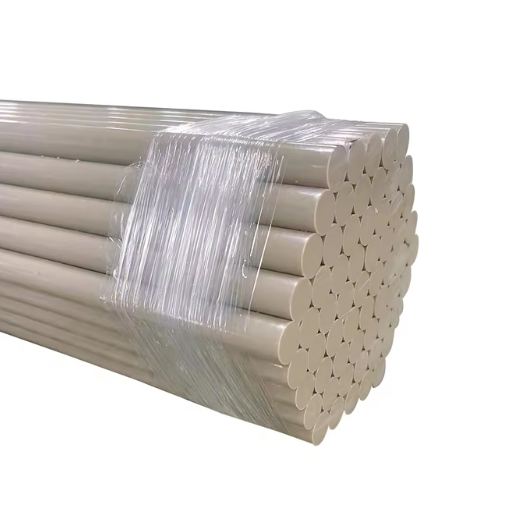
PEEK plastic pellets, or PEEK resin pellets, are solid, cylindrical, or roundish granules of a semi-crystalline thermoplastic in the polyaryletherketone (PAEK) family. Pellets are used as standard feedstocks to give uniformed feed in extruders, injection molding systems, and compression molding presses. Dustiness of pellets causes a problem inside the hopper system.
It is currently being established as one of the highest performing plastics available for use. The mechanical strength is preserved at temperatures where most other plastics start turning soft, if not degrade completely. Continuous service temperatures range up to 260°C with short-time peaks of 300°C. It is resistant to attack from acids, bases, organic solvents, and hydrocarbons. Inherent flame retardancy with a UL94 rating of V-0. It produces less smoke and does not emit harmful gases when burned. Sterilization can be easily carried out repeatedly without any deduction to its original properties.
These characteristics make PEEK a direct metal replacement in aerospace, medical, automotive, and chemical processing environments. For a broader comparison of high-performance materials, see our complete engineering plastics selection guide.
The material was first commercialized in the early 1980s by Imperial Chemical Industries. Today, the global PEEK market exceeds $1.2 billion annually and grows at roughly 6–8% per year, according to MarketsandMarkets industry research. Demand is driven by lightweighting trends in aerospace, the shift toward electric vehicles, and the expansion of implantable medical devices where PEEK’s elastic modulus closely matches human bone.
PEEK Pellets vs. Other High-Performance Plastics
Procurement teams often compare PEEK to PPS, PEI, and polyimide. Each material occupies a different position on the cost-performance spectrum.
|
Material |
Max Continuous Temp |
Tensile Strength |
Relative Cost |
Best For |
|---|---|---|---|---|
|
PEEK |
260°C |
90–100 MPa |
$$$$ |
Extreme heat, chemical resistance, medical implants |
|
PPS |
220°C |
80–90 MPa |
$$ |
High-temperature electrical, chemical exposure |
|
PEI |
170°C |
105 MPa |
$$$ |
Structural parts, dimensional stability, transparency |
|
Polyimide |
300°C+ |
85–95 MPa |
$$$$$ |
Ultra-high temperature, thin films, bearings |
PEEK justifies its premium when your application combines high temperature, mechanical load, and chemical exposure in a single environment. If your part operates below 200°C and does not face aggressive chemicals, PPS or PEI may deliver adequate performance at lower cost. If electrical performance and chemical resistance top your priority list, our PPS plastic resin procurement guide walks through where this lower-cost alternative shines. When you need superior dimensional stability or transparency in structural parts, our PEI Ultem plastic guide breaks down the trade-offs in detail. For buyers comparing high temperature plastic pellets across all polymer families, understanding these trade-offs prevents over-specification. Our ABS plastic pellets procurement guide covers a cost-effective alternative for moderate-temperature applications.
PEEK Pellet Grades and Specifications
Not all PEEK plastic pellets share the same utility – manufacturers compound the base resin with glass fiber, carbon fiber, or specialty fillers to tailor mechanical, thermal, and electrical properties. Utilizing an incorrect grade results in part failures, financial loss, or regulatory rejection. Here is how the different grades differ.
Unfilled (Virgin) PEEK Pellets
In neat PEEK PEEK, the baseline grade is UNC. Highest in regard to toughness, impact strength, and elongation at break out of all PEEK variants, all-round properties; Targeted properties such as electrical insulation make it appropriate for connectors, insulators, and non-reinforced extruded profiles.
Key properties:
- Tensile strength: ~90–100 MPa
- HDT on 1.8 MPA: 152°C
- Elongation at break: 30-50%
- Density: 1.30 g/cm³
Typical market prices on clear PEEK resin are set at 40and90 per kilogram on Chinese generic grades; and 150to150200 per kilogram for premium Western brands including Victrex or Solvay. Medical-grade virgin PEEK carries additional certification costs. These price increments inform on PEEK’s price per kg; ensuring that potential offers are verified.
Best Applications: Seals, bearings, electrical connectors, pump impellers, and handle instruments of medical grade.
Glass-Fiber-Reinforced (GF30) PEEK Pellets
PEEK with GF30 contains 30% short glass fiber by weight. This fiber helps improve tensile modulus, creep resistance, and dimensional stability and hurt the impact resistance and elongation as compared to unfilled grades.
The main attributes are as below:
- Tensile strength: ca. 150-170 MPa
- Heat deflection temperature: 315°C at 1.8 MPa
- Elongation at break: 2–4%
- Density: 1.49 g/cm³
GF30 PEEK pellets are generally priced at around 55to120 per kilogram depending on supplier quality and certification level. Its cost increase compared to virgin PEEK isn’t heavy; nonetheless, the reinforcement in stiffness is significant.
Best applications would be: Structural automotive components, valve bodies, mechanical equipment bodies, and electrical insulators, where maximum levels of stiffness are demanded.
Carbon-Fiber-Reinforced (CF30) PEEK Pellets
Carbon-fiber-reinforced PEEK with 30% carbon weight is known as CF30 PEEK. This compound is deemed the strongest among standard PEEK variants that simultaneously enjoys good thermal conductance -much more than unfilled grades. Its coefficient of thermal expansion is less compared to that of GF30 -lacking the same attribute- because of this weight percentage in carbon fiber reinforcement.
KEY CHARACTERISTICS:
- Tensile strengths are at about 200–230 MPa.
- The heat deflection temperature is 315°C and upwards under 1.8 MPa.
- Elongation at break, 1.5–2.5%.
- Density close to 1.40 g/cm³.
For industrial pellets, the cost for CF30 PEEK ranges from $60 to $150 per kilogram. Special lots certified for aerospace application, boosting confidence due to their full traceability over each batch, sell in the upper range.
It finds good use in applications: the big ones where weight and strength matter, such as aerospace structural brackets, loaded gears and bushings, robotic components, and high-performance automotive under-hood applications.
Medical-Grade PEEK Pellets
Medical-grade PEEK pellets meet biocompatibility standards like USP Class VI and ISO 10993. These standards assure that the material does not evoke adverse biological reactions while exposing tissue and fluids. [23] PEEK’s elastic modulus is close to that of human cortical bone, which helps in mitigating stress shielding in orthopedic implants and in promoting better osseointegration.
There are two categories of medical grades:
- Non-implantable: For surgical instruments, housing for devices, and tubing. Typically in the price range of 80to80to120 per jug.
- Implantable / dental: For spinal fusion cages, dental abutments, and permanent orthopedic implants. These must have full FDA Drug Master File (DMF) support and batch-level traceability. Typically priced anywhere between 1,000to1,000to2,000+ per kilogram.
Best uses: Spinal implants, dental prosthetics, surgical instruments, and medical device components that require sterilization by autoclave or gamma radiation.
Bearing and Wear-Resistant Grades
The PEEK pellets that are modified with PTFE, graphite, or carbon powder have always been seen as highly successful in reducing the friction coefficients and improving the wear resistance of moving parts. Whilst tensile strength is weakened, the wear life of the component is extended.
Ideal for: Guides, thrust washers, wear plates, conveyor wear strips, and pump bearings.
PEEK Pellet Grades at a Glance
|
Grade |
Tensile Strength |
HDT (1.8 MPa) |
Key Advantage |
Price Range (USD/kg) |
|---|---|---|---|---|
|
Unfilled (Virgin) |
90–100 MPa |
152°C |
Toughness, electrical insulation |
40–40–200 |
|
GF30 |
150–170 MPa |
315°C |
Stiffness, dimensional stability |
55–55–220 |
|
CF30 |
200–230 MPa |
315°C+ |
Strength-to-weight, low expansion |
60–60–230 |
|
Medical (Non-Implant) |
90–100 MPa |
152°C |
Biocompatibility, sterilizable |
80–80–120 |
|
Medical (Implantable) |
90–100 MPa |
152°C |
Full regulatory documentation |
1,000–1,000–2,000+ |
Choosing between PEEK grades is really a matter of matching thermal headroom to your operating window. If you are weighing PEEK against other heat-resistant polymers before committing, our high temperature engineering plastics selection guide helps you map each grade to its ideal temperature range. Not sure which grade fits your part? Our engineering team reviews your temperature, load, and chemical exposure requirements and recommends the most cost-effective PEEK grade.
Applications by Industry: Where PEEK Plastic Pellets Deliver Results
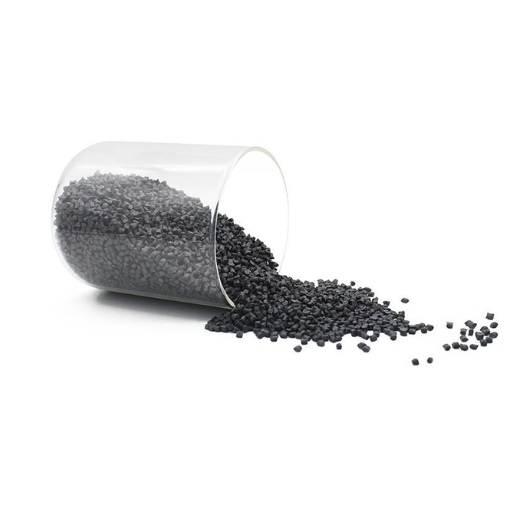
Plastic PEEK pellets are fed into the manufacturing processes for structural parts grafted into six primary industries. In every industry, the material has found acceptance on the strength of its ability to replace metal and decrease weight.
Medicine and Dentistry
PEEK material is supreme in spinal implants. Surgeons place intervertebral fusion cages made from PEEK to provide stress shielding with bone-matching compliance and stimulate the cells in generating bone. Dental laboratories machine PEEK temporary crowns and abutments for their biocompatibility and high-temperature autoclave sterilization at 134°C.
PEEK is molded by medical device factories into carefully designed surgical instrument handles used in surgical and diagnostic set-ups, along with fitting PEEK tube connectors and certain diagnostic equipment housings. The sterilization of PEEK devices is done by gamma radiation, steam, and fine chemicals without any sort of degradation or lessening performance.
PEEK is rarely the only polymer in a medical product, so it pays to understand how it sits alongside the alternatives. If you are building a device material strategy, our engineering plastics for medical devices selection guide covers biocompatibility, sterilization, and regulatory considerations across the full material set.
Regulatory note: Where a medical device does not need to be made from implant-grade materials, this should become immediately apparent to you either way. Otherwise, using implant-grade materials when implant-grade materials are not needed will needlessly waste money. On the contrary, using non-implant materials for an implant can prove to be the wrong decision.
Aerospace
At roughly 1.3 g/cm³, PEEK delivers approximately 50% weight savings compared to aluminum and 75% compared to titanium, as detailed in Aon3D’s material science overview. This matters for aircraft interiors, electrical connectors, ducting, and structural brackets where every gram affects fuel efficiency.
In the aerospace industry, CF30 PEEK pellets are considered as highly critical. The stiffness and fatigue resistance inherent in carbon fiber reinforcement is perfectly suited to loaded brackets and clips, while also eliminating the potential galvanic corrosion problems associated with metal-on-metal interfaces.
When Liang moved the brackets from his aerospace component workshop in Shenzhen from machined aluminum to the perimeters of CF30 PEEK injection-molded materials, the bracket weights dropped 42% per part. He claims that the moldable polymer also cut Machining time from 45 minutes per bracket to a 90-second molding cycle. Over the larger run of ceremonies, additional material expenses were recouped due to lower labor costs and quicker turnarounds.
Automotive
PEEK pellets serve under-hood applications where temperatures exceed 150°C continuously. Typical parts include gearbox components, turbocharger impellers, bearing retainers, and seals. Electric vehicle manufacturers increasingly specify PEEK for high-voltage insulation systems and battery module components because the material resists both heat and electrolyte chemicals. For broader molding guidance, refer to our complete injection molding pellet guide.
GF30 PEEK is the workhorse grade for automotive. It provides the stiffness and heat resistance needed for engine-bay components without the cost premium of carbon-fiber grades.
Electronics and Semiconductor
Fabricating semiconductors must have exceedingly pure materials. PEEK with minimal ionic outgassing and leaching is suitable for this. Virgin PEEK is primarily employed in wafer carriers, ultrapure water tubing, and high-temperature connectors so as not to impart contamination to critical processes.
Another plus is its dielectric resistance, along with established electrical properties over a wide temperature, which makes it good for connectors, insulators, and sensor housings microelectronics.
In the Oil, Gas, and Chemical Processing Secondaires
Downhole drilling equipment faces exposure to high pressures, high temperatures, and corrosive well fluids, which may sometimes include hydrogen sulfide. Metal seals and valves corrode under these conditions. PEEK seals, packers, and valve components are all candidates capable of surviving the polymer’s inertness to the chemicals and inherent seal integrity across wide temperature swings.
High-gearing PEEK is famous for its use in pumps and compressors. Additionally, the low coefficient of friction lessens energy losses, while wear inhibitors extend maintenance intervals.
Processing Guidelines for PEEK Plastic Pellets
PEEK is one of the most difficult thermoplastics to process. The barrel temperature, mold temperature, and drying parameters are very high in the plastic processing spectrum. If these parameters are not correct, you will encounter degradation of PEEK, poor surface finish, and weak weld lines.
Drying Requirements
In general, PEEK pellets need to be dried before processing. When processed, melts lose molecular weight due to water hydrolysis. This leads to associating molecular weight and brittle states.
Suggested drying conditions:
- Temperature: 150°C
- Duration: 3-5 hours at a minimum
- Target moisture content: Below 0.02%.
- Equipment: Desiccant dryer essential, hot air dryers are not sufficient.
Pellets might need longer drying times if they were left exposed to humidity for an extended time. Remember, always measure to determine the moisture content before further processing starts.
Injection Molding Parameters
PEEK requires high barrel and mold temperatures. Standard injection molding machines can process PEEK if they reach the required setpoints and use corrosion-resistant screws and barrels. For detailed material property data, Xometry’s PEEK resource provides an excellent technical overview.
Typical molding parameters:
- Feed zone: 340–360°C
- Compression zone: 360–380°C
- Metering zone: 370–400°C
- Nozzle: 370–390°C
- Mold temperature: 170–200°C
- Injection pressure: 100–150 MPa
- Hold pressure: 50–80 MPa
The temperature of the mold is critical. Running PEEK into a cool mold below supercooling causes low crystallinity, sudden drop hardness, and melt, or surface roughness. Higher temperature promotes proper crystallization to an extent and enhances mechanical properties as much as feasible.
Extrusion and Compression Molding
For extruder processing through the melt extrusion of PEEK pellets, the 400°C-rated treatment barrels and screw designs developed to minimize shear are to be employed. Profiling leaves to rods, plates, tubes, or filaments to be employed in further machining.
By using micro-pellets or fine powder compression molding to mix with large, thick components to be made like those otherwise difficult to injection mold, utilizing micro-pellets for better packing density and uniform filling as opposed to cut sections will have advantages in compression molding.
Exhibiting Responses and Remedial Measures
- Brittleness: Failure to attain proper polymer healing temperature, or polymeric degradation due to hydrolysis on account of moisture. Solution: Mold temperatures must be verified to offer settings for above 170°C while moisture content shall stand no more than 0.02%.
- Poor surface finish: A result of low mold temperature and poor venting. Solution: elevate the mold temperature while verifying the vent operations.
- Weld-line weakness: This results from melt fronts not rejoining at a sufficient temperature. To address this, one may need to boost melt temperature, mold temperature, or adjust gate placement.
Sourcing and Procurement: How to Evaluate a PEEK Pellets Supplier
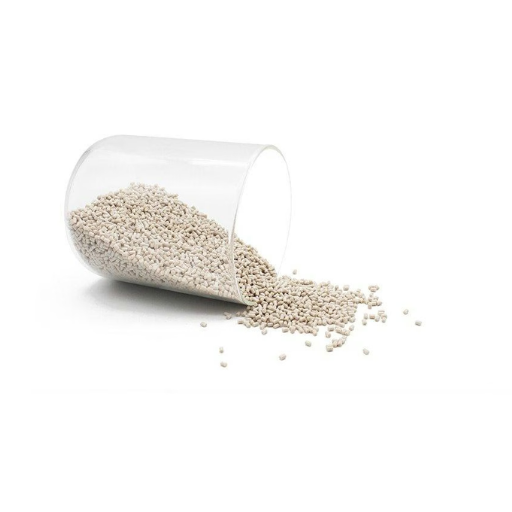
Sourcing PEEK plastic pellets requires more than comparing price lists. Certification documentation, batch consistency, and technical support capabilities separate a reliable PEEK pellets supplier from trading companies that resell mystery material. For a broader supplier evaluation framework, see our plastic resin pellets procurement guide.
Key Supplier Evaluation Criteria
The supplier’s dimensions to be evaluated before the order is placed are:
- Certification Documents: Is the supplier able to provide REACH, RoHS, and UL documentation? Have they got USP Class VI or ISO 10993 test reports in the medical segment? – Are they able to provide a batch trace-ability and material certification to ASTM D6262 for aerospace applications?
- Batch Consistency: Inquire incoming raw material inspection, in-process melt-flow testings, and inspections were done in their outgoing quality control. A consistent size of pellets, moisture content, and MFI, will reduce defects in the molding and production downtime.
- Technical Support: Does the supplier have materials engineers? They will need to assist their customers in material selection; he/she may have to advise his and her client on drying parameters and mold design of molds they could or would not use on the product in question.
- Minimum Order Quantity and Lead-Time Flexibility: Due to the high cost of PEEK, a supplier who stipulates a minimum order for 1000kg will be forcing an overcommitment from the clients for the material in prototype testing. Clients may then want to look for suppliers from whom they can order lesser such amounts.
- Past experiences. For how long has the supplier been dealing with PEEK? This material necessitates a distinctive way of storage and handling. Suppliers who are masters of commodity plastics might be new in the high-temperature materials and could mess up the inventories.
Global vs. Chinese Suppliers
The PEEK trade market stands unsure.
Western elite suppliers-Evonic, Victrex, and Solvay-almost have a choke hold on the aerospace and customer applications. They have extensive regulatory filings, decades of batch data, and global technical support. Their prices are often two to three times the price of Chinese generic equivalents.
Heavyweight Chinese players, such as Zhaoyan Shares, Jilin Joinature, and Jiangsu Junhua, have drastically narrowed the quality gap in the industrial and non-implantable fields. A few are now running 5,000-liter polymerization reactors the same scale as Victrex. Their pricing typically starts 40% to 60% lower than the Western premiums for the unfilled and filled grades.
When Dr. Patel medical device startup in Mumbai needed to source USP Class VI PEEK pellets for a new surgical instrument line, they naturally assumed that the only logical source would be Victrex. Upon investigation of documentation from a certified Chinese producer, an alternative grade came to their qualifying table, which was able to meet all requirements of biocompatibility, and that too at 55% less the cost. The savings were invested in progress with added ISO 13485 certification steps, thus bringing a new product to market a full three months early.
Ready to evaluate PEEK pellet suppliers? Request documentation packages from our team, including technical data sheets, certification summaries, and sample availability. Get started here.
Pricing Benchmarks
|
Grade / Tier |
Chinese Generic |
Western Premium |
|---|---|---|
|
Virgin Unfilled |
40–40–90/kg |
150–150–200/kg |
|
GF30 |
55–55–100/kg |
170–170–220/kg |
|
CF30 |
60–60–140/kg |
180–180–230/kg |
|
Medical Non-Implant |
50–50–95/kg |
120–120–180/kg |
|
Medical Implantable |
N/A or limited |
1,000–1,000–2,000+/kg |
These prices show recent situations prevailing in 2026; therefore, actual figures might vary depending on volume and other considerations such as certification requirements in addition to constantly fluctuating Currency exchange rates. Discounts vary and the company begins giving volume discounts at 500 kg and then with 1,000 kg and up other types of discounts.
Hidden Costs to Watch
- Certification testing: Considering a third-party test can amount to $5,000–$20,000 for biocompatibility or aerospace certifications.
- Custom compounding: This comprises fees for Planck engineering to finalize color matches, custom MFI with supplier engineers, or in-house development of proprietary blends, all of which cost more and take longer.
- Shipping specializations: PEEK is not classified as hazardous material, necessitating expensive shipping methods or expedited shipping on short-notice production runs.
- Equipment: If your plant does not have desiccant dryers capable of running at 150°C, consider either investing in this specialist drying equipment or negotiate a toll-drying agreement.
Conclusion
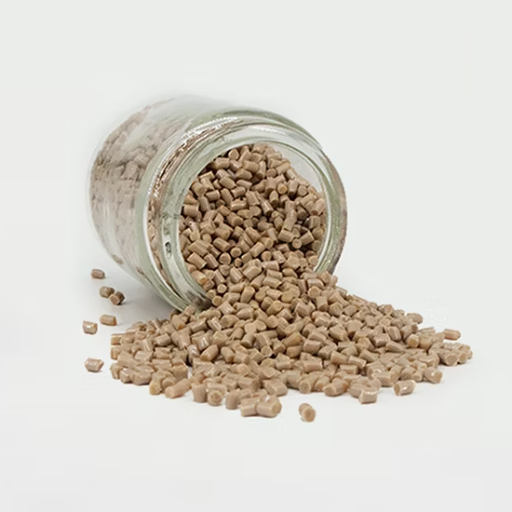
With accent-rating outputs, the PEEK pellets truly serve the best functionality in any complex system for manufacturing. Be that for a virgin PEEK resin pellets and semiconductor purity; a GF30 Compound for heat resistance in the automotive industry; or a material for the medical industry and implantable devices-a grade difference isolates a successful production run from a costly rework. PEEK in the right grade replaces metal for weight loss, corrosion prevention, and injection molding on complicated geometries, from implantable medical devices to aerospace structural brackets.
Success with PEEK reduces down greatly to four things: You must dial in the best grade for your temperature, mechanical, and chemical requirements. It must give you all the certifications your market allows. Dry your pellets adequately ahead of processing, and go with a producer who has specifically addressed high-performance resins and not simply commodity plastics.
At Suzhou Yifuhui New Material Co., Ltd, we provide virgin, glass-filled, and carbon-fiber-reinforced PEEK pellets and a full suite of engineering resins including PPS, PEI, PC, and PFA. Our quality-control department tests for melt flow, density, and mechanical property consistency on every appropriated form/lot received from the compounder. We offer very attractive minimum order quantities for qualification runs with very competitive pricing for large-volume productions.
Ready to source PEEK plastic pellets for your next project? Contact our materials team today for a tailored quote, technical data sheets, and free sample evaluation.