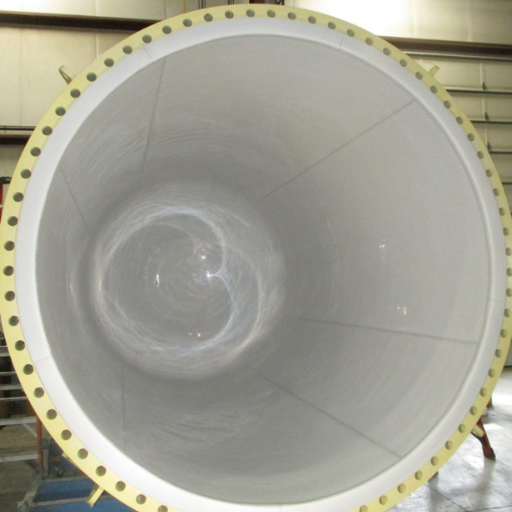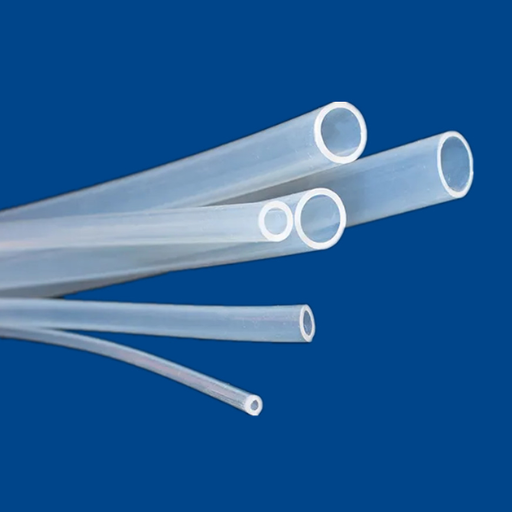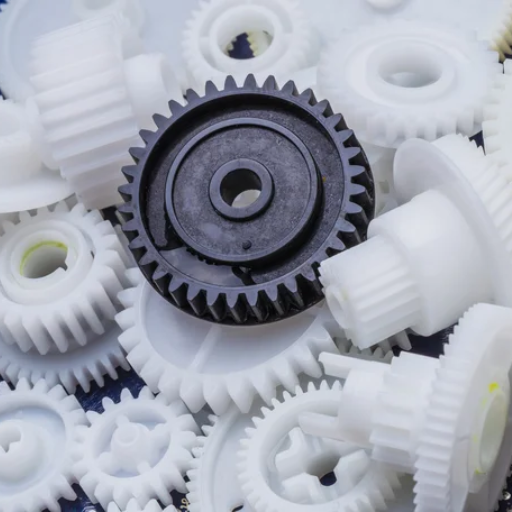
PEI Ultem falls into the range of 25 to 150 per kilo, which constitutes a big gain in thermal and mechanical performance of some 70 percent compared to PEEK for just 40-50 percent of the cost. That means a complete company line, priced mildly out of the market, may be profitable for a great many manufacturers selling a line in that margin. But PEI Ultem is not a substitute for everything. Name the wrong grade and a single production run could cost a large number of scrapped parts and certifications gone south, and the whole supply chain got delayed.
This was exactly the dilemma raised in consideration of the Meridian Medical Devices R&D team, the company shifting housing material from stainless steel to polymer for its reusable surgical instruments. The biocompatible PEEK material was what they needed, yet the raw material cost pushed the bill of materials roughly 30% above budget. Plain Ultem 1000 g2-UN pellets were then tested and found capable of standing up against a steam autoclave and able to meet USP Class VI specifications, all for less than half of the original resin price. That kept the production lines running on schedule and satisfied the margins which hospital customers demanded.
This guide sets out to give what most articles seem to be missing, which is a focus on procurement: PEI Ultem compound grades, realistic price benchmarks, and certification requirements and supplier evaluation criteria. You’d learn exactly what grade fits best to your application what certifications need to come, how much you can realistically pay and how to evaluate suppliers who can offer batches that are consistent in quality. To learn more about engineering plastics, please read: Engineering Plastics: Complete Material Selection Guide for Manufacturers
What Is PEI Ultem Plastic?
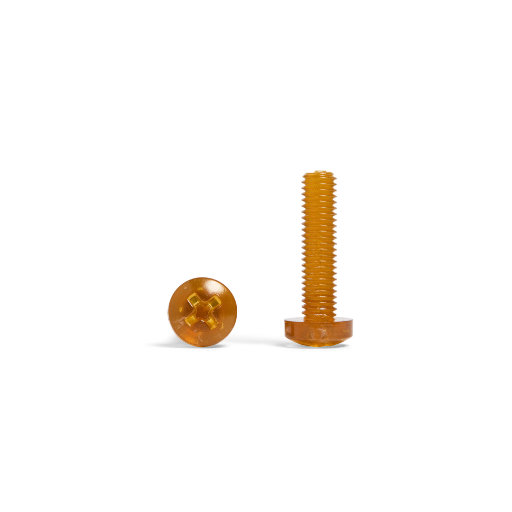
Polyetherimide is a variant of the Sabic ULTEM classic name and is an amorphous thermoplastic within the family of polyimides. The molecular structure involves ether links with imide groups in an aromatic backbone; hence, it is a unique family of polymer material. The effect of this chemistry is high heat resistance, flame retardancy, and good dimensional stability. This is hardly seen in other plastics.
It is quite different in relation to PI-derived semi-crystalline plastics such as CF-PEEK. The amorphous structure of PEI persists through molding rather than crystalline; in other words, PEI does not have a melting point, but the processing region is large, rendering it the ideal balanced polymer with isotropic shrinkage compared to PEKs. This isotropy can also be attributed to its low rate of warpage, which is very convenient from the part design viewpoint.
Key properties of unfilled PEI Ultem plastic include:
- Continuous service temperature: 170°C (338°F)
- Heat deflection temperature: 200°C at 264 psi
- Tensile strength: ~105 MPa (15,200 psi)
- Dielectric strength: ~830 V/mil
- Flammability: UL94 V-0 rated without additives
- Density: 1.27 g/cm³
- Transparency: Amber-tinted, translucent in thin sections
These attributes make PEI Utem Plastic among the most versatile high-performance engineering resins available. This material bridges the gap between standard engineering plastics like polycarbonate and nylon, and ultra-high-performance materials such as PEEK and polyimide.
PEI vs. Other High-Performance Plastics
When comparing high-performance materials, procurement teams might revert to only PEEK vs. PEI, but in reality other plastics can compete in the same end-uses. That said, when purchasing agents know very well that, PEI could fit best in their intended applications, they would also cut off unnecessary spending and over-specification.
|
Material |
HDT (°C) |
Tensile Strength (MPa) |
Relative Cost |
Best For |
|---|---|---|---|---|
|
Polycarbonate (PC) |
135 |
65 |
Low |
Transparency, impact resistance, low heat |
|
PSU (Udel) |
175 |
70 |
Low-Medium |
Hydrolysis resistance, lower cost than PEI |
|
PPSU (Radel) |
205 |
75 |
Medium |
Superior impact strength, repeated sterilization |
|
PEI (Ultem) |
200 |
105 |
Medium |
Best cost-performance balance for high heat |
|
PEEK |
315 |
100 |
High |
Extreme temperature, chemical exposure |
|
Polyimide (PI) |
360 |
90 |
Very High |
Highest temperature, semiconductor applications |
The PEI (Ultem) family is the most widely used thermoplastic material for applications that need a continuous operation temperature above 150°C, flame retardation, and electrical insulation, where the PEEK family’s above 260°C processing technology could be unnecessarily expensive. If your project pushes into the upper end of the thermal range and you want a broader comparison of your options, our High Temperature Engineering Plastics: 2026 Selection Guide for Engineers and Buyers walks through how PEI stacks up against other heat-resistant resins.
PEI Ultem Grades and Specifications
Not all PEI pellets are equal. The mechanical properties, processability, transparency, and cost of a grade depend on the grade chosen. Below are some details for each grade of norm with pellet quality.
Unfilled PEI (Ultem 1000 / 1010)
Ultem-1000 is the baseline standard for an unfilled grade which provides the highest ductility and transparency of any PEI form, within an elongation at break of 12-80%. This grade is particularly well-suited for applications requiring electrical insulating properties or optical clarity and/or extreme flexibility.
Typical applications comprise surgical instrument handles, electrical connector housings, cooking equipment, and optical inspection windows. Price ranges from $25-60 per kg for generic Chinese compounders, and $80-150 per kg for SABIC-branded ULTEMS 1000 resin.
Contrary to 1000-rigid and unmodified-if it is a potential candidate for MIM in conjunction with MFL-aspire more to the design limits for MIM wall thickness which is that below 0.2mm, a hundred and one became the key level.
30% Glass-Fiber Reinforced PEI (Ultem 2300)
The glass fiber content of Ultem 2300 is 30% by weight. Due to this reinforcement, its tensile strength almost doubled to about 150 MPa and its flexural modulus increased roughly threefold to around 9,000 MPa. The trade-off this improvement comes with values for lower ductility are elongation at break of 2-4%.
The material is opaque and with a density of 1.60 g/cm³. Especially well-suited to be used in structural components where stiffness and low warpage are more important than impact resistance. Applications include brackets in aircraft interiors, components for car engines, and semiconductor wafer handling equipment for microelectronic fabrication.
Prices, generally $35-80 per kg, are set depending on tier of supplier and amount to order.
Other Reinforced and Custom Grades
Beyond the standard unfilled and 30% glass grades, suppliers offer several specialized formulations:
- Carbon-fiber reinforced PEI: Adds conductivity and EMI shielding for electronics enclosures
- PTFE/graphite-filled PEI: Reduces friction coefficient for bearing and wear applications
- Flame-retardant enhanced grades: Meet stricter FAA or rail smoke-toxicity standards
- FDA/food-contact grades: Comply with 21 CFR 177.1590 for repeated food contact
- Custom color compounds: Pigmented pellets for aesthetic requirements in consumer products
Grade Selection Decision Matrix
|
Requirement |
Recommended Grade |
Why |
|---|---|---|
|
Electrical insulation + transparency |
Ultem 1000 |
Highest dielectric strength, translucent |
|
Structural stiffness + low creep |
Ultem 2300 |
GF30 reinforcement, high modulus |
|
Repeated steam sterilization |
Ultem 1000 or 2300 |
Both resist hydrolysis at 134°C |
|
EMI shielding |
CF-filled PEI |
Carbon fiber provides conductivity |
|
Bearing surfaces |
PTFE-filled PEI |
Low coefficient of friction |
|
Lowest cost, moderate heat |
Unfilled generic PEI |
Amorphous structure simplifies processing |
Need help matching the right grade to your application? Our engineering team reviews part drawings and operating conditions to recommend the most cost-effective PEI formulation. Contact us for a free material consultation.
Applications by Industry
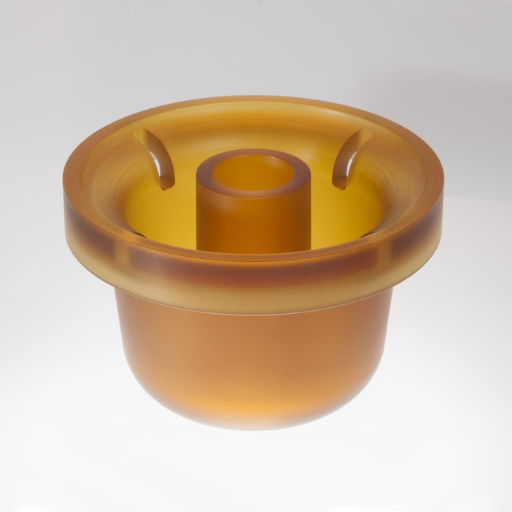
PEI Ultem plastic isof great importance to different industries where a combination of heat resistance, mechanical strength, and electrical insulation bring great worth(ss). In the respective sectors, critical industries are targeted by the use of PEI Ultem pellets.
Health Sector
The health sector is the largest user of Ultem medical product. The high demand for Ultem comes as a result of good industry practices for ISO 10993 biocompatibility and in-class VI treatment and its ability to withstand multiple autoclaving cycles.
Typical examples of medical development comprise: sterilization trays, surgical tools handles, instruments of endoscope, dental equipment parts, and organ equipment enclosures. The unfilled Ultem 1000 leads this industry as due to its lack of bacterial adhesion and transparent amber color, making it possible to visually inspect fluid lines.
Biocompatible certificates, from the suppliers of your project, should be provided for verifying PEI for medical specifications. General PEI from impure compounders poses potential risks to patients, primarily due to lack of cleaning of biocompatibility evidence or histological assessment. If you are weighing PEI against other resins for a medical build, our Engineering Plastics for Medical Devices: The 2026 Material Selection Guide covers biocompatibility, sterilization, and grade selection in far greater depth.
Aerospace
Ultem PEI is valued by the aerospace manufacturers for the combo of low weight and flame resistance. At approximately half the density of aluminum, PEI contributes to fuel efficiency while passing stringent FAA flammability standards.
Common applications are for the interior of an aircraft in critiques like seat frames, trays, overhead bin latches, and supply ducts. For structural brackets, the favored choice is Ultem 2300 due to the stiffness conferred by the glass fiber reinforcement of load-bearing parts. Ultem 2300 has a heat release rate from OSU (Ohio State University) lower than, or equal to, 55/55 — a critical time-out for certification for cabin materials.
Automobile
While PEI Ultem is used more and more in automotive applications, the growing popularity of electric cars has led to more demanding requirements. The newest electric car battery systems and power electronics are made to generate heat. This exceeds the limits of traditional engineering plastics, so they need PEI to withstand the heat. PEI has a Camus reactor at 170°C and CTI above 600V, which is viable for high-voltage inverter connector houses and busbar insulation.
Applications for the internal combustion engine include bezels of reflectors, housings of transmission solenoids, and enclosures for sensors installed in the engine bay. In all these constructs, PEI replaces metals or more expensive polymers while meeting both thermal stability and dimensions required by the applications.
Electronics and Semiconductor
Dielectric properties and low-volatile content make PEI Ultem a material for the electronics industry. PEI offers a continued electric performance in an amicable temperature or humidity setting with applications to wafer handling machines, IC test connectors, and other types of high-frequency connector housings.
Semiconductor fabs like the amorphous PEI structure to a tee since it gives consistent dielectric properties regardless of thermoplastic forming parameters. As a result, designers can be sure that neither changes in the long-term properties nor electrical failures will exist in close tolerance test fixtures for experiments in which the components have motions measured in microns.
Machinery for Food Processing and Packaging
PEI food application grades meeting FDA regulations are packed for food-processing equipment exposed to heat and numerous repetitive cleaning cycles. That is not the only case. Microwave-safe cookware components would benefit from PEI purity resistant to heat, and many of these manufactured utensils for a demanding commercial kitchen environment.
Unlike other high-performance plastics, PEI retains its properties even after numerous steam or caustic washing cycles. That prolongs the utility period of equipment and minimizes maintenance time at manufacturing facilities.
Processing Guidelines for PEI Pellets
Regimens for the PEI Ultem possess the semblance of processing others amorphous thermoplastics, although its high melting point demands a higher skill gear and much dryer, which the processors really need to watch out.
Drying Requirements
PEI is hygroscopic and must be dried before processing. Moisture levels above 0.02% will cause splay, bubbles, and reduced mechanical properties in molded parts.
Recommended drying protocol:
- Temperature: 150°C
- Time: 4-6 hours minimum
- Dew point: -40°C or lower
- Target moisture: <0.02%
Use a desiccant dryer, not a hot-air dryer. The aggressive drying temperature prevents surface defects and ensures consistent melt flow during molding.
Injection Molding Parameters
For the range of available grades of the PEI Ultem resin family in the given form geometry, the barrel temperature of the extruder will require a variation of 340 to 425°C; for instance, the temperature of the mold mentioned will lie between 65 and 175°C, where a thin wall that necessitates an excellent surface finish will require 175°C for an optimal surface-finish temperature.
Typical processing window:
- Feed zone: 320-340°C
- Compression zone: 350-380°C
- Metering zone: 370-400°C
- Nozzle: 360-390°C
- Mold temperature: 65-175°C
- Injection pressure: 80-150 MPa
Higher mold temperatures improve surface gloss and reduce molded-in stress. For optical or aesthetic parts, run molds at the upper end of the temperature range.
Extrusion and Additive Manufacturing
PEI pellets from this resin are also applicable in film, sheet, and profile extrusion processes. The drying/temperature profiles are the same as for injection molding, although the barrel temperatures are usually set 10–20°C lower to avoid thermal degradation suiting with the longer residence time requirements.
An additional emerging area is the use of pellets in 3D printing. One kilogram of PEI pellets for extrusion and 3D printing costs about €32/kg, compared to €270/kg for PEI filament. This 8x cost advantage has indeed made it extremely advantageous in limiting aviation prototyping as well as small-series production, where material costs really affect the part costs.
Sourcing and Procurement
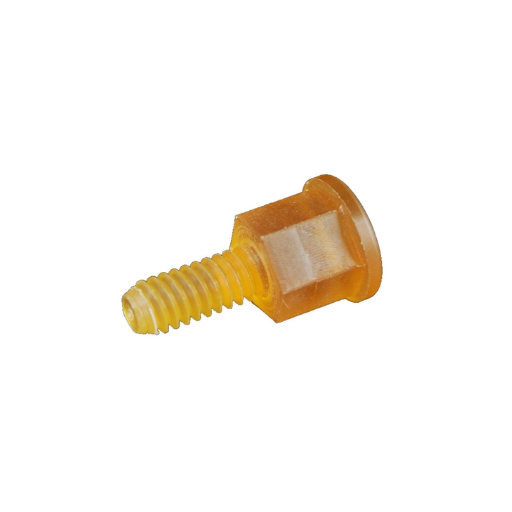
For PEI Ultem plastic, finding the best supplier is as crucial as picking the right grade. The price is one factor. The other consists of the consistency of batches, certificates, and whether technical assistance is there to back them up, all of which would ensure a smooth run of your production lines without any potentially costly shutdowns.
Key Supplier Evaluation Criteria
When vetting PEI pellet suppliers, request documentation in five critical areas:
- Certification documentation: FDA food-contact letters, UL94 V-0 test reports, REACH and RoHS compliance declarations, and biocompatibility certificates for medical grades
- Batch consistency data: Melt flow index (MFI) ranges, tensile strength test results, and color consistency measurements across multiple lots
- Quality control processes: Incoming raw material inspection, in-process testing protocols, and finished goods release criteria
- MOQ and lead time flexibility: Minimum order quantities, stock availability for standard grades, and custom compound lead times
- Technical support capabilities: Material selection assistance, processing parameter recommendations, and troubleshooting support
A supplier who cannot provide detailed batch test data should raise a red flag. PEI is a premium material, and your quality system should demand premium documentation.
Global vs Chinese Suppliers
The PEI Ultem plastic market splits into two tiers. Understanding the difference helps you match supplier capability to application requirements.
The premium tier includes companies like technology leader SABIC, Ensinger (TECAPEI), and RTP Company in the market. These top-tier suppliers provide branded resin and full traceability, extensive certifications, and excellent technical supporting services. They are the materials of choice for medical implants for applications such as aerospace structural parts, where liability may demand a paper trail.
The cost-competitive tier includes Chinese compounders and distributors procuring base PEI resin to develop custom grades to be marketed. Providers such as Guiyang Lilin New Materials, Xiamen Keyuan Plastic, and Guangzhou Huaxiu Plastic allow the distribution of generic PEI pellets at 50-60% below the price of branded materials while delivering competitive performance. Opposite to the generic Chinese PEI suppliers, the concerned Chinese suppliers may find possible holes into the North American market.
The key is in matching supplier first-tier with application criticality. A semiconductor test socket needn’t have an implant-grade biocompatibility certification. As a cost comparison, a Chinese generic PEI compound could perform identically to the branded resin at half the price, given that we have verified data for melt flow index and tensile strength.
Pricing Benchmarks
PEI Ultem plastic pricing varies widely by grade, supplier tier, and order volume. Here are realistic benchmarks for procurement planning:
|
Grade |
Generic Chinese ($/kg) |
Branded Western ($/kg) |
Typical MOQ |
|---|---|---|---|
|
Unfilled (Ultem 1000) |
$25-45 |
$80-150 |
25-1,000 kg |
|
30% Glass filled (Ultem 2300) |
$35-60 |
$100-180 |
25-1,000 kg |
|
Carbon-fiber filled |
$50-90 |
$150-250 |
500+ kg |
|
Medical/implant grade |
N/A |
$200-2,000+ |
100-500 kg |
|
Custom color/compound |
$30-70 |
$120-200 |
1,000+ kg |
Volume discounts are usual at 500 kg, 1,000 kg, and 5,000 kg break-points. Annual contracts over 10,000 kg go from 15-25% below retail charges.
Hidden costs that should be specifically factored in include certification testing ($500-2,000/test), import custom duties and VAT, and inland transportation and inventory holding expenses for MOQ-related inventory overstock.
Want to compare quotes on PEI pellets from several grades and suppliers? Ask for a detailed quotation from our team and let us provide transparent pricing for different grades, volume tiers, and delivery terms. You may use such combinations to construct an accurate cost model.
Why Source PEI Ultem Plastic from Yifuhui

Consolidating engineering resin procurement simplifies the process and strengthens bond with our suppliers. Yifuhui presents options of acquiring either Polyetherimide Ultem plastic or additionally PEEK, PPS, POM, PA66, PC, and ABS; hence multiple materials can be ordered through a single purchase order and quality system. To learn more about PEEK plastic granules, please read: PEEK Plastic Pellets: The Complete Procurement Guide for High-Performance Manufacturing . If PPS is also on your shortlist, our PPS Plastic Resin: The Complete Procurement Guide for High-Performance Manufacturing breaks down grades, pricing, and supplier selection using the same procurement-first approach.
In terms of quality control protocols, this would make sure that every batch is tested in accordance with MFI, tensile strength, moisture, and color consistency. We strive to retain all certificates of analysis for all deliveries with a technical data sheet while carrying the full property profile information.
Processing advice and material selection can be provided within 24 hours by trained professionals whenever such requests are made by the engineering team.
Consistent purchasing brings orders with significantly fewer chances of mistaken quality or fault. It also reduces administrative overhead for manufacturers running multiple materials on different product lines, giving improved batch traceability and sometimes the blessings of volume-based pricing models that scattered buying does not offer.
Conclusion
PEI Ultem plastic is claimed to deliver one of the highest cost-performance ratios in the high performance polymer market. Its benefits, including 170°C continuous operating temperature, inherent flame retardancy, and excellent electrical properties, render it a suitable material for use in medical equipment, aircraft components, automotive electronics, and equipment for semiconductors.
Key takeaways to ponder in your next procurement decision:
- Consider the suitability of the particular grade for the application, e.g.: unfilled Ultem 1000 for electrical and transparent parts; Ultem 2300 for structural stiffness.
- Make sure you educate yourself about the certifications that can be justified with articles sold: Ask for the compliance declaration and batch-specific test data with the purchase order.
- Consider the best tier of supplier: Name resins for high-risk applications and generic compounds for industrial parts when properties conform to the spec.
- Total landed cost: Include testing, freight, duties, and inventory carrying costs in your model.
- Undoubtedly, sourcing combined with various polymers support producers in cutting overhead, whilst also enhancing the tractability of products in question.
Once you have finalised to source for PEI and Ultem plastic pellets, contact Yifuhui to get an offer in full detail. One of our engineers will review your application requirements and suggest the best grade, laced with competitive pricing and supply chain reliability that satisfy you.