As the procurement manager in a Cantonese automotive parts plant, Chen Wei would not forget the morning when he found the container full of wasted resin. Last week he had approved a shipment of PA66 nylon pellets. They arrived on schedule. The certificate of analysis was all right. Water had flown into the warehouse when the warehousemen stored the pellets near an open loading dock during the three days of rainy weather. But by the time the pellets reached the injection molding floor, they had sucked in enough moisture to put out a 20,000-piece scrap heap of splay-marked defects.
If you have sourced engineering resins, chances are you have had your own experience with this. Among the various manufacturing plastics, PA66 or nylon 66 turns out to be one of the most capable. It demands a certain amount of reverence as well. How, then, do you select PA66 nylon pellets right for your application, convey to handling from receiving dock to hopper, and source at a cost that protects your margin? After reading this material you are going to know grade-selectively for your process. Exactly which grades will best work for you, which certifications you must want, and how to shy away from moisture errors that spell thousands in costs for the manufacturer.
What Are PA66 Nylon Pellets?
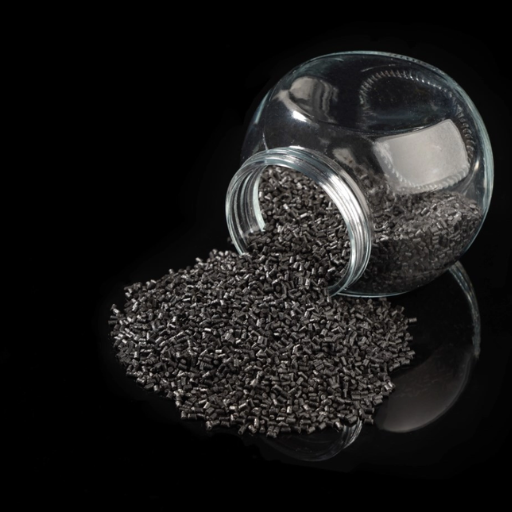
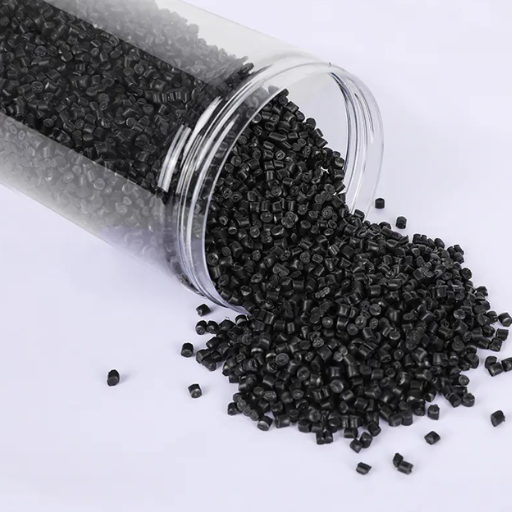
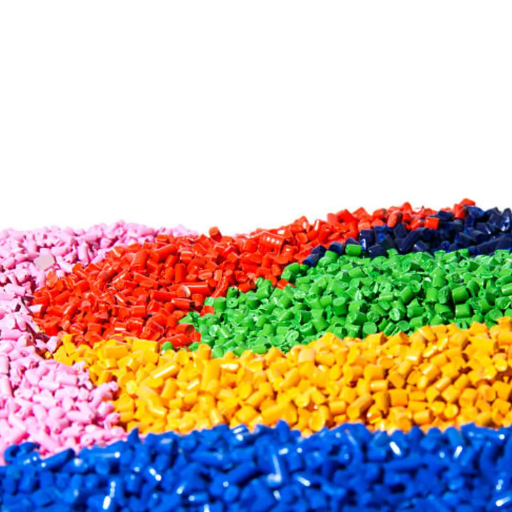
The granules, whether tubular or disk-like, of polyamide 66 consist of condensing adipic acid with hexamethylene diamine, a semi-crystalline thermoplastic engineered for strength, hardness, and heat-shock resistance. This polymer chain contains repeating amide linkages connecting monomer residues between amine (-NH) and carboxy (-CO) groups. It is this structure that imparts PA66 with qualities of strength, wear-resistance, and thermal stability, but in the final analysis, the use of this product is based on its quality. PA6 (polyamide 6) and PA66 are the most important polyamides today. In injection molding, blow molding, and extrusion, PA66, which will ideally be suitable for molding, covers nearly the entire automotive, electrical, industrial, and consumer goods sectors.
For buyers, the semi-crystalline nature of PA66 is important: it behaves fundamentally in the heat, thus enhancing consumer prospects. For this reason: the crystalline areas make the compound more durable and resistant to temperature, whereas the amorphous areas offer some flexibility. This is ideally suited for load-carrying parts, which require strength in resisting impacts and vibrations.
The preface of the utility of PA66 in engineering applications.
Manufacturers prefer to use PA 66 instead of a cheaper alternative due to three reasons: firstly, having a melting point of around 265 degrees Celsius, which is an advantage of around 45 degrees more than PA 6 (nylon 6) is clearly beneficial in under-hood and high-temperature industrial environments. Secondly, PA66, when subjected to a constant mechanical load, exhibits superior constitutive as well as creep resistance. The third one is that PA66 exhibits better dimensional stability while processing and even after this in case of glass-filled grades.
The global PA66 market is estimated to reach $8 to $10 billion in 2024, where the automotive sector alone consumes 45-50 percent of total production.
PA66 vs PA6: When to Choose Which
If you keep your operating temperature below 180 degrees C and are governed primarily by cost considerations, PA6 pellets will usually due. They handle much easier and are a wee bit less hygroscopic. When ambient temperatures exceed 180 degrees Celsius, creep resistance is of utmost concern, or when very high stiffness nylon is desired, then go with PA66. Many procurement managers maintain both on their AVL and defer specification based on the application rather than an onset penchant.
Need help matching the right polyamide to your temperature and load requirements? Our engineering team reviews material specifications daily and can recommend the exact grade for your mold. Contact us for a consultation.
Common Trade Names and Generic Grades
-There is a great variety of promotional grades found worldwide; then, there is the specific mix of competencies below these. By this, we mean larger-brand resins from foreign players against regional competition-based generic grades that offer competitive pricing. The more widely proliferated trademarks include; for instance, Zytel formerly from Celanese and before that DuPont; Ultramid by BASF; Technyl from Domo; and Vydyne by Ascend. All come with big specifications and test results, original equipment manufacturer, or OEM approvals present while hence ‘batch to batch’ performance is guaranteed. Chinese proprietors supply generic pellets or plant-bound consignments which could hold every relevant mechanical property matching/vertexes of a branded grade at their selling costs, discounted from 30 to 50 percent with no OEM liability issue.
PA66 Pellet Grades and Specifications
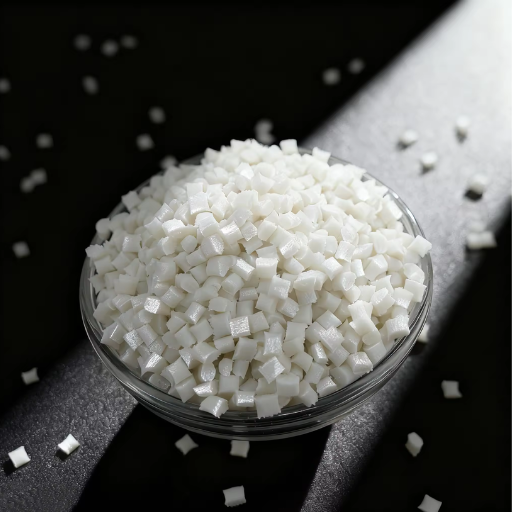
On the whole, the choice of PA66 pellets, in the right grade, will decide the success or failure of any procurement decision. For instance, unfilled virgin resin works perfectly for bearings and gears, but warps under the car hood. Glass-fill grades are good with engine compartment heat, only that they eat through molds faster and notch more easily. The breakdown below should help in matching grade to function
Unfilled (Virgin) PA66 Pellets
In a broader sense, unfilled PA66 is equipped with rather balanced mechanical properties. Tensile strength sits approximately at anywhere between 80 and 85 MPa. Good impact resistance and the natural lubricity of this material make it rather functional in applications where sliding or rotating are expected. To date, it’s been used for gears, bearings, brushings, fasteners, and conveyor rollers. The material takes to machining and accepts dyes and colorants with ease. On a price basis, generic unfilled PA66 pellets generally range from $2.50 to $5.00 per kilogram, while branded types are sold for $4.00 to $8.00 per kilogram. Price, like all other finance factors, can depend on the demand, supply, and certification requirements. If your application leans toward gears, bearings, or bushings, you may also want to weigh PA66 against acetal, so it helps to review our POM Acetal Pellets: Complete Procurement and Processing Guide before locking in a material.
The main drawback is its moisture sensitivity. Unfilled PA66 absorbs up to 2.5% of water by weight at saturation in 50% relative humidity. This absorption does bannhe resin, which enhances toughness with regard to impact in service, but it may lead to dimensional changes and property variation if not controlled.
Glass-Fiber Reinforced PA66 Pellets
When glass fiber is added, PA66 shifts from an ordinary tough and strong resin to a structural material. 15, 30, and 50 grades correspond to the weight percentages of 15%, 30%, and 50%, respectively, of glass fiber. GF30 is really a horse of another color as far as PA66 is concerned. It increases the flexural modulus from approximately 2,800 MPa (neat) to, say, 9,000-10,000 MPa at most, or more than three times stiffer. Heat distortion temperature shoots up, while shrinkage is cut back from 0.8% to 1.5% (neat) tho 0.2% to 0.6% (GF30), enhancing rigidity and improving dimension stability significantly.
But to compensate, glass reinforcement does have its peculiar disadvantages — they raise notch sensitivity, trim unnotched suffer, and may speed up mold wear. Above all, they require a higher working temperature (from 80 to 100 degrees Celsius) and produce more careful venting to prevent fiber breakages and surface defects. The price for GF30 defaults in the £3.00 to £6.50 per kg range for generic grades.
At an electrical connector plant in Sao Paulo, Maria Santos, manufacturing engineer, had to learn that the hard way. Her team had always specified an unfilled PA66 for the housing of a terminal block. When the product line was moved to a higher-temperature environment, it shifted to GF30 without upgrading the mold steel or temperature controls. Amongst the first few parts produced, all of the dimensions were in spec, while there was severe fiber readout on the aesthetic surface. After other modifications were made in terms of the steel and hardening mold, ceramic heaters were in place to bring the mold temps up to 90 degrees, and they successfully achieved production-ready quality. The resounding message is that the one who is prepared will earn glass-filled PA66 nylon pellets’ praise.
Flame-Retardant PA66 Pellets
Electrical and electronic uses generally call for UL94 V-0 or HB flame-retardant grades. Mostly manganese oxide-based and halogen-free, phosphorus or nitrogen-based systems have replaced previous works of electronics using brominated grades to follow Western Europe’s RoHS and REACH laws. These have a bit higher price points, running from 4.50to4.50to10.00.kg, but circuit breaker bodies, switch housings, and conductive parts requiring certification must have them-the cost of losing safety certification is far higher than a 10¢ per kg.
When you get a pellet in a flame retardant pencil of examination, check to make sure that the supplier keeps up their Yellow Cards for whichever exact grade you are expecting to get. Changing over between an occasion where “a comparable” one is used to de-certify the consumer for their own product.
UV-Stabilized and Weather-Resistant Grades
The traditional PA66 grades would degrade in long-term UV exposure. Carbon black with HALS (hindered amine light stabilizer) systems augments outdoor service life. Among the standard applications for black UV-stabilized grades are automotive exterior clips, agriculture equipment, and outdoor electrical enclosures. No such facility exists for the natural color-coded and light-colored grades even though they have shorter lifespans.
Lubricated and Wear-Resistant Grades
PTFE, molybdenum disulfide, blocks, and silicone-oil-added modifications have already proved themselves by decreasing the coefficient of friction for bearing and sliding applications. Users need to pay a premium for these value-added specialty grade materials in order to change lubrication altogether in such assemblies as conveyor guide rails, pump impellers, or textile machine parts.
Heat-Stabilized PA66 Pellets
Long-term thermal aging resistance adhering to continuous high-temperature service stands as a differentiating factor. Heat-stabilized materials come with an antioxidant package that slows down the degradation of the polymer chain upon exposure to harsh time-temperature environments under continuous operating temperatures of 150 to 180 °C. A definite application can be found in automobile engine compartments; thermal chambers manufacturing should also consider the product. When your service window pushes past what heat-stabilized PA66 can comfortably handle, it is worth comparing alternatives in our High Temperature Engineering Plastics: 2026 Selection Guide for Engineers and Buyers to be sure you pick the right polymer for the heat.
Applications as Per Industry
PA66 nylon pellets feed into manufacturing in every segment of the industry, so that knowing the ways that industries apply the components aids procurement in choosing the base grade as well as in meeting criteria specified by standards.
Automotive
The automotive industry still is the prime user of PA66. Radiator end tanks, intake manifolds, cable ties, and engine covers are some of the under-hood applications using the material. Terminal blocks meant for reel-to-reel contacts, electrical connectors, and fuse boxes are made using flame-retardant and glass-filled grades. Structural parts in the interior, like seat frames or pedal modules, find favor for their strength-to-weight ratio. For a wider view of how PA66 fits alongside other resins across a vehicle, our Engineering Plastics for Automotive: Material Selection and Sourcing Guide walks through material choices part by part.
To the automotive industry’s suppliers, the road to business does thicken. Many customers demand an IMDS (International Material Data System) submission along with their own material approval requirements. Material from Zytel or Ultramid often comes with pre-approved specifications and speeds up the whole validation process. Generic grades, meanwhile, require testing and, inordinately long lead times, and heavy certification requirements.
Electrical and Electronics
Circuit breakers, contactors, switches, and connectors depend on PA66 for its combination of electrical insulation, heat resistance, and mechanical strength. Continuous reel-by-reel molding for terminal blocks needs good flow characteristics and batch viscosity; therefore the melt flow index (MFI) stability is critical in preferred vendors.
Industrial and Mechanical
Gears, bearings, bushings, rollers, conveyor parts and other items exploit the natural wear resistance and self-lubricating properties of the unfilled PA66. Chemical-resistant grades are used for pump and valve internals. In applications of this kind, batch-to-batch consistency is more often crucial than the supreme mechanical properties, given that dimensional drift can lead to assembly failures.
Consumer Goods
Power-tool housings and triggers, appliance parts, zippers, and sports equipment use PA66 because of its good balance between toughness and surface appearance. Consumer goods applications mostly prioritize cost considerations and color consistency over temperature performance.
Processing PA66 Pellets: What Manufacturers Must Know
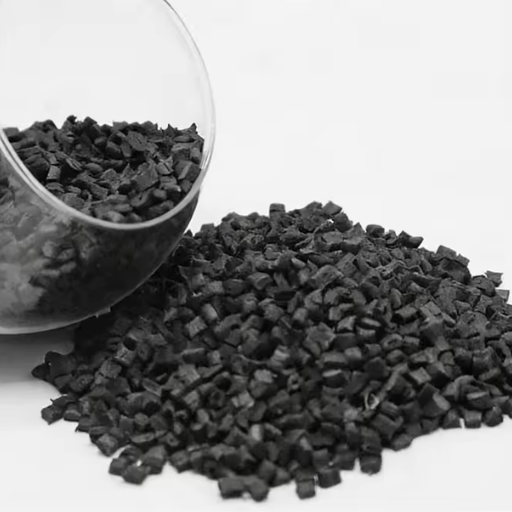
Even the best PA66 pellets will generate waste once moisture is mishandled. This article focuses on the dos and don’ts of drying needs, molding, and storage.
Moisture Sorption and Drying
PA66 is hygroscopic in nature. It continuously absorbs atmospheric moisture until it reaches an equilibrium state. In the absence of any fillers, it will contain nearly 2.5 percent moisture by weight at 50 percent relative humidity and at 23° Celsius. For processing, the moisture content must be less than 0.2 percent-granting anything higher will lead to hydrolytic degradation, splay, bubbles, reduced mechanical properties, and surface hat defects.
Drying conditions for processing: 80-100° C for 4 to 6 hours of drying in a desiccation unit with dew points ranging from -20° to -40° Celsius; oven drying will not be considered for full production processing since it does not provide sufficient airflow and humidity control avoidance of moisture fluctuations in the target moisture regions.
James Oduya is the plant manager at an injection molder in Nigeria, once when he was forced to accept a consignment of PA66 pellets from a container that had been shipped partly in the rainy season without hydrophobic packaging. The bags were slightly moist to the touch. But instead of rejecting the load, the drying cycle was extended by about an additional 2 hours. The result was that the parts were fine for visual inspection but failed a tensile test by 15 percent because moisture had already initiated hydrolysis in the polymer chains. The whole lot of ten tons had to be scrapped. His rule since then: measure moisture content upon receipt, not after drying.
Protecting your production starts before the pellets reach the hopper. Ask your supplier about moisture-barrier packaging and COA moisture specifications. We ship PA66 nylon pellets in sealed, moisture-resistant packaging with batch-tested certificates of analysis. Request a quote to see our standard delivery protocols.
In-Plant Storage Best Practices
Transfer unused PA66 pellets into sealed containers or bins with desiccant after the original packaging has been opened. The best rotational inventory system is first-in-first-out inventory rotation. It should never be left unattended without the bag being left open overnight. If you reside in high-humidity regions, you may also find it beneficial to conduct storage in a nitrogen-purged environment and continuous hopper drying rather than batch drying.
Injection Molding Parameters
PA66 melt temperatures range between 270 and 300 degrees Celsius. Mold temperature fluctuates between 60 and 100 degrees Celsius to provide the best surface finish and crystallinity. Glass-filled grades will require higher end mold temperatures to prevent fiber readout and surface roughness. Shrinkage varies by grade: 0.8 to 1.5 percent for unfilled, 0.2 to 0.6 percent for GF30. Gate design should avoid sudden thickness changes that create weld lines, and vents should be sufficient to prevent burn marks.
Extrusion Considerations
Profile extrusion, monofilament, and film applications depend on the same temperature ranges as injection molding to a large extent. However, moisture control is more important in continuous extrusion since a wet batch cannot be isolated as easily as it is in a discrete molding cycle. In designing dies, the shear sensitivity of PA66 must be taken into consideration to avoid the melt’s fracturing.
Post-Molding Conditioning
Some applications can benefit from controlled humidity conditioning subsequent to molding. Parts need to be kept at 50 to 70 percent relative humidity for 24-48 h. This strengthens them by adding impact strength through enough water absorption to plasticize the amorphous regions. An anneal at 150 to 180 degrees Celsius for 1 to 2 hours relieves internal stresses and tends; it also stabilizes dimensions. These steps increase process time but may be necessary for parts overcoming odds against various physical insults or very tight tolerance requirements.
Sourcing and Procurement
Choosing suppliers for PA66 pellets should take into consideration varying factors instead of comparing kg prices. This would enable the supplier solution to generate operational success rather than stirring chaos within the production chain.
The Key Suppliers’ Assessment Criteria
Start looking out for documents, precisely the ISO certification. Automotive suppliers will, of course, demand IATF 16949. Ask for certificates of analysis (COA) beyond MSDD to test MF-results, moisture content, and NV. Spot-checking MSDD on mechanical properties additionally helps ensure COA-batch-to-batch-consistency issues.
Technical support is what separates the manufacturers from the traders. Your supplier, in a bid-proposals chain, will recommend mold temperature changes when switching from unfilled pellets (alone) to being a great strong glass fiber 30% master batch. They understand the difference in drying protocol between shipping in summer compared to monsoon. The supplier who provides answers to these questions before being asked will save far more than a discount of a few cents per kilogram.
Global Versus Regional Suppliers
Major Western producers like Celanese (Zytel), BASF (Ultramid), Domo (Technyl), and Ascend (Vydyne), along with extensive technical libraries, pre-approved automotive her finishes, and global logistic integrations, reflecting on the higher cost, lower responsiveness, and therefore lack of ability to compete.
Chinese producers and resellers who can compound and distribute have been able to duplicate PA66 pellets with comparable mechanical properties to brand-name goods at a substantially reduced price. The value proposition is compelling for these generic grades in industrial, consumer, and non-safety-critical automotive applications. The supplier qualification process will be of utmost importance: audited test protocols, whether possible, visit the plant and start with small qualification batches before going for bigger investments.To learn how to choose an engineering plastics manufacturer, please read this article: Engineering Plastics: Complete Material Selection Guide for Manufacturers
Pricing Benchmarks
The following table provides realistic price ranges for generic PA66 pellets in 2026. Branded grades typically carry a 40 to 100 percent premium.
|
Grade |
Price per kg (Generic) |
Price per kg (Branded) |
|---|---|---|
|
Unfilled virgin |
2.50–2.50–5.00 |
4.00–4.00–8.00 |
|
GF30 |
3.00–3.00–6.50 |
5.50–5.50–11.00 |
|
Flame-retardant V-0 |
4.50–4.50–10.00 |
8.00–8.00–16.00 |
|
UV-stabilized black |
3.00–3.00–6.00 |
5.00–5.00–10.00 |
|
Lubricated (PTFE/MoS2) |
5.00–5.00–12.00 |
9.00–9.00–20.00 |
Volume discounts commonly are applied at full shipping payloads (20 to 25 metric tons). Higher pricing structures are seen in the less-than-container-load (LCL) orders for the additional logistics handling.
Packaging and Shipping
Typical packaging for nylon pellets made of PA66 includes a 25-kilogram multilayer bag, 500-kilogram super sacks, and delivery by bulk trucks or railcars. Moisture-barrier packaging with multiple layers of aluminum foil or polyethylene will be necessary for ocean shipments, particularly in tropical climates. During receiving inspection, at least a spot check for moisture content ought be done with a calibrated halogen moisture meter. If indeed the trace averages taller than 0.15 percent moisture content, reject the entire lot irrespective of what the report states.
Why Source PA66 Nylon Pellets from Yifuhui
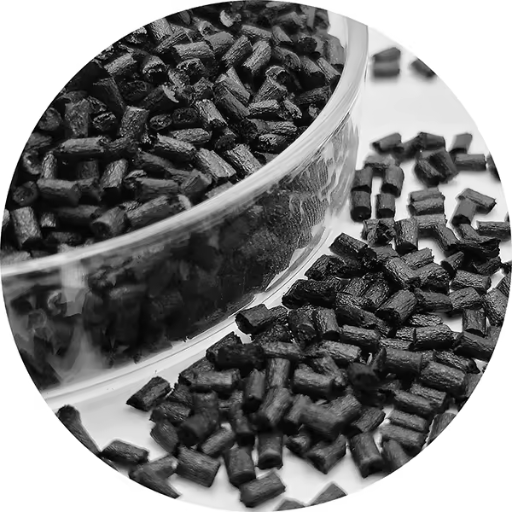
The Yifuhui New Material Co., Ltd.in Suzhou stocks PA66 nylon pellets as well as polycarbonate, ABS, POM, PPS, and PFA and so forth. Such variety is an important aspect for procurement professionals who would rather streamline their vendors than manage ten separate supplier relations.
We closely monitor batch-to-batch quality control with full COA documentation on every lot. We also deliver assistance to our engineering staff to assist in grade selection, drying protocol suggestions, as well as processing troubleshooting. Competitive prices for both generic and branded polyamide pellets serve to protect your material budget with reliability. Our supply chain dynamics are controlled to keep the production chain running, not disappear while aiming for a low cost only to face a difficulty.
If you are studying a new PA66 grade, switching from a PA6 grade, or are looking for a more attentive supplier, we can help. Just ask for a quote mentioning your specific requirements, and we will respond with solid suggestions, prices, and shipping availability within 24 hours.
Conclusion
Ultimately, PA66 polyamide resin targets informed buyers and punishes the ignorant. The five decisions define your success in his standard work: choosing the right grade for temperature and load, drying so as to destroy the moisture below 0.2 percent before processing, storing said resin correctly sealed and rotated, making sure the supplier supplies a COA, and using the total cost of ownership as the calculation for cost rather than simply looking at price/kilogram.
Get those right, and PA66 will deliver long decades of performance on the toughest manufacturing floor; get them wrong, and even the shining resin may become an expensive lesson.
If you are ready to be a buyer of this polymer, please insist that the seller supplies a COA to ensure that his products are actually pure PA66 polymer. Trust your clients when they tell you the COA is in their hands, while letting them specify the technical specs.
Later you can mail them back to the seller, saying, “Please drop this COA on the desk, and unless it says PA66, don’t do this deal.”
This guide was prepared by the materials engineering team at Suzhou Yifuhui New Material Co., Ltd. For technical datasheets, certification documentation, or custom grade inquiries, reach out through our contact page.