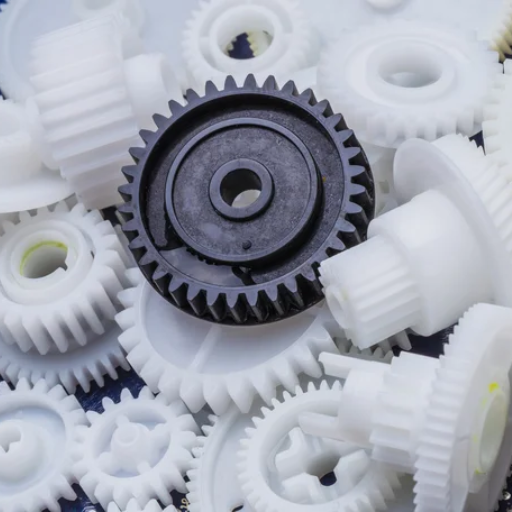
The scent from that place will stay in Liu Ming’s memory forever. The Ningbo precision gear factory plant manager approved POM acetal pellets testing for a new fuel-system component. The material specs showed perfect performance which included high stiffness and low friction and excellent dimensional stability. The processing team failed to identify the thermal warning system. The mold temperature crept five degrees above recommended range during the second shift. The barrel vents opened within minutes to release formaldehyde gas. The burn marks on the parts were the least of his problems. Engineers needed six hours to recalibrate all temperature settings which resulted in complete production downtime because they had to discard 500-kilogram batch of material.
The story will make you wince if your job involves sourcing engineering resins. POM acetal pellets serve as one of the most effective metal-replacement plastics for manufacturing operations. The material maintains its performance until processing errors occur. This guide shows you how to choose the right grade, mold it safely, and source it at a price that protects your margin. The complete training program will teach you which POM resin works for your application and how to escape thermal traps that capture inexperienced molders and the right price for stable product quality.
What Are POM Acetal Pellets?
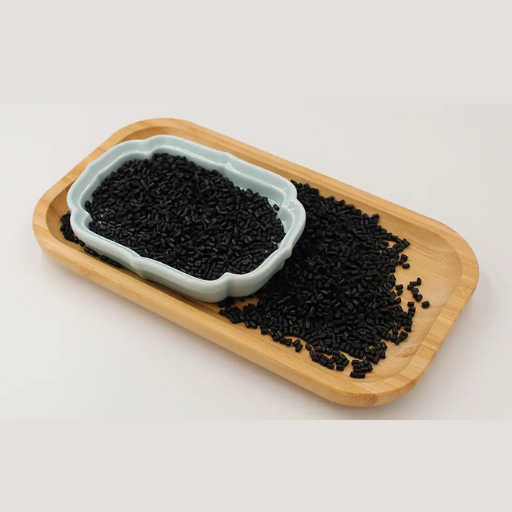
The POM acetal pellets consist of cylindrical and disk-shaped granules which contain polyoxymethylene, a thermoplastic engineering material that exists as a semi-crystalline substance formed through the repetition of formaldehyde molecular units. The polymer provides metal-equivalent stiffness properties together with extremely low friction and excellent dimensional stability. The material exists in pellet form which manufacturers use as feedstock to create products through injection molding and extrusion and blow molding processes that serve the automotive and industrial and electronics and medical and plumbing industries.
The semi-crystalline structure of POM is what makes it special. The resin acquires its rigidity and creep resistance and tight tolerance maintenance ability through crystalline regions which constitute about 70 to 80 percent of the material volume. POM maintains its shape under rising temperatures while amorphous plastics such as polycarbonate and ABS experience gradual softening. The material retains its stiffness until it reaches its melting point at which point it undergoes rapid transformation. That behavior is excellent for precision parts. The material requires special handling when processing.
Homopolymer vs Copolymer: The Critical Choice
Every POM acetal pellet falls into one of two categories. The understanding of the distinction between two things protects against costly errors in product specifications. POM-H (homopolymer) contains only formaldehyde-derived repeat units. The material provides better tensile strength and increased hardness and melts at a temperature of approximately 175 degrees Celsius. DuPont Delrin stands as the most popular branded homopolymer. The processing trade-offs result in two effects because they reduce operational limits while increasing the risk of developing centerline porosity in thick sections and they decrease chemical resistance.
POM-C (copolymer) incorporates small amounts of comonomer units that interrupt the regular chain structure. The process reduces crystallinity but achieves better thermal stability and hydrolysis resistance and chemical tolerance. The melting point sits around 165 degrees Celsius. Major branded copolymers include Celcon (Celanese), Ultraform (BASF), Duracon (Polyplastics), and Hostaform (Celanese).
The POM-C copolymer works better than the other materials for most injection molding applications. It offers better processing capabilities, protects against hot water and alkaline environments, and has lower costs. POM-H homopolymer excels when maximum stiffness, hardness, and fatigue resistance are non-negotiable.
Need help deciding between homopolymer and copolymer for your mold? Our engineering team reviews specifications daily. Share your application requirements and we will recommend the exact POM grade within 24 hours.
Common Trade Names and Generic Grades
The POM landscape includes well-established branded resins and cost-competitive generic alternatives. The companies DuPont, Celanese, BASF, and Polyplastics offer extensive technical documentation and established supply chains through their products Delrin, Celcon, Hostaform, Ultraform, and Duracon. Generic and custom-compounded POM pellets from qualified Chinese manufacturers can match the mechanical properties of branded grades at 30 to 50 percent lower cost for applications that do not require specific OEM certifications or medical-grade compliance.and custom-compounded POM pellets from qualified Chinese manufacturers can match the mechanical properties of branded grades at 30 to 50 percent lower cost for applications that do not require specific OEM certifications or medical-grade compliance. For more information on engineering plastics, please read: Engineering Plastics: Complete Material Selection Guide for Manufacturers.
POM Pellet Grades and Specifications
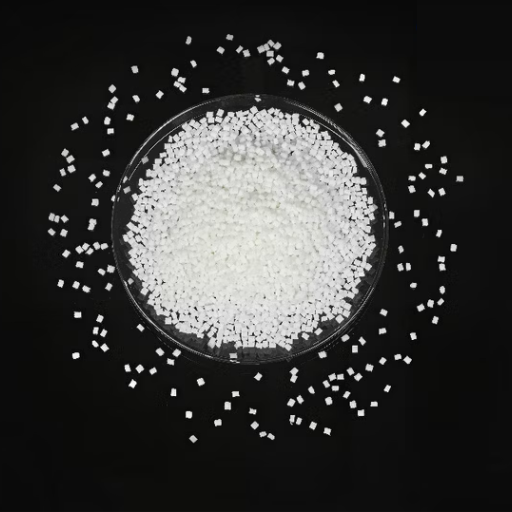
Choosing the right grade of POM acetal pellets separates successful projects from rework and scrap. The following breakdown helps you match the grade to the job.
Standard (Unfilled) POM Pellets
Unfilled POM offers all the traditional specifications that have made this resin famous: a tensile strength in the region of 58-70 MPa, a flexural modulus in the region of 2,500-3,200 MPa, and a coefficient of friction within a range from 0.20 to 0.35. It absorbs very little moisture-about 0.2% within a 24-hour period; even very humid conditions will not significantly affect POM’s dimensions. Applications include gears, bearings, bushings, conveyor elements, fasteners, and spring items.
Per kilogram, generic POM-C pellets will typically cost between 2.50-2.50to5.50. On the other hand, branded homopolymer types, like Delrin, range in price from 4.00 to 4.00to8.00 per kilogram, depending on quantities and on the degree of certification required.
Availability: Glass-Fiber Reinforced POM Pellets
Glass fiber-enhanced tensile modulus and tensile creep were strength characteristics enhanced by several structural composites. Additional properties included the use of glass fiber reinforcement in different combinations, often ranging from anywhere from 10% to 25%. The properties dependent on the concentration per number fiber include higher hardness and increased mobilization, as well as increased abrasion due to the increase in the content of other phases. The automotive sector is, indeed, smarting for these varieties. Prices typically fall within the $3.50to7.00 per kg range.
UV-Stabilized and Weather-Resistant Grades
The properties of standard POM change rapidly after exposure to ultraviolet light. Outdoor parts that are not stabilized will degrade within mere months; becoming brittle and changing color. UV-stabilization and carbon-black systems increase the longevity of the part’s integrity for external applications. If the part will be exposed to sunlight, UV-stabilization should be specified from the beginning; retrofitting after molding is seldom feasible.
Low-Emission/VOC Grades
The stringent regulations for lowest-emission and volative organic compounds (VOC) in the functional interiors and fuel systems of automobiles have challenged the makers of POM to come up with grades that produce less offgassing and effectively satisfy manufacturers’ requirements. Low-emission POM-C grades satisfy the criteria set forth in VDA 276, SAE, and outside pure compliance with FMVSS criteria for limited use within the cabin and fuel contact applications. Though pricey, these grades allow no risk of failing emissions testing.
Food and Medical Grades for POM
Forms of copolymers compatible with FDA regulations and biologically functional are found in a variety of medical device applications, such as those represented by the mechanisms of an insulin pen, parts of an inhaler and components of an instrument used in surgery. These grades are produced with special production facilities and packing lines devoted to them. Sterilization certification and complete traceability are essential things to associate with. Before POM acetal pellets are used in medical service specifications, USP Class VI or ISO 10993 should always be reached.
Applications by Industry
Responding to nearly all sectors in need of precision, durability, and low friction, POM acetal pellets’ application becomes an integral part of the end-use selection process for the production team.
Automotive
The automotive industry is POM’s biggest consumer, absorbing 35-40 percent of global production. Fuel system components-mainly sender units, caps, fuel rails, clips, and valve bodies-test POM’s resistance to hydrocarbons and accuracy in maintaining close tolerances during vibration. Seat belt mechanisms, door lock systems, window regulator gears, and HVAC actuators rely on standard and low-friction grades. Interior trim fasteners and handle mechanisms avail themselves of the good snap-fit characteristics and smooth surface finish of this material.
Modern automotive suppliers are now wrestling with much stricter emissions compliance standards so far disregarded by old specifications. Low-VOC POM-C grade parts are now standard whenever equipment is for use in the cab or attached to the fuel system.
Industrial and Mechanical
The traditional applications of POM encompass cogs, bearings, bushes, cam follower paths, and sliding components in an industrial environment. The low sliding friction coefficient and high wear resistance make POM material a significant substitution for applications like brass, bronze, and steel without external lubrication for moving parts. Silent chain conveyors utilize POM(s) for minimizing fatigue and sound. POM is also used for impellers of pumps, stem valves, springs and clips for rapid shaping and resistance under affecting agent strength.
POM actually does better in wet and humid environments as compared to nylon, which is seldom stated. It absorbs water in one-tenth the amount of PA66. The parts maintain their dimensions and mechanical properties under tropical climatic conditions or wash-down scenarios. For more information on PA66 nylon granules, please read: PA66 Nylon Pellets: Complete Procurement Guide for Engineering Manufacturing.
Consumer Electronics and Consumer Goods
Due to POM’s excellent characteristics for molding and long cycle life, keyboard keys, printer gears, fan bearings, and switch bodies take advantage of it. For zipper sliders, buckles, pen mechanisms, and toys, POM exhibits its snap-fit strength and smooth-gliding nature. In consumer goods applications, typically, cost and color consistency prevail over high-temperature performance.
Medical Devices
The biocompatibility, sterilization tolerance and capacity to tolerate exact dosing tolerances led to the use of medical grade POM-C in insulin pen bodies, inhaler mechanisms, and drug delivery components. The rigidity, of resistance to repeated autoclave cycles, had surgical instrument handles benefitting from the resin. Full material certification and batch traceability is regarded as a must-have for all medical matter applications.
Plumbing and Fluid Handling
POM-C copolymer is used in faucet cartridges, tap handles, and small valve parts for hot water and chlorine chemicals. Superior hydrolysis resistance of the copolymer makes it the preferred choice over homopolymer for any application that requires continuous contact with hot water above the 60-degree Celsius range.
Processing POM Pellets: Safety and Parameters
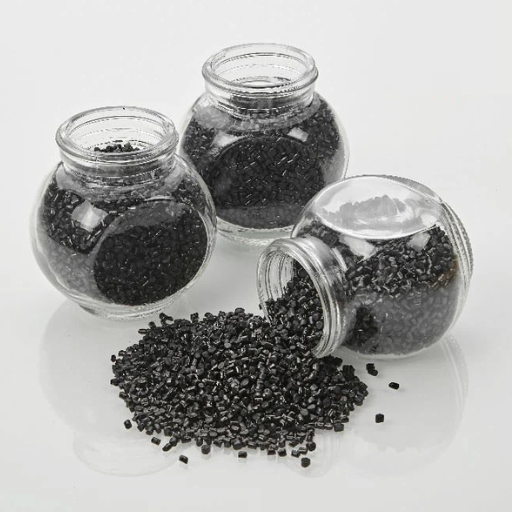
You could purchase the most exquisite and high-grade POM acetal pellets that are available in the market and still end up with bad scrap if you pay no attention away from some critical thermal limits. This chapter covers the non-negotiables of safe molding.
Critical Safety Warning: Thermal Degradation and Venting
Cautions: melt to formaldehyde, make it a point not to let POM go on decomposing as a result of overheating. Temperatures even remotely close to 230 fall into another territory and break the polyoxyalkylene molecules, letting them out in the form of formaldehyde gas. However, formaldehyde is toxic, poisonous, and explosive. Furthermore, such a breakdown of polyacetal resin under these conditions will produce voids, burn marks, and discoloration on molded parts.
Proper mold venting is inevitable, as said above. Vents must allow escaping for any trapped air, together with degradation gases, without generating flash. Slots Vents with deep-thin intruding along parting lines and weld-lines of the part are very well established. Standard depths are 0.01 to 0.02 millimeters for POM, thinner than for nearly all other resins.
Processing safety starts with the right material specification. Ask your supplier for processing parameters tailored to the exact grade you receive. We provide detailed temperature and venting guidelines with every shipment of POM acetal pellets. Request a quote to review our delivery documentation.
Injection Molding Parameters
|
Parameter |
POM-C (Copolymer) |
POM-H (Homopolymer) |
|---|---|---|
|
Melt temperature |
190 to 210 degrees C |
200 to 220 degrees C |
|
Mold temperature |
80 to 120 degrees C |
80 to 120 degrees C |
|
Pre-drying |
80 degrees C for 2 to 4 hours |
80 degrees C for 2 to 4 hours |
|
Shrinkage |
1.8 to 2.2 percent |
2.0 to 2.5 percent |
|
Injection speed |
Moderate |
Moderate |
POM is a fast polymer to crystallize and its short cooling times in the MFA lead to quick freeze-off. It is usually important to have a greater gate size and a higher injection pressure, so we make sure the cavity completely fills out before the freeze; in the case of POM, a uniform wall thickness is necessary since differential shrinkage would result in warpage.
Extrusion and Blow Molding Considerations
In profile extrusion, monofilament, and rod production, the temperature ranges for processing are not quite dissimilar to those similar in injection molding. Thus, temperature control and venting in a continued process are even more intrinsic since a hot spot can’t be discarded easily as in a discrete molding process. The die developed here must address the problem of rapid crystallization of POM-caused surface defects and dimensional problems.
Post-Processing and Assembly
POM has a low surface energy, making it hard to be bonded using adhesives in the absence of a special surface treatment. Mechanical fastening, snap fit, and ultrasonic welding were the preferred assembly methods. Machining molded blanks, including rod stock, seemed a viable alternative for prototype and very-low-volume production. A clean cut could be produced provided appropriate tools, good cooling, and moderate cutting speeds.
Zhang Hui, a tooling engineer at an automotive supplier in Suzhou, dug his teeth into the peculiar world of POM machining during a prototype run, milling Delrin blanks with feeds and speeds one would normally use on nylon. But alas, his parts came out of the mill with edges melted and surfaces fuzzy. After shift-ing to carbide tools with increased rake angle while intro-ducing compressed air cooling, the surface finish improved greatly. This lesson was to treat POM as the crystalline material it is, not the amorphous plastics that may be more comfortable to work with in your shop.
Sourcing and Procurement
To choose a supplier of POM acetal pellets means to not just look at a price per kilogram figure. Hence, the availability of grades, the presence of certifications, and having technical support are the indicators whether you have a material stream that works with you or creates chaos on the shop floor.
Primary Criteria for Supplier Appraisal
Begin with documentation. ISO 9001 certification is now imperative. If you are into the automobile industry, then IATF 16949 certification is to be demanded. For medical device manufacturers, ISO 13485 is the requirement. Demand certificates of analysis with cialis including melt flow index, density, moisture level, and some mechanical spot checks.
Technical support distinguishes a professional from a commodity man. Can your supplier differentiate between Delrin 100P and Celcon M90? Do they grasp why low VOC grades are crucially required in automotive fueling systems? Answering those questions before you ask them could save the money of slashing down with a mere few cents on the kilogram.
Global vs Regional Suppliers
Those top Western polymer producers, including DuPont with products such as Delrin and some others like BASF, Polyplastics, and Celanese, among a few others, own all the innovation, technical literature, pre-approved automotive grades, and a global logistics network; this significantly affects their pricing.
Chinese compounders and distributors are making POM acetal pellets that meet the mechanical properties of the branded grades at more competitive rates. Offering good value for applications in various industries, home appliances, and low-level automotive use causes direct competition. The critical element is good supplier qualification: assess their audit-testing protocols and check the company’s production setup personally and, if it makes sense, manufacture parts for small qualification runs to confirm that all your criteria will be met) before committing to full volumes.
Pricing Benchmarks
The following table provides realistic price ranges for generic POM pellets in 2026. Branded grades typically carry a 40 to 100 percent premium.
|
Grade |
Price per kg (Generic) |
Price per kg (Branded) |
|---|---|---|
|
POM-C copolymer standard |
2.50to2.50to5.50 |
4.50to4.50to9.00 |
|
POM-H homopolymer standard |
3.50to3.50to6.50 |
6.00to6.00to11.00 |
|
Glass-filled (GF20/25) |
3.50to3.50to7.00 |
6.50to6.50to12.00 |
|
UV-stabilized |
3.00to3.00to6.50 |
5.50to5.50to10.00 |
|
Low-VOC automotive |
4.00to4.00to8.00 |
7.50to7.50to14.00 |
|
Food/medical grade |
5.00to5.00to10.00 |
9.00to9.00to18.00 |
In full-truckload quantities, buyers are offered volume discounts (20–25 metric tons). Less-than-container-load deliveries should be price-compensated for the extra logistics burden. Possibilities for hidden cost drivers arise from mold wear and tear with glass-filled grades, maintenance of venting systems, and costing for drying equipment that renders the best surface finish.
Packaging and Logistics
The standard packaging is done in 25-kg multilayer bags, 500-kg supersack, or bulk truck delivery. POM is less absorbent than nylon; however, maintaining sealed packaging will also be imperative for extended storage or shipping under humid weather. In the receiving inspection, look for color variations, dirt or contamination, or in the appearance of uniformity in pellet size. Question any lot that looks discolored and is speckled with off-color dots, has excessive dust, or has non-uniform pellet contours.
Why Source POM Acetal Pellets from Yifuhui
POM acetal pellets are also stored by Suzhou Yifuhui New Material Co., Ltd., among a host of other engineering resins such as PA66, polycarbonate, ABS, PPS, PFA, and others. This level of variety is a key selling point for purchasing departments with respect to vendor rationalization. Otherwise, managing your relationships with varying suppliers can get unmanageable.
On a lot-to-lot basis, we oversee stringent quality control measures with complete COA testing documentation on every single lot. Our engineering staff stands ready to help you decide on grades, give advice on processing parameters, and sort out typical problems, thermal degradation, or dimensional and property issues. On another note, we sell premium and generic POM pellets at very competitive prices while maintaining reliability on the acquisition of goods.
Carlos Mendez, head of procurement in a Monterrey industrial components manufactory, was confronted with a situation familiar to many industrial purchasing managers. Sourcing POM from one supplier, nylon from a second, and polycarbonate from a third meant that every month there was three full days of incoming QC purely for ensuring that different delivery schedules and documentation formats are being coordinated. After all materials were now switched to Yifuhui, this QC process has now been reduced by 60 percent. Just because one supplier keeps one COA format for each material, one fixed delivery schedule, one source for technical questions for the whole synthetic core that the engineering part requires.
Raising productivity and supporting changes in your company operations are asked by this short paragraph. If you need to evaluate any new grade of POM, change from metal to plastic, or merely look for a supplier that is more responsive, please do not hesitate to let us know your technical requirements. We will respond to you within 24 hours with grade recommendations, prices, and delivery options.
Conclusion
POM acetal pellets reward smart shoppers and penalize laxity in thermal treatment. There are but five things that would decide the success equation in your case: copolymer or homopolymer based on the kind of chemical exposure and stiffness that it bears, the intended temperature or regulatory needs, the invariable need to be strict with temperature control in mold and barrel settings, ensuring that the supplier has provided the COA documentation, and pricing-out the whole cost of ownership as opposed to the kilo cost of the polymer.
Attend to any of these wrong and this polymer material may result in reaping decades of successful operation, either in gear, fuel systems, or precision mechanisms or else turn into a very expensive lesson within investments in gate and temperature control.
Feel accomplished to source material while in the tactile domain of POM acetal pellets, with specifications that can be honored. Simply get in contact with our desk-I am certain we’ll match up to all industry demands for your particular grade, source, and package material readily in order to avoid delays. To learn more about Engineering Plastics for Automotive: Material Selection and Sourcing Guide, please click to view our accompanying guide.
This guide is brought together by the materials engineering team of Suzhou Yifuhui New Material Co., Ltd. Technical datasheets, certification documentation, or custom grade inquiries can be made through our contact page.