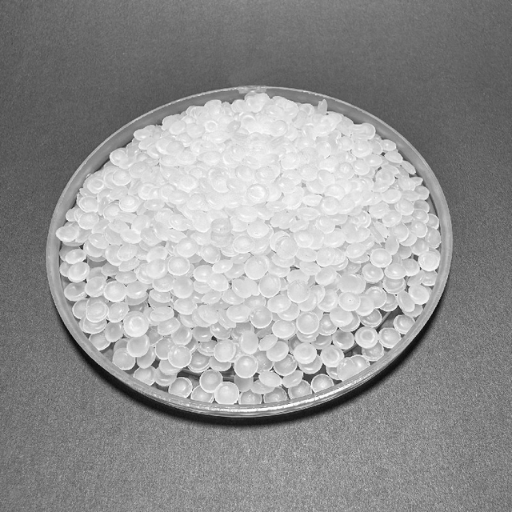
A production manager in Shenzhen lost a full morning to warped crate corners. The barrel temperatures were correct. The mold was correct. The problem was the pellets. The new HDPE lot had a melt flow index 30% higher than the previous batch. The resin ran faster, cooled unevenly, and pulled the part out of tolerance.
If you process polyethylene, you have seen something similar. HDPE vs LDPE processing is not just a materials debate. It is a machine-setup, cycle-time, and scrap-rate issue. The two resins share the same chemistry, but they behave very differently under heat and pressure.
This guide gives you the exact processing parameters you need for injection molding, extrusion, blow molding, and film extrusion. You will learn how temperature, pressure, shrinkage, and melt flow affect each material. You will also get a pellet specification checklist so your incoming resin matches your line.
For a broader comparison of properties, costs, and selection criteria, see our complete HDPE vs LDPE material guide.
Need help matching the right polyethylene grade to your process? Contact our materials engineers for a tailored recommendation and quote →
Why HDPE and LDPE Process Differently
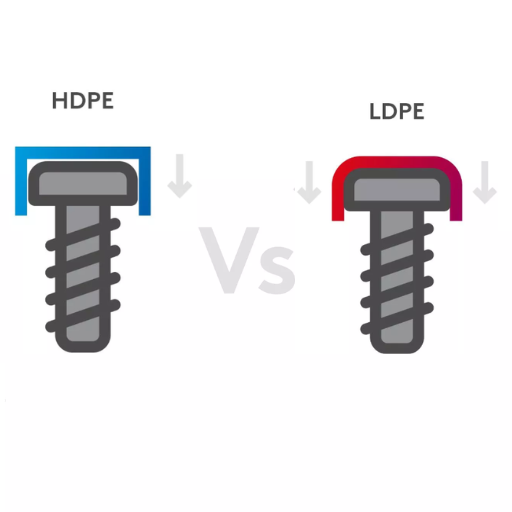
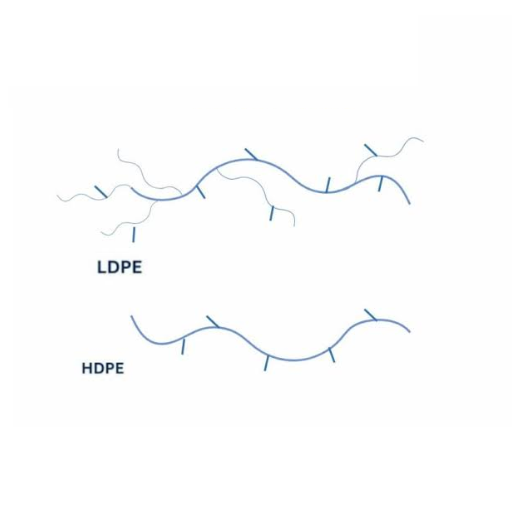
The difference starts at the molecular level. HDPE has a linear structure with minimal branching. Its chains pack tightly, giving it a density of 0.941 to 0.970 g/cm³ and crystallinity of 60% to 80%. LDPE has extensive long-chain branching. Its chains cannot pack tightly, so its density drops to 0.910 to 0.940 g/cm³ and crystallinity stays between 40% and 50%.
This structural gap drives every processing distinction. Tightly packed HDPE chains need more heat and more shear to flow. Branched LDPE chains move past one another more easily. As a result, LDPE melts at a lower temperature, flows farther at the same pressure, and cools faster in thin sections.
The Role of Melt Flow Index
Melt flow index, or MFI, measures how easily a polymer flows when melted. It is one of the first numbers to check on a technical data sheet. A higher MFI means lower viscosity and easier flow.
Typical MFI ranges differ by process:
- Extrusion: 0 to 1 g/10 min
- Blow molding: 1 to 5 g/10 min
- Injection molding: above 5 g/10 min
A pipe extruder needs low MFI for high melt strength. An injection molder molding thin-walled caps needs higher MFI to fill the cavity before the gate freezes. Choosing the wrong range is a common source of defects.
HDPE vs LDPE Injection Molding
Injection molding is where hdpe vs ldpe processing differences show up most clearly. Both materials run on standard reciprocating-screw machines, but their temperature, pressure, and shrinkage profiles differ. For guidance on matching pellet grade to processing method, read our plastic pellets for injection molding guide.
Melt and Mold Temperatures
HDPE melt temperatures typically range from 200°C to 300°C. Mold temperatures run from 10°C to 80°C, with 40°C to 60°C common for general-purpose parts. Higher mold temperatures improve surface gloss and reduce flow hesitation in thin walls.
LDPE melt temperatures range from 160°C to 280°C. Mold temperatures typically fall between 20°C and 70°C, often 30°C to 45°C. LDPE’s lower melting point reduces energy use, but it also means the material softens more quickly if barrel temperatures drift high.
Injection Pressure and Speed
HDPE usually runs at 70 to 105 MPa injection pressure. Its moderate viscosity fills most parts well, but thin-wall or high-flow-length designs may need the upper end of the range. Fast injection speeds are generally recommended to prevent premature cooling.
LDPE flows more easily and can tolerate injection pressures up to around 150 MPa, with pack pressures near 75 MPa. Its excellent flow makes it forgiving for complex or thin-walled parts, but excessive pressure can cause flash.
Shrinkage and Warpage
HDPE shrinkage typically falls between 1.5% and 4%. Its high crystallinity causes significant volumetric shrinkage as it cools. Uniform mold temperature and consistent cooling are critical to prevent warpage.
LDPE shrinkage is often reported from 1.5% to 5%, though many grades fall closer to 1% to 2%. The lower crystallinity and softer structure make it more forgiving, but large flat parts can still warp if cooling is uneven.
Drying Requirements
Neither HDPE nor LDPE typically requires predrying. Both materials absorb very little moisture. However, surface condensation during cold storage can cause cosmetic defects, so letting cold pellets reach ambient temperature before loading is good practice.
Common Defects and Prevention
HDPE parts are prone to warpage, sink marks, and flow hesitation in thin walls. Higher mold temperatures and optimized gate placement reduce these issues. LDPE parts can flash if clamp force or injection pressure is too high, and they may distort if ejector pins push too aggressively on soft parts.
Best Injection Molding Applications
HDPE excels in rigid parts such as caps, closures, crates, bins, housings, and industrial components. LDPE fits flexible or soft-touch parts such as squeeze bottles, flexible lids, gaskets, and tubing connectors.
Sourcing HDPE or LDPE for injection molding? View our HDPE pellet specifications and request a quote →
HDPE vs LDPE Extrusion
Extrusion is a different challenge. Here, melt strength, die design, and temperature profile matter more than injection pressure.
Extrusion Temperature Profiles
General polyethylene extrusion runs from 160°C to 240°C across the barrel, adapter, and die. HDPE sits at the higher end of that range because of its higher melting point. LDPE runs at the lower end, which saves energy and reduces thermal degradation risk.
| Zone | HDPE Typical Range | LDPE Typical Range |
|---|---|---|
| Rear barrel | 160–200°C | 140–170°C |
| Middle barrel | 180–240°C | 160–210°C |
| Front barrel | 200–260°C | 180–230°C |
| Adapter/die | 200–280°C | 180–240°C |
These ranges vary by grade, equipment, and product geometry. Always start with the resin supplier’s recommended profile and adjust based on melt pressure and surface quality.
Screw Design Considerations
HDPE benefits from a screw with higher compression ratio and more shear to break down its crystalline structure. Typical L/D ratios of 24:1 to 30:1 work well. LDPE is less demanding and runs well on standard polyolefin screws with lower compression ratios.
Using an LDPE screw profile for HDPE can leave unmelted pellets and cause pressure surges. Using an HDPE profile for LDPE can overheat the material and cause gels or discoloration.
Melt Strength and Die Design
HDPE has higher melt strength. This makes it ideal for pipe, profile, and sheet extrusion where the extrudate must hold its shape outside the die. LDPE has lower melt strength but excellent draw-down characteristics, which is why it dominates blown film.
Typical Extruded Products
Different industries favor different outcomes in hdpe vs ldpe processing. HDPE extrusion produces pipes, tubing, sheets, geomembranes, ropes, and woven tapes. LDPE extrusion produces films, coatings, flexible tubing, and cable jacketing. For an industry-by-industry breakdown of end-use applications, see our HDPE vs LDPE applications guide.
HDPE vs LDPE Blow Molding
Blow molding shares elements with both injection molding and extrusion. The parison must flow through the die and then hold its shape while the mold closes and air inflates it.
Blow Molding Temperature Settings
HDPE blow molding uses higher melt temperatures, typically 180°C to 230°C, to produce a stable parison with enough melt strength for large bottles. LDPE blow molding runs at lower temperatures, often 160°C to 200°C, because the material is naturally softer and more elastic.
Parison Behavior
HDPE parisons are stiffer and less elastic. They hold their shape well but require precise die gap and programming for uniform wall thickness. LDPE parisons are softer and more elastic. They tolerate some die variation but can sag if the temperature is too high.
Common Blow Molded Products
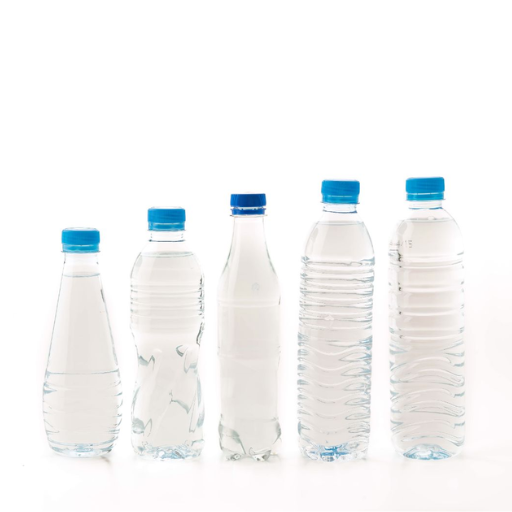
HDPE dominates rigid bottles and containers such as milk jugs, detergent bottles, and drums. LDPE suits squeeze bottles, small flexible containers, and pharmaceutical dropper bottles where rebound and conformability matter.
HDPE vs LDPE Film Extrusion
Film extrusion is where LDPE truly differentiates itself in hdpe vs ldpe processing. Blown and cast film lines are optimized for LDPE’s flow and draw-down behavior. If your line runs flexible films, explore our LDPE pellet specifications.
Blown Film Parameters
LDPE dominates blown film because of its excellent bubble stability, clarity, and heat sealability. Typical blow-up ratios range from 2:1 to 4:1, and frost line height is easier to control than with HDPE.
HDPE can be blown into film, but the process is more demanding. HDPE film is stronger and stiffer, allowing downgauging. A 30-micron LDPE film can sometimes be replaced with a 15-micron HDPE film. However, HDPE requires precise cooling, narrower die gaps, and lower blow-up ratios to avoid bubble instability.
Film Properties
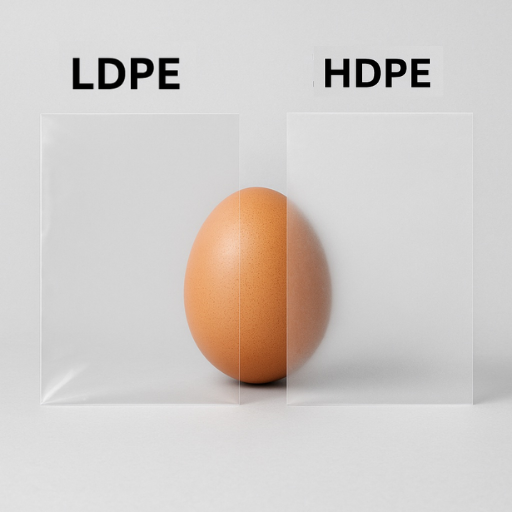
LDPE film is glossy, soft, and stretchy. It seals easily and resists punctures through deformation. HDPE film is matte, stiff, and has a higher strength-to-weight ratio. It is common for industrial liners, heavy-duty bags, and grocery sacks.
When to Choose HDPE Film
Choose HDPE film when strength, stiffness, and material reduction are priorities. Choose LDPE film when clarity, softness, sealability, and easy processing are priorities.
HDPE vs LDPE Processing Parameter Comparison
The table below summarizes the key hdpe vs ldpe processing differences side by side.
| Parameter | HDPE | LDPE |
|---|---|---|
| Melt temperature | 200–300°C | 160–280°C |
| Mold temperature (injection molding) | 10–80°C | 20–70°C |
| Injection pressure | 70–105 MPa | Up to ~150 MPa |
| Shrinkage | 1.5–4% | 1.5–5% |
| Crystallinity | 60–80% | 40–50% |
| MFI range (injection molding) | 4–35 g/10 min | 2–50 g/10 min |
| MFI range (extrusion) | 0.1–1.0 g/10 min | 0.2–2.0 g/10 min |
| Drying required | No | No |
| Best processes | Injection molding, extrusion, blow molding | Film extrusion, injection molding, blow molding |
| Common defects | Warpage, sink marks, flow hesitation | Flash, distortion, overheating |
This table is a starting point. Always validate settings with production trials using your specific grade, mold, and machine.
Which Is Easier to Process?
LDPE is generally easier to process than HDPE. It melts at a lower temperature, flows more easily, and tolerates a wider processing window. Beginners and high-speed film lines often prefer LDPE for its forgiving behavior.
HDPE requires tighter temperature control, longer cooling times, and more attention to shrinkage. However, it rewards proper setup with stronger, more dimensionally stable parts. For rigid applications, the extra care is worth the result.
The real answer depends on your equipment and experience. A well-tuned HDPE line is not difficult to run. A poorly set LDPE line can still produce flash, gels, and dimensional issues.
Choosing the Right Pellet Grade for Your Process
Selecting the right polyethylene is only half the battle. The pellet grade must match your process. Here is what to check on the technical data sheet.
Match MFI to Your Process
- Injection molding thin walls: choose higher MFI for faster flow
- Injection molding thick walls: choose medium MFI for better mechanical properties
- Pipe or profile extrusion: choose low MFI for melt strength
- Blown film: choose film-grade MFI optimized for bubble stability
Check Density and Additives
Density affects part weight, stiffness, and shrinkage. Additives such as UV stabilizers, anti-static agents, slip agents, and color masterbatch change processing behavior. Always confirm compatibility with your equipment and end-use requirements.
Require a Certificate of Analysis
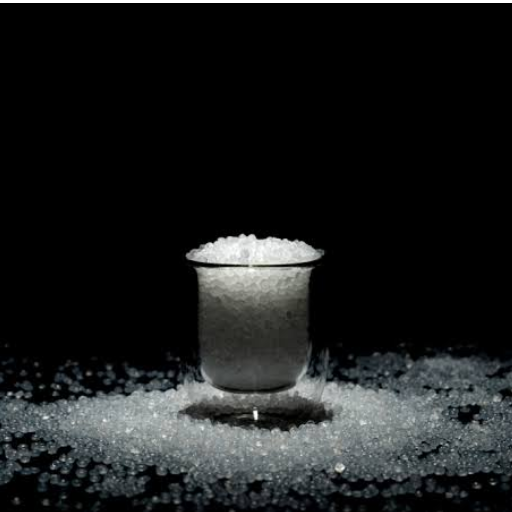
A certificate of analysis, or COA, should include MFI, density, tensile strength, and ash content at minimum. Comparing each lot against your approved baseline prevents the kind of batch-to-batch variation that causes defects.
When Maria’s team in Shenzhen implemented incoming MFI checks on every HDPE lot, their scrap rate from batch variation dropped by 60%. The test took 20 minutes. The savings were immediate.
Need consistent MFI and density from lot to lot? Contact our team for polyethylene pellets with full COA documentation →
Batch Consistency and Troubleshooting
Even the right grade will misbehave if the batch is inconsistent. Melt flow variation, density drift, and contamination are the most common incoming-resin problems.
Incoming Inspection Checklist
- Verify MFI against the COA
- Check density or specific gravity
- Inspect pellets for color, shape, and contamination
- Confirm additive package matches your specification
- Store pellets in a clean, dry area away from direct sunlight
In-Process Monitoring
Track melt temperature, melt pressure, cycle time, and part dimensions. Sudden changes in any of these values often point back to resin variation.
When to Contact Your Supplier
Contact your supplier if you see repeated defects, out-of-spec COA values, inconsistent color, or unusual odor. A reliable supplier will investigate the root cause and provide a corrective action plan.
Processing Recycled HDPE and LDPE
Recycled polyethylene, whether rHDPE or rLDPE, introduces additional processing variables. Post-consumer resins have broader MFI ranges and may contain contamination or moisture. Processing temperatures sometimes need minor reductions to prevent degradation.
Many processors blend recycled content with virgin resin to maintain properties while meeting sustainability targets. Start with a low blend ratio, measure mechanical properties, and adjust the formulation based on results. For buyers evaluating rHDPE, our recycled HDPE pellets guide explains how to source material that runs consistently.
Conclusion
HDPE vs LDPE processing comes down to matching the right material, grade, and machine settings to your application. HDPE needs higher temperatures, handles higher pressure, and produces rigid, strong parts. LDPE runs cooler, flows easier, and delivers flexible, soft parts and films. To learn more about HDPE Pellets, please click to refer to our accompanying guide.
Key takeaways:
- HDPE melt temperatures run 200°C to 300°C; LDPE runs 160°C to 280°C
- LDPE generally flows better and is easier to process; HDPE delivers better dimensional stability
- Shrinkage is higher for both than for many engineering resins, so mold and die design must account for it
- MFI selection should match your process: low for extrusion, medium for blow molding, higher for injection molding
- Batch consistency, documented by COA data, is essential for stable production
The right pellet supplier does more than deliver resin. They provide consistent specifications, technical support, and documentation that keep your line running smoothly. Contact our materials engineers today to discuss your HDPE or LDPE processing requirements and request a custom quote →
Frequently Asked Questions About HDPE vs LDPE Processing
What is the main difference between HDPE and LDPE processing?
HDPE requires higher melt temperatures and pressures due to its linear, crystalline structure. LDPE processes at lower temperatures with better flow because of its branched molecular structure.
Which is easier to process, HDPE or LDPE?
LDPE is generally easier to process. It has a lower melting point, lower viscosity, and better flow, making it more forgiving for film extrusion and thin-wall injection molding.
Do you need to dry HDPE or LDPE before processing?
No. Neither HDPE nor LDPE typically requires predrying because both absorb very little moisture. Cold pellets should reach ambient temperature before loading to avoid condensation.
What injection pressure is used for HDPE?
HDPE injection molding typically uses 70 to 105 MPa. LDPE can use higher pressures up to around 150 MPa.
Which has more shrinkage, HDPE or LDPE?
Both shrink significantly. HDPE typically shrinks 1.5% to 4%. LDPE shrinkage ranges from 1.5% to 5%, though many grades fall near 1% to 2%.
Can HDPE and LDPE be processed together?
They can be blended in small amounts, but it is not recommended. Different melting points, shrinkage rates, and crystallinity levels cause poor mechanical properties and processing instability.