In March 2026, a procurement manager at a Midwest pipe manufacturer signed a 12-month contract for virgin HDPE at $1,180 per ton. Three months later, oil prices dropped 14%, and his competitor across town locked in recycled HDPE at $620 per ton with fixed pricing through year-end. Same tensile strength. Same chemical resistance. Same delivery schedule. The only difference was the feedstock source and $560 per ton in material cost.
That gap is widening. The global market for rHDPE pellets now exceeds $5.7 billion, and procurement teams that understand how to evaluate grades, verify certifications, and manage batch consistency are cutting resin costs by 20-50% without sacrificing production quality. If you are responsible for sourcing high-density polyethylene, this guide gives you the exact framework to do the same.
You will learn what rHDPE pellets are, how they compare to virgin HDPE across cost and performance, which grades suit your application, how to evaluate suppliers, and what processing parameters to use. We also include real 2026 price benchmarks by grade so you can negotiate from a position of knowledge.
Want to skip ahead and get a quote for your volume? Contact our materials team for specifications, COA samples, and competitive pricing on rHDPE pellets.
What Are rHDPE Pellets?
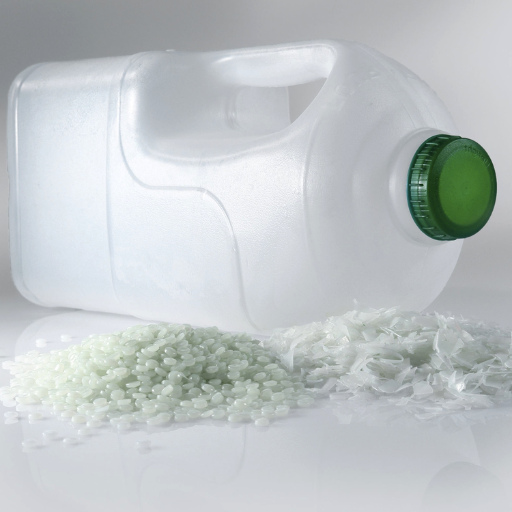
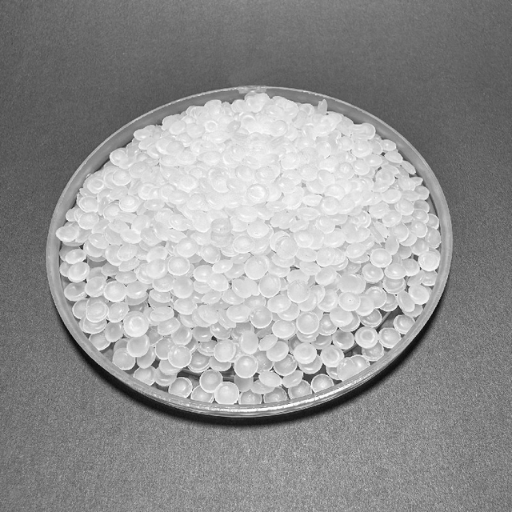
rHDPE pellets are granules of recycled high-density polyethylene produced from post-consumer and post-industrial plastic waste. The primary feedstock includes milk bottles, detergent containers, juice jugs, industrial drums, and caps collected through municipal recycling programs and industrial scrap streams.
The manufacturing process follows six stages:
- Collection and sorting, Near-infrared (NIR) optical sorting isolates HDPE from PET, PP, and other polymers
- Washing, Hot water and caustic baths remove labels, adhesives, and organic residues
- Grinding, Clean bottles are shredded into flakes roughly 10-20 mm in size
- Drying, Centrifugal and thermal dryers reduce moisture to under 0.1%
- Extrusion and filtration, Flakes are melted and pushed through fine mesh screens to remove remaining contaminants
- Pelletizing, Molten strands are cooled and cut into uniform pellets, typically 3-5 mm in diameter
The finished rHDPE pellets retain 90-95% of virgin HDPE mechanical properties in most grades. Color is the main variable. Natural or clear rHDPE comes from sorted milk bottles and commands a premium. Mixed-color feedstocks yield gray or black pellets suited to industrial applications where appearance matters less than cost.
There are two feedstock categories to understand:
- Post-consumer recycled (PCR), Sourced from municipal waste streams. Higher sustainability credentials, more variable quality, and often requires deodorization for packaging applications.
- Post-industrial recycled (PIR), Sourced from factory trim, sprues, and off-spec production. More consistent properties, lower contamination, and generally lower cost per ton.
Both types produce rHDPE pellets suitable for injection molding, blow molding, and extrusion. The key is matching the grade to your process and end-use requirements. To learn more about the types of Recycled Plastic Pellets, please click to refer to our accompanying guide: Types of Recycled Plastic Pellets: Complete Guide to rPET, rHDPE, rPP & More
rHDPE Properties and Performance
Before you specify rHDPE pellets for a production run, you need to know how the material behaves. The table below compares typical rHDPE properties against virgin HDPE benchmarks.
| Property | rHDPE Range | Virgin HDPE Benchmark | Notes |
|---|---|---|---|
| Density | 0.94-0.97 g/cm³ | 0.94-0.97 g/cm³ | Identical |
| Melt Flow Index | 0.2-20 g/10 min | 0.2-20 g/10 min | Grade-dependent; wider tolerance in rHDPE |
| Tensile Strength | 25-37 MPa | 30-37 MPa | High-quality rHDPE matches virgin at the upper end |
| Chemical Resistance | Excellent | Excellent | Acids, alkalis, and solvents pose no issue |
| Moisture Absorption | Very low | Very low | Both resist water absorption |
| UV Resistance | Good (black/gray) | Good | Carbon black in dark grades improves UV stability |
| Reprocessability | 6-10 cycles | 10+ cycles | Slight degradation with each reheat cycle |
The data tells a clear story. For applications where color flexibility exists and mechanical loads are moderate to high, rHDPE pellets perform nearly identically to virgin material. The gap only widens in two areas: color consistency and extreme high-stress fatigue.
Color consistency is the practical challenge most buyers encounter. Mixed-color feedstocks produce gray or charcoal pellets. If your product needs a specific color match, you will either specify natural rHDPE and add masterbatch, or you will use dark pigments to standardize the appearance.
For demanding applications, blending 10-30% virgin HDPE with rHDPE restores near-virgin performance. Research published in MDPI Polymers showed that 100% virgin HDPE delivers a flexural strength of 39.98 MPa, while 100% recycled HDPE measures 20.88 MPa. A 50/50 blend produces intermediate results and is the sweet spot for many manufacturers who want cost savings without requalifying parts.
Virgin vs rHDPE: What the Numbers Actually Look Like
Procurement decisions come down to three factors: cost, performance, and compliance. Here is how rHDPE pellets stack up against virgin HDPE in each category.
Cost Comparison
| Grade | Price per Ton (2026) | Premium / Discount vs Virgin |
|---|---|---|
| Basic mixed-color rHDPE | 300−300−500 | 55-70% below virgin |
| Mid-grade rHDPE (injection/extrusion) | 510−510−810 | 30-45% below virgin |
| High-quality / natural rHDPE | 850−850−1,200 | Parity to 5% below virgin |
| Virgin HDPE benchmark | 980−980−1,235 | Baseline |
| Food-grade / deodorized rHDPE | 1,100−1,100−1,500 | 10-30% premium over standard rHDPE |
The price advantage of rHDPE pellets is real, but it is not universal. Basic mixed-color grades offer the deepest savings and work well for pipes, pallets, and outdoor products. Food-grade natural rHDPE, on the other hand, can match or exceed virgin pricing due to sorting, washing, and certification costs.
Here is where rHDPE offers a hidden advantage: price stability. Virgin HDPE is tied to naphtha and crude oil markets. When oil spikes, virgin resin follows within weeks. rHDPE pricing is driven by bale availability, sorting capacity, and regulatory demand, not oil futures. In regulated markets like the EU, rHDPE has partially decoupled from virgin resin volatility.
Performance Differences
Virgin HDPE still leads in two specific areas:
- Mechanical strength at the extremes, Virgin polymer chains are longer and more uniform, giving virgin HDPE a slight edge in fatigue resistance and very high-load applications
- Color and surface finish, Virgin material offers predictable appearance. rHDPE requires color-sorting or masterbatch addition for cosmetic parts
For 90% of industrial applications, those differences are irrelevant. rHDPE delivers the same chemical resistance, moisture barrier, and impact strength that make HDPE the material of choice for containers, pipes, and durable goods.
Environmental Impact
An independent life-cycle assessment by ALPLA, cited in PETnology, measured the carbon footprint of rHDPE at approximately 0.24 kg CO2e per kilogram. Virgin HDPE clocks in at roughly 1.92 kg CO2e per kilogram. That is an 88% reduction in carbon emissions.
Energy savings are equally significant. Mechanical recycling uses up to 88% less energy than producing virgin resin from petroleum feedstock. For manufacturers facing Scope 3 emissions reporting requirements, switching to rHDPE pellets is one of the fastest ways to reduce supply-chain carbon intensity.
rHDPE Pellet Grades: Which One Do You Actually Need?
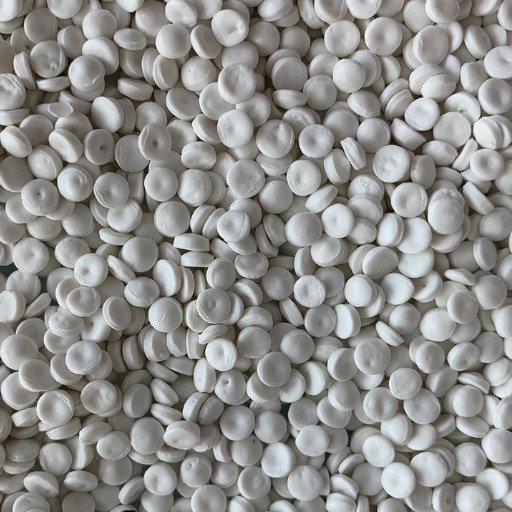
Not all rHDPE pellets are interchangeable. Buyers who fail to specify the right grade end up with odor issues, color mismatches, or out-of-spec MFI. Here is how to choose.
Natural / Clear rHDPE
Natural rHDPE comes from sorted milk bottles and clear HDPE packaging. It is the highest-purity grade and the only option for light-colored or transparent finished products.
- Best for: Food-contact bottles, cosmetic packaging, light-colored consumer goods
- Price: 850−850−1,200 per ton (premium grade)
- Certification: FDA NOL or EU EFSA approval required for food contact
- Caveat: Supply is limited because it depends on clean, mono-material feedstock streams
Mixed-Color / Gray rHDPE
This is the workhorse grade. It comes from mixed post-consumer bales and delivers consistent mechanical properties with variable color.
- Best for: Drainage pipes, pallets, bins, outdoor furniture, geomembranes, non-cosmetic industrial parts
- Price: 510−510−810 per ton
- Color management: Dark masterbatch or carbon black standardizes appearance
- Caveat: Not suitable for applications requiring color matching
Black rHDPE
Black rHDPE is typically mixed-color material compounded with carbon black. The pigment masks color variation and adds UV stability.
- Best for: Decking, fencing, agricultural film, geomembranes, outdoor infrastructure
- Price: 600−600−900 per ton
- UV stability: Carbon black provides long-term weather resistance
- Certification: Ocean-bound and Ocean Cycle certified grades available for sustainability branding
Food-Grade rHDPE
Food-grade rHDPE undergoes super-clean processing, deodorization, and challenge testing to meet FDA or EU food-contact standards.
- Best for: Milk bottles, juice containers, caps, food trays
- Price: 1,100−1,100−1,500 per ton (10-30% premium over standard)
- Certification: FDA Food Contact Notification, EU EFSA approval, or equivalent
- Caveat: Not all suppliers offer true food-grade rHDPE. Verify certification documents before ordering
When Liu Chen, a procurement director at a Guangdong packaging firm, switched his non-food bottle line to mixed-color rHDPE, he cut material costs by 34%.
When he tried the same switch for a food-contact line without verifying certification, the batch failed incoming QC due to residual odor. He now maintains two supplier relationships. One handles standard industrial rHDPE. A second, audited source covers food-grade material. The dual-supplier strategy costs more in administrative overhead, but it eliminates line stoppages.
Need help matching the right rHDPE grade to your application? Our engineering team can review your specifications and recommend the optimal grade with processing parameters.
Sourcing rHDPE Pellets: A Buyer’s Checklist
Evaluating rHDPE suppliers requires more than comparing price per ton. Inconsistent MFI, moisture content, or contamination can shut down a production line faster than a 10% price premium ever will.
Price Benchmarks and Market Trends
As of mid-2026, global rHDPE pricing follows these ranges:
- Asia (FOB China): Mixed-color 480−480−750/ton; natural 800−800−1,100/ton
- Europe (delivered): Mixed-color EUR 650-950/ton; food-grade EUR 1,000-1,400/ton
- North America (delivered): Mixed-color 550−550−850/ton; natural 900−900−1,300/ton
Three factors move these numbers:
- Feedstock availability, Seasonal collection rates and bale quality
- Certification level, GRS, FDA, and food-grade certifications add processing cost
- Color specification, Natural and light-colored grades require more sorting
Spot buyers face more volatility than contract buyers. If your volume exceeds 20 tons per quarter, negotiate a 6-12 month fixed-price contract. Contract pricing typically runs 5-10% below spot and protects against feedstock shortages.
Certifications and Compliance
| Certification | What It Verifies | When You Need It |
|---|---|---|
| GRS (Global Recycled Standard) | Percentage of recycled content; chain of custody | Sustainability claims; ESG reporting |
| FDA NOL / EU EFSA | Safety for food-contact applications | Bottles, caps, trays, any food packaging |
| RecyClass | Recyclability and recycled content traceability | EU market access; packaging compliance |
| REACH | Chemical safety compliance | All materials sold into the EU |
| Ocean Cycle / OBP | Ocean-bound plastic sourcing | Sustainability branding; B2C marketing |
Never accept a supplier’s word on certification. Request the certificate number and verify it with the issuing body. Fake or expired certifications are more common than buyers expect.
Supplier Evaluation Checklist
Before you place a trial order, verify these items:
- MFI consistency, Batch-to-batch variation should be within +/- 10%. Ask for the last 6 months of COA data
- Moisture content, Under 0.1% for injection molding; under 1% for extrusion
- Contamination specs, Ash content and black speck limits should be defined in the purchase agreement
- Filtration level, Ask about screen mesh size during extrusion. Finer filtration means fewer defects
- Odor control, For packaging applications, request deodorized grades and specify odor acceptance criteria
- Color tolerance, Define Delta E limits if color consistency matters
- Delivery reliability, Check references for on-time delivery rates
- Minimum order quantities, Ensure MOQs match your consumption. Standard lots start at 10-20 tons; sample lots at 25 kg
If a supplier refuses to share COA data or pushes back on specification requirements, treat that as a red flag. Reliable rHDPE pellet suppliers document every batch.
Applications: Where rHDPE Pellets Deliver Results
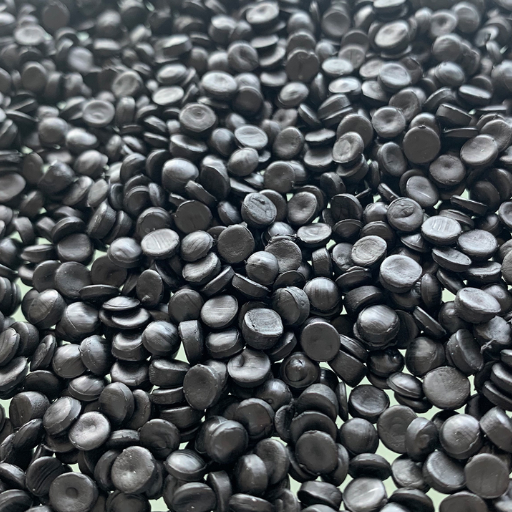
rHDPE pellets serve the same industries as virgin HDPE. The difference is cost, carbon footprint, and regulatory compliance. Here is where manufacturers are switching in 2026.
Packaging
Non-food bottles for detergent, shampoo, and motor oil are the largest packaging segment for rHDPE. The material offers identical chemical resistance and impact strength at 30-45% lower cost. Food-contact applications require certified grades, but the economics still favor rHDPE when volumes are high.
Caps and closures are another strong fit. rHDPE cap resin with MFI in the 8-20 g/10 min range processes reliably on standard injection molding lines.
Construction and Infrastructure
This is where rHDPE dominates. Corrugated drainage pipe, sewer conduit, and water distribution pipe all run on mixed-color rHDPE with no cosmetic requirements. The material’s 50+ year service life and chemical resistance make it ideal for buried infrastructure.
Plastic lumber, decking, and fencing use black rHDPE compounded with UV stabilizers. The product lasts decades outdoors and diverts significant plastic volume from landfills.
Geomembranes for landfill liners and mining ponds represent a growing segment. The low permeability and chemical resistance of HDPE are unchanged by recycling.
Industrial and Consumer Goods
Pallets, storage bins, wheelie bins, and totes are natural fits for mixed-color rHDPE. These products need durability, not beauty. Automotive fluid reservoirs and non-structural under-hood components also switch easily.
Agricultural Applications
Agricultural drainage pipe, shade netting, compost bins, and chemical tanks all process well from rHDPE. The UV resistance of black grades is particularly valuable in outdoor farm settings.
Processing Parameters for rHDPE Pellets
rHDPE processes on the same equipment as virgin HDPE, but a few parameter adjustments improve yields and reduce defects.
Injection Molding
| Parameter | rHDPE Setting | Virgin HDPE Setting | Adjustment |
|---|---|---|---|
| Barrel temperature | 160-260°C | 180-280°C | Slightly lower to reduce degradation |
| Mold temperature | 20-60°C | 20-60°C | Same |
| Injection pressure | 700-1,100 bar | 700-1,200 bar | Slightly lower |
| Drying time | 2 hours at 70°C | Minimal | Recycled pellets may retain trace moisture |
| Shrinkage | 1.5-4.0% | 1.5-3.0% | Account for wider range in mold design |
The key adjustment is shrinkage. rHDPE pellets can exhibit slightly higher or more variable shrinkage than virgin material. Design molds with a bit more tolerance, or run a short trial before full production.
Blow Molding
Blow molding grades need low MFI, typically 0.3-1.0 g/10 min. rHDPE blow molding resin is widely available from Asian and European suppliers. Parison programming and wall thickness control remain identical to virgin processing.
Extrusion
Pipe and profile extrusion uses rHDPE with MFI between 0.2 and 8.0 g/10 min depending on the product. The extrusion process is forgiving, and mixed-color grades work well for corrugated pipe and industrial profiles.
Quality Control and Batch Consistency
The biggest risk in sourcing rHDPE pellets is batch-to-batch variation. Here is how to manage it.
Incoming Inspection Protocol
Test every lot before it enters production:
- MFI verification, Run a quick melt flow test. Compare against the COA and your baseline. Reject lots outside +/- 10% tolerance
- Moisture testing, Use a halogen moisture analyzer. Target under 0.1% for injection molding
- Visual contamination check, Inspect a 1 kg sample for black specks, gels, or foreign particles
- Odor evaluation, For packaging, warm a small sample and evaluate smell against your acceptance standard
- Color measurement, Use a spectrophotometer to check Delta E against your specification
Certificate of Analysis (COA) Review
Every batch of rHDPE pellets should arrive with a COA. Verify that the following data points are present and within spec:
- Melt Flow Index (MFI) at stated temperature and load
- Density
- Tensile strength at yield
- Moisture content
- Ash content
- Color (Lab* or visual standard)
- Lot number and date of manufacture
When to Reject a Batch
- MFI outside the agreed tolerance band
- Moisture content above 0.1% for injection molding
- Visible contamination exceeding agreed black speck limits
- Persistent odor in deodorized grades
- Missing or inconsistent COA documentation
A rejected batch is inconvenient. A bad batch that makes it to your production floor is expensive. Build a 2-3 week buffer stock so you can reject and replace without line stoppages.
Blending rHDPE with Virgin HDPE
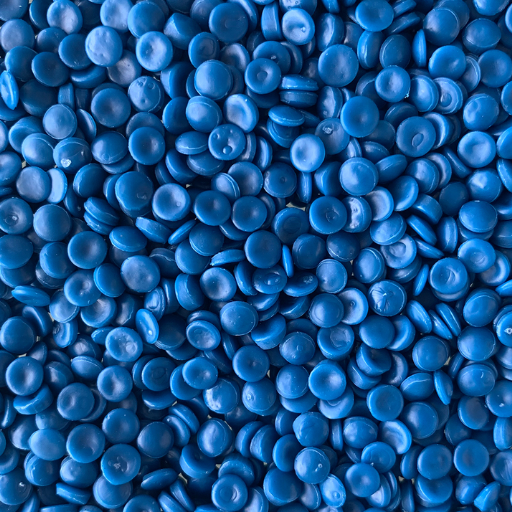
You do not need to go 100% recycled to capture benefits. Blending is often the smartest approach.
| Blend Ratio | Flexural Strength | Cost Savings vs 100% Virgin | Best For |
|---|---|---|---|
| 100% virgin | 39.98 MPa | Baseline | High-stress, cosmetic, food-contact parts |
| 75% virgin / 25% rHDPE | ~35 MPa | 8-12% | Quality-critical parts with sustainability targets |
| 50% virgin / 50% rHDPE | ~30 MPa | 18-25% | General industrial parts, pipes, bins |
| 25% virgin / 75% rHDPE | ~25 MPa | 28-38% | Non-cosmetic, moderate-stress applications |
| 100% rHDPE | 20.88 MPa | 35-55% | Drainage pipe, pallets, outdoor goods |
The 50/50 blend is the practical sweet spot for many manufacturers. It cuts material costs roughly 20% while retaining 90-95% of virgin mechanical performance. No mold changes required. No customer complaints.
Zhang Wei, a plant manager at a Zhejiang automotive supplier, started with 30% rHDPE in his fluid reservoir line. After six months of zero field failures, he moved to 50% rHDPE and cut material costs by $340 per ton.
The blended parts still passed OEM drop tests and thermal cycling requirements. His only process change was a slight reduction in barrel temperature to account for the recycled feedstock’s heat history.
Conclusion
rHDPE pellets are no longer a compromise material. They are a competitive advantage for procurement teams who know how to source them correctly. The global market is growing at 9.4% annually. Regulatory pressure from the EU PPWR and corporate sustainability commitments is locking in demand. And the cost savings are real: 20-55% below virgin HDPE for industrial grades, with an 88% lower carbon footprint.
Success with rHDPE comes down to four principles:
- Match the grade to the application, Industrial parts need mixed-color rHDPE. Food contact needs certified, deodorized grades
- Verify every batch, MFI, moisture, contamination, and odor are your quality gatekeepers
- Consider blending, A 50/50 virgin/recycled blend often delivers the best net value
- Lock in contract pricing, Spot markets swing. Fixed contracts protect your budget
The manufacturers winning on material costs in 2026 are not gambling on low-grade resin. They are specifying rHDPE pellets with the same discipline they apply to virgin resin. The result is lower spend, stable supply, and compliance with every sustainability mandate on the horizon. To learn more about Recycled Plastic Pellets and Recycled Plastic Pellets for Injection Molding, please refer to our accompanying guide.
Ready to source rHDPE pellets for your next production run? Contact Suzhou Yifuhui New Material for grade-specific specifications, batch COA samples, and competitive volume pricing. Our engineering team will match the right rHDPE pellets to your process and help you cut material costs without cutting quality. To learn more about Food-Grade Recycled Plastic Pellets: FDA & EFSA Compliance Guide for Buyers, please click to view our accompanying guide.