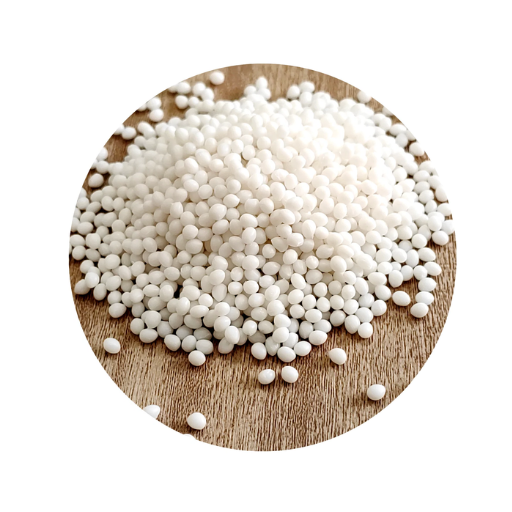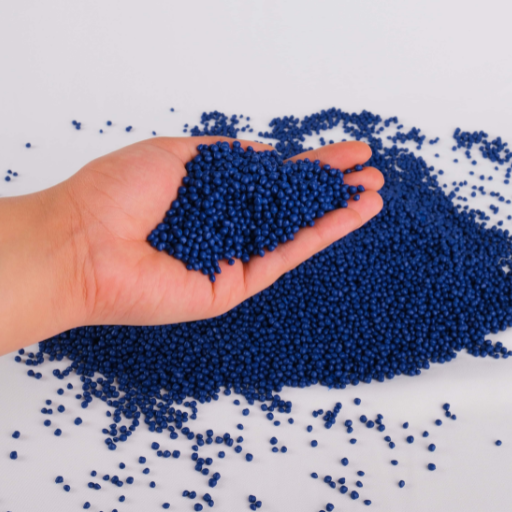
A purchasing agent sends out a drawing that says “Hytrel tubing.” Three quotes come back. One covers solid TPEE tube, one a Hytrel-lined PVC composite, and one a reinforced hose with a TPEE core. Every supplier believes it answered the drawing.
In a sense, all three did. The drawing named a polymer family that covers four products, with temperature ceilings 50 to 80 °C apart. That gap is why so many Hytrel tubing specifications get settled at quotation rather than at design.
Hytrel is tough, flexible and resistant to oils and fuels, and that reputation is earned. What a datasheet won’t tell you is which grade extrudes into tube, what the finished construction can hold, or where another polymer wins outright.
This guide covers all three. If you want the polymer background first, our complete Hytrel material guide covers it.
Definition: Hytrel tubing is tube or hose made from Hytrel, a thermoplastic polyester elastomer (TPEE, ISO name TPC-ET). The name covers four products: solid TPEE tube, Hytrel-lined PVC tube, reinforced hose, and blow-molded duct. They share a polymer family but not a specification.
What Is Hytrel Tubing?
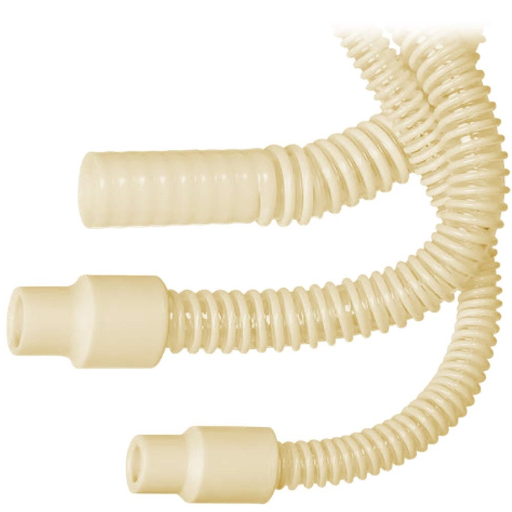
Hytrel is a thermoplastic polyester elastomer whose ISO 1043 symbol is TPC-ET. What a thermoplastic polyester elastomer is explains the chemistry. For tubing, the useful question is which of four products you were quoted.
One Polymer, Four Products
| Product | Construction | Typical dimensions | Temperature ceiling | Source |
|---|---|---|---|---|
| Solid Hytrel tube | 100% TPEE, extruded | 0.9 mm OD buffer tube up to industrial tube | Set by grade, load and fluid | Thorlabs; necero |
| Hytrel-lined PVC tube | 55D Hytrel liner inside a PVC cover | ID 0.170, 1/4, 3/8 in | 71 °C (160 °F) | NewAge 123c; GVC |
| Hytrel hose and liner | TPEE core tube, reinforcement, cover | Set by the hose builder | 121 °C petroleum; 85 °C water/oil; 57 °C water/glycol | Parker 4460/4660 |
| Hytrel duct and sleeve | Blow-molded or extruded | Part-specific | Grade-dependent | Celanese trade article |
Solid Hytrel vs Hytrel-Lined PVC
Most pages selling Hytrel tubing are selling the composite. A 55D Hytrel liner sits inside a PVC cover, co-extruded as a single wall. The datasheets cap that construction at 71 °C (160 °F), and the cap belongs to the cover, not to the Hytrel.
That is a product limit, not a material limit. Solid Hytrel has no single ceiling, because grade, load and fluid each move it. The composite stops where its cover stops.
Consider a process engineer we’ll call Elena. Her drawing called for “Hytrel tubing, 3/8 in ID” on a washdown line. What arrived was the lined composite, which matched the drawing and sat far below the temperature she had assumed.
Who Makes Hytrel Now
Celanese owns the brand through its purchase of DuPont Mobility & Materials. The deal was announced in February 2022 at $11.0 billion and closed on November 1, 2022. Celanese Hytrel TPC is now the manufacturer page. Many distributor pages still credit DuPont.
Hytrel Tubing Grades: Which Ones Extrude?
Two questions sit behind a grade choice. Does the manufacturer list tubing as a typical application, and can the grade be extruded at all?
| Grade | Nominal Shore D | Measured max / 15 s | Flexural modulus (MPa) | Melting point (°C) | HDT at 1.8 MPa (°C) | Process | Tubing listed |
|---|---|---|---|---|---|---|---|
| 4056 | 40 | 43 / 37 | 60 | 152 | not stated | Injection, extrusion | Fittings only |
| 4556 | 45 | 45 / 42 | 87 | 193 | 35 | Injection, extrusion | Fittings only |
| 5526 | 55 | 55 / 51 | 200 | 203 | 45 | Injection, thermoforming | No |
| 5556 | 55 | 55 / 51 | 190 | 201 | 45 | Injection, extrusion | Yes, hose and tubing |
| 6356 | 63 | 63 / 57 | 290 | 210 | 45 | Injection, extrusion | Yes, tubing |
| 7246 | 72 | 68 / 64 | 550 | 218 | 50 | Injection, extrusion | Yes, tubing |
| 8238 | 82 | 76 / 70 | 1,150 | 221 | 45 | Injection | Yes, tubing |
Hardness is measured to ISO 868 and ISO 48-4, flexural modulus to ISO 178, heat deflection to ISO 75, and melting point by DSC. Values for 5526, 5556 and 7246 come from current Celanese datasheets. The other four come from 2019 DuPont sheets and should be re-checked before a drawing cites them.
Two rows reward a second look: 4056 and 4556 are listed for hose fittings, not hose or tube, while 8238 is listed for tubing yet processes only by injection molding.
The 55D Trap: 5526 Is Not 5556
Celanese describes 5526 as “specially recommended for injection molding applications requiring high flow properties.” Its applications are seals, packing and gaskets, gears and bearings. Its characteristics line reads “Injection Molding, Thermoforming,” with no extrusion anywhere.
The 55D extrusion grade is 5556, which lists “Hose and tubing” first. The Hytrel 7246 grade guide covers the grade that lists “Tubing” first. 5526 is a molding grade and should not be specified for tube. See Hytrel 5526 for its full property set.
Why 72D Is a Label, Not a Measurement
The Celanese 7246 sheet states that “the 72 Shore D hardness is based on a legacy method and is still used for grade identification purposes.” The measured value is 68D maximum, or 64D at 15 seconds, and the ISO 20029 designation on the same sheet reads 70.
8238 follows the pattern: called 82D, measured 76D maximum and 70D at 15 seconds, and its higher modulus comes with a lower 1.8 MPa HDT than 7246. Nominal Shore D is a grade identifier, never a test result. The Hytrel data sheet and test methods explain how each value is generated.
Extruding Hytrel Tube: Free Extrusion vs Vacuum Sizing
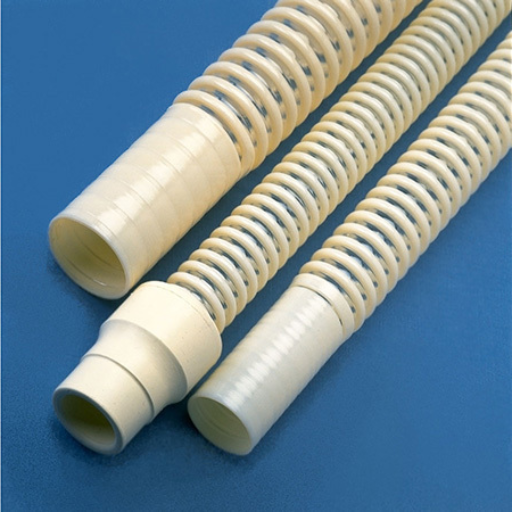
Tube extrusion splits into two routes, and hardness and diameter decide which one you get.
When Free Extrusion Works
Free extrusion suits the softer grades, and the working limit is tubing up to about 6 mm diameter. Beyond that, roundness is hard to hold without a sizing die.
Consider a converter we’ll call Marcus. He ran a 55D tube on a free-extrusion line and fought ovality for a week, adjusting screw speed and haul-off. The fix was not in the screw. Above about 6 mm, the tube needs vacuum sizing.
Vacuum Sizing for 45D and Above
Vacuum sizing is standard from 45D upward and required above 6 mm. The 35D and 40D grades grab in the die, with one exception: a large-diameter, thin-wall lay-flat hose liner under very low vacuum.
Die, Draw-Down and Draw-Ratio Balance
Die diameter runs 2 to 3 times tube OD for tubes up to about 20 mm, and 1.5 to 2 times above 20 mm. The sizing die bore is 3 to 15 percent oversize to compensate shrinkage, which covers 55D through 72D.
Draw-down ratio should land between 4 and 9 for vacuum sizing. Draw-ratio balance should sit at 1.0, with 0.9 to 1.1 acceptable. Vacuum for small-diameter tube runs 0.10 to 0.30 bar.
Drying, Melt Temperature and Regrind
Screw L/D should be 24:1 or higher, with a compression ratio of 2.5 to 3.5:1. Moisture before extrusion must be at or below 0.08 percent generally, and 0.06 percent for 7246.
For 7246, dry at 100 to 120 °C for 2 to 3 hours in a dehumidified dryer. Run melt at 225 to 245 °C, with 235 °C as the optimum. Regrind is acceptable up to about 50 percent for extrusion.
The processing trap is temperature sensitivity. Hytrel melt viscosity depends strongly on temperature, and the dependence increases with hardness. Measure melt temperature at the die, not at the barrel setpoint.
Where TPEE Tubing Earns Its Place
Fuel and Vapor Lines
The proven fuel construction is a co-extruded TPEE / PBT or PEN / TPEE laminate. The layers run about 200 / 100 / 700 micrometers, with no adhesive (EP 1 331 087).
In that patent’s 10 m hose test, TPEE alone measured 2.8 to 5.0 mg/m, on gasoline plus 10 percent ethanol at 40 °C for 3,000 hours. The polyester barrier took the same construction below 0.1 mg/m. Treat those as hose test data, not a resin property.
SAE J2260 and ISO 13775-2 are the specifications that apply, and both are performance based. SAE J30 is a rubber hose standard and doesn’t apply.
One limit matters. Celanese rates alcohol-blended fuels possibly resistant at 23 °C but not recommended at 60 °C. Ambient petrol is fine; a hot ethanol blend is not.
Hydraulic Hose and Charge-Air Ducts
Parker Parflex builds several hose lines on copolyester core tubes, rated to SAE 100R7. The finished hose derates by fluid as well as temperature. Petroleum fluids run to 121 °C, water and oil emulsion to 85 °C, water and glycol to 57 °C.
For cold-side charge-air ducts, HTR8888 BK190A is a 55D black high-melt-viscosity blow-molding grade, roughly 30 percent lighter than the rubber it replaces. Ask the hose builder for the derating chart rather than the resin datasheet.
Fiber-Optic Buffer Tube
The 900 micrometer OD tube over 250 micrometer fiber is the product most searchers mean by Hytrel tubing. Thorlabs rates its assembly for 0 to 70 °C operating, while necero gives minus 40 to plus 85 °C.
The 0 to 70 °C figure is an assembly specification, and it gets misread as a material limit. Shrinkage stays under 0.5 percent, and reels come in 1 km lengths. Ask for the resin grade behind the tube.
Medical Tube
Healthcare grades exist: SC976 NC010 at 72D, plus SC956 and SC988. Sterilization compatibility is where the grade decision lands.
Ethylene oxide and gamma are suitable, steam at 134 °C is suitable in some applications, and dry heat at 160 °C is not. Compliance is grade-specific. A converter holds the device qualification, so ask for the certificate behind any ISO 10993 or USP Class VI claim.
Where TPEE Tubing Is the Wrong Choice
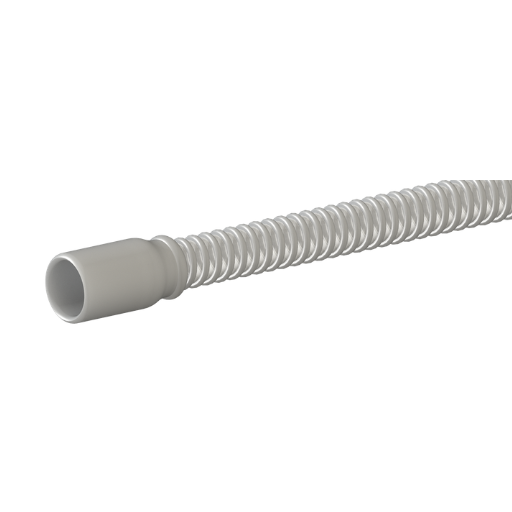
A page claiming every tubing application is a sales page. Naming the losses is more useful, and in several service classes another material wins outright.
Hot Water and the Hydrolysis Cliff
Hot water is the one service class where the grade choice inverts. Hytrel 7246, the harder 72D grade, is rated not recommended in water at 90 °C, while 5526 and 5556 are rated possibly resistant.
The 7246 sheet goes further: not recommended in 50 percent glycol and water at 108 °C, in Glysantin G48 at 125 °C, in oils at 130 °C or in DOT 4 brake fluid at 120 to 130 °C.
The mechanism is ester hydrolysis. Water attacks the ester linkages, the chains scission, and the material chemicrystallizes and embrittles. The rate rises with temperature along an Arrhenius dependence, as Diaz and colleagues described in 2018. The 2001 DuPont guide called Hytrel unsuitable in water above 50 °C without a hydrolysis stabilizer.
Parker’s hose catalog puts a number on the cost. Its copolyester-core hose is rated 121 °C on petroleum fluid and 57 °C on water and glycol. That 64 °C drop is hydrolysis, not pressure.
Consider a plant engineer we’ll call Priya. She specified a 72D grade for a hot water line because harder sounded safer. It was the wrong direction. A softer 55D grade carries the better water rating.
Where hot water is unavoidable, specify 5577R-07, 7277R-07 or HTR8801 NC020. Availability is reported by distributors, so confirm it before you write it into a specification.
Air Brake, Pneumatic and AdBlue
Air brake tubing is polyamide 11 or 12 under SAE J844 and ISO 7628. Pneumatic control tubing is polyamide or polyurethane. AdBlue lines are polyamide 12 or sulfur-free EPDM under ISO 22241.
None of those lines is Hytrel tubing. Pairing Hytrel with J844 is a category error that fails at qualification.
Refrigerant, Coolant and Peristaltic
Refrigerant hose is an EPDM tube with a polyamide barrier, under SAE J3062 and J2064. EV battery coolant lines are polyamide 12 or 612.
Peristaltic pump tubing is silicone, PVC or a thermoplastic vulcanizate, because TPEE takes compression set and fatigues in a roller pump. One comparative study put TPEE set near 63 percent against 23 percent for NBR and 33 percent for EPDM. Test conditions differ, so read that as directional.
Washdown, Bleach and Food Contact
Bleach is the quiet failure. Sodium hypochlorite at 10 percent is rated not recommended even at 23 °C, and so is hydrogen peroxide. A dairy or biotech line cleaned with hypochlorite attacks the bore no matter how well it handles the product.
The dedicated food-contact regulation is 21 CFR 177.1590 for polyester elastomers. Its scope is narrow: dry food only, Type VIII, number-average molecular weight between 20,000 and 30,000. A specification therefore rests on a grade-specific declaration and the conditions of use, not on the polymer family.
For high-purity chemical service, PFA is the safer pick and the cost difference is usually smaller than a failed qualification.
Pressure, Bend Radius and What Nobody Publishes
No public working-pressure, burst-pressure or minimum-bend-radius figure exists for unreinforced Hytrel tube. That is a searched conclusion. A pass over hose-maker design guides, tubing distributors and the manufacturer’s pages returned methods and derating advice, never a rating.
Use the method instead. Zeus Industrial Products publishes the thick-wall form most tubing makers use: burst pressure equals tensile strength at yield times (OD squared minus ID squared), divided by (OD squared plus ID squared). Working pressure is burst divided by 4.
The thin-wall version, P = 2σt / (D minus t), holds only above a diameter-to-wall ratio of about 20. Below that, stress varies through the wall and the thick-wall form is required.
Two cautions follow. Both calculations assume ambient temperature and carry no derating, while thermoplastic strength falls as temperature rises. And short-term burst is not a working pressure, because the finished tube is time-, temperature- and fluid-dependent. Test the construction.
Minimum bend radius depends on outside diameter, wall and hardness, so it isn’t a material constant. Test it, or take the converter’s qualification.
One figure circulating here deserves correction. The 6,000 psi number belongs to a braided hose with a PFA or ETFE core, where only the cover is Hytrel. It isn’t a Hytrel tube rating.
How to Specify Hytrel Tubing
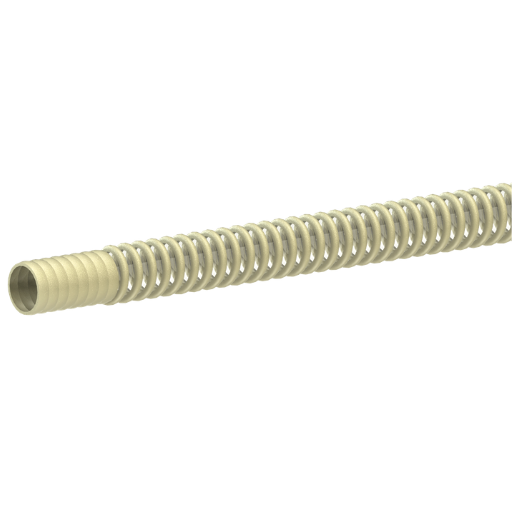
Most tubing disputes start with a specification that names a polymer and nothing else. Eight lines close the gap.
| Specification line | What to write |
|---|---|
| Product family and construction | Solid tube, lined composite, hose, or duct |
| Grade and hardness | 55 Shore D nominal, ISO 868, not just “55D” |
| Dimensions and tolerance | ID, OD, wall, and the tolerance band that matters |
| Fluid and temperature | Include the cleaning chemistry, not just the product |
| Pressure or vacuum | State the safety factor, and whether the figure is burst or working |
| Standard or approval | Name it, and confirm it covers TPEE |
| Sterilization or food contact | Only if either applies |
| Documentation | Current datasheet revision, batch certificate, grade declaration |
Yifuhui supplies Hytrel resin pellets to converters, not finished tube. We stock Hytrel 7246 pellets, the grade whose datasheet lists tubing first, and 5526 for molding work. Send the drawing or the service environment, and we will confirm the grade behind it.
Conclusion
Three points decide most specifications. First, the name covers four products, and the lined PVC composite stops at 71 °C while solid TPEE does not. Second, grade selection is a processing question as much as a property one: 5556 and 7246 extrude, and 5526 does not. Third, water catches buyers, because the harder 72D grade is the more hydrolysis-sensitive one.
The next step is a grade-specific data package: the current datasheet, the test method behind the hardness figure, and a hydrolysis check against your fluid and temperature. That turns a vague callout into a specification a converter can quote against.
Yifuhui supplies Hytrel resin pellets to converters, not finished tube. Tell us the construction and service environment, and we will confirm the grade behind it.
Frequently Asked Questions
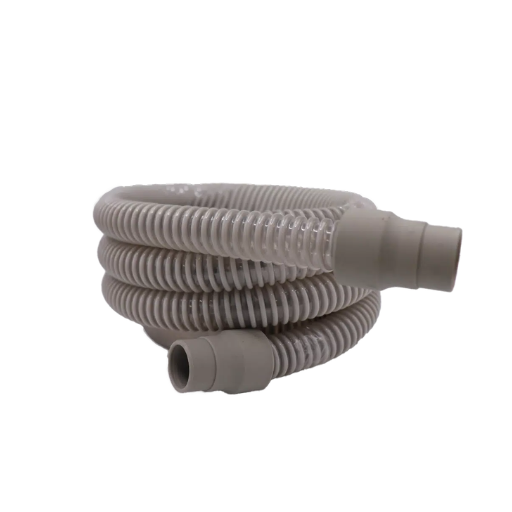
What is Hytrel tubing used for?
Fiber-optic buffer tube, fuel and vapor lines, hydraulic hose cores, charge-air ducts and medical tube. Hytrel-lined PVC covers food and biotech lines. Each use needs a different construction.
Is Hytrel tubing the same as Hytrel-lined PVC?
No. Solid Hytrel tubing is 100 percent TPEE, extruded as a single wall. Hytrel-lined PVC is a composite with a 55D Hytrel liner inside a PVC cover, capped at 71 °C.
What temperature can Hytrel tubing handle?
There is no single rating. Solid Hytrel depends on grade, load and fluid; Hytrel-lined PVC stops at 71 °C. Grade 7246 is not recommended in 90 °C water, while 5526 and 5556 are possibly resistant.
Is Hytrel tubing food safe?
Food-contact grades exist, but compliance is grade-specific and depends on conditions of use. Regulation 21 CFR 177.1590 covers dry food only, Type VIII. Ask for a grade-level declaration.
Can Hytrel tubing be used for fuel?
Yes, in a multilayer construction. A co-extruded TPEE, PBT or PEN, TPEE laminate needs no adhesive and cuts permeation sharply. Alcohol blends are the exception: fine at 23 °C, not at 60 °C.
Is Hytrel tubing the same as nylon air brake tubing?
No. Air brake tubing is polyamide 11 or 12 under SAE J844 and ISO 7628. Hytrel is a polyester elastomer, so pairing it with those standards fails at qualification.
Can Hytrel tubing be autoclaved?
Partly. Ethylene oxide and gamma are suitable, and steam at 134 °C suits some applications. Dry heat at 160 °C is not. Confirm the method against the supplier’s declaration.
What is the difference between Hytrel 5526 and 5556?
Both are 55D but process differently. Hytrel 5526 is a high-flow molding and thermoforming grade for seals, packing, gears and bearings. Hytrel 5556 extrudes and lists hose and tubing first.
Does Hytrel tubing resist hot water?
Poorly without a stabilizer. The 2001 DuPont guide called Hytrel unsuitable in water above 50 °C unless hydrolysis-stabilized. Grade 7246 is not recommended at 90 °C.
Who owns the Hytrel brand now?
Celanese, which bought DuPont’s Mobility & Materials business for $11.0 billion, closing on November 1, 2022. Current datasheets carry the Celanese name; many distributor pages still say DuPont.