The most complete injection molding guide for Hytrel was last revised in August 1995. It still ranks first for the query, and it’s still better than most of what has been published since. It also predates the machines and grade sheets most readers will run today.
This article covers Hytrel injection molding from the setpoints up: melt and mold temperatures by grade, the tooling numbers that decide whether a part ejects clean, and splay, the one defect the manufacturer’s own guide doesn’t cover.
Hytrel is a thermoplastic polyester elastomer, TPEE, ISO designation TPC-ET, and a Celanese brand since 1 November 2022, when Celanese bought DuPont’s Mobility & Materials business. Setpoints come from current Celanese datasheets. Much of the tooling advice still in circulation comes from the DuPont era. Where the two disagree, this article says which one wins.
The Hytrel material guide covers the family and where each grade fits. This page is for the person setting the machine.
Hytrel Injection Molding Settings at a Glance
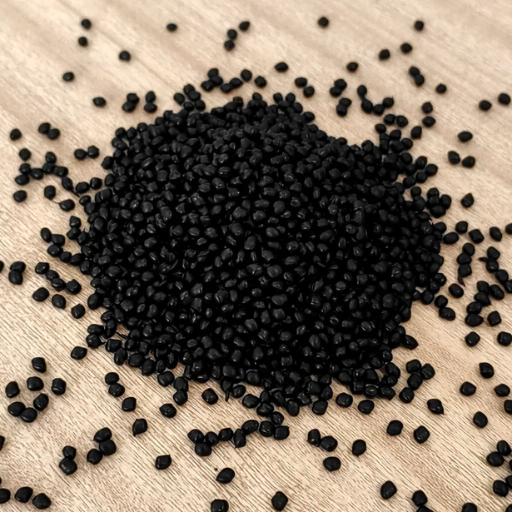
Hytrel injection molding runs a 220–250 °C melt for 5526 and 5556 and 235–255 °C for 7246, with molds at 45–55 °C.
| Grade | Dry | Melt optimum | Melt range | Mold | Eject | Shrinkage |
|---|---|---|---|---|---|---|
| 5526 | 100 °C, 2–3 h | 230 °C | 220–250 °C | 45–55 °C | 134 °C | 1.4% |
| 5556 | 100 °C, 2–3 h | 235 °C | 220–250 °C | 45–55 °C | 122 °C | 1.4% |
| 7246 | 110 °C, 2–3 h | 245 °C | 235–255 °C | 45–55 °C | 149 °C | 1.6% |
The figures come from current Celanese datasheets. Barrel wear, nozzle length and thermocouple placement all move the real number, so treat the table as a starting point and the grade sheet as the limit. For any other grade, read its own sheet.
Measure melt temperature with a needle pyrometer in the melt, not from the controller, which reads the barrel wall and lags the polymer. The Hytrel material data sheet gives minimum, optimum and maximum per grade.
Moisture above the 0.08% spec raises the hydrolysis rate. Check the pellets before the hopper, not after.
Which Hytrel Grade Are You Molding? The 70 °C Melt Spread
Melt optimum runs from 180 °C on 3078 to 250 °C on 8238. A single setup sheet headed “Hytrel” is wrong by 70 °C before anyone touches the machine.
| Grade | Hardness | Melt optimum | Note |
|---|---|---|---|
| 3078 | 30D | 180 °C | DuPont-era |
| 4056 | 40D | 190 °C | DuPont-era |
| 5526 | 55D | 230 °C | Not rated for extrusion |
| 5556 | 55D | 235 °C | Extrusion rated |
| 6356 | 63D | 240 °C | DuPont-era |
| 7246 | 72D | 245 °C | Highest of the three current grades |
| 8238 | 82D | 250 °C | DuPont-era |
Hardness drives the setpoints because it tracks how much soft phase the polymer carries. Soft grades flow cooler and need a longer screw-forward time: 7–8 s/mm for 35D–40D, 5–6 s/mm for 44D–63D, which covers 5526 and 5556, and 4–5 s/mm for 72D–82D parts up to 4 mm thick.
Hold pressure splits the same way. DuPont allowed grades above 55D to hold at injection pressure, and asked for a decreasing profile below 47D. That leaves 5526 and 5556, at exactly 55D, in a gap the guide does not address. Start them at a moderate hold and watch for overpacking.
Hard grades leave less margin. The Hytrel 7246 window is 235–255 °C, only 20 °C wide, with the optimum 10 °C below the ceiling. A controller that overshoots has nowhere to go.
Its hold pressure ceiling is 70 MPa, a limit rather than a target, and it ejects at 149 °C against 122 °C for 5556. Hytrel 5526 runs 15 °C cooler and is the easier grade to start on.
If Your Job Is Extrusion, the Window Changes
Extrusion is a different job with a narrower window. The current Celanese sheets put 5556 at 225 °C (220–235 °C) and 7246 at 235 °C (225–245 °C). Dry to 0.06% for either; the 1995 extrusion manual allowed 0.08%. The screw needs at least 24:1 L/D against 20:1 for injection, and 5526 isn’t rated for extrusion at all.
Hytrel Drying Temperature and Moisture Spec
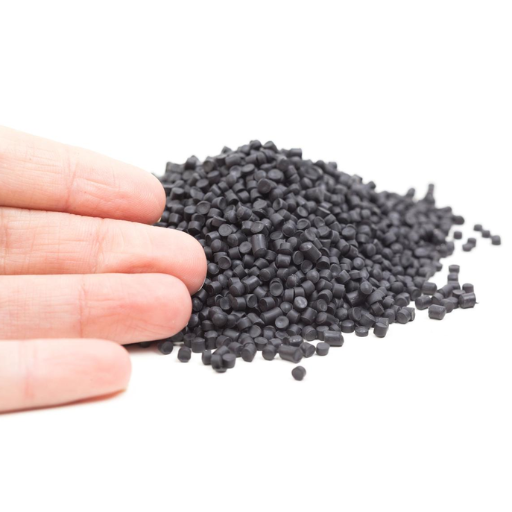
Hytrel doesn’t hydrogen-bond water the way PA66 does. Its chain has no amide groups, so uptake at room conditions is low. The problem isn’t what the pellet holds on the shelf. It’s what that water does above the melting point.
Dissolved moisture attacks the ester linkages and the polymer hydrolyses. Molecular weight falls, and the part leaving the tool may still look correct. DuPont’s guide is explicit that the loss may not show as a surface defect while low-temperature service performance drops. Splay and silver streaks are a separate, visible symptom of the same moisture.
Drying is an equipment specification, not a discipline.
| Parameter | Value | Source |
|---|---|---|
| Injection moisture ceiling | 0.08% (0.10% legacy) | Current TDS / legacy guide |
| Standard dry | 100 °C, 2–3 h | Current TDS |
| 7246 | 110 °C, 2–3 h | Current TDS |
| Low-temperature route | 70 °C overnight | Legacy guide |
| Over-drying ceiling | 12 h at 100 °C | Legacy guide |
| Hopper air dew point | −18 °C or lower | Legacy guide |
| Airflow | 0.8–1 CFM per lb/h of resin | Legacy guide |
| Regain | about 0.10% in roughly 2 h at 50% RH | Legacy guide |
Sizing follows from airflow. A press consuming 20 kg/h runs about 44 lb/h of resin, so 0.8–1 CFM per lb/h calls for 35 to 44 CFM of dry air. That’s a sizing estimate, not a setpoint; confirm it against the dryer’s rated capacity at your dew point.
An air-circulating oven at 100 °C for 4–6 hours will usually get Hytrel under spec, but slowly and at the mercy of shop humidity. A desiccant dryer at −18 °C dew point gets there in 2 to 3 hours and holds it. Use the oven as a backup, and verify with a moisture analyzer either way.
Store pellets in the processing area at least 4 hours before use so the whole granule reaches the same temperature. Regrind goes through the same cycle. Grinding exposes fresh surface and adds heat history, so re-dry to spec. The verification discipline matches drying PA66 pellets, a more hygroscopic resin where the test is routine.
Machine and Mold Setup: Screw, Nozzle, Shot Size and Clamp
Current datasheets set temperatures but say almost nothing about the screw. The mechanical specification still comes from the 1995 guide.
| Item | Specification |
|---|---|
| Screw type | General purpose, gradual transition |
| L/D | at least 20:1 |
| Compression ratio | at least 2.5:1, not above 3:1 to 3.5:1 |
| Metering depth | 2.5–3.0 mm on a 60 mm screw |
| Zone split | 50/25/25 feed/transition/metering |
| Nozzle | Reverse taper, independently controlled |
| Shut-off nozzle | Not required |
| Clamp force | 48–69 MPa (3.5–5.0 tons/in²) of projected area |
| Shot size | 25–75% of machine capacity |
| Polymer hold-up | about 4× maximum shot |
| Back pressure | 0.34–0.55 MPa (50–80 psi gauge) |
| Screw speed | about 100 rpm |
The compression ceiling matters more than the minimum. The guide ties both excessive shear and pellet bridging to a ratio above 3:1 to 3.5:1, which is why it specifies a general-purpose screw with a gradual transition. When the feed section starves, the press cycles between starve and flood: periodic short shots, and black specks once residual melt overheats.
A shut-off nozzle isn’t required. Hytrel does not drool at normal operating temperatures, so the usual reason to fit one doesn’t apply. If you run near the top of the window and see stringing or cold slugs, add nozzle suck-back before you add hardware.
Shot size catches small parts. The guide puts the shot at 25–75% of capacity and hold-up at about 4× the maximum shot. A small part on a large barrel can fall below that 25% floor, and the melt then spends many cycles at temperature before it’s injected. Residence time, not injection pressure, becomes the limit.
Regrind, Purging and Changeover
DuPont allows 25% regrind on unpainted parts without significant property loss, and reports 5556 tested to four passes at 100%. Those are legacy figures, not current datasheet limits. The rules that matter are practical: sharp knives, granule size matched to virgin, fines removed, short heat history, a clean grinder, and re-drying to 0.08%.
Purge with LDPE or HDPE at shutdown. POM and PVC are incompatible, so purge thoroughly before and after a changeover from either. The extrusion manual advises against PE purging on an extruder, so the rule is process-specific.
Hytrel Melt Temperature by Grade
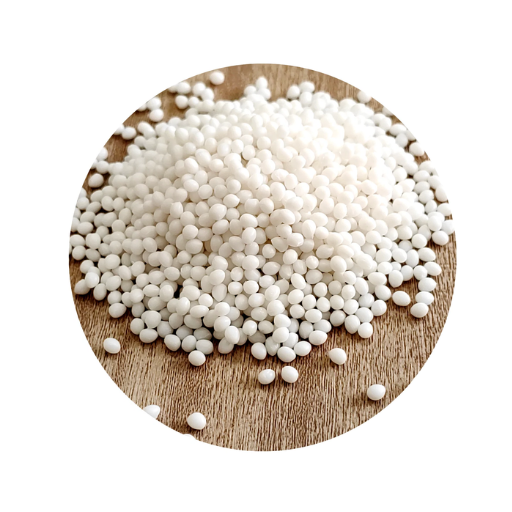
Zone profiles rise from the rear to the front, then drop at the nozzle. The rear stays cool so pellets don’t stick to the screw. The nozzle is usually set slightly below the front zone.
| Grade group | Nozzle | Front | Center | Rear | Stock range |
|---|---|---|---|---|---|
| 5526 / 5556 | 220 | 235 | 235 | 205–235 | 220–250 |
| 6356 | 235 | 245 | 245 | 220–245 | 240–260 |
| 7246 | 240 | 245 | 245 | 220–245 | 235–255 |
All values in °C. Zone figures and the 6356 range are from the 1995 DuPont profile. Stock ranges for 5526, 5556 and 7246 are current Celanese values. No current Celanese sheet for 6356 was available, so that row rests on the legacy profile.
The controller setpoint isn’t the melt temperature. Read the melt with a needle pyrometer in a purge or the core of a short shot, and log it against the grade’s stock range. A barrel can sit on setpoint while the melt runs cold at short residence time, or picks up excessive heat history during a long dwell.
DuPont allowed the melt to run up to 20 °C above optimum to fill thin sections. That’s a documented fix for a specific filling problem, not a licence to run hot, and it never overrides the grade’s published maximum. Spend it once, on a part that won’t fill, and check the gate and wall first.
7246 carries two ranges. The 1995 guide gives 240–260 °C, the current sheet 235–255 °C. Both put the optimum at 245 °C.
The current range wins: it sits 5 °C lower at each end and describes the grade as supplied now. If you have a 1995-era setup sheet in the file, its window is still legal, just wider than the resin needs.
Hytrel Mold Temperature and Shrinkage
Cold molds are the common assumption for elastomers. For TPEE it’s wrong. DuPont specified 45 °C for every grade, and current sheets give 45–55 °C.
The 5526 sheet disagrees with itself: 50 °C on one page, 45 °C on another. Hold the mold at 45–55 °C and treat 45–50 °C as the working range for 5526.
Mold temperature is a shaping variable. It sets shrinkage, cycle time, ejection and surface finish, so settle it before you tune the melt.
Nominal shrinkage by grade, from the 1995 guide:
| Grade | Shrinkage (%) |
|---|---|
| 4056 / G3548W | 0.5 |
| G4074 / G4069 | 0.8 |
| 4556 | 1.1 |
| 5526 / 5556 | 1.4 |
| 6356 | 1.5 |
| 7246 / 8238 | 1.6 |
Three variables move that number, and the 1995 guide quantifies each on 5526. Mold temperature from 45 to 64 °C adds 0.08 percentage points. Injection pressure from 700 to 900 bar subtracts 0.15. Wall thickness from 3.2 to 2 mm subtracts 0.13.
The arithmetic is 1.40 + 0.08 − 0.15 − 0.13 = 1.20%. Treat that as an illustration of direction, not a number to cut steel to. The 64 °C term sits outside today’s window, and the three effects do not superpose cleanly.
Parts keep shrinking after they leave the tool. Anneal at 120 °C for 4 hours and residual movement drops below 0.1%. Annealing stabilizes dimensions and cuts scatter, but it adds a small permanent shrink, so it cannot rescue an undersized part.
Care when the drawing tolerance is tighter than that drift, when the wall is thick enough to hold heat, or when the part runs hot in service. For a thin, loose-tolerance part, ignore it. For a precision fit, anneal samples before cutting steel.
Mold Design Rules That Matter for TPEE
TPEE fills easily and ejects soft. These rules come from the 1995 guide and remain the practical baseline. Most protect one of two things: a gate that freezes before the part packs, or a surface that grips it.
| Feature | Rule |
|---|---|
| Gates | Fan, flash or tab |
| Gate thickness | Half the part thickness; equal to part thickness below 1.5 mm |
| Gate land | 0.5–1 mm |
| Tunnel gates | Down to 0.5 mm |
| Runners | Full round or trapezoidal; trapezoid depth at least 75% of width |
| Sprue taper | At least 2.5 degrees |
| Nozzle orifice | 0.5–1 mm smaller than the sprue bushing |
| Vents | Up to 6 mm wide, no deeper than 0.04 mm |
| Undercuts | Up to 0.8 mm, radiused |
| Draft | 0.5–2 degrees per side |
| Surface finish | Matte preferred; polish causes ejection problems below 47D |
Put ejector pins where the part is stiffest. Large-area pins on the thickest sections spread the load and stop a pin punching through a soft grade. A polished cavity looks like quality and behaves badly: below 47D the part grips the polish and sticks. Matte releases better.
Hot runners are permitted. Neither the current sheets nor the 1995 guide publish a drop or manifold temperature for any Hytrel grade. Anyone who gives you one is quoting experience, not a datasheet.
Run a temperature ladder instead: start at the low end of the stock range, raise the drop in small steps, and check the purge for black specks and the parts for splay. Size the manifold and drop volume to the shot, and apply the 30-minute heat-off rule to the hot-runner controller too.
Overmolding and Insert Molding
The guide’s rule: the insert resin should melt below 190 °C, and the overmold should run at least 30 °C above its normal melt temperature so it can fuse the insert surface. The insert must be dry and grease-free.
That rule runs into the grade ceiling. For 7246, 30 °C above a 245 °C optimum is 275 °C, well past the 255 °C maximum. Treat the grade maximum as hard, choose an insert that melts low enough to bond inside it, and design a mechanical interlock where the chemistry won’t cooperate.
The guide lists Hytrel, PBT, PC and ABS as good bonding partners. Adhesion to PC and ABS is weaker than to PBT or another Hytrel grade, and most production designs add an adhesion promoter or a mechanical interlock. The wider comparison is in Hytrel vs TPU.
Troubleshooting Hytrel: Problem, Cause and Fix
The manufacturer’s matrix in the 1995 guide has fourteen numbered sections covering eleven distinct problems. Splay isn’t one of them.
The Defect Matrix
The table uses current Celanese values for melt, mold, ejection, shrinkage and drying, and the 1995 guide for mechanical limits, screw-forward time, shot size, hold-up, the anneal and the 30-minute heat-off rule.
| Problem | First causes to check | Fix |
|---|---|---|
| Short shots | Melt or mold too cold; pressure or speed too low; gate or vent too small; feed bridging | Raise melt within the window and mold to 45–55 °C; raise pressure and speed; open gate and vents |
| Flashing | Pressure too high; clamp tonnage too low; poor parting-line fit | Lower pressure; raise clamp to 48–69 MPa of projected area; blue and fit the parting line |
| Ejection difficulty | Part too hot at ejection; insufficient draft; sharp undercut; polished cavity on soft grades | Cool to the grade ejection temperature (a part temperature, not a mold setting); add 0.5–2 degrees draft; radius undercuts; matte finish below 47D |
| Warpage | Uneven mold temperature; unbalanced packing; gate position; thick-to-thin transitions | Balance cooling; hold mold at 45–55 °C; adjust hold and gate location; core out thick sections |
| Excessive shrinkage | Low hold pressure or time; high melt or mold temperature; thick wall | Raise hold pressure and time; lower melt and mold temperature within their windows; confirm the grade figure |
| Sinks and voids | Insufficient packing; gate freezes before hold; thick sections | Raise hold and screw-forward time to gate freeze plus 1–2 s; move gate; core out |
| Burning and black specks | Feed bridging; long residence; poor venting; contamination | Check for bridging; keep shot at 25–75% of capacity; clean vents; purge; inspect screw and check ring |
| Degradation | Melt above the grade range; long hold-up; heat left on during a stop; moisture | Stay inside the grade window; cut hold-up; purge at shutdown; heat off after 30 minutes |
| Dimensional variation | Mold temperature drift; hold pressure drift; cycle variation; regrind ratio; moisture | Control mold at 45–55 °C; lock hold and cycle; fix regrind ratio; dry to 0.08% |
| Surface defects | Cold mold; moisture; contamination; gate freeze; mold finish | Raise mold to 45–55 °C; dry to 0.08%; clean the mold; adjust gate and speed |
| Flow lines | Melt or mold too cold; injection too slow; small gate; cold slug | Raise melt and mold; increase injection speed; enlarge gate; check nozzle |
Hytrel Splay and Silver Streaks
DuPont’s guide doesn’t list splay as a category. It appears once, in the operating precautions, as a danger signal, with no cause list.
The table below is derived from the guide’s drying, degradation and venting sections plus standard shop practice. It’s a field guide, not a manufacturer’s matrix.
| Cause | What is happening | Fix |
|---|---|---|
| Moisture above spec | Water flashes to steam in the melt and stretches the flow front into silver streaks | Dry to 0.08%; hold hopper dew point at −18 °C or lower; verify with a moisture analyzer |
| Degraded hold-up | Melt sits in the barrel too long and breaks down, releasing gas and discolored streaks | Shot at 25–75% of capacity; hold-up near 4× maximum shot; purge between runs |
| Nozzle drool or cold slug | A cold plug or an overheated nozzle carries partly frozen polymer into the gate | Control the nozzle independently; reverse taper; orifice 0.5–1 mm under the sprue; add suck-back |
| Gate shear | High shear at a small gate degrades the melt before it enters the cavity | Open the gate; keep land at 0.5–1 mm; slow the profile through the gate |
| Vent burn | Trapped gas compresses and scorches at the end of fill | Clean vents; no deeper than 0.04 mm; add vents at the last-fill point |
| Contamination with POM or PVC | The incompatible resin degrades at Hytrel melt temperature and releases gas and specks | Purge with LDPE or HDPE; strip the screw and barrel after either |
| Regrind fines | Fines melt at a different rate, carry moisture and dust, and leave streaks | Sharp knives; matched granule size; remove fines; re-dry to 0.08% |
| Incompatible colorant carrier | The carrier cannot handle the melt temperature or holds moisture | Use a carrier matched to TPEE; check letdown; dry the colorant as specified |
Check the dryer before you touch the machine. Moisture is the first cause to rule out, and it’s the one you can measure before the press runs.
Safety: Fumes, Burns and the Odor Trap
Molten Hytrel sits between 175 and 260 °C at the nozzle, and it’s a burn hazard before it’s anything else. Resin can ignite above 300 °C if it collects on a heater band or a hot nozzle body. Shut the heat off if the press will stand for more than 30 minutes.
The three decomposition products with published limits in the guide are:
| Substance | TWA | STEL |
|---|---|---|
| Tetrahydrofuran (THF) | 200 ppm | 250 ppm |
| Acetaldehyde | 100 ppm | 150 ppm |
| Acrolein | 0.1 ppm | 0.3 ppm |
THF also has a flash point of −14 °C, so the gas coming off a hot barrel is flammable as well as irritating.
DuPont’s guide notes that the acrolein limit sits below the concentration at which its odor can be detected, so smell is not a ventilation test. A barrel that smells clean can still be producing an atmosphere above the exposure limit. Extract at the nozzle and above the mold, and verify airflow with a measurement rather than a sniff.
Quench purge masses in water before handling them. Treat decomposition gas trapped in a confined space as a pressure hazard, not only a fume hazard. A closed barrel, hopper or drum can rupture metal as gas builds.
Frequently Asked Questions
What temperature should I dry Hytrel at?
Dry 5526 and 5556 at 100 °C for 2 to 3 hours in a dehumidified hopper. Hytrel 7246 needs 110 °C for the same time. Target 0.08% moisture or below, and don’t leave a dryer running overnight at 100 °C.
What mold temperature does Hytrel need?
Current Celanese datasheets call for 45 to 55 °C. The 5556 and 7246 sheets give 50 °C as the optimum; the 5526 sheet gives both 50 and 45 °C on different pages. DuPont’s 1995 guide gives a single figure of 45 °C for all grades.
Why is my Hytrel part splaying?
Moisture is the first thing to rule out. Dry to 0.08% or below and check hopper air dew point, which should be −18 °C or lower. Regain is about 0.10% in roughly 2 hours at 50% RH, so an open hopper can undo a good dry. DuPont’s matrix doesn’t list splay.
Can I run Hytrel 5526 on an extruder?
No. Celanese rates 5526 for injection molding and thermoforming only. If the job needs extrusion, use 5556 or 7246, both rated for film, sheet and other extrusion. Extrusion also demands 0.06% moisture and a screw of at least 24:1 L/D.
How much regrind can I add?
Up to 25% on unpainted parts without significant property loss. DuPont tested 5556 to four passes at 100% regrind, which is a ceiling for that grade, not a general license. Keep knives sharp, match granule size to virgin, remove fines and re-dry to 0.08%.
What is the shrinkage of Hytrel?
Current Celanese data gives 1.4% for 5526 and 5556, and 1.6% for 7246. The 1995 guide covers the wider family, from 0.5% on 4056 and G3548W to 1.6% on 7246 and 8238. Mold temperature, injection pressure and wall thickness each move the figure.
Can Hytrel be overmolded onto other plastics?
Yes, with the right insert. Hytrel bonds well to Hytrel and PBT, and more weakly to PC and ABS, where most designs add an adhesion promoter or a mechanical interlock. The insert should melt below 190 °C, and the insert must be dry and grease-free.
How should Hytrel pellets be stored?
Keep pellets sealed until they go into the dryer, and store them in the processing area at least 4 hours before use. Regain is about 0.10% in roughly 2 hours at 50% RH. Once a bag is open, treat the resin as wet and re-dry to 0.08%.
Getting the Grade Right Before the First Shot
Confirm the grade before anything else. It sets the melt window, and the melt window sets the dryer and the tool. 5526 runs at an optimum of 230 °C across 220–250 °C and dries at 100 °C. 7246 runs hotter, optimum 245 °C across 235–255 °C, and needs 110 °C drying.
Yifuhui supplies Hytrel 5526 pellets and Hytrel 7246 pellets. The company does not mould parts. Send the grade and the part drawing, and the team confirms the processing window and stock within 24 hours.
Dry resin, a stable profile and a tool at temperature are the three things you control. Get them right before the first shot, and the rest of the run is maintenance.