A molder receives a drawing that calls out Hytrel 5526 at 55 Shore D. The first inspection report comes back at 51. The line stops, the buyer emails the supplier, and three people spend a day arguing about a number that was never a contradiction.
Hytrel 5526 is a medium-modulus thermoplastic polyester elastomer, and its hardness is the most misunderstood part of its specification. The grade is called 55D, and the measured result at 15 seconds is 51.
Both numbers are correct. Knowing which one belongs on a drawing, a purchase order and a lab report prevents most of the disputes around this grade.
This guide covers what Hytrel 5526 is, how to read its data, when it beats Hytrel 7246 and its 55D neighbours, how to dry and mold it, when not to use it, and how to buy it without documentation surprises.
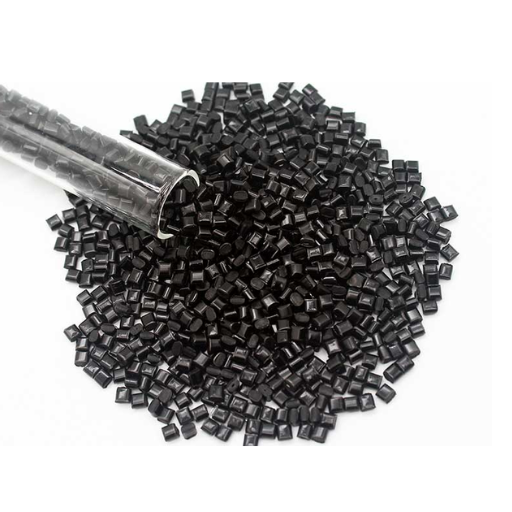
Hytrel 5526 is a medium-modulus thermoplastic polyester elastomer (TPEE, ISO designation TPC-ET) with a nominal 55 Shore D hardness. It is a high-flow injection-molding and thermoforming grade used for seals, gaskets, gears and bearings. Its measured hardness is 51 Shore D at 15 seconds.
Need 5526 pellets now? Check Hytrel 5526 availability and we will confirm stock, batch documentation and lead time.
What Is Hytrel 5526?
Hytrel 5526 is one grade in the Hytrel family of thermoplastic polyester elastomers. The polymer combines hard crystalline PBT segments with soft amorphous polyether segments. Their ratio sets the hardness, and the result behaves like rubber while processing like an engineering plastic.
Celanese describes 5526 as a medium-modulus, high-flow molding material with thermoforming as a secondary process. It contains a non-discoloring stabilizer, is plasticizer free, and is the general-purpose molding grade in the 55D band. Buyers who need more stiffness move to 7246; buyers who need to extrude move to 5556.
Decoding the grade number
The first two digits of a Hytrel grade usually encode nominal hardness:
| Grade | Nominal | Measured at 15 s | Role |
|---|---|---|---|
| 4056 | 40D | 37 | Soft molding and extrusion |
| 4556 | 45D | 42 | General-purpose, slightly stiffer |
| 5526 | 55D | 51 | Medium-modulus, high-flow molding |
| 5556 | 55D | 51 | The 55D extrusion counterpart |
| 6356 | 63D | 57 | Stiffer molding and extrusion |
| 7246 | 72D | 64 | High-modulus, higher heat |
| 8238 | 82D | 70 | High-hardness, high-stiffness |
The digits are an identification label, not a test result. Buyers search for Hytrel 55D and TPEE 55D, yet every grade reads lower at 15 seconds than its label, and the gap widens with hardness: 3 points at 4056, 4 at 5526, 8 at 7246 and 12 at 8238. DuPont’s own product guide calls Shore D “an imprecise parameter that may vary substantially according to the nature of the specimen measured.”
Nominal 55D vs measured 51D
The current Celanese datasheet gives two hardness figures: Shore D max 55 and Shore D at 15 seconds 51, both under ISO 48-4. The 15-second value is what an incoming inspection lab normally reports. The maximum is the highest reading and sits closer to the legacy grade label. The 2015 DuPont sheet gives the same 51 and 55 under ISO 868.
A drawing that says only “55 Shore D” invites a rejection when the lab reports 51. A drawing that says “nominal 55 Shore D (grade identification), measured 51 Shore D at 15 s per ISO 48-4, max 55” gives the inspector a number they can match. That wording is the difference between a first-article approval and a week of email.
Variants: 5526 BK203 and 5555HS
Hytrel 5526 BK203 is a black, UV-stabilised injection-molding variant. It isn’t the same material in a different color: the datasheet lists 210 MPa tensile modulus, 220 MPa flexural modulus, 52 hardness at 15 seconds, 17 kJ/m² notched Izod at minus 40 °C, and Vicat A50 of 177 °C. There is no “5526 HS.” The heat-stabilised 55D grade is 5555HS, based on 5556.
Who makes it today
Hytrel is owned by Celanese. Celanese acquired the brand, along with Zytel, Crastin, Rynite and Vamac, in its $11.0 billion purchase of DuPont’s Mobility & Materials business, announced 18 February 2022 and closed 1 November 2022.
Current datasheets are issued by Celanese. Yifuhui supplies pellets and stock; we don’t polymerize or compound the material. For the full ownership history, read our complete Hytrel material guide.
Hytrel 5526 Properties and Data Sheet Summary
The table uses current Celanese typical values. Every row names its test method. These are typical properties, not specification limits.
| Property | Value | Unit | Test method |
|---|---|---|---|
| Density | 1.19 | g/cm³ | ISO 1183 |
| MFR at 220 °C / 2.16 kg | 18 | g/10 min | ISO 1133 |
| Molding shrinkage, flow / across | 1.4 / 1.4 | % | ISO 294-4 |
| Tensile modulus | 190 | MPa | ISO 527-1 |
| Tensile stress at yield / break | 15 / 40 | MPa | ISO 527-2 |
| Nominal strain at break | 780 | % | ISO 527-2 |
| Flexural modulus | 200 | MPa | ISO 178 |
| Tear strength, flow / across | 130 / 130 | kN/m | ISO 34-1 |
| Notched Izod at minus 40 °C | 115 | kJ/m² | ISO 180/1A |
| Shore D at 15 s / max | 51 / 55 | – | ISO 48-4 |
| Melting temperature | 203 | °C | ISO 11357-3 |
| Glass transition temperature | minus 25 | °C | ISO 6721 |
| HDT at 1.8 MPa / 0.45 MPa | 45 / 65 | °C | ISO 75-2 |
| Vicat softening, B50 / A50 | 75 / 180 | °C | ISO 306 |
| Water absorption, 24 h | 0.6 | % | ISO 62 |
| UL 94 at 1.5 mm | HB | – | UL 94 |
| Comparative tracking index | 600 | V | IEC 60112 |
Mechanical and impact performance
The modulus figures tell the story. A tensile modulus of 190 MPa and a flexural modulus of 200 MPa make 5526 roughly one third as stiff as Hytrel 7246 at 550 MPa. It bends and recovers, yet carries a load in a seal or a gear tooth.
Impact is strong at room temperature: notched Charpy at 23 °C shows no break. At minus 30 °C it gives 150 kJ/m² with a partial break, and at minus 40 °C it falls to 30 kJ/m². Notched Izod at minus 40 °C is 115 kJ/m². Those are good low-temperature numbers for a 55D elastomer, but they drop as the part gets stiffer or the notch gets sharper.
Thermal performance and the two Vicat values
The melting point is 203 °C and the glass transition is minus 25 °C. HDT is 45 °C at 1.8 MPa and 65 °C at 0.45 MPa. Vicat softening is 75 °C at B50 and 180 °C at A50.
Those last two numbers cause most of the confusion. They come from the same datasheet but use different loads: B50 uses 50 N and reports 75 °C; A50 uses 10 N and reports 180 °C. Comparison tables that quote 180 °C without naming A50 make 5526 look far more heat resistant than it is in a loaded part.
The same pattern runs across the family. From 4056 to 8238, HDT at 1.8 MPa spans only 35 to 50 °C, while HDT at 0.45 MPa spans 46 to 105 °C. Heat resistance in Hytrel is mostly a low-load phenomenon, so the useful load-bearing ceiling for 5526 stays near 45 °C.
What changed since the 2015 DuPont sheet
Many supplier sites still host the 2015 DuPont sheet. It is legitimate as a legacy document, but several values have been revised:
| Property | 2015 DuPont sheet | Current Celanese data |
|---|---|---|
| Shore D at 15 s / max | 51 / 55 (ISO 868) | 51 / 55 (ISO 48-4) |
| Glass transition | minus 20 °C (DSC) | minus 25 °C (DMA) |
| Tensile stress at break | 43 MPa | 40 MPa |
| Tensile stress at yield | 14 MPa | 15 MPa |
| Yield strain | 37% | 35% |
| Tear strength | 133 kN/m | 130 kN/m |
| RTI electrical / impact / strength | 50 / 50 / 50 °C | 85 / 85 / 75 °C |
| Melt / mold temperature | 220–250 / 45–55 °C | 220–250 / 45–55 °C |
The RTI change is the largest. A 50 °C rating and an 85 °C rating lead to different design decisions. When a customer sends a property table, ask for the document date and the owner.
Hytrel 5526 vs 7246 and Its Near Neighbours
5526 vs 7246: flexibility vs stiffness
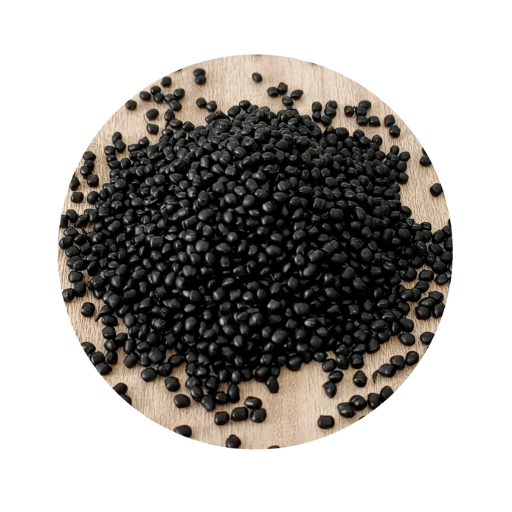
Hytrel 7246 is the high-modulus grade at nominal 72D, with 550 MPa tensile and flexural modulus, a 218 °C melting point, a 50 °C HDT at 1.8 MPa and a density of 1.26 g/cm³. It suits tubing, cable jackets, stiff gears and oil-field parts; the 7246 product page lists stock and packing options.
Hytrel 5526 is the flexible, high-flow grade at nominal 55D. It is better when the part must bend, absorb impact, seal, or fill a thin wall, and it is more forgiving in a complex mold.
Choose 5526 for flexibility and flow; choose 7246 for stiffness, heat under load and fluid resistance. Don’t switch one for the other without rechecking sealing force, fatigue life and dimensional fit. Our Hytrel 7246 guide carries the full comparison and processing data.
5526 vs 5556 vs 6356
This is the comparison most buyers get wrong. 5526 and 5556 are both nominal 55D and share a similar modulus. They aren’t interchangeable, because they’re built for different processes.
- 5526 is the high-flow injection-molding grade, with thermoforming as a secondary process.
- 5556 is the extrusion grade, listed for film, sheet and other extrusion, with applications in hose and tubing, wire and cable, film, sheet and belting.
- 5586 is the higher-viscosity member of the same tier.
- 5555HS is a heat-stabilised grade based on 5556.
So the question isn’t which 55D grade is better. It’s which process makes the part. A tube or a cable jacket belongs in 5556; a molded seal or gear belongs in 5526. Hytrel 6356 sits above the band at nominal 63D, stiffer than 55D but short of 72D.
When 5526 is the wrong grade
Four predictable failures:
- The part carries load at temperature. HDT at 1.8 MPa is 45 °C. Move to 7246.
- The part is extruded. Use 5556.
- The part sees hot water. TPEE hydrolysis is a documented risk at 70 °C and above.
- The part needs food contact, healthcare approval or outdoor UV performance. Use an FG grade, a PC/SC grade, or 5526 BK203 where black is acceptable.
Key Applications of Hytrel 5526
Celanese publishes two application families for this grade: seals, packing and gaskets, and gears and bearings. The properties explain why.
- Seals and gaskets. The 55D hardness, the 200 MPa modulus and the recovery after deformation suit sealing. It resists oils and many industrial chemicals and needs no vulcanization. Compression set is the limitation; compare against NBR or EPDM for a static hot seal.
- Gears and bearings. Toughness, flex fatigue and low water absorption (0.6% at 24 hours) keep dimensions stable. Check HDT under the actual load and confirm lubrication.
- Cable jackets and electrical parts. CTI 600 V, volume resistivity 4E11 ohm-metres and UL 94 HB at 1.5 mm make it a candidate where flexibility matters more than cut-through resistance.
- Appliance and power tool parts. Impact strength, surface feel and color stability suit housings and consumer components. The non-discoloring stabilizer isn’t a UV package.
- Thermoformed parts. Thermoforming is listed for 5526. The datasheet publishes no thermoforming window, so the converter’s trial data is the authority.
The current Celanese datasheet lists OEM approvals for 5526 from General Motors (GMW17327P Type 3M1), Hyundai (MS220-24 Type D), Mercedes-Benz (DBL5562), Stellantis-Chrysler (MS-DB-448) and Volkswagen Group (VW 50123). No Ford specification is listed. Confirm current status with Celanese before quoting an automotive program.
Processing Hytrel 5526
Drying and moisture control
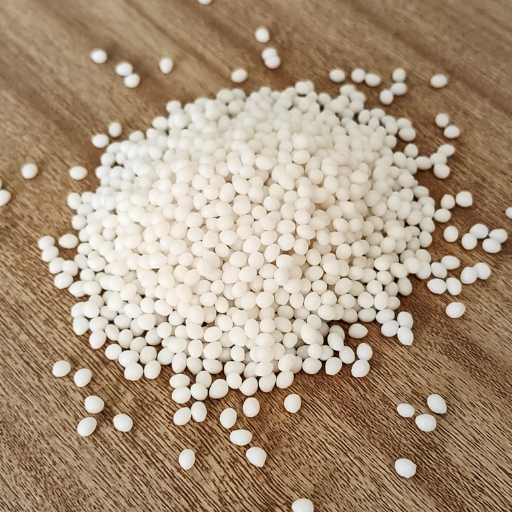
Dry Hytrel 5526 at 100 °C for 2 to 3 hours in a dehumidified dryer, and keep processing moisture at or below 0.08%. Dry pellets left in open air pick up 0.10% moisture in about two hours at 50% relative humidity, so re-dry them. Moisture above the melting point causes hydrolytic degradation: bubbles, a viscosity drop and brittleness, often with no visible defect. The drying step isn’t optional.
Injection molding parameters
| Parameter | Setting |
|---|---|
| Drying | 100 °C, 2 to 3 hours, dehumidified |
| Processing moisture | 0.08% maximum |
| Melt temperature | 220 °C min / 230 °C optimum / 250 °C max |
| Mold temperature | 45 to 55 °C; optimum 45 to 50 °C |
| Ejection temperature | 134 °C |
| Shrinkage | 1.4% flow / 1.4% across |
The Celanese datasheet gives a mold temperature optimum of 50 °C in its property table and 45 °C in its text block on the same page. The range is consistent at 45 to 55 °C, so treat 45 to 50 °C as the working optimum and confirm it on the tool.
The datasheet publishes no hold pressure, back pressure, injection speed, screw speed or cushion values, and no extrusion parameters. If a supplier attributes a hold-pressure number to Celanese, ask for the document. Two practical points that are widely documented: keep injection pressure at the minimum that fills the part and hold it steady rather than on a long decaying profile, and purge thoroughly when switching from POM or PVC, because Hytrel is incompatible with both.
Thermoforming and extrusion
Thermoforming is listed for 5526. Extrusion is not.
Celanese rates 5556, 4556 and 7246 for film, sheet and other extrusion; 5526 is the only grade in this comparison rated for injection molding and thermoforming alone. Distributor extrusion manuals list 5556 and 5555HS at 55D and omit 5526 entirely. Running 5526 on an extruder is a grade selection error, not a processing adjustment.
Shrinkage and temperature sensitivity
Shrinkage is 1.4% in both directions, so the part is effectively isotropic, which helps precision work. Hytrel viscosity is strongly temperature-sensitive, so a small melt-temperature change can alter fill and pressure more than it would in a commodity resin. Stay inside 220 to 250 °C and adjust speed before temperature. For regrind, chop with sharp knives rather than impact, keep the heat history low, dry it before use, and agree the permitted percentage with the end customer.
Limitations: When Hytrel 5526 Is the Wrong Choice
Load-bearing heat. HDT at 1.8 MPa is 45 °C. The 180 °C Vicat A50 and the 203 °C melting point are not service temperatures.
Hot-water hydrolysis. TPEE is vulnerable in hot water, with documented risk at 70 °C and above. Test the specific grade under the actual conditions before committing.
UV and weathering. Base 5526 is light stabilised, not sold as UV- or weather-stabilised. For outdoor exposure, use 5526 BK203 or a grade with documented weathering data. “Non-discoloring” doesn’t mean “outdoor stable.”
Compression set. TPEE generally has higher compression set than NBR or EPDM, and the 5526 datasheet publishes no compression-set value at all. For a static hot seal, test the material against your incumbent rather than assuming it will hold.
Cost premium. Hytrel costs more than generic TPE and TPU. The premium buys consistent properties, documented approvals and a known brand. If the part doesn’t need them, a commodity TPE may be the better commercial choice.
Buying Hytrel 5526: Price and Supplier Checks
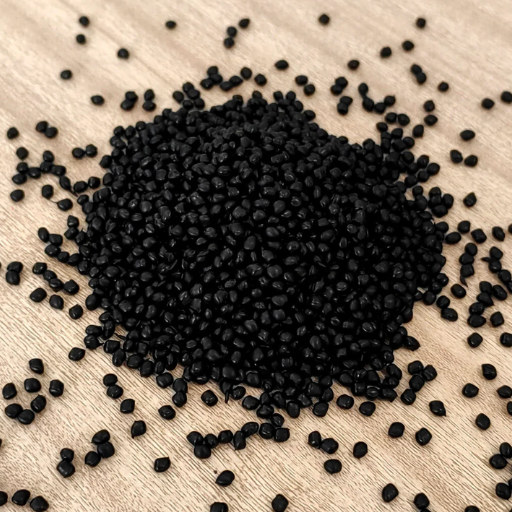
Hytrel 5526 pricing depends on grade, volume, packaging, documentation and freight. Branded Hytrel carries a premium over generic TPEE, and automotive-approved material with full traceability costs more than a general-purpose lot.
Listings for 5526 range from roughly RMB 20 to more than RMB 50 per kilogram. That spread is too wide to be a volume effect, and the low end is usually regrind, off-grade or undocumented material rather than a bargain.
Yifuhui’s indicative ladder starts at US$8.00 to US$9.00 per kilogram for 25 to 99 kg and falls to US$6.50 to US$7.50 at 1,000 kg and above. Treat it as a planning range, not a quotation. Ask for a current quote against your quantity and delivery terms.
Ask every supplier five questions:
- Is the datasheet issued by Celanese, and what is its date?
- Does the certificate of analysis match the ordered grade, including color and suffix?
- Is the material virgin, regrind or a blend?
- What is the batch traceability and packaging?
- Can you supply the OEM approval letters that apply to my program?
A supplier who can’t answer the first two questions isn’t selling a documented grade. That matters more for 5526 than for a commodity resin, because the grade is often named in automotive and appliance programs.
Frequently Asked Questions
What is Hytrel 5526?
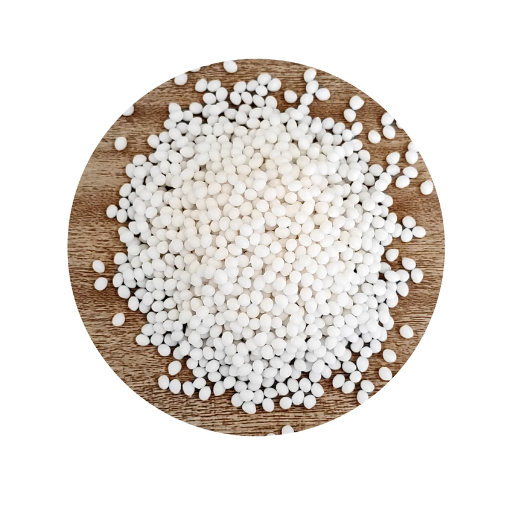
A medium-modulus thermoplastic polyester elastomer with a nominal 55 Shore D hardness. It is a high-flow injection-molding and thermoforming grade used for seals, gaskets, gears and bearings.
Is Hytrel 5526 55D or 51D?
Both. 55D is the nominal grade label. 51 is the measured result at 15 seconds under ISO 48-4, and 55 is the maximum reading. The 55D label comes from a legacy identification method, not from the measured value.
What is the difference between Hytrel 5526 and 7246?
5526 is the 55D medium-modulus grade for flexible, high-flow molded parts. 7246 is the 72D high-modulus grade for stiffness, higher heat under load and fluid resistance.
What is the difference between Hytrel 5526 and 5556?
Both are nominal 55D. 5526 is the injection-molding grade; 5556 is the extrusion grade for hose, tubing, cable, film and sheet. Choose by process first.
What is the melting point of Hytrel 5526?
203 °C by ISO 11357-3 at 10 °C per minute.
Is Hytrel 5526 food safe?
Base 5526 isn’t a food-contact grade by default. Food-contact work requires an FG grade with the appropriate declaration.
Is Hytrel 5526 UV resistant?
Base 5526 is light stabilised but not sold as UV- or weather-stabilised. Hytrel 5526 BK203 carries a UV stabilization package.
Who makes Hytrel 5526 now?
Celanese. The brand moved from DuPont in the Mobility & Materials acquisition, announced in February 2022 and closed on 1 November 2022.
Conclusion
Hytrel 5526 is a capable 55D molding grade, but it is often specified badly. Five points matter most:
- 55D is a label, 51 is a measurement. Put both on the specification so inspection has a number to match.
- The grade number decodes to hardness. 5526 means 55D; the pattern helps you navigate the family.
- HDT is 45 °C at 1.8 MPa. The 180 °C Vicat A50 is not a service temperature.
- 5556 is the extrusion grade. 5526 is for molding and thermoforming.
- Current data comes from Celanese. A 2015 DuPont sheet is for revision comparison, not a current specification.
If you are sourcing Hytrel 5526, we can confirm grade availability, batch documentation and lead time. Request a quote or review the thermoplastic polyester elastomer range to compare grades. To gain a deeper understanding of Hytrel Material Data Sheet: Properties & Test Methods, please refer to our accompanying guide.