PFA melts at 302 °C. Of every number on a fluoropolymer datasheet, that one gets misread more than any other.
A design team reads 302 °C, adds a margin, and specifies a part to run at 280 °C. The part holds for a few weeks, then creeps out of tolerance and leaks. The material did not fail. The specification failed, because melting point and service temperature are two different numbers and only one of them governs a finished part.
This guide separates the four temperatures that decide whether PFA belongs in your application. You will get the melting point and its real range, the continuous service ceiling, the decomposition limit, and the low-temperature floor. You will also get the comparison across fluoropolymers and the point where PFA stops being the right material at all.
If you are sizing a resin against a process temperature right now, our PFA fluoropolymer range lists the grades we stock.
The PFA melting point is 302 to 310 °C (576 to 590 °F), measured by ASTM D3418. PFA’s maximum continuous service temperature is 260 °C (500 °F), the highest of any fluoropolymer resin. It begins to decompose and release hydrogen fluoride above roughly 400 °C. The melting point is not a usable service temperature.
One note before the numbers. In search results, “PFA” also stands for paraformaldehyde, an unrelated chemical that melts near 120 to 170 °C. Everything on this page is about perfluoroalkoxy alkane, the fluoropolymer.
What Is the Melting Point of PFA?
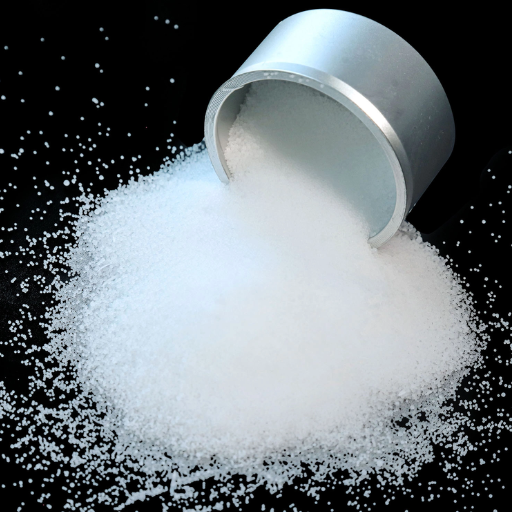
The melting point of PFA is 302 to 310 °C (576 to 590 °F), measured by differential scanning calorimetry under test standard ASTM D3418.
That range comes from the resin family, not from sloppy measurement. PFA is a copolymer of tetrafluoroethylene and a perfluorinated alkyl vinyl ether, and the proportion of that comonomer shifts the melting peak from grade to grade.
Across the commercial grades from Chemours, Daikin, Solvay and AGC, the true spread runs wider still, from about 285 °C to 316 °C. The Chemours Teflon PFA data bulletin and the AGC Fluon PFA brochure show the same band from two independent manufacturers. Our own PFA properties reference shows the same spread and explains why a single figure is misleading.
Why PFA Melts Over a Range, Not at One Number
A homopolymer like PTFE has one dominant crystal structure and one sharp melting peak. PFA does not. The perfluoroalkoxy side chains interrupt the crystal lattice, so different regions of the same pellet melt at slightly different temperatures.
The practical consequence is simple. When a datasheet quotes one melting figure, treat it as the centre of a band. Your grade sits somewhere inside that band, and the resin supplier’s certificate of analysis is the number that applies to your lot.
PFA Melting Point vs Other Fluoropolymers
Melting point rises down this table, but read the second column before you draw a conclusion from the first.
| Material | Melting point | Max continuous service temp | Melt processable |
|---|---|---|---|
| FEP | 255 to 275 °C | About 200 °C | Yes |
| PFA | 302 to 310 °C | 260 °C | Yes |
| PTFE | About 327 °C | 260 °C | No (sintered) |
| ETFE | About 265 °C | 150 to 170 °C | Yes |
| PVDF | About 170 °C | 150 °C | Yes |
PTFE melts higher than PFA and shares the same 260 °C service ceiling. FEP melts lower and carries a lower ceiling. Melting point and service temperature do not track each other, and that mismatch is the next section.
Figures come from manufacturer datasheets and independent fluoropolymer comparisons. For the full property table behind them, see our PFA vs PTFE guide.
Melting Point vs Continuous Service Temperature
These two numbers answer different questions, and mixing them is the most expensive thermal mistake in fluoropolymer selection.
Melting point is the temperature at which the crystals in the polymer break down and the material becomes a liquid. Continuous service temperature is the highest temperature at which a finished part holds useful mechanical properties under load. For PFA, those values are 302 to 310 °C and 260 °C.
The Four PFA Temperature Numbers
PFA has four thermal limits, and each one governs a different decision.
- Glass transition, about 85 to 90 °C. Above this point the amorphous regions soften and the material turns from rigid to tough. It does not fail here; it changes character.
- Continuous service temperature, 260 °C. The ceiling for a loaded part in air, backed by the relative thermal index method (UL 746B). This is the number to design to.
- Melting point, 302 to 310 °C. A phase change, measured by ASTM D3418. It sets the processing window, not the service window.
- Decomposition onset, about 400 °C. Where the polymer starts breaking down and releasing hydrogen fluoride. TGA data on high-purity grades puts one percent weight loss in air nearer 420 °C.
The gap between 260 °C and 302 °C is not usable headroom. It is the margin the material needs to keep its strength.
Why a 310 °C Melting Point Does Not Give You a 310 °C Part
Strength leaves PFA long before the crystals melt. Between 23 °C and 250 °C, tensile strength falls by roughly half, from about 25 MPa to about 12 MPa, and flexural modulus drops by about nine tenths, from roughly 590 MPa to 55 MPa.
A bracket that carries load at room temperature turns soft and flexible at 250 °C. It will not melt, and it will not hold the load either. A part rated for 260 °C continuous does not become safer to run at 300 °C because its melting point sits at 310 °C.
Short-Term Peaks Above 260 °C
Processes rarely run at one steady temperature, so the fair question is what a brief excursion costs.
A short peak above 260 °C, measured in seconds or minutes, does less damage than sustained operation at the same temperature. The damage accumulates with time at temperature, so a ten-second spike and a ten-hour soak are not equivalent, even at the same reading.
No general rule covers every grade. If your duty includes peaks, take the excursion curve from the datasheet for your specific grade, or ask the supplier. Designing the part to the peak, and paying for a higher-temperature material, is a cheaper mistake than discovering creep in the field. Our PFA tubing guide covers how this plays out in fluid lines, where pressure adds a second variable.
The Full PFA Temperature Range
PFA is not only a hot material. Its useful window runs from deep cryogenic service to the 260 °C ceiling, and that width is part of why it appears in so many fluid and electrical applications.
Low-Temperature Performance
PFA stays tough and flexible down to about minus 200 °C, and some datasheets extend the floor to minus 240 °C. Where a stiffer polymer would turn brittle and crack, PFA keeps bending.
That property puts it in cryogenic transfer lines and low-temperature instrumentation, where a polymer that shatters at minus 100 °C is not an option.
Autoclave and Sterilisation Temperatures
Steam sterilisation runs at 121 °C or 134 °C, and some cycles reach 141 °C. Every one of those sits well inside the service window, which is why PFA is a default in reusable pharmaceutical and medical fluid paths.
A material rated to 150 °C continuous would pass the same test on paper. PFA passes it with margin, and keeps its chemical resistance and low extractables at the same time.
PFA Temperature Ratings by Form and Grade
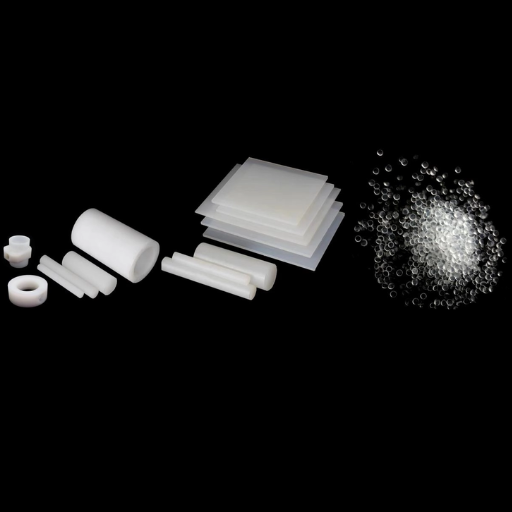
The PFA melting point itself does not change between a pellet, a tube and a sheet. The rated service limit does, because form and wall thickness change how heat moves through the part.
Thin-wall tubing heats and cools faster than a thick machined block, and a coating bonded to a metal substrate is limited by the substrate as much as the PFA. That is why a resin datasheet and a tubing datasheet, both for PFA, can quote different figures.
Grade selection matters too. Teflon PFA 340, 440 and 450 differ in melt flow and end use, while ultra-high-purity grades trade a little thermal headroom for lower extractables. Our PFA grades and resins guide maps the grades to their duties, and the Teflon PFA 340 resin page carries the full data sheet for that grade. For the wider picture of the material behind these numbers, our PFA material guide covers chemistry, grades and applications.
What If You Need More Than 260 °C?
PFA’s ceiling is a property of the molecule, not a gap in the grade list. No PFA grade runs continuously above 260 °C, and PTFE does not either, despite its higher melting point.
If your process sits above 260 °C, the answer is a different material class. PPS, PEEK and PEI hold useful strength at temperatures where fluoropolymers have already gone soft, and they carry the chemical resistance for many of the same duties. Our high-temperature engineering plastics guide compares them on the same basis, and our plastic melting temperature reference puts their melting points next to PFA’s.
The trade is real. Moving to PEEK buys temperature, and it costs chemical breadth and money. Match the material to the duty rather than forcing PFA past its limit.
Processing Temperatures Are Not Service Temperatures
The temperatures used to shape PFA run far above the temperatures the finished part can take, and the two get confused because they are both measured in hundreds of degrees.
PFA melts around 302 to 310 °C and processes above that. Extrusion and molding need barrel and die temperatures near 380 to 390 °C. Dispersion coating processes dry at 100 to 120 °C, burn off the surfactant at 250 to 290 °C, and sinter at 330 to 360 °C.
None of those figures describes service. A converter runs PFA at 380 °C for seconds, under ventilation, on purpose. A finished part runs at 260 °C or below for years.
The processing window tells you how to make the part; the service window tells you how to use it. Our PFA molding guide works through the processing side in full.
How to Read a PFA Datasheet Temperature
When a datasheet lands on your desk, match the number to the question you are asking.
- “Can I run this part here?” Read the continuous service temperature. For PFA, 260 °C.
- “Will it melt?” Read the melting point. It will not, at any service temperature you would use.
- “Will it lose strength first?” Read the property values at your service temperature, not at 23 °C.
- “Is it safe to overheat?” Read the decomposition figure and the safety data sheet. Above 400 °C, PFA releases hydrogen fluoride.
- “Can I form it?” Read the processing temperatures, and keep them off the part specification.
One number from the top row answers the wrong question from the bottom row. Read the label before the value.
Frequently Asked Questions
What is the melting point of PFA?
PFA melts at 302 to 310 °C (576 to 590 °F), measured by ASTM D3418. Across commercial grades the true spread runs from about 285 °C to 316 °C, because the comonomer content shifts the melting peak from grade to grade.
What temperature can PFA withstand continuously?
PFA is rated for continuous service at 260 °C (500 °F) in air, the highest continuous rating of any fluoropolymer resin. That rating assumes a loaded part; a part carrying no load has more margin, and a part under stress at temperature has less.
Is PFA’s service temperature the same as its melting point?
No. PFA’s melting point is 302 to 310 °C, and its continuous service temperature is 260 °C.
The melting point is where the crystals break down and the material becomes liquid. The service temperature is where a finished part still holds useful strength under load. Design to 260 °C.
PFA vs PTFE: which has the higher melting point?
PTFE melts higher, at about 327 °C against PFA’s 302 to 310 °C. Both carry the same 260 °C continuous service rating, so the higher melting point does not buy PTFE a higher service limit. It matters for processing, not for service.
What is the maximum temperature for PFA tubing?
Extruded PFA tubing carries the same 260 °C continuous service ceiling as the resin it is made from. A vendor table that lists “up to 80 °C” describes a different limit, not the material’s thermal rating. Our PFA tubing guide explains where that 80 °C figure comes from and why it misleads.
Can PFA be autoclaved?
Yes. Steam sterilisation at 121 °C and 134 °C, and cycles reaching 141 °C, sit inside PFA’s 260 °C service window. PFA keeps its shape, its chemical resistance and its low extractables through repeated autoclave cycles, which is why reusable pharmaceutical and medical fluid paths standardise on it.
At what temperature does PFA decompose?
PFA begins to decompose above roughly 400 °C, releasing hydrogen fluoride and carbonyl fluoride. High-purity grades show one percent weight loss in air nearer 420 °C. This is a safety and processing limit, and it sits well above any service temperature you would design to.
Is “PFA” in a search result the same as paraformaldehyde?
No. Both share the three-letter abbreviation. Paraformaldehyde is a different chemical that melts near 120 to 170 °C and has nothing to do with perfluoroalkoxy alkane, the fluoropolymer covered here.
Conclusion
PFA’s thermal story comes down to five numbers and one habit of mind.
- Melting point, 302 to 310 °C. A phase change, and a processing input, not a service limit.
- Continuous service temperature, 260 °C. The number to design to.
- Glass transition, 85 to 90 °C. Where the material turns from rigid to tough.
- Decomposition onset, about 400 °C. The safety and processing ceiling.
- Low-temperature floor, near minus 200 °C. Where cryogenic flexibility still holds.
- Read the label. Melting point, service temperature and processing temperature are three questions with three different answers.
The engineers who get fluoropolymer selection right are the ones who specify against the service temperature and check the property value at that temperature. The melting point tells you how the resin behaves in the barrel, not how the part behaves in service. Keep the two apart, and the specification holds.
We supply PFA across the grades that matter for high-temperature and high-purity duty. Tell us your service temperature, your chemical exposure and your part form, and we will match a grade to it and send the data sheet. Contact our engineering team for a recommendation and a quote, or start with the Teflon PFA 340 resin and the rest of the PFA range.