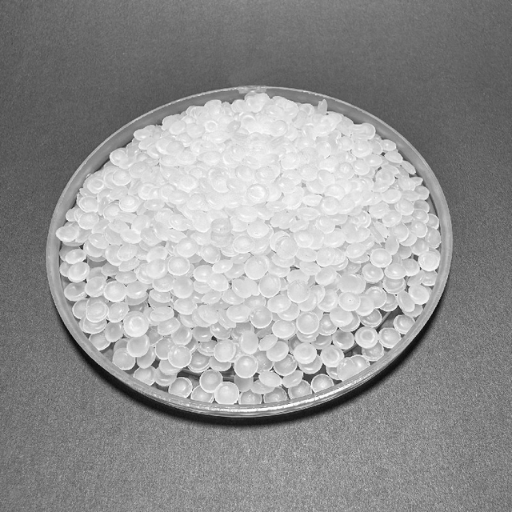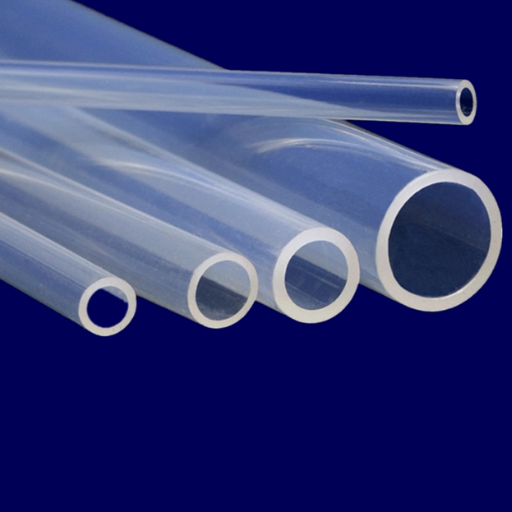
Last March, one company’s procurement manager at a Shenzhen-based middle-tier supplier of infusion pump swamps was afraid of being boxed into a competitive deal. The enterprising move was to substitute the ABS from one supplier with a “compatible” grade offered by a budget operating vendor to save 14% on raw material. About eight weeks later, and during the EU MDR re-qualification, batch number “imitation” failed the extractables test. Proceedings came to a halt for 31 days, and, with a six-digit delay, the “cost savings” was negated.
The narrative is replayed in medical equipment manufacturing more times than some of us care to disclose. Engineering plastics for medical devices are not run-of-the-line goods. They are regulatory articles, and an imprudent choice might just pull the pin for a 510(k) submission, a recall, or an otherwise production standstill during an audit.
So that is the reason for setting up this manual: it is for engineers and procurement personnel with a unified, handy source detailing all the pertinent criteria to help them in the selection of an engineering plastic with medical-grade plastic and sterilization compatible, confirmation fit, and cooking up those graceful documentation that current regulation and regulation zealously mandated.
Here is what we cover:
- What separates a medical-grade resin from an industrial grade
- The regulations that govern material selection (ISO 10993, USP Class VI, FDA 21 CFR, EU MDR)
- A resin-by-resin breakdown of the materials that dominate medical manufacturing
- A sterilization compatibility matrix you can hand to your validation team
- Application examples by device category
- How to source medical-grade pellets without sacrificing budget
Let’s start with the definition that most buyers get wrong. It matters more than price.
What Qualifies as a Medical-Grade Engineering Plastic?
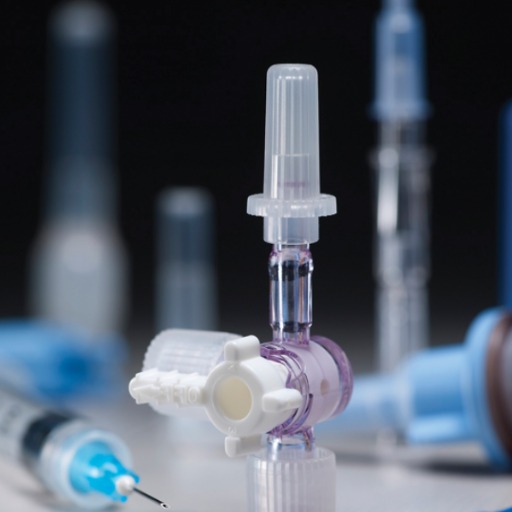
Medical-grade engineering plastics are thermoplastic resins that are produced under lot-controlled conditions for biocompatibility testing according to ISO 10993 or USP Class VI standards. A Certificate of Analysis (COA) correlates the pellet lot to those tests.
Chemically, the base polymer may be identical with the industrial-grade product. What characterizes medical-grade plastics is the documentation, contamination control, and supplier-change-control policies.
Three criteria determine the level of qualification:
- Noncontact components are outer housings on a hemodialysis machine. They do not come into direct contact with the patient or the drug.
- Body contact parts are components that contact or access skin, tissue, or fluid pathways: surgical-instrument handles, catheter hubs, and IV connectors.
- Those in contact with high-level FDA-controlled drugs and implants demand the highest qualification. Examples of such components are syringe barrels, drug-pen reservoirs, and PEEK cages.
A resin can be cleared for one classification and disqualified for the next. That nuance matters when you ask a supplier whether a grade is “medical.” To learn more about Engineering Plastics, please read: Engineering Plastics: Complete Material Selection Guide for Manufacturers
Quick CTA: Need a resin matched to a specific contact class? Request a technical data sheet from our engineering team and we will respond within 24 hours.
Regulatory Standards That Govern Medical Device Plastics
Material selection for their finish with a regulatory approval stamp has ceased to be a purely engineering exercise. All regulatory bodies require traceability from the pellet stage to the final finished product. In fact, apart from these extreme scenarios, there are five basic frameworks that will shape virtually any decision.
For biological evaluations there is guideline ISO 10993 for medical devices. It reviews cytotoxicity, sensitization, irritation, and systemic toxicity. It is hard to delineate which specific tests a material should go through since all depend on the duration and type of contact.
ALWAYS ask which ISO 10993 modules the resin has passed. “Compliant” is just not sufficient.
Also Readily Available in the USP Class VI is the scope for systemic toxicity, inrtacutaneous reactivity, and implantation response of materials, created for medical packaging and devices. USP Class VI is top notch-Classes I to V are less promiscuous in terms of test combinations.
USP Class VI is the classification for the United States Pharmacopeia of plastics employed in medical packaging and devices. This standard evaluates systemic toxicity, intracutaneous reactivity, and implantation response. Class VI is the highest, followed respectively by Classes I through V.
The massive increase in the documentary requirements at the point of full enforcement under the EU MDR (Regulation 2017/745) has left haven’t a chance at all when Notified Bodies now think of stopping at substance-level identity.
ISO 13485 is the quality standard for device manufacturers, which involves including the polymer they are commencing with. It does not control the resin itself, but it provokes how a manufacturer has to incorporate qualifying and controlling its suppliers of materials. An ISO 13485 audit becomes a lighter burden if there is a proven batch record and a change control letter presenting the pellet supplier with appropriate permission.
You must trace each gram of material from resin to the finished component. If you are a medical manufacturer, and you are not doing this, then your resin cannot be a medical-resin.
The Core Engineering Plastics Used in Medical Devices

Medical device manufacturers choose from a small family of engineering plastics for the making of contemporary medical products. Each thermoplastic is valued for its proper combination of overall mechanical performance, compatibility with sterilization, and biocompatibility profile. Here is the shortlist for actual experience with polymer behaviors and by division purposes around the global setting.
Polycarbonate (PC) is for IV components and transparent housing
Medical-grade polycarbonate is well valued for exceptional optical clarity, good strength to allow impact echo, and dimensional stability that work well with many fluid handling pieces. It is everything in IV connectors, blood reservoirs, dialyser housing, and operation instrument windows.
PC for ethylene oxide (EtO) and other uses in gamma sterilization, although high doses of gamma can cause yellowing in unstabilized grades. For repeated steam autoclaving, PC is not eligible, with PSU or PPSU being the better category.
PEEK is made for implants and surgical tools
Polyether ether ketone (PEEK) is a high-end specialty. PEEK material is replacing metal onto spinal intervertebral fusion boxes, dental abutments, and trauma-plus fixation gear. Also, its module comes quite near to that of cortical bone compared to titanium, so the problem of stress shielding gets reduced.
PEEK is compatible with all the major sterilization techniques, even repeated autoclaving, making it a material that could be very useful for reusable surgical instruments and orthopedic trays. To learn more about PEEK Plastic Pellets, please read: PEEK Plastic Pellets: The Complete Procurement Guide for High-Performance Manufacturing
PEI (ULTEM) for Sterilizable Trays and Surgical Tools
The cost performance of Polyetherimide (PEI), also known as ULTEM, is one tier below that of PEEK. More than 200 autoclave cycles do not affect PEI, and it is extremely resistant to gamma sterilization and ethylene oxide while still retaining its strength.
The material can be produced through injection molding and held onto the most rigorous tolerances in manufacturing surgical parts for implants. Reinforced with glass fibers, with the ability to resist surface damage and withstand live steam sterilization, PEI is a common material for the production of instrument handles. To learn more about PEI Ultem Plastic, please read: PEI Ultem Plastic: Complete Procurement Guide for High-Performance Manufacturing
Polysulfide and PPSU for Reusable Surgical Components
Polysulfide (PSU) and PPSU are used for a longer life than polycarbonate steam sterilization. For PPSU, the number reaches over 1,000 in some published validation studies. This attribute of PPSU forms the best universal-Polycarbonate replacement in reusable and surgical procedure devices such as reusable instrument trays, drills, burrs, and nipple protectors.
Polyoxymethylene (Acetal) for Drug Delivery Devices
Polyoxymethylene (POM), also known as acetal, provides the required low friction co-efficient and dimensional accuracy for the little mechanical parts. The small gear trains in insulin pens, metering valves for inhalers, and the clicking systems of auto-injectors are all made of it. As copolymers or homopolymers, POM is provided in medical grade and is sold after ensuring that any traces of residual monomer are kept in check.
PA (Nylon) for Catheter Tubing and Cable Ties
Medical grade polyamides like PA6, PA66, and PA12 are extruded into materials like catheter tubing, fluid-line connectors, and surgical cable ties. PA12 is particularly favored for catheters because of its low moisture content and good flexibility. Glass-fiber-reinforced PA66 is used for structural parts in surgical instruments.
Polypropylene for Single-Use Disposables
Polypropylene represents a volume opportunity rather than a premium opportunity. A few disposable products made with it would be barreling for syringes, specimen containers, outer films for IV bags, laboratory ware, pipette tips, and centrifuge tubes. Medical-grade PP systems have a full set of documented additive packages and can be sterilized with gamma irradiation, which is an essential feature in the disposables market.
ABS for Diagnostic Enclosures
For non-contact diagnostic housings, ultrasound housings, and portable patient-monitor housings, acrylonitrile-butadiene-styrene (ABS) is the pragmatic choice. It allows for good surface finishing, paintability, and a price point performing well against similar materials in this application.
TPE and TPU for Tubing, Seals, Soft-Touch Grips
In fluid line tubing, peristaltic pump tubing, gaskets, and for soft-touch instrument grips, traditional rubber is being replaced by thermoplastic elastomers (TPE) and thermoplastic polyurethanes (TPU). These are simple to process on a standard thermoplastic equipment, are easier for sterilization validation, and recycle much more easily than vulcanized rubber.
Sterilization Compatibility Matrix
Choosing a resin itself is simply not enough, as the sterilization method chosen by the device team used to clean the part could wipe out some candidates without more information. This matrix is given as merely a starting point-with-inclusive list and thereafter to be validated in cooperation with your resin supplier prior to any firming in your end design.
|
Resin |
Autoclave (Steam) |
EtO |
Gamma (25-40 kGy) |
E-beam |
Plasma |
|---|---|---|---|---|---|
|
PC |
Limited |
Yes |
Yes (may yellow) |
Yes |
Yes |
|
PEEK |
Yes (1000+ cycles) |
Yes |
Yes |
Yes |
Yes |
|
PEI |
Yes (200+ cycles) |
Yes |
Yes |
Yes |
Yes |
|
PSU |
Yes |
Yes |
Yes |
Yes |
Yes |
|
PPSU |
Yes (1000+ cycles) |
Yes |
Yes |
Yes |
Yes |
|
POM |
Limited |
Yes |
Yes |
Yes |
Yes |
|
PA |
Limited |
Yes |
Yes |
Yes |
Yes |
|
PP |
No (deforms) |
Yes |
Yes |
Yes |
Yes |
|
ABS |
No |
Yes |
Yes (may yellow) |
Yes |
Yes |
|
TPE / TPU |
Varies by grade |
Yes |
Yes |
Yes |
Yes |
Just because something is described as “yes” in the input does not necessarily it will get the party validated for a certain degree-by-the-degree performance; color retention will diminish, mechanical holding force will decrease, or additive migration will start-up at levels. It’s always important to take the COA validation summary from the supplier.
Matching Engineering Plastics to Medical Applications
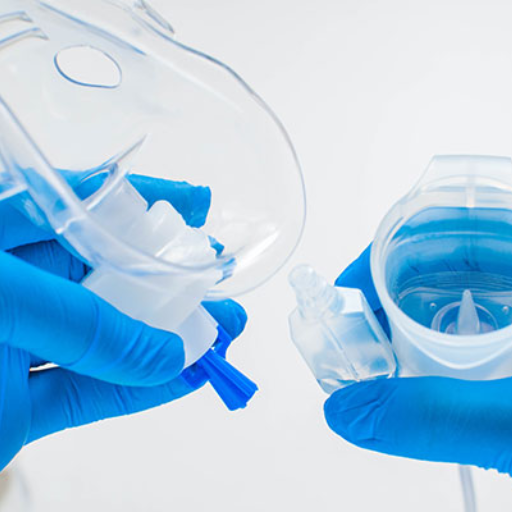
Here, the treatment of the three most common categories within medical practice is industrialized in order to consider our database for engineering plastics.
Surgical Instruments and Reusable Tools
PEI, PSU, PPSU, and PEEK prevail. Steam autoclaving is an indispensable criterion. Axes and hinges-the fiber-glass-strengthened PEI; syringe housings and sterilization containment of PPSU.
Single Use Disposable
In high volume disposable utensils- syringes, specimen tubes, medical ware, and components of IV-golf ball POs and PE. In the case of high-end disposable materials, product luster or impact strength with PC and ABS. Gamma sterilization at 25 kGy for a single-use disposable is the default, so radiation-stabilized-grade materials are better to rely on.
Diagnostic and Imaging Equipment Housings
ABS, PC, and PC/ABS blends account for much of the weight inside the diagnostic casing. Since they are non-touch parts, the criteria are somewhat relaxed, but flame retardance (UL 94 V-0 or V-1) is important for AC-powered devices.
Drug-Delivery Devices
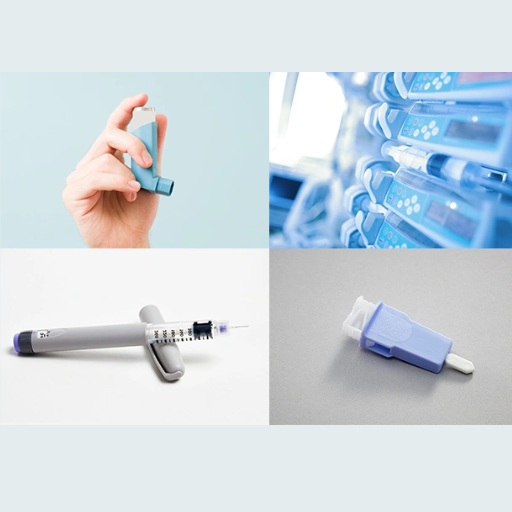
Gears and metering bodies (POM), always PC for barrel windows, reservoirs (PP), sealing parts (TPE) consist of basic combinations on insulin pens, auto-injectors, an inhaler, or infusion-pump cassettes and require drug-contact qualifications.
Implantables
PEEK grades that come in implant form, a fit of a few PSU and UHMWPE grades for particular applications. ISO 10993 has a very high hurdle for scrutiny with implantables. The long-term implantation test suggestions are pretty high.
Practical example: An OEM in Suzhou recently consolidated five separate resin suppliers down to two by sourcing PC, POM, ABS, PA, and TPE pellets from a single vendor with documented medical-grade COAs. Their incoming-inspection workload dropped by 38%, and audit prep moved from six weeks to two. See our full engineering resin range to evaluate consolidation opportunities.
How to Source Medical-Grade Engineering Plastics Reliably
Once the resin shortlist is established, the sourcing stage decides whether your program moves smoothly or comes to a full stop right at the first stage of audit. A selection may color the supplier, taking the winner from just a plebeian trade to a robust and risky one.
Documentation requirement for every lot:
- Certificate of Analysis (COA) linked with lot number and production date
- Biocompatibility test summaries (ISO 10993 modules or USP Class VI)
- Drug Master File (DMF) reference, as/if applicable
- A regulatory change notification policy in writing
- Resin Grade-level Technical Data Sheet (TDS)
- Elemental analysis results of heavy metals and residual monomers
Batch traceability and a lot reservation. Medical OEMs usually validate one resin lot for downstream production. Confirm that the supplier can reserve a specified amount of a single lot for shipping in staged releases. Lot mixing within a production campaign would disrupt validation.
Prototyping to production transition. Another issue of programs often is a wall where small lot prototype resin passes the baton to industrial grade. Plan the turn early. Tell the supplier, “Are prototype and production lots sharing the same DMF and additive package?”
Regrind contamination. Medical-grade resins must be made of virgin pellets unless the design of the appliance with recycled material has been specified. Ensure compliance that only virgin pellets are shipped keeping all regrind, recycle, or off-spec material out.
Discuss Maria, a sourcing manager from a German diagnostic-cartridge maker. She standardized her buying specification in late 2024. Each medical-grade pellet lot ships with the six-item documentation set mentioned above. Her supplier problem case volume shrank from 11 in the first full year to 2 in the second year.
Soft CTA: Want a copy of the medical-grade pellet documentation checklist we ship with every order? Contact our team and we will email it within one business day.
Cost vs Performance Decision Framework for Procurement
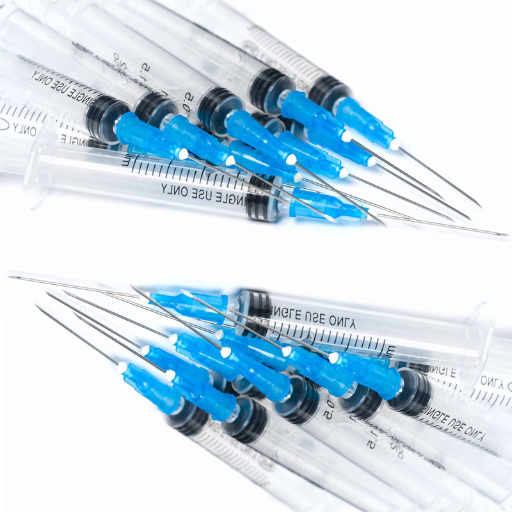
Myriads of procurement spreadsheets talk transparently about Pellet prices. Paradoxically, this is most deceptive too. To any medical-grade engineering plastics the validation cost, lot consistency, supplier’s capability, and downtime risk contribute directly towards a total cost of ownership.
A simple tripart scheme integrates procurement with engineering requirements for facilitating optimal material selection
Tier 1: Commodity-Medical
PP, PE, PS. Used in disposables, packaging, labware. Cost per kg is low; volume is high; and therefore, the validation cost is amortized amongst millions of parts.
Tier 2: Engineering-Medical
PC, ABS, POM, A, PMMA. Used in durable disposables, drug-delivery mechanisms, diagnostic enclosures. Cost per kg is moderate; lot consistency is vital for reliability of the mechanisms.
Tier 3: High-Performance Medical
PEEK, PET, PSRW, PPSU. Used in reusable surgical instruments, implants, sterilization trays. Cost per kg is high; per part cost is moderate because low part volumes and performance lead to negligible failures.
The question of procurement is not “What tier is least expensive?” Costs alone are not justifiable. The right question to ask is: “What tier is able to meet our device class requirements with minimum overall system risk?”
Frequently Asked Questions
What is the most common engineering plastic in medical devices?
Polypropylene (PP) is the most common plastic utilized in medical manufacturing, chiefly for syringes and disposables. Among the engineering plastics, Polycarbonate (PC) is very commonly used because its water-clear clarity, exceptional impact strength, and wide sterilization compatibility and bio-compatibility.
Is polycarbonate medical grade?
Medical-grade polycarbonate is part of a specific product family that has undergone rigorous testing of biocompatibility (usually USP class VI and selected ISO 10993 modules) and is supported by a certificate of analysis attached to each lot. The industrial-grade polycarbonate is chemically similar but lacks the documentation required for medical use.
Can PEEK be autoclaved?
Yes. PEEK can repeatedly go through steam autoclave cycles at 134 degrees C without any measurable change in mechanical properties, therefore used in reusable surgical instruments or orthopaedic trays.
What is the difference between USP Class VI and ISO 10993?
USP Class VI is a prescribed battery of three biological tests laid down by the US Pharmacopeia. ISO 10993 is an ad-hoc module of tests for biological assessment chosen on the basis of contact configuration and duration. Most medical device submissions require ISO 10993 assessments; USP Class VI evaluations are frequently employed to lend additional points.
Putting It Into Practice
The engineering plastics that make up modern medical application devices are not something that would be taken lightly. Selecting the proper resin is just the first step. Documenting, sterilization, and ensuring a traceable supply chain are the steps to get products moving.
Three things can be taken from the material decision to next:
First, match the resin to the first class of contact; afterward, dry sterilization methods are second, and lastly, the cost comes.
In fact, the documents must go down to the lot level. Every time a delivery is made, it is expected that a record of the other details will be included, such documents as; A TBP, the ISO 10993 summary, CERT, DMF reference, change-control policy, TDS, batch traceability, et cetera.
Try to consolidate things wherever you can. A single supplier who keeps running with PC, ABS, POM, PA, and TPE means easy incoming inspection and less audit prep.
Yifuhui in Suzhou is able to keep any demand on any medical-grade engineering plastic from polycarbonates and ABS to POM, PA, PEI, PSU, PPSU, and PEEK. Each lot comes with documents to state that shipment is according to all the properties, biocompatibility, and so on, useful data to sit down with your validation and audit teams on Day 1.
Strong CTA: Building a new medical device or re-qualifying an existing one? Request a medical-grade pellet quote and technical data sheet from our engineering team today. We respond to every inquiry within 24 hours.
Application specifics of the final molecular preference of the resin, under racing in a long thick binder with an inhibitor of bioactivity components; in short, documentation concerning source, compliance, and maybe a little less direct choice for the rest of the step.