Set two identical clear panels side by side in full Arizona sun. Same thickness, same price point, both cut from plastic sheet. In the summer of 2024, you couldn’t tell them apart. By the fall of 2026, one is still water-clear. The other is yellow, hazy, and brittle at the edges.
That difference is UV resistance, and it decides which resin you should buy for anything that lives outdoors. When you compare polycarbonate vs acrylic UV resistance, you’re really asking one question: will this part still look and work like new in year five, ten, or twenty?
This guide answers it with the chemistry, the weathering data, the coating and stabilizer options, and the outdoor service life figures you need to choose between PC and acrylic pellets. As a resin supplier, we also show you how to verify the UV claims on any datasheet, because a vague promise is how outdoor parts fail early.
The Quick Verdict on Polycarbonate vs Acrylic UV Resistance
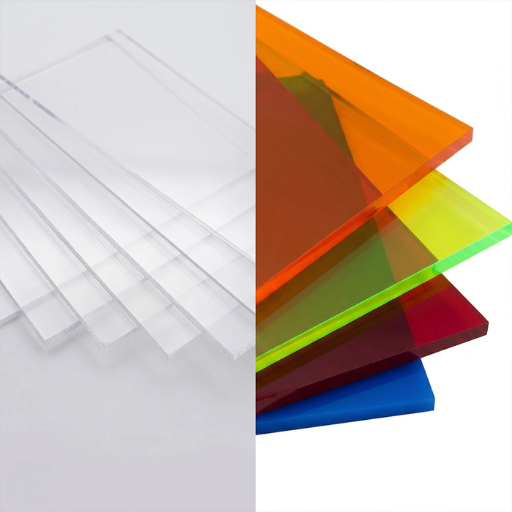
Acrylic is naturally UV-resistant. Polycarbonate is not, and it needs protection to survive outdoors.
Acrylic, or polymethyl methacrylate (PMMA), resists yellowing and holds its clarity for decades in direct sunlight without any coating. Polycarbonate (PC) is far tougher against impact, but its chemistry absorbs solar UV and degrades. Unprotected PC yellows and loses surface strength within a few years outdoors.
- Choose acrylic when long-term clarity and color are the priority. Outdoor signage, skylights, lamp covers, and display glazing fit here.
- Choose UV-stabilized or UV-coated polycarbonate when impact is the real risk. Safety glazing, machine guards, storm protection, and protective barriers need PC’s toughness, and the UV package is the price you pay for it.
The rest of this guide explains why these two materials age so differently, so you can apply the verdict to your specific part. For the full property picture, start with our complete polycarbonate vs acrylic comparison before you commit to a material.
Need to compare grades side by side while you read? Browse our polycarbonate pellet grades and our PMMA acrylic pellet range.
Why Acrylic Stays Clear and Polycarbonate Turns Yellow
The reason these resins age differently sits at the molecular level, and it’s worth understanding because it explains every claim you will read.
What Sunlight Does to Polymers
Solar UV, roughly the 290 to 400 nanometer band, carries enough energy to break polymer bonds. When those bonds break, the material develops color bodies (yellowing), the surface micro-cracks, and the polymer loses strength. Every plastic ages this way. The question is how fast.
Polycarbonate Absorbs the UV That Destroys It
Polycarbonate is built from bisphenol A, and that backbone contains aromatic rings. Aromatic rings are excellent UV absorbers. So PC soaks up solar UV, which triggers two degradation paths: a photo-Fries rearrangement and photo-oxidation. Both produce yellow chromophores and chain scission.
Here is the catch. Polycarbonate blocks UV precisely because it absorbs it. That absorption is what yellows the material and embrittles the surface over time. The very property that makes PC a good UV shield for whatever sits behind it is the property that damages PC itself.
Acrylic’s Chain Is Transparent to Solar UV
Acrylic is polymerized methyl methacrylate, and its backbone is aliphatic, meaning it contains no aromatic rings. It has no chromophore in the solar UV range, so sunlight passes through without triggering degradation. That’s why PMMA is described as naturally UV-stable. The protection runs through the full thickness of the material, not just a thin surface layer.
Material makers lean on this distinction. Röhm, the manufacturer of PLEXIGLAS, calls its approach naturally UV-stable. Its PLEXIGLAS UV-resistance documentation backs a 30-year guarantee against visible yellowing on almost all clear-transparent PLEXIGLAS products, with up to 90% of light transmission retained over that period. A coating that can scratch, chip, or wear away is not part of the equation.
Polycarbonate vs Acrylic UV Resistance: The Numbers That Matter
Here is the head-to-head in one table. These are typical published values from manufacturer datasheets and material suppliers, and they describe outdoor, unprotected exposure unless a UV package is stated. Aggregate figures of this kind also appear in Laird Plastics’ polycarbonate vs acrylic industrial comparison, a broad property survey of both resins.
| Outdoor / UV property | Acrylic (PMMA) | Polycarbonate (PC) |
|---|---|---|
| Natural UV stability | Excellent, no coating needed | Poor, yellows in roughly 1 to 3 years in direct sun |
| Cause of degradation | Minimal, no solar UV chromophore | Bisphenol A backbone absorbs UV, then photo-degrades |
| UV coating needed for outdoor use | No | Yes, or a UV-stabilized grade |
| Typical UV coating life | Not applicable | About 5 to 10 years before yellowing accelerates |
| Typical outdoor service life | 15 to 30+ years with little yellowing | 10 to 15 years when UV-protected |
| Light transmission (new) | About 92% | About 88% |
| Impact strength vs glass | Roughly 10x | Roughly 250x |
| Scratch resistance | Higher surface hardness | Softer, scratches more easily |
How to Read This Table
UV resistance is acrylic’s clear win. Impact resistance is polycarbonate’s. So the honest answer to “which is better outdoors” is almost always the same: it depends on what has to survive, the sun or the baseball bat.
That is why acrylic dominates outdoor signage, luminaire covers, and decorative glazing, while UV-protected polycarbonate owns safety glazing, transit windows, and greenhouse roofing. Each material was chosen for the failure mode the designer feared most.
Standard, UV-Stabilized, or UV-Coated PC: Three Different Materials
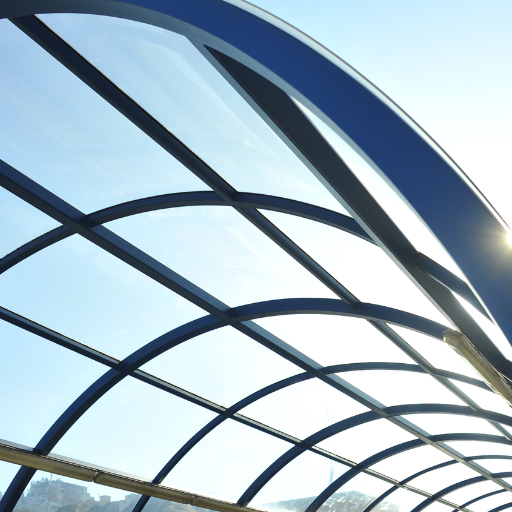
When a supplier tells you a polycarbonate is “UV resistant,” that phrase covers three very different products. Knowing which one you are buying is the difference between a ten-year part and a two-year disappointment.
Standard PC. No UV protection. Fine for indoor parts, but it yellows and loses impact strength within a couple of years of direct sun. Do not spec it outdoors.
UV-stabilized PC. UV absorbers and hindered amine light stabilizers are compounded into the pellet. This delays yellowing and extends life, and it’s the only practical option for molded parts, because you can’t co-extrude a protective cap onto an injection-molded component.
UV-coated or co-extruded PC. Sheet and multiwall panels get a UV-absorbing cap layer, typically around 50 microns thick, that screens most of the incoming solar UV before it reaches the bulk polymer. This is the best PC option for glazing and roofing, where the cap is applied during extrusion.
Why Molded PC Parts Rely on the Pellet
This is the insight molders often miss. If you injection mold an outdoor PC part, you have no cap layer. The stabilizer package inside the pellet is your only armor, so you must specify a UV-stabilized PC grade and confirm the stabilizer type with the resin supplier. For the full processing picture on PC, see our polycarbonate pellets for injection molding guide.
Marta, a product engineer at a Texas enclosure maker, learned this the hard way. Her outdoor control housings were molded in standard clear PC because the prototypes looked perfect in the shop. Eighteen months on a roof later, the housings had gone yellow and chalky. Customers noticed. She re-specified a UV-stabilized grade at a modest premium, and two years on, the replacement housings still look close to new. The fix was not a new material. It was choosing the right grade of the same material.
Need help choosing a UV-stabilized PC grade for a molded part? Contact our engineers and we will match a grade to your sun exposure and service life target.
How Long Does Each Material Really Last Outdoors?
Service life claims vary because climate and grade matter, but the ranges below hold across most real-world installations.
Acrylic holds clarity for 15 to 30+ years. Premium PMMA sheet products carry 30-year anti-yellowing warranties and retain up to 90% of their original light transmission over that span. Colored acrylic carries a shorter colorfastness warranty, typically around 10 years. Acrylic’s natural stability means there’s no protective layer to fail, which is its quiet advantage.
UV-protected polycarbonate lasts roughly 10 to 15 years. The limiting factor is usually the coating or cap layer itself. Coatings and caps last about 5 to 10 years in harsh sun before they degrade, and once they fail, yellowing accelerates quickly. Unprotected PC doesn’t last long enough to be useful, roughly 1 to 3 years before visible yellowing and haze.
Accelerated Tests Versus Real Weather
Suppliers prove outdoor life with accelerated weathering, usually xenon-arc or QUV chambers run to standards like ASTM G154 or ISO 4892. Accelerated hours map loosely to real years, but nothing replaces real-world exposure in Florida, Arizona, or the tropics. When a datasheet claims a service life, ask which test produced it and how the hours translate to your climate.
UV Transmission: What the Sheet Blocks for What Sits Behind It
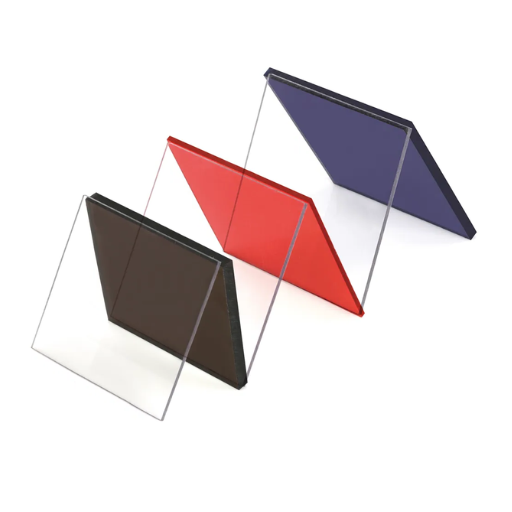
There is a common confusion worth clearing up. Standard acrylic blocks almost all UV below roughly 380 nm, so a PMMA lens or glazing face protects the contents behind it from fading. Polycarbonate also absorbs virtually all UVB and most UVA. Both materials block UV well.
But blocking and surviving are different things. PC blocks UV by absorbing it and then pays the degradation cost. PMMA blocks most UV through its UV-inhibitor package and still keeps its own clarity, because the polymer backbone doesn’t break down. So for a light fixture lens or a sign face that must protect what is behind it and keep looking clear itself, acrylic does both jobs with one material.
One exception to remember: optical UV-transmitting PMMA grades exist for applications like UV curing. Those are formulated to pass UV, not block it. If you need a UV-blocking part, spec a standard UV-stabilized PMMA, not a UVT grade.
Matching the Resin to Your Outdoor Application
Use this as a starting map, then let your own failure modes decide. If you buy in pellet form rather than sheet, our polycarbonate vs acrylic pellets guide covers sourcing and grade selection for both resins.
- Outdoor signage and light boxes: acrylic. Clarity and color retention over years of sun are the whole job.
- Skylights and non-trafficable glazing: acrylic for clarity, multiwall UV-coated PC where hail is a threat.
- Lamp globes and luminaire refractors: acrylic. It stays clear and does not cloud where light loss matters.
- Machine guards and safety glazing: UV-coated or UV-stabilized PC. Impact survival outweighs long-term clarity.
- Greenhouse and roofing panels: multiwall PC with a UV cap layer for hail resistance, or acrylic where impact risk is low and 30-year clarity is wanted.
- Molded outdoor enclosures, covers, and lenses: UV-stabilized PC when toughness is needed, PMMA when the part must hold optics and clarity.
- Automotive and transportation glazing: UV-stabilized PC, almost always with a hard coating for abrasion.
Daniel, who runs a signage shop outside Dallas, switched his outdoor channel letter faces from polycarbonate to UV-stabilized acrylic in 2024. His old PC faces had started yellowing after about two seasons in the Texas sun, and re-calls were eating his margin. Two years later, the acrylic faces have not discolored, and he has stopped replacing letters under warranty. He still sells PC for the vandal-proof letters his customers ask for near highways. Both materials now have a place in his shop, chosen by location rather than habit.
UV FAQ: Does Polycarbonate Yellow in the Sun?
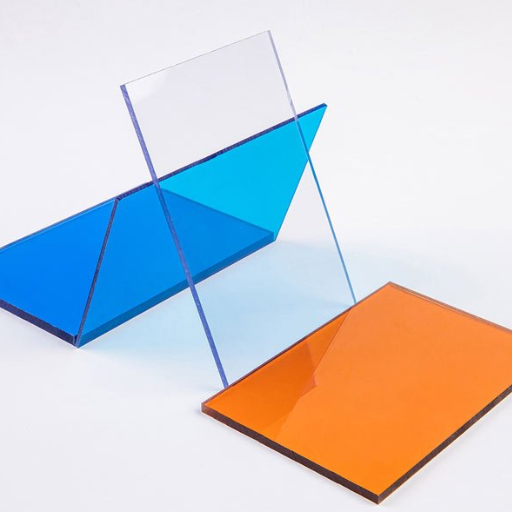
Does polycarbonate yellow in the sun? Yes. Unprotected polycarbonate yellows and hazes within roughly 1 to 3 years of direct sun exposure. UV-stabilized grades and UV-coated sheet last far longer, but they still do not match acrylic’s long-term clarity.
Is acrylic UV resistant? Yes, inherently. Acrylic does not need a coating to resist UV, and its stability runs through the full material thickness rather than a thin surface layer.
Does acrylic yellow over time? Barely. Quality PMMA holds its clarity for 15 to 30+ years outdoors, and premium products carry 30-year anti-yellowing warranties.
Which is better for outdoor use, acrylic or polycarbonate? For long-term clarity and appearance, acrylic. For surviving impacts, UV-protected polycarbonate. Your answer depends on whether sun or impact is the bigger threat to your part.
Does polycarbonate need a UV coating outdoors? For sheet, ideally yes, either a coating or a co-extruded UV cap. For molded parts, use a UV-stabilized grade, because a cap cannot be applied after molding.
How long does UV coating last on polycarbonate? Roughly 5 to 10 years outdoors. After it fails, yellowing accelerates, so factor re-coating or replacement into your lifecycle cost. Our polycarbonate vs acrylic cost guide shows how that UV premium changes total cost of ownership.
Does acrylic block UV light? Standard acrylic blocks nearly all UV below about 380 nm, which is why it protects the contents behind a sign face or lens.
How to Verify a Supplier’s UV Claims
Vague “UV resistant” claims are the reason outdoor parts fail early. Any serious supplier should answer these questions in writing.
- Ask for the protection method. Is the product stabilized, coated, or co-extruded with a UV cap? Stabilized and coated PC behave very differently outdoors.
- Ask for the test. What weathering standard was used (ASTM G154, ISO 4892), for how many hours, and with what result? Request the actual test report.
- Ask for the warranty. What is guaranteed, and for how long? A 30-year anti-yellowing warranty means something different from a one-year cosmetic claim.
- Ask which side faces the sun. Coated PC sheet is directional. Installing it backward defeats the protection.
- Ask for the stabilizer package. For molded parts, confirm the UV absorber and HALS type and loading in the pellet, not a generic “UV grade” label.
- Ask for a COA on every batch. UV stabilizers are added in compounding, so batch consistency matters. A stabilizer that is present on the datasheet but missing in the bag is a real risk.
Priya, a senior buyer for a greenhouse panel distributor, now refuses to approve any PC order without the weathering report and stabilizer spec on file. She was burned once by an imported “UV PC” panel that turned chalky after two winters. The quote was cheap, but the replacement program cost her company six figures in freight and customer goodwill. Today she treats a documented UV package as a purchasing requirement, not a nice-to-have, and she has not had a yellowing claim since.
Conclusion
UV resistance separates these two clear resins more sharply than any other property. Acrylic is the long-clarity outdoor resin, naturally UV-stable through its full thickness and good for 15 to 30+ years outdoors. Polycarbonate is the impact resin that must be UV-stabilized or UV-coated to survive the sun, and even protected, it will not match acrylic’s long-term clarity. The right answer is always application-specific, and the data behind any UV claim is only as good as the test that produced it.
At Suzhou Yifuhui, we supply both sides of this decision. We carry polycarbonate pellets, including UV-stabilized grades for outdoor molded parts, and PMMA acrylic pellets for applications where clarity is the priority. Because we supply both resins, you can source the right outdoor material and its documentation from one partner, with batch-tested quality and certificates of analysis on every shipment.
Contact Suzhou Yifuhui to discuss UV-stabilized polycarbonate or acrylic pellets for your outdoor application. Our engineers will help you match the resin to your sun exposure, impact risk, and service life target, and we respond to every inquiry within 24 hours.