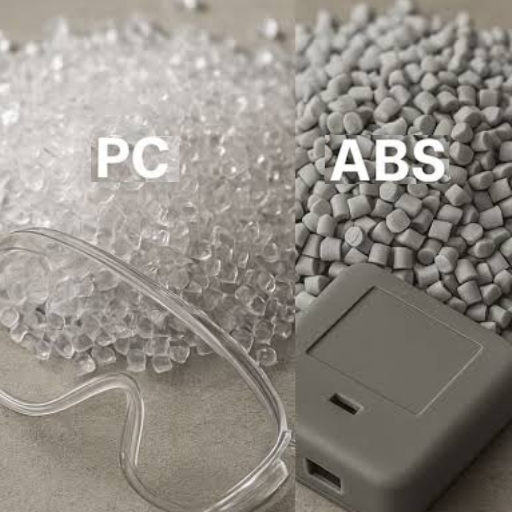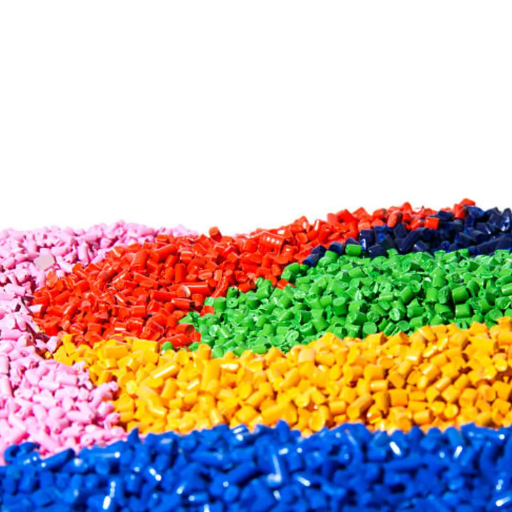
Recycled PC/ABS pellets are not virgin PC/ABS at a discount. They are a different material with a different set of trade-offs, and treating them as a drop-in replacement is how a production line ends up with silver streaks and a rejected cosmetic lot.
That distinction matters more every year. Electronics and appliance manufacturers have published recycled-content targets. Procurement teams are now asked to hit them without breaking part performance.
The problem is that nobody explains what actually changes when you switch. Marketing pages claim performance parity. Datasheets give numbers without context. The genuinely useful research sits in academic journals that buyers never see.
This guide closes that gap. You will learn where recycled PC/ABS pellets come from, and why blending recycled PC and ABS is harder than recycling a single resin. We cover what degrades and what does not, how to read a certification, and how to specify the material on a purchase order.
What Are Recycled PC/ABS Pellets?
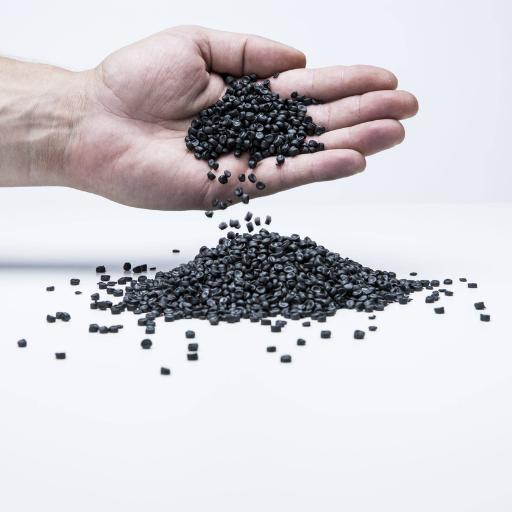
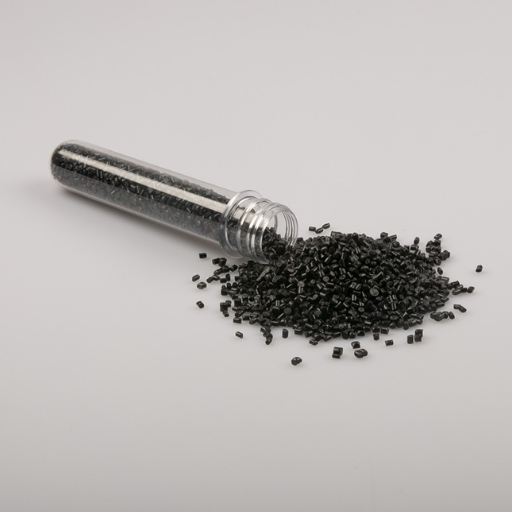
Recycled PC/ABS pellets are compounded thermoplastic granules made from recovered polycarbonate and acrylonitrile butadiene styrene. Producers sort, clean and reprocess post-consumer electronics and appliance waste, then compound it with stabilizers, impact modifiers and often flame retardants to restore the properties buyers expect from a PC/ABS blend.
The compound is supplied in pellet form and processed on the same injection molding equipment as virgin material. What changes is not the machine. It is the consistency of what you feed it.
If you are still deciding between the two base resins, our polycarbonate vs ABS plastic pellets comparison covers where each one wins on its own, and why the blend is usually the more forgiving choice.
Where the Feedstock Comes From
The feedstock for recycled PC/ABS comes from a narrow set of streams. Waste electrical and electronic equipment (WEEE) is the largest, followed by appliance plastics, selected automotive streams, and mixed post-consumer material.
This is the single most important fact in the whole supply chain: the constraint on recycled PC/ABS is not demand and it is not monomer supply. It is the availability and consistency of eligible feedstock. Global e-waste generation reached 62 million tonnes in 2022, yet only 22.3% was formally recycled. The material exists. The qualified, traceable portion of it is what runs short.
Recycled content also comes in two forms. Post-consumer recycled (PCR) content comes from products that reached end users. Post-industrial recycled (PIR) content comes from factory scrap. PCR carries more weight in sustainability reporting and in European regulation, and it is harder to source consistently.
If you are new to the terminology, our recycled plastic pellets guide covers the wider material landscape, including how PCR and PIR compare across resin families.
Need a PCR grade spec’d for your part? Send us your application and target recycled content percentage. Our technical team will match a grade and return a datasheet within 24 hours. Request a quote
Why Recycled PC/ABS Is Harder to Make Than Single-Resin Recyclate
Recycling a single resin is a sorting problem. Recycling a blend is a separation problem, and separation is harder.
The Separation Problem
WEEE plastics are sorted by density. PC/ABS lands in the heavy fraction above 1.1 g/cm³. That is the same fraction where ABS and polystyrene also collect, so the stream arrives mixed.
Optical sorting is supposed to fix this, but much of the heavy fraction is black. Black material reflects too little light for near-infrared sorters to classify, so it has to be pre-sorted mechanically instead. The result is that sorted PC/ABS can still contain up to around 5% foreign polymer.
Some of that contamination is benign. ABS and PC are compatible with the blend. Polystyrene and POM are not, and they degrade mechanical performance. Purification routes exist, including dissolution and precipitation processes that remove contaminants to a validated level, but they add cost that shows up in your price per ton.
Legacy Flame-Retardant Contamination
There is a second problem that almost no supplier page mentions. Older electronics housings carry brominated flame retardants, and some of those substances are now classified as persistent organic pollutants. Phosphorus-based flame retardants leave residues too.
Those residues do not simply sit there. They raise viscosity variability between lots, and halogenated flame retardants combined with trace catalytic metals can trigger degradation. Specifically, they can drive acid hydrolysis of the polycarbonate fraction and thermo-oxidation of the ABS fraction at elevated melt temperatures.
So a recycled PC/ABS lot can process differently from the last one, even when the datasheet values look identical.
Compatibilizers Restore the Interface
Producers counteract phase separation with compatibilizers. Common choices include styrene-maleic anhydride copolymers, ABS grafted with maleic anhydride, EVA grafted with maleic anhydride, and GMA-based styrenic copolymers. These additives lower interfacial tension and improve melt mixing.
The payoff is measurable. With the right compatibilizer package and a controlled ratio, recycled PC/ABS blends can retain the majority of virgin mechanical performance. Published work on recycled PC/ABS compatibilization reports recycled PC content above 55% in a 60/40 blend. In favorable cases, total recycled polymer exceeds 75% while properties stay close to virgin.
Recycled vs Virgin PC/ABS: What Actually Changes
This is where most marketing material gets vague. Here is the honest comparison.
| Property | Virgin PC/ABS | Recycled (PCR) PC/ABS | What drives the difference |
|---|---|---|---|
| Tensile strength | Full spec | Comparable | Retained in most qualified grades |
| Flexural modulus and stiffness | Full spec | Comparable | Retained |
| Heat resistance (HDT) | Full spec | Slightly lower to comparable | PCR content and stabilizer package |
| Notched impact | High | Moderate to high | Contamination and impact modifier package |
| Strain at break | High | Reduced | Labels, dirt and foreign polymer act as crack initiators |
| Melt flow reproducibility | Tight, lot to lot | Wider, lot to lot | Feedstock variability and flame retardant residues |
| Color consistency | Excellent | Limited | WEEE recyclate is black or grey |
| Odor and VOC | Low | Variable | Feedstock history and decontamination depth |
| Carbon footprint | Baseline | 30% to 45% lower at 30% to 50% PCR | Supplier-reported, cradle to gate |
Read the left column and the middle column together and a pattern appears. Stiffness, tensile strength and heat resistance survive recycling well. What degrades is strain at break, color, odor, and lot-to-lot reproducibility of melt flow.
That matters because those are exactly the properties that determine whether a part passes a drop test or a cosmetic inspection.
Consider a real pattern. A procurement manager at an appliance brand was told to reach 30% recycled content on a control panel housing. The first lot from a low-cost supplier passed every dimensional check. Then it failed a cosmetic audit, because the black was not uniform between parts.
The replacement compound was GRS certified, with a stated color tolerance. It cost roughly 12% more per tonne, and it passed. The lesson was not that recycled material fails. Certification and a color spec, not price per kilogram, decide the outcome.
Explore the wider comparison in our virgin vs recycled plastic pellets breakdown.
Recycled PC/ABS Pellet Grades, Color, and What You Can Actually Buy
Typical PCR PC/ABS Grades
Commercial recycled PC/ABS grades cluster into a few families. Ranges below are typical and vary by producer, PCR percentage and additive package.
| Grade type | MFI (g/10 min) | Notched impact | Color | Typical use |
|---|---|---|---|---|
| Natural, general purpose | 10 to 30 | 30 kJ/m² or higher | Natural | Injection molded parts, visible internal components |
| Black, general purpose | 10 to 20 | 12 kJ/m² or higher | Black | Non-visible housings and brackets |
| Impact modified | 10 to 25 | 40 kJ/m² or higher | Black or dark | Appliance and electronics housings |
| Flame retardant (FR) | 12 to 30 | 15 kJ/m² or higher | Black | IT and electronics enclosures, UL94 V-0 |
| High PC content | 8 to 25 | 30 to 50 kJ/m² | Black | Structural parts needing higher heat |
Two benchmarks are worth carrying into a supplier conversation. For small domestic appliances, a Charpy notched impact around 25 kJ/m² is generally accepted as industrially adequate while retaining stiffness. With elastomeric core-shell modifiers, quality grades reach notched Izod values of 40 kJ/m² and above.
A listed PCR grade illustrates what a good datasheet looks like: melt flow of 25 ± 3 g/10 min, notched Izod above 53 kJ/m², and HDT above 90 °C, with a reported carbon footprint around 76% below virgin PC.
Match the grade to the application before you negotiate price. Send us your part requirements and we will narrow the grade family in one exchange.
The Color Reality Check
Color is the hardest specification to hit, and it deserves its own conversation.
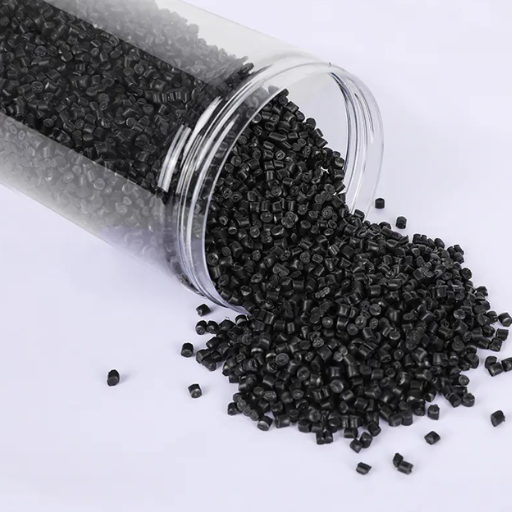
Recycled PC/ABS from WEEE is black or gray. That is a property of the feedstock, not a manufacturing defect. If your part needs a light or bright color, you will be adding pigment masterbatch to lift the base, and that creates a chain of consequences.
One documented case is instructive. Hitting a specific gray standard on recycled PC/ABS required adding 3% to 6% white titanium dioxide masterbatch. That addition shifted the mechanical properties and the flammability behavior, and it diluted the recycled content that the program was trying to raise.
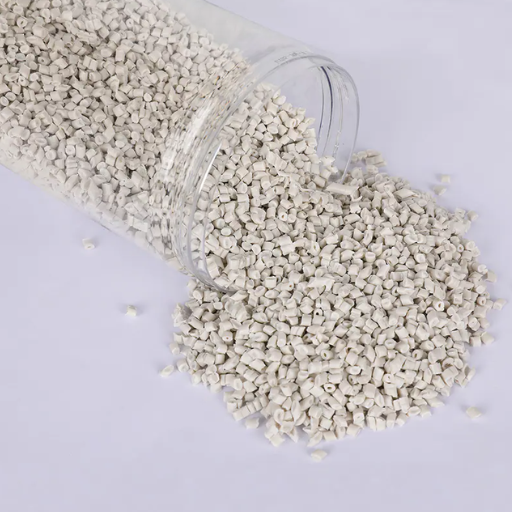
So color and recycled content trade against each other. Dark and black grades suit non-visible parts. Natural grades suit parts where the recycled base is close enough to the target. Visible, high-gloss, tightly color-controlled cosmetics remain the hardest case for PCR material.
Certifications: What Each One Actually Proves
A recycled-content claim is worth exactly as much as the documentation behind it. Several certifications appear on PCR PC/ABS datasheets, and they do not all prove the same thing.
- GRS (Global Recycled Standard) verifies recycled content and adds social and environmental criteria across the supply chain.
- ISCC PLUS provides chain-of-custody accounting, often on a mass balance basis, which suits large mixed streams.
- UL2809 validates recycled content specifically for the North American market and is frequently requested by electronics OEMs.
- OBP (Ocean Bound Plastic) certifies feedstock recovered from coastal collection networks.
- EN 15343 is the European standard for traceability of recycled content in plastics, and it is the reference point European buyers increasingly expect.
The distinction that decides an audit is physical segregation versus mass balance. Physical segregation means the recycled material in your lot is traceable to specific feedstock. Mass balance allows recycled and virgin material to be co-mingled with accounting offsets. Both are legitimate, but they answer different questions.
Whatever the certificate, ask for the transaction certificate for the specific lot you are buying. Without it, the recycled-content number on the datasheet is a marketing figure, not a verified one. Our recycled pellet quality control guide walks through the documentation set to request, and our guide to recycled pellet types explains how certification requirements differ by material.
One caution for European programs: a GRS certificate is not automatically accepted as equivalent under the EU Packaging and Packaging Waste Regulation. Verify the requirement for your specific market before you promise a compliance date.
Processing Recycled PC/ABS Pellets: Adjustments That Matter
Recycled PC/ABS runs on the same equipment as virgin material. It does not run on the same settings without thought. Most problems trace back to drying.
Drying
PC/ABS is hygroscopic, and recycled material is less forgiving of under-drying than virgin. Water left in the pellets hydrolyzes the polycarbonate during melting, which produces silver streaks on the part surface and brittleness in the finished component.
Dry recycled PC/ABS for 2 to 4 hours at approximately 110 °C to reach a moisture content below 0.02%. One published study ran a recycled blend successfully at 90 °C for 2 hours, so the exact window depends on your grade and dryer. Confirm it against the datasheet rather than assuming.
A process engineer learned this the direct way. He ran a 100% PCR lot through a hopper dryer still set for virgin PC/ABS. The parts came off with silver streaking down the visible face.
Moisture measured 0.05%, well above the 0.02% target. Extending the dry cycle to 4 hours at 110 °C resolved it completely. The same settings then held for the rest of the run.
Injection Molding Settings
Recycled PC/ABS molds in a familiar window:
- Melt temperature: 250 °C to 280 °C
- Mold temperature: 70 °C to 100 °C
- Screw speed: slower than virgin, with higher back pressure for mixing
- Venting: inspect and clear more often, because volatiles are more likely
Running 100% PCR also means re-tuning your pigment masterbatch to the actual recycled base rather than the color you assumed. Expect less lot-to-lot reproducibility of melt flow than with virgin blends. Compatibilization narrows that gap but does not eliminate it, so build a qualification step into the schedule.
Sourcing Recycled PC/ABS Pellets: A Buyer’s Checklist
What to Specify on the PO
Vague purchase orders produce variable material. Put these on the document:
- PCR percentage and the certification basis
- MFI range, stated with the test standard
- Minimum notched impact
- Color with an L*a*b* tolerance, not a name
- UL94 rating together with the wall thickness it applies to
- Filler content
- Certification set required
- Odor or VOC limit, if the part is enclosed or consumer-facing
One recurring friction point deserves mention. OEM specifications are often written around virgin material. A recycled grade can then be marked non-conforming against a target the supplier never saw defined. Ask suppliers to state their test standards explicitly, and compare like with like.
Price Benchmarks and Supplier Risk
Qualified, certified PCR PC/ABS compounds average around USD 3,400 per tonne on an ex-works basis globally. That figure reflects compounds with certification and consistent performance, not the cheapest spot material available.
Uncertified recycled PC/ABS from Chinese spot traders sells for much less. Listings range from roughly USD 1,250 to 3,600 per tonne, depending on grade, flame retardancy and color. The gap between the average and the floor is the certification and consistency premium. It is not a markup on the same material.
For high-specification programs, dual-sourcing is standard practice. Framework agreements typically run annually, with a qualification lot, approved color and appearance standards, and periodic revalidation. Ask for retained samples, datasheet version control, and disclosure of the feedstock stream.
If this is your first recycled program, our guide to evaluating recycled pellet suppliers sets out the vetting questions, and our plastic resin pellets guide covers material selection fundamentals.
When Recycled PC/ABS Makes Sense, and When It Does Not
Recycled PC/ABS pellets work well in specific situations and poorly in others. Being honest about the boundary saves a failed qualification run.
Choose recycled PC/ABS when:
- The part is non-visible or internally mounted
- The program carries a recycled-content target or a Scope 3 reporting obligation
- The component is dark or black, which the feedstock already suits
- Cost sensitivity is real and a qualification lot is acceptable
- The application is an appliance or electronics housing, where this material is proven
Choose virgin PC/ABS when:
- Optical clarity or tight color control is a specification
- The part is a visible, high-gloss cosmetic surface
- Perfect lot-to-lot melt flow repeatability is required
- The application demands the upper end of impact performance at low wall thickness
There is a middle path too. Blending recycled and virgin pellets lets you start at a modest recycled percentage, qualify it on your equipment, and scale up as your process proves stable. It is usually the fastest route to a first compliant production lot.
Frequently Asked Questions
Is recycled PC/ABS as strong as virgin?
In stiffness and tensile strength, qualified grades perform comparably. Impact strength and strain at break are usually lower, because contaminant particles act as crack initiators. The gap narrows with impact modifiers and compatibilizers, but a recycled grade will not match the best virgin impact grades at thin wall sections.
Can PC/ABS be recycled?
Yes. Post-consumer PC/ABS is recovered from electronics and appliance streams and compounded back into pellets. The challenge is separation rather than feasibility, because PC and ABS share a density fraction with other polymers, and much of the material is black.
Why is recycled PC/ABS black?
WEEE and appliance housings are predominantly black or grey, so the recovered feedstock is too. Lifting the color requires adding pigment masterbatch, which shifts mechanical and flammability properties and reduces the effective recycled content percentage.
What certifications prove recycled content?
GRS, ISCC PLUS, UL2809, OBP and EN 15343 are the common standards. Each verifies recycled content differently. GRS and ISCC PLUS are widely recognized, UL2809 is common in electronics, and EN 15343 is the European traceability reference. Always request the lot-level transaction certificate.
Does recycled PC/ABS pass UL94 V-0?
Many flame retardant PCR grades do, using non-halogenated phosphorus-based systems. Ratings are wall-thickness specific, so confirm the rating at your actual part thickness and verify that current RoHS and REACH compliance documentation accompanies the lot.
Conclusion
Recycled PC/ABS pellets are a capable engineering material, not a compromise product. They retain the stiffness, tensile strength and heat resistance that make PC/ABS useful, and they carry a substantially lower carbon footprint. What they demand is respect for their differences.
The essentials come down to a short list. Feedstock consistency, not demand, limits supply. Separation is the hard part of manufacturing, and legacy flame retardant residues add viscosity variability. Stiffness survives recycling; color, strain at break and lot-to-lot melt flow are what move.
Certification only counts when a transaction certificate backs it. Drying is not optional. Target 110 °C for 2 to 4 hours to reach below 0.02% moisture. And color trades against recycled content, so decide which one your program prioritizes before you specify.
Get those points right and recycled PC/ABS becomes a dependable part of your material portfolio. Get them wrong and it becomes a qualification problem that costs weeks.
Suzhou Yifuhui New Material supplies PC/ABS and recycled grades with full documentation, batch-level quality control, and technical support from specification through production. Tell us your application, target recycled content and color requirement, and we will recommend a grade and send samples. To learn more about PC/ABS Blend Pellets: Blend Ratios, Grades & Applications, please refer to our accompanying guide.
Request recycled PC/ABS samples and a grade recommendation. We respond to every inquiry within 24 hours.