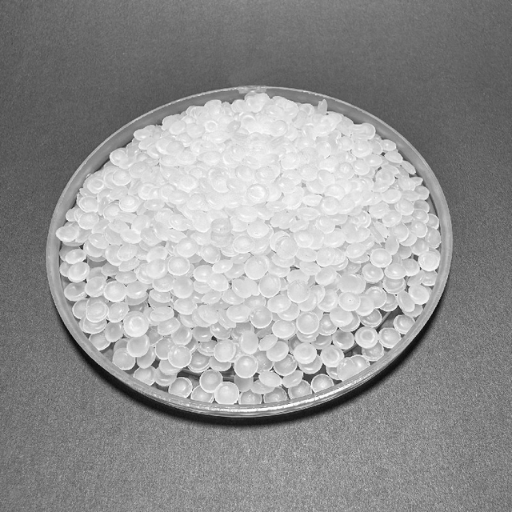
Last Tuesday, a procurement manager we work with opened a letter from her resin supplier. Polypropylene pellets, up 8%. Polycarbonate, up 12%. No explanation, no index data, just a new price list with a 30-day effective date. She had two weeks to decide whether to accept the increase, renegotiate, or qualify a second source. Without a pricing benchmark, she was negotiating blind.
Sound familiar? If you buy plastic resin pellets for a manufacturing operation, you have likely been in her seat this year. The plastic resin pellets price in 2026 has been anything but stable, and the gap between what suppliers quote and what the market actually justifies can run as wide as 22 cents per pound on commodity grades.
This guide gives you the benchmarks you need before your next conversation with a supplier. You will learn realistic 2026 price ranges by resin type, the factors that move those numbers, how volume changes what you pay, and exactly how to request a quote so you can compare offers accurately. If you need the material fundamentals first, start with our plastic resin pellets guide and come back for the numbers. By the end, you will be able to tell a justified price increase from a pricing test.
How Much Do Plastic Resin Pellets Cost in 2026?
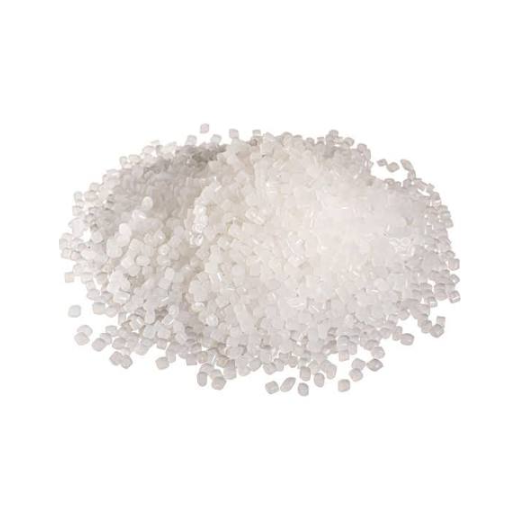
In 2026, plastic resin pellets range from about $650 per ton for commodity PVC to over $100,000 per ton for specialty PEEK. Most commodity pellets sit between $850 and $1,400 per ton, engineering resins between $1,500 and $6,000, and certified recycled grades between $400 and $1,700.
The honest answer is that the plastic resin pellets price depends on four things: the resin family, the grade, your order volume, and where you buy. Commodity pellets run hundreds of dollars per ton. Engineering grades run thousands. Specialty resins can hit five figures.
Here are indicative 2026 price ranges to use as a starting benchmark. Treat these as a sanity check, not a price list. Resin markets move week to week, so always validate current spot data at quote time using ICIS, the PlasticsExchange weekly Resin Review, or a local index like China’s 100ppi.
| Resin family | Typical range (USD/ton) | China domestic reference (RMB/ton, Aug 2026) |
|---|---|---|
| PP (polypropylene) | $900-1,200 | 8,320-9,580 |
| HDPE | $850-1,250 | 8,010-9,760 |
| LDPE / LLDPE | $1,000-1,300 | 7,380-8,460 |
| PVC | $650-900 | 4,100-5,260 |
| PS / HIPS | $1,100-1,400 | 8,370-9,860 |
| PET | $750-1,000 | ~7,439 |
| ABS | $1,700-3,600 | 8,910-16,380 |
| PC (polycarbonate) | $1,550-2,750 | 11,200-19,800 |
| PA6 / PA66 | $2,200-5,700 | 12,700 / 17,833 |
| POM (acetal) | $2,000-2,800 | ~12,000 |
| PBT | $2,000-3,300 | not published |
| UHMWPE | $1,600-5,500+ | not published |
| PPS / PEI / PEEK | $8,000-100,000+ | not published |
| Recycled rPP / rHDPE / rPET / rABS | $400-1,700 | 4,000-8,500 |
Note on the numbers: ranges reflect mid-2026 conditions and blend spot, contract, and regional data. They are intentionally wide because grade, brand, and quantity swing the real number significantly. Use them to benchmark a quote, not to set a budget to the dollar.
Commodity Resin Pellet Prices
Commodity resins are the workhorses of packaging, construction, and consumer goods. They trade in large volumes and track petrochemical feedstocks closely, which is why the plastic resin pellets price on PP and PE tends to move together with crude oil and olefin supply. Polypropylene pellets price and polyethylene pellets price rarely diverge for long.
In 2026, commodity prices have swung hard. Chinese spot levels reached roughly $1,156 per ton for PP and $972 for HDPE during the Q2 rally, then corrected through the summer. Western markets run higher. Chinese PP typically sits about 29% below US prices, and LDPE about 47% below, so regional sourcing is a major lever for the plastic resin pellets price you pay.
Engineering Resin Pellet Prices
Engineering resins carry a 2 to 5 times premium over commodity grades, which is why the plastic resin pellets price for ABS, PC, or nylon sits far above the commodity table. ABS plastic pellets, polycarbonate pellets, and nylon pellets each command prices that reflect their specialized feedstock chains and compounding.
Volume matters more here than on commodities. One supplier’s pricing guide we reviewed shows PA66 nylon pellets at roughly $3.50 per kg in one-ton quantities, dropping to about $2.80 per kg at twenty tons. That 20% spread on a high-volume program is a real budget line. For a deeper look at each material, our guides to ABS plastic pellets, polycarbonate pellets, PET pellets, and PA66 nylon pellets cover grade selection in detail.
Recycled Plastic Pellet Prices
Recycled pellets trade at a meaningful discount to virgin, typically 20% to 55% depending on grade and certification. Mixed-color rHDPE runs roughly $300 to $500 per ton, while certified natural rHDPE reaches $850 to $1,200 per ton and food-grade approaches $1,500. The spread between certified and uncertified material is the biggest pricing variable in the recycled market, because certification proves consistency. Our recycled plastic pellets guide and virgin vs recycled price comparison explain when that discount is worth taking.
What Drives the Plastic Resin Pellets Price?
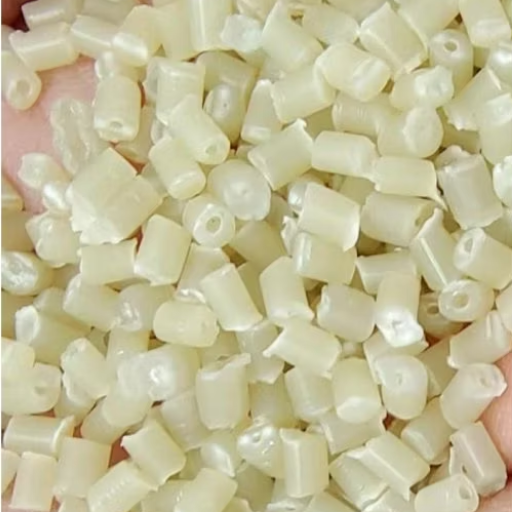
A quote is only useful if you understand what sits behind it. Seven factors move resin pricing, and most suppliers price against the same underlying inputs.
Feedstock and Crude Oil Costs
Crude oil volatility can explain up to 90% of the movement in virgin resin production costs, and raw materials account for 70% to 85% of a producer’s total cost. When naphtha, propylene, or ethylene move, resin follows within weeks. ABS is the exception buyers should watch: it depends on three separate feedstocks (acrylonitrile, butadiene, and styrene), so its price does not track crude one to one.
Supply, Demand, and Operating Rates
When producers run plants below capacity, supply tightens and prices firm. In 2026, China’s trade-in stimulus programs boosted demand for appliances and autos, while manufacturers elsewhere cut operating rates to work down inventories. These shifts move prices faster than most buyers expect.
Grade, Additives, and Compounding
Two pellets with the same polymer can sit far apart on a price sheet. Flame-retardant ABS runs 20% to 40% above general purpose. Glass-filled nylon adds a premium for the compound. Always compare like for like: grade, filler, and additive package, not just polymer family.
Virgin vs. Recycled
Recycled pricing responds to bale availability and sorting capacity rather than oil futures, which makes it a more stable option for many buyers. The certification level, not the color, is what sets the price.
Order Volume
Volume is the biggest lever you control. The discount ladder in the next section shows how much quantity changes price.
Region and Sourcing Channel
Buying direct from a manufacturer removes broker markups. Buying from China at FOB prices captures the lowest feedstock-cost region in the world. Each step in the supply chain adds margin, so the channel is part of the price.
Market Timing and Geopolitics
Finally, timing matters. Resin prices do not move smoothly. They lurch on events: shipping disruptions, feedstock shortages, trade policy, even regional conflicts. A buyer who understands the timing can lock in favorable terms, while one who ignores it pays the peak.
Why Resin Prices Rose and Fell in 2026
2026 resin prices moved in three waves: a weak January, an April-May synchronized producer rally, and a Q2 geopolitical spike (PP +26%, PVC +24%, PET +27% month over month) that corrected by mid-summer. For buyers who track the plastic resin pellets price, 2026 has been a case study in volatility. January started flat to down as weak demand dragged on prices. February and March firmed as China’s demand stimulus took hold. Then April brought the most synchronized wave of producer price increases across PE, PP, PS, ABS, PC, PVC, PA6, PA66, and PET in years.
The sharpest move came in the second quarter. Middle East shipping disruption squeezed supply and feedstock flows, and commodity prices spiked: PP up about 26% month over month to $1,156 per ton, PVC up nearly 24% to $878, and PET up about 27% to $982. By mid-summer the market was correcting as destocking and weak downstream demand replaced the geopolitical squeeze.
The lesson for buyers is not to chase the headlines. It is to separate the cost story from the pricing test. A supplier can cite “market conditions” for any increase. Only the underlying feedstock indexes tell you whether the number is justified. We return to that in the audit section below.
How Volume Changes the Plastic Resin Pellets Price per Ton
Quantity is the fastest way to lower your plastic resin pellets price per ton. Suppliers structure discounts around standard shipping units, and the breakpoints are consistent across the industry.
| Order size | Typical discount vs. catalog |
|---|---|
| Sample (1-5 kg) | Premium rate; you pay for the handling |
| 25 kg bag | Catalog list price |
| Pallet (500-1,000 kg) | 10-15% off |
| Supersack (800-1,250 kg) | 15-25% off |
| Container load (16-18 MT) | Lowest per-ton rate |
| Annual contract (20+ tons/quarter) | 5-10% below spot |
MOQs follow the same logic. Plan to pay premium rates for 25 to 50 kg qualification samples. Regional distributors typically take orders from 250 to 500 kg. Manufacturer-direct pricing and long-term contracts generally start at 5 to 20 metric tons.
A purchasing manager we worked with consolidated three suppliers into one annual contract and dropped his effective polypropylene cost by 9% purely from volume. He also cut freight and paperwork by ordering container loads instead of pallets. Consolidation is not just about leverage. It is about reducing the number of touchpoints in your supply chain.
Spot Price vs. Contract Price vs. Total Cost of Ownership
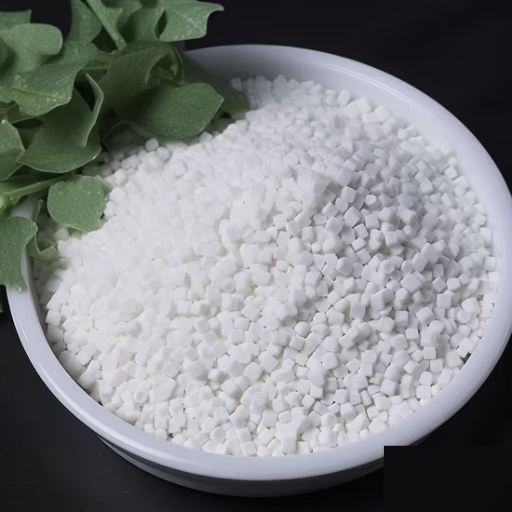
The plastic pellets price per ton is the number on the invoice. Total cost of ownership is the number that hits your P&L. The two can point in opposite directions.
Spot buying gives you flexibility and lets you ride down cycles, but you absorb volatility and may pay premiums during shortages. Contracts lock in terms, typically 5% to 10% below spot, and secure supply, but you lose some upside when prices fall. Most experienced buyers keep a base contract and layer spot purchases on top.
Then there are the hidden costs that never appear on a price list. Drying hygroscopic resins like nylon adds roughly $0.10 to $0.30 per kg in energy and labor. Moisture-related scrap and rework can add 3% to 8% to effective part cost in polyamide molding. A cheap grade that scrap runs at 80% yield costs more than a premium grade running at 98%.
The clearest way to see this: material is often only 15% to 20% of the finished part cost. A 10% resin increase on a $0.40-per-shot material adds $0.04 per shot, which is $80,000 a year at two million shots. Small numbers compound fast when you scale them across a production year.
How to Get an Accurate Quote: RFQ Best Practices
The most common reason quotes do not match is that buyers ask for “PP pellets” while suppliers price specific grades, volumes, and Incoterms. A complete RFQ removes the ambiguity. Send this minimum set of details on your first request:
- Grade and brand: exact product name, or target MFI, density, and key properties
- Additives and fillers: glass fiber %, flame retardant, UV stabilizer, color
- Quantity: tonnes per order and per year, plus packaging preference (bags, supersacks, container)
- Destination and Incoterm: FOB, CIF, CFR, DDP and the port or plant city
- Certifications required: ISO 9001, RoHS, REACH, UL, FDA or EU food contact
- Target price: give a realistic range based on the benchmarks above
- Timeline: when you need delivery and whether this is a trial or repeat order
Then ask for the documents that prove the price: a Certificate of Analysis per batch, the last six months of COA data, and process capability data (Cpk) for the key properties. A supplier who quotes a fair plastic resin pellets price will share these readily. One who resists is telling you something.
Pro tip: always run a 25 kg qualification sample through your actual production line before committing to volume. Third-party verification of a first order, at 200to200to400 for melt index and density testing, is the cheapest insurance in the industry.
Want help drafting a quote request that gets you comparable offers? Contact our materials team and we will walk you through the specifications that matter for your application.
How to Audit a Resin Price Increase Letter
When a supplier sends a price increase, treat it as a claim, not a fact, and test it against the plastic resin pellets price benchmarks you have already collected. The audit takes about 30 minutes and relies on public data. We adapted this from procurement guidance published by MoldMinds, which covers the full method.
- Pull the feedstock index for the resin in question. ICIS, the PlasticsExchange Resin Review, and S&P Global all publish spot levels.
- Check the four-week movement. If spot moved under 3% in the month before the letter, the increase is likely a pricing test. A legitimate, cost-driven move typically shows 8% or more.
- Name the market event. Ask the supplier to cite the specific event driving the increase and the index that proves it. If they cannot close the gap with named data, part of the increase is discretionary.
- Compare across suppliers. When several suppliers issue parallel notices, a real cost shift is likely. A lone letter is easier to challenge.
- Watch offshore programs. Chinese domestic pricing tracks local propylene and ethylene markets, not US Gulf Coast benchmarks. A supplier applying US index math to a China-sourced grade is overcharging.
The gap between a justified increase and a pricing test on commodity PP and PE runs about 0.08to0.08to0.22 per pound. On a 500,000-pound annual program, that is 40,000to40,000to110,000 of exposure. The audit pays for itself.
Virgin vs. Recycled: When the Price Gap Makes Sense
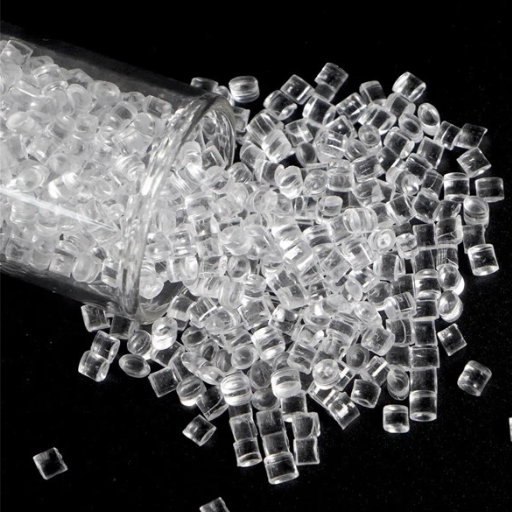
The virgin vs recycled plastic pellets price gap is real, but the discount is not free. Certified industrial grades offer 20% to 55% savings over virgin, and for many non-critical applications that is a sensible trade. Recycled material runs slightly differently in processing, and performance retention varies by grade, so qualification testing matters more, not less.
Pay up for virgin or specialty grades when a part must pass strict mechanical or regulatory requirements, when thin walls demand consistent flow, or when a field failure costs more than the material savings. A 50/50 virgin-recycled blend often captures about 20% savings while retaining 90% to 95% of virgin mechanical performance, which makes it a strong middle path for many molders. Our virgin vs recycled plastic pellets guide walks through the full trade-off framework.
Ready to compare options for your program? Get a side-by-side quote on virgin, recycled, and blended pellets from one supplier, so the numbers are apples to apples. Request a quote and we will respond within 24 hours.
Price Negotiation Strategies for Buyers
Negotiation is easier when you know where the plastic resin pellets price is headed. In mid-2026, PA66 sits in a buyer’s market with Q2 and Q3 seen as favorable entry points, while PET remains oversupplied globally. Commodity polyolefins are correcting after the Q2 spike. Those conditions favor the buyer who is ready to move.
Use these levers in your next discussion:
- Consolidate volume across resins and plants to earn the largest volume tier.
- Extend contract terms in exchange for a price floor, or negotiate a spot-linked formula that protects both sides.
- Pool freight by combining orders into container loads and consolidating deliveries.
- Benchmark before you negotiate. A supplier who knows you track ICIS and the PlasticsExchange arrives at the table with realistic numbers.
- Qualify a second source. The credibility to walk away is the strongest negotiating position in procurement.
One caution: do not over-engineer a small spend. If your annual resin exposure is under $15,000, absorbing an increase may beat the time cost of qualifying a new supplier. Above $50,000, a formal sourcing audit is usually cost-positive. Match the effort to the exposure.
Conclusion
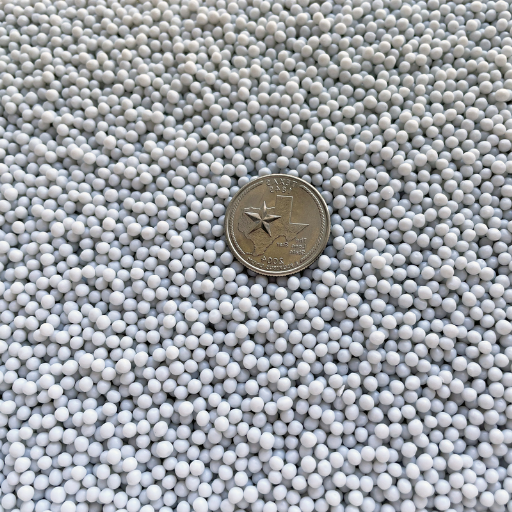
Plastic resin prices 2026 look chaotic from the outside, but they follow a handful of predictable drivers: feedstock costs, supply and demand, grade, volume, region, and timing. The plastic resin pellets price in 2026 has been volatile, and it will stay that way. That volatility is exactly why a benchmark matters.
Your three takeaways: use the price table as a sanity check before accepting any quote, model total cost of ownership rather than per-ton price alone, and send a complete RFQ so every supplier bids on the same specification. When a price increase arrives, audit it against the feedstock indexes before you respond.
We keep this guide current with the market because we quote these materials every day. If you want a transparent, current price for virgin, recycled, or engineering resin pellets, our team can help you compare options and lock in terms that protect your margin. Contact Suzhou Yifuhui New Material Co., Ltd. for a quote, and we will respond within 24 hours with real numbers, not placeholders. To learn more about Plastic Pellets for Injection Molding and Polypropylene Pellets, please refer to our accompanying guide.