The cheapest resin choice often becomes the most expensive mistake on your production floor. Manufacturing teams face the polycarbonate vs ABS decision every week. Procurement managers see the price gap and lean toward ABS. Engineers review impact requirements and specify polycarbonate. Both parties believe they protect the project from harm. Both parties will fail to make correct decisions when they do not understand everything.
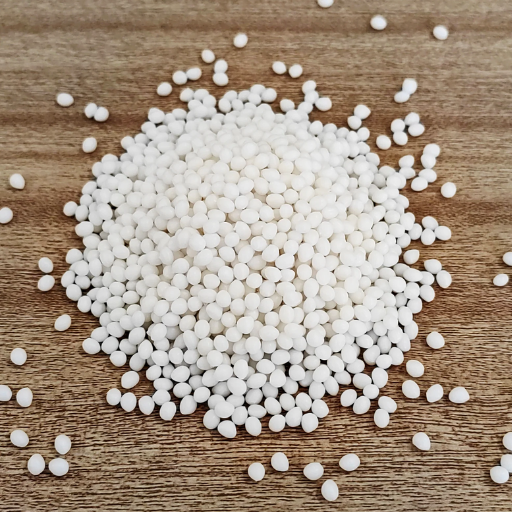
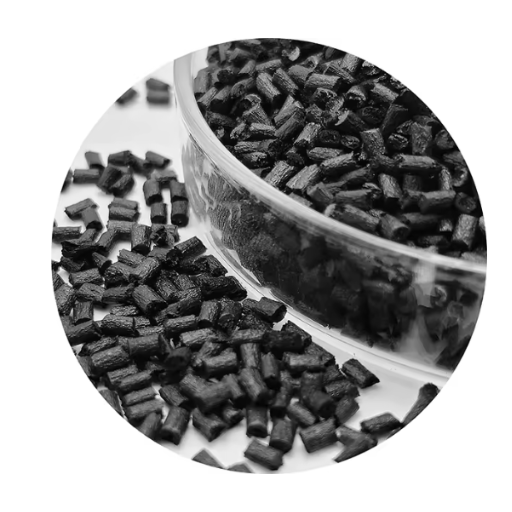
The guide shows production metrics through which polycarbonate and ABS plastic pellets compare their mechanical performance and thermal limits and their injection molding behavior and total cost of ownership and their procurement factors. The material selection process shows which material works best while demonstrating the advantages of a PC/ABS blend and showing the method to define pellet quality that ensures batch performance.
Want to skip ahead and source both materials from one supplier? [Contact our team] for a tailored quote on polycarbonate pellets, ABS pellets, or PC/ABS blends matched to your application.
What Are Polycarbonate and ABS?
You need to define each material before you start performance comparisons. Both materials belong to the category of thermoplastics. Both materials function through the process of injection molding. Their chemical properties and their physical characteristics develop from that point onward.
Polycarbonate (PC) Composition and Properties
Polycarbonate functions as an amorphous engineering thermoplastic which derives from bisphenol A and phosgene. The material’s molecular design creates a substance that possesses outstanding toughness combined with high resistance to heat and natural optical transparency. PC provides tensile strength values which range between 60 MPa and 72 MPa. The material exhibits Izod impact resistance which varies between 640 J/m and 850 J/m. Those numbers place it among the strongest transparent plastics available for industrial production.
PC maintains its operational capabilities at temperatures reaching approximately 115 degrees Celsius. The material exhibits resistance to UV degradation after undergoes stabilization. The material machines without generating any heat or hazardous fumes. Manufacturers developing safety equipment and automotive lights and medical housings select PC because of its valuable characteristics.
ABS Composition and Properties
The abbreviation ABS represents the chemical compound acrylonitrile butadiene styrene. The material creates a terpolymer which consists of three different monomers. Acrylonitrile provides the material with chemical resistance and heat resistance properties. Butadiene enhances the material’s ability to endure impacts while maintaining strength. Styrene provides the material with both stiffness and a shiny surface finish. The material functions as a multipurpose solution which requires minimal processing work while demonstrating excellent compatibility with paint, plating, and adhesives.
The tensile strength of ABS material measures between 30 MPa and 50 MPa. The Izod impact resistance of the material ranges from 200 to 320 J/m. The material maintains its opaque appearance when untouched. The heat deflection temperature of the material ranges from 97 to 102 degrees Celsius. The specifications for the material show lower performance than those of PC materials but ABS offers substantial cost savings and requires reduced energy and pressure to pass through molds.
PC/ABS Blends: The Third Option
The majority of manufacturers overlook the existence of a middle ground solution. PC/ABS alloy pellets combine polycarbonate and ABS in ratios typically ranging from 60:40 to 70:30. The blend combines PC’s thermal resistance and impact strength with ABS’s capability to be processed and its aesthetic qualities. The material requires different molding temperatures between 230 and 300 degrees Celsius depending on the specific weight ratio used. The product provides about 80 percent of pure PC physical performance while the product price stays 30 percent lower than that of pure PC.
The automotive industry requires PC/ABS blends for interior components while power tools and laptop cases market demands increase at Yifuhui. Engineers use these materials when the application requires pure PC but the mechanical and thermal requirements exceed the limits of ABS.
Head-to-Head Property Comparison
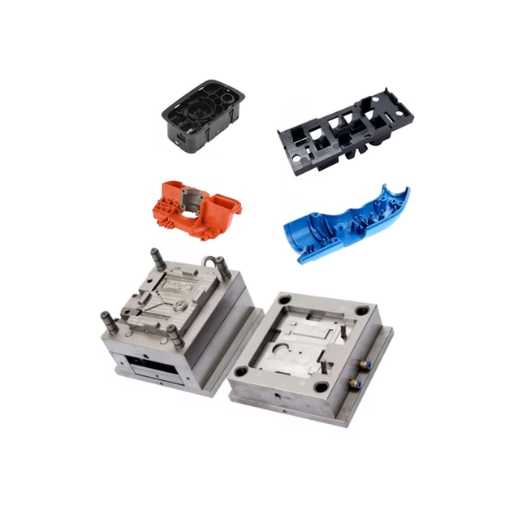
The fastest way to evaluate polycarbonate vs ABS is to stack their numbers side by side. Here is what the data says.
|
Property |
Polycarbonate (PC) |
ABS |
|---|---|---|
|
Tensile Strength |
60-72 MPa |
30-50 MPa |
|
Impact Resistance (Izod) |
640-850 J/m |
200-320 J/m |
|
Heat Deflection Temperature |
132-138°C |
97-102°C |
|
Density |
~1.20 g/cm³ |
~1.05 g/cm³ |
|
Transparency |
Transparent (87-90%) |
Opaque |
|
Surface Hardness |
Softer, scratches easily |
Harder, better scratch resistance |
|
Material Cost (approx.) |
$4.00-5.00/kg |
$2.00-3.00/kg |
Source: MatWeb material database, Covestro Makrolon technical datasheets, INEOS Lustran technical datasheets.
PC outperforms its competitors in three areas which include strength and thermal resistance and impact protection. ABS plastic products become more affordable and lighter while providing better surface hardness compared to other materials. The gap between the two parties remains considerable. PC material demonstrates double tensile strength compared to its competitors. It can withstand temperatures from 30 to 40 degrees above its deformation point. Businesses need to pay a 40 to 60 percent extra cost for material procurement which provides them with those benefits.
Li Wei who works as a procurement manager at a Shenzhen electronics factory first evaluated the new router housing quote and after seeing the price difference he chose ABS. His team conducted drop tests two months after their initial testing. The ABS housings broke when they fell from waist height onto concrete. The project required a mold revision process along with a switch to PC/ABS resin which caused a six-week project delay. The “savings” from choosing ABS cost his company roughly $18,000 in rework and lost time.
Mechanical Strength and Durability
For load-bearing or high-impact parts, polycarbonate is the clear winner. Safety helmets and riot shields and machine guards use PC because it absorbs energy without shattering. ABS handles moderate impact but becomes brittle at low temperatures and under sustained stress. If your part must survive drops, collisions, or vibration, specify PC or a high-PC-ratio blend.
Thermal Performance
Heat deflection temperature separates these materials in automotive and electronics applications. The PC material maintains its structural integrity until it reaches 138 degrees Celsius. ABS begins to soften around 100 degrees Celsius. The ABS material does not provide sufficient protection for under-hood automotive components and LED lighting housings and parts that are close to heat sinks. PC or PC/ABS becomes the practical minimum.
Surface and Aesthetic Considerations
ABS takes paint, adhesive, and chrome plating better than PC. Its harder surface resists scratches in normal handling. The softer surface of PC material gets damaged more easily whereas textured and matte finishes effectively conceal scuff marks. If your part needs a glossy decorative finish, ABS is usually the better starting point.
Injection Molding: Processing Differences
The resin you choose directly affects your processing parameters, equipment requirements, and cycle economics. These differences matter as much as the material properties themselves.
Melt Temperature and Energy Requirements
ABS melts between 200 and 250 degrees Celsius. Polycarbonate operates between 280 and 320 degrees Celsius. The 80-degree temperature difference results in increased barrel temperatures which need more time to reach operating temperature and use extra energy for each component. PC requires injection pressures which reach 1,240 bar while ABS requires 500 to 1,000 bar. Your press must have the clamp tonnage and platen strength to handle PC. Not every machine on your floor can run it.
Drying Protocols: The Hidden Quality Killer
Moisture sensitivity is where many manufacturers stumble. PC pellets exhibit extreme hygroscopic properties. They must be dried to below 0.02 percent moisture at 120 degrees Celsius for two to four hours before processing. ABS requires operators to dry the material until its moisture content reaches below 0.1 percent at temperatures between 80 and 90 degrees Celsius.
Skipping the drying process leads to sliver streaks and bubbles and internal voids and hydrolytic degradation. The part may look acceptable at first glance but fail catastrophically under load. We recommend desiccant dryers with dew points of minus 20 degrees Fahrenheit or lower for PC. Hot-air dryers do not provide enough drying capacity in most cases.
Need help specifying drying equipment for your pellet line? [Contact our engineering team] for guidance on moisture control protocols tailored to your facility.
Mold Design and Cycle Considerations
ABS exhibits good flow characteristics which enable it to move through narrow surfaces and through complex shape designs. The material achieves better mold filling because its lower viscosity allows it to enter complex mold designs with reduced need for pressure. PC requires proper gate design and venting systems and consistent wall thickness to achieve complete filling without developing stress points because it has higher viscosity. Shrinkage rates are similar, around 0.5 to 0.7 percent, but PC’s higher processing temperatures can complicate dimensional control if mold cooling is inadequate. The production cycle times for ABS material operate at shorter durations. The material achieves faster cooling which enables earlier ejection from the system. PC maintains its heat for extended periods, which results in a 10 to 20 percent increase in cycle time for various uses. The production difference becomes noticeable when manufacturing one million parts.
Cost Analysis and Procurement Factors
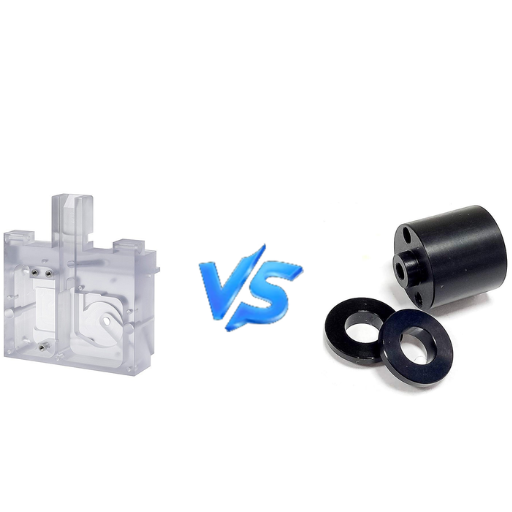
Material cost per kilogram is only the starting point. Smart procurement managers look at total cost of ownership.
Material Cost Per Kilogram
The cost of Virgin ABS pellets starts at 2.00 and extends up to 3.00 for each kilogram. The price of Virgin polycarbonate pellets ranges between 4.00 and 5.00 per kilogram. The price of PC/ABS blends stands between 3.00 and 4.00 per kilogram. The stated ranges serve as worldwide standard measurement values. The actual pricing structure depends on multiple factors which include order volume and grade specifications and color selection and regional supply availability.
Total Cost of Ownership
All elements must be evaluated including energy consumption and scrap rates and rework needs and tooling deterioration. The melting and molding process of PC requires more energy than other materials. The process requires strict monitoring for its operations. The material costs make PC more expensive to dispose of than ABS when there is a misrun or short shot. The cost structure changes completely when ABS causes field failures that lead to warranty claims or product recalls.
Chen Min, an automotive Tier Two supplier in Jiangsu, provided a dashboard bezel quote which included pure PC specifications to demonstrate high-end product features to her client. The final quote exceeded the budget by 22 percent. The client rejected her proposal. Chen changed the design to use a 60/40 PC/ABS mixture. The client approved the price she presented after she achieved the heat and impact standards. She delivered the project according to schedule while maintaining her profit margin.
Bulk Ordering and Supply Chain Efficiency
The approach of purchasing both PC and ABS from one supplier results in decreased shipping expenses and more efficient quality control processes and unified payment methods. The volume-based pricing structure gives you additional negotiating power. Yifuhui provides both standard and custom grade materials as our inventory. Your engineering resin requirements will be met through a single purchase order which includes one delivery timetable and one technical support connection.
The handling of storage spaces. The two substances require storage in spaces that maintain dry conditions and controlled temperature and humidity levels. PC exhibits stronger moisture absorption response when compared to other materials during its storage period. The industry standard requires sealed containers or in-plant drying as a mandatory process before any material can be used. The shelf life of virgin pellets extends from 12 months to 24 months when they receive proper storage treatment.
Applications: When to Choose Which
The best material is the one that meets your performance requirements without over-engineering your budget. Here is how leading manufacturers decide.
Choose Polycarbonate When
- When dealing with heavy impact, it is vital in wearing helmets, face guards, and machine covers in such workplaces as high-traffic areas.
- Temperatures reaching 100 degrees Centigrade should be withstood for the manufacture of headlights, car accessories that include engine kits, and LED crates.
- The corollary to UV-exposure can be prevented by employing clear visors, headlight lenses, sight-windows, and transparent panels.
- Material characteristics, sound enough to be used outdoors, have already been UV stable, stable to dimensional change, light, and/or remain stable throughout operations.
- For instance, operating tangent is a component that effectively withstands heavy weight.
Choose ABS When
- The decision is cost-driven; for toys, appliance housings, and low-stress consumer goods.
- Looks matter; with things like paint or chrome plating, pair electronics housings.
- Thin-wall geometries that would be complex are required for: the keyboard frames, remote control shells, and intricate enclosures
- They have chemicals exposure to oils or fuels: some automotive interior details, industrial handles.
- Moderate temperature is guaranteed and indoor use like office equipment or household appliances.
Choose PC/ABS Blend When
- ABS is so weak that it is pitiful, while pure PC is so over-engineered as to be over budget
- A balancing act is needed with regard to strength, heat resistance, and processability
- Bed surface finish of which will support finishing processes like painting or plating
- The intended application can be pertained to what is automotive interiors, power tools, or consumer electronics
PC/ABS blends are now the default blends for a majority of automotive dashboards, pillar covers, and laptop shells. They have a far lower processing temperature than pure PC thus deliver energy-saving costs and quicker cycle times. These materials offer better impact resistance than ABS; they also take most decoration looks better than pure PC.
Sourcing Considerations for Procurement Managers
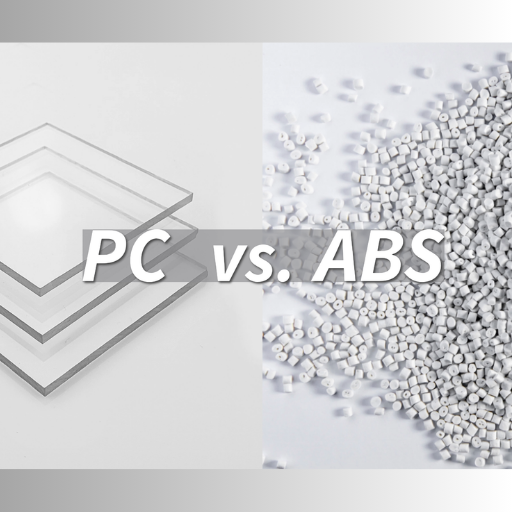
Specifying the right-resin is actually only half of the battle. Verifying pellet quality and making sure the supplier is good prohibits any production surprises.
Quality Indicators
Melt flow index, which refers to the ease with which the material fills the mold, is very important. For example, you might specify only a certain range of melt flow index appropriate for your part geometry and wall thickness. Where colored consumer goods might present a problem, let the supplier be asked to provide color matching data for every lot. If you are looking for performance and consistency, then one has to ride on virgin pellets. Yeah, go for regrind or recycled content to save money, but grades will vary. Nevertheless, as already mentioned, if you indeed use regrind, then limit the concentration to 20 to 30 percent-something that gets mixed in with virgin material with regularity.
Certifications and Compliance
For the electronics and automotive supply chains, compliance with RoHS and REACH is mandatory. Both for PC and ABS, grades in several formulations may be obtained. The performance ratings and flammability standards may vary with the grade. Flame retardancy is an obvious plus for ABS relative to PC. Good flame resistance is also there; hence, PC is easier to grant an UL rating of V-0. Medical-grade or food-contact certification is typically needed with specific resin grades from gears known as approved manufacturers. Before making any large quantity purchase orders, crosscheck the related certifications and produce documentation.
Supplier Evaluation Criteria
Enquire whether they are implementing batch procedures. Do they test MFI, moisture content, and mechanical properties in every lot? What is their typical lead time for standard grades as opposed to custom colors? Do they have any safety inventory with pattern requests? Can they help you troubleshoot processing problems or suggest grade alternatives via the technical team?
What has been the secret to longevity at Yifuhui? Our firm has batch-tested all PC and ABS pellets before being sent out. We also have certificates of analysis for all lots. With additional engineering support available, our teams help tirelessly on materials and orders that are still in progress. Along with this, we maintain stocks of PC/ABS blends in several ratios, such as 50:50, 60:40 and 70:30, for those clients asking for a balanced set of characteristics.
Ready to source PC, ABS, or PC/ABS pellets with guaranteed batch consistency? [Request a quote] and our team will recommend the right grade and volume for your production schedule.
Conclusion
With respect to the outdated and argumentative issue of polycarbonate vs ABS, there is no universal answer, and the best material to use is always determined based on an application, the price budget, systemic production, etc.
Opt for polycarbonate when massive impact requirements, heat tolerance greater than 120 degrees, better optical clarity, or outdoor endurance are required. However, opt for ABS when the priority is cost, cosmetic surface, or requires easy processability. Alternatively, use a PC/ABS blend if a tradeoff between cost and properties seems advisable (you often realize most of PC’s performance for what usually turns out to be significantly less total costs).
What helps is to consider the total cost of ownership, not just the price of material per kilogram. Keep in mind energy, scrap, cycle time, and field failure probability unheard of in the previous design. Spell out in the contract the quality requirements allowed for pelleting. It would only supplement your project definition if you could buy from a vendor that stocks both materials, checks every batch monetarily-wise, and stands ready to support your engineering team whenever the need arises.
We deliver virgin polycarbonate pellets, ABS pellets, and custom PC/ABS blends to car, communication, healthcare, and manufacturing parts OEMs. Our group graciously provides materials without missing a deadline; as early as you phone or e-mail us, we will give you a competitive quote and send you a pre-defined grade’s technical data sheet.