In March 2025, a procurement manager at a mid-sized electronics manufacturer in Stuttgart placed an order for 20 metric tons of ABS plastic pellets. The supplier had the best price. The material arrived on time. Three weeks into production, the injection molding line started producing parts with silver streaks and inconsistent surface finish. The root cause: the pellets contained 15 percent unmarked regrind mixed into what was sold as virgin ABS. The recall and line stoppage cost the company 85,000 euros.
You source plastic pellets to keep production running, not to gamble on material quality. ABS is the workhorse of engineering thermoplastics, with over 6.5 million metric tons produced globally each year across automotive, electronics, appliance, and consumer goods manufacturing. The right ABS grade, from the right supplier, eliminates defects before they reach your mold.
This guide covers the specifications, grades, processing requirements, and procurement factors that determine whether your ABS plastic pellets perform reliably or cause costly production failures. If you want a broader view of how ABS fits alongside other polymer feedstocks, our Plastic Resin Pellets: The Complete Manufacturing and Procurement Guide offers a helpful overview before you dive into the specifics below.
What Are ABS Plastic Pellets?
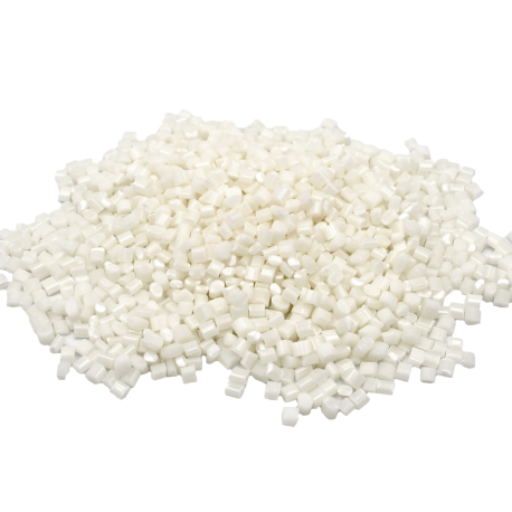
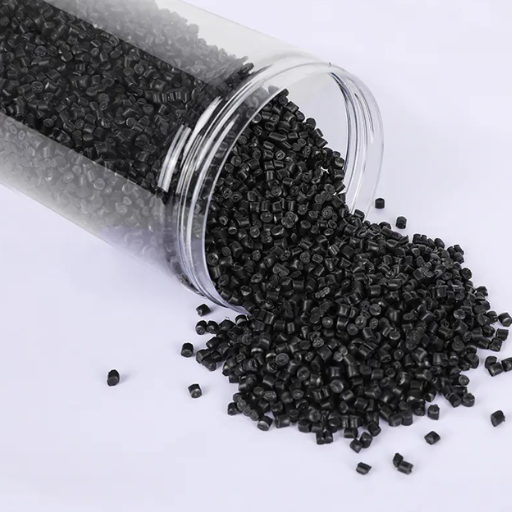
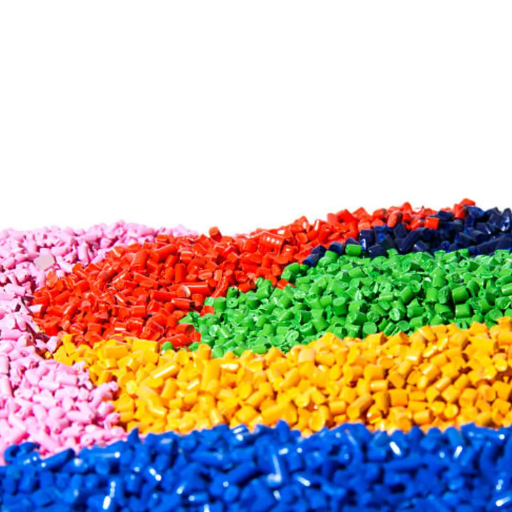
ABS plastic pellets are small, free-flowing granules of Acrylonitrile Butadiene Styrene, an amorphous thermoplastic terpolymer. Three monomers combine to create its signature balance of properties.
Acrylonitrile (20 to 30 percent) provides chemical resistance and thermal stability. Butadiene (15 to 25 percent) delivers impact toughness, especially at low temperatures. Styrene (50 to 60 percent) contributes rigidity, surface gloss, and ease of processing. Inside the material, dispersed rubber-phase polybutadiene particles sit within a continuous styrene-acrylonitrile matrix, giving ABS its characteristic combination of stiffness and durability.
The pellet form matters for manufacturing. Compared to powder feedstock, pellets provide higher bulk density, better flow through hoppers and feed systems, lower moisture pickup due to reduced surface area, and more consistent metering in injection molding and extrusion equipment. In the industry, “pellets” and “granules” are used interchangeably. Both terms describe the standard free-flowing feedstock that feeds injection molders, extruders, and 3D printers.
Key Properties of ABS Plastic Pellets
Understanding material properties helps you match ABS grades to specific production requirements. Here is what standard general-purpose ABS delivers.
Mechanical Performance
ABS offers tensile strength ranging from 33 to 52 MPa in unfilled grades. Glass fiber-reinforced variants push this above 90 MPa. Notched Izod impact resistance sits between 200 and 400 joules per meter for general-purpose grades, with high-impact formulations exceeding 400 J/m at room temperature. Unlike many plastics that become brittle in cold environments, ABS maintains usable impact resistance down to minus 40 degrees Celsius.
Density ranges from 1.03 to 1.08 grams per cubic centimeter, making ABS lightweight relative to its strength. Shrinkage during molding is low and uniform, typically 0.4 to 0.8 percent, which allows tight dimensional tolerances in finished parts.
Thermal Capabilities
The glass transition temperature of ABS is approximately 105 degrees Celsius. Heat deflection temperature under load ranges from 85 to 100 degrees Celsius for general-purpose grades, while heat-resistant formulations push HDT above 120 degrees Celsius. Standard ABS performs reliably in continuous service from minus 20 to 80 degrees Celsius.
Physical and Chemical Characteristics
ABS produces a high-gloss, smooth surface straight from the mold. It accepts painting, electroplating, adhesive bonding, and printing without special surface treatment. The material provides good electrical insulation, making it a preferred choice for electronic enclosures and components.
Chemical resistance covers aqueous solutions, mild acids, alkalis, and oils. Strong solvents such as ketones, esters, and certain aromatics will attack ABS, so verify chemical compatibility before specifying it for environments with solvent exposure.
One critical note for processing: ABS is hygroscopic. Pellets absorb moisture from ambient air and must be dried before processing. Skipping this step produces splay marks, silver streaks, bubbles, and degraded mechanical properties in finished parts.
Want material recommendations for your specific application? Contact our engineering team for grade selection guidance. We respond within 24 hours.
ABS Pellet Grades: A Complete Selection Guide
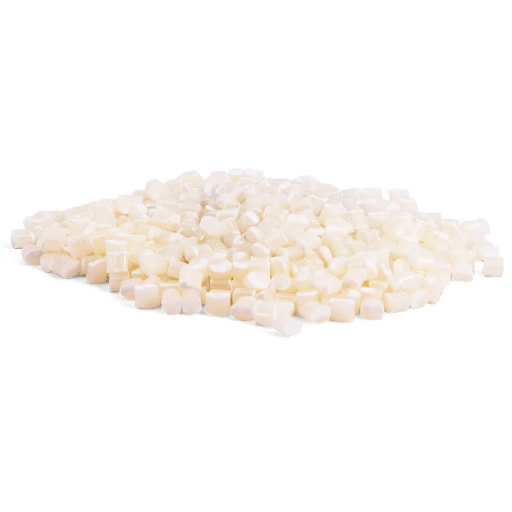
Not all ABS is the same. Selecting the wrong grade for your application leads to field failures, rejected batches, and wasted production time. Here are the major ABS pellet grades and when to use each.
General-Purpose ABS
The workhorse grade contains 15 to 20 percent rubber content and delivers balanced cost-to-performance. General-purpose ABS works well for appliance housings, toys, containers, office equipment, and consumer goods where moderate impact resistance and good surface finish are sufficient. Brands such as Chi Mei PA-757 and Sinopec 8391 dominate this category.
High-Impact ABS
When your parts face drops, impacts, or rough handling, high-impact grades with 25 to 40 percent rubber content provide the toughness you need. These formulations deliver notched Izod values above 400 J/m at room temperature and maintain over 120 J/m at minus 40 degrees Celsius. Automotive bumpers, safety helmets, luggage shells, sporting goods, and industrial pipe fittings all benefit from high-impact ABS. Brands like Chi Mei PA-709S are commonly specified in this category.
Flame-Retardant ABS (FR V0)
Electronics manufacturing demands materials that self-extinguish. Flame-retardant ABS pellets achieve UL 94 V-0 or V-2 ratings through carefully formulated additive packages. This is the fastest-growing ABS segment, driven by 5G infrastructure, electric vehicle electronics, AI server enclosures, and consumer device safety requirements. Applications include power adapter housings, electrical enclosures, IT equipment casings, and LED lighting components. Verify that your FR grade carries valid UL 94 certification and RoHS compliance documentation.
Consider the case of a Shenzhen-based contract manufacturer that produces power distribution units for data centers. In 2024, they switched from a lower-cost general-purpose ABS to a UL 94 V-0 flame-retardant ABS for their enclosure line. The per-unit material cost increased by 18 percent, but the certification upgrade opened access to three new European OEM contracts worth $2.3 million annually. The grade change paid for itself within the first quarter.
Heat-Resistant ABS
Modified with alpha-methylstyrene or similar co-monomers, heat-resistant ABS withstands operating temperatures 15 to 30 degrees Celsius above standard grades. HDT values reach 95 to 120 degrees Celsius. Automotive interior components near heat sources, under-hood parts, hair dryers, kitchen appliances, and LED light housings require this grade.
Electroplatable ABS
Engineered with controlled morphology specifically for metal adhesion, electroplatable ABS accepts chrome, nickel, and other metal finishes with strong bond integrity. Automotive grilles, door handles, showerheads, and decorative consumer electronics trim use electroplatable grades extensively.
Transparent ABS (MABS)
Made by incorporating methyl methacrylate into the polymer backbone, MABS delivers 80 to 85 percent light transmission while retaining ABS-level toughness. Cosmetic packaging, medical device components, and consumer electronics where internal components need visibility are typical applications. Toray’s Toyolac 920 555 exemplifies this grade.
Glass-Fiber Reinforced ABS
Adding 10 to 40 percent glass fiber increases tensile strength by 30 to 80 percent and flexural modulus by 100 to 200 percent. These gains come with trade-offs: reduced impact strength, higher internal stress after molding, and a less attractive surface finish. Structural automotive brackets, power tool housings, and load-bearing industrial components benefit from GF-ABS.
High-Flow ABS
Lower melt viscosity and faster cycle times characterize high-flow grades. These formulations fill complex, thin-walled mold geometries that would challenge standard ABS. Large equipment housings, precision 3C product parts, and intricate consumer goods leverage high-flow grades for efficient production.
Grade Selection Summary
| Grade | Key Properties | Typical Applications | Relative Cost |
|---|---|---|---|
| General-Purpose | Balanced strength, gloss, processability | Appliances, toys, consumer goods | Base |
| High-Impact | Exceptional toughness, low-temp performance | Automotive bumpers, helmets, luggage | Base to +15% |
| Flame-Retardant | Self-extinguishing, UL 94 V-0/V-2 | Electronic enclosures, power adapters | +25% to +50% |
| Heat-Resistant | HDT up to 120 deg C | Automotive interiors, kitchen appliances | +15% to +30% |
| Electroplatable | Superior metal adhesion | Chrome trim, decorative hardware | +10% to +20% |
| Transparent (MABS) | 80-85% light transmission | Cosmetic packaging, medical devices | +30% to +50% |
| GF-Reinforced | 30-80% higher tensile strength | Structural brackets, tool housings | +20% to +40% |
| High-Flow | Faster cycles, thin-wall filling | Complex housings, precision parts | Base to +10% |
Major Industrial Applications
ABS plastic pellets feed production lines across virtually every manufacturing sector. Understanding where different grades perform best helps you specify the right material.
Automotive Manufacturing
The automotive sector consumes over 1.3 million metric tons of ABS annually. Interior components including dashboards, door panels, pillar covers, console parts, and ventilation components rely on ABS for its surface finish, dimensional stability, and ease of coloring. Exterior parts such as grilles, mirror housings, and wheel covers demand UV-stabilized or electroplatable grades. Electric vehicle platforms intensify the demand for lightweight, durable ABS in battery housings, charging port assemblies, and electronic module enclosures.
Electronics and Appliances
Electronics manufacturing drives 28 to 30 percent of global ABS consumption. Laptop shells, TV bezels, monitor housings, remote controls, and keyboard frames use standard and flame-retardant ABS extensively. Home appliances including vacuum cleaner bodies, refrigerator linings, thermostat housings, and kitchen appliance shells depend on ABS for its balance of appearance, durability, and cost. The rapid expansion of 5G base stations and AI server infrastructure has increased demand for specialized flame-retardant ABS grades with enhanced thermal stability.
Consumer Goods and Toys
ABS produces the surface finish and dimensional precision required by brand-sensitive consumer goods. LEGO bricks owe their precise fit and long-term color stability to carefully specified ABS formulations. Luggage shells, furniture components, sporting goods, and household items benefit from ABS impact resistance and surface quality.
3D Printing and Prototyping
Pellet-fed 3D printing continues to grow as an alternative to filament-based FDM for industrial prototyping and low-volume production. ABS pellets processed through pellet extruders at 230 to 250 degrees Celsius nozzle temperature with a 90 to 110 degrees Celsius heated bed produce durable functional prototypes. An enclosed build chamber at 45 to 60 degrees Celsius reduces warping and improves interlayer adhesion.
Construction and Industrial
Chemical-resistant piping, electrical conduit, protective equipment enclosures, and industrial storage components use ABS for its combination of durability and dimensional accuracy. These applications typically specify general-purpose or high-impact grades.
Processing ABS Pellets: Critical Steps for Consistent Results
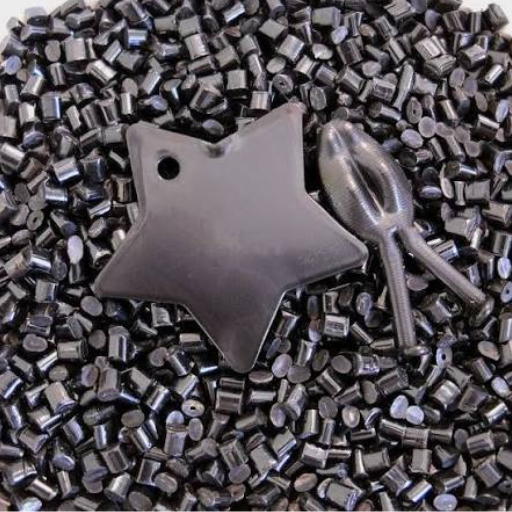
Drying Is Non-Negotiable
The single most common processing failure with ABS plastic pellets traces back to inadequate drying. ABS absorbs moisture from ambient air. When wet pellets enter a 230 degrees Celsius barrel, that moisture flashes to steam, producing splay marks, silver streaks, internal voids, and degraded mechanical properties.
Dry ABS pellets to a maximum moisture content of 0.02 percent before processing. This requires 2 to 4 hours at 80 to 90 degrees Celsius in a desiccant dryer with dew point monitoring. A hopper dryer connected directly to the feed throat maintains dried pellets at processing temperature and prevents moisture re-absorption.
Injection Molding Parameters
Set barrel temperatures in a graduated profile: approximately 200 degrees Celsius at the feed zone, rising to 230 degrees Celsius at the mid-barrel, and reaching 240 degrees Celsius at the nozzle. Maintain melt temperature between 210 and 250 degrees Celsius. Keep mold temperature between 60 and 80 degrees Celsius; higher mold temperatures improve surface gloss but extend cycle time.
Apply injection pressure between 10,000 and 30,000 PSI depending on part geometry and wall thickness. Cooling time varies from 10 to 60 seconds based on part thickness. Shrinkage compensation of 0.4 to 0.8 percent applies uniformly due to ABS’s isotropic shrinkage behavior, which simplifies mold design compared to materials with differential shrinkage. If ABS is destined for your molding line specifically, our Plastic Pellets for Injection Molding: A Complete Selection & Sourcing Guide walks through material selection and sourcing decisions that pair well with these parameters.
Common Defects and Solutions
When Wang Li’s injection molding team at a Ningbo automotive supplier started seeing silver streaks on instrument panel components, they traced the problem to their desiccant dryer. The desiccant bed had saturated and was no longer achieving the required minus 40 degrees Celsius dew point. Replacing the desiccant and verifying moisture content below 0.02 percent eliminated the defects immediately.
| Defect | Likely Cause | Solution |
|---|---|---|
| Splay / Silver streaks | Moisture in pellets | Verify dryer dew point; dry at 80-90 deg C for 2-4 hours |
| Knit lines / Weak welds | Poor flow front merging | Raise mold temperature; adjust injection speed profile |
| Warpage / Sink marks | Uneven cooling or thick sections | Optimize packing pressure; maintain uniform wall thickness |
| Burn marks | Inadequate mold venting | Clean or add vents; reduce injection speed |
| Brittle parts | Thermal degradation of butadiene phase | Reduce barrel temperature; decrease residence time |
Sourcing and Procurement: What to Evaluate
Selecting an ABS pellet supplier requires more than comparing price per kilogram. The factors below separate reliable long-term supply partners from costly procurement mistakes.
Quality Documentation
Every shipment should include a Certificate of Analysis that covers melt flow index per ASTM D1238, tensile strength per ASTM D638, notched Izod impact per ASTM D256 or ISO 180, heat deflection temperature per ASTM D648, and density. Consistent MFI values across multiple lots indicate reliable batch-to-batch quality control. Fluctuating MFI values suggest blended or mixed-source material.
Certifications
Verify ISO 9001 quality management certification for the supplier’s production and distribution operations. For electronics applications, confirm UL 94 flame rating certification for FR grades with valid yellow card documentation. Ensure REACH and RoHS compliance declarations cover the specific grade you order, not just the supplier’s general product line.
Pricing Benchmarks
Virgin general-purpose ABS from Chinese producers trades at 1.40to1.40to2.20 per kilogram FOB, depending on grade, brand, and order volume. High-impact and specialty grades carry premiums of 10 to 50 percent. Flame-retardant V-0 grades range from 2.20to2.20to3.20 per kilogram. Recycled ABS costs 20 to 40 percent less than virgin, at 0.65to0.65to1.10 per kilogram.
European spot market prices for virgin ABS have ranged from 1.50 to 2.00 euros per kilogram through 2025 and into mid-2026, reflecting feedstock cost fluctuations and regional demand patterns. Total landed cost includes ocean freight, import duties of 10 to 15 percent, customs clearance, and inland transportation. Expect 20 to 30 percent above FOB price for fully landed material.
Sourcing from China
China produces 57 to 75 percent of global ABS output. Major production and distribution hubs in Shanghai, Ningbo, Xiamen, and Dongguan provide proximity to ports and efficient logistics. Bulk order lead times typically run 20 to 30 days after order confirmation and pre-shipment sample approval.
Minimum order quantities vary by supplier and grade. Sample quantities of 1 to 5 kilograms are available for initial testing from most suppliers. Custom-colored or modified grades may require 25 to 1,000 kilogram minimums. Bulk commodity orders target 20 metric tons or more for optimal pricing.
Storage and Handling
Store ABS pellets in clean, dry, climate-controlled conditions at 15 to 35 degrees Celsius and below 50 percent relative humidity. Use moisture-proof sealed bags or containers. Apply first-expired-first-out inventory rotation to prevent material aging. Pre-dry all material before processing regardless of storage conditions.
Ready to source ABS pellets? Request a quote from Yifuhui for virgin, recycled, or custom-grade ABS. We stock Chi Mei, Sinopec, LG Chem, Toray, and 10 additional brands with full certification documentation.
Sustainability: Virgin vs. Recycled ABS
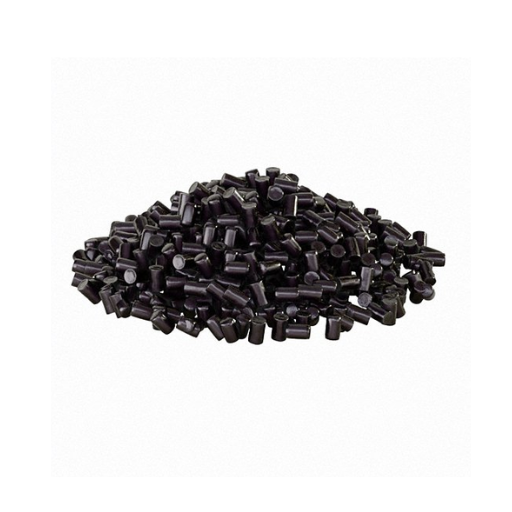
Sustainability requirements increasingly influence material procurement decisions across automotive and electronics supply chains. Understanding the trade-offs between virgin and recycled ABS helps you balance performance, cost, and environmental targets.
Virgin ABS
Produced directly from petrochemical feedstocks, virgin ABS delivers maximum consistency, highest mechanical performance, and full lot-to-lot traceability. Applications requiring tight specifications, cosmetic appearance, regulatory certification, or high mechanical loads should specify virgin material.
Recycled ABS
Mechanically recycled ABS retains 75 to 85 percent of virgin mechanical properties when properly processed. Post-industrial regrind from sprues, runners, and rejected parts offers the most consistent recycled feedstock. Post-consumer recycled ABS from electronics waste and automotive components introduces greater variability but delivers significant environmental benefits.
Recent lifecycle assessment research from 2025 demonstrates that mechanical recycling of ABS offsets 60 to 100 percent of the environmental impact compared to virgin production across resource consumption and global warming potential categories. Solvent-based recycling technologies now achieve 91 percent energy savings versus virgin production and reduce carbon dioxide emissions by 10.2 tons per metric ton recovered.
The practical approach for most manufacturers blends 10 to 25 percent recycled content with virgin material for non-cosmetic, non-safety-critical parts. This captures sustainability benefits while maintaining processing reliability and mechanical performance. GRS-certified recycled ABS pellets are increasingly available for manufacturers with formal ESG procurement requirements.
ABS vs. Alternative Materials
When evaluating ABS against other plastic pellet options, focus on the specific demands of your application rather than a universal “best” material.
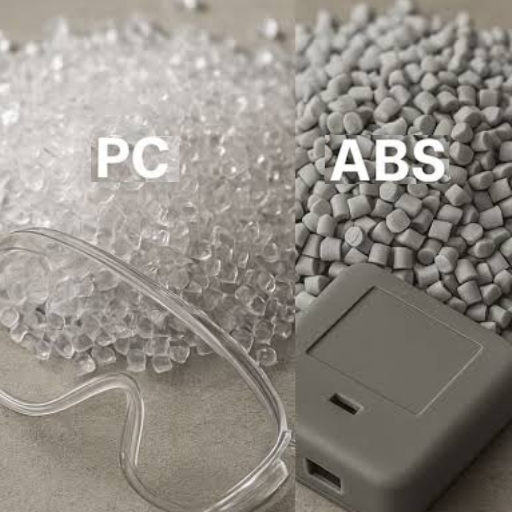
Polycarbonate delivers higher strength at 60 to 72 MPa and heat deflection temperature above 130 degrees Celsius. It also provides optical transparency that ABS cannot match. However, PC costs 40 to 60 percent more than ABS and requires 280 to 320 degrees Celsius melt temperatures that increase energy consumption and equipment demands. For applications needing more than ABS offers but not the full cost of PC, PC/ABS blend pellets split the difference with improved heat and impact performance at a moderate price premium.
Polypropylene costs 20 to 40 percent less than ABS and requires no pre-drying. It excels in chemical resistance and living hinge applications. However, PP delivers lower impact strength, reduced dimensional precision, and a less attractive surface finish. Choose PP when chemical resistance or lowest cost is the priority. Choose ABS when surface quality, dimensional stability, or impact performance matters.
HDPE provides better chemical resistance and moisture barrier properties at lower cost than ABS. It dominates packaging and chemical container applications. ABS outperforms HDPE significantly in strength, heat resistance, dimensional precision, and appearance quality.
Conclusion
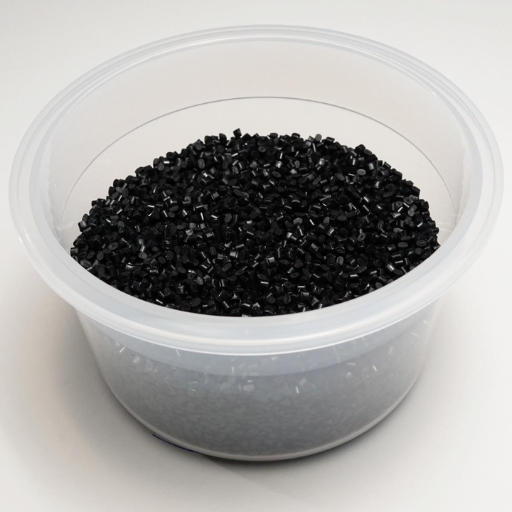
ABS plastic pellets power an extraordinary range of manufactured products, from the dashboard in your vehicle to the laptop you use every day. The difference between smooth production and costly defects comes down to three decisions:
Match the grade to the application. General-purpose ABS will not survive under-hood temperatures. Flame-retardant ABS is wasted cost in a toy. Use the grade selection guide above to specify correctly from the start.
Dry before processing, every time. No processing parameter matters more. Moisture in ABS pellets is the leading cause of surface defects and mechanical property loss in injection molded parts.
Evaluate suppliers on documentation, not just price. A Certificate of Analysis that arrives with every shipment, consistent MFI values across lots, and valid certifications separate reliable supply partners from procurement risks.
Suzhou Yifuhui New Material Co., Ltd. supplies ABS plastic pellets from 15 major domestic and international brands, including Chi Mei, Sinopec, LG Chem, Toray, SABIC, and Covestro. We stock general-purpose, high-impact, flame-retardant, transparent, and glass fiber-reinforced grades. We also offer recycled and custom-modified ABS formulations. Every shipment includes full quality documentation. Contact our team for grade recommendations, samples, or a competitive quote. We respond within 24 hours.