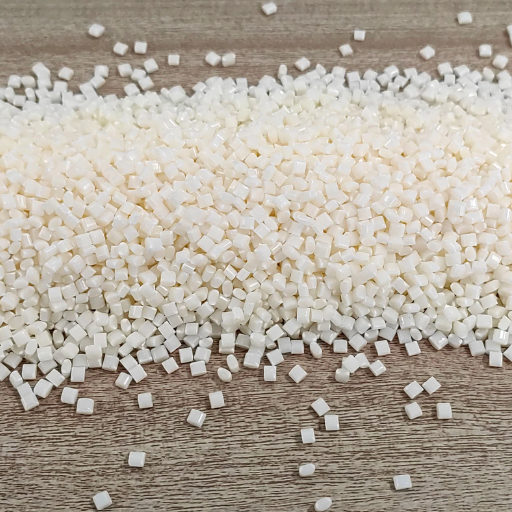
Most material selection sheets offer two boxes: PC or ABS. For a fast-growing share of injection-molded parts, the right answer is a third option that sits between them.
The PC/ABS blend market reached roughly USD 3.15 billion in 2026 and is forecast to grow at 7.58 percent annually through 2032, according to GII Research. Electronics is the fastest-growing segment at about 6.5 percent per year. That growth is not driven by marketing. It is driven by engineers discovering that a blend solves a problem neither pure resin fits.
PC/ABS blend pellets, also sold as PC/ABS alloy pellets, solve that problem by letting you dial in the balance instead of accepting an extreme. You already know the tradeoff at either end. Polycarbonate brings heat resistance and impact strength but molds at high temperatures and costs more. ABS brings flow, surface finish, and lower cost but gives up heat and impact performance.
This guide covers what a PC/ABS blend is, how blend ratio and additive package change performance, the processing and drying windows you must control, and what to specify when you buy.
What Are PC/ABS Blend Pellets?
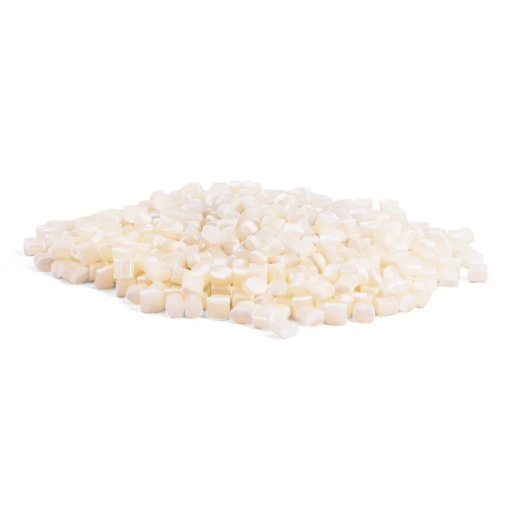
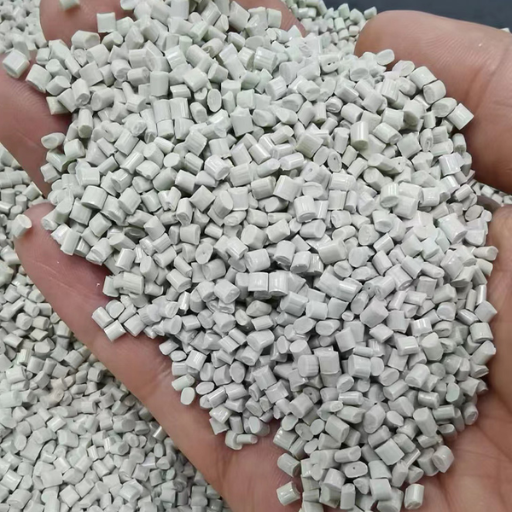
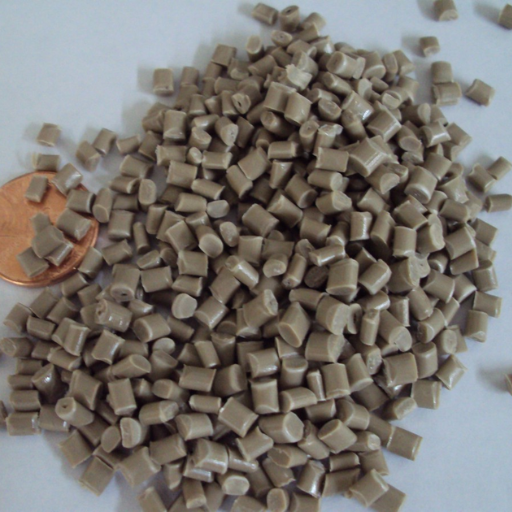
PC/ABS blend pellets (also sold as PC/ABS alloy pellets) are compounded granules of polycarbonate dispersed with acrylonitrile butadiene styrene. The blend is a physical alloy rather than a new polymer. It combines PC’s rigid, heat-resistant phase with ABS’s tough, easy-flowing phase in a single pellet.
Compounding is not simple mixing. The two polymers are partially compatible, so producers add a compatibilizer, often a styrene-maleic anhydride graft, to stabilize the interface between phases. Without that stabilization, the phases separate and the part fails at the boundary. This is why a blend from a qualified compounder behaves differently from a shop-floor mixture of PC and ABS pellets. You cannot reliably reproduce a commercial blend by blending virgin pellets at the machine.
The pellet form matters for production. Consistent pellet geometry gives stable bulk density, uniform feeding through hoppers and dryers, and predictable metering in the screw. Suppliers deliver PC/ABS blend pellets in 25 kg bags, octabins, and bulk trucks, with the same handling requirements as any hygroscopic engineering thermoplastic.
Why Blend Instead of Choosing PC or ABS
A blend earns its place when a single property set is not enough. Heat resistance above what ABS can deliver, combined with flow and surface finish that PC struggles to match. Dimensional stability across a large, thin-walled part. Or cost control on a part that does not justify full PC pricing.
The classic example is a laptop shell or a dashboard panel. Pure PC would resist the heat but fight you on flow and cosmetics. Pure ABS would mold beautifully but soften under load and heat. A blend delivers both, which is why these applications have used blends for decades. If you are still weighing the two base resins, the comparison in our guide to polycarbonate vs ABS covers that decision in detail.
Not sure which blend ratio fits your part? Send us your application details and our engineers will recommend a starting grade. We reply within 24 hours.
How the PC/ABS Blend Ratio Changes Performance
Blend ratio is stated as PC to ABS by weight. A 70/30 grade is 70 percent polycarbonate and 30 percent ABS. The ratio is the single most important grade variable, because it sets where the material lands between the two base resins.
Common PC/ABS Ratios: 50/50, 60/40, 70/30, and 80/20
The rule is straightforward. More PC raises heat resistance, impact strength, and dimensional stability. More ABS improves flow, surface finish, and cost. Producers commonly offer 50/50, 60/40, 70/30, and 80/20, with custom ratios spanning roughly 30/70 to 80/20.
PC/ABS Ratio-to-Property Table
Here is how the common ratios compare on the metrics buyers ask about most.
| Ratio (PC/ABS) | Heat deflection (HDT) | Notched impact | Flow | Relative cost | Typical target |
|---|---|---|---|---|---|
| 50/50 | ~95–105 °C | Moderate | High | Lowest | Cost-sensitive housings |
| 60/40 | ~100–108 °C | Good | High | Low-moderate | General-purpose enclosures |
| 70/30 | ~110–115 °C | High (400–600 J/m) | Moderate | Moderate | Automotive interior, electronics |
| 80/20 | ~120 °C+ | Highest | Lower | Highest | Demanding structural parts |
Ratio-to-property relationships are summarized from Formerra’s PC/ABS blend guidance. Values are typical ranges across commercially available grades and shift with additives and test method (ASTM versus ISO). A 60/40 grade optimizes flow and finish for parts that need a clean surface without extreme heat demands. A 70/30 grade is the workhorse for dashboards and notebook shells, where heat and impact both matter. Above that, you are paying PC prices for diminishing fluidity.
One useful data point: a widely listed PC 30 percent / ABS 70 percent grade carries a specific gravity of 1.2, melt index near 25 g/10 min, tensile strength around 53 MPa, tensile modulus about 2,700 MPa, and notched Izod near 50 J/m. Higher-PC grades move those mechanical numbers up sharply.
Property Profile and Grade Families
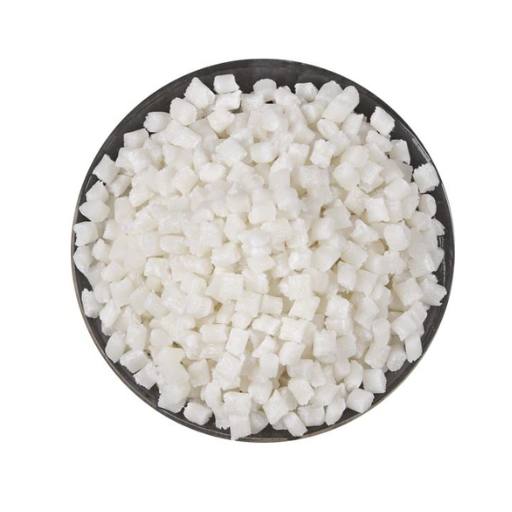
A general-purpose PC/ABS blend typically delivers:
- Specific gravity: 1.10 to 1.32 g/cm³
- Heat deflection temperature: 85 to 120 °C, with short-term excursions to about 130 °C
- Water absorption: 0.12 to 0.2 percent after 24 hours
- Mold shrinkage: 0.4 to 0.7 percent unfilled, 0.2 to 0.4 percent glass-filled
- Melt flow rate: roughly 8 to 28 g/10 min, depending on grade and test conditions
- Flammability: many grades meet UL94 V-0 with documented wall thickness
Those ranges are wide because the additive package moves performance as much as the ratio does. That is where grade families come in.
Glass-Fiber Reinforced (GF20 / GF30)
Glass fiber raises stiffness and cuts shrinkage. A 30 percent glass-filled, flame-retardant grade illustrates the range across real datasheets. Kingfa JH-R0G30 rates UL94 V-0 at 3.2 mm with 108 MPa tensile strength and notched Izod of 0.850 J/cm. A competing grade, Daicel’s NOVALLY S 4230, reaches V-0 at 1.5 mm and 5VA at 2.0 mm with 92 MPa tensile strength under ISO 527.
The practical takeaway: FR ratings are only meaningful with the wall thickness attached. A V-0 rating at 3.2 mm says nothing about a 1.5 mm part.
Flame Retardant (Halogen-Free, UL94 V-0)
Electrical and IT equipment drives this family. Halogen-free formulations meet RoHS and REACH while achieving V-0 without brominated additives, which matters for European OEM contracts and for recyclability. FR grades carry a processing caution: do not let the melt sit in the barrel, because excess residence time degrades the additive package and can corrode tooling.
High-Impact, High-Heat, and Specialty Grades
Beyond the two big families, compounders offer high-impact grades for parts that take drops, high-heat grades for under-hood or appliance use, electroplatable grades for a chrome finish, UV-stabilized grades for outdoor exposure, and medical or food-contact grades where the compliance file matters. Each one is a specific formulation, not a ratio tweak, so confirm the datasheet before specifying. Established brands such as Covestro Bayblend and SABIC Cycoloy give you a reference point for what each family should deliver.
Processing PC/ABS: Drying, Melt, and Mold
PC/ABS blend pellets process much more easily than pure PC, but the material is still hygroscopic. Moisture control is the step that most often decides whether a run succeeds.
Drying Is Mandatory
PC/ABS absorbs moisture from air, and the polycarbonate phase hydrolyzes when that moisture meets the melt. Undried material produces silver streaks, splay, bubbles, and brittle parts that pass visual inspection and fail in the field. Recommended maximum moisture content is typically 0.02 to 0.05 percent, verified with a moisture analyzer rather than assumed.
Drying windows vary by grade, and this is why you should read the specific datasheet rather than apply one number to every blend.
| Grade | Drying temperature | Time | Max moisture |
|---|---|---|---|
| Toray TOYOLAC PX10 | 105 °C | 4–10 h | <0.05% (target 0.03%) |
| Samyang TRILOY DM280P | 80 °C | 3–5 h | 0.02% |
| Treiessa BESTPOLUX PCA85 | 100 °C | 2–3 h | Per datasheet |
| FR PC/ABS (Jinsu SF75 HF) | 90–100 °C | 3–4 h | ≤0.04% |
Use a dehumidifying hopper dryer. Closed hot-air systems do not dry PC/ABS adequately, because they recirculate moisture-laden air instead of removing it. Over-drying is a real failure too: run temperatures above spec and pellets agglomerate, discolor, and can degrade. Once dried, use the material promptly, because pellets reabsorb moisture within hours of exposure.
Melt and Mold Temperatures
PC/ABS runs cooler than pure PC, which is one reason it molds so well. Typical settings:
| Parameter | Typical range |
|---|---|
| Melt / injection temperature | 235–280 °C (target ~260–265 °C) |
| Low-PC grades (30/70) | 230–250 °C |
| Mold temperature | 50–90 °C (upper end for cosmetics) |
| Injection pressure | 80–130 MPa |
| Holding pressure | 50–80 MPa |
| Back pressure | 3–8 MPa |
| Screw speed | 40–80 rpm |
Higher melt temperatures help thin walls and long flow paths but risk thermal degradation. Higher mold temperatures improve surface finish and reduce molded-in stress, at the cost of longer cycles.
Shrinkage, Warpage, and Screw Setup
Shrinkage of 0.4 to 0.7 percent is low and fairly uniform, but warpage still happens when wall thickness varies or cooling is unbalanced. Design uniform walls, balance the cooling circuit, and add adequate draft to avoid stress whitening at ejection.
For the screw, use a minimum 15:1 length-to-diameter ratio and a compression ratio of 1.5:1 to 3.0:1. Keep shot size between 20 and 75 percent of capacity, ideally 40 to 60 percent, so the material has a consistent residence time. Ravago’s processing datasheets publish these settings grade by grade and are worth keeping at the press.
Running into splay, warpage, or short shots? Request a technical consultation and we will help you dial in drying and molding parameters.
Applications by Industry
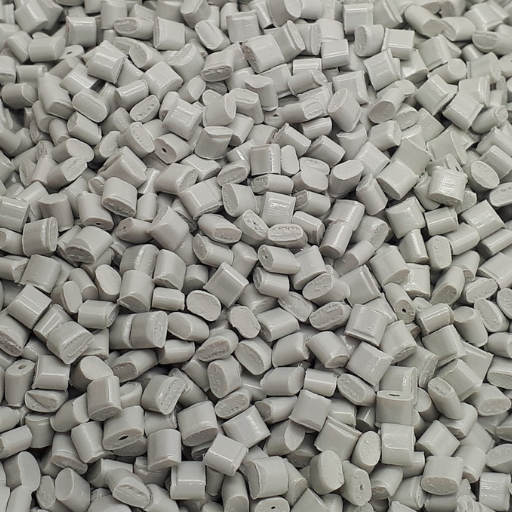
PC/ABS blends appear wherever a part needs more heat or impact performance than ABS can give, without the processing cost of pure PC.
Automotive
Interior dashboards, pillar covers, center consoles, grille frames, and mirror housings are the largest blend application, with automotive accounting for roughly 35 to 40 percent of demand. The blend handles the heat load of an instrument panel top surface while still molding to a grained, painted, or textured finish. Glass-filled grades add stiffness for structural trim. For a deeper look at material selection across vehicle systems, see our guide to engineering plastics for automotive.
Electronics and IT Equipment
Laptop and monitor shells, routers, chargers, power supplies, and appliance control panels rely on FR blends. Here the blend’s balance of flow, flame retardancy, and dimensional stability keeps thin walls filling cleanly while meeting UL94 requirements. This is the fastest-growing segment and the one where halogen-free grades matter most.
Appliances, Power Tools, and Medical
Appliance housings that must hold a paint or texture, compact power-tool bodies that take impact, and medical device enclosures that need a compliant grade all use blends. Medical grades require an ISO 10993 biocompatibility file, so verify documentation before you specify.
A contract molder in Jiangsu illustrates the pattern. In 2025, the plant moved a power-tool housing from a 60/40 blend to a 30 percent glass-filled FR grade to pass a drop test and a flammability requirement at the same time. Cycle time rose by about 6 percent, but the part passed first time and the customer removed a secondary metal bracket. The material change eliminated a sub-assembly step and paid back in one quarter.
Virgin vs Recycled (PCR) PC/ABS
Recycled PC/ABS blend pellets have moved from a niche to a mainstream option, driven by electronics OEMs with published recycled-content targets. Post-consumer grades are compounded from WEEE electronics and appliance streams, and reputable producers publish performance parity claims against virgin grades.
One listed PCR grade delivers melt flow of 25 ± 3 g/10 min, notched Izod above 53 kJ/m², and HDT above 90 °C, with reported carbon footprint around 76 percent lower than virgin PC. That is a meaningful number for ESG reporting, but only if the certification chain is intact.
Look for GRS, UL2809, ISCC PLUS, or OBP certification, and ask for transaction certificates that trace the recycled content to source. Without them, a recycled-content claim does not survive an audit. Recycled blends make sense for non-visible parts, cost-sensitive programs, and sustainability targets. They are harder to justify where color and optical consistency are tight, because blend recyclate is harder to separate and color-match than a single resin.
PC/ABS Blend Pellet Sourcing Checklist
Consistent supply matters more than a low first quote. Here is what to put on the purchase order.
What to Specify
- Blend ratio (for example, 70/30 PC/ABS) and tolerance
- Melt flow rate (MFI) range confirmed against your process window
- Heat deflection temperature minimum at a stated load
- UL94 rating with wall thickness and a current UL Yellow Card, plus RoHS and REACH declarations
- Color specification and L*a*b* tolerance for consistent lots
- Virgin-to-regrind ratio, stated explicitly, so the material is not diluted
- Certification set if you need GRS, ISCC PLUS, food-contact, or medical documentation
Price and MOQ Benchmarks
Bulk PC/ABS blend pellet listings range widely with grade and volume:
- Unfilled grades: at the low end of the range
- FR glass-filled (GF20/GF30): commonly near USD 1.97 to 2.07 per kg at a 1 tonne order
- Cycoloy-class grades: quoted at USD 1,260 to 1,800 per tonne at 10 tonne volumes
- Recycled blends: around USD 900 to 1,100 per tonne
- MOQs: span 1 kg to 20 tonnes
Volume tiers matter. Bulk-tier pricing can beat small-lot pricing by more than 30 percent, so consolidate orders where you can. And confirm the ratio and additive package in writing, because “PC/ABS” without a ratio is not a specification.
Supplier Verification
Ask your PC/ABS blend pellet supplier for a certificate of analysis per lot, retain samples for reference, and confirm which datasheet version applies to your shipment. A supplier who will not provide a COA or a controlled datasheet is not a supplier you want on a production program. For general resin selection principles across materials, our plastic resin pellets guide covers the broader framework.
A procurement team in Guangdong learned this the hard way in 2024. They sourced a 70/30 blend on price alone and received lots that varied in melt flow by nearly 40 percent. One lot flowed cleanly; the next short-shot every thin-wall part on the mold. The line ran at 60 percent efficiency for six weeks before the team traced the problem to inconsistent compounding. The fix was not a new material but a new supplier with per-lot data.
Frequently Asked Questions
What is PC/ABS blend used for?
PC/ABS blend pellets are used for automotive interior trim, dashboards, and grille frames, electronics housings such as laptop shells and routers, appliance and power-tool housings, electroplated parts, and medical device enclosures. They serve parts that need more heat and impact performance than ABS provides without the processing cost of pure PC.
What ratio of PC to ABS should I choose?
Start at 60/40 for general housings where flow and finish matter most. Move to 70/30 for automotive interiors and electronics that need higher heat deflection and impact. Choose 50/50 for cost-sensitive parts and 80/20 only when structural demands justify PC-level pricing. Confirm the final choice against your datasheet and process window.
Is PC/ABS stronger than ABS?
Yes, in almost every mechanical measure. Higher PC content raises tensile strength, stiffness, and notched impact resistance above general-purpose ABS. The tradeoff is flow and cost, so the stronger grade is not automatically the better part. Match the ratio to the load the part actually sees.
Can PC/ABS be recycled?
Yes. Post-consumer PC/ABS is compounded from electronics and appliance waste streams, and GRS or UL2809 certified grades deliver performance close to virgin. Color and contamination control are harder than with single resins, so recycled blends suit non-visible parts and programs with recycled-content targets rather than tight optical specifications.
Is PC/ABS food safe?
Some grades are formulated for food contact and carry FDA 21 CFR compliance. A generic PC/ABS grade is not automatically food safe, because additives and colorants vary. Request the specific compliance documentation for the grade you intend to use before specifying it for food-contact parts.
Can PC/ABS be transparent?
No, not to the level of clear polycarbonate. Standard PC/ABS grades are opaque because the ABS phase scatters light. “Clear” ABS options exist but read as hazy rather than optically clear, so if your part needs lens-grade clarity, specify polycarbonate instead.
Does PC/ABS contain BPA?
Polycarbonate is made from bisphenol A, so PC/ABS blends contain residual BPA bound inside the polymer chain. Many grades meet food-contact and toy regulations on that basis, but requirements vary by market. If your application has a BPA restriction, request a declaration from your supplier for the specific grade.
What temperature does PC/ABS need to be dried to?
Most grades dry between 80 and 105 °C for 3 to 5 hours in a dehumidifying dryer, to a maximum moisture content of 0.02 to 0.05 percent. The exact window depends on the grade. FR and low-PC grades often dry at 90 to 100 °C, while high-PC grades may need 105 °C and longer times.
Conclusion
PC/ABS blend pellets are the practical middle path between two resins that each solve only half the problem. The decisions that determine whether a part succeeds come down to a few specifics.
- Blend ratio sets the balance between heat and impact on one side and flow and cost on the other.
- The additive package (FR, glass fiber, UV, electroplating) matters as much as the ratio.
- Drying to 0.02 to 0.05 percent moisture in a dehumidifying dryer prevents the splay and brittleness that ruin runs.
- FR ratings only count with the wall thickness attached.
- Per-lot data and a clear ratio specification protect you from inconsistent supply.
Specify the ratio, verify the datasheet, and control moisture before the material reaches the press. That is what separates a reliable program from a costly one.
Yifuhui supplies PC/ABS blend pellets across general-purpose, flame-retardant, glass-filled, and high-impact families, with per-batch quality documentation and technical support on grade selection. Request a quote and samples with your application details, and our team will recommend the grade and ratio for your part. We respond within 24 hours.