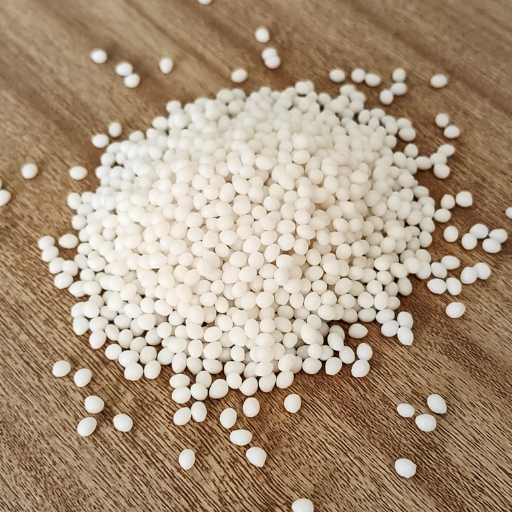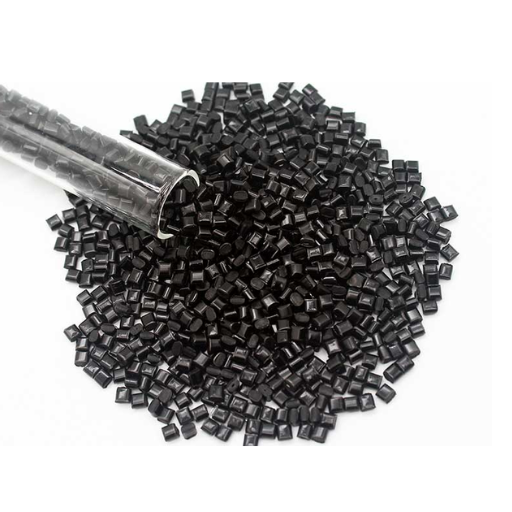
Two flexible parts arrive at the same bench, both 95 Shore A, both black. One is Hytrel. One is TPU. To the eye they’re interchangeable.
Put them in a 110 °C oil line for a month and they stop being interchangeable.
That gap is why Hytrel vs TPU is one of the most consequential material choices in flexible-part design. Both are thermoplastic elastomers. Both process on standard equipment.
Both can be colored, welded and recycled. But they’re different polymers, and the wrong pick usually shows up months after the drawing is approved.
This guide separates the two on the five points that actually change a specification: heat under load, flex fatigue, hydrolysis, oil and fuel resistance, and total part cost.
It also says plainly where TPU wins. A comparison that never picks TPU is a sales page, not engineering advice.
If you need the material definition first, the Hytrel material guide covers the TPEE family in depth.
Definition: Hytrel is a thermoplastic polyester elastomer (TPEE, ISO designation TPC-ET), a block copolymer of hard PBT segments and soft polyether segments. TPU is a thermoplastic polyurethane built from diisocyanate, a polyol and a chain extender. Both are TPEs, but they are different polymer families with different heat, hydrolysis and bonding behaviour.
Hytrel vs TPU at a Glance
| Factor | Hytrel (TPEE / TPC-ET) | TPU |
|---|---|---|
| Chemistry | PBT hard segment, polyether soft segment | Diisocyanate, polyol, chain extender |
| Typical hardness | Shore D 30 to 82 | Shore A 60 to Shore D 80 |
| Load bearing at 120 °C | Retains useful modulus | Grade-dependent, generally lower |
| Flex fatigue | Excellent | Good, below TPEE in most dynamic tests |
| Hydrolysis | Sensitive above about 70 °C, harder grades more so | Polyester TPU poor; polyether TPU better |
| Oil and fuel | Excellent, improves with hardness | Polyester TPU good; polyether TPU weaker |
| Abrasion | Good | Excellent, usually better at equal hardness |
| Compression set | Moderate to poor | Generally better than TPEE |
| Transparency | Typically opaque | Can be transparent |
| Overmolding to PC, ABS, PA | Limited without adhesion promoters | Strong, widely used |
| Relative resin cost | High | Medium |
| Best fit | Dynamic, hot, fluid-exposed engineering parts | Abrasion, transparency, bonding, lower-cost flexible parts |
The table is a summary. The mechanisms below decide whether your part fails.
What Is the Difference Between Hytrel and TPU?
Hytrel Is a Polyester Elastomer, Not a Polyurethane
Hytrel is the Celanese brand name for TPC-ET, the ISO designation for thermoplastic polyester elastomer. The polymer alternates hard crystalline polybutylene terephthalate blocks with soft amorphous polyether blocks. The ratio sets hardness, modulus and elasticity.
That structure gives TPEE its signature behaviour: it behaves like rubber but carries load like an engineering plastic. It’s plasticizer free, so it doesn’t bloom or lose flexibility as plasticizer migrates. It also has no isocyanate, which simplifies some compliance conversations.
For the full naming picture, including TPEE, TPC-ET, COPE and polyester elastomer, see what a thermoplastic polyester elastomer is.
TPU Is Not One Material
TPU is a polyurethane block copolymer. The hard segments come from diisocyanate and a chain extender; the soft segments come from a polyol. Change the polyol and you change the material:
- Polyester-polyol TPU resists oil and abrasion well but hydrolyses in hot, humid conditions.
- Polyether-polyol TPU resists hydrolysis and stays flexible at low temperature but is weaker in oil and fuel.
- Aliphatic TPU resists yellowing and UV far better than aromatic TPU, at a higher price.
This matters because “TPU vs Hytrel” is not one comparison. A 95A polyester TPU and an 85A polyether TPU behave differently from each other, sometimes more differently than either behaves from Hytrel. Ask which TPU before you accept a comparison.
Why the Names Get Confused
Hytrel sits inside the TPE family alongside TPU, TPV and SEBS-based compounds. Sales literature often flattens all four into “TPE,” which hides the differences that decide a part. If you need the sealing and soft-touch side, the TPE and TPV material guide covers it.
The Five Differences That Change a Specification
1. Heat Under Load
Melting point is the wrong number to design to. A part fails when it deflects under load, not when it turns liquid.
Hytrel 7246 melts at about 218 °C, but its heat deflection temperature at 1.8 MPa is only 50 °C. Hytrel 5526 is softer and melts near 202 °C.
Those numbers look modest next to TPU at the same hardness. Yet TPEE keeps more modulus as temperature climbs. That’s why it holds shape in under-hood ducts, hose and cable jackets that would soften in TPU.
TPU isn’t a weak material. Standard grades are often rated to 80 or 100 °C continuous. Heat-stabilized grades reach about 120 °C, with short-term peaks higher.
But a temperature rating isn’t a modulus rating. What matters at 110 °C is how much stiffness remains under load. TPEE generally keeps more.
Consider a molder we’ll call Daniel. He replaced a TPU air duct with a 55D TPEE because the duct sagged during paint-bake exposure. The TPEE part passed, but the switch cost about 60% more per kilogram.
The premium was justified only because the bake cycle was real. Had the duct never exceeded 80 °C, TPU was the better buy.
2. Flex Fatigue
Parts that flex millions of times fail by fatigue, not by tensile strength. This is where TPEE earns its price in CVJ boots, drive belts and convoluted tubing.
Distributor literature cites more than 1,000,000 Ross flex cycles at 23 °C for a 40D Hytrel grade, against roughly 150,000 for a comparable TPU. Treat those as indicative rather than guaranteed, because geometry, notch sensitivity and test speed all move the number. The direction is consistent, though: TPEE outlasts TPU in continuous flex.
If your part bends once during assembly, flex fatigue is irrelevant and you are paying for a property you do not use.
3. Hydrolysis: Both Fail, Differently
Hydrolysis is the most misunderstood difference in this comparison, and the most expensive to get wrong.
TPEE is a polyester. Above roughly 70 °C, water attacks the ester linkages. Risk rises with temperature and hardness, and harder grades contain more ester.
A Hytrel part that performs for years in dry heat can fail in weeks in hot water.
TPU has the same weakness in a different place. Polyester-based TPU hydrolyses readily in hot, humid conditions. Polyether-based TPU resists hydrolysis much better but gives up oil and fuel resistance.
Polycarbonate-based TPU sits between them: better hydrolysis resistance than polyester TPU and better oil resistance than polyether TPU, at a higher price.
So the honest statement is not “TPEE resists water” or “TPU resists water.” It is: match the chemistry to the fluid. For hot-water service, a polyether TPU or a hydrolysis-stabilized TPEE grade may both work, and the grade datasheet decides. For fuel and oil, polyester TPU and TPEE are the stronger choices.
4. Oil, Fuel and Permeation
TPEE resists oils, fuels, hydraulic fluids and many polar chemicals, and resistance improves as hardness rises. That is why high-modulus grades appear in fuel hose, oilfield components and under-hood parts.
Polyester TPU also performs well in oil. Polyether TPU is the weak point in this comparison, so a blanket “TPU resists oil” claim is wrong. If the application involves fuel permeation, ask for permeation data on the exact grade rather than a family claim.
This is also where TPEE’s low fuel permeability becomes commercially important. A hose lining that permeates less can meet emissions limits with a thinner wall or a simpler construction.
5. Abrasion, Tear and Compression Set
TPU usually wins abrasion at equal hardness. Its resilience and tear strength make it the default for wheels, casters, conveyor rollers and phone cases. TPEE is good, but “comparable to TPU” is fairer than “better than TPU.”
Compression set is the opposite story. TPEE is moderate to poor under sustained compression. One study cites around 63% set, versus roughly 23% for NBR and 33% for EPDM.
TPU generally sets less than TPEE, though grade and temperature matter. For a static seal, neither may be the right answer. A TPV or rubber is often better.
Tear strength favours TPEE at equal hardness. Distributor comparisons quote roughly 96 to 101 kN/m for Hytrel against about 52 kN/m for TPV, and TPEE also holds up well against TPU in notched tear. If the part has a sharp corner and a flexing load, that difference matters.
Where TPU Beats Hytrel
Hytrel’s advantages are covered above. A fair comparison also has to name the cases where the cheaper, more common material wins.
- Abrasion. Wheels, rollers, skate components and conveyor parts usually run better and cheaper in TPU.
- Transparency. TPU can be water-clear or tinted; Hytrel is typically opaque. If you need to see through the part, TPU starts with an advantage.
- Overmolding and bonding. TPU bonds strongly to PC, ABS, PA and many polar substrates, which is why it dominates soft-touch handles and power-tool grips. TPEE needs adhesion promoters or mechanical interlocking for the same joints.
- Low-temperature flexibility. Polyether TPU stays flexible well below −40 °C. TPEE is no slouch at −40 °C, but the coldest applications often favour polyether TPU.
- Cost and availability. TPU is made by many suppliers in many countries, so it’s usually cheaper per kilogram and easier to source in small quantities.
If your part is a clear, abrasion-resistant, overmolded consumer component that never sees 90 °C, TPU is probably the right answer. We don’t sell TPU, and we’ll still tell you that.
Application Fit: Which One for Which Part
| Application | Better default | Why |
|---|---|---|
| CVJ boots | Hytrel (TPEE) | Flex fatigue, grease resistance, heat |
| Air ducts and under-hood | Hytrel (TPEE) | Modulus retention at temperature |
| Fuel and hydraulic hose | Hytrel (TPEE), polyester TPU | Oil resistance, low permeation |
| Cable jacketing | Hytrel (TPEE) | Toughness, heat, flex life |
| Timing and drive belts | Hytrel (TPEE) | Dynamic fatigue |
| Footwear midsoles | TPU or E-TPU | Resilience, foamability, cost |
| Wheels and casters | TPU | Abrasion, rebound, cost |
| Phone cases and grips | TPU | Overmolding, transparency, cost |
| Medical tubing | Grade-dependent | Both families have compliant grades |
| Static seals | TPV or rubber | Compression set |
The pattern: hot, dynamic, fluid-exposed parts lean TPEE; abrasion, bonding, clarity and cost lean TPU; static sealing usually leaves both.
Cost: Why the Cheaper Resin Is Not Always the Cheaper Part
Hytrel-type TPEE costs more per kilogram than TPU, often substantially. The premium is real, and it’s wasted when a cheaper material meets the duty.
But resin price isn’t part cost. Four factors narrow the gap:
- Density. TPEE runs around 1.19 to 1.26 g/cm³; TPU around 1.10 to 1.25. A denser resin buys fewer parts per kilogram.
- Cycle time and scrap. TPEE runs at higher melt temperatures and needs thorough drying. Bad drying causes hydrolysis, scrap and rework.
- Part consolidation. A stiffer TPEE part may replace a TPU part plus a reinforcement.
- Lifecycle. A TPU part that fails at 18 months costs more than a TPEE part that lasts five years, even at twice the resin price.
In October 2026, public listings in China for Hytrel 7246 ranged from about RMB 33 to 59 per kilogram, with export offers around US$6.79 to 9.03 per kilogram FOB. Commodity TPU has traded near RMB 17 to 28 per kilogram, with specialty grades well above that.
In practice, branded TPEE runs roughly 2 to 3.5 times commodity TPU, and domestic TPEE narrows the gap to about 1.7 times. Treat all of these as indicators, not quotes.
A buyer we’ll call Priya compared two cable-jacket quotes, one in TPU and one in TPEE. The TPEE option looked 40% more expensive on resin alone.
When she added the TPU part’s higher scrap rate and the cost of a UV-stabilizing topcoat, the gap fell to about 12%. The TPEE part also removed a secondary operation.
The lesson isn’t that TPEE always wins. It’s that the comparison belongs at part level.
Need a part-level cost comparison? Send your application details and we will quote Hytrel 5526 or 7246 against your annual volume, with the processing assumptions stated.
Processing Differences That Decide the Supplier
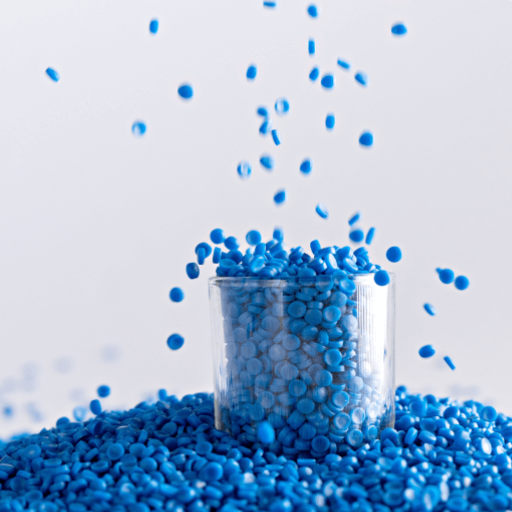
Both materials run on standard injection molding and extrusion equipment, but they don’t run the same way.
Drying is the first gate. Both are hygroscopic. TPEE is typically dried at 100 to 120 °C for two to three hours, with molding moisture held at or below 0.08%.
Skip it and you get hydrolysis in the barrel: splay, bubbles and lost properties. TPU needs drying too, but the window and risk profile differ by grade.
Melt temperature is the second. Hytrel 7246 runs around 235 to 255 °C, optimum near 245 °C. Hytrel 5526 runs cooler. Standard TPU typically runs lower, often 190 to 220 °C depending on grade.
Running TPEE too hot degrades it. Running TPU too hot can release isocyanate-bearing fumes, so ventilation matters.
Overmolding is the third. TPU bonds readily to polar substrates. TPEE usually needs an adhesion promoter or mechanical interlock. If the design depends on a chemical bond to PC or ABS, that decides the material before any property table does.
Regrind is the fourth. Both take limited regrind, but TPEE’s moisture sensitivity makes regrind less forgiving. Dry it like virgin material, and cap the fraction.
For grade-specific settings, the Hytrel 7246 processing guide lists the current Celanese window.
How to Specify Hytrel vs TPU Correctly
Most material disputes start with an incomplete specification. Four steps prevent them.
- Name the family, the grade and the hardness scale. “TPE 95A” isn’t a specification. “TPEE, 55 Shore D, Hytrel 5526” is.
- Put the test method next to the number. Nominal and measured hardness differ. Hytrel 7246 is labelled 72D but measures 64D at 15 seconds under ISO 868. If your drawing says 72D, state the method and tolerance.
- State the service environment, not just the temperature. Hot water, oil, fuel, UV and flex cycles narrow the grade faster than a single number.
- Request a current datasheet and a batch certificate. Hytrel moved from DuPont to Celanese when the $11.0 billion Mobility & Materials deal closed on 1 November 2022. Many distributor pages still credit DuPont and carry old values. The JPT/SPE coverage confirms the timeline.
The Hytrel material data sheet guide explains how to read the current values without mixing revisions.
Ready to specify? Request a Hytrel 5526 or 7246 sample with the datasheet revision and a batch COA. We respond within 24 hours.
Frequently Asked Questions
Is Hytrel the same as TPU?
No. Hytrel is a thermoplastic polyester elastomer (TPEE, TPC-ET), built from PBT hard segments and polyether soft segments. TPU is a thermoplastic polyurethane built from diisocyanate, a polyol and a chain extender. They are both TPEs, but different polymer families.
Which is stronger, Hytrel or TPU?
It depends on the load. TPU usually has higher tensile strength and abrasion resistance at equal hardness. Hytrel holds modulus better when hot and resists flex fatigue and creep better. For a hot, dynamic, load-bearing part, Hytrel usually wins.
Can Hytrel replace TPU directly?
Sometimes, but not as a drop-in. Hytrel is stiffer at the same hardness, bonds differently, and needs different drying and melt temperatures. Expect to change wall sections, gates or adhesion methods.
Does Hytrel absorb water?
Yes. TPEE is hygroscopic and must be dried before processing. It also hydrolyses in hot water above roughly 70 °C; harder grades are more sensitive. Polyether TPU resists hydrolysis better but gives up oil resistance.
Is TPU more abrasion resistant than Hytrel?
Usually, yes. TPU’s resilience and tear strength make it the default for wheels, rollers and wear parts. Hytrel is good, but abrasion doesn’t justify its price premium.
Which is cheaper, Hytrel or TPU?
TPU is usually cheaper per kilogram and easier to source. The gap narrows at part level when you account for density, scrap, secondary operations and service life. A TPU part that fails early can cost more than a Hytrel part that lasts.
Is Hytrel food safe?
Only specific Hytrel grades are intended for food contact, and compliance depends on the grade and use conditions. Celanese offers food-contact grades. Don’t assume a general-purpose grade is compliant; request the current declaration for the exact grade.
Who owns Hytrel now?
Celanese owns the Hytrel brand. It acquired DuPont’s Mobility & Materials business for $11.0 billion, announced in February 2022 and closed on 1 November 2022. Current datasheets come from Celanese.
Conclusion
The Hytrel vs TPU decision isn’t about which material is better. Both are excellent, and they’re not interchangeable. It comes down to service environment:
- Choose Hytrel when the part must carry load at temperature, flex millions of times, resist oil or fuel, or hold dimensions under sustained load.
- Choose TPU when abrasion, transparency, overmolding or cost dominate, and service temperature stays moderate.
- Choose neither for static sealing, where a TPV or rubber usually wins on compression set.
- Decide at part level. Density, scrap, secondary operations and service life can reverse a resin-price comparison.
If you’re weighing Hytrel against TPU for a specific part, send the drawing, service environment and annual volume. We’ll tell you which material we’d specify, including when it’s TPU. Talk to our materials team.