The grade name on the drawing is not always the grade in the bag. A Hytrel 7246 part can measure 64 Shore D on a 15-second reading even though the grade is sold as 72D. A buyer who rejects that lot has misread the specification, not caught a counterfeit.
That confusion runs through most Hytrel automotive work. Plenty of pages list applications. Few map a part to a grade, a process and a document trail. This guide does: CVJ boots, charge-air ducts, airbag doors and fuel lines, plus the documents a Tier 1 requests before a trial lot.
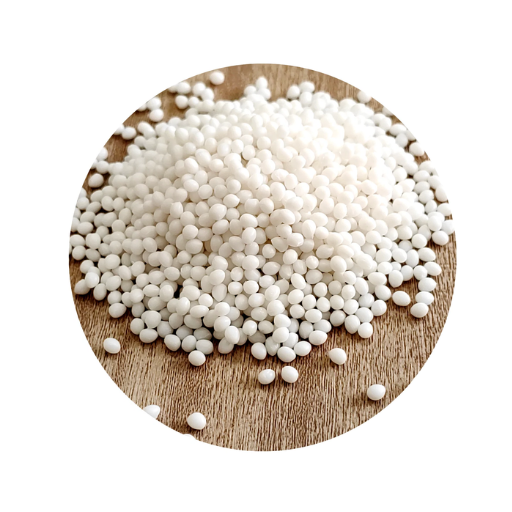
Suzhou Yifuhui supplies Hytrel 5526 and 7246 pellets and advises moulders on grade selection. We do not compound or mould Hytrel. For the material definition and ownership history, start with our complete Hytrel material guide.
Which Hytrel Automotive Grade Fits Which Part?
Start with the part and process, not hardness. A CVJ boot is blow-moulded and flexes for a decade; an airbag door is injection-moulded and must tear on a controlled seam; a fuel line must resist hot hydrocarbon.
The table maps grades named in current Celanese and legacy DuPont documents. Read the last column before quoting a grade. “Documented” means the maker names that part family; “inferred” means the grade fits but is not listed.
| Grade | Nominal / measured hardness | Documented automotive part | Why it fits | Evidence |
|---|---|---|---|---|
| HTR4275 BK316 | 55D nominal, 52D measured | Blow-moulded CVJ boots, cold-side ducts, covers | High melt viscosity for blow moulding; flex fatigue and grease resistance | Documented |
| HTR5612 BK | Medium, grade-specific | Blow-moulded boots and covers | Blow-moulding viscosity | Documented |
| HTR8888 BK190A | 55D nominal, 53D measured | Cold-side charge-air ducts | Lower airflow noise, about 30% lighter than rubber hose | Documented, supplier case data |
| HTR8808 BK316 | 54D | Hot-side charge-air ducts | ~150 °C in use, ~180 °C peak | Documented, product sheet |
| HTR8441 BK316 | 55D nominal, 52D measured | Cold-side air ducts | ~120 °C in use, ~150 °C peak | Documented, product sheet |
| DYM250S BK472 | 49D nominal, 44D at 15 s | Airbag deployment doors | Low modulus, predictable tear seam, low emissions | Documented |
| 7246 | 72D nominal, 64D at 15 s | High-temperature tubing and hose; oil, fuel and solvent resistance | High service temperature and low fuel permeability; 8238 is the top grade for both | Documented grade; fuel-line use inferred |
| 6356 | 63D nominal, 57D at 15 s | Tubing and hose; fuel tanks | Very good resistance to oils, hydraulic fluids and fuels | Documented |
| 5526 | 55D nominal, 51D at 15 s | Seals, gaskets, gears, bearings | Balanced stiffness and set resistance; injection and thermoforming only | Documented |
| 4056 / 4556 | 40D / 45D (4556 measures 42D) | Low-modulus extrusion, not a boot grade | Softness and low-temperature flex | Documented grade, inferred automotive fit |
The standard grades, 4056 to 7246
4056 and 4556 are soft extrusion grades; 5526 is the seals grade; 5556 covers tubing and hose; 6356 is a 63D fluid grade; 7246 is the high-modulus end. None is a blow-moulding grade.
The HTR blow-moulding and duct family
HTR grades carry higher melt viscosity so a parison holds shape. HTR4275 covers boots and cold ducts, HTR8808 hot-side ducts, HTR8441 mid-range, HTR5612 boots and covers. Never specify 5526 or 7246 for a blow-moulded boot.
Airbag-door grades: DYM250S and HTR3048
Airbag doors need low or medium modulus. DYM250S BK472 is the documented 49D grade; HTR3048 BK459 is softer, at 29D maximum and 25D at 15 seconds, with a preliminary datasheet. DYM250S lists 9.5 µgC/g by VDA 277 against roughly 300 for 7246, so they are not interchangeable in a cabin.
Why 72D measures 64D, and 55D measures 51D
Shore D is not instantaneous. ISO 868 and ASTM D2240 specify a 15-second reading; many tables quote peak. 7246 gives 72D nominal and 64D at 15 seconds, 5526 55D and 51D. Put method and dwell on the drawing.
For full property tables and test methods, see the Hytrel data sheet.
Need a grade match? Send the part, process and OEM specification, and we will confirm what is stocked. Request a grade-matched quote.
Why Hytrel Automotive Uses TPC-ET at All
Hytrel is a thermoplastic polyester elastomer (TPEE, TPC-ET under ISO 1043): crystalline PBT hard segments plus polyether soft segments. The ratio sets hardness, and the block structure gives rubber-like recovery without vulcanisation.
That structure gives flex fatigue rubber can match and thermoplastic processing it cannot. It also creates polyester’s weakness: water above roughly 50 °C, without a hydrolysis stabiliser, is hostile.
The hardness trade-off
Softer grades flex longer; harder grades resist heat, fuels and hydraulic fluids. That is the selection logic.
Ross flex cut-growth is the property that separates Hytrel from rigid plastics, but it is not uniform. The 30–47D grades exceed 10^6 cycles; 5526, 5556 and 6356 sit above 5×10^5; 7246 is around 3×10^4. A harder grade may crack sooner at the bellows root.
Three temperature numbers that are not interchangeable
Ask “what temperature can Hytrel take?” and you get three answers, all correct in context.
Low-temperature brittleness. The 5556 sheet lists about −98 °C by ISO 974. Distributor tables sometimes quote −65 °C by JIS K6261 for other grades; treat that as attributed data, not a family-wide rating.
UL 746B relative thermal index. For 5556, RTI spans roughly 50–85 °C by property and wall thickness: electrical 85 °C at 0.75, 1.5 and 3.0 mm; impact 50 °C at 0.75 mm and 85 °C above; strength 50, 75 and 80 °C. This is not a 150 °C rating.
Paint-shop excursion. A paint line is not one 150–160 °C step. Profiling data puts e-coat near 180 °C for 20–30 minutes, primer near 180 °C, base coat near 125 °C, and clearcoat near 160–180 °C. HTR4275 BK316 lists HDT of only 57 °C at 0.45 MPa. A thin duct may survive a topcoat bake; a full e-coat cycle needs the resin maker’s sign-off.
In-use means 1,000–3,000 hours; peak means 100–500 hours.
What “automotive is most of TPEE demand” really means
Industry estimates put automotive at the majority of global TPEE consumption. We cannot verify that from public shipment data. The application list behind it is real: boots, ducts, airbag covers, fuel lines, cable jackets and seals.
The DuPont-to-Celanese continuity question
Celanese acquired DuPont’s Mobility & Materials business on 1 November 2022 for $11.0 billion. Celanese was never formerly DuPont; it now owns Hytrel. Grade codes, plants and data sheets carried over.
DuPont legacy pages still rank for dupont hytrel with a 2019 copyright and no mention of Celanese. If you still search under the old name, verify the current revision and producing site on the CoA.
Hytrel CV Boots: The Application That Built the Market
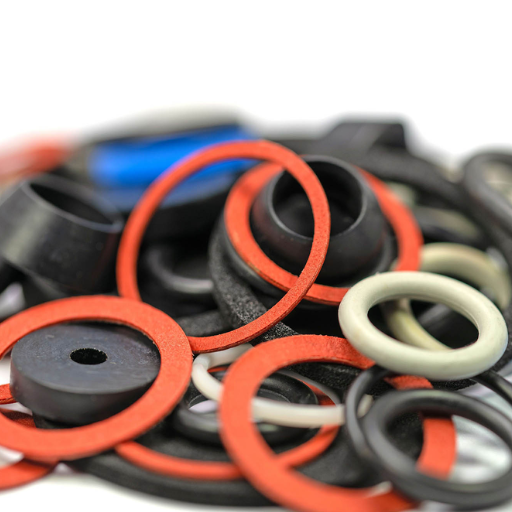
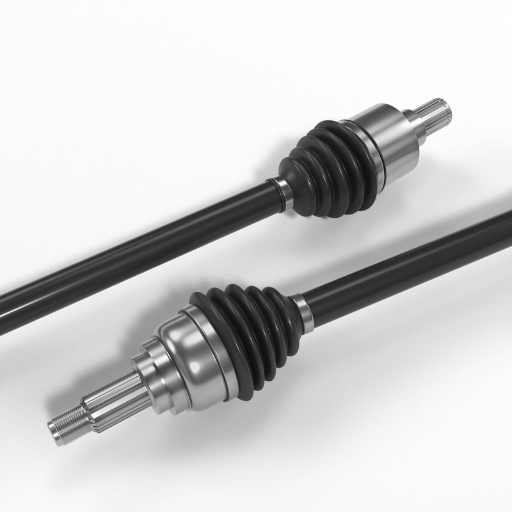
More than one billion Hytrel CVJ boots have been produced over three decades, according to DuPont and Celanese, with no reported material failures. The first production application was a 1984 GM front-wheel-drive boot moulded by ABC Group. It carried a design life of about 150,000 miles and cut weight by roughly 40% against rubber.
NTN’s technical review supports the independent side of that story. The Tier 1 bearing maker recorded TPEE resin boots arriving around 1985 and said they “drastically increased the life of boots.” Almost all fixed-type CVJ joints now use them.
Why TPEE replaced chloroprene
Chloroprene boots worked, but they aged, swelled in grease and added weight. TPEE brought flex fatigue that rubber could match, good non-polar grease resistance, thin walls and blow moulding, which removed a vulcanisation step.
What kills a boot
Grease attack. Not all CVJ greases are equal. Base oil and additives that are fine with rubber can attack polyester. Verify the grease against the grade, not against “Hytrel” in general.
Clamp load. A boot that loses its clamp seal throws grease and takes in grit. The material often gets blamed for a clamp-band or installation problem.
Bellows-root fatigue. The root sees the highest strain. A hard grade, a sharp convolution radius or a moulding defect starts a crack there long before the material’s flex life is exhausted.
A Tier 2 moulder we will call Xinyu had a boot programme fail at 40,000 km with grease weeping at the small clamp. The drawing called for a 55D blow-moulding grade, and the moulder had used it correctly. The clamp band was 2 mm narrower than the validation part; changing the band fixed the leak.
Which grades actually blow-mould
HTR4275 BK316 and HTR5612 BK are the boot grades. Not 5526. Not 7246. If a supplier offers 5526 as a CVJ boot material, the offer is wrong on process grounds before it is wrong on properties.
For the comparison against TPU, including heat-under-load behaviour, see Hytrel vs TPU. For the 55D grade that does the seal work, see the Hytrel 5526 grade guide.
Hytrel Air Ducts and Charge-Air Systems
Ducts split into cold side and hot side, and the grade follows temperature, not shape. Cold-side ducts see ambient or mildly warmed air. Hot-side charge-air ducts sit downstream of the turbo or intercooler and see sustained heat.
HTR8888 BK190A is the cold-side grade. Celanese’s air-management sheet reports 9.3 dB lower airflow noise at 5–12 kHz and about 30% less weight than rubber hose, based on customer testing in SAE 2019-01-1491. Treat those as supplier case data, not independent results.
HTR8441 is the other cold-side option, at roughly 120/150 °C in-use/peak. HTR8808 covers the hot side at 150/180 °C. Those pairs are the number to quote; a single “150 °C” without a duration is not a rating.
Wall thickness follows burst and collapse tests
Wall thickness is an output, not a rule of thumb. A duct must hold burst pressure hot and resist vacuum collapse without wrinkling. A DSM patent for a pressurised fluid conduit (EP1267112A1), which uses Hytrel HTR4275 as a comparison material, describes validation at 450 kPa burst at 150 °C and 20 kPa vacuum collapse at 145 °C. Your programme will have its own numbers, but the principle holds: the test sets the wall, and the grade sets the ceiling.
NVH and bellows geometry
The 9.3 dB result comes from a specific bellows geometry and test. Copying the grade without the convolution count, depth and wall profile will not reproduce it. Duct noise is a system property.
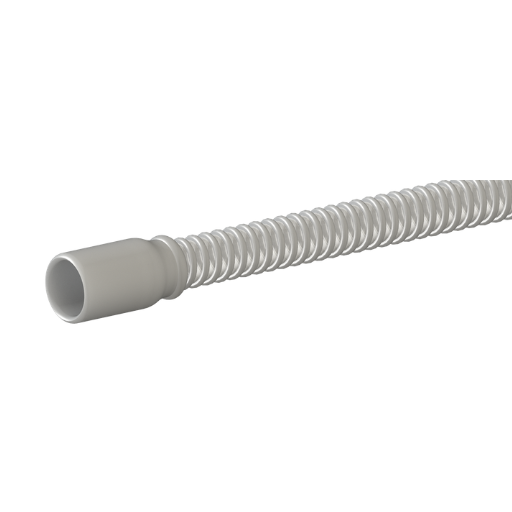
For hose construction, permeation and pressure ratings, use the Hytrel tubing and hose guide. This page stays on which grade suits which part.
Airbag Covers and Interior Parts
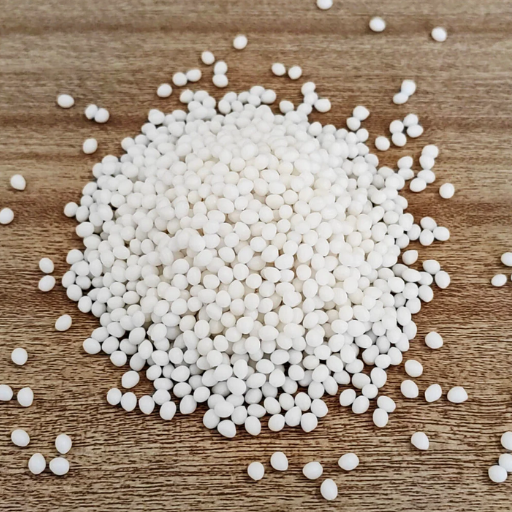
An airbag door has to do two contradictory things: look like a continuous interior panel for a decade, then tear open along a hidden seam in milliseconds. Hytrel contributes the hinge and tear behaviour, not the deployment energy.
The common design is a thick section and a thin section in one tool, sometimes with a laser score. The thin land tears first; the thick hinge holds the door. The grade must be tough enough to fold without fragmenting and consistent enough to open at the intended pressure.
Grade and emissions
DYM250S is the documented airbag-door grade; HTR3048 is the softer option. Neither is interchangeable with 7246, and emissions explain why: DYM250S lists 9.5 µgC/g by VDA 277, while 7246 is near 300 µgC/g. Interior parts face cabin-air requirements that under-hood parts do not.
The temperature window is an OEM requirement, not FMVSS 208
FMVSS 208 sets occupant crash protection. It does not specify a −35 °C to +85 °C material-conditioning window, even though that window appears in many Tier 1 validation plans. Attribute it to the OEM or Tier 1 requirement.
FMVSS 302 is the interior burn-rate standard that does appear on Hytrel airbag-door sheets, at 24–28 mm/min and 1 mm thickness, meeting Class B/SE-B. UL 94 HB is also listed. HB is not V-0. If a programme needs V-0, it needs a flame-retardant grade, not standard Hytrel.
Fuel, Vapour and Hydraulic Lines
Hytrel’s fluid resistance rises with hardness. Non-polar oils, greases, fuels and hydraulic fluids are handled well, even hot. Polar fluids at elevated temperature can attack the polymer severely. That rule explains most fuel-line grade choices.
7246 is the high-modulus option, sold as 72D and measured at 64D. Its documented uses are high-temperature tubing and hose, with high service temperature and low fuel permeability; DuPont positions 8238 as the top grade for both.
Fuel and vapour line use is a common inference from those properties, not a part family named on the sheet. 6356 at 63D covers tubing, hose and fuel tanks at a lower modulus. For the full 7246 property and processing detail, see the Hytrel 7246 grade guide.
Multilayer construction, not a single-resin barrier
A Hytrel hose for fuel or vapour is rarely one material. Hytrel may be the outer jacket, a tie layer or a conductive inner layer in a multilayer construction. The permeation result belongs to the finished hose, not the pellet.
SAE J30 R11 and R12 apply to low-permeation fuel hose assemblies. Hytrel can appear in a construction qualified to those standards; the resin itself is not “SAE J30 certified.” The same logic applies to SAE J517 100R7/R8 for thermoplastic hydraulic hose: those are hose types, not material approvals.
Where Hytrel is not the answer: brake hose
Brake hose per SAE J1401 and FMVSS 106 is EPDM with a PVA braid. Hot glycol-ether brake fluid is hostile to polyester. Hytrel is not the bore material, and a page that lists brake hose as a Hytrel application is wrong.
For permeation data, the lined-PVC ceiling and the full standards map, see the Hytrel tubing and hose guide.
Chassis, Seals and Belts
Chassis boots are the quiet volume application. Rack-and-pinion boots, stabiliser-link boots and jounce or rebound bumpers use the same flex-fatigue argument as CVJ boots, often at lower temperature. Trelleborg and Celanese announced CR-free automotive sealing boots in 2025.
Grade choice follows the same rule: HTR grades for blow-moulded bellows, standard grades for injection-moulded parts.
Seals and gaskets: the 5526 use case
5526 is the documented seals, packing, gasket, gear and bearing grade. It is not a static-gasket material in the EPDM sense, and compression-set data shows why. Hytrel 4056 lists 63% compression set at 70 °C for 168 hours, against 33% for EPDM and 23% for NBR in a comparative study. The comparison is directional, but the message holds: for a permanently compressed static seal, EPDM or NBR usually wins.
Hytrel earns its place where the seal also moves, resists oil, or has to be moulded into a complex shape. For the OEM approval list and the full 55D narrative, use the Hytrel 5526 grade guide. Approvals are grade- and revision-specific.
Belting is industrial, not timing-belt teeth
Automotive timing belts are HNBR bodies with glass or aramid cord and a nylon tooth fabric. Hytrel belting is industrial flat and conveyor belting. The two are not the same application, and “Hytrel timing-belt teeth” is a claim to avoid.
EV and the 2026+ Vehicle
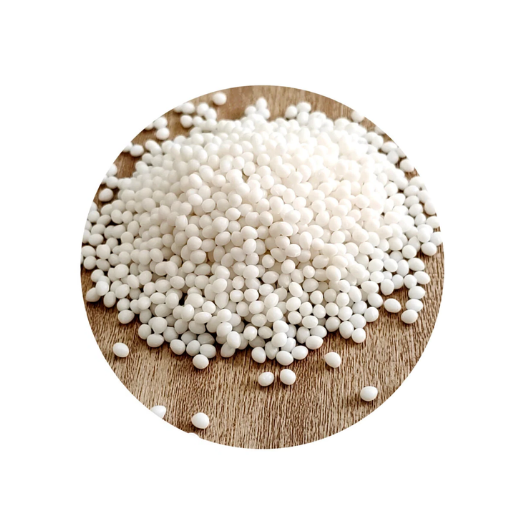
Electrification changes the part list more than the material science. Two uses are verified, one is emerging, and one is a common mistake.
Verified: boots and cable jacketing. Neapco’s injection-moulded Hytrel boots for the Ford E-Transit were recognised in the 2024 SPE Automotive Innovation Awards, at 15% lighter and 17% less material than the parts they replaced. HTR8856 cable jacket is rated −40 to +125 °C and listed to UL62 FT-2.
Emerging: battery-cooling lines. Hydrolysis-resistant Hytrel RS and HTR grades are the subject of current development for coolant loops. The constraint is the same as above: hot water is polyester’s weak point. Do not name a grade for this application until Celanese publishes one for your circuit.
Not Hytrel: busbar insulation. Busbar insulation is a different material family with different dielectric and thermal requirements. Do not specify Hytrel for it.
For the wider portfolio view across PC, PA, PPS and TPE in vehicle engineering, see engineering plastics for automotive. This page stays Hytrel-only.
Processing and Qualification
Drying is not optional. Polyester hydrolyses when it meets moisture at melt temperature, and the damage shows up as lost molecular weight, splay, weak welds and brittle parts. The numbers below come from current Celanese sheets.
| Grade | Drying | Melt temperature | Mould temperature | Processing moisture |
|---|---|---|---|---|
| 5526 | 100 °C, 2–3 h | ~230 °C | 45–55 °C | <0.08% |
| 7246 | 110 °C, 2–3 h | ~245 °C | 45–55 °C | <0.08% |
| DYM250S | 100 °C, 3–4 h | ~248 °C | 45–55 °C | <0.05% |
The melt window spreads about 18 °C across those three grades, and the mould window is narrow. A dryer that is “warm” is not a dryer at 110 °C for three hours. Measure dew point and pellet moisture, not the setpoint.
Blow moulding belongs to the HTR grades only. Injection moulding of standard grades, including machine selection, tooling and defect diagnosis, is covered in the Hytrel injection moulding guide.
Buying Hytrel Automotive Material: The Approval Chain and Paper Trail
Automotive resin buying is a chain, not a single purchaser. The OEM approves the material, the Tier 1 owns the system PPAP and flows requirements down, and the Tier 2 moulder places most resin orders.
Who certifies what
IATF 16949 applies to manufacturing sites. A distributor cannot be certified, and any claim to the contrary describes someone else’s certificate. A distributor’s own certificate is ISO 9001 or equivalent, not IATF 16949. The resin producer’s site certificate is separate, and you should ask for it by site name.
PPAP is part-level. Celanese supplies bulk material, not parts, so a Hytrel PPAP package is built from material data plus the moulder’s PSW, dimensional results and process evidence. IMDS is closed, and the MDS must come from the manufacturer for the exact grade and site. A distributor cannot issue an IMDS ID on the producer’s behalf.
The five documents to request before a trial lot
- Certificate of analysis with manufacturer lot, grade, specification revision, test method and result.
- Current technical data sheet with a revision date, not a legacy DuPont PDF.
- IMDS material data sheet for the exact grade and site.
- Substance declarations for REACH, RoHS, GADSL and ELV, plus GB/T 30512 for Chinese programmes.
- Quality certificates: the distributor’s ISO 9001 and the producer’s IATF 16949 site certificate.
Add the OEM approval crosswalk where required and confirm the revision; a 2019 approval may not cover the current formulation.
Off-grade and counterfeit risk
Hytrel has a documented counterfeit problem in China. A 2016 DuPont statement named Hytrel among counterfeited engineering plastics and cited seizures in the Yuyao market. Off-grade material is the quieter version: genuine polymer that failed a specification, sold without disclosure.
The test ladder starts with the CoA. Incoming checks typically cover density, melt flow rate, Shore D hardness and ash content. For safety-critical parts, add a full mechanical panel per lot and retain samples. A price 20% below market deserves a DSC scan, not a purchase order.
One procurement team we will call Hanyu asked a distributor for an IATF 16949 certificate before a first order. The certificate it received belonged to a moulder, not to the distributor or the resin producer. The order slipped three weeks while the correct site certificate was located.
For the full supplier-qualification framework, see automotive plastic pellets.
Conclusion
Three things decide a Hytrel automotive specification. The part and its process pick the grade family; the temperature and fluid environment pick the grade within it; and the approval chain decides whether the material can be used at all.
Keep the numbers separate. 72D is a nominal label, 64D is the 15-second measurement. UL RTI is not a 150 °C service claim. A 160 °C topcoat bake is not the same event as a 180 °C e-coat cycle.
For most enquiries, start with 7246 for fuel and high heat, 5526 for seals and structural parts, and an HTR grade for anything blow-moulded. Confirm revision, site and OEM approval before the trial lot.
Send the drawing, the process and the OEM specification. We will confirm the grade, the stock and the documents we can supply. Request a quote or technical data pack.
Frequently Asked Questions
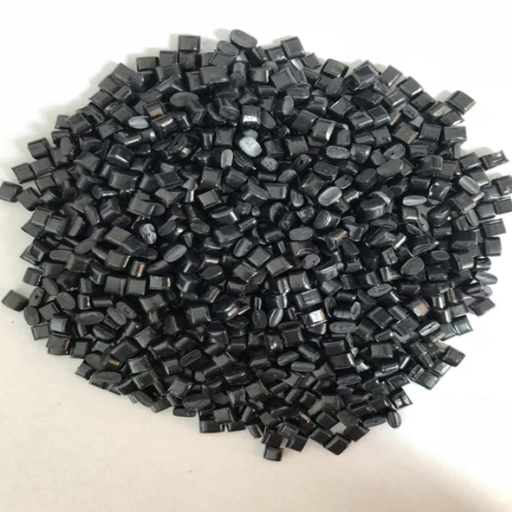
Which Hytrel grade is used for CVJ boots?
Blow-moulded boots use HTR grades, chiefly HTR4275 BK316 (55D) and HTR5612 BK. Standard grades such as 5526 and 7246 are injection and extrusion materials, not blow-moulding grades.
What temperature can Hytrel withstand in automotive use?
There is no single number. The 5556 sheet lists brittleness near −98 °C by ISO 974, and UL 746B RTI spans roughly 50–85 °C by property and thickness. Duct grades publish in-use/peak pairs, such as 150/180 °C for HTR8808.
Is Hytrel used for brake hose?
No. Brake hose per SAE J1401 and FMVSS 106 is EPDM with a PVA braid. Hot glycol-ether brake fluid attacks polyester. Hytrel appears in fuel, vapour and hydraulic lines, not the brake circuit.
Is Hytrel the same as TPEE or TPC-ET?
Yes. Hytrel is Celanese’s brand for a thermoplastic polyester elastomer. TPEE is the common abbreviation, and TPC-ET is the ISO 1043 designation. The ISO 20029 designation for 7246 is ISO 20029-TPC-ET,, GLN,70-22-075.
Who owns Hytrel now?
Celanese. It acquired DuPont’s Mobility & Materials business on 1 November 2022 for $11.0 billion. Celanese was never formerly DuPont. Grade codes and plants carried over, so legacy DuPont sheets may describe the same product under an older revision.
What is the difference between 5526 and 7246?
5526 is a 55D grade for seals, gaskets, gears and bearings. 7246 is a 72D nominal grade for fuel and high-heat work, with higher fluid resistance and lower permeability. Neither is a blow-moulding grade, and their approvals do not transfer.
Can Hytrel be recycled?
Hytrel is a thermoplastic, so regrind can be reused within the limits the resin maker sets for the grade and application. Automotive programmes usually cap regrind and require traceability. Safety-critical parts need written approval.
How do I verify a genuine Hytrel supplier?
Ask for a CoA with the manufacturer lot and grade, a current data sheet, an IMDS entry for the exact grade and site, and the producer’s IATF certificate by site name. Compare density, melt flow and hardness on incoming inspection.