A cable drawing calls out “Hytrel jacket, 55D.” Three suppliers quote: 5526 because it is 55D and in stock, 5556, and 7246. Only two are listed by their datasheets as extrusion grades.
Hytrel 5526 is the trap. It is a high-flow moulding and thermoforming grade, and its datasheet lists no extrusion and no wire or cable. The second trap is temperature: 7246 melts at 218 °C, but its UL recognition stops at 85 °C electrical and 75 °C strength.
This guide maps four cable jobs to grades, gives the temperature and hydrolysis numbers, the extrusion windows, the standards boundary, and where TPU, PVC or fluoropolymer wins. Our complete Hytrel material guide covers the polymer background.
If you already have the cable build and need the grade confirmed, send the construction to our technical team. We’ll check it against the current datasheet before you quote.
What Is a Hytrel Cable Jacket?
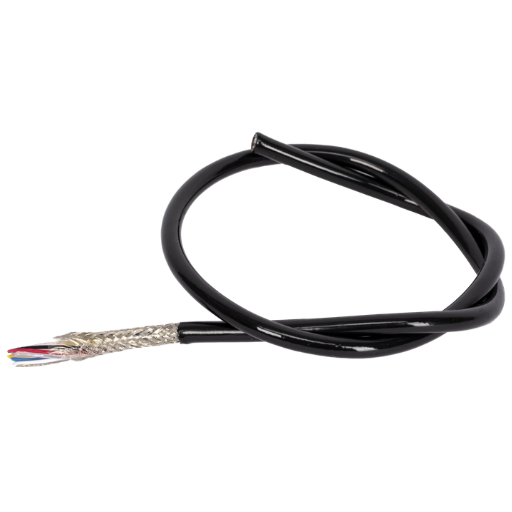
Definition: A Hytrel cable jacket is an outer sheath, buffer or cover extruded from Hytrel, a thermoplastic polyester elastomer (TPEE, ISO designation TPC-ET). It isn’t medium- or high-voltage insulation; the grade sets the temperature and hydrolysis limits. The cable maker holds the listing for the finished cable.
Celanese has owned the brand since 1 November 2022, so current datasheets carry its name. Hytrel is plasticiser-free, unlike flexible PVC, and runs from 30D to 82D.
Four cable jobs follow: fiber buffer or mini loose tube, dynamic flex, flame-retardant and general low-voltage. Each has its own grade and test package.
A Jacket, Not Insulation
Hytrel’s electrical data on the stocked grades supports low-voltage jacketing and fiber buffering, not medium-voltage insulation. Volume resistivity is 2 × 10¹⁰ to 4 × 10¹¹ Ω·m, dielectric strength is 19 to 20 kV/mm, relative permittivity is 3.5 to 4.9, and comparative tracking index is 600 V. Those numbers sit well below the insulation class of cross-linked polyethylene.
Use Hytrel as a jacket over an insulated conductor, not as the insulation. No wall-thickness or voltage rating exists at resin level; the cable maker derives both from the finished-cable standard.
Which Hytrel Grade Is a Cable Grade?
Two questions decide the Hytrel cable jacket grade. Does the manufacturer name cable as a typical application, and can the grade be extruded?
| Grade | Shore D (ISO 868) | Flex modulus (ISO 527, MPa) | Tm (ISO 11357, °C) | UL 94 at 1.5 mm / LOI | Cable role |
|---|---|---|---|---|---|
| 4056 / 4556 | 40 / 45 | 60 / 87 | 152 / 193 | HB | Soft jacket |
| 5556 / 5555HS | 55 | 190 / 195 | 201 | HB / 20% | Wire and cable; 5555HS heat-stabilised mini loose tube |
| 6356 | 63 | 290 | 210 | HB / 21% | Tight buffer; cable outer jacket |
| 7246 | 72 nominal / 68 measured | 550 | 218 | HB / 23% | Wire and cable jackets |
| 8238 | 82 nominal / 76 measured | 1,150 | 221 | HB / 22% | Tight buffer; outer jacket |
| HTR8068 / HTR8813 | 44 / 58 | 155 / 370 | 170 / 200 | V-0 / 26%, 49% | FR compounds |
| 52FR | 55D base | n/a | n/a | FMVSS 302 B | Brominated FR |
Source: Celanese wire-and-cable portfolio and current datasheets, retrieved 2026-11-04.
The 5526 Trap
Hytrel 5526 is 55D, and a quote can look cheaper than 5556, but the datasheet doesn’t list it as a Hytrel cable jacket grade. It’s a moulding grade: seals, packing, gaskets, gears and bearings, processed by injection moulding and thermoforming only. It has no extrusion row and is absent from the wire-and-cable property table. Its melt flow rate is 18 g/10 min at 220 °C/2.16 kg, against 7.8 for 5556.
One composite converter trial, anonymised here as Tomás, ran 5526 on a 55D jacket to save 8%. The surface came out sharkskin and the wall drifted 0.05 mm. Drying, screens and a lower melt did not help; 5556 ran at 225 °C with a stable wall on the same die.
The 55D Default: 5556
Hytrel 5556 is the 55D grade whose datasheet names hose, tubing, wire and cable. It extrudes, has a 190 MPa modulus, melts at 201 °C and carries HB/20 at 1.5 mm. It’s the default for a 55D Hytrel cable jacket; 5555HS is the heat-stabilised version for mini loose tube.
When You Need 7246
For a high-modulus Hytrel cable jacket, 7246 is the grade Celanese names for tubing and cable jackets. At 550 MPa it is about three times stiffer than 5556, with 100 mm³ abrasion loss against 120, so it suits a fiber tight buffer that must resist abrasion. But its Tg is +25 °C and its notched Izod falls from 38 to 7 kJ/m² at −40 °C, so it isn’t the cold-flex choice. The Hytrel 7246 grade guide covers the full property set.
FR Grades: HTR8068 and HTR8813
Unfilled Hytrel is UL 94 HB at 1.5 mm, with a 20 to 23% oxygen index. For a flame-retardant Hytrel cable jacket, HTR8068 is 44D V-0/26; HTR8813 BK320 is 58D V-0/49, which Celanese labels NHFR. 52FR is a brominated concentrate in 5556, so it isn’t halogen-free.
Hytrel Cable Jacket Temperature Rating: Four Numbers That Get Confused
Four numbers describe heat behaviour, and they answer four different questions. Mixing them is the most common specification error in this material.
| Number | 5526 | 7246 | What it answers |
|---|---|---|---|
| Melting point (ISO 11357) | 203 °C | 218 °C | Crystal melt; not a service limit |
| UL 746B RTI, 1.5 mm | 85 / 85 / 75 °C | 85 / 85 / 75 °C | Long-term ceiling |
| HDT at 1.8 MPa (ISO 75) | 45 °C | 50 °C | Stiffness limit |
| Brittleness, ISO 974 | −98 °C | −97 °C | Standard embrittlement test |
The 218 °C Melting Point Is Not a Service Rating
218 °C is a phase change, not a working limit. UL 746B RTI on 5526 and 7246 is 85 °C electrical, 85 °C impact and 75 °C strength at 1.5 mm; 5526 reaches 80 °C strength at 3 mm. Trade claims of 120 to 150 °C are not UL ratings. A 90 or 105 °C Hytrel cable jacket needs a higher-RTI grade or a certified construction.
A composite example: a fiber-optic designer we’ll call Rachel had “218 °C melt” in a product note until a customer read it as a rating. The UL card said 85 °C electrical; she rewrote the note around the RTI.
Why 7246 Is the Cold-Sensitive Grade
At −40 °C, 7246’s notched Izod is 7 kJ/m², down from 38 at 23 °C; its Tg is +25 °C. 5526 has Tg −20 °C and keeps 150 kJ/m² Charpy at −30 °C, falling to 30 at −40 °C. The softer grade is tougher in cold flex; test the finished construction.
The 90 °C Water Table
Hydrolysis catches buyers who choose the harder grade for “better” properties. The scale has two values, “possibly resistant” and “not recommended,” and it flips between 23 °C and 90 °C.
| Grade | Hardness | Water at 23 °C | Deionised water at 90 °C |
|---|---|---|---|
| 4056 / 5526 / 5556 | 40D / 55D / 55D | Possibly resistant | Possibly resistant |
| 6356 / 7246 / 8238 | 63D / 72D / 82D | Possibly resistant | Not recommended |
| 52FR concentrate | 55D base | Possibly resistant | Not recommended |
“Possibly resistant” is not a guarantee. Ester hydrolysis scissions the chain, the freed acid autocatalyses further scission, and the surface embrittles; the rate doubles per 10 °C. That’s why 7246 has a higher modulus and a worse hot-water rating.
The EV-Charging Claim, Qualified
Celanese claims Hytrel brings hydrolysis, flex-fatigue, halogen-free and processing benefits to EV charging jackets. The 90 °C water rating is consistent with 4056 and 5556; 5526 shares the rating but is a moulding grade; 6356, 7246, 8238 and 52FR are rated not recommended. The Hytrel data sheet and test methods explain how each value is generated.
Extruding Hytrel Cable Jacketing: Pressure Die vs Tubing Die
A Hytrel cable jacket runs through a cross-head. The die choice decides whether the melt meets the core under pressure or as a drawn-down tube.
| Parameter | Pressure (packing) die | Tubing (sleeving) die |
|---|---|---|
| Melt meets core | In-die, under pressure | Drawn down onto core, often with vacuum |
| Best for | Adhesion over a rough core | Wall control and clean strip |
| Die diameter | About final cover diameter | Set by draw-down ratio |
| Land length | 1 to 3 times cover diameter; less under 0.5 mm | n/a |
| Draw-down ratio | n/a | 5:1 to 20:1 |
The tubing die gives the best wall control; its diameter is set by the draw-down ratio.
Drying, Melt Temperature and Cooling
The processing window is narrow, and moisture is the first constraint. Hytrel absorbs 0.3% water in 24 hours at 7246 and 0.6% at 5526, four to five times the permitted limit at 7246 and seven to ten times at 5526. A desiccant dryer is not optional.
| Setting | 5556 | 7246 |
|---|---|---|
| Drying | 90 to 110 °C, 2 to 3 hours | 100 to 120 °C, 2 to 3 hours |
| Moisture | ≤0.06% | ≤0.06% |
| Melt | 220 to 235 °C, optimum 225 °C | 225 to 245 °C, optimum 235 °C |
Settings are from the DuPont Hytrel Extrusion Manual and the 5556 and 7246 datasheets.
Measure melt temperature at the die, not the barrel setpoint. Hytrel’s viscosity depends strongly on temperature, more so at higher hardness; a small melt-temperature error shifts viscosity several-fold and shows as wall-thickness variation. Use an L/D of 24:1 or higher. For screw design and general processing beyond the cross-head, see the Hytrel processing guide.
A 10 to 20 °C bath is standard; 60 °C hot water suits fiber and small conductors. Regrind up to 50% with virgin.
Hytrel Cable Jacket Standards: What a Resin Can and Cannot Hold
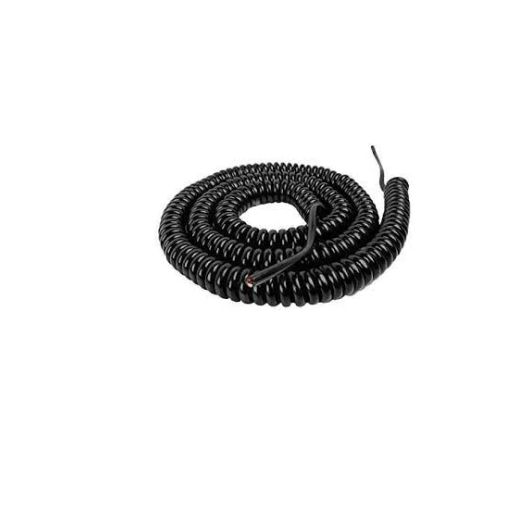
A Hytrel cable jacket standard tests the cable, not the resin. The standards below test or list cables, not resin pellets. The cable maker certifies the cable.
| Standard or scheme | What it covers | Hytrel status |
|---|---|---|
| UL 62 | Flexible cords | QMTT2 route; no public Hytrel cord listing found |
| UL 83 / 44 / 4703 | Building wire, thermoset, PV | No public Hytrel listing found; UL 44 not applicable; PV needs UV stabilisation |
| UL 94 / 746B | Flammability and RTI | HB on unfilled grades; V-0 on HTR8068 and HTR8813 only; RTI 85/85/75 °C on 5526/7246 at 1.5 mm |
| UL QMTT2 | Material recognition | Unverified; E41938 reported, category unconfirmed |
| IEC 60754-1/-2, IEC 61034-2, UL 2885/AATJ2 | Halogen acid gas, smoke density, halogen content | Base Hytrel favourable; 52FR brominated; no public certificate found |
| ISO 19642 (replaced ISO 6722-1) / SAE J1128 | Automotive cable | No public Hytrel/TPEE listing found; PVC or XLPE |
| EN 50264 / EN 50306 / EN 45545-2 | Rail cable | No public Hytrel/TPEE qualification found; PEEK or LSZH; unfilled grades not FR |
UL QMTT2 Is Not UL 62
UL 62 lists cords and cables, not resins. UL QMTT2 is wire and cable material recognition: a recognised compound may let the cable maker omit sunlight, long-term insulation resistance in water, oil and gasoline tests during certification. It isn’t a UL 62 listing. Distributors report yellow card E41938, but the category is unconfirmed; ask for the card and read the grade code.
The Sentences Not to Write
Don’t write “UL 62 listed,” “UL 44 approved,” “EN 45545-2 HL3,” “150 °C continuous” or “ISO 19642 or SAE J1128 qualified.” UL 62 lists cords, UL 44 is thermoset, there’s no public rail listing, the RTI is 85/85/75 °C, and no automotive qualification is public.
Do write: a Hytrel compound can be used in a UL 62 construction if the cable maker certifies the cord. No UL 470 cable standard could be verified; the PV wire standard is UL 4703.
Where Hytrel Wins, and Where TPEE Fails
Hytrel Jacket Fiber: 900 µm Buffer and Furcation
The best-documented Hytrel jacket fiber uses are the 900 micron tight buffer and furcation tubing. Fibercore and YOEC use Hytrel tight buffers; Thorlabs FT900Y and Coherent’s 900 micron Hytrel are furcation or loose tubing. Assembly ratings belong to the assembly, not the resin.
Celanese names 6356, 7246, 8238 and HTR grades for fiber cable but recommends Crastin PBT for mainstream loose tube; Hytrel covers tight buffer, mini loose tube and outer jacket. Hytrel fiber-optic buffer tubing has the construction detail.
Rail, EV, Offshore Wind and Retractable Truck Cable
Celanese positions Hytrel for EV cables, EV charging, transit, offshore wind, drag chain and retractable truck cable, but names no end user. For robotics, the current page names Santoprene TPV, while the 2023 flyer lists drag chain as a Hytrel case; Hytrel isn’t the default robot jacket.
Hytrel Cable Jacket vs TPU vs PVC vs LSZH vs Fluoropolymer
| Material | Continuous temperature | Abrasion | Flex fatigue | Oil and fuel | Hydrolysis | Flame and smoke | Relative cost |
|---|---|---|---|---|---|---|---|
| TPEE / Hytrel | 120 to 150 °C trade; RTI 85 °C | Comparable to TPU | Excellent, hot dynamic | Good | 7246 not recommended at 90 °C water | HB; V-0 grades | Above TPU |
| TPU / PUR | 75 to 90 °C; some to 125 °C | Best-in-class | Excellent | Excellent | TPU type dependent | FR grades | 2 to 3 times PVC |
| PVC | −20 to +80 °C | Low | Poor for repeated flex | Moderate | Good; plasticiser migration | Inherently FR; smoke and HCl | Lowest |
| XLPE | 90 °C | Average | Not for repeated flex | Good | Excellent | Flammable; needs FR additives | Low to mid |
| LSZH compound | Dependent | Dependent | Dependent | Dependent | Dependent | Low smoke, no halogen | Premium over PVC |
| FEP / PFA / ETFE | 150 to 260 °C | High | n/a | Excellent | Excellent | Inherently FR, low smoke | Highest |
In this cable jacket material comparison, a TPEE cable jacket fills the gap between TPU, which softens near 90 °C, and fluoropolymer, which costs more. TPU wins room-temperature abrasion; PVC wins cost but loses on smoke and HCl; fluoropolymer wins above 200 °C. Hytrel vs TPU covers the pair in full.
We found no public TPEE spot price or index. Celanese announced Hytrel price increases in February 2023. Pricing remains quote-based, above TPU and well above PVC.
Where TPEE Is the Wrong Jacket
- Building wire and plenum: PVC/nylon or XLPE; FEP or LSZH; no public Hytrel listing found.
- MV/HV power cable: XLPE or EPR; Hytrel is jacket-class.
- Downhole, ESP or wireline: PP, nylon, PVDF, ETFE, FEP; no Hytrel grade listed; 150 to 300 °C.
- Solar or PV: XLPE or EPR under EN 50618; UV sensitivity.
- Welding or medical: no jacket evidence; no public ISO 10993 grade found.
How to Specify a Hytrel Cable Jacket: Five Lines
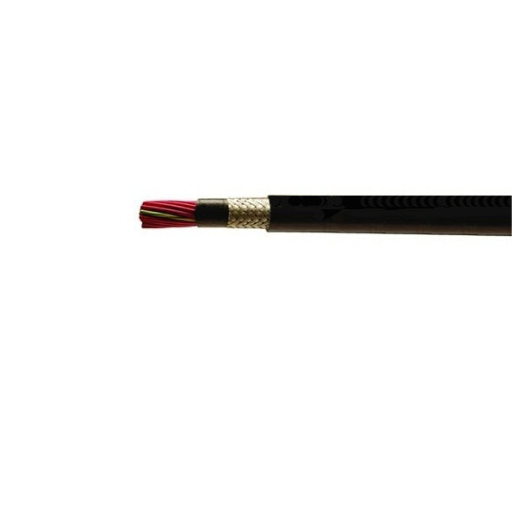
A Hytrel cable jacket specification that names only the polymer leaves grade, test method and certification open. Five lines close the gap.
| Line | What to write |
|---|---|
| Cable job | Fiber, dynamic, FR or general |
| Grade and hardness | 5556 or 7246; Shore D with method |
| Construction | Conductor, wall, tolerance, voltage class |
| Service | Temperature against RTI; fluid; flex and cold bend |
| Documents | Standard, certifier, TDS, yellow card, COA, hydrolysis statement |
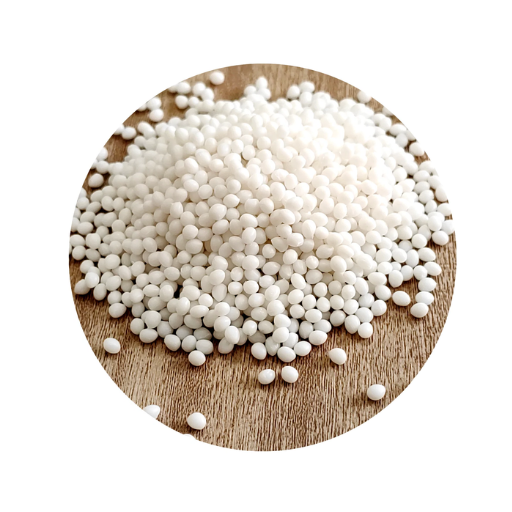
Yifuhui supplies Hytrel resin pellets to converters, not finished cable. We stock Hytrel 7246 pellets for cable jacketing and Hytrel 5526 pellets for moulded cable accessories such as glands, strain reliefs and grommets. Send the construction and the service environment, and we’ll confirm the grade behind it.
Conclusion
Three points decide most Hytrel cable jacket specifications. The grade: 5556 for 55D, 7246 for high modulus; 5526 is not a listed extrusion grade. The temperature: 218 °C is a melting point, not a rating; the UL RTI is 85 °C electrical, 75 °C strength. The standards boundary: the resin can carry material recognition on a yellow card; the cable maker holds the listing.
The next step is a grade-specific data package: current Celanese datasheet, UL yellow card, batch certificate and a hydrolysis check against your fluid and temperature.
Yifuhui supplies Hytrel resin pellets to converters, not finished cable. Tell us the construction and service environment, and we’ll confirm the Hytrel cable jacket grade. To learn more about Hytrel Automotive, please refer to our accompanying guide.
Frequently Asked Questions
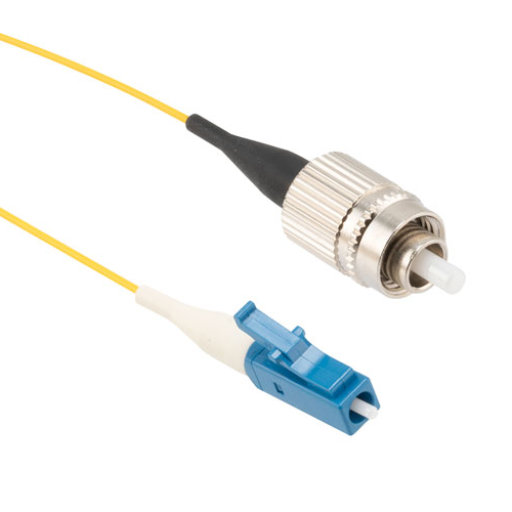
What is a Hytrel cable jacket?
A jacket, buffer or sheath extruded from Hytrel, a thermoplastic polyester elastomer (TPEE, TPC-ET). It protects a conductor or fiber; it isn’t the insulation.
Is Hytrel a good cable jacket material?
For low-voltage jacketing and fiber buffering, yes. 5556 is the 55D default, 7246 the high-modulus option. It isn’t insulation, and 7246 is not recommended in 90 °C water.
What temperature can a Hytrel cable jacket handle?
The UL 746B RTI on 5526 and 7246 is 85 °C electrical, 85 °C impact and 75 °C strength at 1.5 mm. The 203 °C and 218 °C melting points are not ratings. A 90 °C or 105 °C jacket needs a higher-RTI grade or a certified construction.
Is Hytrel flame retardant?
Unfilled Hytrel is UL 94 HB at 1.5 mm, with a limiting oxygen index of 20 to 23%. HTR8068 is V-0 at 26% LOI; HTR8813 BK320 is V-0 at 49%. 52FR is a brominated concentrate, not halogen-free.
Is Hytrel halogen-free?
The base polymer contains no halogen, and HTR8813 BK320 is sold as NHFR. But 52FR is a brominated concentrate in 5556, so it isn’t halogen-free. Ask for a grade declaration before writing “halogen-free” on a drawing.
Is Hytrel UL 62 listed?
No. UL 62 lists flexible cords and cables, not resins. A Hytrel compound can be used in a UL 62 construction if the cable maker certifies the cord. The intended route is UL QMTT2 recognition, to be confirmed on the yellow card.
Can Hytrel 5526 be used for cable jacketing?
No. 5526 is a high-flow injection moulding and thermoforming grade for seals, packing, gaskets, gears and bearings. Its datasheet doesn’t list extrusion or wire and cable. Use 5556 for 55D or 7246 for higher modulus.
What is the difference between 7246 and 5556 for cable?
5556 is the 55D extrusion grade at 190 MPa and 201 °C. 7246 is 72D nominal at 550 MPa and 218 °C. 7246 is stiffer and more abrasion resistant; 5556 is tougher cold and carries the better hot-water rating.
Does Hytrel resist hydrolysis?
Only in the softer grades. 4056, 5526 and 5556 are rated possibly resistant in 90 °C deionised water. 6356, 7246, 8238 and 52FR are rated not recommended. The rate doubles for every 10 °C rise.
Is Hytrel better than TPU for cable jackets?
It depends on the duty. TPU wins room-temperature abrasion and tear. Hytrel wins where the jacket must hold modulus and flex life above the temperature where TPU softens, and it avoids plasticiser migration. The comparison table above covers the pair.