Every polypropylene pellet carries a set of hidden instructions. The grade, the melt flow rate, the additive package, and the supplier’s batch discipline all get locked in at the moment you place an order. Choose correctly, and a food container survives a thousand dishwasher cycles. Choose poorly, and a batch of parts hits the scrap bin along with your margin for the month.
That reality is easy to forget when polypropylene pellets look identical in a 25-kilogram bag. They are not. Two pellets with the same density and the same price can behave completely differently under shear in your injection molding barrel, and the difference shows up as sink marks, warpage, or brittle parts weeks later.
This guide explains what you actually need to know before buying polypropylene pellets. You will learn the differences between PP grades, how to match melt flow rate to your process, what food-grade compliance really requires, where 2026 prices stand, and how to vet a supplier before your production line depends on them. For a broader overview of the full range of raw materials available, see our complete guide to plastic pellets.
What Are Polypropylene Pellets?
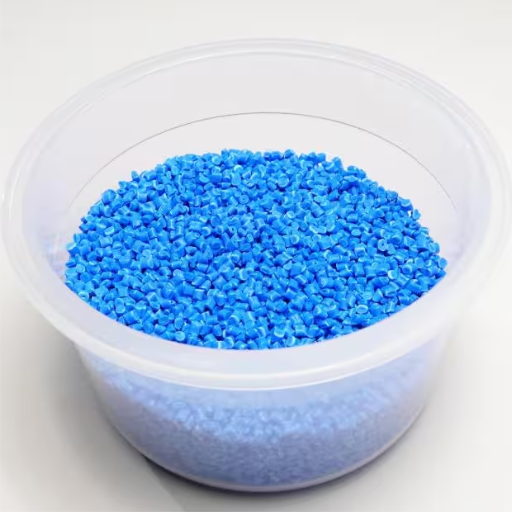
Polypropylene pellets are small cylindrical granules of polypropylene resin, a thermoplastic produced by polymerizing propylene gas, a byproduct of oil refining and natural gas processing. The polymer is melted, extruded into strands, and cut into uniform pellets that serve as the raw material for injection molding, extrusion, blow molding, thermoforming, and fiber production.
The pellet form matters for practical reasons. Uniform pellets feed predictably through conveying systems, dose accurately in gravimetric feeders, and melt consistently across the barrel. That consistency is what lets a mold fill a thin-wall cavity evenly and hold tight dimensional tolerances.
PP Pellets vs. PE Pellets
Polypropylene and polyethylene share the “poly” family name, but they are different materials. PP has a higher melting point, around 160 to 170 degrees Celsius for homopolymer grades, which lets it handle hot-fill packaging and dishwasher cycles that melt standard PE. It is also stiffer and lighter, with a density near 0.90 grams per cubic centimeter, the lowest of the commodity thermoplastics. Its fatigue resistance makes it the standard choice for living hinges.
Why Pellet Form Matters
Molten polymer solidifies into pellets for one reason: consistency. A pellet with uniform size and shape melts at the same rate every time, giving your process the same viscosity, shrinkage, and mechanical properties batch after batch. That repeatability is the foundation of every production schedule.
Types of Polypropylene Pellets
The PP family breaks down into a few broad structural types. Each one trades stiffness, clarity, and impact resistance differently, and each one suits a different set of applications.
- Homopolymer PP: The most common grade. Contains only propylene monomer. Highest stiffness, heat resistance, and tensile strength, but moderate impact resistance. Used for packaging, textiles, pipes, and general injection molding.
- Random copolymer PP: Ethene units are scattered randomly through the chain, up to about 6% by mass. Better clarity, flexibility, and low-temperature impact than homopolymer. The go-to for transparent food containers and medical trays.
- Impact (block) copolymer PP: Ethene blocks are distributed in a controlled pattern, typically 5 to 15% by mass. Tougher and less brittle than random copolymers. Used for automotive bumpers, appliance housings, and heavy-duty containers.
- Compounded and modified PP: Glass fiber, talc, flame retardants, and conductive fillers get blended in to hit specific performance targets. Glass-reinforced PP boosts stiffness and heat deflection; talc-filled grades control shrinkage and warpage.
- Recycled polypropylene pellets: Reprocessed from post-industrial or post-consumer waste. Quality varies with feedstock sorting, but modern recycled PP can match virgin performance for many non-critical applications.
Homopolymer PP
Homopolymer PP delivers the best stiffness, tensile strength, and heat resistance of the family. Tensile strength typically lands between 30 and 35 megapascals. This grade handles hot water, steam sterilization, and repeated flexing, which is why you find it in pipe systems, woven bags, bottle caps, and appliance parts. The trade-off is moderate impact resistance at low temperatures.
Random Copolymer PP
When clarity and toughness matter more than raw stiffness, random copolymer PP wins. The scattered ethene units disrupt the crystalline structure, which improves transparency and gives the material better impact resistance at low temperatures. SK’s Yuplene R370Y is a good example of a random copolymer PP pellet grade: it combines a melt flow rate of 18 grams per 10 minutes with 31.4 megapascals of tensile strength, 94 degrees Celsius heat deflection temperature, and FDA food-contact approval. You can review the full technical datasheet on UL Prospector for the complete property set. This is the material for clear food packaging, syringes, and household goods.
Impact (Block) Copolymer PP
Block copolymers add a dedicated rubber phase to the matrix, which absorbs impact energy. This makes them the standard choice where parts must survive drops, cold environments, and repeated stress. Automotive bumpers, tool housings, and appliance parts all lean on impact copolymer PP. You trade some stiffness and clarity for toughness you can rely on.
Compounded and Modified PP Pellets
Off-the-shelf PP cannot hit every target. Compounding fixes that. Glass fiber at 10 to 40% loading raises stiffness and heat deflection temperature for structural parts. Talc at 10 to 20% improves dimensional stability and reduces warpage in thin-wall parts. Flame-retardant PP meets UL94 V-0 ratings for electrical housings. Conductive and anti-static grades serve electronics applications that need to dissipate charge.
Recycled Polypropylene Pellets
Recycled PP, often called rPP, has matured into a legitimate sourcing option. Post-industrial scrap offers the most consistent feedstock because it is clean and sorted by grade. Post-consumer material needs rigorous sorting, washing, and filtration before it approaches virgin consistency. When you specify recycled polypropylene pellets, ask for the feedstock source, the melt flow range, and the ash content. Verified quality justifies the 20 to 40% cost savings. Our virgin vs. recycled plastic pellets comparison digs into when each makes sense.
Key Properties of Polypropylene Pellets
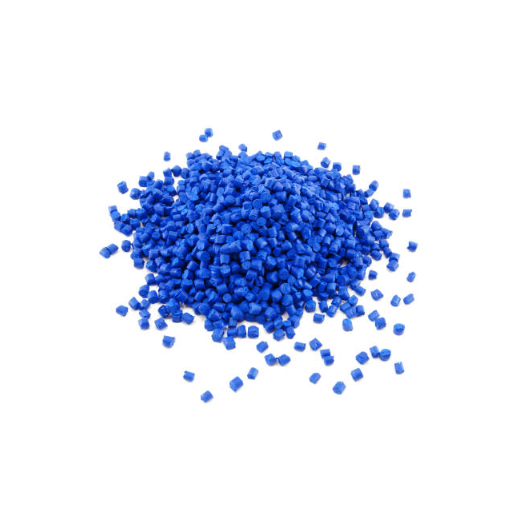
The table below summarizes the properties that matter most when you evaluate PP for a part design. For a deeper technical reference on how PP grades are classified and specified, GlobalSpec maintains a detailed overview of polypropylene resins.
| Property | Typical PP Value | Why It Matters |
|---|---|---|
| Density | 0.895-0.92 g/cm³ | Lowest of commodity plastics; reduces part weight |
| Melting point | 160-170°C (homo), 135-159°C (copolymers) | Sets processing and service temperature limits |
| Tensile strength | 25-35 MPa | Determines load-bearing capability |
| Melt flow rate | 0.25-54 g/10 min by grade | Controls flow, fill, and cycle time |
| Moisture absorption | <=0.01% | Usually requires no pre-drying |
| Shrinkage | 1.0-2.5% | Must be designed for to control warpage |
| Heat deflection temp | 94-110°C (unfilled) | Service temperature ceiling under load |
| Chemical resistance | Excellent vs. acids, bases, alcohols | Suits chemical and automotive environments |
| UV resistance | Poor unstabilized | Needs stabilizers for outdoor use |
Mechanical Properties
PP balances stiffness with toughness in a way few other commodity plastics manage. Its flexural modulus is high enough for structural parts, while its fatigue resistance handles millions of flex cycles in living hinges. Impact resistance depends heavily on the grade, which is why copolymer selection is critical for parts that face low-temperature or impact loads.
Thermal Properties
Homopolymer PP resists continuous service around 100 degrees Celsius and short-term exposure much higher. This heat tolerance is what lets PP packaging go from the dishwasher to the microwave without distortion. Random and impact copolymers run slightly lower melting points, so check the specific grade data before designing for hot environments.
Chemical Resistance and UV Limitations
PP shrugs off most acids, bases, and alcohols, which is why it dominates chemical storage tanks, battery cases, and automotive fluid systems. Its weakness is UV. Unstabilized PP degrades in direct sunlight, so outdoor parts need UV-stabilized grades or an additive package. This is a common spec miss that shows up months later as chalky, cracked surfaces.
Density and Moisture Behavior
PP’s low density reduces part weight without sacrificing volume, a cost advantage in thin-wall and film applications. Its near-zero moisture absorption means it rarely needs pre-drying, unlike ABS, PA66, or PET. That single difference shortens your cycle and removes a whole category of moisture-related defects.
How to Choose the Right Polypropylene Pellet Grade
Grade selection starts with two questions: what will the part face, and how will you make it? The answers point to a melt flow rate and a polymer structure.
Understanding Melt Flow Rate
Melt flow rate, also called melt flow index, measures how easily molten polymer flows under a fixed load. It is the single most useful spec for process compatibility. High MFR grades, above 15 grams per 10 minutes, fill thin-wall and complex cavities quickly. Low MFR grades, below 5, give better melt strength and mechanical integrity for thick, structural parts. The wrong MFR is the most common reason a PP grade runs poorly on equipment that handled the previous resin fine.
PP Grade Selection by MFR
The table below maps common commercial PP grades to their melt flow rates and typical applications. These are widely available grades used across Asia and Europe.
| Grade (typical) | MFR (g/10 min) | Polymer Type | Common Applications |
|---|---|---|---|
| T30S | 2-4 | Homopolymer | Raffia, woven bags, carpet backing |
| M250E | 1.8-3.2 | Homopolymer | Blow molding, hollow products, saline bottles |
| 4220 | 0.25 | Homopolymer | Hot and cold water pipe systems |
| HP500N | 12 | Homopolymer | Furniture, containers, food-contact parts |
| Yuplene R370Y | 18 | Random copolymer | Clear packaging, syringes, household goods |
| Y26 | 26 | Homopolymer | Non-wovens, high-speed spinning, filament |
| K9928H | 28 | Impact copolymer | Washing machine parts, auto parts, appliance housings |
| H9018 | 54 | Homopolymer | Thin-wall food containers |
Virgin vs. Recycled Polypropylene Pellets
Virgin polypropylene pellets give you the tightest spec tolerance and full traceability, which matters for food contact, medical devices, and regulated applications. Recycled PP cuts material cost by 20 to 40% and supports sustainability targets, but it demands a supplier who verifies feedstock, melt flow consistency, and contamination levels. When the end-use allows it and the supplier can prove batch quality, recycled PP is a sound commercial decision.
Not sure which grade fits your part? Our engineers review application requirements and process parameters to recommend the exact PP grade you need. Contact our team for a free material consultation.
Polypropylene Pellet Applications Across Industries
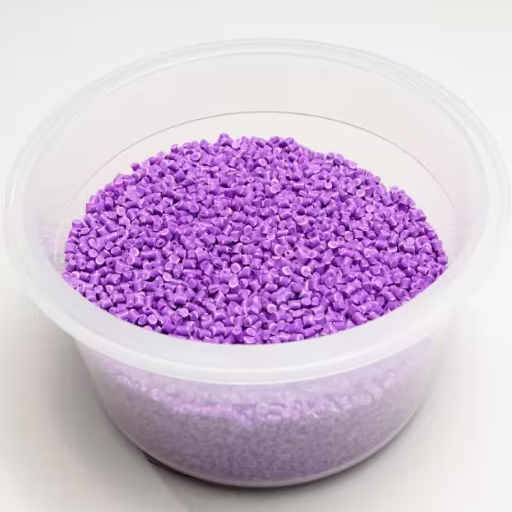
Polypropylene pellets feed manufacturing in nearly every sector. A few of the largest use cases show how grade choice maps to real-world performance.
Packaging and Food Contact
PP dominates food packaging because it resists heat, grease, and chemical leaching. Thermoformed trays, caps and closures, thin-wall containers, and BOPP film all start as PP pellets. Random copolymer grades deliver the clarity consumers expect in a packaged food tray, while homopolymer handles the structural loads of caps and closures. FDA and EU food-contact approval are non-negotiable here, covered in the compliance section below.
Automotive
Weight reduction is the whole game in modern automotive. PP’s low density and good mechanical properties make it the workhorse of interior trim, bumpers, battery cases, and under-the-hood components. Impact copolymer grades absorb crash energy and survive cold climates. Glass-reinforced PP handles parts that need stiffness without the cost of engineering plastics.
Medical and Healthcare
Syringes, IV components, medicine bottles, and laboratory equipment rely on PP because it survives steam sterilization and resists chemicals. Medical-grade PP pellets must meet strict biocompatibility and extractables requirements, and traceability back to the raw material is mandatory. If you manufacture regulated medical parts, do not substitute an unverified grade.
Textiles and Nonwovens
Fiber-grade PP pellets spin into non-woven fabrics for diapers, hygiene products, surgical masks, and geotextiles. Raffia grades weave into bulk bags and carpet backing. These applications demand tight melt flow control because the spinning process is unforgiving of viscosity drift.
Piping, Electrical, and Consumer Goods
PP pipe grades handle hot and cold water systems with a service life measured in decades. Electrical enclosures and cable insulation lean on PP’s insulation properties and, where needed, flame-retardant compounded grades. Consumer goods from furniture to luggage to flip-top caps round out a material family that rarely sits idle in any factory.
Processing Polypropylene Pellets
PP is one of the friendliest thermoplastics to process, but it has quirks that catch new users off guard.
Injection Molding Parameters
Typical injection molding conditions for PP run a melt temperature of 160 to 230 degrees Celsius, a mold temperature of 20 to 80 degrees, and injection pressure between 500 and 1,500 bar. PP crystallizes quickly, which shortens cycle times compared to amorphous plastics like ABS. That speed is a real productivity advantage once your process is tuned. To learn more about Plastic Pellets for Injection Molding: A Complete Selection & Sourcing Guide, please click to view our accompanying guide.
Shrinkage and Warpage Control
PP shrinks between 1.0 and 2.5%, more than many engineering plastics, and the shrinkage is anisotropic, meaning it differs across flow and cross-flow directions. Design your mold to compensate, use uniform wall thickness, and consider talc-filled grades when tight tolerances matter. Warpage is the classic PP complaint, and most of it is preventable at the design stage.
Drying Requirements
Here is where PP simplifies your life. Its moisture absorption is negligible, so you generally feed polypropylene pellets straight from the bag into the hopper. No desiccant dryer, no dwell-time rules, no moisture-related splay marks. If you store material in a cold warehouse and the pellets reach a dew point, a brief two to three hour dry at 80 to 100 degrees can clear surface condensation, but this is the exception, not the rule.
Common PP Processing Defects
Watch for these issues and their likely causes:
- Sink marks: Thick sections cooling slower than surrounding walls. Fix with uniform wall thickness or lower mold temperature.
- Warpage: Differential shrinkage across the part. Fix with proper gate placement, balanced cooling, or a talc-filled grade.
- Flow lines: Mold too cold or too slow a fill. Raise melt and mold temperature or increase injection speed.
- Brittle parts: Polymer degraded by excessive heat or an incompatible recycled blend. Check processing temperature and verify feedstock quality.
Food-Grade Compliance for Polypropylene Pellets
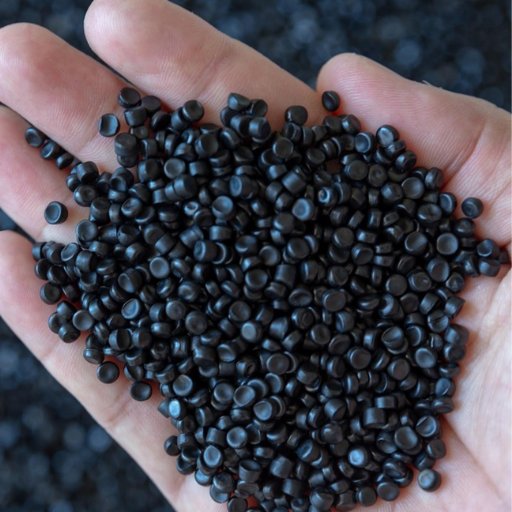
Food contact is where regulatory rigor separates a real supplier from a broker reselling whatever arrives at the dock.
FDA and EU Requirements
The two standards that matter most are the US FDA regulation 21 CFR 177.1520 and the EU Regulation 10/2011. Compliance confirms the polymer and its additives are safe for direct food contact under specified conditions. A grade with these approvals carries documented evidence, not a verbal promise. The Yuplene R370Y grade mentioned earlier is one example that carries FDA 21 CFR 177.1520 compliance for food packaging.
REACH, RoHS, and Other Requirements
European markets require REACH registration for chemical substances and RoHS compliance for restricted heavy metals in electronics. Depending on your destination market, you may also need UL ratings for flame retardancy or NSF certification for potable water contact. Ask which certifications each grade actually holds and request the documentation.
Food-Grade Recycled PP
Recycled PP can be food grade, but the verification bar is higher. The recycler must sort by polymer and color, remove contaminants, and demonstrate compliance with food-contact standards for the specific batch. If you want recycled content in a food package, you need a supplier who can prove the chain of custody, not just quote a price.
How to Evaluate a Polypropylene Pellet Supplier
A low quote means nothing if batch variability shuts down your line. Evaluate suppliers the same way you would evaluate a critical mold maker.
Certifications to Verify
ISO 9001 confirms the supplier follows documented quality management. Food-contact grades need FDA or EU compliance paperwork. REACH and RoHS cover European shipments. For recycled material, look for a documented feedstock and testing process, ideally with third-party verification. Every claim should trace back to a certificate you can keep on file.
Quality Assurance Questions
Before your first order, ask these directly:
- Do you provide a certificate of analysis with every batch?
- What is your melt flow tolerance for this grade?
- How do you prevent cross-contamination between polymer types?
- Can you supply samples from the exact production lot you will ship?
- What is your policy on out-of-spec material returns?
A supplier who cannot answer these clearly cannot guarantee your schedule.
Logistics, MOQ, and Packaging
Minimum order quantities range from 25-kilogram sample bags to full truckloads for commodity grades. Bulk bags around 1,000 kilograms suit medium-volume production, and silo delivery works for high-volume lines. Lead times run from two weeks for stocked grades to eight weeks for custom compounds. Confirm packaging and labeling consistency, because mismatched bags on the dock are a red flag.
Red Flags When Sourcing PP Pellets
Watch for these warning signs:
- No certificate of analysis available
- Prices 30% or more below market without explanation
- Reluctance to provide pre-production samples
- Inconsistent packaging or labeling between orders
- No technical staff to answer processing questions
2026 Price Context
Prices inform every negotiation. Virgin PP spot prices climbed from about $1.08 per kilogram in January 2026 to $1.76 by April, driven by Middle East supply disruptions and rising crude, with Asia CIF China following a similar path. Recycled natural PP traded roughly 20% below virgin at around $1.41 per kilogram in the same window. Meanwhile, China accounts for about 64% of global PP capacity added between 2020 and 2026, and analysts expect the resulting supply glut to keep the market in a downcycle through 2026. In practical terms, buyers with a verified supplier and volume commitments have negotiating room, but should not expect prices to fall far from the current elevated band.
Polypropylene Pellets FAQ
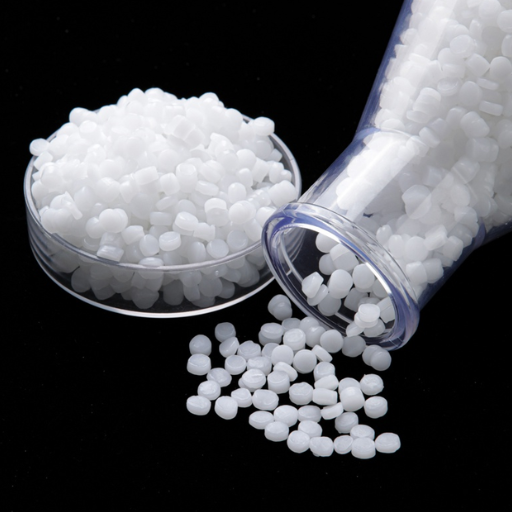
What are polypropylene pellets used for?
Polypropylene pellets are the raw material for injection-molded parts, extruded film and pipe, blow-molded containers, and spun fibers. They appear in packaging, automotive components, medical devices, textiles, and consumer goods.
Is polypropylene the same as polyethylene pellets?
No. Both are polyolefins, but PP has a higher melting point, lower density, and better fatigue resistance. PP handles hot-fill and dishwasher cycles that standard PE cannot, which is why the two are used differently.
What is the difference between homopolymer and copolymer PP?
Homopolymer PP offers higher stiffness and heat resistance. Random copolymers add clarity and impact resistance. Impact copolymers add the most toughness for bumpers and heavy-duty parts.
Do polypropylene pellets need drying before injection molding?
Usually not. PP absorbs almost no moisture, so most grades feed directly into the machine. Only dry after cold storage that caused condensation, then two to three hours at 80 to 100 degrees.
Is polypropylene food safe?
Food-grade PP pellets that comply with FDA 21 CFR 177.1520 or EU 10/2011 are safe for direct food contact. Verify the specific grade carries the approval and request documentation.
What is the price of polypropylene pellets per kg in 2026?
Virgin PP spot prices ran roughly 1.08to1.08to1.76 per kilogram in the first half of 2026 depending on region and crude oil movement. Recycled PP traded about 20% below virgin.
Can polypropylene pellets be recycled?
Yes. PP is mechanically recyclable and increasingly processed through chemical recycling. Recycled polypropylene pellets are viable for many applications when feedstock and batch quality are verified.
Conclusion
Polypropylene pellets are not interchangeable. Grade structure, melt flow rate, food-contact compliance, and supplier discipline all determine whether your parts come out right the first time or fail in the field.
Five principles to take back to your team:
- Match the grade structure to the end-use. Homopolymer for stiffness, random copolymer for clarity, impact copolymer for toughness.
- Select melt flow rate for your process. High MFR fills thin walls; low MFR builds structural strength.
- Verify food-contact compliance with documented FDA or EU approval, never a verbal claim.
- Leverage PP’s no-drying advantage to simplify your process and shorten cycles.
- Vet suppliers on batch consistency and certificates, not price per kilogram alone.
At Suzhou Yifuhui, we supply branded polypropylene pellets with batch-tested consistency, competitive transparent pricing, and engineering support to help you match the right grade to your application. We carry everything from standard homopolymer to specialty random copolymer grades, including the Hanwha TotalEnergies HJ730 PP pellets you can review on our polypropylene product page.
Ready to source polypropylene pellets with guaranteed batch quality? Contact our engineering team for a material recommendation, or request a custom quote based on your volume and specifications. We respond to all inquiries within 24 hours.