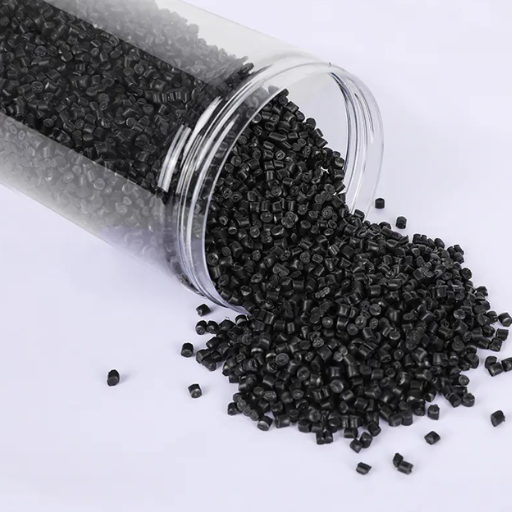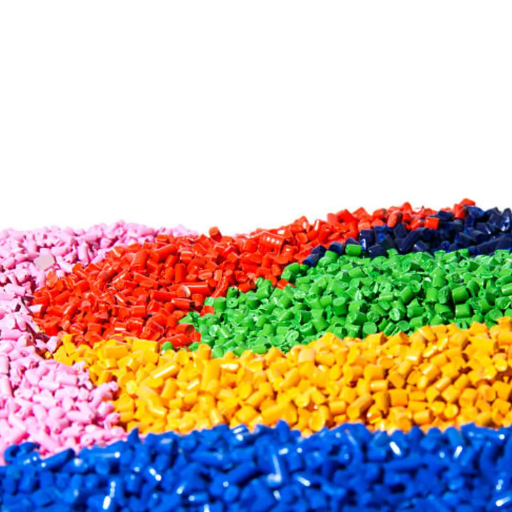
The cheapest resin on the quote isn’t always the cheapest part on the line.
Most PC vs ABS cost decisions get made on a single number: price per kilogram. ABS wins that comparison almost every time, usually by 30% to 50%. So the part gets specified in ABS, the savings get reported, and everyone moves on.
Then the drop test happens.
This guide prices the decision properly. You’ll see verified 2026 prices per kilogram for PC, ABS and PC/ABS blend pellets, a worked cost-per-part model, and the procurement levers that reduce what you actually pay. For the engineering background behind these numbers, our polycarbonate vs ABS plastic pellets guide covers the full material comparison.
Comparing PC vs ABS cost right now? Send us your part drawing and annual volume and we’ll return a cost-per-good-part breakdown for both materials within 24 hours.
PC vs ABS Cost: The Quick Verdict
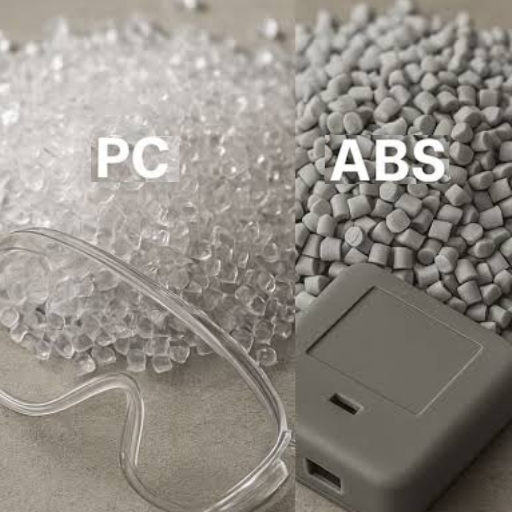
ABS is the lower-cost resin. On injection-molding grades it typically runs 30% to 50% below polycarbonate per kilogram, and the gap widens toward double at the global benchmark midpoint. That makes ABS the right answer whenever the part is cost-sensitive and impact risk is low.
Once cycle time, drying energy and scrap are counted, the cost-per-part gap narrows sharply. And when a field failure would cost more than the resin premium, polycarbonate delivers the lower cost per good part.
Choose ABS when the part is low-stress, price-driven, and stays well below 100 °C in service.
Choose polycarbonate when a failure would mean warranty claims or a mold revision, or when you need clarity and service above 100 °C.
Choose a PC/ABS blend when you want most of PC’s impact performance at roughly half the premium, which suits housings, brackets and internal structural parts.
PC vs ABS Price per Kg: The 2026 Numbers
Here is the pc vs abs cost per kg going into the third quarter of 2026, benchmarked against published ABS and polycarbonate material data. Each line carries its basis and date, because a polycarbonate vs ABS price comparison without dates isn’t a comparison at all.
| Market and basis | ABS | PC | PC/ABS blend |
|---|---|---|---|
| Global benchmark (USD/kg) | 1.50 to 2.50 | 2.50 to 4.00 | 2.50 to 3.00 |
| Asia CIF transaction (USD/t, Jun to Jul 2026) | 1,280 to 1,906 | 1,500 to 1,670 | Not quoted |
| China spot index (RMB/t, 16 Sep 2026) | 11,533 | 15,367 | Not quoted |
| China spot quotes (RMB/t, Sep 2026) | Jihua 0215A 11,150; Tianjin Dagu 12,500 | Covestro 2805 16,400; SABIC 15,800 | Chi Mei 22,000 to 22,800; Covestro 21,500 to 21,600 |
| China domestic PC/ABS ex-works (RMB/t, Sep 2026) | Not applicable | Not applicable | 12,300 to 15,300 |
| Europe average (EUR/t, Jul 2026) | 2,169 | 2,822 | Not quoted |
On the China spot index, ABS sat at 11,533 RMB per tonne against PC at 15,367 RMB per tonne. That’s a premium of roughly 33%. Compare mainstream grades of each in the same month, however, and the premium widens toward 47%.
Why the Published PC vs ABS Cost Gap Disagrees
Search for the PC vs ABS price difference and you’ll find four answers: 15% to 25%, 30% to 50%, 40% to 60%, and roughly double. None of them are wrong. They are answering different questions.
Priya learned this the hard way. As a sourcing lead at a consumer-electronics contractor in Shenzhen, she collected quotes for the same nominal material from four suppliers and found a spread of nearly 40%.
One quote covered general-purpose ABS. Another covered a flame-retardant grade carrying a UL94 V-0 rating. A third was priced for a 5-ton trial, and the fourth assumed a 200-ton annual commitment.
The spread in published figures comes from four variables:
- Grade. General-purpose, flame-retardant, electroplating and glass-filled grades all price differently.
- Region. China spot pricing and European delivered pricing don’t track each other.
- Volume. Annual commitments and trial orders aren’t the same product commercially.
- Date. Spot prices moved more than 30% inside a single quarter in 2026.
Fix grade, region, volume and date before you compare any two resin prices.
Cost per Part: Processing, Energy and Scrap
Resin price sets the floor. What you pay per part is set by what happens after the pellets leave the bag.
Processing Uplift
Polycarbonate runs hotter and slower, and both facts cost money. PC processes at 260 °C to 320 °C in the barrel with mold temperatures of 80 °C to 120 °C. ABS runs at 200 °C to 240 °C with mold temperatures of 40 °C to 80 °C.
That difference shows up in three places:
- Cycle time. PC adds 15% to 25% per cavity. On a crate-sized part, PC runs 45 to 60 seconds against 35 to 45 seconds for ABS.
- Energy. Higher barrel and mold temperatures mean higher kWh per kilogram processed.
- Machine selection. PC’s higher melt viscosity often needs a higher-tonnage press, which raises the hourly machine rate.
Taken together, those three factors produce a processing uplift of roughly 10% to 25% over ABS, consistent with published PC vs ABS molding cost comparisons. Our PC vs ABS injection molding guide sets out the full parameter comparison. To gain a deeper understanding of PC vs ABS for Automotive Parts: Material Selection Guide, please refer to our accompanying guide.
Drying and Handling
Both resins are hygroscopic. PC is far less forgiving.
Polycarbonate must be dried below 0.02% moisture, typically at 120 °C for three to four hours in a desiccant dryer with a dew point at or below minus 40 °C. ABS tolerates a looser target of 0.1% to 0.2% at 80 °C to 90 °C.
Missing PC’s target isn’t cosmetic. Residual moisture hydrolyzes the polymer during melting, producing silver streaks on the surface and permanent brittleness in the finished part. Splay defects and rejected lots trace back to this step. Our drying polycarbonate pellets before molding guide covers dryer selection.
Scrap Rate Is the Swing Factor
This is the number that gets estimated in the quote and then ignored on the floor.
In practice, targets sit at below 2% scrap for PC and below 1.5% for ABS, with trial validation usually aimed at under 3%. At volume, a two to three point increase in defect rate can erase PC’s entire performance advantage, because every rejected part carries the full material, processing and energy cost of a good one.
The reverse also happens, and it’s where purchase decisions go wrong. Tomás, a plant manager at a contract molder in Ningbo, audited his actual scrap data before a re-specification. His quote model assumed 3.5% scrap on polycarbonate. The measured figure over six months was 1.2%, because his team had already tuned the dryer and the mold temperature profile.
Modelling PC at 3.5% had overstated the premium by more than the material difference. Measure your own scrap rate before you model anyone else’s.
Total Cost of Ownership: The Model That Changes the Verdict
Here is a worked polycarbonate vs ABS total cost of ownership model for a common shape of program: an electronics housing with a 120-gram shot, running 250,000 good parts per year, molded in China on 2026 spot resin pricing.
| Cost component | ABS | PC | PC/ABS 60/40 |
|---|---|---|---|
| Resin per part | $0.195 | $0.261 | $0.238 |
| Processing and cycle time | $0.140 | $0.168 | $0.157 |
| Drying and handling | $0.008 | $0.018 | $0.013 |
| Scrap allowance | 1.5% | 2.0% | 1.7% |
| Cost per good part | $0.35 | $0.46 | $0.42 |
| Annual cost at 250,000 parts | $87,000 | $114,000 | $104,000 |
Assumptions: resin at 2026 China spot (ABS $1.60/kg, PC $2.13/kg, blend $1.95/kg), an ABS processing base of $0.14 per part, PC uplift of 20%, blend uplift of 12%, and the scrap rates shown.
Reading the Model
The sticker gap is real. ABS resin costs about 27% less per part than PC, and the finished part lands about 30% cheaper on a cost-per-good-part basis. Processing and drying widen that gap rather than close it, because PC is more expensive to convert.
And the model says nothing about what happens when a part fails in the field. That’s where the verdict can flip.
The Field-Failure Clause
Take the same 250,000-part program. Suppose the ABS housing cracks in service at a 1.5% rate under thermal cycling, and suppose each failure costs $12 in replacement, handling and administrative time. That’s 3,750 failures and $45,000 per year.
The ABS program saved $27,000 on cost per good part. It then spent $45,000 handling failures. The cheaper material cost more, and this model still leaves out the harder costs: a dissatisfied customer, a warranty review, a delayed launch.
Marcus, a procurement manager at an appliance manufacturer, ran this arithmetic the hard way. His ABS cover passed every incoming inspection and failed in the field at 14 months. The resin saving came to $31,000 across the program. Corrective action, including a mold revision and a mid-cycle switch to a 60/40 PC/ABS blend, came to just under $90,000.
When the PC Premium Pays Back
There’s no universal rule, but the arithmetic is simple enough to run.
The PC premium pays back when field failure rate exceeds roughly the resin premium divided by failure cost per part, when a failure carries safety or regulatory consequences, or when the part is hard to replace once installed.
ABS stays the right answer when the failure mode is cosmetic or easily corrected, the part is accessible and cheap to swap, and thermal and impact loads stay comfortably inside ABS limits.
If you are also weighing a transparent alternative, our PC vs acrylic cost comparison applies the same total-cost method to that pair.
PC/ABS Blends and Recycled Grades: The Cost Middle Ground
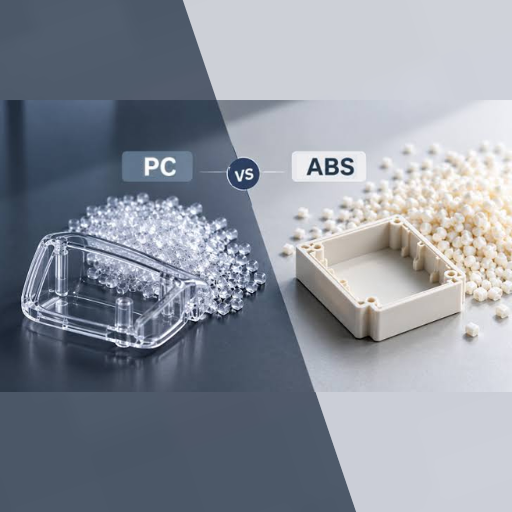
Most buyers treat PC vs ABS cost as a binary. It isn’t. The blend sits between the two on price and performance, and it’s the fastest-growing segment in the category.
Blend Economics
In practice, a PC/ABS blend prices 15% to 30% above ABS while carrying most of PC’s impact and heat performance. On total cost, adopters report 20% to 35% lower cost than an equivalent pure-PC part.
China ex-works pricing as of September 2026 shows the grade spread:
- Non-flame-retardant, general purpose: 12,300 to 13,000 RMB per tonne
- Halogen-free flame retardant: 14,600 to 15,000 RMB per tonne
- Electroplating grade: 14,100 RMB per tonne
Branded and imported grades run far higher, with Chi Mei at 22,000 to 22,800 RMB per tonne and Covestro at 21,500 to 21,600.
A general-purpose domestic blend therefore lands close to ABS on resin cost while giving you a meaningful share of PC’s performance. For ratios, grade families and selection criteria, see our PC/ABS blend pellets guide.
Recycled PC/ABS Price Tiers
Recycled grades open a second cost band, and the spread inside it is wide.
| Material | Price band (RMB/t) | Basis |
|---|---|---|
| Recycled PC/ABS pellets | 12,500 to 12,700 | Yuyao, Jun 2026 |
| PC/ABS FR alloy, black | 8,000 to 11,000 | Yuyao, Apr 2026 |
| PC/ABS FR alloy, grey | 13,000 to 15,000 | Yuyao, Apr 2026 |
| PC/ABS regrind | From 6,000 | Hebei auction, Mar 2026 |
| Recycled ABS | 4,659 to 12,000 | China, 2026 |
| Recycled PC | 8,702 | Zhejiang average, Jul 2026 |
Two cautions before you build a savings case on these numbers. The recyclate market weakened through 2026 as virgin prices fell, compressing the premium these grades once commanded. And color, flame retardancy and contamination drive most of the spread, so a low-priced lot usually carries a qualification cost that never appears in the quote.
For certification and feedstock traceability, see our recycled PC/ABS pellets guide. If housings are your application, our PC vs ABS for electronics enclosures guide covers the specification detail.
Want the landed cost, not the list price? Request pricing on virgin PC, ABS, PC/ABS blend and recycled grades. We’ll quote each material against your volume and application.
2026 Market Drivers: Why the PC vs ABS Cost Gap Moves
The gap isn’t a fixed ratio. Instead, it moves with feedstock, capacity and demand, and 2026 has been unusually active.
The Q1 oil spike reset both curves. Rising crude prices pushed Chinese general-purpose ABS from around 8,000 RMB per tonne to over 13,000, a rise of roughly 60%. General-purpose PC moved from around 11,000 to over 16,000, up roughly 40%. The gap widened sharply, then partially re-converged through the summer.
Europe ran its own cycle. ABS prices fell through June and July, rebounded in August, and finished more than 1,000 EUR per tonne higher than before the Iran conflict disrupted feedstock. An outage at Elix Polymers’ Tarragona ABS plant from 6 to 26 May 2026 tightened regional supply, while standard injection-grade PC declined through the summer. China’s PC market is recovering more slowly, after 2025 finished as the industry’s least profitable year in three.
When the gap is this volatile, the terms matter as much as the price. A contract with a feedstock-linked adjustment clause protects the ratio, not just the number.
Procurement Checklist: Lowering Your Effective PC vs ABS Cost
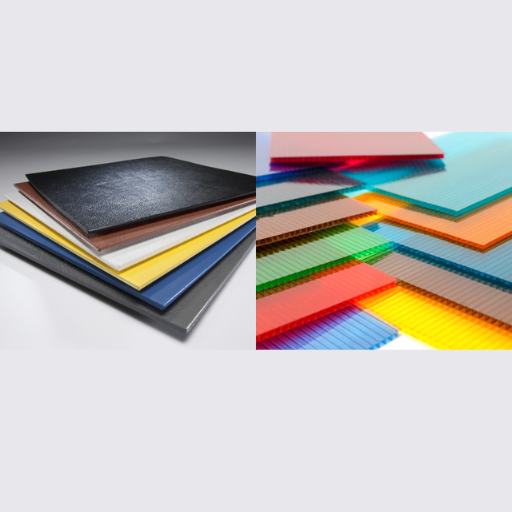
Price per kilogram is the number on the quote. Effective cost is what you actually pay. Six levers move it:
- Ask for the volume tier schedule. Per-kilogram pricing steps down with annual volume. A single quoted price is the least favourable tier.
- Choose contract or spot deliberately. Contract pricing with a feedstock-index clause locks the spread. Spot buying rides the volatility. Both are valid. Drifting into one by accident isn’t.
- Set your regrind ratio before you quote. Controlled regrind lowers effective material cost, and most engineering parts tolerate a defined percentage. Model the saving only after your process proves stable.
- Price the landed cost. Freight, duties, payment terms and minimum order quantities all sit between the quote and the invoice.
- Verify batch consistency. A certified analysis, a verified melt flow index and moisture below 0.02% protect your cost per good part. A cheap batch that raises rejects is the most expensive material you can buy.
- Consolidate your sourcing. Elena, a procurement lead at an industrial equipment maker, found her team buying PC from one supplier, ABS from another and a PC/ABS blend from a third. Three suppliers meant three freight minimums, three audit schedules and three sets of payment terms. Consolidating to one partner and negotiating across all three materials at once moved her blended resin cost more than any single-material negotiation had.
Ready to consolidate? Send us your resin list and we’ll quote PC, ABS and PC/ABS blend grades together, with volume tiers and landed cost per part.
Frequently Asked Questions
Is ABS cheaper than polycarbonate?
Yes. On injection-molding grades ABS typically runs 30% to 50% below polycarbonate per kilogram. The September 2026 China spot index put ABS at 11,533 RMB per tonne against PC at 15,367 RMB per tonne, a premium of roughly 33%.
What is the polycarbonate vs ABS price per kg in 2026?
The global benchmark range is $1.50 to $2.50 per kilogram for ABS and $2.50 to $4.00 for PC. In China, mainstream injection-grade PC quoted between 15,800 and 16,400 RMB per tonne in September 2026, against an ABS market average around 11,650 RMB per tonne.
Why is polycarbonate more expensive than ABS?
PC’s feedstock route through bisphenol A costs more and carries more regulatory oversight than the styrene and butadiene chain behind ABS. PC also delivers roughly two to four times the notched impact strength and a heat deflection temperature about 40 °C higher, which requires costlier impact-modifier packages.
Is polycarbonate cheaper in the long run?
It depends entirely on failure cost. Where the environment is benign and failures are cosmetic, ABS wins on total cost of ownership. Where a failure triggers a warranty claim, a recall or a mold revision, PC’s lower failure rate can make it the cheaper material despite the higher resin price.
Is PC/ABS blend cheaper than polycarbonate?
Yes. A PC/ABS blend typically runs 20% to 35% below pure PC on total part cost while retaining most of its impact and heat performance. It usually prices 15% to 30% above ABS.
Can recycled PC/ABS pellets reduce material cost?
Yes. Recycled PC/ABS traded between roughly 6,000 and 15,000 RMB per tonne in China during 2026, depending on color, flame retardancy and contamination level. The savings are real, but qualification and lot-to-lot consistency determine whether they survive the first production run.
Conclusion
The PC vs ABS cost comparison isn’t one number. It’s three, and only the third one should decide your specification.
The per-kilogram gap is real and stable in direction: ABS runs 30% to 50% below polycarbonate on comparable grades, and the 2026 China spot index puts the premium at roughly a third. The cost-per-part gap is slightly wider, because PC also costs more to process and dry. The cost-per-good-part gap is the one that can reverse, and it reverses when field failures cost more than the resin premium.
Three things to take away:
- Fix grade, region, volume and date before comparing any two resin prices
- Measure your own scrap rate rather than inheriting an estimate
- Run the failure-cost arithmetic for your application, not for the material generally
The correct answer is the one that produces good parts at the lowest total cost, run after run. Suzhou Yifuhui New Material supplies injection-grade polycarbonate, ABS and PC/ABS blend pellets with transparent volume-tier pricing, batch-level testing and certified analysis on every lot.
Request a PC vs ABS price quote with your part volume and application, and our engineers will build the cost-per-good-part comparison for your program. We respond to every inquiry within 24 hours.