In March 2025, a medical device manufacturer in Singapore ordered ten tons of “general-purpose polycarbonate pellets” from a new supplier. The price was right, the spec sheet looked standard, and the delivery arrived on time. Three production runs later, every molded housing failed ethylene oxide sterilization. The resin was a commodity PC grade with no biocompatibility certification. The manufacturer lost $84,000 in material, machine time, and customer trust, all because they did not verify the grade against their sterilization requirement.
If you source polycarbonate pellets for manufacturing, this story probably sounds familiar. The difference between a good production run and a costly failure often comes down to one decision: choosing the right PC resin pellets from the right supplier.
The global polycarbonate resin market reached $15.1 billion in 2024 and is projected to hit $20.1 billion by 2029, according to Grand View Research. Polycarbonate pellets are the raw material behind automotive headlamps, 5G base station housings, surgical instruments, and safety equipment. Getting the grade right matters. Getting the supplier right matters more.
This guide covers everything a manufacturer or procurement professional needs to know about polycarbonate pellets. We start with what PC pellets are and why their properties make them indispensable. We then map every major grade type to its application. We cover processing requirements, current market pricing, and a step-by-step supplier evaluation framework. By the end, you will know exactly how to specify, process, and source polycarbonate pellets with confidence.
What Are Polycarbonate Pellets?
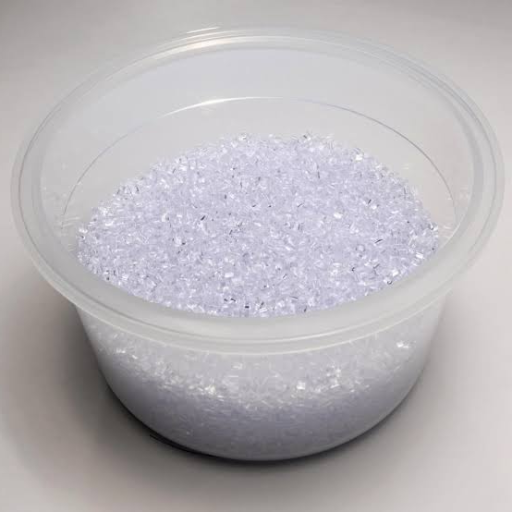
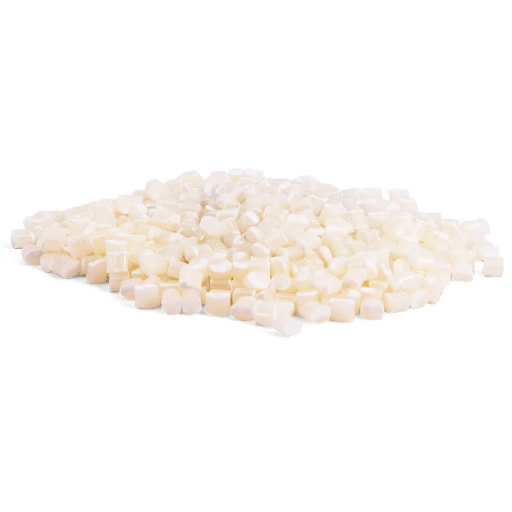
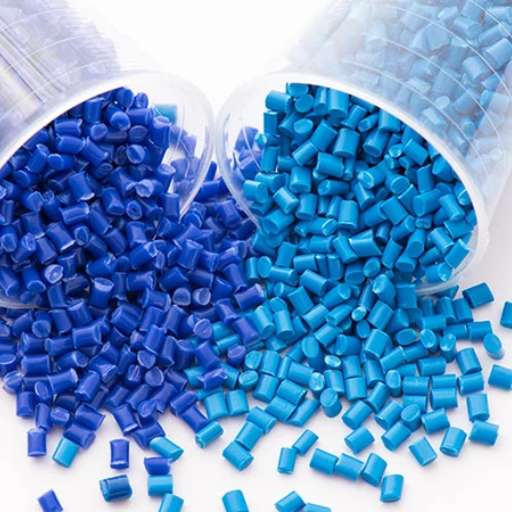
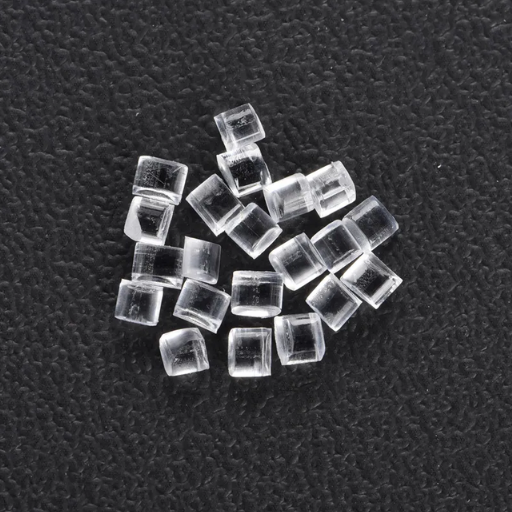
Polycarbonate pellets are small, cylindrical resin granules, typically 2 to 4 millimeters in diameter, made from polycarbonate (PC), an amorphous engineering thermoplastic. They serve as the raw material feedstock for injection molding, extrusion, blow molding, and compounding processes across dozens of manufacturing industries.
Polycarbonate pellets combine three properties that rarely appear together in a single material: exceptional impact resistance, optical clarity above 88 percent light transmission, and heat stability up to 140 degrees Celsius. The material is 250 times more impact-resistant than glass while weighing half as much. This unique combination explains why PC pellets appear in everything from bullet-resistant glazing to LED light covers to surgical instrument housings.
Pellets vs. Granules: What Terminology Matters
The terms “polycarbonate pellets” and “polycarbonate granules” are used interchangeably across the industry. Some regional suppliers draw a technical distinction, granules tend to have irregular shapes from crushing or recycling processes, while pellets are more uniformly cylindrical from extrusion and cutting. For procurement purposes, both terms describe the same product category. What matters is the technical specification on the datasheet, not what the supplier calls the material.
Polycarbonate is produced from bisphenol A (BPA) and phosgene through interfacial polymerization, or increasingly through melt transesterification using diphenyl carbonate. Major global producers include Covestro with its Makrolon brand, SABIC with LEXAN, Chimei with WONDERLITE, and Wanhua Chemical with CLARNATE. China now accounts for 58 percent of global PC production capacity, with 3.81 million tons of annual capacity at the end of 2024.
Key Properties of Polycarbonate Resin
Before comparing grades or requesting quotes, you need to understand what makes polycarbonate pellets perform differently from other engineering plastics.
Mechanical Properties
Polycarbonate delivers tensile strength in the range of 60 to 75 MPa and flexural strength of 90 to 95 MPa. Its Izod notched impact strength reaches 680 to 850 Joules per meter at room temperature. For context, that puts PC in a different league than acrylic (PMMA), which has roughly 17 times less impact resistance, or ABS, which typically reaches one-third to one-half the impact strength of PC.
The elongation at break for standard PC grades is 100 to 130 percent, meaning the material stretches significantly before fracturing. This ductility is what makes PC the material of choice for safety applications. It absorbs energy by deforming rather than shattering.
Thermal and Optical Properties
| Property | Value |
|---|---|
| Heat Deflection Temperature (1.82 MPa) | 124 to 138 degrees Celsius |
| Vicat Softening Point | 146 to 149 degrees Celsius |
| Continuous Service Temperature | minus 20 to 140 degrees Celsius |
| Light Transmission | 88 to 90 percent |
| Density | 1.20 grams per cubic centimeter |
| Water Absorption (24 hours) | 0.2 percent |
PC maintains toughness across a broad temperature window, from freezer conditions to near-boiling water. Optical-grade PC transmits light nearly as well as glass at twice the thermal insulation value. These numbers matter when you are specifying materials for outdoor lighting, automotive glazing, or medical devices that undergo steam sterilization at 121 degrees Celsius.
Chemical Resistance and Weatherability
Polycarbonate resists dilute acids, aliphatic hydrocarbons, and alcohols. It is not resistant to strong alkalis, ketones, aromatic hydrocarbons, or chlorinated solvents. Any application involving chemical exposure demands compatibility testing with the specific fluid and concentration.
Standard PC grades yellow under prolonged UV exposure without stabilization. UV-stabilized grades add protection for outdoor applications like traffic signs, architectural glazing, and automotive exterior components. For the most demanding outdoor environments, co-extruded sheets with a UV-protective cap layer extend service life to 10 years or more.
Need polycarbonate pellets with specific mechanical properties or certifications? Contact Suzhou Yifuhui for a custom grade recommendation based on your application requirements.
Types and Grades of Polycarbonate Pellets
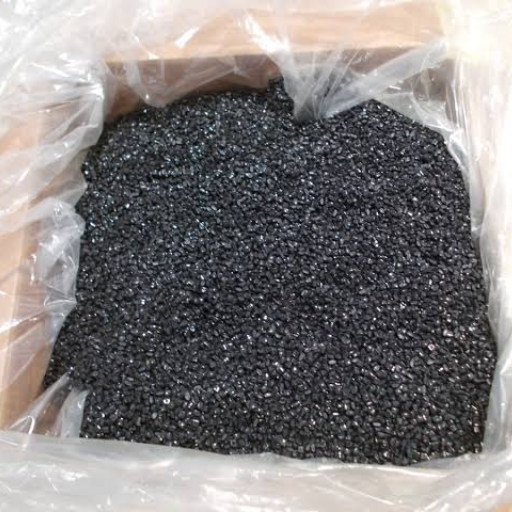
Selecting the wrong PC grade is the single most common procurement mistake in engineering plastics. Here is every major grade category with its distinguishing characteristics and typical applications.
General Purpose PC
General purpose grades offer the standard PC property set: high impact strength, transparency, and good heat resistance. They suit housings, appliance parts, and consumer goods where no special certification or extreme environment applies. Common examples include Makrolon 2805 and LEXAN 141R. Melt flow index (MFI) typically ranges from 5 to 20 grams per 10 minutes, tested at 300 degrees Celsius under a 1.2 kilogram load.
Flame-Retardant Grades (UL94 V-0)
Flame-retardant PC pellets meet UL94 V-0 or 5VA ratings at wall thicknesses as thin as 1.5 millimeters. These grades are essential for electronics enclosures, electrical connectors, 5G base station components, and EV battery module housings. Halogen-free formulations like Makrolon 6555 and LEXAN 945 meet environmental compliance requirements without sacrificing flame performance. The electrical and electronics sector consumes 40 percent of global PC production, making this the largest single application segment.
Optical and Medical Grades
Optical-grade PC achieves 90 percent light transmission with low haze. These transparent plastic pellets are used for LED secondary optics, automotive headlamp lenses, and display covers. Makrolon LED5402 and LEXAN SLX2471T are widely specified for lighting applications.
Medical-grade PC carries ISO 10993 biocompatibility certification and USP Class VI rating. It withstands sterilization by steam autoclave at 121 degrees Celsius, gamma radiation, and ethylene oxide gas. Makrolon Rx series and LEXAN Healthcare grades serve surgical instruments, IV connectors, and diagnostic equipment housings. These grades command a 30 to 70 percent price premium over general purpose PC.
Glass-Fiber Reinforced PC
Adding 10 to 30 percent glass fiber to the PC matrix increases tensile strength by 30 to 60 percent, raises HDT to 140 to 155 degrees Celsius, and improves dimensional stability. The trade-off is reduced impact strength and complete loss of transparency. GF-reinforced PC pellets replace metal in structural brackets, machinery housings, and precision fixtures where the weight savings justify the material cost.
UV-Stabilized and Weather-Resistant Grades
UV-stabilized PC incorporates additives that slow photodegradation and yellowing. These grades are specified for outdoor lighting fixtures, traffic signals, architectural panels, and automotive exterior trim. Makrolon 2407 and LEXAN SLX series are common starting points for weatherable applications.
PC/ABS Blends
Beyond pure PC grades, PC/ABS blends combine polycarbonate’s impact resistance with ABS’s processability and chemical resistance. These blends are widely used in automotive interior components, electronics housings, and appliance panels. While PC/ABS sacrifices optical clarity entirely, it offers easier flow for thin-wall molding and better resistance to certain chemicals than unmodified PC. For manufacturers who need toughness plus cost efficiency and do not require transparency, PC/ABS represents a practical middle ground between pure PC and commodity ABS.
Recycled and Sustainable PC Grades
Post-consumer recycled (PCR) PC pellets reduce carbon footprint by 70 to 80 percent compared to virgin resin, producing 1.0 to 1.5 kilograms of CO2 equivalent per kilogram versus 5.0 to 6.0 for virgin production. Recycled PC costs 10 to 25 percent less than virgin but typically shows slightly lower impact strength and a faint yellow or gray tint. Mass-balanced certified-circular grades from Covestro and SABIC offer virgin-equivalent properties through chemical recycling, increasingly driven by regulatory requirements like the EU’s REACH restrictions and the BPA ban in food contact materials that takes full effect in July 2026.
Consider Liu Yang, a sourcing manager at a German-owned electronics plant in Suzhou. He switched from 100 percent virgin Makrolon 2805 to a 70/30 virgin-to-PCR blend for internal structural brackets. The material cost dropped 18 percent without affecting moldability or mechanical performance. His only requirement: the supplier had to provide batch-level COA documentation proving the recycled content percentage and MFI consistency. He found the right supplier. Not every buyer asks for that documentation. The ones who do get better material.
Polycarbonate Pellets Applications Across Industries
Automotive and Electric Vehicle Components
Polycarbonate is replacing glass in automotive glazing, panoramic roof panels, and headlamp lenses. The weight savings improve fuel efficiency and EV range. A panoramic PC roof panel weighs roughly half what a glass equivalent weighs while providing superior impact protection. Under the hood, flame-retardant and heat-stabilized PC grades serve in connectors, sensor housings, and battery module components. The automotive segment is the fastest-growing PC application, driven directly by the global shift to electric vehicles.
Electronics and 5G Infrastructure
Polycarbonate pellets go into device housings, chargers, power strips, routers, and telecom enclosures. 5G base station deployment across Asia, Europe, and North America has created new demand for weather-resistant, flame-retardant PC grades that maintain signal transparency. Singapore alone increased its Chinese PC pellet imports by 68 percent year over year in the first half of 2025, largely driven by electronics manufacturing expansion.
Medical Devices and Healthcare
Medical-grade PC serves single-use surgical devices, IV components, respiratory equipment, and diagnostic housings.
Construction and Consumer Goods
Multi-wall PC sheets provide lightweight, impact-resistant glazing for greenhouses, stadium roofs, and skylights. In consumer goods, PC pellets become safety eyewear, reusable water bottles, kitchen appliance housings, and protective helmets. The versatility of the base material is why the global PC pellets market, valued at roughly $5 billion in 2025, is projected to reach $6.85 billion by 2032.
Looking for polycarbonate pellets for a specific application? Browse our engineering plastics range to find the right grade for automotive, electronics, medical, or construction use.
Virgin vs. Recycled Polycarbonate Pellets
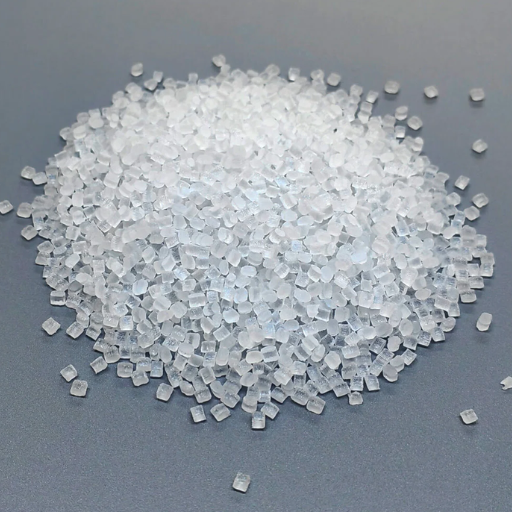
The decision between virgin polycarbonate pellets and recycled alternatives directly affects product quality, production consistency, and per-unit cost. For a detailed comparison, see our guide to virgin vs. recycled plastic pellets.
Performance Comparison
Research comparing 50 and 75 percent PCR content PC against virgin resin found comparable tensile strength, with values clustering around 65 to 71 MPa across all grades. Rheological properties also tracked closely, meaning processors can run recycled PC on the same equipment with similar parameters. The primary performance gap is impact resistance. Recycled PC typically shows 10 to 30 percent lower notched Izod values due to polymer chain scission during prior thermal processing. Optical clarity is the second meaningful difference. Recycled PC almost always carries a slight yellow or gray cast that disqualifies it from lens and display applications.
Cost and Carbon Footprint
Virgin PC pellets cost approximately $2.30 to $3.00 per kilogram for general-purpose grades. Recycled PC runs 10 to 25 percent below those figures. Specialty grades, flame-retardant, optical, and medical, add $4.00 to $8.00 per kilogram across the board. The sustainability calculation is straightforward: recycled PC generates roughly 1.0 to 1.5 kilograms of CO2 equivalent per kilogram compared to 5.0 to 6.0 for virgin production. For manufacturers with corporate carbon reduction targets, PCR content accelerates progress toward those goals.
Selection Guidance
Virgin PC is non-negotiable for optical applications requiring perfect clarity, medical devices requiring biocompatibility certification, safety-critical components like machine guards or bullet-resistant glazing, and any application with long-term outdoor UV exposure. Recycled PC works well for internal structural brackets, non-critical housings in dark colors, industrial components where aesthetics are secondary, and as a core layer in co-extruded sheets sandwiched between virgin outer layers.
The pragmatic approach is often a blend. A 30 percent PCR content ratio preserves most mechanical properties while capturing meaningful cost and carbon savings. The key is verifying the blend ratio through supplier documentation.
Polycarbonate Pellets Processing Guide
Proper plastic pellets for injection molding require strict process control. The most expensive polycarbonate injection molding pellets in the world produce scrap if processed incorrectly. Here are the control points that separate consistent production from costly troubleshooting. To learn more about Plastic Pellets for Injection Molding: A Complete Selection & Sourcing Guide, please click to view our accompanying guide.
Drying: Why Moisture Is the Number One Cause of Defects
Polycarbonate is hygroscopic. It absorbs moisture from ambient air. When undried pellets enter the barrel, that water turns to steam during melting, creating bubbles, silver streaks, splay marks, and voids in finished parts. More critically, moisture causes hydrolytic degradation that permanently reduces molecular weight. You cannot re-dry degraded pellets. The damage is irreversible. This is why polycarbonate injection molding pellets demand stricter drying protocols than most commodity resins.
Drying protocol: 120 degrees Celsius for 4 hours in a desiccant dryer with a dew point below minus 29 degrees Celsius. Target moisture content below 0.02 percent by weight. If your shop runs PC infrequently, verify dryer function with a dew point meter before loading material. A dryer that reaches the right temperature but has saturated desiccant will not dry the pellets. This is one of the most common hidden causes of PC processing defects.
Injection Molding Parameters
Melt temperature should stay within 260 to 310 degrees Celsius across barrel zones. Mold temperature should be 80 to 120 degrees Celsius, higher than most commodity plastics, using pressurized water or oil temperature controllers. Higher mold temperatures improve surface finish, dimensional stability, and reduce molded-in stress. Do not exceed 320 degrees Celsius melt temperature. Above that threshold, PC begins degrading even without moisture present.
If regrind is used, limit it to 15 percent maximum and extend drying time by 1 to 2 hours. Optical and medical grades use zero regrind. Screw speed should stay under 80 RPM. Injection speed should be slow to moderate. Fast injection shears the melt excessively, creating birefringence in clear parts and weak weld lines.
Common Processing Defects and Solutions
| Defect | Likely Cause | Solution |
|---|---|---|
| Bubbles or splay marks | Insufficient drying or wet material | Dry at 120 degrees Celsius for 4 hours; verify dryer dew point |
| Brown streaks or black specks | Thermal degradation from excessive residence time or temperature | Reduce melt temperature; purge barrel; verify residence time within limits |
| Brittle parts or low impact | Moisture-induced molecular weight loss | Improve drying protocol; check regrind percentage and quality |
| Surface cloudiness or haze | Mold temperature too low | Raise mold temperature to 80 to 120 degrees Celsius |
| Warpage or dimensional variation | Non-uniform cooling or excessive molded-in stress | Optimize cooling circuit design; raise mold temperature |
| Weld line weakness | Melt temperature too low or injection speed too slow | Increase melt temperature within grade limits; increase injection speed at weld line position |
| Yellowing or discoloration | Overheating or contaminated regrind | Reduce melt temperature; verify regrind source and purity |
When Maria Torres, a process engineer at a Texas injection molding plant, started seeing random surface cloudiness on clear PC medical device housings, her team checked the dryer temperature, barrel settings, and mold temperature. Everything matched the setup sheet. The issue turned out to be their second dryer. The desiccant wheel had not been replaced in 18 months. It read the right temperature, but it was not removing moisture. They replaced the desiccant, ran the same pellets through proper drying, and the cloudiness disappeared. The material was never the problem. The drying was.
How to Choose the Right Polycarbonate Pellets Supplier
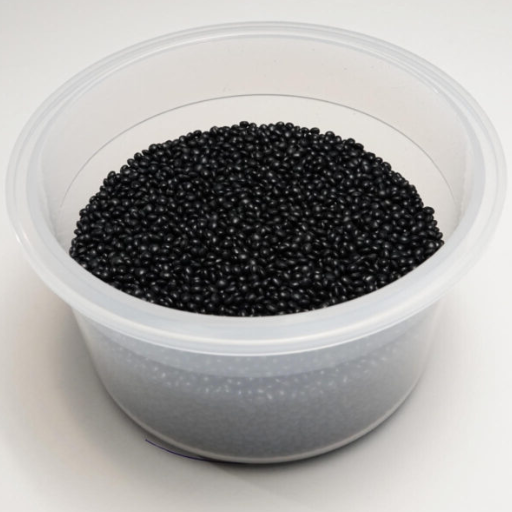
A reliable PC resin pellets supplier does more than ship material. They provide documentation, consistency, and support that protect your production line from surprises.
Certifications to Verify
Different industries require different certifications. For automotive applications, verify IATF 16949 and PPAP documentation capability. For medical devices, ISO 13485 and material-specific biocompatibility certifications (ISO 10993, USP Class VI). For electronics, UL recognition on the specific grade you are buying. For EU exports, REACH and RoHS compliance. For food contact, FDA 21 CFR 177.1580. For recycled content claims, GRS (Global Recycled Standard) certification. ISO 9001 is the baseline. It tells you the supplier has a quality management system. It does not tell you whether that system produces consistent PC pellets.
Quality Verification Checklist
Every shipment of polycarbonate pellets should arrive with a Certificate of Analysis (COA) from the manufacturer, listing the exact grade name, lot number, MFI value, density, tensile and impact strength, Vicat softening temperature, and HDT. The COA must trace back to the manufacturer’s quality lab, not the distributor’s. Before committing to volume orders, request a 1 to 2 kilogram sample from the actual production lot and test it on your equipment. For critical applications, send a sample to an independent lab for MFI, impact, and contamination analysis. Run a trial production lot before placing a container order. These steps cost time and money up front. Discovering a problem after a container of material arrives costs more.
Red Flags When Sourcing PC Pellets
Prices significantly below the market range of $2.30 to $3.00 per kilogram for standard virgin PC. COAs issued by a distributor instead of the manufacturer. Vague grade descriptions like “Optical PC” or “Electronic Grade PC” without a specific brand and grade number like Makrolon 2805 or LEXAN 945. Suppliers unwilling to provide a trial sample from the exact lot you are purchasing. Missing or incomplete lot traceability. Any supplier who refuses documentation requests is hiding something. Move on.
Polycarbonate Pellets Pricing and Market Trends
Current Price Ranges
As of mid-2025, general-purpose virgin polycarbonate pellets trade between $2.30 and $3.00 per kilogram FOB China. Glass-fiber reinforced grades add $0.50 to $1.50 per kilogram depending on glass content. Flame-retardant grades range from $3.50 to $6.00. Optical and medical grades run $4.00 to $8.00. Recycled PC pellets price 10 to 25 percent below comparable virgin grades. These are approximate ranges. Actual pricing depends on grade, volume, contract terms, and current BPA feedstock costs.
China’s H1 2025 PC exports totaled $636 million, up 17.9 percent year over year, with an average export price of $2.26 per kilogram. The price declined 1.2 percent year over year as domestic capacity expansion outpaced demand growth, pushing producers toward export markets.
China’s Role in the Global PC Supply Chain
China produces 58 percent of the world’s polycarbonate, with major production clusters in Shanghai, Guangdong, Shandong, Zhejiang, and Jiangsu. Vietnamese buyers purchased $120 million of Chinese PC in the first half of 2025. Europe imported $64 million, up 45 percent year over year. Singapore’s imports surged 68 percent, driven by electronics manufacturing and the China-Singapore Free Trade Agreement upgrade that took effect in December 2024.
For global buyers, sourcing PC pellets from China offers cost advantages and broad grade availability. The trade-off is longer lead times, 20 to 35 days for sea freight to North America or Europe, and the need for rigorous supplier verification. Reputable Chinese suppliers like Suzhou Yifuhui provide manufacturer-issued COAs, batch traceability, and pre-shipment sample availability that help buyers manage sourcing risk.
Key Industry Trends
The EU BPA ban in food contact materials, effective January 2025 with full transition by July 2026, is reshaping grade selection for packaging and food-contact applications. The automotive industry’s shift to EVs continues driving demand for lightweight, flame-retardant, and thermally stable PC grades. Sustainability initiatives push adoption of PCR and mass-balanced circular PC grades. Asia-Pacific remains the dominant production and consumption region, but Europe is the fastest-growing export market for Chinese PC, up 45 percent year over year in H1 2025.
Polycarbonate Pellets FAQ
What is the difference between polycarbonate pellets and granules?
For procurement purposes, none. The terms are used interchangeably across the industry. Both refer to the small resin pieces used as molding feedstock. Some suppliers use “pellets” for uniformly cylindrical material from virgin production and “granules” for irregularly shaped material from recycling. In practice, the terms describe the same product category.
How much do polycarbonate pellets cost?
General-purpose virgin PC pellets cost $2.30 to $3.00 per kilogram. Flame-retardant grades run $3.50 to $6.00. Optical and medical grades reach $4.00 to $8.00. Recycled PC costs 10 to 25 percent less than comparable virgin grades.
How should polycarbonate pellets be stored?
Store sealed in a cool, dry environment below 30 degrees Celsius with relative humidity under 50 percent. Keep bags closed when not in use. PC absorbs ambient moisture and must be dried before processing even if stored properly. Inspect packaging integrity on receipt. Torn or unsealed bags may indicate pre-saturated material.
Can polycarbonate pellets be recycled?
Yes. PC is mechanically recyclable through specialized facilities. Recycled PC retains roughly 85 to 90 percent of virgin mechanical properties but typically has slightly lower impact strength and a faint color cast. Chemical recycling processes from major producers now produce virgin-equivalent circular grades.
What is the difference between Makrolon and Lexan?
Both are polycarbonate. Makrolon is Covestro’s brand. LEXAN is SABIC’s brand. The base polymer chemistry and core properties are comparable across equivalent grades. Differences lie in specific formulations, additive packages, and regional availability rather than fundamental material properties.
Why do my molded PC parts have bubbles or surface defects?
Undried pellets. Moisture in the material turns to steam during melting. Dry pellets at 120 degrees Celsius for 4 hours in a properly functioning desiccant dryer with a dew point below minus 29 degrees Celsius.
Conclusion
Polycarbonate pellets are one of the most versatile materials in modern manufacturing. They combine impact strength, optical clarity, and heat resistance in ways no other engineering thermoplastic matches. This versatility also creates complexity. With dozens of grades covering general purpose, flame-retardant, optical, medical, reinforced, UV-stabilized, and recycled formulations, choosing the right PC pellets requires matching grade characteristics to application requirements.
Three principles guide every successful polycarbonate pellet procurement decision. First, specify by grade, not by generic material name. “General purpose PC” is not a specification. Makrolon 2805 with a manufacturer COA and lot traceability is. Second, process correctly. Drying before molding is not optional. Moisture kills PC properties permanently. Third, verify supplier quality. A price below $2.30 per kilogram for virgin PC is not a deal. It is a warning sign. Demand certificates, test samples, and check batch documentation before committing to volume.
Suzhou Yifuhui New Material Co., Ltd. supplies virgin and specialty-grade polycarbonate pellets to manufacturers across automotive, electronics, medical, and industrial sectors. We maintain rigorous quality control on every batch we ship. Our team provides the technical data, lot-specific COAs, and pre-shipment samples you need to make confident sourcing decisions.
Contact our engineering team today for a custom quote on polycarbonate pellets matched to your application and processing requirements.