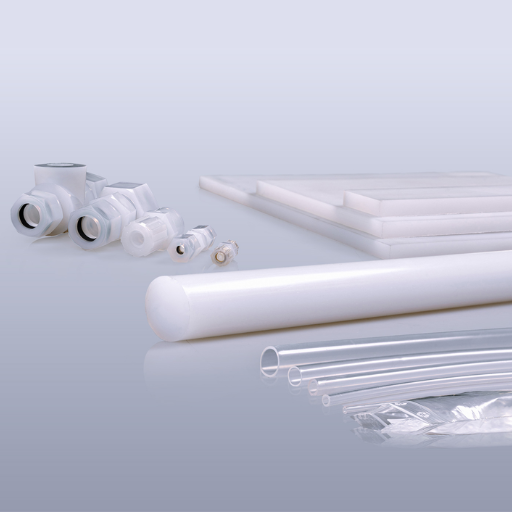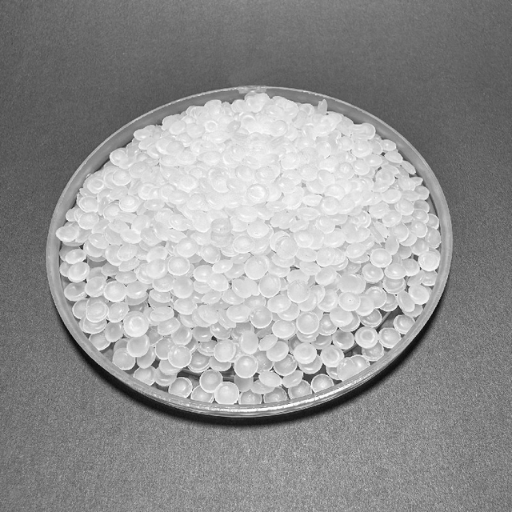
A PFA resin purchase goes wrong in a quiet way. The part comes out of the mold with a hairline crack along a thin wall, or a liner fails at a flange after six months in service, and nobody blames the grade. They blame the machine.
Daniel, a procurement lead at a small medical tubing extruder, learned this the expensive way in early 2026. He needed PFA fast, found a general-purpose grade at a good price per kilogram, and placed a 500 kg order. The tubing extruded fine, and then his customer ran a stress test at temperature. The finished assemblies failed at the joints.
The resin he bought had a melt flow rate of 14, which is built for fast, thin-wall work, not for the thick, high-stress section his customer needed. His cheaper resin cost his company a rejected production run and a requalification cycle that erased any saving.
The lesson isn’t that Daniel bought bad material. It’s that “PFA resin” is a family, not a single product. The grade numbers on the box, 340, 440, 450, AP-231SH, P-63P, decide how the resin flows, how it resists cracking, and what it costs. We stock PFA resin from more than one brand, so this guide tells you which grade your process actually needs, including the times when the cheaper grade is the right answer.
By the end, you will know how to read a PFA resin grade table, which melt flow rate your process requires, and how to tell whether you need a high-purity grade at all.
What Is PFA Resin?
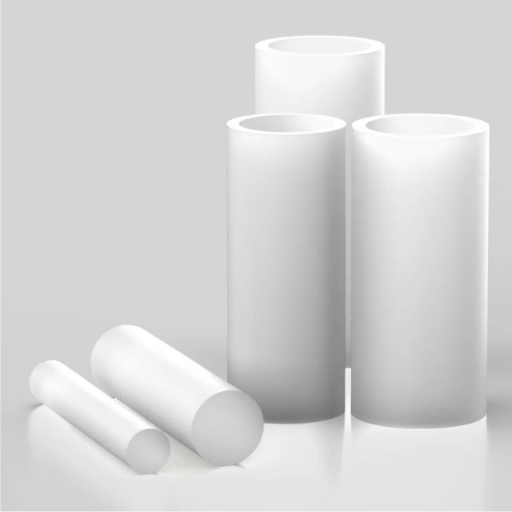
PFA resin is a melt-processable fluoropolymer, a copolymer of tetrafluoroethylene and a perfluoroalkyl vinyl ether. It behaves like PTFE in service but, unlike PTFE, it can be extruded and injection molded like a conventional thermoplastic.
The short answer
PFA resin is a perfluoroalkoxy fluoropolymer supplied as pellets, powder, or dispersion. It offers PTFE-level chemical and heat resistance, a continuous service temperature up to 260 °C, and the ability to be melt-processed by extrusion and injection molding. Grade numbers mostly describe the melt flow rate and the purity class.
If you want the full material background first, our guide to what PFA is and where it is used walks through the chemistry and the applications.
What “grade” actually means
This is where most buyers get stuck, because the word “grade” describes three different things at once. PFA resin grades differ by:
- Purity class. General-purpose (GP) versus high-purity and ultra-high-purity (UHP) grades. UHP grades cut extractables and fluoride ion release for semiconductor and pharmaceutical fluid handling.
- Melt flow rate (MFR). The process grade. Low MFR for linings and stress-crack resistance, high MFR for thin-wall molding and fine wire.
- Brand family. Chemours numbers them 340, 440, 450, and 451HP. Daikin uses names like Neoflon AP-231SH. AGC uses P-63P and P-65P.
When someone searches for a PFA resin grade, they usually mean one of these three axes without realizing it. Naming the axis is the first step to choosing correctly.
The PFA Resin Grade Table
Here is the cross-manufacturer comparison that no single datasheet will give you. All MFR values are stated at standard test conditions (typically 372 °C and 5 kg load; the reference standards are ASTM D3307 and D1238). For Chemours’ own published figures, see the official Teflon PFA resin range.
| Manufacturer | Grade | MFR (g/10 min) | Process | Typical application |
|---|---|---|---|---|
| Chemours (Teflon) | PFA 340 | 14 | Injection, extrusion | General purpose: tubing, fittings, wire coating |
| Chemours (Teflon) | PFA 440HP | 14 to 16 | Injection, extrusion | High-purity fittings, tubing, wafer carriers |
| Chemours (Teflon) | PFA 450HP | 2 | Extrusion, transfer | Linings, hoses, heat-shrink tubing |
| Chemours (Teflon) | PFA 451HP | 2 | Extrusion, transfer | “Super PFA”: smooth surface, low permeability |
| Chemours (Teflon) | PFA 350 | Low | Extrusion, blow molding | Pipe, tube, film, molded parts |
| Chemours (Teflon) | PFA 951HP Plus | ~2 | Extrusion, transfer | Lowest extractables, ultra-high purity |
| Daikin (Neoflon) | PFA AP-231SH | 1.5 to 2.5 | Extrusion, transfer, compression | UHP semiconductor tubing and linings |
| AGC (Fluon) | P-66P | 1 to 3 | Extrusion, transfer, compression | Best stress-crack resistance |
| AGC (Fluon) | P-65P | 3 to 7 | Extrusion, injection | Better stress-crack resistance than P-63P |
| AGC (Fluon) | P-63P | 7 to 18 | Extrusion, injection | General purpose |
| AGC (Fluon) | P-62XP | 24 to 36 | Extrusion, injection | High-flow, thin sections |
| Solvay (Hyflon) | P450 | 10 to 17 | Extrusion, injection | Cable extrusion, jacketing |
| 3M (Dyneon) | 6515UHpZ | 15 (melt index) | Injection | UHP semiconductor components |
How to read this table: the melt flow rate is the master variable. Everything else, purity and brand, modifies it. Find the MFR band your process needs in the next section, then pick the grade inside that band.
Want the technical data sheet for the grades we stock most? Our Teflon PFA 340 resin page lists properties and pricing, and the full PFA fluoropolymer range covers our second brand as well.
Teflon PFA 340: the general-purpose workhorse
Teflon PFA 340 has an MFR of 14, which makes it the easiest of the family to process. It melts at about 305 °C, has a specific gravity of 2.15, a tensile strength of 25 MPa at 23 °C, and an elongation of 300%.
Reach for 340 when you’re running general tubing, fittings, and wire coating, and when you don’t need semiconductor-level purity. It is the pragmatic default and the grade most buyers should start from.
Teflon PFA 440HP and 450HP / 451HP: the high-purity family
The 400 series trades processability for purity and stress-crack resistance.
440HP keeps a high MFR (14 to 16) but raises purity. It suits wafer carriers, fittings, and tubing where contamination control matters but you still want good flow.
450HP drops the MFR to 2. That lower flow is not a defect; it is the point. Low MFR means higher molecular weight and much better resistance to environmental stress cracking, which is what a chemical liner needs. Use it for linings, hoses, and heat-shrink tubing.
451HP is the premium “Super PFA” grade. It is a PTFE-filled resin with improved surface smoothness, lower permeability, and the highest tensile strength of the family at 33 MPa. Grade selection here is about surface quality and barrier performance, not just flow.
Daikin Neoflon AP-231SH: the UHP semiconductor grade we stock
Daikin PFA AP-231SH is the grade to know if you supply semiconductor fluid handling. It has an MFR of 1.5 to 2.5, a melting point of about 304 °C, and tensile strength above 30 MPa. What sets it apart is its fully fluorinated end groups, which reduce fluoride ion release, and its position as one of the best stress-crack-resistant PFA resins available.
It is specified for ultrapure water lines, chemical delivery tubing, and valve linings, and the SEMI F57-approved versions are produced and packaged in cleanroom conditions. We supply Neoflon PFA AP-231SH for exactly these applications.
Do not overlook the Chinese producers
Teflon and Neoflon are not the only options. Everflon numbers its grades 403 through 430 by MFR band, with a GC-series for high purity and a C-series for static-dissipative parts. Juhua and Dongyue now supply domestic general-grade PFA at prices well below the imported brands.
For non-semiconductor applications, a domestic grade can cut material cost without hurting performance. We will tell you honestly when it fits.
How to Choose a PFA Resin Grade
Four decisions, in order. Get the first one right and the rest usually fall into place.
Step 1: Start with melt flow rate
MFR is an indicator of molecular weight, and it decides both how the resin processes and how it performs in service.
- Low MFR (1 to 5 g/10 min): highest melt strength and the best environmental stress-crack resistance. Use for pipe and vessel linings, diaphragms, and any thick, high-stress section. Processed mainly by extrusion and transfer or compression molding.
- Medium MFR (6 to 18 g/10 min): the balanced band. Use for tubing, cable jacketing, and general extrusion and injection molding.
- High MFR (20 to 36 g/10 min): the best flow for thin walls and small, intricate parts. Use for fine-wire insulation and high-speed, thin-wall injection molding.
A practical note on processing: keep the melt temperature inside the grade’s window, and don’t push past roughly 420 °C. Above about 399 °C, PFA can release fumes, so provide local exhaust ventilation at the die and nozzle.
Step 2: Decide whether you need high purity
This is where money is wasted, in both directions. A general-purpose grade in a semiconductor wet line will fail on extractables. A UHP grade on a garden hose fitting is an over-spec that inflates your cost with no return.
“High purity” is not a marketing label. It maps to standards you can specify: SEMI F57 for ultrapure fluid handling components and SEMI C90 for liquid chemical handling. If your application does not sit behind one of those standards, ask what the purity is buying you before you pay for it.
Step 3: Match the form and process
PFA resin ships as pellets, powder, dispersion, and film, and the form is set by your process. Extrusion and injection molding take pellets. Rotolining and rotomolding take free-flowing powder, and coatings take dispersions. Confirm the form before you compare prices, because a pellet quote is not comparable to a powder quote.
Step 4: Choose a brand and a supplier
Priya, a process engineer at a semiconductor components maker, used to specify by brand reflexively, always the same imported grade. When a shortage pushed lead times past 20 weeks, she tested a second source against her SEMI F57 requirements. It passed, and her line kept running. Brand matters, but so does having a supplier who can offer a qualified alternative when one grade goes on allocation.
Tell us your process, your maximum service temperature, and your purity requirement, and we will recommend the grade that fits. We stock both Teflon PFA 340 and Neoflon AP-231SH, so our recommendation is not tied to a single brand. Request a quote →
PFA Resin Properties by Grade
Grade selection changes processability and, at the margins, mechanical performance. It barely touches the core properties.
| Property | Typical value | Notes |
|---|---|---|
| Melting point | 300 to 310 °C | Roughly constant across grades |
| Continuous service temperature | 260 °C | Common to all grades |
| Specific gravity | 2.12 to 2.15 | Varies slightly by grade |
| Tensile strength at 23 °C | 25 to 33 MPa | 451HP highest, 340 lowest |
| Tensile strength at 250 °C | 12 to 18 MPa | 451HP highest |
| Elongation at 23 °C | 300 to 360% | 451HP highest |
| Water absorption | < 0.03% | Negligible across grades |
| Dielectric strength | ~80 kV/mm | Roughly constant |
For the full property set, including values as a function of temperature, see our deep-dive on PFA material properties. For chemical compatibility, the PFA chemical resistance chart lists the media PFA handles and the two it does not: molten alkali metals and reactive fluorinating agents.
What PFA Resin Costs, and Why Grade Changes the Price
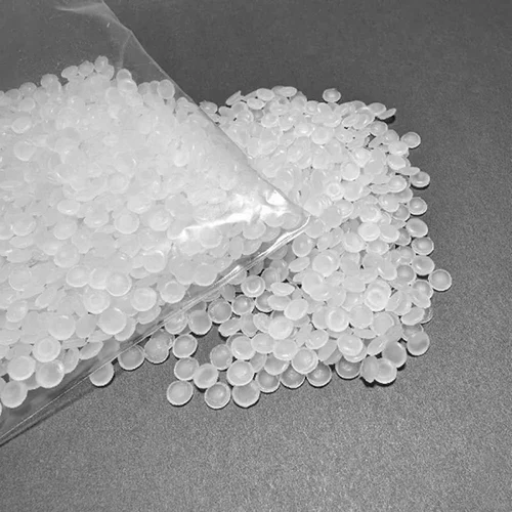
PFA resin is one of the most expensive engineering polymers you can buy, and the spread between grades is wide. The figures below are indicative 2026 market ranges, not quotes; treat them as planning bands.
- Domestic general grade: roughly 75 to 90 RMB per kg
- Domestic high-end, non-high-purity: roughly 155 to 205 RMB per kg
- Domestic high-purity: roughly 280 to 350 RMB per kg
- Imported high-purity and semiconductor grade: roughly 600 to 800 RMB per kg
Domestic fluoroplastics rose 15 to 20% in March 2026 on feedstock costs and strong semiconductor demand, so build a buffer into any long-term budget.
Total cost of ownership, not just price per kilogram
The cheapest grade is rarely the cheapest part. Daniel’s stress-test failure was a materials-price saving that turned into a rejected run. When you compare grades, add up the real numbers:
- Rejection rate at your process conditions
- Service life in the field, where a stress-crack failure costs far more than a price premium
- Lead time and minimum order quantity, especially if one grade is on allocation
- Requalification cost if a substitution later forces a re-test
A grade that costs 20% more per kilogram and cuts your rejection rate in half is the cheaper choice.
Does the PFAS Restriction Affect PFA Resin?
This question is on every buyer’s mind in 2026, so here is the accurate picture. PFA, like PTFE, is a fluoropolymer inside the scope of the EU’s universal PFAS restriction proposal.
The timeline to know:
- 13 January 2023: the restriction proposal was submitted to ECHA by five European states. Its scope covers all PFAS, including fluoropolymers.
- 2 March 2026: ECHA’s Risk Assessment Committee adopted its final opinion.
- 10 March 2026: SEAC agreed its draft opinion; both were published on 26 March, with a consultation that closed on 25 May 2026.
- End of 2026 (tentative): SEAC is expected to adopt its final opinion. Only then does a Commission proposal and a REACH Committee vote follow, with adoption from 2027.
- Semiconductors: a temporary derogation of up to roughly 13.5 years after entry into force has been discussed.
- Supply side: 3M has been exiting PFAS manufacturing, targeting the end of 2025.
The key point: no final EU restriction has been adopted, and no 2026 compliance deadline currently applies to PFA resin. If a supplier tells you PFA is being banned next year, that isn’t accurate. The sensible move is to document your PFA use, keep your requalification options open, and avoid single-sourcing a critical grade.
Frequently Asked Questions
What is PFA resin used for?
PFA resin is used for high-purity fluid handling, chemical process linings, semiconductor tubing and fittings, wire and cable insulation, and any application needing chemical resistance at temperatures up to 260 °C.
What is the difference between PFA 340, 440, and 450?
The number mostly encodes melt flow rate and purity. PFA 340 has a high MFR of 14 for general-purpose work. PFA 440HP is a high-purity grade with a similar MFR. PFA 450HP and 451HP drop to an MFR of 2 for linings and maximum stress-crack resistance.
Is Teflon PFA the same as PFA resin?
Teflon is Chemours’ brand name for its PFA resin. All Teflon PFA is PFA resin, but not all PFA resin is Teflon. Daikin Neoflon and AGC Fluon are equivalent PFA resins under different brands.
Which PFA grade is best for injection molding?
Choose a high MFR grade, roughly 14 to 36 g/10 min. Teflon PFA 340 (MFR 14) suits general injection molding, and AGC P-62XP (MFR 24 to 36) suits thin, intricate parts.
Which PFA grade is best for semiconductor tubing?
An ultra-high-purity, low-MFR grade. Daikin Neoflon AP-231SH (MFR 1.5 to 2.5, SEMI F57) is specified for semiconductor chemical delivery tubing and linings.
Is PFA resin food safe?
Food-contact compliance is grade-dependent, not automatic. Confirm that your specific grade is processed to meet the relevant FDA regulation before specifying it for food contact.
What is the difference between PFA resin and PTFE?
Both are fluoropolymers with similar chemical and thermal resistance. The difference is processability: PTFE is sintered and machined, while PFA is melt-processed, so PFA can be extruded, injection molded, and welded. We compare them directly in PFA vs PTFE.
Choosing the Right PFA Resin Grade
PFA resin grade selection comes down to a short list of decisions, and getting the order right saves money at every step.
- Melt flow rate first. Low MFR (1 to 5) for linings and stress-crack resistance, medium (6 to 18) for tubing and cable, high (20 to 36) for thin-wall molding and fine wire.
- Purity second, and only when a standard requires it. Specify SEMI F57 or SEMI C90 when your application sits behind one. Don’t pay for purity you can’t use.
- Brand third. Chemours, Daikin, AGC, Solvay, and 3M each make good PFA. So do Chinese producers, at lower cost, for non-semiconductor work.
- Then the supplier. On a grade like PFA, allocation and lead time matter as much as price, and a supplier who stocks more than one brand gives you a fallback.
Daniel’s fix, the second time around, took an afternoon of questions. He confirmed his maximum service temperature, checked the section thickness, and matched both to a lower-MFR grade. The rejected runs stopped.
If you tell us your process, your temperature limit, and your purity requirement, we will point you to the grade that fits and quote it, whether that is Teflon PFA 340, Neoflon AP-231SH, or a domestic grade that does the same job for less. Our team responds to every technical inquiry within 24 hours.