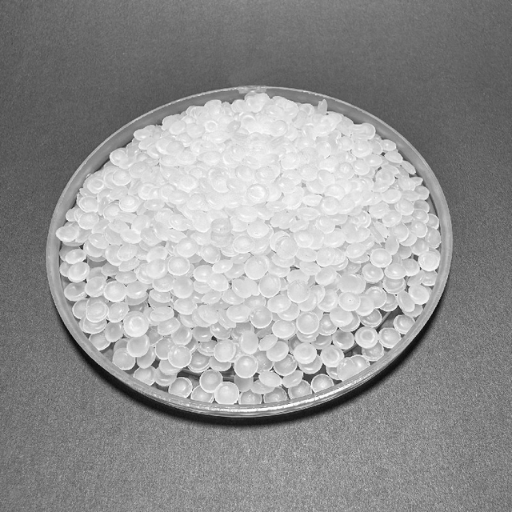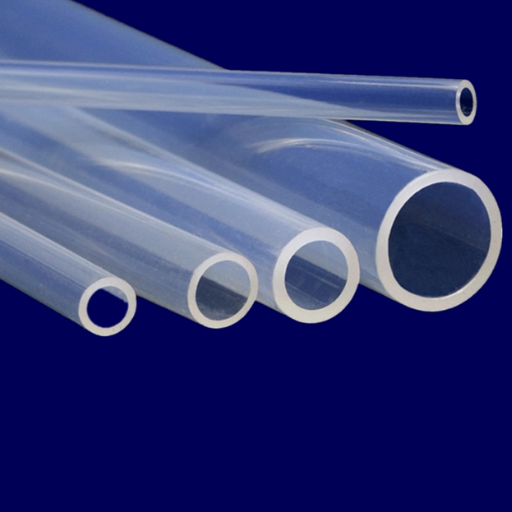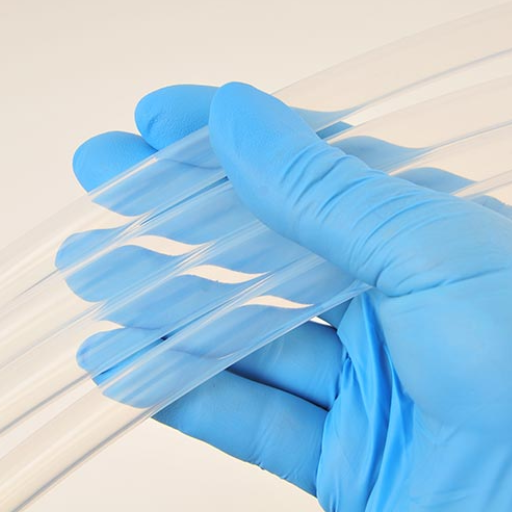
Every transparent lens, headlamp, and EV battery housing begins with the same decision: which polycarbonate pellet you load into the injection molding machine.
Last spring, Zhao Min, a production manager at a Ningbo lighting factory, learned this the hard way. Her team had just won a contract to mold diffuser lenses from polycarbonate pellets for injection molding.
The first shift ran beautifully. By the third shift, silver streaks covered nearly every part. Her reject rate hit 34% in a single week.
The pellets had sat in an open hopper overnight. Polycarbonate is hygroscopic, and Ningbo’s coastal humidity did the rest. Two days of production became scrap before anyone checked the moisture content.
Polycarbonate is one of the most demanding engineering thermoplastics to mold. It absorbs moisture aggressively, tolerates a narrow processing window, and punishes process shortcuts with visible defects. But when you select the right grade and dry it properly, it delivers impact resistance, optical clarity, and heat tolerance that few materials match.
This guide covers everything you need to run polycarbonate successfully: grade selection for injection molding, processing parameters, design guidelines, defect troubleshooting, and how to verify the quality of the pellets you receive.
You’ll get the exact numbers your process engineer needs and the sourcing framework your procurement team wants. No vague advice. Just the pellet-level facts that keep your production line running.
What Are Polycarbonate Pellets for Injection Molding?
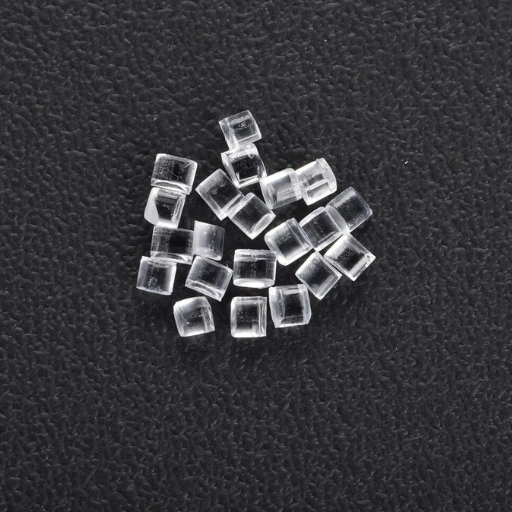
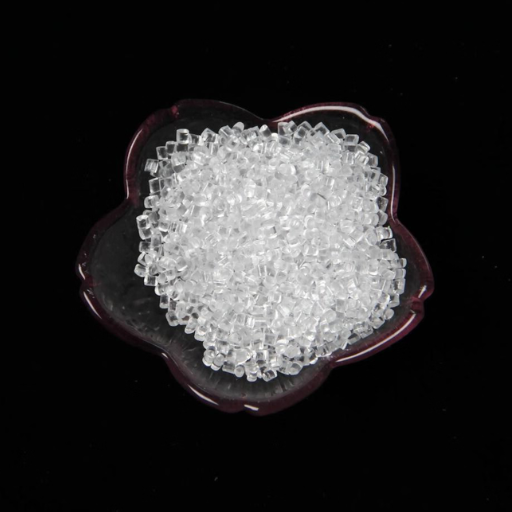
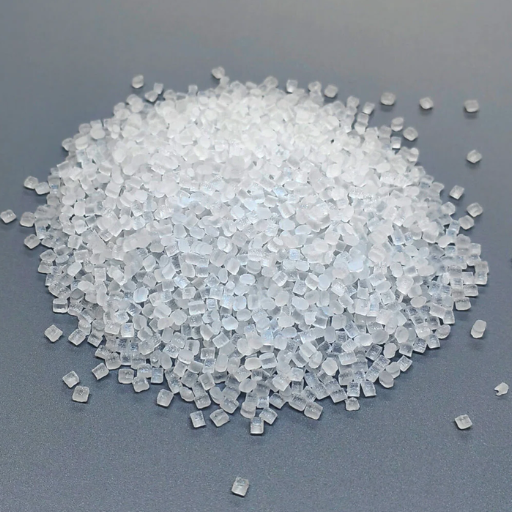
Polycarbonate pellets for injection molding, also called polycarbonate granules for injection molding, are cylindrical granules of amorphous polycarbonate resin, a transparent engineering thermoplastic known for high impact strength, optical clarity, and heat resistance. Injection molders melt these pellets in a barrel and inject them under pressure into a mold cavity to form finished parts.
The pellet form matters more than most buyers realize. Uniform, dust-free pellets feed consistently through the machine hopper, melt evenly across the barrel zones, and dose precisely shot after shot. Powder or flake feedstock can bridge in the hopper, trap air, and produce inconsistent parts.
Polycarbonate is a polyester of carbonic acid and bisphenol A. Its rigid aromatic rings and flexible carbonate groups give it a rare combination of toughness and transparency. Transparent grades transmit roughly 85 to 90 percent of visible light. Standard grades absorb about 250 times the impact energy of glass at half the weight.
These properties make PC the default choice for safety glazing, automotive lighting, electronics housings, and medical devices. For a full overview of the material and its broader applications, see our complete polycarbonate pellets guide.
Polycarbonate Injection Molding Grades: How to Choose
All polycarbonate pellets for injection molding are not equal. The right grade depends on your part geometry, performance requirements, and regulatory needs, and comparing PC injection molding grades before you commit is the single best way to avoid a costly mismatch. Selecting the wrong grade is the second most common cause of PC molding problems, behind only poor drying.
General-Purpose PC
General-purpose grades like Makrolon 2805, LEXAN 121R, or WONDERLITE PC-110 balance flow, impact, and clarity. They suit housings, covers, and transparent components without extreme demands. This is where most molders should start.
High-Flow PC for Thin-Wall Parts
Thin-wall electronics housings and long-flow geometries need grades that fill the cavity before the melt cools. High-flow grades such as LEXAN BPL1000 or INFINO SC 1280UR carry melt flow rates of 20 to 30 g/10min or higher. They trade some impact strength for better flow.
Flame-Retardant PC for Electrical and EV Applications
Electronics enclosures, battery housings, and charging components require UL 94 V-0 ratings. FR grades like LEXAN 945, Makrolon 6557, and CALIBRE EV33-22 meet this standard. Modern formulations are halogen-free, which matters for environmental compliance in many markets.
Glass-Fiber-Reinforced PC for Structural Stiffness
Adding glass fiber raises stiffness and heat deflection temperature but reduces impact strength and flow. LNP THERMOCOMP D-series grades range from 10 to 50 percent glass content. A 30 percent glass-filled grade gives you high rigidity for structural frames and brackets. Use them when dimensional stability matters more than toughness.
Optical-Grade PC for Lenses and Light Guides
Optical grades like WONDERLITE PC-1150 and LEXAN OQ-series minimize haze for lighting and display components. These pellets demand clean handling and careful gate placement. Even small contamination levels create visible defects.
Medical-Grade PC for Healthcare Devices
Medical grades meet ISO 10993 or USP Class VI biocompatibility standards and survive gamma or EtO sterilization. LEXAN HP-series and ColorRx PC-2000RX are common choices for surgical instruments and drug delivery housings. Confirm the full regulatory documentation before specifying.
UV-Stabilized PC for Outdoor Use
Outdoor housings, streetlight covers, and signage need UV-stabilized grades like Makrolon 2407 or TARFLON UV. Unstabilized PC yellows and embrittles under prolonged sunlight. The stabilizer package adds cost but extends part life dramatically.
| Grade Family | Example Grades | Best For |
|---|---|---|
| General purpose | Makrolon 2805, LEXAN 121R | Housings, covers, transparent parts |
| High flow | LEXAN BPL1000, INFINO SC 1280UR | Thin walls, long flow lengths |
| Flame retardant | LEXAN 945, CALIBRE EV33-22 | Electronics, EV battery components |
| Glass reinforced | LEXAN BFL2015, LNP THERMOCOMP D-series | Structural, high-stiffness parts |
| Optical | WONDERLITE PC-1150, LEXAN OQ-series | Lenses, light guides, diffusers |
| Medical | LEXAN HP-series, ColorRx PC-2000RX | Surgical, drug delivery, diagnostics |
| UV stabilized | Makrolon 2407, TARFLON UV | Outdoor housings, lighting, signage |
When you compare grades, always check the melt flow rate, heat deflection temperature, and impact strength against your part requirements. A flame-retardant grade that fills a thin wall poorly will cost more in scrap than the premium resin that fills it cleanly. Our engineering team cross-references your mold specifications against manufacturer datasheets to prevent that mismatch. Browse our polycarbonate pellet inventory and compare grades side by side.
Polycarbonate Injection Molding Parameters
Polycarbonate is not forgiving. It demands precise temperature control and disciplined material handling. The parameters below give you a working baseline, but always confirm against your exact grade’s technical data sheet.
Drying: The Non-Negotiable First Step
Polycarbonate is hygroscopic. It pulls moisture from the air, and moisture above 0.02 percent causes hydrolysis during melting. Hydrolysis shortens polymer chains, which destroys impact strength and creates visible defects.
Dry polycarbonate pellets for injection molding in a desiccant dryer at 120 degrees Celsius for 3 to 6 hours. The dryer must reach a dew point of minus 20 degrees Fahrenheit or lower. Air-circulating dryers cannot achieve the low moisture levels PC requires.
Don’t over-dry. Beyond about 10 to 24 hours, PC yellows and degrades from thermal history. If you process flame-retardant grades, over-drying degrades them even faster.
How do you know the pellets are dry enough? Measure moisture, don’t guess. If you lack a moisture analyzer, run an air-shot inspection and watch for splay before you start a production run.
Melt and Mold Temperatures
The melt temperature range for PC is roughly 260 to 320 degrees Celsius. A typical nozzle setting is 280 to 295 degrees Celsius. Glass-filled grades run hotter, sometimes up to 330 degrees Celsius.
Set the mold temperature between 80 and 120 degrees Celsius. Higher mold temperatures reduce molded-in stress, improve surface finish, and help the melt fill complex geometry. A cold mold produces parts with high internal stress and visible flow lines.
Injection pressure runs high because PC melt is viscous. Plan for 70 to 150 MPa and enough clamping force to hold the mold closed. Screw speed should stay between 40 and 60 RPM. Reduce it further for glass-filled grades to avoid fiber breakage.
Key Processing Parameters
| Parameter | Recommended Range | Why It Matters |
|---|---|---|
| Drying temperature | 120°C, 3-6 hours | Prevents hydrolysis and splay |
| Moisture limit | Below 0.02% | Protects molecular weight |
| Melt temperature | 260-320°C | Balances flow and degradation |
| Mold temperature | 80-120°C | Reduces stress, improves finish |
| Injection pressure | 70-150 MPa | Overcomes high melt viscosity |
| Holding pressure | 50-80% of injection pressure | Prevents sink marks and voids |
| Holding time | Until gate freeze, 3-8 seconds | Prevents shrinkage voids |
| Mold shrinkage | 0.5-0.7% | Design-for-shrink allowance |
Holding pressure and holding time deserve special attention. Sink marks and vacuum voids appear when the part shrinks after the surface freezes. Hold pressure at 50 to 80 percent of injection pressure until the gate freezes. This packs the cavity and compensates for volumetric shrinkage.
For a broader look at running engineering resins, review our plastic pellets for injection molding guide.
Polycarbonate Injection Molding Design Guidelines
Polycarbonate’s toughness lets you design parts that other plastics cannot handle, but molding polycarbonate pellets for injection molding also has quirks that demand discipline in mold design.
Keep wall thickness uniform between 1.0 and 4.5 mm. The ideal range is 1.5 to 3.5 mm. Thick sections cool slowly and shrink unevenly, producing sink marks and internal voids. If your part needs a thick wall, consider a structural rib instead.
Limit rib thickness to 50 to 60 percent of the adjoining wall. Add fillets and radii at every base. Sharp corners concentrate stress, and PC is notch-sensitive. A minimum radius of 3 mm protects against stress cracking.
Use draft angles of 0.5 to 1 degree minimum. Textured surfaces need more, usually 1 to 3 degrees. Without sufficient draft, rigid PC parts can stick in the cavity and crack during ejection.
Gate design matters more for PC than for most resins. Large gates like edge, fan, or tab designs reduce shear heating. Keep gate lands short, no more than 0.75 mm. For optical parts, position gates off visible surfaces to hide flow lines and weld marks.
Vent the cavity to 0.02 to 0.03 mm depth. Trapped air burns and creates black spots on PC surfaces. Adequate venting is cheap insurance against a scrap pile.
Common Polycarbonate Injection Molding Defects and Solutions
Most defects in parts molded from polycarbonate pellets for injection molding trace back to one of two root causes: moisture or poor packing. Use the quick-reference table below to identify a defect fast, then read the detailed fixes that follow.
| Defect | Root Cause | Primary Fix |
|---|---|---|
| Splay / silver streaks | Moisture, shear heat, thermal degradation | Dry below 0.02%, lower melt temp, enlarge gates |
| Surface bubbles | Moisture in pellets | Desiccant dry at 120°C for 3-6 hours |
| Vacuum voids | Insufficient packing | Raise holding pressure and time |
| Sink marks | Volumetric shrinkage | Gate into thickest section, boost packing |
| Flow / weld lines | Low mold temp, non-uniform fill | Multi-stage injection, raise mold temp |
| Warpage | Orientation stress | Balanced filling, slow pack stage |
Splay (Silver Streaks)
Splay appears as silver or white streaks radiating from the gate. It’s the most common PC defect, and moisture is usually the culprit. Undried pellets release steam during injection. Shear heat from undersized gates or a worn nozzle can also cause it.
Fix splay by verifying the desiccant dryer reaches the correct dew point and the pellets measure below 0.02 percent moisture. Lower the melt temperature in 5 to 10 degree steps. Reduce back pressure.
Then work on the mold and machine. Enlarge the gates and shorten the gate lands. Inspect and replace a worn or blocked nozzle tip.
Bubbles and Vacuum Voids
Surface bubbles come from moisture, the same root cause as splay. Vacuum voids, by contrast, form in the part core when the surface freezes before the center packs. Insufficient holding pressure or premature gate freeze-off causes them.
Dry properly to eliminate surface bubbles. Raise holding pressure to 60 to 80 percent of injection pressure and extend holding time until the gate freezes. Match the machine barrel to the shot size. A shot that uses less than 30 percent of barrel capacity lets the melt dwell too long and degrade.
Sink Marks
Sink marks are shallow depressions on thick sections. They form when volumetric shrinkage exceeds packing capacity. Gate into the thickest section of the part so the melt reaches the heavy wall first. Enlarge sprues and runners to keep flow unrestricted.
Film gates outperform point gates on thick optical components. A study on thick-walled PC lenses confirmed that effective packing pressure is the critical lever for reducing both sink marks and warpage.
Flow Lines, Weld Lines, and Warpage
Flow lines and weak weld lines appear when the melt cools before filling the cavity completely. Low mold temperature, non-uniform fill, and poor gate placement all contribute.
Use a multi-stage injection profile: slow at the gate to prevent jetting, fast to fill the main cavity, then slow again to pack. Raise the mold temperature to 80 to 120 degrees Celsius to reduce internal stress and improve surface finish. Balanced cavity filling prevents the orientation stress that drives warpage.
The good news is that most of these defects are preventable. Over 80 percent of PC part defects trace back to improper material preparation. Fix the drying and packing, and you eliminate the majority of your scrap.
Verifying Polycarbonate Pellet Quality on Receipt
The polycarbonate pellets for injection molding that leave a supplier’s warehouse are not necessarily the pellets that arrive at your dock. PC absorbs moisture in transit, and careless handling introduces contamination. Verify quality before you trust a new batch.
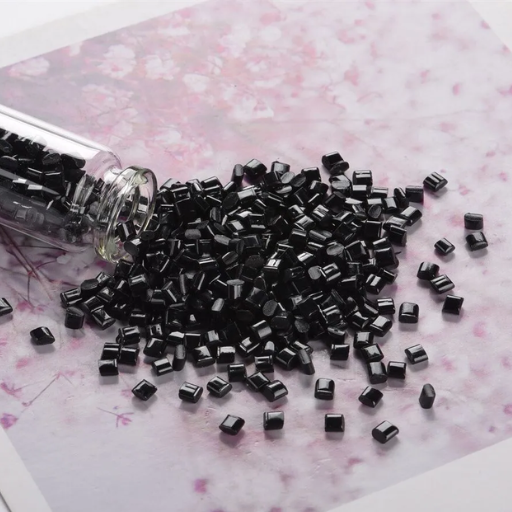
Start with a visual inspection. Pellets should be uniform in color and size with minimal dust. Foreign particles, discoloration, or an off odor signal contamination or regrind mixing.
Check the certificate of analysis against the grade datasheet. Confirm the melt flow index matches within tolerance. An MFI that drifted from the datasheet means the resin changed, and your process settings may no longer apply.
Measure moisture before molding even sealed bags. Packaging absorbs moisture over time, and a “fresh” bag can still arrive wet. If you don’t have a moisture analyzer, run a trial shot and inspect for splay.
Keep a reference sample from each accepted batch. If a molding problem appears later, you can compare the suspect pellets against the reference to isolate the cause.
Request the standard documentation: ISO 9001 quality certification, RoHS and REACH compliance statements, UL yellow cards for flame-retardant grades, and FDA or ISO 10993 documentation for medical and food-contact applications. A supplier who can’t produce these on request is a red flag.
For a complete incoming inspection framework, see our plastic pellet quality control checklist.
How to Source Polycarbonate Pellets for Injection Molding
Sourcing reliable PC resin pellets for injection molding is about more than the lowest price per kilogram. A $0.20 per kg saving disappears the moment an off-spec batch shuts down your line.
Evaluate suppliers on four fundamentals. Do they test every batch or spot-check periodically? Can they deliver within your production schedule, or do you need to carry excess safety stock?
Then look beyond the order book. Will their engineering team troubleshoot molding issues with you? Do they offer transparent pricing with current market data?
Order samples before committing. A 1 to 2 kg evaluation sample costs little and reveals a lot. Run trial shots, compare melt flow, color, and shrinkage against your reference. Then order a trial lot before full production.
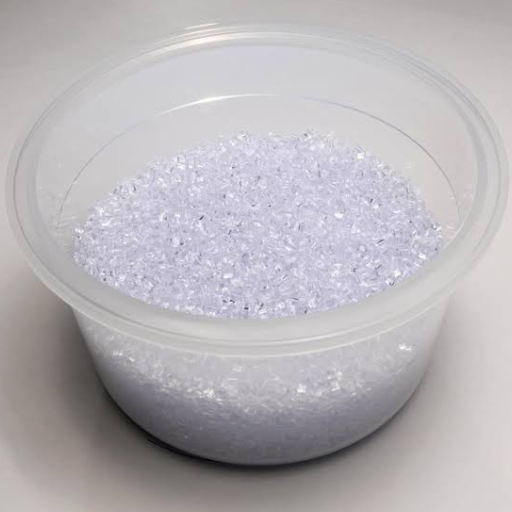
Know the packaging and logistics. Standard PC pellets ship in 25 kg moisture-barrier bags, 40 bags per pallet. Large orders can move in 1-ton super sacks. For overseas orders, confirm the supplier uses moisture-barrier packaging and plans shipping to minimize humidity exposure.
Understand the cost structure. Chinese factory-direct pricing typically requires a 15-ton minimum order and lands around $3,500 to $4,500 per ton for virgin injection-grade PC. Distributors offer smaller lots at a premium. Recycled PC sells at a 40 to 60 percent discount but carries property and consistency trade-offs.
Consolidating your resin purchases with one supplier reduces administrative overhead and improves volume pricing. If you mold multiple engineering resins, a single partner simplifies quality control and logistics. We supply PC alongside ABS, PA66, POM, PPS, and dozens of other grades under one roof.
Polycarbonate Pellet Prices and Market Outlook 2026
Prices for polycarbonate pellets for injection molding moved sharply in 2026, and the trends matter for your sourcing decisions.
In March 2026, the IMARC polycarbonate pricing report recorded average prices of about $1.92 per kg in Northeast Asia, $2.06 per kg in Southeast Asia, $3.15 per kg in North America, and $3.38 per kg in Europe.
China trade data for June 2026 showed export prices averaging $2.50 per kg and import prices near $2.92 per kg, up roughly 26 percent year over year. The rise signals tightening supply for high-grade resin.
Expect regional spreads to persist. North America and Europe carry a structural premium over Asian production. If your supply chain tolerates the lead time, sourcing from China at factory-direct pricing can cut material costs by 30 percent or more.
Drivers behind demand remain strong. EV battery housings, 5G infrastructure, LED lighting, and medical device production all consume growing volumes of injection-grade polycarbonate. Electrical and electronics remain the largest application segment at roughly 40 percent of demand.
When you request a quote, ask for today’s price, not a catalog price. Resin markets move weekly. Request a current quote for polycarbonate pellets, and our team will confirm today’s pricing before you commit.
Polycarbonate Pellets for Injection Molding FAQ
How long do polycarbonate pellets need to dry before molding?
Dry PC in a desiccant dryer at 120 degrees Celsius for 3 to 6 hours, targeting moisture below 0.02 percent. The dryer must reach a dew point of minus 20 degrees Fahrenheit or lower. Do not exceed 10 to 24 hours, or the resin degrades and yellows.
What is the polycarbonate injection molding temperature?
The polycarbonate injection molding temperature range is 260 to 320 degrees Celsius, with a typical nozzle setting of 280 to 295 degrees Celsius. Mold temperature should run at 80 to 120 degrees Celsius.
How do I fix splay marks in polycarbonate parts?
Verify drying below 0.02 percent moisture first, since wet resin is the most common cause. Then reduce melt temperature, lower back pressure, enlarge gates, and inspect the nozzle tip for wear or blockage.
Is polycarbonate food safe or medical grade?
Standard PC contains BPA, which faces restrictions in food-contact applications. Medical-grade PC meets ISO 10993 or USP Class VI standards and is safe for regulated devices. Confirm the supplier’s certification before specifying.
Can recycled polycarbonate pellets be injection molded?
Yes, with caveats. Recycled PC costs 40 to 60 percent less but may carry reduced impact strength, color inconsistency, and higher contamination risk. Verify MFI and impact properties before production.
What is the difference between polycarbonate and acrylic for molding?
Polycarbonate offers superior impact strength and heat resistance but requires stricter drying and processing. Acrylic molds more forgivingly with better scratch resistance but cracks under impact. See our PC vs acrylic comparison for the full breakdown.
Which is better, polycarbonate or ABS for electronics housings?
For impact, clarity, and heat resistance, PC wins. For easier processing, lower cost, and better surface finish, ABS wins. Many applications use a PC/ABS blend. Our PC vs ABS guide covers the trade-offs in depth.
Conclusion
Polycarbonate is unforgiving to the unprepared and unmatched for the prepared. The material rewards molders who dry correctly, select the right grade, and control their process within its narrow window.
Run through these five checkpoints before your next PC molding job:
- Select the grade for the application, not the price list. Match melt flow, heat deflection, and impact to your part.
- Dry below 0.02 percent moisture in a desiccant dryer. This single step prevents the majority of PC defects.
- Respect the processing window. Hold melt temperature between 260 and 320 degrees Celsius and mold temperature between 80 and 120 degrees Celsius.
- Pack the part properly. Use 50 to 80 percent holding pressure until the gate freezes to prevent sink marks and voids.
- Verify what you receive. Check the certificate of analysis, measure moisture, and inspect pellet quality before trusting a new batch.
Get any of these wrong, and you pay in scrap, downtime, and warranty claims. Get them right, and polycarbonate delivers the transparent, impact-resistant, heat-tolerant parts your product needs.
If you are comparing polycarbonate against other transparent resins, our engineering plastics guide helps you position PC within the wider material landscape.
Ready to source polycarbonate pellets for injection molding? Contact Suzhou Yifuhui today. Our engineering team reviews your mold specifications, matches the right grade to your application, and responds within 24 hours with competitive pricing and delivery planning. Request your custom quote now.