Procurement teams at Tier 1 automotive suppliers now source recycled versions of nearly every resin on their spec sheets — from commodity rHDPE to engineering-grade rPA66 — yet buyers routinely assume “recycled pellets” means rPET bottles and nothing more. That assumption costs money.
The global recycled plastic pellets market hit $13.9 billion in 2026, driven by EU PPWR mandates and brand sustainability commitments. Manufacturers who understand the full range of types of recycled plastic pellets can cut material costs by 20-50% while meeting regulatory targets.
You already know recycled feedstock reduces carbon footprints. Here’s what you need: a side-by-side breakdown that shows exactly how rPET, rHDPE, rPP, rLDPE, rABS, rPC, and rPA66 compare on tensile strength, heat resistance, price per ton, and processing compatibility.
This guide delivers that data. You’ll see 2026 price benchmarks, property retention percentages against virgin equivalents, and an industry-by-industry application matrix. By the end, you’ll know which pellet type fits your production line — and which grades to avoid.
When Lin, a procurement manager at a Guangdong electronics factory, received her first quote for rABS pellets in March 2026, she hesitated. The spec sheet showed 85% tensile strength retention against virgin ABS at 25% lower cost per ton. She ran a trial batch. The housings passed drop tests. She reallocated 40% of her ABS spend to recycled feedstock that month.
Want to find the right recycled pellet for your application? Contact our engineering team for spec sheets and sample batches.
What Are Recycled Plastic Pellets and How Are They Classified?
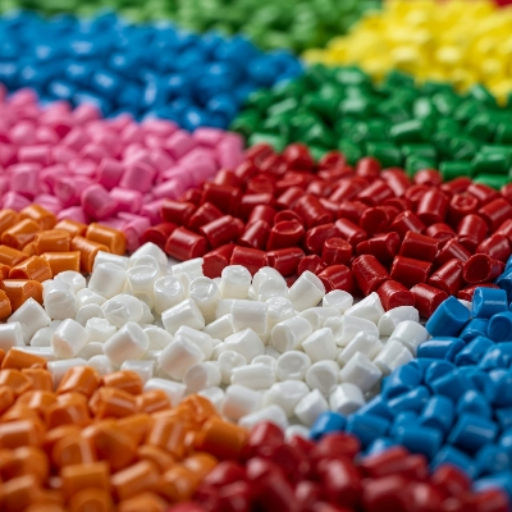
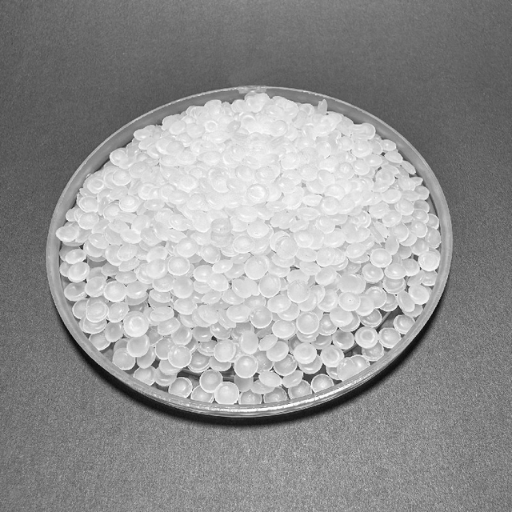
Mechanical recycling of post-consumer or post-industrial plastic waste produces recycled plastic pellets. The process involves collection, sorting, washing, shredding, melt extrusion, and pelletizing. The result is a uniform pellet that feeds directly into injection molding machines, extruders, and blow molding equipment.
Classification starts with resin type, matching the Resin Identification Code (RIC) system. RIC #1 yields rPET. RIC #2 produces rHDPE. RIC #4 becomes rLDPE. RIC #5 generates rPP. RIC #3 creates rPVC. RIC #6 produces rPS. RIC #7 covers rABS, rPC, rPA66, and other engineering polymers.
The second classification is feedstock origin. Post-consumer recycled (PCR) pellets come from household and commercial waste streams — beverage bottles, packaging films, and discarded consumer goods. Post-industrial recycled (PIR) pellets originate from factory scrap, trimmings, and rejected parts. PIR feedstock is cleaner and more consistent. PCR feedstock carries higher sustainability credentials for ESG reporting.
The third classification is grade. Natural or clear pellets arrive unpigmented, with color sorting completed before processing. They command the highest prices because manufacturers can add custom colorants. Processors blend mixed-color pellets into black or gray tones. They cost 20-30% less and work perfectly for non-cosmetic parts like pipe cores and pallet bases. Food-grade pellets undergo super-clean recycling and decontamination processes. They meet FDA and EFSA standards for direct food contact.
Here’s a quick distinction that saves production headaches: pellets aren’t granules, and neither is regrind. Extrusion through a die forms uniform cylinders or spheres. Regrind is irregular shredded flake. Pellets flow better through automated feeding systems and deliver more consistent melt behavior.
Understanding these three classification layers — resin type, feedstock origin, and grade — is the foundation for choosing the right material. Skip this step, and you’ll risk buying rHDPE pipe-grade pellets for an injection molding job that demands rPP homopolymer.
Recycled Plastic Pellets Comparison Table
The table below compares the seven most common types of recycled plastic pellets on properties that matter to production engineers. All values represent high-quality recycled grades, not downcycled mixed-resin blends.
| Pellet Type | RIC | Tensile Strength (MPa) | Heat Resistance (°C) | MFI Range (g/10min) | Density (g/cm³) | Price per Ton (2026) |
|---|---|---|---|---|---|---|
| rPET | #1 | 50-60 | 65-75 | 0.7-1.0 (IV-based) | 1.38-1.40 | $800-1,200 |
| rHDPE | #2 | 14-18 | 110-130 | 0.2-30 | 0.94-0.97 | $800-1,100 |
| rLDPE | #4 | 8-12 | 80-100 | 1-5 | 0.91-0.94 | $600-900 |
| rPP | #5 | 20-25 | 100-130 | 6-20 | 0.90-0.91 | $700-1,000 |
| rPVC | #3 | 40-50 | 60-80 | 0.5-3 | 1.30-1.45 | $900-1,300 |
| rPS | #6 | 30-45 | 70-90 | 2-15 | 1.04-1.06 | $700-1,000 |
| rABS | #7 | 35-45 | 90-110 | 1.5-5 | 1.03-1.07 | $1,200-1,800 |
Looking at the comparison data, here’s what stands out. rPET delivers the highest tensile strength among commodity recycled pellets, making it the default choice for load-bearing and fiber applications. rHDPE offers the best chemical resistance and moisture barrier, which explains its dominance in pipe and container manufacturing. rPP beats both on heat resistance, tolerating temperatures above 120°C in homopolymer grades.
The price column reveals a second pattern. Commodity recycled pellets — rPET, rHDPE, rPP, rLDPE — cluster between $600 and $1,200 per ton for standard non-food grades. Engineering recycled pellets like rABS and rPC command premiums of 50-150% above commodity levels. Food-grade certification adds another 100% or more across all resin types.
A third pattern concerns performance retention against virgin equivalents. According to APR LCA data, mechanical recycling uses 75-88% less energy than virgin resin production. Property retention varies by polymer: rPET holds 90% of virgin tensile strength. rHDPE retains 85%. rPP spans 80-90% depending on copolymer versus homopolymer grade. rABS from post-industrial sources matches 85-95% of virgin impact resistance.
That retention data matters for specification decisions. A part designed for 50 MPa tensile strength can use rPET at 55 MPa with a safety margin. The same part would fail if specified in rLDPE at 10 MPa. Material selection isn’t about sustainability alone. It’s about matching mechanical requirements to the right pellet type.
rPET Pellets (Recycled Polyethylene Terephthalate)
rPET pellets come primarily from post-consumer beverage bottles, food trays, and polyester textile waste. The recycling process washes away labels and adhesives, sorts by color, shreds into flake, and extrudes into pellet form. Bottle-to-bottle recycling requires additional decontamination and super-clean processing to meet FDA food-contact standards.
The mechanical profile of rPET is distinctive. It offers the highest tensile strength (50-60 MPa) and elastic modulus among commodity recycled pellets. A 2025 comparative study found rPET retains ~90% of initial tensile strength and ~95% of modulus after 90 days of storage. That dimensional stability makes it the preferred choice for structural parts and fibers.
rPET also behaves hygroscopically. (It absorbs moisture from ambient air.) Processing without pre-drying causes hydrolytic degradation, reducing molecular weight and producing brittle parts. Standard practice calls for drying at 130-140°C for 4-6 hours to reach moisture content below 0.02%.
Primary applications include beverage bottles, food packaging trays, polyester fibers for apparel and carpets, strapping tape, and 3D printing filament. The intrinsic viscosity (IV) specification determines the end use: 0.80-0.84 dL/g for bottle-grade, 0.70-0.78 dL/g for fiber-grade.
Pricing in 2026 ranges from $800-1,200 per ton for non-food-grade clear or mixed-color rPET. Food-grade super-clean rPET commands $1,500-2,500 per ton due to the additional processing and certification requirements. For a deeper dive into rPET specifications and sourcing, see our complete rPET pellets guide and rPET Pellets: Properties, Applications and Sourcing Guide for Manufacturers.
rHDPE Pellets (Recycled High-Density Polyethylene)
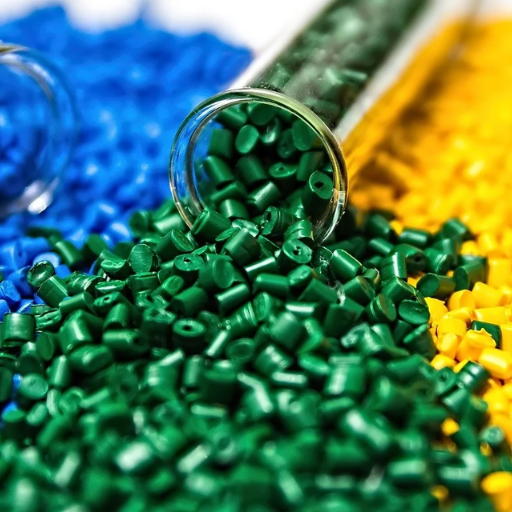
rHDPE pellets originate from milk jugs, detergent bottles, industrial containers, and pipe scrap. Abundant feedstock makes rHDPE one of the most widely available recycled pellet types on the market.
The standout property is chemical resistance. rHDPE resists acids, bases, and organic solvents better than rPET or rPP. It also provides an excellent moisture barrier. The tensile strength runs 14-18 MPa — lower than rPET but paired with the highest ductility among the three major commodity types. Elongation at break exceeds 500% in quality grades.
A pipe manufacturer in Jiangsu faced a practical challenge in early 2026. Their municipal drainage contract required 100% recycled content. Standard rHDPE lacked the pressure rating for the specification. The engineering team designed a co-extruded pipe with a virgin HDPE skin for chemical resistance and an rHDPE core for cost and sustainability credits. The pipe passed all certifications. The bid won.
rHDPE processing is forgiving. (Melt temperatures run 180-220°C.) It tolerates a wider moisture range than rPET and requires minimal drying. The material flows well in blow molding, extrusion, and injection molding applications.
Price ranges from $800-1,100 per ton for non-food-grade natural or mixed-color pellets. Food-grade rHDPE — sourced from post-consumer milk bottles and processed for dry food contact — sells at $1,800-2,200 per ton. If you want the full picture on grades, feedstock, and supplier vetting, read our rHDPE Pellets: Complete Sourcing, Properties & Application Guide for Manufacturers.
rPP Pellets (Recycled Polypropylene)
rPP pellets come from bottle caps, yogurt containers, automotive battery cases, and crate scrap. Polypropylene recycling infrastructure has expanded rapidly since 2024, and supply chain maturity is improving batch-to-batch consistency.
The primary advantage is heat resistance. rPP homopolymer grades tolerate continuous service temperatures up to 120°C. rPP copolymer grades trade some heat resistance for improved impact performance at low temperatures. (Think automotive bumpers in winter climates.) That thermal profile makes rPP the go-to choice for under-hood automotive parts, hot-fill packaging, and microwaveable food containers.
Tensile strength runs 20-25 MPa. Density sits at the lowest point among major recycled pellets at 0.90-0.91 g/cm³. That low density reduces part weight, which matters for automotive fuel economy targets and shipping cost calculations.
rPP’s available in homopolymer (Homo) and copolymer (Copo) grades with MFI ranges from 6 to 20 g/10min. Injection molding grades dominate the market, though extrusion and raffia/tape grades are gaining share. Mixed-color rPP sells for $700-1,000 per ton. Natural grades command $1,100-1,500 per ton.
One processing note: rPP’s less hygroscopic than rPET but still benefits from drying at 80-100°C for 2-3 hours before injection molding. Color consistency can vary between batches, so buyers should specify color tolerance windows in purchase orders.
rLDPE Pellets (Recycled Low-Density Polyethylene)
rLDPE pellets derive from plastic bags, shrink wrap, agricultural film, and squeeze bottles. Collecting lightweight films challenges conventional sorting equipment. As a result, rLDPE supply is tighter and quality more variable than rHDPE or rPP.
The material shows high flexibility and impact resistance. Tensile strength reaches only 8-12 MPa, but elongation at break can exceed 600%. That flexibility makes rLDPE ideal for garbage bags, pallet wrap, agricultural film, flexible tubing, and bin liners.
Film-grade rLDPE carries an MFI of 1-2 g/10min. Higher MFI grades (3-5) suit injection molding of flexible parts. Processing melt temperatures run 160-200°C.
Pricing sits at the lowest point among major recycled pellets at $600-900 per ton. The trade-off is consistency. Film feedstock contains pigments, adhesives, and multi-layer contaminants that are difficult to remove completely. Buyers should request Certificate of Analysis (COA) documentation and specify MFI tolerance within +/- 10% batch-to-batch.
Manufacturers rarely use rLDPE in rigid structural applications. (Its value lies in flexibility and cost.) For manufacturers producing stretch film or flexible packaging, rLDPE offers a 30-40% cost reduction over virgin LDPE with acceptable performance.
Engineering Recycled Pellets: rABS, rPC, rPA66 & More
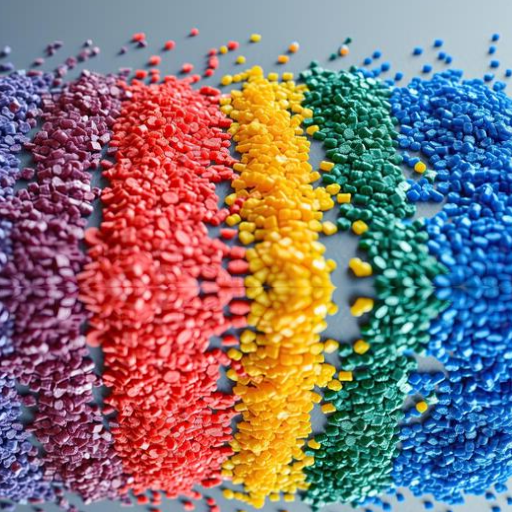
Most buyers focus on commodity recycled pellets and overlook engineering-grade options. That oversight costs opportunities. Why overlook engineering recycled pellets? Post-industrial scrap from automotive, electronics, and appliance manufacturing yields rABS, rPC, and rPA66 pellets with 85-95% of virgin mechanical properties.
rABS pellets retain high impact resistance and dimensional stability. The material comes mostly from post-industrial sources — electronics housings, automotive dashboards, and appliance panels. A 2026 trial at a Guangdong factory demonstrated rABS housings passing the same drop tests as virgin ABS at 25% lower material cost. Tensile strength runs 35-45 MPa. Pricing sits at $1,200-1,800 per ton.
rPC (recycled polycarbonate) pellets offer exceptional mechanical strength and heat resistance. Transparency retention is good in clear grades, though UV exposure during the first lifecycle can yellow the material. rPC suits automotive lenses, electronics enclosures, and medical device components where sterilizability matters. Prices run $2,000-3,000 per ton.
rPA66 (recycled nylon) pellets deliver wear resistance and tensile strength of 50-80 MPa when glass-fiber reinforced. Sources include automotive under-hood scrap, industrial gear trimmings, and fastener rejects. The primary challenge is moisture absorption. rPA66 must be dried at 80-100°C for 4-6 hours before processing to prevent hydrolysis. Pricing ranges from $1,800-2,500 per ton.
Suzhou Yifuhui stocks and sources recycled engineering resins including rPC, rPA66, rABS, and custom-compounded blends. Our quality control protocols verify MFI, tensile strength, and color consistency on every batch. If your application demands high-performance recycled feedstock, request a technical data sheet and sample batch from our engineering team.
Other Recycled Pellet Types
Beyond the mainstream options, three additional pellet types deserve mention.
rPVC pellets come from construction pipe, window frame, and flooring scrap. The chlorine content and mixed additive packages make rPVC harder to recycle than PE or PP. Recyclers need specialized separation equipment. rPVC sells for $900-1,300 per ton and finds use in non-food packaging, construction profiles, and cable insulation.
rPS pellets derive from foam packaging (EPS), disposable cups, and insulation boards. The material’s lightweight and insulating but difficult to recycle economically due to high volume-to-weight ratios. Recyclers downcycle rPS into coat hangers, plant pots, and insulation board fill. rPS sells for $700-1,000 per ton.
Specialty blended pellets represent a growing category. Ocean-bound plastic pellets mix rPET, rPP, and rPE from coastal collection programs. Recycled carbon fiber-reinforced pellets blend post-industrial carbon fiber with rPA6 or rPP for high-strength automotive and aerospace parts. Mixed-resin pellets — the lowest-cost option at $400-600 per ton — work for plastic lumber, pallet cores, and non-aesthetic fill applications.
How to Choose the Right Recycled Pellet for Your Application
Selecting a recycled pellet type requires matching seven factors to your production requirements.
Mechanical requirements come first. Parts under tensile load need rPET, rABS, or rPA66. Impact-prone parts like automotive bumpers favor rPP or rABS. Flexible components such as gaskets and films require rLDPE or TPE-based pellets.
Thermal limits narrow the field. Continuous service above 100°C eliminates rPET, rPS, and rLDPE. rPP homopolymer and rPC handle 120°C and above. rPA66 with glass fiber reinforcement tolerates 150°C in under-hood automotive applications.
Chemical exposure is the third filter. rHDPE resists the widest range of acids and bases. rPP also performs well against solvents. rPET degrades in strong alkaline environments. rPVC handles oils and greases but doesn’t perform well with aromatic solvents.
Regulatory needs dictate grade selection. Food-contact applications require FDA or EFSA certification. Automotive parts need OEM approval and consistent lot-to-lot documentation. Medical devices demand biocompatibility testing and full traceability. Each requirement adds cost and narrows supplier options.
Aesthetic requirements determine color grade. Natural pellets allow custom color matching. Mixed-color pellets limit color choices to black, gray, or brown. For consumer-facing parts where appearance matters, natural grades are worth the 20-30% price premium.
Processing method compatibility matters. Injection molding works with rPP, rABS, rPET, and rPA66. Blow molding favors rHDPE and rPET. Extrusion handles rHDPE, rPP, rPVC, and rLDPE. Thermoforming suits rPET and rHDPE sheet grades. Match the pellet’s MFI range to your equipment’s shear rate and cavity geometry.
Budget constraints close the loop. The table below maps pellet types to price tiers and primary industries.
| Pellet Type | Price Tier | Primary Industries |
|---|---|---|
| rPET | Medium | Packaging, textiles, 3D printing |
| rHDPE | Medium | Construction, packaging, industrial |
| rPP | Low-Medium | Automotive, food packaging, consumer goods |
| rLDPE | Low | Film, flexible packaging, agriculture |
| rABS | High | Electronics, automotive, appliances |
| rPC | High | Automotive, electronics, medical |
| rPA66 | High | Automotive, industrial, aerospace |
Which factor matters most? It depends on your application. Use this matrix as a starting point, not a final answer. Every application has unique loading, thermal, and regulatory conditions. To see how each pellet type performs across real production environments, explore our Recycled Plastic Pellets Applications: Industry-by-Industry Manufacturing Guide. For tailored material recommendations based on your exact specifications, contact our team for a no-obligation consultation.
Quality Grades and What They Mean for Pricing
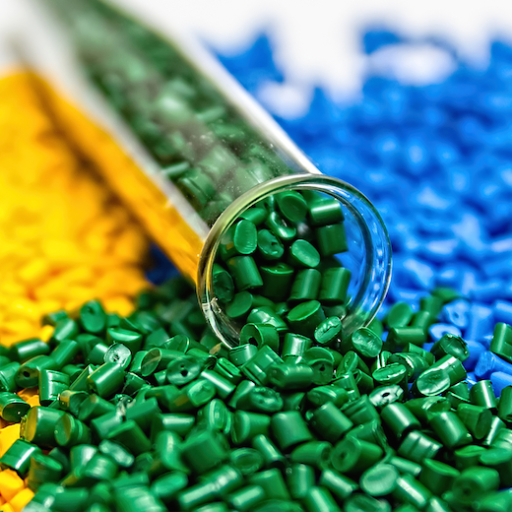
Recycled pellet prices vary by grade as much as by resin type. Understanding the three main grade categories prevents overpayment and under-specification.
Natural or clear grades are unpigmented pellets sorted from single-color feedstock streams. They cost the most because manufacturers can add precise colorants to match brand specifications. Natural rHDPE sells for $1,000-1,100 per ton. Natural rPP runs $1,100-1,500 per ton. These grades suit consumer-facing parts, medical components, and any application where color consistency matters.
Mixed-color grades blend feedstock of different colors into black, gray, or brown pellets. They cost 20-30% less than natural grades. Mixed-color rHDPE sells for $800-950 per ton. Mixed-color rPP runs $700-900 per ton. The performance matches natural grades exactly. Only the aesthetics differ. For pipe cores, pallet bases, and internal structural parts, mixed-color pellets deliver the same mechanical properties at lower cost.
Food-grade pellets undergo super-clean recycling, decontamination, and challenge testing to meet FDA and EFSA standards. The certification adds 100% or more to base pricing. Food-grade rPET for bottle-to-bottle recycling sells at $1,500-2,500 per ton. Food-grade rHDPE for dry food contact commands $1,800-2,200 per ton. The premium reflects processing costs, not superior mechanical properties.
Post-industrial versus post-consumer origin also affects price. PIR pellets are 10-20% cheaper than PCR equivalents because the feedstock is cleaner and sorting costs are lower. PCR pellets carry higher sustainability value for ESG scorecards and EU PPWR compliance reporting.
Conclusion
The recycled pellet market in 2026 no longer limits buyers to rPET bottles and rHDPE milk jugs. Manufacturers can now source recycled versions of nearly every resin type — from flexible rLDPE to high-strength rPA66 — at prices 20-50% below virgin equivalents.
Three principles guide successful selection. Match the pellet’s tensile strength and heat resistance to your part’s mechanical requirements. Choose the grade — natural, mixed-color, or food-grade — based on aesthetic and regulatory needs, not habit. Verify batch-to-batch consistency through Certificate of Analysis documentation and MFI tolerance specifications.
The data’s clear. rPET leads on strength and barrier properties. rHDPE dominates chemical resistance and moisture protection. rPP wins on heat tolerance and weight reduction. Engineering recycled pellets like rABS and rPC close the performance gap with virgin materials at substantial cost savings.
You won’t find a single pellet that satisfies every requirement. That’s why understanding the full range of types of recycled plastic pellets matters. For a broader comparison of recycled versus virgin feedstock, read our virgin vs recycled plastic pellets comparison. For high-performance material guidance, explore our engineering plastics guide.
You don’t need to navigate this landscape alone. Suzhou Yifuhui supplies a comprehensive range of recycled plastic pellets — from commodity rHDPE and rPP to engineering-grade rPC and rPA66 — with batch-tested quality documentation and competitive pricing. Request a quote today. Our engineering team responds within 24 hours with tailored material recommendations and sample batches for trial runs.