Last updated:
To assess food grade recycled plastic pellets, connect the material on offer to its recycling process, rules in the target market and planned food-contact use. Then connect the delivered lot to that evidence. A recycled-content certificate alone can’t prove that chain.
Illustrative scenario: A buyer receives a recycled-content certificate with a quotation for food packaging. The file says nothing about the food, contact temperature or source plant. Ask for proof that fits this use. The certificate alone cannot show that the resin suits the pack.
What proof should you ask for? Start with the market and use. This guide shows how to compare US and EU records. It also separates process tests from lot tests and helps you compare quotes on the same terms.
Start with the seven checks in the supplier section below.
Key takeaways
- Match the actual source plant and process to the planned use.
- Keep FDA advice, EU scientific assessment, authorization and registration in their proper roles.
- Separate process validation, compliance support and routine lot tests.
- Hold unresolved source or use mismatches for the reviewer.
What food grade recycled plastic pellets mean for buyers
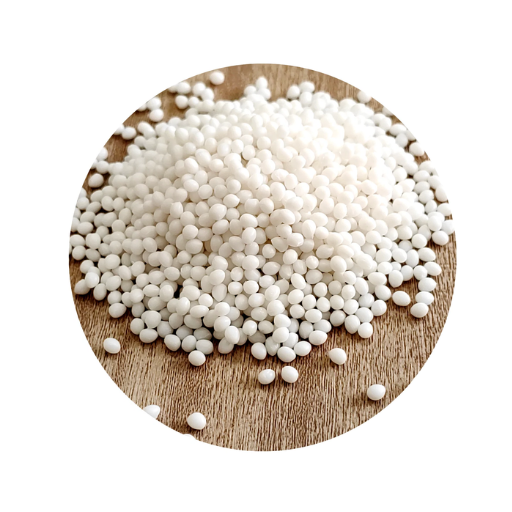
The image shows what granules can look like. It cannot prove which polymer they are, where they came from or whether they are fit for food contact. Looks aren’t enough. A clean-looking pellet can’t tell you which process made it.
Treat “food grade” as a claim that needs a defined scope. Name the polymer and grade in the purchase file. Add the formulation, input source, recycling route and planned food-contact use.
The general food-contact resin guide covers grade and formulation documents. Recycled material adds questions about previous use, possible contamination and the controls that address it.
Write the use brief first
State the market and food types. Add how long contact lasts, how hot filling and storage will be, and any later heating or reuse. Describe whether contact is direct or involves a barrier layer.
State the recycled content and show the final pack design. The reviewer needs both.
State whether the input is used consumer plastic or scrap from making new goods. Keep post-consumer and pre-consumer sources distinct. Ask where the input came from and how the source is controlled.
A resin name won’t answer those questions. Nor will the word “recycled.”
Ask for the source record. Check separately whether that source counts towards any recycled-content target.
Distinguish certificate purposes
The Global Recycled Standard covers recycled content and chain of custody. It also sets requirements for social, environmental and chemical practices in processing. That scope is broader than a recycled-content percentage, but it does not replace a food-contact review for the target market.
You can ask for both kinds of evidence without confusing them. A recycled-content record addresses the sourcing claim. A process file shows how the process controls contaminants and which uses it covers.
A lot record links the shipment to its maker and agreed test limits. Compare each document with the question it can actually answer.
Verify the US FDA process opinion and use restrictions
What a no objection letter establishes
FDA offers voluntary review of recycling processes. It gives informal advice on whether the process is expected to yield plastic pure enough for the planned use.
That advice may take the form of a no objection letter (NOL). It does not certify the whole company, all grades or each shipment. The supplier must still meet the food-contact rules that apply.
Use the FDA public recycled-plastics database to locate the reference. It lists processes, dates, applicants and use limits. Save the relevant record and request the underlying letter or further details from the supplier.
Compare the following fields with the quotation and use brief:
| Field | Comparison to make | Follow-up when it differs |
|---|---|---|
| Applicant and process reference | Is this the cited technology or process? | Request the exact reference and file version. |
| Actual producer | Can the source be connected to the covered process? | Request the licensing or supply-chain explanation. |
| Polymer and input source | Do the material and source controls fit? | Ask the process owner to resolve the difference. |
| Food and use restrictions | Does the intended application fall within scope? | Keep the mismatch open for technical review. |
Follow the process connection
The database explains that a covered process may be sublicensed when the same process and intended conditions apply. The technology holder and seller may have different names. That alone is no reason to reject the letter. But you still need to know that the source plant uses the covered process.
Ask who performs recycling, where it occurs, and what connects that operation to the reference. A trader needn’t own the equipment. Ask it to name the source plant and explain the chain. Keep that reply with the lot ID.
FDA’s chemistry guidance treats tertiary recycling of PET and PEN differently. FDA no longer reviews those processes or issues a separate opinion letter for each one. Don’t turn an NOL request into a universal rule for every recycling route. Ask the reviewer to identify the applicable basis.
Read food types and conditions separately
Letter codes for heat and handling do not describe food types. Use one field for food restrictions and another for use conditions. Keep any limits on barriers, contact and recycled content.
Illustrative scenario: A record covers a restricted dry-food application, while the buyer plans heated liquid contact. The familiar polymer name doesn’t close that gap. Compare the planned use with the actual letter and ask for a written review before accepting it.
Check the EU technology, process and installation route
Separate the roles of the documents
The European Commission’s plastic-recycling guidance explains Regulation (EU) 2022/1616. Start with the route that applies to your process. The technology and process determine that route. Don’t reduce it to an “EFSA approved” label.
EFSA provides scientific assessment. The Commission handles authorization where required. Registration and installation records identify operations within the framework.
A declaration of compliance and its supporting records serve the supply chain. None is a substitute for all the others.
| Evidence | Purpose in the buyer file | Question still to resolve |
|---|---|---|
| Scientific opinion, where applicable | Explains the evaluated process and restrictions | Does the supplied process match it? |
| Applicable authorization or route records | Establishes the relevant regulatory basis | What is its current status and scope? |
| Operator, facility and installation IDs | Identifies the source plant | Can the shipment be traced to it? |
| Declaration and supporting file | Communicates compliance and use information | Does it cover the material and your role? |
Ask the supplier to name the route first. The steps are not the same for every technology. Novel-technology routes also have their own rules.
The final material must also meet the plastics rules that apply. These include checks on its composition and migration into food. An FDA reference doesn’t establish the EU position.
Check the actual installation
Check the recycler’s legal name, plant address and IDs. Do they match the declaration, process file and shipment record?
A report may cover a pilot plant. Ask how its findings apply to the plant that will supply you. If the address differs, ask why. That difference alone doesn’t prove the process is covered or that it failed.
Prepare for the October 2026 amendment
As of 31 October 2026, Regulation (EU) 2026/2376 is not yet in force. It was adopted on 28 October and published on 29 October. It enters into force on 18 November 2026. Changes include how the register is managed and how compliance records are passed along the chain.
Article 2 sets out separate transitions for products that meet the prior rules:
- For products requiring A/B declarations, the transition for the changed declaration rules runs until 18 February 2027.
- For products requiring the new C/P declarations, placement on the market without those declarations is allowed until 18 May 2027.
- Materials or articles made from products placed on the market under those provisions may be placed on the market until stocks are exhausted.
Ask the supplier which declaration applies to its role and product. These transitions are not a food-safety waiver.
The Commission legislation page also lists amendment 2026/2412 to Annex I, dated 28 October 2026. Ask for up-to-date composition support. Don’t assume an old file covers every change.
Read challenge-test evidence without inventing universal limits
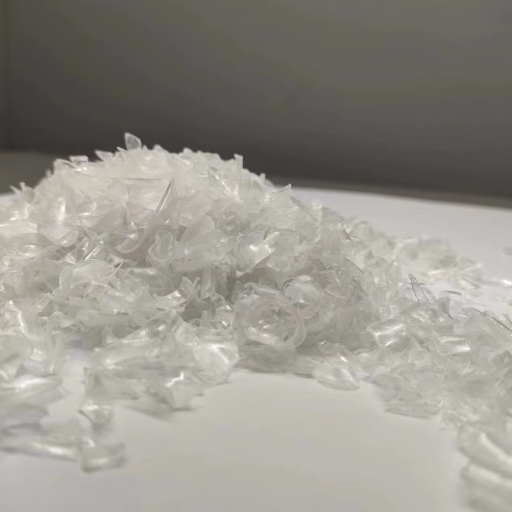
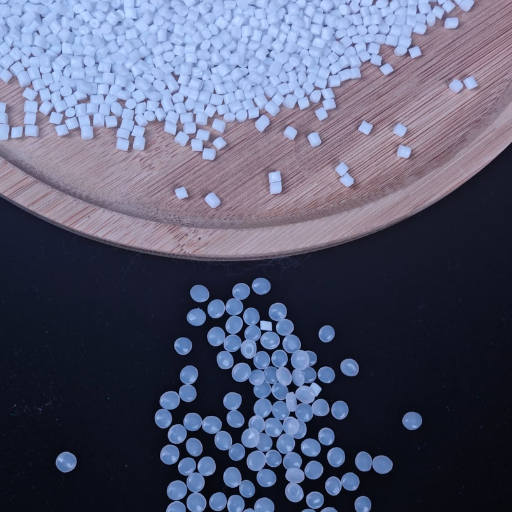
The illustration shows flakes, not a laboratory procedure or a passing test. A photograph cannot validate decontamination.
What the challenge test evaluates
A challenge test uses surrogate contaminants. These are chosen chemicals used to test how well the process removes contamination. The findings apply to the conditions tested.
Read the method, process steps, test conditions and findings together. Don’t demand virgin input for every test. The same surrogate list or removal rate will not fit every polymer and route.
The FDA chemistry guidance explains source controls, surrogate testing and exposure assessment. Does the plant run within the tested conditions? Ask the process owner which controls matter. Find out how staff check them and what happens if a setting goes out of range.
Keep concentration, migration and exposure distinct
Residual concentration is the amount left in plastic. Migration is the amount that moves to food or a food simulant. Dietary exposure is what a person may take in. It also depends on how the pack is used.
Keep those terms and units apart. They cannot all become one pass/fail limit for a pellet.
In EFSA’s 2024 mechanical-PET guidance, the 3 mg/kg PET value is a reference input-contamination level for misuse. It is not a universal ceiling for finished pellets. The method compares two values: C_res, the level left after cleaning, and C_mod, the level modelled for the exposure case under review. Don’t extend that PET calculation to all recycled polymers.
If a report gives a number without a unit, material, test method or use scenario, request the missing context. A result can be right yet answer the wrong question. Check it against the test you agreed to buy.
Keep the three evidence layers separate
| Layer | What it supports | What it cannot establish alone |
|---|---|---|
| Process validation | Decontamination performance under evaluated conditions | Identity and quality of every later shipment |
| Compliance support | Suitability for a defined composition and use | That an unidentified lot came from the covered source |
| Routine certificate of analysis | Agreed measured properties of a stated lot | Complete process validation or food-contact status |
The recycled-pellet quality-control guide provides inspection background. Agree routine tests separately. A CoA need not repeat a full challenge test for each lot. Good melt-flow results do not settle an open question about food-contact compliance.
Match rPET, rHDPE and rPP to the actual planned use
Start with the evidence route, then assess whether the grade suits processing. A shortlist helps you choose what to review. It doesn’t grant permission to use the resin.
| Material | Process and source evidence to request | Grade questions to keep separate |
|---|---|---|
| rPET | Relevant process reference, controlled input and intended-use scope | Intrinsic viscosity, moisture and article-specific processing needs |
| rHDPE | Covered feedstock, process connection and food/use restrictions | Melt flow, colour, contamination and required sensory checks |
| rPP | Exact process record and its restricted applications | Flow, colour and performance for the planned article |
rPET: distinguish grade performance from compliance
The rPET pellets guide gives material and sourcing background. Use it to frame grade questions, then return to the actual supplier file.
A bottle grade may have different process needs from a sheet grade for thermoforming. Agree the right tests for your part. An intrinsic-viscosity value does not prove all food-contact uses. Neither does a treatment label.
Specify the final article and conversion route. If the quote changes the grade, additives or blend, ask whether the supporting assessment still covers the planned blend. Don’t assume that a familiar trade description settles the question.
rHDPE and rPP: read the specific scope
The FDA database reviewed for this guide includes PET, HDPE and PP process records, including entries dated 28 September 2026. Those records do not make every grade in each family fit for food contact. Each reference carries its own source, process and use context.
The rHDPE sourcing guide can help frame technical questions. To check the basis for use, read the exact process record. Don’t translate a restricted dry-food application into approval for milk, hot filling or repeated use.
Applications are questions, not permissions
A bottle, cap and tray can create different contact conditions. Put the actual article in the use brief instead of asking only for “food-grade PP.” If you compare alternative polymers, reopen the evidence check for each option. Don’t copy the first resin’s file to the new one.
Check the new source, grade and use in their own right.
Build a supplier evidence file and compare quotes
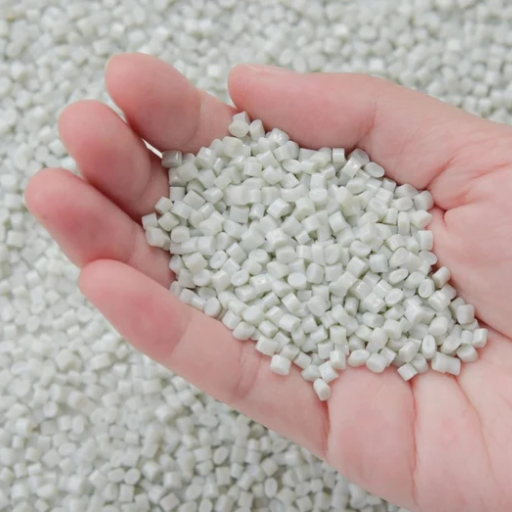
The image illustrates granules during sourcing; it supplies no price benchmark or certification evidence. Compare dated quotes for the same grade, use and proof.
Seven checks before a volume order
- Define market and use. The buyer supplies food types, time, temperature, construction and reuse details. Record assumptions for review.
- Identify the material. The supplier states polymer, exact grade, formulation and recycled-input origin. Resolve ambiguous trade names.
- Connect producer and process. Request the relevant reference and the clear link to the actual operation, including licensing where applicable.
- Check operating scope. The recycler identifies input controls and the production conditions covered by the evidence. Ask how changes are assessed.
- Obtain compliance support. Request the applicable declaration, letter, authorization or route explanation and supporting assessment through the responsible party.
- Trace the lot. Match producer, lot number, specification revision and agreed CoA to the shipment. Record the agreed sampling and test methods.
- Record the decision. Assign unresolved questions, acceptance responsibility and change-notification terms. Keep the evidence version used for the decision.
These are buyer controls, not a universal legal audit schedule. Set review frequency according to the material, use and supply risk. Don’t claim that every supplier must undergo an annual audit because a checklist recommends one.
Request usable support
The full test report may be confidential. Ask what the reviewer can see under an access agreement. Or ask the process owner what proof it can share for this use. A report needn’t be public to be valid.
A useful request reads: “Please name the source plant and its process or regulatory route. Send the proof for our stated food, contact time and heat. If the cited applicant and source plant differ, please explain the link.”
That request gives the supplier clear fields to answer. Keep the reply in the purchase file.
Compare like-for-like quotations
Include material and grade, recycled origin, planned use, process evidence, lot specification, packaging, order quantity, destination, delivery terms, currency and quote date. Ask the supplier to mark exclusions. There is no useful universal food-grade premium when those fields differ.
Illustrative scenario: Two quotes name the same polymer. One names the source plant and use limits. The other shows only a certificate logo. The buyer asks for the missing proof before comparing price.
Neither quote is approved in this example. The missing proof is still needed.
Use the seven checks to prepare that request before releasing a volume order. A complete file makes the remaining decision visible; it does not replace the compliance review.
Applications, red flags and the release decision
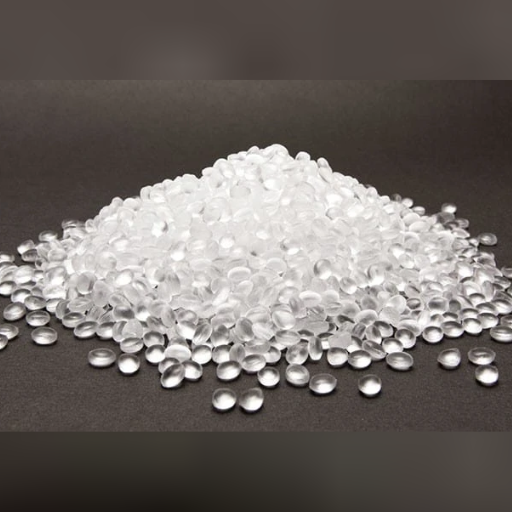
The image is illustrative material photography, not evidence of an approved application. For a broader shortlist, see the types of recycled plastic pellets overview, then verify the planned source and use.
What if the public register is stale?
The Commission recycling page was checked on 31 October 2026. It still displayed a notice that registration updates had been offline since 11 September. The notice said the public register was frozen. An expected restoration date is not proof that updates resumed.
Ask the operator for current records. Seek help from the competent authority if needed. A missing row during a stated outage does not prove a breach on its own. An old row does not prove every current plant detail either.
Can a GRS certificate or CoA establish food-contact status alone?
No. The certificate addresses its own standard’s scope; the CoA addresses stated lot tests. You still need the evidence connecting source, process, composition and planned use. Return to the missing fields in the opening scenario rather than requesting another generic certificate.
Must the seller hold its own FDA letter?
Not in every case. FDA allows covered sublicensing. It also treats tertiary PET/PEN recycling differently. A rule that every seller must own a letter is too broad.
Request the applicable basis and the clear link to the source plant.
When should the purchase stay on hold?
Use a row per open issue. Name the reviewer and the proof needed to close it.
| Open issue | Next action | What closes the question? |
|---|---|---|
| Source plant changed | Ask for the new plant and process link | Reviewer confirms that the cited basis covers it |
| Use falls outside the record | Send the actual food, time and heat details | Reviewer resolves the use gap with suitable support |
| Lot cannot be traced | Request a source-to-lot record | Supplier links the delivered lot to the reviewed source |
Don’t treat a blank field as a pass. Once the file aligns, the reviewer can make a decision on record under the rules that apply.
Before your next order, complete the use brief and seven supplier checks. The question is concrete: do the records connect this lot to this process and this use?