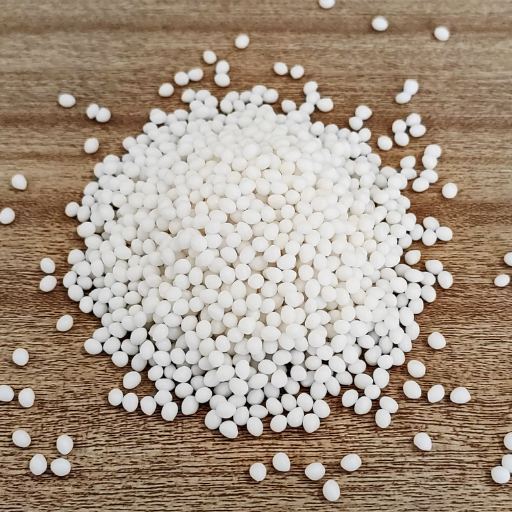
Consider a buyer we’ll call Daniel. His RFQ specified TPEE pellets for a CVJ boot. A supplier quoted the right grade, but the datasheet said “TPC-ET.” Daniel’s quality team held the shipment for two weeks. The pellets were correct. The name was different.
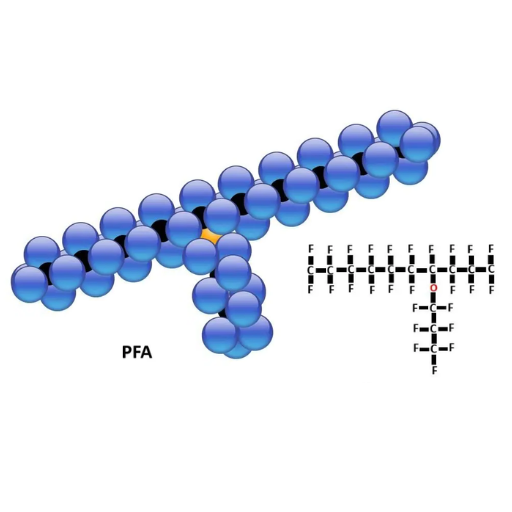
Thermoplastic polyester elastomer (TPEE) is a block copolymer of hard crystalline polyester segments, usually PBT, and soft amorphous polyether or polyester segments. The hard segments provide strength and heat resistance. The soft segments provide flexibility and rebound. TPEE melts and processes like a thermoplastic, with no vulcanization step.
The naming is only the first confusion. TPEE, TPC-ET, COPE, and “polyester rubber” describe one material family. Hytrel, Pelprene, SKYPEL, and TRIEL are brands built on it.
This guide covers the definition, realistic property ranges, comparisons with TPU and TPV, grade selection, processing, limitations, and sourcing. If you already need pellets, browse our thermoplastic polyester elastomer range.
What Is Thermoplastic Polyester Elastomer (TPEE)?
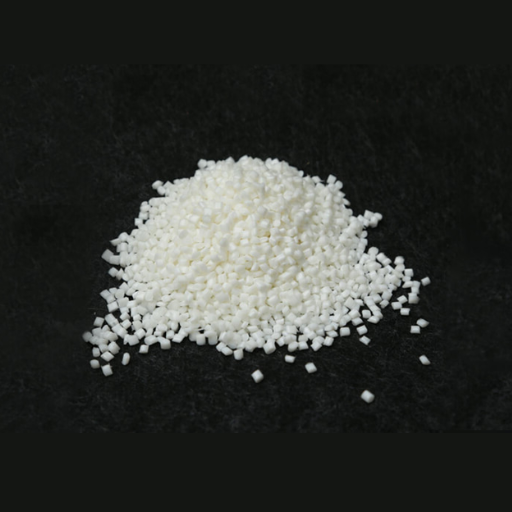
TPEE is an engineering thermoplastic elastomer. It behaves like a tough rubber at room temperature and melts and flows like a plastic in the machine. The combination comes from the polymer chain, not from plasticizers or curing agents.
Hard segments form crystalline domains that act as physical crosslinks. Soft segments form an amorphous matrix that provides stretch and recovery. Heat the material above its melt range and those physical crosslinks reverse, which is why TPEE can be injection molded, extruded, blow molded, and reground.
TPEE, TPC-ET, COPE and “Polyester Rubber”: One Material, Four Names
- TPEE is the common industry abbreviation for thermoplastic polyester elastomer.
- TPC-ET is the ISO 1043 designation for a thermoplastic copolyester elastomer.
- COPE stands for copolyester elastomer and appears in older literature.
- Polyester rubber is an informal description, not a specification term.
Brand names such as Hytrel, Pelprene, SKYPEL, TRIEL, and Kopel sit on top of the same chemistry. They are commercial grades, not different material families.
This matters in procurement. If your specification says TPEE and the datasheet says TPC-ET, the material may be correct while the paperwork looks inconsistent. Specify the ISO designation plus the grade name, and ask the supplier to confirm equivalence in writing.
Is TPEE Rubber or Plastic?
TPEE is a thermoplastic elastomer: rubber-like in performance, plastic-like in processing. It isn’t a thermoset rubber because it needs no vulcanization. It isn’t a rigid plastic because it recovers from large deformations. Evaluate it with elastomer data such as hardness, modulus, compression set, and flex fatigue, not tensile strength alone.
How TPEE Differs from Generic TPE
TPE is the umbrella term for SEBS compounds, TPVs, TPUs, and TPEEs. TPEE is the polyester-based engineering member of that family.
It generally offers higher modulus at equal hardness, better heat resistance, and better oil and fuel resistance than soft SEBS compounds. It also costs more. Our TPE and TPV material guide covers the SEBS and EPDM side of the family.
The Hard/Soft Block Structure That Drives TPEE Performance
Most TPEE grades use polybutylene terephthalate (PBT) as the hard segment. The soft segment is usually a polyether such as PTMG, or a polyester such as polycaprolactone. The hard domains carry load. The soft matrix provides elasticity.
The hard/soft ratio is the main design lever. More hard segment means a stiffer grade, higher modulus, higher melting point, and better creep resistance. More soft segment means a softer, more flexible grade with a lower melting point. That is why one product family can cover a wide hardness range, and why two grades at the same Shore D can still differ in heat and oil performance.
TPEE Properties and Technical Data
The table below gives screening ranges for unfilled TPEE, cross-checked against UL Prospector’s TPEE classification and Chimei’s TPEE technical data. Values vary by grade, hardness, and test method, so confirm the exact grade against a current supplier datasheet.
| Property | Typical TPEE range | Notes |
|---|---|---|
| Hardness | Shore D 30–82; some soft grades around Shore A 71–80 | Grade-dependent; test standard and timing affect readings |
| Density | 1.1–1.4 g/cm³ | Filled and specialty grades can fall outside this range |
| Tensile strength | 10–50 MPa | Higher-hardness grades generally show higher values |
| Elongation at break | 200–800% | Varies strongly with hardness |
| Flexural modulus | 60–1,200 MPa | Do not compare ISO and ASTM values without checking methods |
| Melting point | 150–230 °C; commonly 180–220 °C | Melting point is not a service-temperature limit |
| Service temperature | Commonly −40 °C to 150 °C | Grade-dependent; some grades claim a wider range |
TPEE’s mechanical strengths are flex fatigue, tear resistance, impact resistance, and creep resistance. A 40D grade is reported to exceed one million Ross flex cycles at 23 °C in branded supplier testing, compared with roughly 150,000 for a comparable TPU. The figure is test-specific, but the direction is consistent: TPEE is built for repeated flexing. Abrasion resistance is good, though TPU often leads at equal hardness.
Melting points run from about 150 °C for soft grades to about 230 °C for hard grades. Service temperature is lower and depends on load and time. Don’t specify a grade by melting point alone.
TPEE resists oils, greases, fuels, and many solvents. That is why it dominates fuel and hydraulic hose, CVJ boots, and under-hood parts. The weaknesses are hot-water hydrolysis and UV or thermal-oxidative aging in unstabilized grades.
TPEE vs TPE vs TPU vs TPV: Which Elastomer Do You Need?
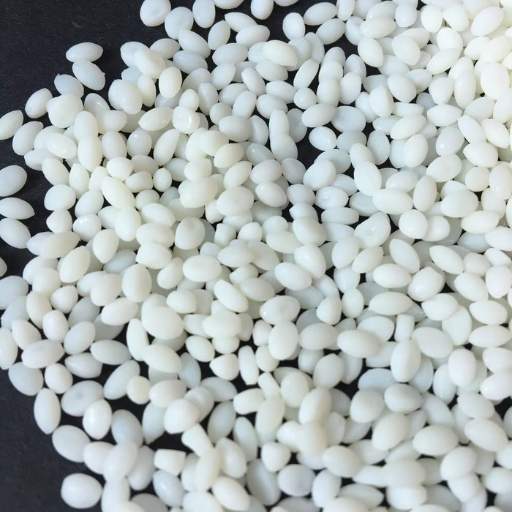
The four families overlap enough to confuse a specification. Use this table as a shortlist tool.
| Property | TPEE | TPU | TPV | SEBS-based TPE |
|---|---|---|---|---|
| Hardness range | Shore D 30–82; some A grades | Shore A 65–D 80 | Mainly Shore A 50–100 | Soft Shore A grades |
| Modulus at elevated temperature | High; retains load better above 120 °C | Drops sharply with heat | Moderate | Low |
| Compression set | Moderate | Moderate | Excellent | Moderate |
| Transparency | Generally opaque | Can be transparent | Opaque | Can be clear |
| Oil and fuel resistance | Good | Good | Moderate | Low |
| Relative cost | High | Medium | Medium | Low |
| Best fit | Dynamic, hot, oil-exposed engineering parts | Abrasion, toughness, transparent parts | Seals, weather resistance, compression set | Soft-touch, consumer, low-cost flexible parts |
Choose TPEE when you need modulus and load-bearing capacity at temperature, combined with flex fatigue and oil resistance. Choose TPU when abrasion and transparency matter more than heat.
Choose TPV when compression set and weathering dominate, as in many automotive seals. Choose SEBS-based TPE when softness and cost matter more than engineering performance.
In a direct TPEE vs TPU comparison, TPU usually wins on abrasion and transparency. In a TPEE vs TPV comparison, TPV usually wins on compression set and weathering. For the TPV side, see our comparison of TPV versus TPE.
Need help narrowing the shortlist? Send our team your application, temperature, and fluid exposure, and we will suggest a starting grade. Contact our materials team with the details.
Where TPEE Is Used
TPEE appears wherever a part must flex repeatedly without losing strength, especially under heat or oil.
Automotive and Transport
Automotive is the largest TPEE segment, estimated at more than 70% of global demand. Common parts include CVJ boots, air ducts, fuel and hydraulic hoses, drive belts, seals, and suspension components. The material fits because it combines flex fatigue with oil resistance and heat aging.
Wire, Cable and Electronics
TPEE works as a cable jacket where abrasion, cut-through, and flex life matter. It also appears in connectors, flexible buttons, and selected electronic components. Flame-retardant grades are available.
Industrial Fluid Handling and Machinery
Industrial uses include hydraulic and pneumatic hose, tubing, conveyor belts, gears, couplings, and damping parts. The combination of modulus and resilience suits parts that carry load while absorbing motion.
Consumer, Medical and Specialty Applications
Consumer uses include watch bands, shoe components, combs, bottle caps, and sporting goods. Medical tubing and device components use selected grades with the appropriate compliance documentation. Some grades bond to ABS, PC, and TPU for overmolding.
How to Choose a TPEE Grade
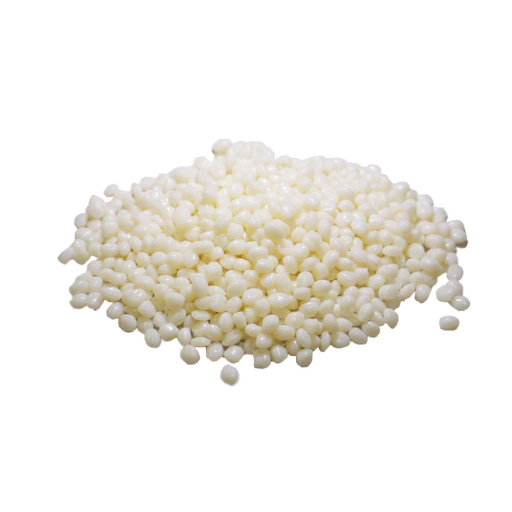
Grade selection is elimination, not guesswork. Start with the application, then narrow by hardness, temperature, fluid exposure, processing, and compliance.
Five Questions That Narrow the Grade
- What hardness does the part need? Start with the flexibility the assembly requires, not the hardest grade available.
- What is the continuous and peak temperature? Include brief excursions such as paint-bake or sterilization.
- What fluids will the part contact? Oil, fuel, hydraulic fluid, hot water, and cleaning agents each change the shortlist.
- How will the part be made? Injection molding, extrusion, and blow molding use different viscosity grades.
- What documentation is required? Food contact, medical, flame retardance, RoHS, REACH, and OEM specifications may limit the options.
Hardness, Heat and Fluid Exposure
Harder grades offer higher modulus, better creep resistance, and higher melting points. They are also less flexible and can be more sensitive to hydrolysis in hot water.
Softer grades offer flexibility and low-temperature performance but lower load capacity. Don’t default to the hardest grade. Specify the softest grade that meets the mechanical and thermal requirements.
Injection Molding vs Extrusion vs Blow Molding
Injection molding uses general-purpose grades with moderate viscosity. Extrusion needs higher melt strength. Blow molding needs higher viscosity or chain-extended grades to hold the parison.
A buyer we’ll call Elena compared a commodity TPEE at roughly US$2 per kilogram with a branded grade at roughly US$4 for an under-hood boot. The commodity grade met the hardness target. It failed the heat-aging and oil-exposure validation. The second quote looked expensive until scrap and rework entered the calculation.
Processing TPEE: Drying, Temperature and Regrind
TPEE runs on standard injection molding and extrusion equipment, but it punishes loose temperature control.
The Temperature-Sensitivity Trap
TPEE melt viscosity changes sharply with temperature. A 10 °C shift can move viscosity several-fold, turning a stable process into short shots, flash, or inconsistent dimensions.
A process engineer we’ll call Marcus ran a cable jacket line on a narrow window. A barrel-temperature drift of about 10 °C produced a run of undersized jackets.
The material was fine. The control was not. Start with the supplier’s melt range, verify it, and hold it.
Drying and Moisture Control
Most TPEE grades require drying before processing. Moisture can drive hydrolysis in the melt and weaken the finished part. Typical recommendations range from 80–120 °C for 6–8 hours, with some grades dried at 100 °C for 2–3 hours. Follow the grade-specific datasheet and verify moisture before the run.
Regrind and Batch Consistency
Clean, dry production regrind is usually usable at a controlled ratio, commonly in the 25–50% range depending on grade and application. Confirm the limit with the supplier. Keep regrind segregated by grade and color, and document the ratio.
Limitations of TPEE Buyers Should Know
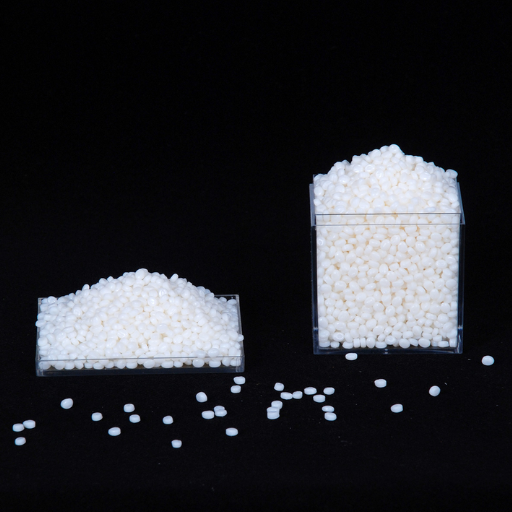
TPEE is strong, but it is not universal. These limits most often surprise buyers.
Hot-Water Hydrolysis
Hot water and steam can attack the polyester linkages. Risk increases around 70 °C and above, and harder grades can be more sensitive. Hydrolysis-stabilized grades reduce the risk, but they don’t make every grade suitable for continuous hot-water service.
UV and Thermal-Oxidative Aging
Unstabilized TPEE can degrade under prolonged UV exposure. Outdoor parts need a UV-stabilized grade, often a black or weather-resistant package. Hot-air aging is a separate concern addressed by antioxidants.
Compression Set vs Rubber
TPEE is not the best choice for every seal. In one comparative study, TPEE showed roughly 63% compression set versus about 23% for NBR and 33% for EPDM. Test conditions matter, but the pattern is clear: under sustained compression, thermoset rubber and TPV often hold their shape better.
Cost Premium
TPEE costs more than generic TPE and usually more than TPU or TPV. The premium buys heat resistance, modulus retention, flex fatigue, and oil resistance. If the application does not need those properties, the premium is wasted.
Sourcing TPEE: Price Drivers and Supplier Checklist
TPEE is not a commodity. Two pellets with the same hardness can differ in stabilization, viscosity, compliance documentation, and brand premium.
Buyers comparing thermoplastic polyester elastomer manufacturers in China should confirm ISO naming, lot-level certificates of analysis, and processing support, not just price per kilogram.
What Drives the Price Difference
The main drivers are brand and grade family, hardness and formulation, stabilization package, volume and packaging, documentation and compliance, and origin and logistics. Public listings on 2026-10-20 showed commodity TPEE around US$2.1–3.2 per kilogram FOB China, while branded Hytrel grades ranged from roughly US$3.4 to US$12 per kilogram, with specialty grades higher. Treat these as indicative market ranges, not quotes.
What to Confirm Before You Order
Before placing an order, ask for:
- A grade-specific technical data sheet with test methods and units.
- A certificate of analysis for the actual lot, not just the grade.
- Drying and processing recommendations for that grade.
- The supplier’s regrind policy and batch-consistency data.
- Compliance declarations for RoHS, REACH, and any food-contact or medical requirement.
- MOQ, lead time, packaging, and shipping terms.
- A sample for incoming validation.
Yifuhui supplies TPEE pellets and stock, including Hytrel 5526 and Hytrel 7246. We help buyers compare grades and confirm documentation before shipment.
Frequently Asked Questions
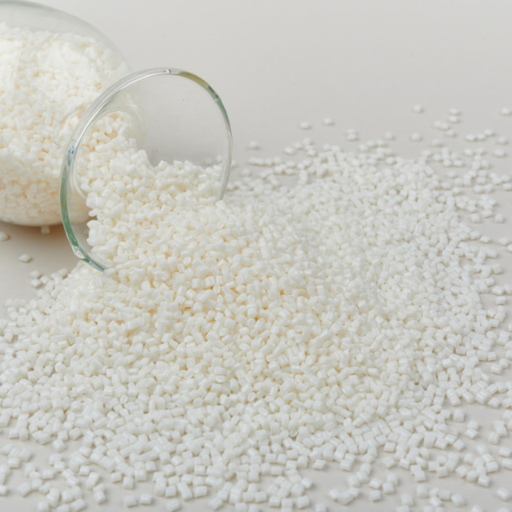
What is TPEE material?
TPEE is a thermoplastic polyester elastomer. It is a block copolymer with hard polyester segments and soft polyether or polyester segments. It behaves like rubber but melts and processes like a plastic.
Is TPEE rubber or plastic?
TPEE is a thermoplastic elastomer. It has rubber-like elasticity and plastic-like processing. It is not a thermoset rubber, and it is not a rigid conventional plastic.
What does TPC-ET mean?
TPC-ET is the ISO designation for a thermoplastic copolyester elastomer. It describes the same material family commonly called TPEE.
What is the difference between TPEE and TPU?
TPEE generally has higher modulus and better load retention at elevated temperature. TPU often wins on abrasion resistance and transparency. The right choice depends on temperature, flex fatigue, and optical requirements.
What is TPEE used for?
Common uses include CVJ boots, air ducts, fuel and hydraulic hoses, drive belts, cable jackets, industrial tubing, gears, and selected consumer and medical parts.
What is the melting point of TPEE?
Melting points typically range from about 150 °C to 230 °C, depending on hardness and grade. Common grades melt between 180 °C and 220 °C. Melting point is not the same as maximum service temperature.
Is TPEE food safe?
Some TPEE grades are formulated and certified for food-contact use, but the base polymer alone does not guarantee compliance. Ask for the grade-specific food-contact declaration. For general TPE safety, see our guide on whether TPE plastic is safe.
Is TPEE recyclable?
TPEE is a thermoplastic, so clean production scrap can usually be reground and reused at a controlled ratio. It isn’t biodegradable, and end-of-life recycling depends on the available collection and processing stream.
How much does TPEE cost?
Indicative public listings in October 2026 showed commodity TPEE around US$2.1–3.2 per kilogram FOB China and branded grades from roughly US$3.4 to US$12 per kilogram. Specialty grades can be higher. Confirm pricing against the exact grade, volume, and documentation.
Conclusion
TPEE fills a specific gap: rubber-like flexibility with engineering-plastic strength, heat resistance, and oil resistance. That combination is why it dominates dynamic automotive parts and why it commands a premium over generic TPE.
Keep these five points in mind:
- TPEE, TPC-ET, COPE, and “polyester rubber” describe one material family. Brand names sit on top.
- Hardness, melting point, and service temperature are grade-dependent ranges, not universal constants.
- TPEE beats TPU and TPV on heat and modulus retention, but loses on compression set and sometimes abrasion.
- Hot-water hydrolysis, UV aging, and cost are the limits to check before you commit.
- A grade-specific datasheet, lot certificate, and processing recommendation matter as much as the price per kilogram.
If you are specifying a thermoplastic polyester elastomer for a new part, start with the application and work backward to hardness, temperature, and fluid exposure. Our team can help you narrow the grade and confirm availability. Request a quote or a grade recommendation and we will respond with the documentation you need.