It takes a single peak of 230 °C under the bonnet of an EV inverter to permanently de-rate a PA66 bracket by 30 percent. The wrong resin in the hottest spot of an assembly does not just shorten part life. It triggers warranty claims, redesign cycles, and procurement scrambles that wipe out the savings of every other line on the bill of materials.
You likely already know the notion of “heat resistant” is fuzzy. HDT, continuous service temperature, glass transition, melting point, and UL RTI are each telling a different tale, and judging the wrong metric produces either an over-specified part nobody can afford or under-specified junk that breaks in the field. In this guide, the most significant high-temperature engineering plastics are compared by actually relevant metrics, ranked according to realistic prices, and advice is given as to what one has to ask about a pellet supplier before a purchase order is issued.
Here are the sections: definitions, the five temperature numbers that help you pick, a resin-by-resin explanation, a comparison table to stick into a design review, and a procurement picture that marries performance with cost.
What Counts as a High Temperature Engineering Plastic?
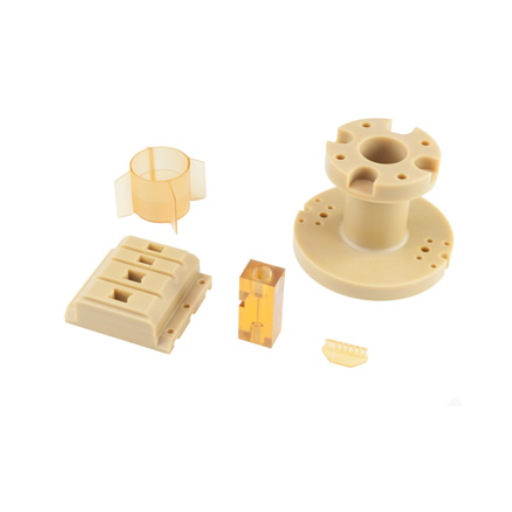
A high-thermal engineering plastic is a thermoplastic that maintains useful mechanical properties under load at continuous service temperatures greater than 150 degrees Celsius, with short-term resistance above 200 degrees Celsius. These resins maintain stiffness, toughness, and dimensional stability even as normal plastics soften, creep, or oxidize.
This overall categorization fits well in the three stages with variations concentrating on both price and qualification efforts.
- Regular Engineering Plastics – POM, PA66, and PC see continuous service between almost 100-120 degrees Celsius.
- High Performance Engineering Plastics- PPS, PSU, PPSU, and PEI reach continuous service at 150-200 degrees Celsius.
- Ultra-High Performance-Glass Reinforced- PEEK, PEKK, PAI, PI, LCP, and PTFE allow operating in 200+ to 315+ degrees Celsius continuous service.
When engineers say “high temperature plastics” in a procurement meeting, they usually mean tiers two and three. That is the band where metal-replacement, weight reduction, and chemical-resistance value cases live. Our comprehensive engineering plastics guide walks through the full tier map if you need the broader context.
The Temperature Metrics That Actually Matter
Most failures along these lines occur from drafting the temperature number wrong. Here are the five that a team with Buyers and Designers should agree on when quoting resin compounds.
Heat Deflection Temperature (HDT)
HDT, measured per ASTM D648, is the temperature at which a loaded bar deflects a set amount under either 0.45 or 1.8 MPa. It is a short-term, low-load proxy for stiffness retention. HDT is useful for screening, but it does not predict long-term behavior.
Continuous Service Temperature (CST)
A continuous service temperature – CST is a temperature which a resin is capable of maintaining for thousands of hours of continuous service exposure without significant change in its mechanical and electrical properties. CST is of the highest importance to be recorded on any specification sheet because it equates to the life of the part.
Glass Transition Temperature (Tg)
Tg, measured by DSC per ISO 11357, is where an amorphous resin loses stiffness as it transitions from glassy to rubbery. For PEI, PSU, PPSU, and PC, Tg sets the practical ceiling. For semi-crystalline resins like PEEK, PPS, and high-heat PA, the melt point matters more.
Melt or Decomposition Temperature
Melt Temperature affects Processing Window, so the machine must have melt within a near-temperature range, say for PEEK, around 343 °C. For that huge melt temp, the injection molding machine is ruled out if it can’t accommodate a vastly roomier barrel temperature of say 360-400 °C.
UL RTI Rating
The UL Relative Thermal Index is a long-term, certified rating. UL RTI numbers are typically 30 to 60 °C lower than HDT for the same resin. If a safety agency or insurance carrier is involved, this is the only number that counts.
Why HDT alone is misleading: The HDT undergoes a shortened type test under a fixed load, while real-life parts run numerous years under different loads, oxides, and chemical attacks; a resin can achieve a handsome HDT but still fail by 50 C in UL RTI. Do not sign off yet on the higher-temperature engineering plastic unless the HDT is put side by side with CST and UL RTI operating temperature well above HDT for once.
Want a single technical data sheet you can hand to your design team? Request our consolidated thermal property datasheet covering PEEK, PEI, PPS, PSU, and high-heat PA grades.
The Core High Temperature Engineering Plastics
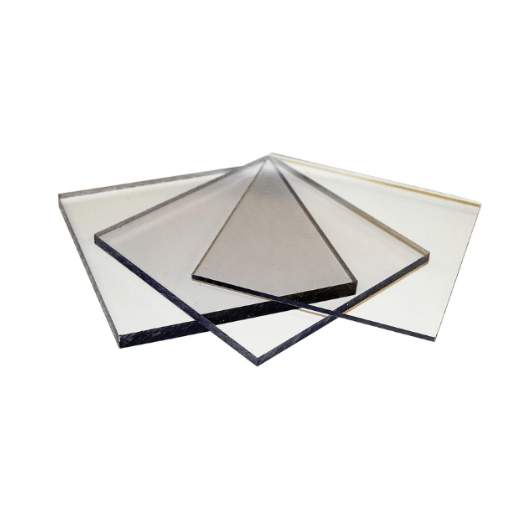
This is the working shortlist. Each resin paragraph explains the problem these materials solve, so engineers and buyers can pre-qualify candidates in minutes.
PEEK (Polyetheretherketone)
PEEK is the benchmark. Tg sits at 143 °C and CST holds near 250 °C, with short bursts to 310 °C. Unfilled PEEK delivers a tensile strength around 100 MPa, and 30 percent carbon-fiber-reinforced grades push past 200 MPa. PEEK resists hydrolysis, steam sterilization, and most solvents. Solves: aerospace bracket weight, semiconductor wet bench durability, downhole oil and gas seals, and surgical implants. Cost runs roughly $80 to $150 per kg for industrial grades. Our PEEK plastic pellets page covers grade-by-grade specifications.
PEKK and PAEK
PEKK is the most suitable middle high-temperature thermoplastic for the aero tooling and 3D printing applications on account of its having the second largest heat loading. Within the thermoplastic family of PAEKes, PEEK and PEKK account for the most substantial usage by engineers.
PEI / ULTEM (Polyetherimide)
PEI runs 170 to 180 °C continuous with a Tg of 217 °C. ULTEM 1010 holds FAA flame, smoke, and toxicity (FST) compliance, and ULTEM 9085 is the standard for aircraft interior ducting. PEI also offers excellent dielectric stability and gamma-radiation resistance. Solves: aircraft interiors, sterilizable trays, electrical insulators. Cost runs 20to20to45 per kg. See our deep dive on PEI / ULTEM plastic for grade selection.
PPS (Polyphenylene Sulfide)
PPS is the chemical-resistance leader among affordable high-performance resins. CST runs 200 to 220 °C, and PPS-GF40 holds an HDT north of 260 °C. PPS shrugs off automotive fluids, acids, and bases at temperature. Solves: under-the-hood automotive sensors, EV connectors, pump impellers. Cost runs $8 to $18 per kg, which makes PPS one of the highest-value high temperature engineering plastics on the spec sheet. See our PPS plastic resin overview for grade details.
PSU and PPSU
PSU operates feasibly with a 160 °C continuous-temperature fed-in, PPSU with 180 °C, both with capable of holding their own against repeated steam sterilizations; thus, reusable surgical instruments and dialyzer housings thrive on them. The one thing that PSU lacks when compared to PPSU is the high impact toughness of the latter. Solves: medical sterilization and food-contact hot fluid handling.
PAI (Torlon)
PAI attributes the highest fitted adhesion to any filled thermoplastic, close to 140 MPa tensile strength and CST develops about 260 °C. It performs well machine from stock shapes but demands a slow, multi-step post-cure. Solves: high-load wear parts, thrust washers, downhole oil and gas components. PAI runs around 190 to 200 per kg.lazy’s.
PI (Polyimide, Vespel-type)
PI sustains continuous service to 300 °C and beyond. Most grades are not melt-processable; parts are from direct-formed billets or compression molding. Solves: spacecraft thermal isolators, semiconductor handling rings, jet engine seals.
LCP (Liquid Crystal Polymer)
LCP runs constant at 220°C and processes to wall thickness down to 0.2 mm with no flash formation. The favorable resin for high density electronic connectors and 5G antennas, LCP possesses dimensional stability through reflow soldering, making it the go-to standard workhorse for surface mount manufacturing.
Fluoropolymers: PTFE, PFA, FEP, and PVDF
This family brings an exceedingly high-temperature performance while also offering nearly unrestricted chemical resistance. PTFE remains ductile to 260°C in the limit and does not slump during melting. PFA is melt-processed as a thermoplastic and holds to 260°C continuously. PVDF holds 150°C and shrugs some pretty strong acids on into the chemical processing and plant environments.
High-Heat Polyamides: PA46, PA9T, PA10T
These are your entry-level options in price. With proper glass-fiber reinforcement, PA46 (Stanyl) and PA9T (Genestar) reach Tg values ranging between 150° to 180°C and cost a fraction of what PEEK or PEI would. This fixes busbar housings, automotive chain tensioners, and lighting reflectors. Price ranges approximately 6to6to14 per kg.
High Temperature Engineering Plastics Comparison Table
Use this side-by-side as a first-pass screening tool. Numbers reflect typical unfilled grade values from published technical data sheets and 2026 indicative market pricing.
|
Resin |
Tg (°C) |
HDT @ 1.8 MPa (°C) |
CST (°C) |
UL RTI Elec. (°C) |
Typical $/kg (USD, 2026) |
|---|---|---|---|---|---|
|
PEEK |
143 |
152 |
250 |
240 |
80to80to150 |
|
PEKK |
162 |
165 |
260 |
220 |
110to110to180 |
|
PEI / ULTEM |
217 |
198 |
170 to 180 |
170 |
20to20to45 |
|
PPS |
90 |
110 (unfilled), 265 (GF40) |
200 to 220 |
200 |
8to8to18 |
|
PSU |
187 |
175 |
160 |
160 |
14to14to28 |
|
PPSU |
220 |
207 |
180 |
180 |
25to25to48 |
|
PAI (Torlon) |
280 |
278 |
260 |
220 |
90to90to180 |
|
PI (Vespel) |
n/a |
360+ |
300+ |
240 |
200to200to400+ |
|
LCP |
280 |
240 |
220 |
220 |
20to20to50 |
|
PTFE |
n/a |
121 |
260 |
180 |
14to14to30 |
|
PFA |
n/a |
74 |
260 |
200 |
50to50to90 |
|
PA46-GF30 |
70 |
290 |
150 to 180 |
140 |
9to9to14 |
|
PA9T-GF35 |
125 |
286 |
150 to 170 |
130 |
10to10to16 |
Two caveats to keep in mind along these lines. One is the fact that fillers greatly affect every row-it would be discussed next. The second point involves using $ per kg to contrast the figures rather than to use them for a purpose. Most of the time, scrap rate, qualification cost overshadow all variable cost of the resin.
How Fillers and Reinforcements Shift the Temperature Envelope
Rewrites reinforcement to spec sheet. The loading rate varies, generally with substantial inclusions of glass fiber, making the heat deflection temperature (HDT) soar by 60 to 120 °C and the flexural modulus triple. When the fiber consists mainly of carbon, stiffness levels ace majority of the aluminum alloys at half the density.
There could have been trade-offs against warming and warpage due to glass-fiber inclusion and anisotropy; diamond fillers smooth shrink but often depress stiffness. Finally, fiber-carbon inclusion in the polymer conducts, outcasting electronic housing. Even then, often the believe-held expectation of high cost gap is little in reality. PPS-GF40 at $14 per kg may cost around 70 to 80 percent less than PEEK yet successively fills a big part of the design questions engineers manipulate toward PEEK as a resin just because they have understood better its shape modulation limitations against peak loads.
Most likely, a reinforced resin grade from a mid-tier ranks in total-cost analysis higher for applications lying between 180 and 220 °C continuous service, with dimensional stability and good chemical resistance. This testifies against the most lucrative application of category engineering/thermosetting plastics.
Matching High Temperature Engineering Plastics to Industry Applications
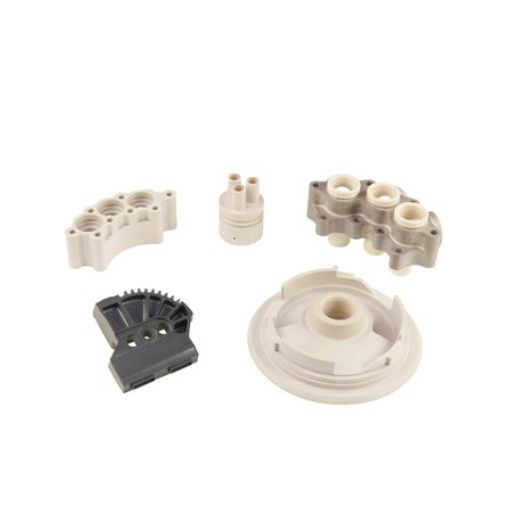
In these examples, the correct resin often depends on how it turns out in the operating environment as opposed to mere high rankings on a heat record; for major industries, such as space and defense, the shortlist is arranged such:
Aerospace and Defense
PEEK, PEKK for use in the clamping and mount structures. PEI/ULTEM for FST compliance in cabin interiors and ductwork. PAI for high-load bushings. Mike replaced in 2024 an aluminum clamp fabricated in 6061-T6 material that had previously sinned a regional jet cable clamp with PEEK-CF30 in which, at a tier-one aerospace supplier. The weight per aircraft dropped 38 percent, with the unit cost falling 19 percent after the initial qualification year because PEEK has excluded the anodize and corrosion-inhibitor steps.
Semiconductor and Wet Bench
PEEK, PFA, and PTFE do good with hydrofluoric acid, etc., and fast temperature from semiconductors and pools. Due to the cleanliness stringency, vendors required are much fewer; semiconductor procurement teams instead qualify resin lots than merely resin grades.
EV and E-Mobility
The principal thermal management responsibility in EVs is passed into high-heat PA, PPS, and LCP. PPS-GF40 in busbar insulators, also in inverter housings. PA46-GF30 in cooling-system manifolds. LCP in fine-pitch high-voltage connectors. And on the practical side, PA66 is no longer fitting the harsh environments of the 800-volt platforms, forcing a step-up to either PA46 or PPS. For a deeper understanding of PA66 Nylon Pellets, please refer to our accompanying guide: PA66 Nylon Pellets: Complete Procurement Guide for Engineering Manufacturing
Oil and Gas
PEEK and PAI in downhole seals and bearings. PPS in surface chemical-injection components. The combination of pressure, temperature, and highly aggressive fluids leaves a small list of materials; supplier qualifications are typically far more detailed than catalog offerings.
Medical Sterilization
PEI, PSU, PPSU are placed after each autoclave cycle. PEEK as is done for Tf implantable and reusable instruments. The price inquiry often includes all details relevant to biocompatibility certificates (ISO 10993, USP Class VI).
Sourcing reusable surgical components or aircraft cabin parts? Talk with our engineering team about PEEK, PEI, and PPSU pellet grades stocked for medical and aerospace qualification.
Why High Temperature Engineering Plastic Parts Fail
The failures within this class are different from those of commodity plastics. Being aware of them saves oneself from any unworthy specification choices.
Creep under sustained load is a common failure that is synonymous with a con-beat-ily mode. Suppose you have earmarked a part with 200°C for its flash temperature, but it might deform permanently when under load for a few thousands of hours at 160°C. For a structural application, you shall choose a CST.
Thermo-oxidative ageing: Here, there is a decline in toughness as time advances. Conspicuously, PEEK and PPS manage rather well, whereas PEI exhibits a steeper propension towards hydrothermic effects in less oxygen-rich scheduled environments over 170°C. Antioxidant additives may add some marginal lifetime. However, rarely are these on basic data sheets.
Hydrolysis sneaks in with PEI, PSU, and PC in steam or hot water. PPSU and PEEK are victims to a much lesser extent, which is why the dialyzer housings ran from PC into PPSU in the past decade.
Residual stresses are held from improper drying, hot-runner imbalance, or wrong gate location out west in all high-Tg amorphous resins like PEI, and cracks small increases in length up to weeks after molding. Drying conditions that must be adhered to for these resins are rarely optional.
Cost vs Performance: A Procurement Decision Framework
This is the section that most guides dealinguse with engineering often skip. There are three levels of procurement benchmarks.
Stage 1, very good entry-elev temp: engineering plastics such as high-quantity PA and PPS, $6-$18 per kilogram, are covered by any strong electrical and performance aspect of a chemical product at an application running from around 150 °C to 220 °C.
Tier 2, middleness in the range high temp: technique plastics such as PEI/ULTEM, PSU, PPSU, LCP, $14-$50 per kilogram, which have their benefits from steam sterilization, transparency, FST compliance, or thin-wall flow.
Tier 3, ultra high temp: extreme plastics such as PEEK, PEKK, PAI, PI, $80 to $400+ per kilogram. These materials are high-end, considered for continuous service over 220 °C, or due to demanding chemistries and mass-critical assemblies, the advantages with metal replacement are expected to justify this high resin cost.
Carlos, the lead procurement head in North American EV components, did a real cost trade in 2025; his team accepted PEEK-800 V for 180°C continuous for a bus bar carriage. PPS-GF40 did satisfy, in a side-by-side qualification, every property requirement at $13 per kg against $108 per kg for the PEEK grade. The annual materials spend on that single part declined from $1.62M to $0.195M.
The lesson to be learned is not “go cheap,” but the lesson should include the specification of the metric that is really needed (CST plus UL RTI, plus chemical exposure), and thus letting the resin tier follow, rather than visa versa, where a resin was specified but justification had to be found.
How to Source High Temperature Engineering Plastic Pellets Reliably
The perfect resin choice will not matter if feedstock production ever goes badly. Five tightly controlled aspects separate a stable program from one that has to be recalled.
- Each lot must have a certificate that includes as minimum requirements Tensil retention, Volume Resistant PPS, Moisture content, and Melt Flow Forge alongside the I. D. of production.
- Trace lot back to the resin producer to keep a failure investigation from dragging on for weeks.
- The pre-drying per the specs at production, which is PEEK at 150 °C for 3 hours, PEI at 150 °C for 4 hours, and PPS at 130 °C for 3 hours. Moisture-driven splayed is probably the most easily preventable defect.
- Guided by resin chemistry we do not regrind it. PEEK may tolerate a little regrind but PEI loses the notched Izod rapidly on multiple hot histories.
- The idea is to rely on one supplier for 99% of the polymers and to struggle through all the small problems with quality measures, qualifications, change-control, and audit trails when need be.
Yifuhui stocks PEEK, PEI / ULTEM, PPS, PSU, PPSU, PFA, and highly heat-resistant PA grades in all pellet form with appropriate COAs and available lot reservation for production runs. This resin’s span allows both engineering and procurement teams to shortlist, test out, and switch levels without always onboarding another new vendor because their specs have changed.
Frequently Asked Questions
What plastics are best for high temperatures?
The Vespel grade of Polyimide (PI) may be operated continuously above 300 °C and in an unstable situation above 400 °C which is the maximum for any practical engineering plastics. Coming into the running in the 260-250 chassis are PTFE and PEEK.
Is PEEK the best high-temperature plastic?
PEEK is undoubtedly the strongest overall high-temperature engineering plastic from a material standpoint, but it does not always off er the best package of properties. PPS, PEI, and high-heat PA respectively cover the 150 to 220 °C. temperature slot for a lot better off a fraction of PEEK. State the temperature you require, and try getting into the lowest area in each grade that meets the properties you need.
When do we call them high heat or high-temperature plastics?
Connotations aside, those two words used interchangeably when discussing industrial processes. Pretty much all we are saying here is “high-temperature engineering plastics” means a plastic resin manufactured for the duration of being subjected to loads beyond 150 °C, and which has controlled PVC data.
Can high-temperature plastics be 3D printed?
Yes. PEI/ULTEM 1010 and 9085, PEEK, PEKK for FDM printing on industrial-machines. The build-plate temperatures almost always reach over 200 degrees, and post-heat treatments help in attaining solid dimensional stability.
So, what replaces metals at high temperatures?
PEEK-CF30, PAI, and PI replace aluminum and a few stainless pats in aerospace, oil and gas, and equipment for semiconductors. The opportunity, indeed, allows a set scenario: weight savings weigh most, corrosion is a matter, and the component count is only in a meaningful range to justify the qualification spend.
Choose the Right High Temperature Engineering Plastic for Your Program
The information that can be gleaned from this document is heavy on three points.
- Emphasize continuous service temperature (CST) and UL RTI, not HDT alone, because HDT is used as a screening value. The parameters affecting functional part life are its approved UL RTI rating and CST.
- Start with mid-tier placement-Good opportunities are in PPS, PEI, and the high-temperature engineering plastics high-end, which endows their potential applications to arouse wide industrial interest in the range of 150 to 220 °C, at one-tenth of the cost as compared to PEEK.
- Select multiple resins from the same provider. Broader resin selection can speed up qualification cycles, simplify COA-related challenges, offer an engineer some room, and substitute as one scales up projects.
One set of resins will principally influence schedule slip, warranty claims, and cost sheet. The other sets of resins will mainly manifest as field failures mildly symptomatic of months of stress and heartburn from delayed responses.
Here we’d be grateful for your interest in reaching out to Yifuhui for quoting high-temperature engineering plastics. For reference, our team is a supplier of PEEK, PEI/ULTEM, PPS, PSU, PPSU, PFA along with a variety of high-temperature PA grades (all in the pellet form) supported by documented COAs, lot reservation, and engineering support that ties the resin choice to your operating envelope. You may reach out to any engineer on staff and you shall be waiting for a response within 24 hours in the form of technical data sheets and approximate pricing values on specific volume orders.