The same resin decision fails differently in a car than it does anywhere else.
An ABS panel that behaves perfectly in a warehouse can pass every mechanical test and then fail the OEM’s odor panel. A polycarbonate bezel that meets every requirement on the drawing can come back 22% over budget. Chrome plating that passes peel test at room temperature can crack through a thermal cycle in the field.
Jian learned the third one. He is a program engineer at a Tier 1 exterior trim supplier in Ningbo, and his team had specified a standard ABS for a chrome-plated grille. The drawing said “ABS,” and ABS was the cheap, familiar choice.
The part passed every lab test. Then the plated grilles started peeling chrome after two winters of thermal cycling, and the field action cost more than the entire resin budget for the program. Plating grade selection, not the resin family, had been the real decision.
Choosing between PC and ABS for automotive parts is a commercial decision, and you make it before the tool is cut and before the PPAP is submitted. Get it wrong and you are looking at new steel, a re-run of validation, and a slipped start of production.
You probably already know both materials work in a car. What you need is the requirement that binds your part, the finish method it has to survive, and the grade to order so the part behaves in year three the way it did in the first trial build.
This guide covers the vehicle-zone decision matrix, the finish strategy most teams miss, the interior emission specs that quietly disqualify a grade, the lighting split, the EV battery cover application, and what to put on the purchase order so the specification holds. Wherever you see a polycarbonate vs ABS for automotive decision, the same four constraints apply. As a resin supplier to automotive Tier 1 and Tier 2 manufacturers, we quote across both families every week.
PC vs ABS for Automotive: The Zone Decision Matrix
Start with the requirement that can fail your part, not the material you used on the last program.
The short answer: ABS is the automotive interior default. It costs less, molds easily, takes paint and plating extremely well, and holds a good surface finish. It’s also HB-rated unless flame-retarded, softens near 90°C, and yellows outdoors.
Polycarbonate adds impact strength, heat resistance to roughly 130°C, and transparency, at 30% to 50% more material cost. Painted and plated exterior trim usually lands on ABS or a PC/ABS blend. Lenses and EV battery covers land on PC and flame-retardant PC/ABS.
| Vehicle zone | Binding requirement | ABS | PC | PC/ABS blend |
|---|---|---|---|---|
| Instrument panel skin, door trim | Cost, finish, scratch resistance | Best choice | Over-specified | Higher cost |
| IP carrier, pillar, console structure | Impact + moderate heat | Marginal | Over-specified | Best choice |
| Plated grille, wheel cover, badge | Plating adhesion | Plating-grade ABS | Uncommon | Plating-grade blend |
| Painted exterior trim | Gloss, heat in service | Easy-flow high-heat ABS | Not typical | Good |
| Permanent outdoor, molded-in-color | UV and color retention | Fails without ASA | Good | Limited |
| Headlamp lens | Transparency + hardcoat | Not possible | Best choice | Opaque |
| Lamp housing, bezel, base | Warpage, dimensional stability | Good | Good | Best choice with GF |
| Near-source heat (bulb, power stage) | Heat above 100°C | Creeps and warps | Best choice | Grade-dependent |
| True under-hood (>130°C) | Heat above PC’s ceiling | No | No | No: use PA6-GF |
| EV battery cover | Flame retardance at wall | FR grade only | V-0 available | V-0 common, best balance |
Read the table by finding your binding requirement, then accept the trade-offs it forces. A cosmetic interior panel that must hit a cost target pulls you toward ABS. A lens or a battery cover pulls you toward PC or a flame-retardant blend. A part sitting above the engine pulls you out of this comparison entirely.
The base properties behind this table are compared in full in our polycarbonate vs ABS guide. The rest of this article stays where automotive differs: finish, emissions, thermal zone, and sourcing.
Need a grade recommendation for a specific part? Send us the vehicle zone, service temperature, and finish method and our engineers will confirm the resin family and grade within 24 hours.
Why Automotive Changes the PC vs ABS Answer
An automotive part carries four constraints at once, and a resin that wins on one can lose on another.
Thermal zone. The part’s position in the vehicle sets its heat load. Cabin trim sees cabin heat. A lens sees bulb or LED heat. Anything above the engine sees exhaust-driven temperatures that neither PC nor ABS can survive.
Finish method. A plated part, a painted part, and a molded-in-color part are three different material decisions, not one material with three post-processes.
Cabin emissions. Interior parts must pass volatile organic compound (VOC) and odor limits set by the OEM. This is the constraint that most often disqualifies an otherwise perfect grade.
Durability and weathering. A part that lives outdoors for the vehicle’s life needs UV stability and color retention that standard ABS does not have.
Two program-level constraints sit on top of those. The OEM material approval applies to a specific grade, not to a polymer family. And end-of-life and post-consumer recycled content targets now reach the materials engineer’s desk, not just the sustainability team’s.
The general property comparison, including melt temperatures and drying discipline, belongs to the pillar guide. This article stays on the automotive decision. Where your part sits in the vehicle is the first thing to settle.
Interior: Where ABS and PC/ABS Win
ABS is the best plastic for car interior trim that has to hit a cost target, and it earns that position for good reasons. It takes paint, it holds a fine surface finish, it resists scratching and marring better than PC, and it is the cheapest of the three options.
What is a car dashboard made of? On most vehicles the visible dashboard surface is an ABS skin, and the structural carrier behind it is often a PC/ABS blend. Instrument panel skins, door inner panels, center console panels, rear lamp bodies, and decorative trim all commonly run on ABS.
It has one failure mode worth designing around. Unmodified ABS releases internal stress slowly, and that release can show up during storage or transport at elevated temperature as deformation. For a dimensionally critical part, that slow creep is the reason to look at a blend rather than a standard grade.
PC/ABS covers the middle. Instrument panel carriers and retainers, pillars, mid consoles, and air-conditioning vents need more impact and heat resistance than ABS delivers, but pure PC is over-specified and over-priced for the job. The blend is the standard answer, and it handles automotive fluid exposure better than pure PC at lower cost. Our PC/ABS blend pellets guide covers the ratios and grade families.
The Cabin Emission Spec That Decides the Grade
This is the constraint competitors skip, and it’s the one that most often forces a grade change.
An interior part that passes every mechanical requirement can still fail the OEM’s odor and VOC panel. Standard ABS and commodity PC/ABS grades sometimes carry enough residual monomer and volatiles to miss the limit. Automotive interior grades are formulated with a desorption or devolatilization step to cut those residuals, and they carry named OEM approvals to prove it.
| Interior part | Typical spec family | What to ask the supplier for |
|---|---|---|
| Instrument panel carrier, console trim | VDA 277 for VOC; OEM odor panel | VOC value in µg/g and the odor grade, not a verbal “low odor” |
| IP and pillar trim (European programs) | BMW GS 93016, Daimler DBL 5404.28/.29/.83, VW TL 522 31-A/B | The approval document naming your specific grade |
| IP and console (North American programs) | GM GMW15581P-ABS+PC, Ford WSS-M4D585-C1 | Grade-level approval, not a family statement |
| Console, decorative trim, vents | Low-gloss and low-odor PC/ABS grades | Gloss target and odor data per lot |
For orientation on what the numbers look like, a published automotive PC/ABS grade records a VOC content of 9 µg/g to VDA 277 and carries approvals across the major European and North American programs. A low-odor alloy from a Chinese compounder claims an odor level within grade 3.5 and a 30% to 40% odor reduction, with heat deflection between 80°C and 105°C. Treat supplier-claimed figures as a starting point and verify against the OEM’s own test method.
Farah found this late. She was specifying a molded trim panel for a European program and had settled on a grade that met the impact and heat requirements comfortably. The odor panel failed.
The reformulated low-emission grade met the same mechanical targets. But the tool was already cut for the original flow length, and the new grade flowed differently enough to need a gate revision. Asking for the VOC data sheet at the specification stage, not the validation stage, would have cost a phone call instead of a tool change.
Not sure whether your interior part needs a low-emission grade? Send us the OEM spec reference from your program and we will confirm whether a standard or low-VOC grade applies.
Exterior: Plating, Painting, or Molded-in-Color
The finish method is a material decision, and this is where automotive parts diverge most from a generic comparison.
Plated trim uses a plating-grade substrate. Chrome-plated grilles, wheel and hub caps, mirror shells, badges, name plates, spoilers, and cowl tops are all plated ABS or plated PC/ABS. A plating grade is a distinct family with controlled butadiene content and surface chemistry, not a standard grade with a plating step added. Platable ABS grades and high-impact platable ABS/PC grades exist for exactly this purpose.
Plating durability is a thermal and adhesion problem, not a resin-family problem. Thermal growth at the chrome interface, peel test results, and thermal-cycle survival are what decide whether the part holds in the field. Plating-grade selection and gate and weld-line placement matter more than whether the base is ABS or a blend. That is the lesson Jian’s grille taught, and it is why a plating grade has to be named on the drawing.
Painted trim is cheaper than plating and avoids the plating line, but it adds a paint process and its own emissions burden. Easy-flow, high-heat ABS grades suit high-gloss painted exterior parts.
Molded-in-color (MIC) changes the material. For trim that lives outdoors permanently, molded in color with no paint and no plating, the answer is ASA or PC/ASA rather than plain ABS. ASA swaps the butadiene rubber in ABS for acrylic rubber, which keeps the processing and surface behavior of ABS while holding color and gloss under sustained sunlight. Removing the paint or plating step is a real cost case, and the weatherable blends often come in pre-colored, low-gloss finishes that pass the OEM’s UV and gloss-retention tests.
| Exterior finish | Resin family | Why |
|---|---|---|
| Chrome plating | Plating-grade ABS or plating-grade PC/ABS | Plating adhesion and thermal-cycle survival |
| High-gloss paint | Easy-flow high-heat ABS | Gloss, heat in service, cost |
| Molded-in-color, permanent outdoor | ASA or PC/ASA | UV and color retention without paint or plating |
| Painted or plated, warm location | PC/ABS | More heat and impact than ABS, cheaper than PC |
The ABS outdoor warning is real. Unstabilized ABS yellows, chalks, and embrittles under sustained sunlight, which is the main limit on ABS plastic in cars that sit outside. UV-stabilized grades help, but they do not turn ABS into a permanent-exterior material. If the part will still be in direct sun in five years, the specification is ASA or PC/ASA, or a coated system. Deciding this after tooling is the most expensive version of the mistake.
Lighting: PC Lenses, ABS and PC/ABS Housings
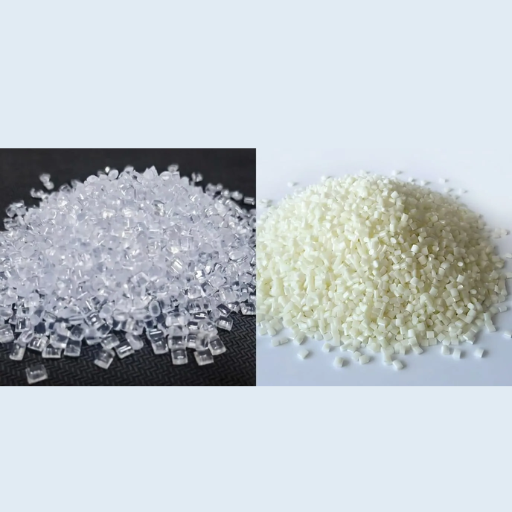
Automotive lighting is the cleanest example of the split this article keeps returning to. The lens and the housing are two different material decisions inside one assembly.
The lens is polycarbonate, and the hardcoat isn’t optional. Polycarbonate accounts for roughly half the plastic in a front headlamp, running at 85% to 88% visible light transmission with high impact strength. Because uncoated PC scratches and degrades under UV, an exterior lens carries a UV-curable hardcoat on its outer surface.
Thermal distance sets the design limit. With a halogen source, a PC lens needs roughly 80 to 120 mm of standoff from the bulb, because PC’s heat deflection temperature sits around 125°C to 138°C. LED sources cut that thermal load and widen the design freedom considerably.
This is why the LED transition expanded what designers could do with a PC lens rather than shrinking it. A vehicle lighting materials review covers the optical and thermal constraints in more detail.
The housing is ABS or PC/ABS. ABS transmits almost no visible light, which is exactly why it is never the lens and very often the housing, base, or frame. Where the housing is large and thin, warpage rather than strength is the deciding factor, and a glass-filled blend is the usual answer.
| Component | Material | Reason |
|---|---|---|
| Outer lens | PC plus UV hardcoat | Transparency and impact |
| Housing, base, frame | ABS or PC/ABS | Opacity, cost, moldability |
| Bezel, reflector carrier | PC/ABS, often glass-filled | Warpage and dimensional stability |
| Rear lamp housing | ABS, PC/ABS, or plating-grade ABS | Cost and finish |
A 2026 study of injection-molded headlamp housings tested PC, ABS, and PC/ABS blends with glass fiber at 0%, 10%, and 30% loading. The 30% glass-filled PC/ABS blend produced the lowest warpage at 0.61 mm, while 30% glass-filled ABS gave the lowest volumetric shrinkage. The study is worth reading for the deformation data behind the blend choice . The point for a buyer is that the housing decision is a warpage decision, and a glass-filled blend is often how you win it.
Optics and transparency behavior are covered in depth elsewhere in this cluster. Here, the lighting rule is short: PC for the lens with a hardcoat, ABS or a glass-filled blend for everything opaque behind it.
Heat: Where PC vs ABS for Automotive Stops Working
Automotive heat is two questions, not one, and mixing them up is how parts fail slowly.
The first question is cabin and near-source heat. Standard ABS softens around 90°C to 100°C with a practical ceiling near 80°C to 85°C, and its heat deflection temperature at 0.45 MPa runs roughly 80°C to 120°C depending on grade. Polycarbonate holds a heat deflection temperature of roughly 130°C to 140°C at 1.8 MPa with continuous service near 115°C to 120°C. Anything within sight of a halogen bulb, a power stage, or a heat sink is PC or PC/ABS territory.
The failure mode is slow, which is what makes it dangerous. An under-specified part doesn’t melt. It creeps and warps over months near the heat source, gradually loosening a boss or opening a seam until a rattle, an ingress failure, or a warranty claim appears.
The second question is the one honest suppliers answer directly. Above roughly 130°C, neither PC nor ABS is the answer. Intake manifolds, engine covers, radiator end tanks, thermostat housings, and pump bodies run well past PC’s ceiling. That is glass-filled PA6 or PA66 territory, where heat deflection temperatures pass 200°C. Specifying PC or a blend into a genuine under-hood position is the automotive version of over-specification, and it fails in the same slow way.
If your part sits on the engine rather than near it, the resin map you want is in our engineering plastics for automotive guide, which covers the full family from PP through PA66 and PPS. For lengths and load paths that put PC’s notch sensitivity under stress, our mechanical breakdown covers the design implications.
EV and NEV: Battery Covers and High-Voltage Parts
The battery pack is where the PC versus ABS decision has moved fastest, and where the stakes are highest.
Halogen-free flame-retardant PC/ABS is a mainstream battery cover material. Upper and lower pack covers, module covers, and separators combine PC’s toughness and heat resistance with ABS’s processability and chemical resistance, then add a halogen-free flame-retardant package. Suppliers report self-extinguishing at UL94 V-0 in a wall as thin as 1.5 mm, which is the threshold that matters because the rating has to hold at the wall your tool actually produces.
| Cover material | Flame rating | Density | Best fit |
|---|---|---|---|
| Halogen-free FR PC/ABS | V-0 at ~1.5 mm | ~1.2 g/cm³ | Balanced covers and module housings |
| FR polypropylene | V-0 with FR package | Below 1.0 g/cm³ | Lowest cost, lower modulus |
| Glass-filled PA6 / PA66 | V-0 grade available | 1.2 to 1.4 g/cm³ | Higher modulus, higher moisture sensitivity |
| PC unidirectional tape | Inherently FR | Low | Thin-wall top covers, recyclable (2026 development) |
The performance envelope suppliers claim is worth knowing before you specify. Published figures for flame-retardant PC/ABS battery materials include notched Izod above 600 J/m at minus 30°C, dimensional stability through minus 40°C to 125°C cycling, tensile strength around 59 to 60 MPa, Charpy impact up to about 70 kJ/m², and flexural modulus around 2,300 to 2,500 MPa.
Against metal covers, the reported benefit is a 10% to 20% reduction in pack weight, plus design freedom and fewer secondary operations. Attribute these as supplier-claimed values and validate them on your own geometry.
Major producers publish comparable cell-holder and module grades rated V-0 and stable near 80°C. A thermoplastic polycarbonate unidirectional tape also entered the market in 2026 as a recyclable alternative to metal battery top covers, in 1.0 mm and 1.5 mm thin-wall configurations.
High-voltage parts raise the bar further. Cell holders, module frames, busbar insulation, and charging-inlet housings need V-0 flame retardance and, where surface tracking is a risk, a high comparative tracking index. At this point the decision has stopped being about cost at all, and the requirement is written by safety certification rather than by the bill of materials. How flame ratings and tracking performance are specified and verified is covered in our PC vs ABS electronics enclosure guide. What matters here is that the automotive battery cover sits in the flame-retardant half of the PC-versus-ABS decision, and the ABS-only option does not apply.
Recycled Content, ELV, and the Reprocessing Reality
Post-consumer recycled content targets have moved from the sustainability report onto the materials engineer’s desk. OEMs commonly target 25% to 30% post-consumer content by 2030, and the EU End-of-Life Vehicle directive sets 95% vehicle recoverability. If your part involves recycled content, the choice between ABS and a PC/ABS blend changes the outcome.
The reason is in the reprocessing data. A published study on recyclability of coated plastics found that ABS notched impact falls by roughly 5.9% with recycled content and up to 12.5% after the fifth reprocessing cycle, because the polybutadiene phase degrades through thermo-oxidation. An ABS/PC alloy loses about 23% impact after five cycles but stays stable for the first two, and it performs better than ABS when coating impurities are present, losing 28% against ABS’s 42% at high contamination .
The practical read is simple. Introducing PC improves reprocessing stability. That makes recycled content far easier to justify in non-visible interior parts, underbody components, and brackets than in lenses, plated cosmetic parts, or structural high-heat positions. If a program’s PCR target is pushing you toward recycled feedstock, a PC/ABS blend is often the more robust home for it than a straight ABS grade.
Supply is the other half of the question. Capacity for recycled-content battery enclosures is scaling quickly, but traceable recycled PC/ABS with a controlled flame-retardant system is still the constraint. Confirm the recycled content and the flame package together, not separately.
The broader recycled sourcing framework, including quality control on recycled lots, sits in our recycled plastic pellets cluster.
PC vs ABS for Automotive: Cost and Supply in 2026
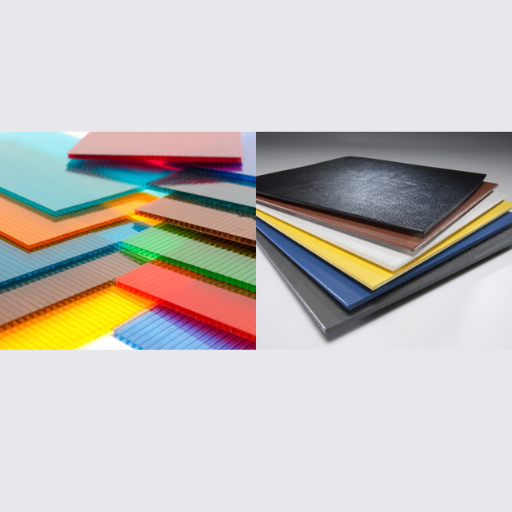
Indicative China pricing puts general-purpose ABS at roughly $1.40 to $2.80 per kilogram, general-purpose PC at roughly $2.00 to $4.00 per kilogram, and PC/ABS alloy at roughly $3.20 to $4.50 per kilogram. ABS is typically 30% to 50% cheaper than PC, and plating-grade, low-VOC, and flame-retardant grades carry a premium over commodity quotes. Budget from a grade-specific quotation rather than a market index.
Volatility is the 2026 story, and it changes substitution timing. In China, ABS moved from roughly 8,000 to 8,200 yuan per ton early in the year to a March 2026 peak above 13,000 yuan per ton, a rise of more than 50% driven by feedstock cost and panic restocking. It then hit an April high near 14,180 yuan before falling back to roughly 10,000 to 10,300 yuan by late June, a swing of more than 4,200 yuan per ton within a single quarter. General-purpose PC spiked more than 40% in the same period, with one report citing a move from 11,200 to 21,000 yuan per ton, before settling near 14,000 to 15,000 yuan by mid-year.
The bid-ask spread was as wide as the trend. Two nominally identical ABS grades in different regions reportedly traded up to 3,400 yuan per ton apart, which means a quote is only meaningful against a named grade, a named port, and a date.
Demand context matters too. China passenger car retail reportedly fell around 15% year on year in March 2026, while new energy vehicle demand continued to support specialty PC and PC/ABS grades even as commodity grades stayed weak. A program quoted at the April peak and re-quoted in July sees a very different commercial case for the same part, which is an argument for validating a second qualified grade before you need it rather than during a spike.
Order quantity is part of the comparison at automotive program volumes, and MOQ assumptions belong in the quote review. Our PC vs ABS injection molding guide covers how grade and process interact once the material is chosen.
Specifying the Pellet: What to Put on the PO
The resin decision isn’t finished when you pick the family. These are the checks that turn a material choice into a part that behaves in year three.
Name the grade, not the polymer. A standard ABS grade, a plating-grade ABS, a low-VOC PC/ABS, and a halogen-free flame-retardant PC/ABS are four different products. Write the grade family on the drawing, not “ABS.”
Remember that the OEM approval sits on the grade, not the family. Ask for the approval document that names your specific grade and its OEM specification, such as a GS 93016, DBL 5404, GMW15581P, TL 522 31, or WSS-M4D585-C1 reference. A statement that “our ABS is approved” isn’t an approval.
Specify the requirement at the condition you will test it. A flame rating at the wall thickness you actually mold, not the family’s headline rating. An odor and VOC result to the OEM’s own method, not a generic low-odor claim.
Lock color, gloss, and odor consistency lot to lot. Automotive cosmetic parts are the most sensitive application there is for batch-to-batch drift. A trim panel that arrives a shade off is a rejected shipment, not a rework.
Confirm the MFI or MVR window. Thin-wall covers and long-flow interior trim need higher flow than structural parts, and a drift in melt flow index between lots turns a validated process into short shots and warp. Our plastic pellets for automotive guide covers the full qualification and incoming-inspection protocol.
Request the batch certificate of analysis. MFI or MVR, tensile, impact, heat deflection, moisture at packing, color, flame-retardant additive level for FR grades, and odor and VOC data where the spec demands it.
Automotive Decision Checklist
Use this as a go or no-go pass before the drawing is released:
| Your part | Specify |
|---|---|
| Interior cosmetic, cost-led | ABS |
| Interior needing more impact or heat than ABS | PC/ABS blend |
| Plated grille or wheel cover | Plating-grade ABS or PC/ABS |
| Painted exterior | Easy-flow high-heat ABS |
| Permanent outdoor, molded-in-color | ASA or PC/ASA |
| Headlamp lens | PC plus hardcoat |
| Lamp housing, bezel, base | ABS or glass-filled PC/ABS |
| Near-source heat above 100°C | PC or PC/ABS |
| True under-hood above 130°C | Glass-filled PA6 or PA66 |
| EV battery cover | Halogen-free FR PC/ABS at V-0 in the molded wall |
Then lock the callout so nobody substitutes on price alone: material family, grade, color and gloss reference, OEM spec number, finish method, and a no-substitution-without-written-approval clause. That single line prevents more field failures than any property table.
Frequently Asked Questions
Is polycarbonate or ABS better for car parts?
Neither is universally better. ABS wins on cost, processability, paint and plating adhesion, and surface finish, which makes it the right choice for interior trim and painted or plated exterior parts. Polycarbonate wins on impact strength, heat resistance above 100°C, and transparency, which makes it the right choice for lenses and near-source heat. Most painted or plated exterior trim lands on ABS or a PC/ABS blend.
What plastic is used for car interior trim?
ABS is the interior default for skins, door trim, and console panels, chosen for finish and cost. PC/ABS covers instrument panel carriers and pillars where ABS lacks impact or heat resistance. Any interior grade also has to pass the OEM’s VOC and odor limits, which usually means a low-emission grade rather than a standard one.
Is ABS or polycarbonate better for headlights?
They do different jobs in the same assembly. The outer lens is polycarbonate with a UV hardcoat, because ABS transmits almost no visible light. The housing, base, and bezel are ABS or a glass-filled PC/ABS blend, where warpage rather than transparency is the deciding factor.
Can ABS be used under the hood?
Not in a genuinely hot under-hood position. ABS softens near 90°C with a practical ceiling around 80°C to 85°C, and polycarbonate tops out near 130°C. Intake manifolds, engine covers, and thermostat housings run hotter than that and use glass-filled PA6 or PA66, where heat deflection passes 200°C.
Does ABS yellow in the sun?
Yes. Unstabilized ABS yellows, chalks, and embrittles under sustained sunlight. UV-stabilized grades slow it but do not make ABS a permanent-exterior material. For trim that lives outdoors for the vehicle’s life, use ASA or PC/ASA, which keep the processing behavior of ABS while holding color and gloss.
What plastic is used for EV battery covers?
Halogen-free flame-retardant PC/ABS is a mainstream choice for new energy vehicle battery covers, reaching UL94 V-0 in a wall as thin as 1.5 mm and offering a reported 10% to 20% weight reduction against metal. Flame-retardant polypropylene, glass-filled PA6 or PA66, and polycarbonate unidirectional tape are the alternative paths, each with a different modulus, moisture, and recyclability trade-off.
Is PC/ABS better than PC or ABS for automotive?
Often, yes. A PC/ABS blend combines polycarbonate’s toughness and heat resistance with ABS’s processability, surface finish, and lower cost, which is why it is the standard answer for instrument panel carriers, pillars, and lamp housings. It is an alloy rather than an average of its parents, though, so validate its properties and its flame rating on their own rather than assuming it inherits the best of both.
Can recycled plastic be used in automotive parts?
Yes, in many non-visible, low-load applications such as interior brackets, underbody parts, and cable conduits. Reprocessing data shows that adding PC improves multi-cycle impact stability, which makes a PC/ABS blend a more robust home for recycled content than a straight ABS grade. Lenses, plated cosmetic parts, and high-heat structural parts generally still require virgin grades.
Making the PC vs ABS for Automotive Call Stick
The resin isn’t the hard part. Naming the requirement that binds your part, then specifying a grade that satisfies it at the condition you actually test, is the hard part. Three points carry most of the value:
- Zone picks the family. Interior trim is ABS, structural interior and lamp housings are a blend, lenses are PC with a hardcoat, and anything above the engine leaves this comparison entirely.
- Finish is a material decision. Plated, painted, and molded-in-color are three different specifications, and permanent outdoor trim means ASA or PC/ASA rather than ABS.
- Interior emissions and the OEM spec number belong on the drawing. An odor panel failure or a grade-level approval gap is a tool change, not a material tweak.
Diego learned the last one the expensive way. His team specified a permanently exterior utility bracket in standard ABS because the price was right and the part was simple. Two summers later the brackets had yellowed and gone brittle, and one shattered on a routine impact job. The correct specification had been a molded-in-color ASA from the start, which would also have removed the paint step his team had added to compensate for the fade.
Pick the family from the binding requirement. Pick the grade at the wall thickness, flow length, and emission limits you actually need. Then lock the PC vs ABS for automotive callout on the drawing so nobody substitutes on price alone.
Whichever way your PC vs ABS for automotive decision lands, the grade has to be right at the wall thickness and service condition you actually mold. Yifuhui supplies PC, ABS, PC/ABS, and ASA grades for automotive applications, with grade-level OEM approvals documented, a batch certificate of analysis on every lot, and plating-grade and flame-retardant families in stock. Tell us your vehicle zone, service temperature, finish method, and annual volume and our engineering team will recommend the right grade and quote it within 24 hours.