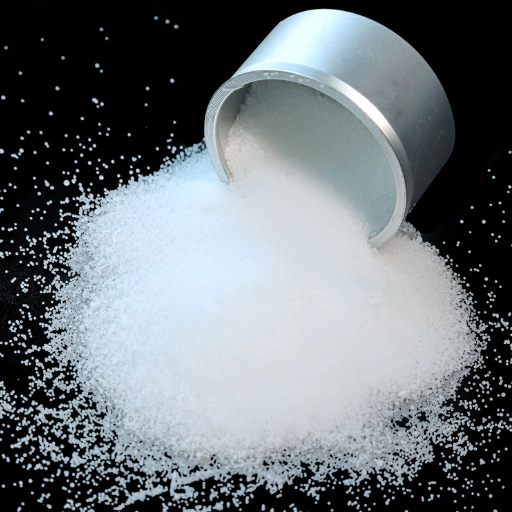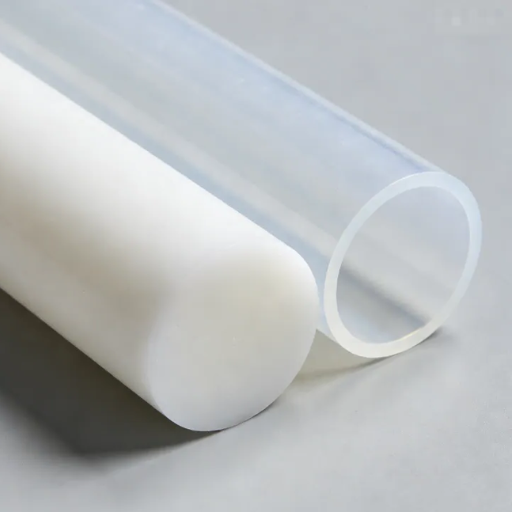
A material that flexes like rubber, processes like engineering plastic, and changed owners four years ago is a recipe for confusion. Hytrel® is that material.
Ask three buyers what Hytrel material is, and you may hear three different answers. One calls it a DuPont product. Another calls it a Celanese brand. A third calls it a generic thermoplastic polyester elastomer and wonders why anyone pays a premium for the name.
All three are partly right, and that is exactly the problem. If you are specifying a part that must hold strength at temperature, resist oil, and survive millions of flex cycles, the details behind the name decide whether your part works.
This guide explains what Hytrel material is, who makes it now, how the common grades differ, where it performs, where it fails, and how to buy it without relying on outdated assumptions.
Hytrel material is a thermoplastic polyester elastomer (TPEE), designated TPC-ET under ISO 1043. It is a block copolymer built from hard crystalline PBT segments and soft amorphous polyether segments. The ratio of hard to soft segments sets hardness, stiffness, and flexibility, typically across Shore D 30 to 82.
If you already know which grade you need, you can compare Hytrel 5526 pellets and Hytrel 7246 pellets directly. If you are still deciding whether TPEE is the right family, read on.
What Is Hytrel Material?
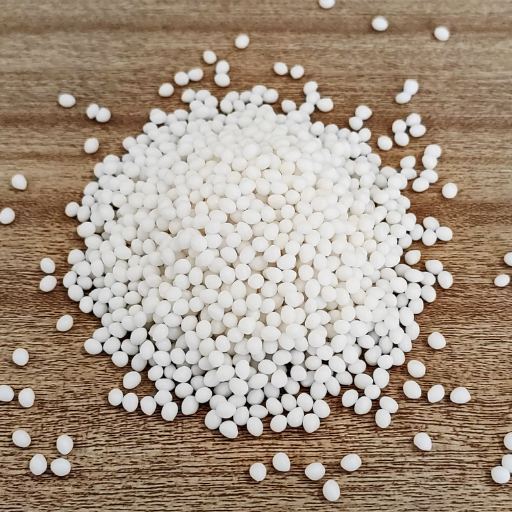
Hytrel is a brand name, not a chemical family. The material underneath is TPEE, a polyester-based thermoplastic elastomer. The distinction matters because “TPE” is used loosely across the industry to describe several unrelated chemistries.
A procurement manager we will call Elena learned this the hard way. Her RFQ asked for “TPE, Hytrel type, 55 Shore D.”
One supplier quoted a SEBS-based compound. Another quoted Hytrel 5526. Both were technically thermoplastic elastomers.
Only the Hytrel grade met the oil resistance and flex-fatigue target for her under-hood part. The cheaper quote would have passed incoming inspection and failed in the field.
Hytrel, TPEE, and TPC-ET: Three Names, One Material
The naming is simpler once you separate brand from chemistry:
- Hytrel is the commercial brand, now owned by Celanese.
- TPEE means thermoplastic polyester elastomer, the general material family.
- TPC-ET is the ISO 1043 designation for the same family. You will also see it written as TPC.
In everyday procurement, all three point to the same product. Search results sometimes call it Hytrel plastic or Hytrel TPE, and European datasheets may print Hytrel TPC-ET. All of them describe the same polyester elastomer. In a specification, use the ISO designation plus the grade name so there is no ambiguity.
The Hard and Soft Block Structure
TPEE gets its behavior from two types of polymer segments in one chain.
The hard segments are crystalline polybutylene terephthalate (PBT). They act like physical crosslinks, giving the material strength, creep resistance, and a defined melting point. The soft segments are amorphous polyether chains. They provide flexibility, rebound, and low-temperature performance.
Change the ratio, and you change the material. More hard segment means a stiffer grade with a higher modulus. More soft segment means a more flexible grade. That is why one brand can cover Shore D 30 to 82 without changing the basic chemistry.
Unlike a thermoset rubber, those crosslinks are not permanent chemical bonds. Heat the material above its melt range and the structure breaks down, which is what makes TPEE injection moldable, extrudable, and recyclable as production scrap.
Why “Plasticiser-Free” Matters
Most soft TPE compounds use liquid plasticizers to reach low hardness. Those plasticizers can migrate over time, especially under heat or contact with oils. When they leave, the part stiffens, shrinks, or cracks.
Hytrel grades are plasticizer-free. Flexibility comes from the polymer architecture itself, so it does not depend on an additive staying in place. For a hose, boot, or cable jacket that must stay flexible for years, that difference is worth more than a datasheet number suggests.
Who Makes Hytrel Now? The DuPont to Celanese Transition
This is the question that still trips up procurement teams: Hytrel is no longer a DuPont product.
Celanese acquired the Hytrel brand, along with Zytel, Crastin, Rynite, and Vamac, as part of its $11.0 billion purchase of DuPont’s Mobility & Materials business. The deal was announced on 18 February 2022 and closed on 1 November 2022. Current grade datasheets, compliance statements, and technical support come from Celanese.
The material did not change. The company that documents it did.
That distinction sounds minor until it reaches a quality department. A buyer we will call Priya had a 2019 DuPont datasheet in her qualification file when a new shipment arrived with Celanese-branded paperwork.
Her incoming inspection team paused the approval. Nothing was wrong with the pellets. The document trail had simply changed hands.
What the Transition Means for Buyers
For most projects, the practical impact is limited to documentation:
- Request current Celanese datasheets for the exact grade and lot you are buying.
- Confirm that certificates of analysis and compliance declarations match the current brand owner.
- Update internal qualification files that still reference DuPont.
- Check that your ERP or approved-vendor list does not reject Celanese documentation as a “different” supplier.
The brand history also explains why so many search results still say DuPont. Older DuPont Hytrel datasheets, distributor pages, and product listings remain online long after the ownership change. Treat undated documents with caution.
If your team needs current documentation for a Hytrel grade, contact our materials team and we will confirm what is available for the grade and shipment you are considering.
Hytrel Material Properties and Technical Data
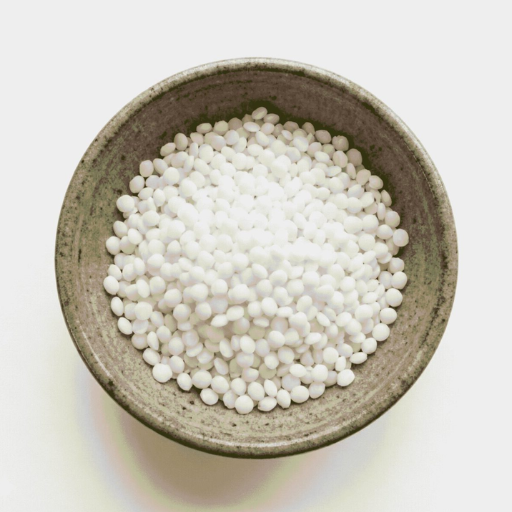
Hytrel sits between flexible rubber and rigid engineering plastic. The exact balance depends on hardness, but the broad property profile is consistent across the family.
Mechanical Performance
The material combines high toughness with recoverable elasticity. Key characteristics include:
- High flex fatigue resistance, which is why it dominates dynamic parts such as CVJ boots and drive belts.
- Good tear strength, especially compared with soft TPV and SEBS compounds at similar hardness.
- Creep resistance under sustained load, a weakness in many soft TPEs.
- Abrasion resistance comparable to TPU in many applications.
- High elongation, often several hundred percent at break, depending on grade.
Distributor literature cites more than 1,000,000 Ross flex cycles at 23 °C for a 40D Hytrel grade, versus roughly 150,000 for a comparable TPU. Tear strength at the same hardness is quoted at 96 to 101 kN/m for Hytrel versus about 52 kN/m for TPV. These are indicative comparisons, not guarantees, but they explain why TPEE is chosen for parts that flex continuously.
Thermal Performance
Standard Hytrel grades are typically used from about -40 °C to 150 °C. High-modulus grades extend the upper end, and some automotive applications rely on short-term exposure to 150 to 160 °C during paint-bake cycles.
Melting points sit well above normal service temperatures:
- Hytrel 5526: approximately 202 °C by DSC, or 211 °C by the older D2117 method.
- Hytrel 7246: approximately 218 to 219 °C.
Those numbers are not a license to run the material at its melting point. They define the processing window and explain why the polymer keeps useful strength at temperatures where TPU softens.
Chemical Resistance and the Three Weak Points Buyers Miss
Hytrel resists oils, fuels, hydraulic fluids, and many polar chemicals. Resistance generally improves as hardness increases. That is why high-modulus grades are common in fuel hose and oilfield components.
Three limitations deserve equal attention.
1. Hot water and hydrolysis. Water resistance is limited at 70 °C and above, depending on grade. Higher-hardness grades contain more ester and are more sensitive to hydrolysis. At 100 °C, softer 30 to 40 Shore D grades are generally recommended. Hydrolysis can reduce mechanical properties over time, and the material is hygroscopic, so it must be dried before processing.
2. UV exposure. Unprotected Hytrel degrades outdoors. Parts that see sunlight need carbon black, UV stabilizers, or another shielding system. Properly stabilized grades can last more than a decade outside, but the base resin alone is not a UV solution.
3. Compression set. This is where rubber still wins. In one comparative study, Hytrel showed a compression set of roughly 63%, versus about 23% for NBR and 33% for EPDM. If your part is a static seal that must hold clamping force, TPEE is usually the wrong choice. If your part must flex, resist oil, and keep its shape under dynamic load, the comparison changes.
A design engineer we will call Marcus ran into this boundary. He replaced an NBR gasket with a 40D Hytrel grade to eliminate a vulcanization step.
The part passed the initial leak test, then took a permanent set after weeks under compression and began to weep. The material was not defective. It was simply being asked to do a job that belongs to rubber.
For the full grade-level property picture, Celanese publishes current datasheets at materials.celanese.com. Distributor literature such as the Distrupol Hytrel brochure provides useful comparisons, but the Celanese document for your exact grade is the reference to qualify against.
Hytrel Grades and How to Choose
Celanese groups Hytrel grades by application and performance. Three grades come up most often in general industrial sourcing.
| Property | Hytrel 4056 | Hytrel 5526 | Hytrel 7246 |
|---|---|---|---|
| Hardness | 40 Shore D | 55 Shore D | 72 Shore D |
| Flexural modulus at 23 °C | Approximately 50 to 55 MPa | Approximately 205 to 207 MPa | Approximately 518 to 570 MPa |
| Melting point | Consult grade datasheet | Approximately 202 to 211 °C | Approximately 218 to 219 °C |
| Position in the line | Low-modulus molding and extrusion grade | Medium-modulus, balanced grade | High-modulus, high-service-temperature grade |
| Typical uses | Flexible parts, profiles, base resin for concentrates | Seals, gaskets, gears, bearings, cable jackets, belting | Tubing, fuel and hydraulic hose, oilfield parts, film |
5526 vs 7246: The Decision Most Buyers Face
Hytrel 5526 is the general-purpose workhorse. At 55 Shore D, it offers what distributor literature describes as the best overall balance of properties in the line: good flex fatigue, abrasion resistance, oil and solvent resistance, and enough strength for load-bearing parts. It is the usual starting point for seals, gaskets, gears, bearings, cable jackets, and general molded goods.
Hytrel 7246 is the high-modulus option. At 72 Shore D, it delivers more stiffness, a higher service temperature, and excellent resistance to oils, fuels, and solvents, with low fuel permeability. Its elongation is lower, so it is a poorer choice for parts that must stretch dramatically. It fits tubing, fuel and hydraulic hose, oilfield components, and other applications where stiffness and fluid resistance matter more than softness.
In simple terms: choose 5526 when you need a balanced flexible part, and choose 7246 when you need stiffness, heat, and fluid resistance.
The Wider Grade Families
Beyond the three common grades, the Hytrel line includes:
- General-purpose (G) grades for molding and extrusion.
- HTR specialty grades with heat stabilization, flame retardancy, or blow-molding capability.
- PC/SC healthcare grades manufactured under GMP principles and tested for medical applications.
- FG food-contact grades developed for applications in contact with food.
- ECO and RS grades made with renewable polyether glycols, with renewable content that varies by grade.
- Concentrate masterbatches, such as black and UV-stabilizer products, used to modify base grades.
A Five-Question Grade Selection Checklist
Before requesting a quote, answer these five questions:
- What hardness does the part need? Start with the flexural modulus and deflection your design allows.
- What is the maximum continuous temperature? Include short-term peaks such as paint bake or sterilization.
- What fluids will the part contact? Oils and fuels favor TPEE. Hot water and steam push you toward another material or a hydrolysis-stabilized grade.
- Is the load static or dynamic? Dynamic flex favors TPEE. Static compression seals favor rubber.
- Does the part need food contact, healthcare, flame retardancy, or UV stabilization? These requirements narrow the grade family quickly.
If you are comparing the two most common options, you can review Hytrel 5526 and Hytrel 7246 side by side, or ask our team to match a grade to your application.
Hytrel vs TPU vs TPV vs TPE
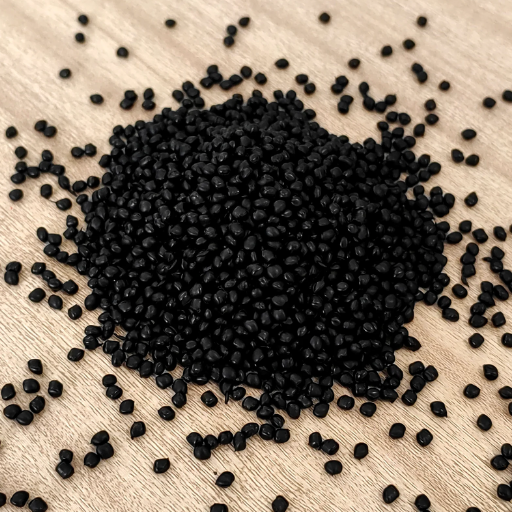
The thermoplastic elastomer family is genuinely confusing because the names overlap. This table separates the four materials buyers most often compare.
| Factor | TPEE (Hytrel) | TPU | TPV | SEBS-based TPE |
|---|---|---|---|---|
| Chemistry | Polyester hard segment plus polyether soft segment | Polyurethane block copolymer | Crosslinked EPDM in a PP matrix | SEBS or SBS blended with oil and PP |
| Hardness range | Broad, roughly Shore D 30 to 82 | Broad, from soft to rigid | Mostly soft to medium | Mostly soft |
| Load bearing at 120 °C and above | Excellent for an elastomer | Drops sharply | Limited | Limited |
| Flex fatigue | Excellent | Good | Moderate | Moderate |
| Compression set | Poor compared with rubber | Good | Very good | Moderate |
| Oil and fuel resistance | Excellent | Good | Moderate | Poor |
| Transparency | Opaque | Often transparent | Opaque | Can be clear |
| Plasticizer content | None | None | Often plasticized | Often plasticized |
| Relative material cost | High | Medium | Medium | Low to medium |
| Best fit | Dynamic engineering parts exposed to heat and fluids | Abrasion-resistant, transparent, or overmolded parts | Sealing and weather-resistant flexible parts | Consumer grips, soft-touch parts, general sealing |
The short version: TPEE wins when a part must carry load at temperature, resist oil, and flex repeatedly. TPU wins on abrasion, transparency, and lower cost. TPV wins on compression set and sealing. SEBS-based TPE wins on softness, color, and cost for less demanding parts.
This boundary matters internally, too. Our existing TPE and TPV material guide covers the SEBS and EPDM side of the family in detail. This guide stays on the polyester side.
Key Applications of Hytrel Material
Industry estimates put automotive at more than 70% of global TPEE demand. That concentration makes sense: cars are full of parts that must flex, resist grease and fuel, and survive heat cycling.
Automotive
Common applications include:
- CVJ boots that protect constant-velocity joints while flexing millions of times.
- Air ducts and air intake components that need heat resistance plus flexibility.
- Fuel and hydraulic hose linings and covers, where permeation resistance matters.
- Drive belts and flexible couplings that combine load capacity with flex life.
- Airbag covers and interior components, where grade-specific performance is critical.
- Rail pads and suspension components, where damping and creep resistance matter.
The automotive paint-bake cycle is a useful filter. Parts that see short-term 150 to 160 °C exposure need a grade that retains shape and properties through that excursion.
Fluid Handling and Tubing
Hytrel is widely used in tubing and hose where rubber would either permeate fuel or add processing steps. Depending on grade and test conditions, fuel permeation is reported at a fraction of the rate of oil-resistant rubbers such as NBR and CR.
The material also handles hydraulic fluid, many industrial oils, and a range of solvents. It is not a universal chemical barrier. Halogenated hydrocarbons and phenols are known weak points, and hot water remains the main environmental limit.
Wire and Cable Jacketing
TPEE jackets offer a combination that cable designers value: abrasion resistance, flex fatigue, oil resistance, and low-temperature flexibility without the processing burden of a thermoset rubber. The material is used in industrial cable, automotive cable, and specialty cords.
Industrial and Consumer Parts
Other applications include gears, sprockets, silent gears, seals, couplings, power-tool components, sporting goods, furniture components, and polymer modification. Hytrel is also used as an impact modifier for other plastics, though that is a compounding topic rather than a direct part-design choice.
Processing Hytrel: Injection Molding and Extrusion
Hytrel runs on standard injection molding and extrusion equipment. The material is forgiving in some ways and unforgiving in one important way.
The Temperature-Sensitivity Trap
Hytrel melt viscosity is highly temperature-sensitive. A 10 °C change in melt temperature can shift viscosity several-fold. That sensitivity is the number one processing trap.
Run too cold, and the melt may be too viscous to fill a thin section. Run too hot, and you risk thermal degradation, poor part quality, and harmful vapors. The practical answer is to measure melt temperature at the die or nozzle rather than trusting barrel setpoints.
Drying, Regrind, and Screw Design
Hytrel is hygroscopic. Moisture must be controlled before processing to avoid hydrolysis during the melt. Dry the resin according to the grade datasheet, typically in the range of 80 to 110 °C for two to three hours, and verify moisture content before running production.
For screw design, Celanese guidance favors gradual-transition screws with a 3.0:1 to 3.5:1 compression ratio and an L/D of at least 18:1 for molding or 24:1 for extrusion. General-purpose screws can work, but mixing sections and high-compression designs need care.
Regrind is usable within limits. The common guidance is up to 25% regrind for general molding and up to 50% where melt flow rate allows, provided the regrind is clean, dry, and consistently blended.
Typical Starting Parameters
Treat these as starting points, not specifications:
- Molding pressures: roughly 40 to 95 MPa.
- Linear shrinkage: approximately 0.004 to 0.018 in/in, depending on grade and wall thickness.
- Mold temperature: grade-dependent, often in the 20 to 40 °C range for general grades.
- Melt temperature: grade-dependent, commonly 185 to 240 °C. Confirm against the grade datasheet.
Because the processing window is narrow relative to viscosity, run a temperature ladder during setup and document the melt temperature that produces acceptable parts. That record is more useful than a generic setpoint sheet.
Is Hytrel Safe? Food Contact, Medical Grades, and Recycling
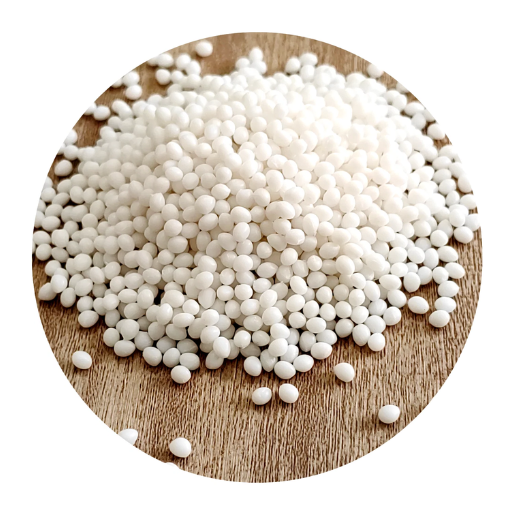
Safety and compliance questions need grade-specific answers. “Hytrel” alone is not a compliance statement.
Food Contact
Celanese offers food-contact grades within the Hytrel family, including FG-designated products developed for applications in contact with food. Compliance depends on the grade, the intended use conditions, and the market. A general-purpose grade should not be assumed compliant just because a food-contact grade exists in the same family.
Ask for the current compliance declaration for the exact grade and application. For broader questions about thermoplastic elastomer safety, our guide on whether TPE plastic is safe covers the general framework.
Healthcare and Medical Grades
The PC/SC healthcare family includes grades manufactured under GMP principles and tested for medical applications. One example, Hytrel SC976 NC010, is a 72 Shore D grade developed for healthcare use, with testing referenced to ISO 10993-5 and ISO 10993-11 and selected USP Class VI requirements.
Healthcare grade selection is not a catalog exercise. Biocompatibility, sterilization method, extractables, and device-specific regulatory requirements all matter. Work from the current Celanese healthcare datasheet and your device’s regulatory pathway.
Recyclability and End-of-Life
Hytrel is a thermoplastic. Properly handled production waste can be recycled, and regrind is routinely used within the limits described above.
Post-consumer recycling is a different question. TPEE is not biodegradable, and collection streams for it are limited. The practical end-of-life guidance in manufacturer literature is recycling where feasible, then incineration with energy recovery in appropriately equipped facilities, or landfill where local regulations allow.
ECO and RS grades reduce the material’s reliance on fossil feedstock by using renewable polyether glycols. Renewable content varies by grade, so check the specific product data rather than assuming a fixed percentage.
Hytrel Material vs Rubber: When TPEE Replaces EPDM and NBR
The case for replacing rubber with TPEE is straightforward on paper. You eliminate vulcanization, shorten the process chain, enable recycling of production scrap, and gain thermoplastic processing speed.
The case against it is equally real. TPEE costs more per kilogram than many rubber compounds, and it loses badly on compression set. In the comparative study cited earlier, Hytrel’s compression set was roughly double that of EPDM and nearly triple that of NBR.
So the substitution pays when:
- The part is dynamically flexed rather than statically compressed.
- The part must resist oil, fuel, or hydraulic fluid.
- The part benefits from thermoplastic processing or recyclable scrap.
- The part needs consistent molded geometry without a vulcanization step.
- The application can tolerate TPEE’s compression-set limitation or designs around it.
It usually does not pay when:
- The part is a static seal that must hold clamping force for years.
- The operating environment includes hot water or steam.
- The part is highly cost-sensitive and a generic TPE or rubber meets the requirement.
- The part sees unprotected outdoor UV and the grade is not stabilized.
For adjacent comparisons, our guide on TPE vs silicone covers the silicone side of the rubber-replacement question.
Buying Hytrel: Price Drivers and Supplier Checklist
Hytrel is a premium material. Buyers who treat it like a commodity resin are usually surprised by the quote, and sometimes by the documentation requirements.
Why TPEE Costs More
The price premium comes from several factors:
- Brand and qualification: Hytrel is a specified brand in many automotive and industrial drawings. Substitution requires re-qualification.
- Chemistry: The hard/soft block structure and the PBT content cost more than a filled SEBS compound.
- Grade complexity: Heat stabilization, UV packages, food-contact compliance, and healthcare documentation add cost.
- Volume and packaging: Small orders carry higher handling and freight costs per kilogram.
- Documentation: COAs, compliance declarations, and traceability are part of the product.
The right question is not “why is this more expensive than TPE?” It is “what does the premium buy in this application?” If the answer is flex fatigue, oil resistance, and heat performance, the premium is usually justified. If the answer is “it is the brand we have always used,” it may be worth reviewing the specification.
What to Confirm Before You Order
Use this checklist for any Hytrel supplier:
- Grade identity: Confirm the exact grade, hardness, and stabilizer package.
- Current datasheet: Make sure it is issued by Celanese, not an archived DuPont document.
- Lot documentation: Ask for a certificate of analysis with the shipment.
- Drying and packaging: Confirm moisture protection and packaging format.
- Regrind policy: Clarify whether the material is virgin, regrind, or a blend.
- Lead time and MOQ: Match the supply plan to your production schedule.
- Compliance: Request food-contact, healthcare, or flame-retardant declarations for the exact grade if required.
At Yifuhui, we supply Hytrel 5526, 7246, and other thermoplastic polyester elastomer grades as pellets, with batch documentation and technical support. We are a supplier, not the brand owner. If you need help matching a grade to an application or confirming current documentation, request a quote and our team will respond with availability and lead time.
Frequently Asked Questions
What is Hytrel material?
Hytrel material is a thermoplastic polyester elastomer (TPEE), also designated TPC-ET. It combines hard crystalline PBT segments with soft polyether segments, giving it rubber-like flexibility and engineering-plastic strength. It is plasticizer-free and can be injection molded, extruded, and recycled as production scrap.
Is Hytrel rubber or plastic?
Hytrel is a plastic, specifically a thermoplastic elastomer. It behaves like rubber in use but processes like a thermoplastic, so it does not require vulcanization. That processing difference is the main reason designers choose it over thermoset rubber.
Is Hytrel still made by DuPont?
No. Celanese acquired the Hytrel brand from DuPont as part of the $11.0 billion Mobility & Materials deal. The transaction was announced in February 2022 and closed on 1 November 2022. Current datasheets and technical support come from Celanese.
What does TPC-ET mean?
TPC-ET is the ISO 1043 designation for thermoplastic polyester elastomer. It describes the same material family commonly called TPEE. The designation helps avoid confusion with other thermoplastic elastomers such as TPU, TPV, and SEBS-based TPE.
Is Hytrel food safe?
Only specific food-contact grades are intended for food contact, and compliance depends on the grade and use conditions. Celanese offers FG-designated grades for food-contact applications. Do not assume a general-purpose grade is compliant. Request the current declaration for the exact grade.
Is Hytrel recyclable?
Production waste is recyclable, and regrind is commonly used within grade-specific limits. Post-consumer recycling is limited because collection streams are scarce. Hytrel is not biodegradable. Manufacturer guidance recommends recycling where feasible, then energy recovery or landfill in line with local regulations.
What is the difference between Hytrel 5526 and 7246?
Hytrel 5526 is a 55 Shore D grade with a balanced property profile, used for seals, gaskets, gears, cable jackets, and general molded parts. Hytrel 7246 is a 72 Shore D grade with higher stiffness, higher service temperature, and low fuel permeability, used for tubing, fuel and hydraulic hose, and oilfield parts.
Does Hytrel resist UV and hot water?
Unprotected Hytrel degrades under UV, so outdoor parts need carbon black, UV stabilizers, or another shielding system. Hot water resistance is limited at 70 °C and above, and higher-hardness grades are generally more sensitive to hydrolysis. Check the grade datasheet for both requirements.
Conclusion
Hytrel material occupies a specific and valuable position in the elastomer market. It is not a cheaper rubber, and it is not a drop-in replacement for every flexible part. It is a polyester-based TPEE for dynamic, load-bearing, fluid-exposed applications where rubber processing or TPU performance falls short.
Five points are worth carrying into your next specification:
- Hytrel is a brand; TPEE (TPC-ET) is the material. Use both names correctly in specifications.
- Celanese owns the brand today. The DuPont transition closed in November 2022, so use current documentation.
- 5526 and 7246 cover most general needs. Choose 5526 for balance and 7246 for stiffness, heat, and fluid resistance.
- Know the weak points. Hot water, unprotected UV, and compression set are the three limits that decide whether TPEE fits.
- Buy on grade and documentation, not just price. The premium is justified by performance, but only when the grade matches the application.
If you are sourcing Hytrel material for an automotive, fluid-handling, cable, or industrial part, our team can confirm grade availability, batch documentation, and lead time. Request a quote or compare Hytrel 5526 and Hytrel 7246 directly.
Hytrel is a registered trademark of Celanese. Datasheet values vary by grade and test method. Confirm all figures against the current Celanese datasheet before design or purchase.