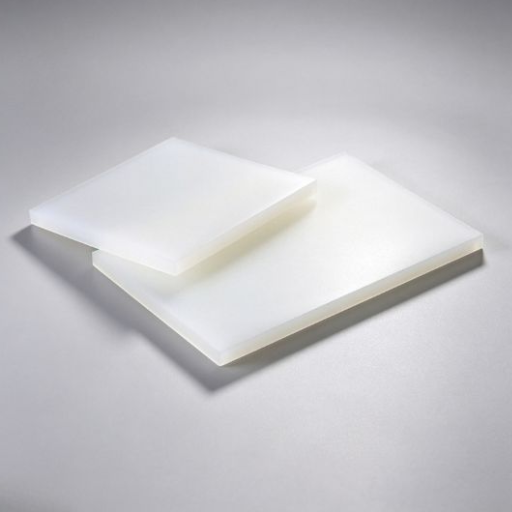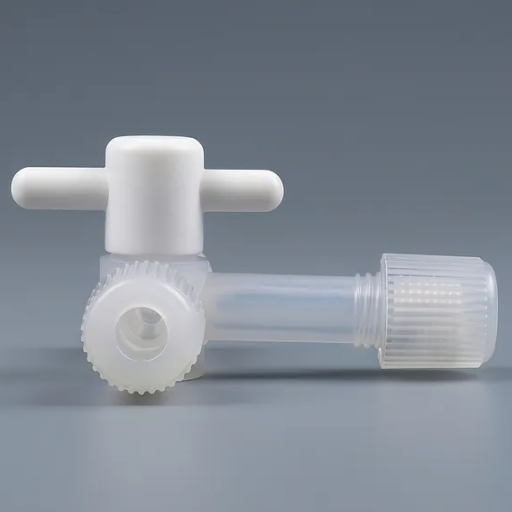
Type “PFA safety” into a search engine and the top result is not about plastic. It is a cardiac procedure called pulsed field ablation, which borrows the same four-letter acronym.
That mix-up is the whole problem. PFA means one thing to a cardiologist and something else to a polymer buyer, and the answer you get depends on which one the search engine thinks you meant. So the question “is PFA safe?” gets answered badly, or not at all.
If you buy, specify or process perfluoroalkoxy (PFA) resin, you have probably met two contradictory stories. One says PFA is an inert, food-safe fluoropolymer with a 60-year safety record. The other says it is a “forever chemical” on the way to being banned.
Both stories contain a fragment of truth. Neither is the honest answer.
We supply PFA resin alongside PTFE and a dozen other engineering plastics, so we have no reason to push one side. This guide gives you the accurate, dated picture: what PFA actually is, where the real safety questions live, what the rules say in late 2026, and what a buyer should do about it.
By the end you will be able to separate a polymer from a pollutant, answer your own customers’ questions, and read every PFAS headline with a filter.
If you are still defining the material itself, our guide to what PFA is and where it is used covers the chemistry first.
Need the compliance status of a specific grade? Send us the grade and the market you sell into, and our team will confirm what applies. We answer every technical inquiry within 24 hours.
Is PFA Safe? The Short Answer
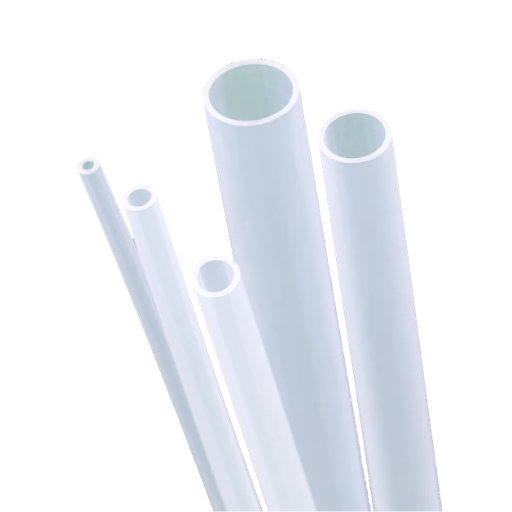
PFA is safe when it is used as intended. As a finished material it is chemically inert, insoluble and not bioavailable, which is why regulators allow it in food contact, medical and semiconductor service. It becomes a hazard only when it is overheated far above its service range, where it can release hydrogen fluoride. PFA is a PFAS, but it is not PFOA or PFOS.
That is the 40-word version. The rest of this article is the detail behind it, because “safe” depends on which of two very different questions you are asking.
The two safety questions:
- Product safety asks whether the finished PFA part is safe in contact with food, water, pharmaceuticals or the body.
- Occupational safety asks whether it is safe to process, weld, machine or overheat PFA in your plant.
These are governed by different rules, different evidence and different controls. Most pages blur them together, which is why the answers you find online feel slippery. We keep them separate.
Is PFA the Same as PFAS or PFOA?
This is the confusion that drives most of the fear, so it is worth being exact.
PFA is a PFAS. “PFAS” stands for per- and polyfluoroalkyl substances, an umbrella category covering roughly 14,000 chemicals. The EU’s proposed restriction covers that whole family, and PFA sits inside it. Anyone who tells you PFA is “not a PFAS” is either selling something or mistaken.
PFA is not PFOA. This is the part that matters. PFOA and PFOS are small, mobile perfluoroalkyl acids. They dissolve, they travel in water, and they accumulate in living things.
They are the substances that drinking-water limits actually target. PFA is a long-chain fluoropolymer: a large, high-molecular-weight solid that does not dissolve or bioaccumulate the way PFOA does.
The two are related by history, not identity. PFOA was once used as a processing aid in making some fluoropolymers, which is how the polymer got tarred with the acid’s reputation. It was never the polymer itself, and modern grades are made without it.
The regulators themselves draw this line. When ECHA’s Risk Assessment Committee issued its opinion on 2 March 2026, it noted that fluoropolymer particles were generally less bioavailable and lower in toxicity than the mobile PFAS it is targeting. Japan’s Food Safety Commission classifies PTFE, PFA’s close relative, as IARC Group 3, meaning “not classifiable as carcinogenic to humans.” The Fluoropolymers Product Group reports leachables below 1 ppm in 96% of commercially available fluoropolymers.
None of that means PFA is exempt. It means PFA is a polymer with a very different risk profile from the mobile acids that share its family name. PFA vs PFOA comes down to this: say “PFA is a PFAS” and you are correct, and say “PFA is PFOA” and you are not.
If you are weighing PFA against the other fluoropolymers on the same question, our PFA vs PTFE comparison covers where each one sits.
Product Safety: Is PFA Safe for Food, Water and Pharma?
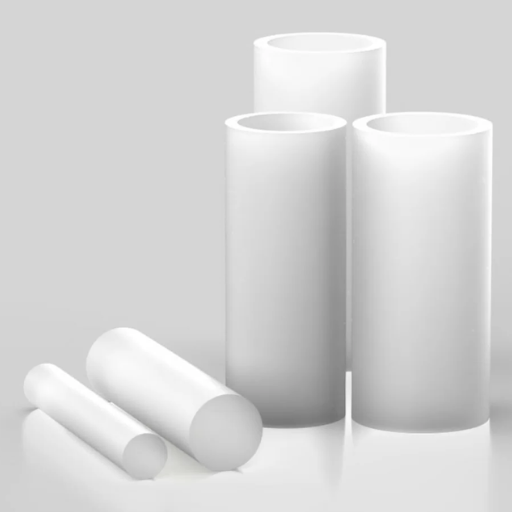
For a finished part, the answer is set by the grade and the application, not by the material’s reputation.
In the United States, PFA may lawfully contact food under FDA 21 CFR 177.1550, the regulation for perfluorocarbon resins. The rule is specific. It covers properly sintered PFA intended for repeated use, and it requires the finished article to meet extractives limits.
It does not cover every form. Articles made from unsintered dispersion, for example, do not comply, no matter how good the resin is.
In the European Union, food-contact PFA is assessed under Regulation 10/2011, which sets a specific migration limit of 0.05 mg/kg for the monomers involved. For pharmaceutical and medical parts, the relevant gate is USP Class VI. For semiconductor fluid paths, it is SEMI F57, which limits extractable metals and caps surface roughness for high-purity parts.
The practical point for a buyer is simple. Compliance is a property of the grade you purchase, certified at the resin level. A machinist cannot add it at the cut, and a finisher cannot add it at the polish. If you need food-contact or medical PFA, you specify the compliant grade on the purchase order and keep the certificate.
There is also a quiet trap here. Two grades can carry the same datasheet headline and different compliance. Colorants, processing aids and additives can change whether a specific compound qualifies, so “PFA” on its own is never enough. Check the grade, not the material class.
Specifying against a standard? We stock food-contact, medical and semiconductor PFA grades and will confirm the documentation before you order.
Occupational Safety: Handling and Processing PFA Without Risk
The second safety question is the one that actually injures people, and it is the one suppliers explain least.
PFA is stable in service. Overheat it, and it decomposes. The service temperature of 260 °C is a mechanical limit, not a decomposition limit, and mixing those two numbers up is a common and costly error.
The PFA decomposition temperature begins around 360 to 400 °C. From roughly 250 to 300 °C upward, heating can release hydrogen fluoride (HF) and carbonyl fluoride (COF₂). Higher temperatures add tetrafluoroethylene, hexafluoropropylene and, above roughly 470 °C, perfluoroisobutylene (PFIB), which is about ten times more toxic than phosgene.
Those gases are hazardous at low concentrations. The eight-hour occupational limit for HF is around 1.8 ppm. For COF₂ it is 2 to 5 ppm. PFIB carries a ceiling of 0.01 ppm.
The controls are well established: local exhaust ventilation, enclosed processes, the lowest welding temperature that gives a sound joint, and a strict no-smoking rule anywhere PFA is handled, because contaminated tobacco is a documented route.
Marcus runs the fabrication cell at a chemical equipment builder, and he learned the no-smoking rule the slow way. A welder on his team went home with chills, a fever and a tight chest after a shift, and the plant clinic initially treated it as flu. It was polymer fume fever, caused by inhaling PFA decomposition products during a hot-gas weld run at the top of the temperature window.
Marcus dropped the zone temperatures, added extraction at the bench, and the incidents stopped. The fix was a process change, not a material change.
Polymer fume fever is the acute illness from these fumes. Symptoms are flu-like, onset is hours after exposure, and it usually resolves within 24 to 48 hours. US poison centres logged roughly 267 suspected cases in 2023 alone.
None of this is a reason to avoid PFA. It is a reason to treat it like any high-temperature fluoropolymer and control the heat, the ventilation and the housekeeping. The Fluoropolymers Product Group’s safe-handling guide is the reference for the temperature and control details.
For the process setpoints that keep degradation from starting, see how PFA is extruded, molded and machined.
For a full-time process, PFA material properties documents the service limits these controls protect.
PFA and the EU Universal PFAS Restriction: Where It Stands
The PFA PFAS regulation question is the headline every buyer is reading, so here is the dated record, with one critical clarification up front: no final EU restriction has been adopted, and no compliance deadline currently applies to PFA.
| Date | Milestone |
|---|---|
| 13 Jan 2023 | Germany, Denmark, the Netherlands, Norway and Sweden submit the universal PFAS restriction proposal to ECHA, covering roughly 14,000 substances including fluoropolymers |
| 2 Mar 2026 | ECHA’s Risk Assessment Committee (RAC) adopts its final opinion: PFAS pose a serious, non-threshold risk; a broad restriction is favoured; the fluoropolymer exemption is rejected |
| 10 Mar 2026 | SEAC agrees its draft opinion, which is more flexible on derogations than RAC |
| 26 Mar 2026 | Both opinions published; a 60-day consultation opens |
| 25 May 2026 | Consultation closes |
| End of 2026 (expected) | SEAC adopts its final opinion |
| 2027 onward | Commission proposal, REACH Committee vote and adoption follow |
The RAC opinion matters most for PFA, because it directly rejected the industry argument that fluoropolymers should be carved out as “polymers of low concern.” It did allow limited derogations: personal protective equipment, and a time-limited derogation for spare parts in energy, electronics and machinery. It also proposed concentration limits of 25 ppb for targeted PFAS, 250 ppb for the sum, and 50 ppm total.
One number keeps surfacing in buyer conversations. For semiconductors and similar critical uses, the transition period under discussion runs up to about 13.5 years after entry into force. That is not a deadline you can plan around yet, because the restriction itself is not law. ECHA’s PFAS pages are the primary source, and they should be checked before any procurement decision is made on the basis of a headline.
Selling into a regulated market? If you tell us the market and the application, we will tell you where that grade sits today, not where a rumour says it will.
US and North America: A State-Level Patchwork
In North America there is no single PFA rule. PFA regulations sit at the state and provincial level, and the states have split into two camps.
Maine began enforcing its expanded PFAS-in-products law on 1 January 2026, covering cookware, cosmetics, children’s toys, textiles and more. But Maine exempts semiconductors outright under 38 MRSA §1614(4)(K), along with medical devices and motor vehicles, and it runs a “currently unavoidable use” program for products with no substitute.
Minnesota moves on a slower clock. Its Amara’s Law reporting requirement takes effect in 2026, with a product ban intended from 2032 unless a use is designated unavoidable.
The split that matters most is New Mexico. Its PFAS ban includes an explicit exemption for fluoropolymers, and Canada has removed fluoropolymers from its PFAS legislation entirely. So you have two live precedents: one camp that keeps fluoropolymers in scope, and one that carves them out.
At the federal level, the US EPA’s Comprehensive PFAS Strategy of 18 May 2026 kept the drinking-water limits for PFOA and PFOS at 4 parts per trillion but pushed the compliance deadline from 2029 to 2031. It also proposed rescinding limits for four other PFAS. None of that drinking-water rule is about fluoropolymers, because it targets the mobile acids, not the polymers.
The takeaway for a buyer is that “banned in the US” is not a sentence that means anything yet. Your exposure depends on your state, your product category, and whether your application lands in a carve-out.
Supply Reality: 3M’s Exit and the “Certified Supply” Problem
For some buyers, the harder problem in 2026 is not regulation but supply.
3M committed to exit PFAS manufacturing by the end of 2025, including the electronic-grade fluids used in semiconductor cooling. Its Zwijndrecht plant in Belgium accounted for roughly 80% of global semiconductor-grade PFAS fluid capacity, so the exit rippled through that supply chain.
The situation is not a simple shortage. In May 2026, 3M sold its German fluoropolymer business, Dyneon, to the Capmont Group, which preserved Germany’s last remaining fluoropolymer plant rather than closing it. At the same time, Chemours, AGC, Arkema, Daikin and others are expanding capacity into the gap.
What buyers report is a shortage of certified supply, not raw material. Requalifying a new grade for a semiconductor or medical line takes months of testing, and the re-qualification queue, not the polymer itself, is where the delay lives. That is why the practical advice below leans on documentation and supply security rather than a fast switch.
Our PFA resin grades guide maps the major grades by application, and our PFA fluoropolymer range shows the stock we hold, including Teflon PFA 340 resin.
What PFA Buyers Should Do Now
Elena manages materials for a medical device maker, and when the PFAS headlines peaked she had a choice: switch fast, or understand first. She built a one-page inventory of every PFA grade on her bill of materials, mapped each to its application and its market, and found that two of her three grades sat in exempt categories.
She secured supply on the third and left everything else alone. The panic cost her nothing, and the documentation took a week.
Her method is the playbook. Run it in this order:
- Document grade-level exposure. List every PFA grade you buy, the part it becomes, and the market it ships into. Material class is too coarse; grade is the unit of compliance.
- Do not requalify preemptively. Switching a qualified grade to dodge a rule that has not been adopted can cost you a valid qualification and a year of testing.
- Identify where no substitute exists. Some fluid paths, seals and semiconductor components have no drop-in replacement. Know which of yours do.
- Secure certified supply. Lock in your qualified grades and their documentation while they are available.
- Re-review quarterly. The SEAC final opinion is expected at the end of 2026, so the picture can change within a single procurement cycle.
For the high-purity applications where substitutes are hardest to find, PFA in semiconductor manufacturing explains the standards these parts must meet.
Frequently Asked Questions
Is PFA safe?
PFA is safe when used as intended, and it is chemically inert, insoluble and not bioavailable as a finished material. It poses a hazard only when overheated far above its service range, where it can release hydrogen fluoride. It is a PFAS, but it is not PFOA or PFOS.
Is PFA toxic?
The finished PFA polymer is not classified as toxic and is not bioavailable. The hazard sits in its decomposition products, not the material itself, and those appear only under severe overheating during processing.
Is PFA a PFAS? Is it the same as PFOA?
PFA is a PFAS, because PFAS is an umbrella category of about 14,000 substances that includes fluoropolymers. PFA is not PFOA. PFOA is a small, mobile, bioaccumulative acid; PFA is a large, inert fluoropolymer solid.
Is PFA food safe?
It depends on the grade. Food-contact PFA is certified to FDA 21 CFR 177.1550 for repeated use, and EU food contact is governed by Regulation 10/2011. Specify the compliant grade, because compliance is set at the resin level.
Is PFA being banned?
No final ban has been adopted. The EU’s universal PFAS restriction is a proposal, and no compliance deadline currently applies to PFA. Several US states restrict PFAS in consumer products, but semiconductors and medical devices are often exempt.
Is PFA safe to process, or does it give off fumes?
PFA is safe to process with the right controls. Above roughly 360 to 400 °C it can release hydrogen fluoride and other gases, so local exhaust ventilation, enclosed processes and a no-smoking rule are standard practice.
Is PFA safe below 260 °C?
Yes. The 260 °C figure is a continuous service-temperature limit for mechanical performance, well below the 360 to 400 °C range where decomposition begins.
Where can I find a PFA safety data sheet?
Suppliers issue an SDS for each grade. Ask your supplier for the SDS that matches your exact grade, and keep it with your compliance records.
Getting PFA Safety and Compliance Right
PFA safety is not one question with one answer. It is a material that is inert in service, hazardous only when overheated, and a PFAS that is not PFOA. The regulatory picture is unresolved and dated, not final and frightening.
Hold these five points:
- PFA is a PFAS, but it is not PFOA or PFOS.
- Product safety is set by the grade, certified at the resin level.
- Occupational safety is about heat, ventilation and housekeeping.
- The EU restriction is a proposal, not law, with no deadline today.
- The near-term risk to your line is certified supply, not prohibition.
If you want to reduce PFAS content in a non-critical application, food-safe HDPE is a well-documented alternative with no fluoropolymer in it.
The calm answer beats the panic answer every time. Elena’s week of documentation did more for her supply security than any emergency substitution would have.
Tell us the grade, the application and the market, and we will confirm exactly what applies today, whether that grade is Teflon PFA 340 or a domestic grade that does the job for less. Our team answers every technical inquiry within 24 hours.