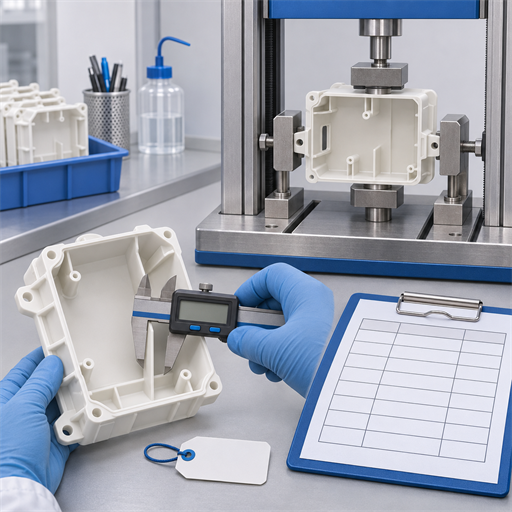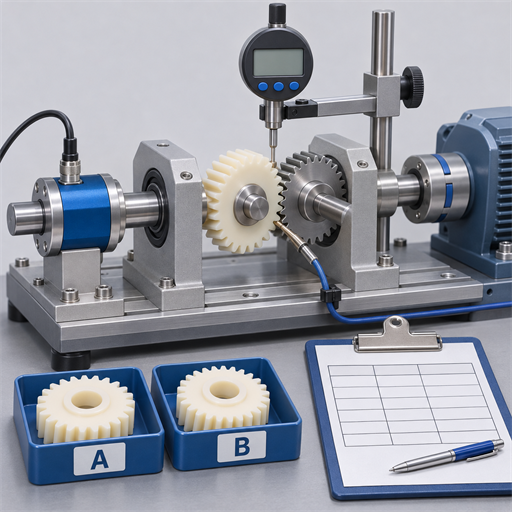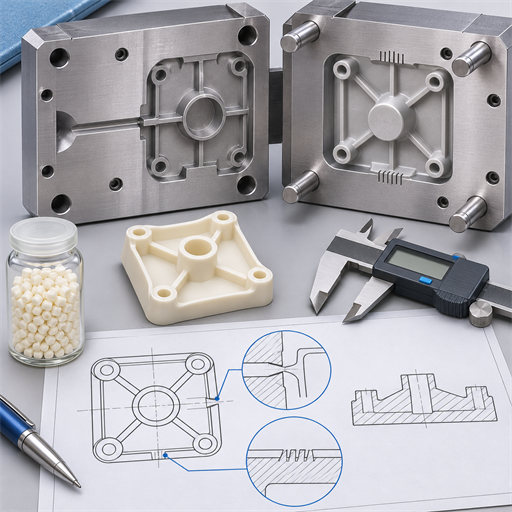
The drawing said “Hytrel, medical grade, 72D.” Three suppliers quoted it. One offered standard 7246, one offered SC976, and one offered a 55D compound because that was what the warehouse had.
All three could defend the quote. Only one matched the device file.
“Hytrel medical grade” sounds like a single material. It isn’t. It’s a Celanese healthcare programme covering six grades from 30D to 82D, two control tiers, and a test package narrower than most buyers assume. Getting it wrong shows up in a documentation audit, a sterilization validation, or a biocompatibility review.
This guide covers the grade map, test scope and specification lines.
Definition: Hytrel medical grade refers to Celanese’s SC (Special Control) and PC (Premium Control) healthcare grades of Hytrel TPC-ET. Six hardness points run from SC938 at 30D to SC988 at 82D. They are made under GMP principles and tested to ISO 10993-5, ISO 10993-11 and selected parts of USP Class VI.
What “Hytrel Medical Grade” Actually Means
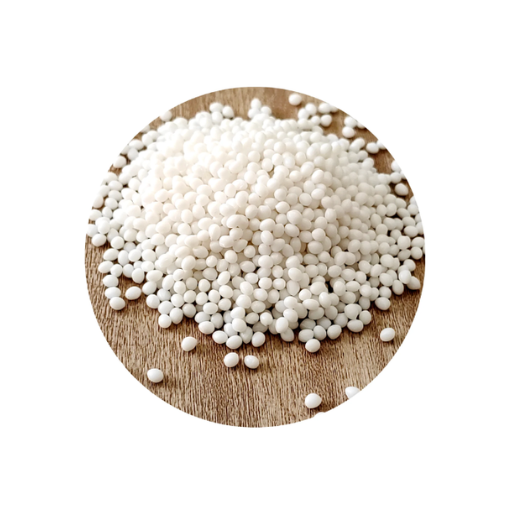
Hytrel is a thermoplastic polyester elastomer (TPEE, ISO designation TPC-ET), a block copolymer of hard PBT and soft polyether segments. Celanese has owned the brand since 1 November 2022.
“Medical grade” isn’t an FDA or EU regulatory category. The VDI 2017 guideline is the only dedicated standard for the term. Each producer sets the criteria behind its own label, so a TPEE medical grade is only as strong as the declaration behind it.
The label covers four things:
- A healthcare control tier, either SC or PC
- A defined biocompatibility test package
- A non-discolouring stabiliser package
- A supplier declaration, not a device clearance
It doesn’t mean FDA approval, ISO 10993 certification, ISO 13485 certification, or implantability. Celanese’s customer self-declaration says its quality system isn’t certified to ISO 13485 for medical-grade lines. The datasheet wording is “manufactured according to GMP principles,” not “GMP certified.”
Two common grades aren’t healthcare grades. Hytrel 5526, a high-flow moulding and thermoforming grade, has no traceable ISO 10993 or USP Class VI statement in any Celanese document I checked. Hytrel 7246 is the standard 72D grade; its healthcare counterpart is SC976 or PC976.
If your drawing already names a grade, send it with the sterilization route and contact category. We will confirm whether a healthcare equivalent exists. Talk to our materials team.
The Six Hytrel Healthcare Grades, SC938 to SC988
The Hytrel healthcare grade family spans six hardness points. The digits aren’t the hardness: SC956 is 55D, SC969 is 63D, SC976 is 72D, and SC988 is 82D. For the wider grade range, see the Hytrel material guide.
| Grade | Nominal Shore D | Measured, 15 s / max | Standard twin | Tensile modulus | Melting point | Processing |
|---|---|---|---|---|---|---|
| SC938 | 30D | 26 / 30 | Not confirmed | ~25 MPa | 177 °C | Injection |
| SC948 | 40D | 39 / 40 | Not confirmed | ~30–40 MPa | 193 °C | Injection, extrusion |
| SC956 | 55D | 51 / 55 | 5556 | 180 MPa | 201 °C | Injection |
| SC969 | 63D | 58 / 63 | 6356 | 260 MPa | 211 °C | Injection, extrusion |
| SC976 | 72D | 64 / 68 | 7246 | 550 MPa | 218 °C | Injection, extrusion, thermoforming |
| SC988 | 82D | 70 / 76 | 8238 | ~1,200 MPa | 221 °C | Injection, extrusion, thermoforming |
A 72D grade reads 64 at 15 seconds on the ISO 48-4 scale. One is the label, one is the test; distributors that print only “64D” quote the measured value.
The twin column maps the four confirmed SC grades; SC938 and SC948 have no confirmed twin. The mapping comes from distributor and legacy DuPont documents, not a Celanese equivalence statement. Confirm both datasheets.
The soft end: SC938 and SC948
Distributor and legacy listings give SC938 30D, a 25 MPa tensile modulus and a 177 °C melting point, and SC948 40D, 30 to 40 MPa and 193 °C. Neither has a primary Celanese datasheet in the sources checked, so confirm on the current TDS. Use them for soft-touch grips and flexible connections where 55D feels too stiff.
The workhorse middle: SC956 and SC969
SC956 is 55D, measuring 51, with a 180 MPa modulus, MFR 8 at 220 °C, a 201 °C melting point and HDT 45 °C at 1.8 MPa. SC969 is 63D, measuring 58, with a 260 MPa modulus, MFR 9 at 230 °C, a 211 °C melting point and DTUL 85 °C at 0.45 MPa. Both suit tubing, seals and connectors.
Label the modulus method: SC956’s 180 MPa is tensile (ISO 527), while 5556’s 190 MPa is often flexural (ISO 178).
The stiff end: SC976 and SC988
SC976 is 72D, measuring 64, with a 550 MPa modulus, 1.26 g/cm³ density, MFR 13 at 240 °C and a 218 °C melting point. SC988 is 82D, measuring 70, with a modulus around 1,200 MPa and a 221 °C melting point. Both are for catheter shafts, balloons and load-bearing parts.
SC vs PC: what the tier buys
Distributor listings show PC grades from 30D to 82D (PC938 through PC988); confirm the exact current codes with Celanese. PC976 is listed with the same 72D nominal, 1.26 g/cm³, MFR 13 and 550 MPa modulus as SC976; confirm on its datasheet.
The tier changes control, not polymer. PC grades add testing, a higher inspection level and, according to Celanese, DMF access by letter of authorisation. A DMF is a drug-side vehicle, not a substitute for the device’s ISO 10993 file.
Hytrel ISO 10993 and USP Class VI: What They Actually Cover
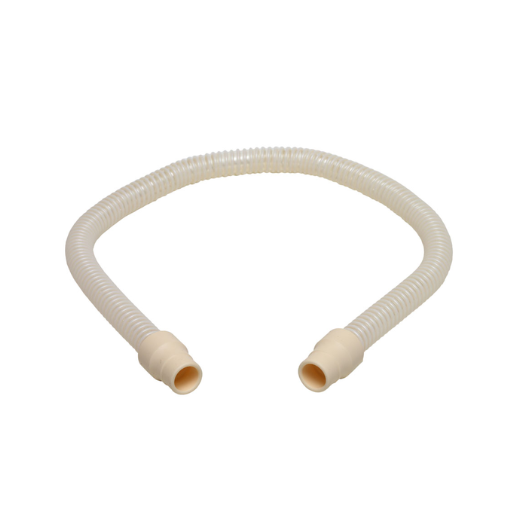
The recurring Celanese datasheet sentence is precise:
“This product is manufactured according to Good Manufacturing Practice (GMP) principles and generally accepted in food contact applications in the USA when meeting applicable use conditions. This product is also tested against ISO 10993-5 and -11 and selected parts of USP Class VI.”
It names two ISO 10993 tests, not the whole matrix.
ISO 10993-5 is cytotoxicity; -11 is systemic toxicity. Sensitisation, haemocompatibility, implantation and the -1 risk assessment are not in the public claim.
USP Class VI is three in-vivo extract tests under USP <88>: systemic injection, intracutaneous reaction and intramuscular implantation. “Selected parts” means only some were run.
| Item | What it is | Status on Hytrel healthcare grades | Who owns it |
|---|---|---|---|
| ISO 10993-1 | Risk assessment for the final device | Not a resin test | Device maker |
| ISO 10993-5 | In-vitro cytotoxicity | Tested | Supplier data; device maker re-assesses |
| ISO 10993-11 | Systemic toxicity | Tested | Supplier data; device maker re-assesses |
| USP <88> Class VI | Three in-vivo extract tests | Selected parts only | Supplier data; device maker confirms |
| DMF | Drug Master File for drug-contact materials | Celanese-stated PC benefit, by letter of authorisation | Celanese; device maker references it |
| ISO 13485 | Device quality management system | Not held by Celanese for these lines | Device maker |
The Hytrel datasheet doesn’t say whether the tests used resin, plaques or finished parts. ISO 10993-12 specimen preparation changes what the result means. Ask for the report, not the sentence.
ISO 10993-1 is a risk assessment on the final sterilised device. FDA’s 2023 guidance starts with chemical characterisation (ISO 10993-18) and toxicological risk assessment (ISO 10993-17). EU MDR puts biocompatibility on the device maker.
The implant boundary
The DuPont healthcare brochure says the grades are “not intended for and should not be used for” implants of 30 days or more. DuPont’s product guide adds a broader caution: no implantation or internal body-fluid contact without a written contract (Policy H-50103 / Caution H-50102). The brochure predates Celanese’s 2022 ownership. Treat the written-contract condition as live and confirm the current policy.
That isn’t a clearance for shorter-term implants. ISO 10993-1 still requires a device-level evaluation for 24 hours to 30 days of contact.
Food contact is a separate question
21 CFR 177.1590 covers bulk dry food and 177.2600 covers fatty or wet food. Legacy DuPont literature lists 5526 and 7246 under both; current Celanese sheets carry no grade-specific declaration, so request a compliance letter. Those declarations address oral exposure, not biocompatibility. Don’t cite 177.1315; it covers PETG copolymers.
Hytrel Sterilization: Where the Grade Decision Lands
Hytrel sterilization supports EtO, gamma and electron beam. Everything else depends on the grade, the wall and the device.
| Route | Status | What to write on the drawing |
|---|---|---|
| Ethylene oxide (EtO) | Suitable | “EtO sterilizable; validate the cycle to ISO 11135” |
| Gamma irradiation | Suitable | “Gamma sterilizable with a non-discolouring grade; validate the dose to ISO 11137” |
| Electron beam | Suitable | DuPont design-guide data to 150 kGy on grades 4056, 5556 and 7246, not the SC grades; validate the dose to ISO 11137 |
| Steam autoclave | Subject to testing, and contested | “Autoclave resistance is application-specific; validate cycle count to ISO 17665” |
| Dry heat | Conflicting | Distrupol’s Hytrel SC row marks 160 °C dry heat unsuitable; a family-level chart says good. Don’t specify without device validation |
| VHP / plasma | Evidence of degradation | Don’t claim repeated VHP compatibility |
Hytrel’s ester linkages hydrolyse in hot, humid conditions. DuPont’s hydrolysis brochure says water resistance “is limited at temperatures of 70 °C or above, depending on the grade.” Steam at 121 to 134 °C sits well above that ceiling.
High-hardness grades contain more ester, so 72D and 82D are the more hydrolysis-sensitive ones. In chemical-resistance tables, 5556 and 5526 are “possibly resistant” in 90 °C water; 7246, 6356, 8238 and 52FR are “not recommended.” Celanese sells RS grades for long-term steam above 80 °C.
Compatibility charts disagree. ISM rates copolyester TPE “poor” for autoclave; an AAMI TIR 17-derived table scores it 5/5 worst for moist heat; Distrupol’s Hytrel SC row marks single and repeated 134 °C steam “suitable in some applications.” None names a grade or a cycle count.
Device makers disagree too. Intersurgical steam-sterilises some Alterna Clear Hytrel breathing systems. Datex-Ohmeda warns that autoclaving its reusable Hytrel patient tubes causes cracks, holes and discolouration over time.
In one composite case, Marcus, a device engineer at a contract manufacturer, hit this at cycle 25. He had specified SC976 for a reusable handle and assumed a 134 °C autoclave cycle would be routine. The parts passed dimensional checks at cycle 5 and showed surface crazing by cycle 25. The fix wasn’t a new datasheet; it was a softer SC956 grade with a qualified cycle count and a redesigned seal.
If you are choosing a grade around a sterilization cycle, send the wall thickness, the route and the cycle count. That combination decides more than the datasheet does. Ask us to check the grade against your cycle.
Where Hytrel Medical Tubing and Components Win
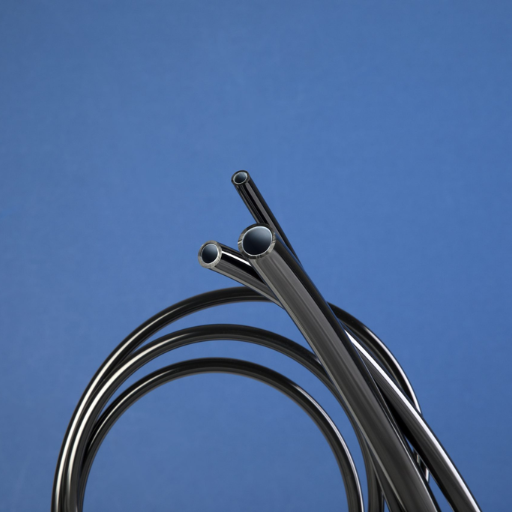
Hytrel earns its place where a part needs modulus, flex fatigue and no plasticiser. Hytrel medical tubing is the largest example.
GE HealthCare lists reusable Hytrel patient tubes in four lengths in its Aisys CS2 and Avance CS2 accessories catalogue, from 35 cm to 1.5 m, all with 22 mm cuffs. Intersurgical sells Alterna Clear Hytrel 22 mm breathing systems and tubes. Sun Med’s patient Hytrel tube appears in McKesson’s catalogue under HCPCS A4618.
Catheter work uses the stiff end. Cordica, the January 2026 rebrand of TEAM Technologies, precision-extrudes Hytrel for catheter shafts, multi-lumen tubing and balloon constructions. One Medical Extrusion lists SC988 natural tubing at 0.014 in ID. Patents pair a 5556 shaft with a softer 4056 distal tip, and 7246 appears as a PET-compatible balloon tip.
Other uses include wound-care film, CPAP rigidisers, insulin-pen grips, seals, diaphragms and blood-processing cassettes. Hytrel also reaches cleared devices: FDA 510(k) K121664 covers Stryker’s T4/T5 Hytrel Togas surgical gown. DuPont data quoted by distributors gives Hytrel 40D more than 1,000,000 Ross Flex cycles at 23 °C, against about 150,000 for TPU. That is manufacturer data.
One correction: Hytrel isn’t a stock peristaltic pump tube. In Baxter’s apheresis cassette patents, Hytrel 4056 forms the umbilicus body and 8122 forms support blocks, while the repeatedly occluded pump tube is PVC or another soft tubing. Treat “Hytrel peristaltic tubing” as a niche OEM construction, not a catalogue item.
Hytrel vs TPU, Silicone, PVC and PEBA
| Property | Hytrel / TPEE | Medical TPU | Silicone | Flexible PVC | PEBA |
|---|---|---|---|---|---|
| Hardness range | 30–82D | 62A–76D | 50–68A | ~80A | 25–74D |
| Modulus | ~25–1,200 MPa tensile | Lower, elastic | Very low | Low | Low–mid |
| Flex fatigue | >1M Ross Flex cycles (40D) | ~150k cycles | Good | Poor for repeated flex | Excellent |
| Autoclave | Subject to testing; short validated cycles | Not recommended; embrittlement in 5–20 cycles | Excellent; hundreds of cycles | Poor, deforms | Soft grades deform at 121 °C |
| Gamma / EtO / e-beam | Yes / yes / yes | Yes / yes / yes | Yes / yes / yes | Yes / yes / yes | Yes / yes / yes |
| Plasticiser | None | None; formulation-dependent | None | DEHP or alternative | None |
| Transparency | Off-white; translucent thin walls | High | High | High | High |
| Relative cost | Premium | Mid–high | High | Lowest | High |
The honest position is simple:
- Hytrel wins on stiffness, flex fatigue, chemical resistance and plasticiser-free construction. See the full Hytrel vs TPU comparison.
- TPU is clearer and softer.
- Silicone owns repeated autoclave.
- PVC and EVA own cost-driven disposables.
- PEBA owns catheter stiffness gradients.
DEHP-free PVC still leaches alternative plasticisers such as ATBC or TOTM, and FDA issued DEHP warnings in 2001 and 2002 for neonatal exposure.
Cost indices from a 1991 Danish EPA study put soft PVC at 100, TPU at 532, PEBA at 553 and silicone at 628. Use them as a rank ordering, not current pricing.
For the wider safety question across elastomer families, see is TPE plastic safe.
How to Specify a Hytrel Medical Grade
A useful specification has five lines. Each one closes a gap that a datasheet cannot. If you are new to device materials, our guide to engineering plastics for medical devices covers the wider selection.
| Line | What to write | Why it matters |
|---|---|---|
| 1. Contact category | Surface, external communicating or implant; duration | Drives the ISO 10993-1 assessment |
| 2. Grade and hardness | SC938, SC948, SC956, SC969, SC976 or SC988; nominal Shore D with method and dwell time | “Medical grade” alone is not a grade |
| 3. Sterilization | Route, dose or cycle count, validation standard | The grade and wall may change with the route |
| 4. Documentation | TDS, healthcare declaration, ISO 10993-5/-11 reports, USP Class VI report with scope, DMF letter if PC, COA, change-control statement | The resin data must match the device file |
| 5. Processing | Injection or extrusion; drying; melt; regrind policy | Medical programmes usually prohibit regrind |
In another composite case, Priya, a procurement lead at a device start-up, caught the gap during a supplier audit. The brochure said “ISO 10993 certified.” The file had cytotoxicity and systemic toxicity reports, but no specimen form and no USP Class VI scope. The audit didn’t fail because the material was wrong. It stalled because the evidence couldn’t be matched to the device.
Don’t put any of these phrases on a drawing:
- “FDA approved”
- “ISO 10993 certified”
- “USP Class VI certified”
- “ISO 13485 certified”
- “Implantable”
- “Autoclaveable,” unless you also state a cycle count
Yifuhui supplies Hytrel 5526 and Hytrel 7246 pellets. Neither is a healthcare grade. For SC or PC grades, we confirm availability and the Celanese documentation package against your application. Request the current datasheet and documentation list.
Frequently Asked Questions
Is Hytrel medical grade?
Only the SC and PC grades. Standard 5526, 5556, 6356, 7246 and 8238 are industrial; 5556 pairs with SC956, 6356 with SC969, 7246 with SC976 and 8238 with SC988. 5526 has no true twin; SC956/PC956 is nearest. The soft end adds SC938 and SC948.
What is the difference between SC and PC Hytrel?
SC means Special Control: GMP principles, high consistency, ISO 10993-5/-11 and selected USP Class VI. PC means Premium Control: more testing, more regulatory support, a higher inspection level and Celanese-stated DMF access. PC976 is listed with the same headline properties as SC976.
Is Hytrel ISO 10993 certified?
No. The grades are tested to ISO 10993-5 and -11. ISO 10993-1 is a risk assessment on the final device. “Certified” is the wrong word.
Is Hytrel USP Class VI?
The healthcare grades are tested to selected parts of USP Class VI under USP <88>, not the full battery. Ask for the report, extraction media and specimen form.
Can Hytrel be autoclaved?
It depends on the grade and the device. A-M Systems rates its Hytrel tubing for 10 minutes at 127 °C. Distrupol’s Hytrel SC table marks single and repeated 134 °C steam as “suitable in some applications.” Intersurgical steam-sterilises some breathing systems.
Datex-Ohmeda warns that autoclaving its reusable Hytrel patient tubes causes cracks and discolouration. Validate to ISO 17665.
Is Hytrel implantable?
Not for permanent implants. The grades are not intended for implants of 30 days or more, and internal body-fluid contact requires a written contract. Shorter-term use still needs a device-level biological evaluation.
Is Hytrel 7246 a medical grade?
No. Standard 7246 is an industrial 72D grade; SC976 and PC976 are the healthcare 72D counterparts.
Is Hytrel 5526 a medical grade?
No. Standard 5526 is a high-flow 55D moulding and thermoforming grade with no traceable ISO 10993 or USP Class VI statement. SC956 or PC956 is the closest healthcare grade at 55D. See the Hytrel 5526 grade guide for the industrial properties.
Does Yifuhui stock SC or PC grades?
No. We stock 5526 and 7246. For SC or PC grades, availability and the Celanese documentation package are confirmed case by case against your application.
Hytrel Medical Grade: The Grade, the Test, the Cycle
Hytrel medical grade is a programme, not a pellet. The grade map runs from SC938 at 30D to SC988 at 82D, and the digits aren’t the hardness. The tests are ISO 10993-5, ISO 10993-11 and selected parts of USP Class VI, not a certificate. Sterilization is EtO, gamma or electron beam by default, with steam as a grade-and-device validation question.
Get those three things right and the specification becomes usable. A converter knows what to run. A regulatory engineer knows what to request. A buyer knows why standard 7246 isn’t the same quote as SC976.
Send your drawing, the sterilization route and the contact category. We will tell you which grade matches, what documentation comes with it, and where the standard grade stops. Start with our Hytrel materials team.