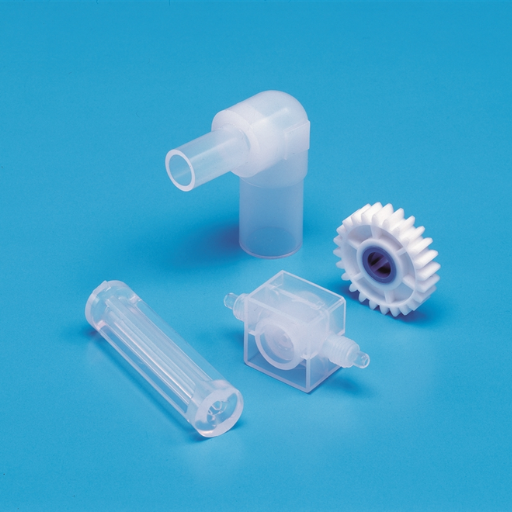
A single wafer can fail over a metal it cannot see. In a modern fab, engineers measure contamination in parts per billion. A fluid line that releases more than its share of iron, sodium, or nickel can quietly cut yield across a whole batch.
That’s why PFA semiconductor fluid handling is specified so precisely. PFA is the default polymer for the fluid paths inside a chip fab. Selecting it, though, is less about chemical resistance and more about extractables, standards, and the difference between a compliant pellet and a compliant part.
Priya runs fluid-handling qualification at a logic fab in Singapore. When her ultrapure water line started showing intermittent sodium spikes, the cause wasn’t the water treatment.
It was a single general-purpose fitting, bought because it was cheaper and assumed to be equivalent. It met the resin spec. It didn’t meet the component spec. The line passed the audit only after a full trace of every wetted part against the right standard.
We supply PFA resin from more than one brand, so this guide is the cross-brand vertical reference you’d normally assemble from a stack of single-manufacturer datasheets. By the end, you’ll know where PFA sits in the fab and which standard qualifies each part. You’ll also know which grades are built for semiconductor use, and how to specify PFA so a compliant resin becomes a compliant component.
If you’re still deciding whether PFA is the right material at all, our guide to what PFA is and where it is used covers the chemistry and the wider applications first.
Why PFA Semiconductor Fluid Handling Is the Default
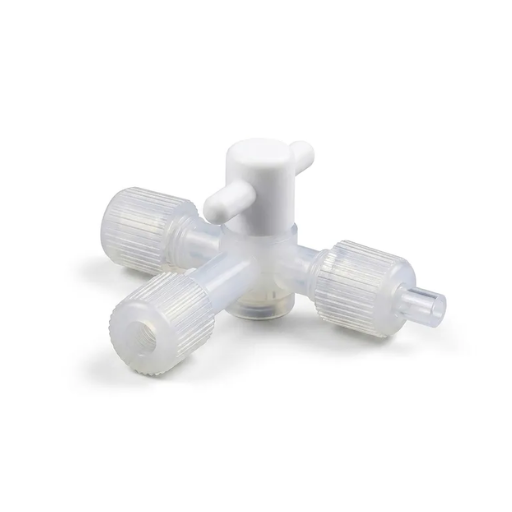
PFA earns its place in the fab for one reason above all others: it adds the lowest metallic extractables of any extrudable fluoropolymer. That matters because trace metals at parts-per-billion levels change a device’s electrical behavior and cause yield loss.
The material brings three things at once. It’s inert to almost every process chemical, including hydrofluoric acid and sulfuric-peroxide mixtures; our PFA chemical resistance chart covers the detail. It holds a continuous service temperature of 260 °C. And it’s melt-processable, so it can be extruded and injection molded into tubing, fittings, and shapes rather than only machined.
PTFE shares the first two properties but not the third, and it can’t be melt-extruded into a void-free tube. FEP processes like PFA but softens about 60 °C lower and carries higher extractables. PVDF is cheaper and tougher, and it’s used for utility lines, but it doesn’t reach the purity class a critical process line needs. We compare these materials in full in PFA vs PTFE.
The practical summary: for the fluid path where purity is the requirement, PFA is the default, and the question is not whether to use it but which grade and which standard.
The Fab Fluid Path: Where PFA Is Used
This is the map that no single datasheet gives you. Every manufacturer maps its own product to the fab. This table maps the whole fluid path: the process, the PFA components found there, the standard that qualifies them, and a representative grade.
| Process area | PFA components used | Standard that qualifies it | Representative grade |
|---|---|---|---|
| Ultrapure water (UPW / DIW) | Tubing, pipe, fittings, valves, filter housings, regulators, flowmeters, dip tubes | SEMI F57 (component), SEMI C90 (resin) | Teflon PFA 450HP / 951HP PLUS, Neoflon AP-231SH |
| Bulk chemical delivery (BCD) | Tubing, pipe-in-pipe, all-PFA fittings, drums, tank liners, dispense systems | SEMI F57 | Teflon PFA 451HP, Neoflon AP-230 / 231SH |
| CMP (planarization) | Slurry lines, valves, fittings, pumps, flowmeters, sensors | SEMI F57 plus abrasion tolerance | High-purity PFA, low surface energy |
| Wet etch, clean and strip | Baths and sinks, wafer carriers, baskets and racks, tubing, valves, nozzles | SEMI F57, moldable PFA HP | Molded PFA HP / HP Plus |
| Photolithography and solvent handling | Tubing, anti-static PFA tubing, dispense lines | SEMI F57 plus NFPA 77 static control | Static-dissipative PFA |
| Chemical waste collection | Tubing, pipe, containment | SEMI F57 | General high-purity PFA |
Read across a row and you have a specification. Read down a column and you have a buying pattern.
The map also encodes three decision rules that experienced fab engineers apply almost without thinking:
- Trace-metal-sensitive fluid path: specify a SEMI F57 qualified component, not just a compliant resin, and choose a fully fluorinated end-group grade.
- Low-ignition-energy solvent: specify static-dissipative PFA rather than standard insulating PFA, which we cover in the static control section below.
- Molded component under mechanical load: specify a molded PFA HP grade, not extruded stock, because the mechanical and purity demands differ.
Sourcing PFA for a fab line? Tell us the fluid, the component, and the purity class, and we will confirm the grade against the standard. See our PFA resin range →
PFA Components in the Fab

PFA does not appear in one place. It appears in every place a high-purity fluid touches a surface, and each component carries its own requirement.
Tubing and pipe
Tubing is the largest single PFA application in a fab, and the one with the most detailed purity standard attached. PFA tubing carries ultrapure water, acids, bases, solvents, and slurry. Its smooth, void-free bore is the reason it displaces paste-extruded PTFE, which is micro-porous and traps reagent between batches.
The tubing itself, its bore finish, its extractables profile, and its double-containment construction are covered in depth in our guide to high-purity PFA tubing. What matters here is the vertical rule: in a fab, specify tubing by the extractables result on the finished tube, not on the resin behind it.
Fittings, valves and dispense hardware
Where tube ends, PFA continues. All-PFA fittings, diaphragm valves, block valves, and dispense assemblies form the joints and control points of the line. Makers build these parts so that every wetted surface is PFA or PTFE, which removes the metal, elastomer, or dissimilar-plastic surfaces that would otherwise leach into the fluid.
This is where Priya’s sodium spike came from. A fitting can be chemically correct and still be the weak point in a purity audit if it was qualified against the wrong standard.
Molded components: carriers, baths and racks
PFA is not only tubing. Molded high-purity PFA forms wafer carriers, baskets, racks, wet-process baths, and sinks. Resin suppliers describe molded PFA HP parts as more break-resistant than quartz, which matters when a damaged carrier can shed particles across a batch.
Molded semiconductor components are shaped by the same processes used across the industry. Our PFA molding guide covers the injection, transfer, and compression parameters behind those parts.
Machined wetted parts
Some PFA components start as extruded rod or sheet, then get machined to tolerance: precision seals, packing, and custom bodies where an extrusion gives a more uniform composition than a molded part. For anything that flexes in service, orient the part correctly relative to the extrusion direction, because extruded PFA is anisotropic.
SEMI F57: The Qualification That Defines UHP PFA
If one standard separates a general-purpose PFA part from a semiconductor-grade one, it is SEMI F57. Understanding what it tests, and what a companion standard tests instead, is the core of specifying PFA for a fab.
What SEMI F57 tests, and how it reports
SEMI F57 is the specification for high-purity polymer materials and components used in ultrapure water and liquid chemical distribution systems. It applies to PFA, PTFE, and PVDF pipe, tubing, fittings, valves, filter housings, transducers, flowmeters, and regulators.
The test is a controlled leach. Per the standard, the lab prepares samples under SEMI F40, rinses them repeatedly in deionized water, then soaks them in ultrapure water at 85 °C for seven days. It acidifies the solution with ultrapure nitric acid to keep metals from precipitating, then measures the extracted species by ICP-MS and reports them in micrograms per square metre of wetted surface.
The standard covers 16 metals, including aluminum, calcium, chromium, copper, iron, lead, nickel, potassium, sodium, and zinc, alongside ions and total organic carbon. Representative limits tighten over time; chromium, nickel, and lead sit below a few micrograms per square metre, while aluminum and copper are allowed more.
Because the limits differ between versions, always confirm which revision applies. The current edition has historically been cited as SEMI F57-0120, with SEMI F57-0622 the more recent revision. The authoritative record is maintained by SEMI.
SEMI C90 versus SEMI F57: the pellet and the part are not the same test
The mistake most often made is treating resin compliance as component compliance. Two standards are involved, and they test different things.
| SEMI C90 | SEMI F57 | |
|---|---|---|
| What it tests | Raw material (pellets) | Finished component (tubing, fitting, valve) |
| Extractant | 5% nitric acid | Ultrapure water |
| Conditions | Pellet-level, lot-level test | 85 °C for seven days |
| What it reports | Pellet extractables | Component extractables in μg/m² |
| For a buyer | Necessary, not sufficient | The qualification that matters to a fab |
A resin can pass C90 and still produce a part that fails F57. Extrusion conditions, cooling, machining, handling, and packaging all influence what ends up on the wetted surface of the finished part.
Why a compliant resin does not guarantee a compliant component
This is the single most useful point to hold onto as a buyer. SEMI F57-0622 revised the standard to separate raw-material testing from finished-component testing, in part because component results can vary widely even when the starting pellet is compliant.
Two extruders can begin with the same compliant pellets and finish with very different extractables results. That’s why a resin datasheet, on its own, isn’t a qualification. The question to ask a supplier is whether the finished part carries F57 test data, not whether the resin behind it carries a C90 or equivalent claim.
Entegris publishes plain extractables figures for its ultrapure PFA tubing, and 3M documents the material-standards framing behind fluid handling. Read either and the C90-versus-F57 distinction becomes obvious in practice.
Qualifying a part rather than a bag of pellets? Ask us for the extractables position and the grade behind a component, and we will walk through it with you. Request a PFA quote →
Semiconductor-Grade PFA Resins: What Makes Them Different
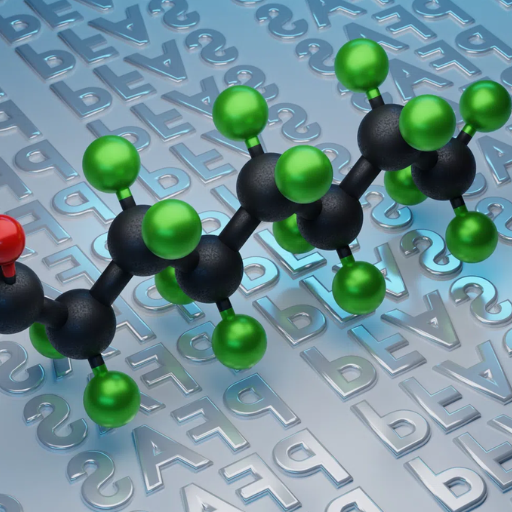
Not every PFA is built for a fab. The grades funneled into semiconductor fluid handling differ from general-purpose PFA in ways that are deliberate, not cosmetic.
The first difference is the end group. Polymer chains carry terminal groups that chemistry leaves behind at the end of the backbone, and those groups are where fluoride ions can elute from. Semiconductor grades are made with fully fluorinated, or stabilized, end groups, which sharply reduces fluoride-ion release into the fluid.
The second difference is additive content. A semiconductor grade carries no additives, fillers, or process aids that could leach into a high-purity line. Engineers choose it for what it doesn’t contain as much as what it does.
The third difference is controlled surface and extractables performance, backed by the pellet-level testing we described above. Daikin’s Neoflon AP-231SH is a good example of an extrusion grade engineered for this duty: its flame-retardant-free composition, fluorinated end groups, and reduced fluoride-ion elution are all specified for semiconductor lines. Its data sheet lists a melt flow rate of 1.5 to 2.5 g/10 min and a melting point around 295 to 310 °C. Tensile strength holds at or above 30 MPa with elongation of at least 300%, and stress-crack resistance is excellent among extrusion grades.
The grade families a semiconductor buyer will meet most often are:
- Chemours Teflon PFA 450HP, 451HP, and the 950 / 951 HP PLUS series.
- Daikin Neoflon AP-230, AP-230SH, and AP-231SH.
- 3M Dyneon UHPZ.
We stock both brands, so the recommendation isn’t tied to one supplier: the Teflon PFA 340 resin page and the Neoflon PFA AP-231SH page carry the data sheets and pricing. These grades cost more than general-purpose PFA, and in a fab they are what ultrapure tubing, liners, valve bodies, and wafer carriers are made from. The wider grade picture, including MFR bands and which process each grade suits, is laid out in our PFA resin grade table.
Static Control: The PFA Problem Nobody Mentions Up Front
PFA’s purity isn’t the only thing that makes it unusual in a fluid system. Its electrical behavior does too, and it’s easy to overlook until it becomes a safety issue.
PFA is an excellent electrical insulator. That’s an asset for wire and cable, and a problem for fluid handling.
Because the material is hard to ground, flowing fluid can generate and store static charge on a high-purity line. In field cases, that charge has discharged through the tube wall, opening a pinhole leak path. Once a path exists, later discharges can jump the same gap at lower energy.
The reason engineers take it seriously is the ignition energy of the fluids involved. The minimum ignition energy of common semiconductor solvents is small: methanol about 0.14 mJ, acetone about 0.19 mJ, and isopropyl alcohol about 0.21 mJ. A spark from the outside of a charged tube to ground can, in a solvent-laden environment, ignite it.
Standard practices from NFPA 77 address this directly:
- Reduce flow velocity.
- Keep wall resistivity low.
- Increase breakdown strength.
- Add an external grounded conductive layer.
The most common product answer is static-dissipative PFA, which coextrudes conductive carbon-loaded PFA stripes with virgin PFA tubing. The stripes can be grounded to drain charge, while the pure inner bore stays intact for purity. Some designs even let the fluid be seen through the stripe.
The decision rule follows from the map: when the fluid has a low ignition energy, a standard insulating PFA line is the wrong choice. Specify a static-dissipative grade instead.
Specifying PFA for a Fab: Qualify the Part, Not Just the Resin
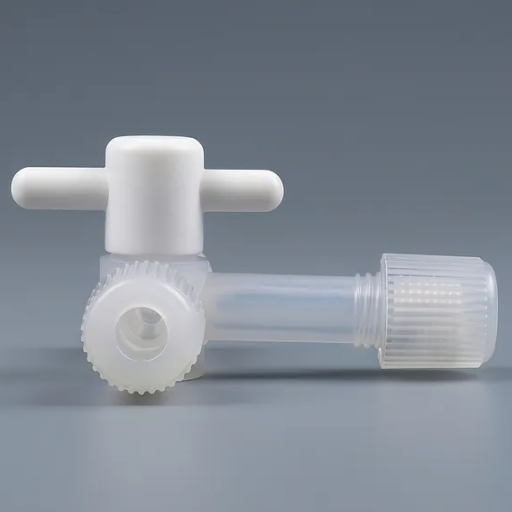
Specification is where PFA projects succeed or fail, and the industry’s pressure points all funnel into the same discipline.
Name the grade. A fab drawing calls out the resin by grade, not as generic “PFA.” That’s what lets a buyer trace a part back to a documented, lot-tested raw material.
Require F57 data on the finished component. As the earlier section established, resin compliance is necessary but not sufficient. Ask for the extractables result on the part.
Respect packaging and handling. A clean tube packed in the wrong film picks up contamination in transit. Handling, cleanroom class, and end-of-line packaging are part of what you pay for at the high-purity end.
Plan for requalification. The supply base is shifting. 3M announced its exit from PFAS manufacturing by the end of 2025, which removes capacity and forces requalification across affected grades. Buyers who relied on a single grade have had to retest, re-specify, and re-approve. Carrying more than one qualified source is now a practical risk control, not a luxury.
That last point is worth an example. When a fab in northern Europe lost access to a single-supplier grade after the 3M announcement, its qualification team had three months to requalify a substitute across a dozen wetted components. The parts that had F57 data on file moved through quickly. The parts that carried only a resin claim went back to the start of testing. The lesson is simple: documentation you already hold is what saves a requalification from becoming a redesign.
The PFAS Question for Semiconductor Buyers
Since 2023, the question behind most PFA inquiries has shifted from “what does it cost” to “will I still be able to buy it.” For a semiconductor buyer, the honest answer has a specific shape.
No restriction currently bans PFA. The EU’s universal PFAS restriction is a proposal under review, not adopted law.
In 2026, the Risk Assessment Committee issued its final opinion in March and the Socio-Economic Analysis Committee issued its draft opinion shortly after, both proposing that sectors including electronics and semiconductors receive derogations. An independent study for the European Parliament’s ITRE committee went further, recommending a permanent derogation for semiconductors because no drop-in substitute currently exists for their PFAS uses. The direction points to a multi-year transition with semiconductor carve-outs, not an immediate cutoff.
That’s the whole of it here. The regulation itself, including the derogation timeline and the alternative materials being weighed, is a large subject with its own treatment in our dedicated guide to PFA safety and the PFAS question. If you’re a semiconductor buyer, the practical takeaway is narrow: plan for requalification pressure and multi-source your grades, but don’t treat PFA as a material about to disappear from the fab.
Frequently Asked Questions
What is PFA used for in semiconductors?
PFA handles the fluid paths inside a chip fab: ultrapure water distribution, bulk chemical delivery, CMP slurry lines, wafer cleaning and wet etch, photolithography chemical handling, and chemical waste collection. Engineers choose it because it adds the lowest metallic extractables of any extrudable fluoropolymer.
What is SEMI F57?
SEMI F57 is the specification for high-purity polymer materials and components used in ultrapure water and liquid chemical distribution systems. It leaches a finished component in ultrapure water at 85 °C for seven days and reports extractables, including 16 metals, in micrograms per square metre.
Which PFA grade is used in semiconductor manufacturing?
Fully fluorinated, additive-free grades such as Chemours Teflon PFA 450HP and 951HP PLUS, Daikin Neoflon AP-231SH, and 3M Dyneon UHPZ. Our PFA resin grade table lists the full range by application.
Is PFA the same as PTFE for semiconductor use?
No. Both are chemically inert fluoropolymers, but PFA is melt-processable, so it forms smooth, void-free tubing and molded parts, while PTFE is shaped by compression and sintering and can be micro-porous. We compare them in PFA vs PTFE.
Why does PFA tubing need static-dissipative grades?
PFA is a strong electrical insulator, so flowing fluid can build static charge. With low-ignition-energy solvents such as methanol or IPA, a discharge can be dangerous. Static-dissipative PFA lets the line be grounded while keeping the inner bore pure.
Can PFA be used for ultrapure water?
Yes. Ultrapure water distribution is PFA’s largest single application in a fab, and the reason SEMI F57 exists is to bound what a component adds to that water.
Will PFAS regulation ban PFA in semiconductor fabs?
No restriction currently bans PFA. The proposal under review points toward semiconductor derogations and a multi-year transition.
Getting PFA Semiconductor Handling Right
PFA in a semiconductor fab rewards a short, fixed checklist. Work through it in order and the qualification path stays clear.
- Map the fluid path first. Identify every wetted part by process: UPW, BCD, CMP, wet clean, photolithography, waste.
- Match the component to the standard. SEMI C90 tests the pellet, SEMI F57 tests the finished part. Specify by the part.
- Choose the grade deliberately. Fully fluorinated end groups, no additives, and F57 data on the finished component.
- Do not ignore static. Low-ignition-energy solvents call for static-dissipative PFA, not standard insulating tube.
- Multi-source and keep your data. Requalification is coming; documentation you already hold is what makes it fast.
Priya’s sodium spike traced back to one fitting that met the resin spec and missed the component spec. The fix wasn’t a better material. It was a better standard, applied to every wetted part in the line.
Tell us your process, your fluid, and the purity class you’re working to. We’ll match a grade and confirm the standard that applies, whether that’s Teflon PFA 340, Neoflon AP-231SH, or another semiconductor-grade resin. Our team answers every technical inquiry within 24 hours.