A procurement manager once lost an entire production day because the HDPE pellets he ordered would not flow through his injection molding machine. The resin was genuine high-density polyethylene. The problem was the grade: pipe extrusion pellets with a melt flow index of 0.3 landed in an injection molding line built for materials with an MFI of 12. The machine could not push them. Cavities short-filled. The plant burned through three shifts of downtime.
That mistake happens more often than it should. These pellets are not interchangeable. The same polymer can be rigid enough for buried water pipe or flexible enough for film liners, depending on grade, density, and molecular weight. Buyers who understand those differences get consistent parts, fewer defects, and better material costs. Buyers who don’t get scrap, delays, and supplier disputes.
This guide explains how to choose, source, and process HDPE resin for manufacturing. You’ll learn what makes HDPE different from other polyethylenes, which grade matches each process, what certifications to require, how much you should expect to pay in 2026, and how to evaluate suppliers before you commit to a bulk order.
Need a reliable HDPE pellet supplier now? View our Taisox 9001 HDPE pellets or contact our team for a specification-matched quote.
What Are HDPE Pellets?
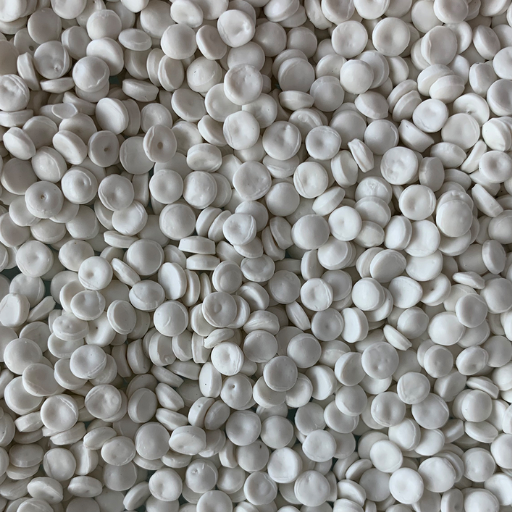
HDPE pellets are small cylindrical or disc-shaped granules made from high-density polyethylene, a thermoplastic polymer produced by polymerizing ethylene monomers under low pressure. The resulting polymer chains pack tightly together, giving the material its signature density range of 0.941 to 0.970 g/cm³. That density is the source of HDPE’s stiffness, strength, and resistance to chemicals and moisture.
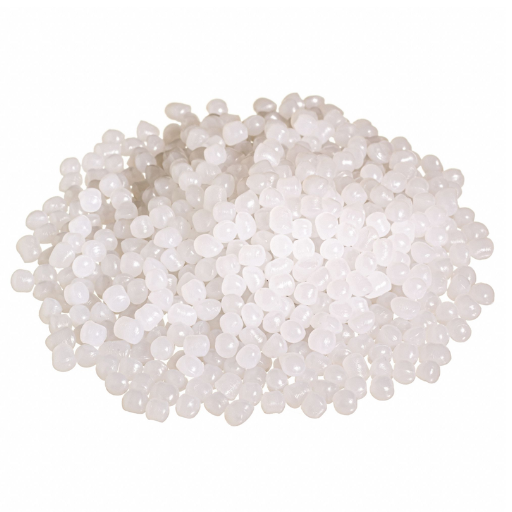
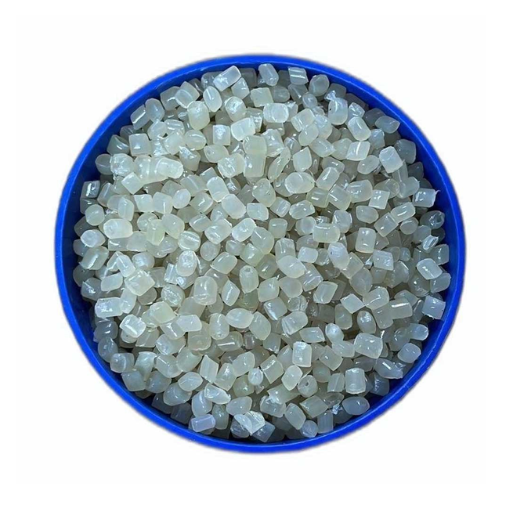
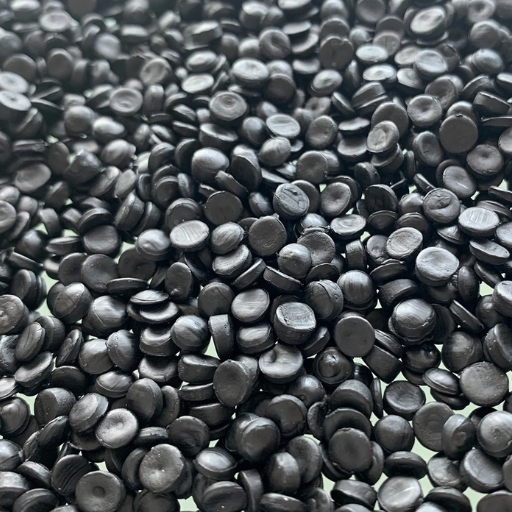
In pellet form, HDPE is the standard feedstock for injection molding, extrusion, blow molding, and rotational molding. Pellets feed cleanly through hoppers, melt uniformly in heated barrels, and let processors control batch consistency from one production run to the next. Most virgin pellets are translucent or opaque white, though suppliers can add color masterbatch or stabilizers for specific applications. Recycled grades often appear gray, black, or mixed-color depending on the feedstock.
HDPE carries SPI resin code #2, making it one of the most widely recycled plastics. It can be reprocessed multiple times with minimal degradation when heat history is controlled, which is why both virgin and recycled material is common in cost-sensitive and sustainability-driven applications.
HDPE vs LDPE vs LLDPE
HDPE, LDPE, and LLDPE all belong to the polyethylene family, but their molecular structures create very different processing and performance profiles. HDPE has a linear structure with minimal branching, so its chains pack tightly. That gives it higher density, rigidity, and tensile strength. LDPE has extensive branching, which keeps chains apart and produces a softer, more flexible material. LLDPE uses short linear branches to combine flexibility with higher tensile strength than LDPE. If your application leans toward softer, more pliable polyethylene, our complete LDPE pellets procurement and application guide breaks down grades, sourcing, and end uses in detail.
For a deeper comparison, see our HDPE vs LDPE guide. Choose HDPE when you need rigidity, chemical resistance, and lower material cost, and see how each resin behaves on the machine in our HDPE vs LDPE processing guide, which covers injection molding, extrusion, and blow molding side by side . Choose LDPE or LLDPE when you need flexibility, clarity, or heat-sealability.
Key Properties of HDPE Pellets
HDPE’s popularity across packaging, construction, automotive, and industrial applications comes from a consistent set of properties. Understanding these numbers helps you match a grade to your end-use and catch out-of-spec material before it reaches your production floor.
Physical and Mechanical Properties
| Property | Typical Range |
|---|---|
| Density | 0.941-0.970 g/cm³ |
| Tensile strength | 21-37 MPa |
| Flexural modulus | 800-1,500 MPa |
| Elongation at break | 350-1,000% |
| Melting point | 120-140°C |
| Vicat softening point | 125-130°C |
| Operating temperature | -40°C to 60-85°C |
| Moisture absorption | ~0.01% |
HDPE offers an excellent strength-to-density ratio. It is stiff enough for rigid bottles and structural pipe, yet light enough to replace metal in automotive and logistics parts. Its low moisture absorption makes it ideal for outdoor and water-contact applications without drying before processing in most cases.
Chemical, Thermal, and Environmental Resistance
HDPE resists acids, bases, solvents, oils, and cleaning chemicals better than most commodity plastics. It also performs well at low temperatures, retaining impact resistance down to -40°C. UV resistance is moderate in natural grades but can be improved with carbon black, UV stabilizers, or hindered amine light stabilizers for outdoor products.
Environmental stress crack resistance, or ESCR, varies significantly by grade. Grades with lower density and higher molecular weight generally resist stress cracking better. That matters for detergents, surfactants, and long-term load applications.
Quality Indicators to Specify on Every Order
Do not order this resin without specifying the details that affect processing. At minimum, request:
- Melt Flow Index (MFI) at 190°C/2.16 kg per ASTM D1238
- Density per ASTM D792
- Tensile strength and elongation per ASTM D638
- ESCR per ASTM D1693 for chemical and stress applications
- Ash content if you are buying recycled or regrind grades
- Certifications such as FDA 21 CFR 177.1520, NSF/ANSI 61, REACH, or RoHS
A clear purchase order protects both you and the supplier. It also makes incoming inspection faster because you can compare the certificate of analysis directly against your requirements.
HDPE Pellet Grades by Process and Application
The most important rule in HDPE procurement is simple. Match the MFI to the process. Using a pipe-grade pellet in an injection molding machine causes back pressure, short shots, and excessive wear. Using an injection molding grade for blow molding produces weak parisons that sag before the mold closes.
Injection Molding Grades (MFI 8-20 g/10 min)
Injection molding grades need high flow to fill complex cavities quickly. Typical applications include caps, closures, thin-wall containers, crates, pallets, and household items. MFI ranges from 8 to 20 g/10 min, with thin-wall parts at the high end.
These grades prioritize fast cycle times and good dimensional stability. They usually have lower molecular weight than extrusion or blow molding grades, which means slightly lower impact strength but much better processability.
Blow Molding Grades (MFI 0.3-1.5 g/10 min)
Blow molding grades need high molecular weight to support the parison as it hangs in the mold. Common products include milk jugs, detergent bottles, drums, and large industrial containers. MFI typically falls between 0.3 and 1.5 g/10 min.
Smaller bottles generally use lower MFI, around 0.3 to 0.5, while larger containers and drums may use grades closer to 1.0 to 2.0. The key is parison strength: if the material flows too easily, the parison stretches and thins before the mold closes.
Pipe and Profile Extrusion Grades (MFI 0.1-0.5 g/10 min)
Pipe grades are the lowest-MFI HDPE pellets because they need long polymer chains for pressure resistance and slow crack growth performance. PE80, PE100, and PE4710 classifications describe the material’s long-term hydrostatic strength. PE100 is common for water and gas distribution, while PE4710 is widely used in North American municipal water systems.
These grades must meet strict standards such as ISO 4427 for water supply and ASTM D3350 for cell classification. For potable water, NSF/ANSI 61 certification is usually mandatory.
Film and Sheet Extrusion Grades (MFI 0.05-0.3 g/10 min)
High-molecular-weight HDPE, often called HMW-HDPE, is used for blown film, geomembranes, agricultural film, and liners. The ultra-low MFI delivers tear resistance, puncture resistance, and barrier properties. These grades require specialized extrusion screws and higher torque motors.
Rotational Molding Grades (MFI 2-8 g/10 min)
Rotational molding uses either powder or pellet feedstock. When pellets are used, they are typically ground into powder before molding. Tanks, kayaks, bins, and playground equipment need grades with balanced flow and impact resistance. MFI usually ranges from 2 to 8 g/10 min.
Food-Grade and Specialty Grades
Food-contact HDPE must comply with FDA 21 CFR 177.1520 or equivalent EU regulations. NSF/ANSI 51 covers food equipment materials, while NSF/ANSI 61 covers drinking water system components. Specialty grades include UV-stabilized, anti-static, color-matched, and glass-filled variants for specific performance requirements.
Applications of HDPE Pellets by Industry
HDPE pellets serve almost every manufacturing sector. The same base polymer appears in milk jugs, fuel tanks, drainage pipe, and surgical waste containers because grade selection lets processors tailor the material to the application.
Packaging
HDPE dominates rigid packaging. Milk jugs, juice bottles, detergent containers, shampoo bottles, caps, closures, and crates all use HDPE because it is lightweight, chemical resistant, and easy to recycle. Thin-wall injection molded containers use high-MFI grades, while larger blow molded bottles use low-MFI grades.
Construction and Infrastructure
HDPE pipe is one of the largest single applications. Municipal water distribution, gas distribution, sewage and drainage systems, irrigation, and telecom ducting all rely on HDPE for its 50-plus year service life, flexibility, and corrosion resistance. Geomembranes and geosynthetics use HMW-HDPE film grades for landfill liners and mining containment.
Automotive
Fuel tanks, battery cases, interior trim, fenders, and under-vehicle shields use HDPE because it resists chemicals, absorbs impact, and reduces weight compared to metal. Fuel tank grades require special ESCR and permeation performance to meet emissions regulations.
Consumer and Industrial Goods
Storage bins, pallets, crates, toys, outdoor furniture, and garbage containers use HDPE for durability and low cost. Industrial applications include chemical tanks, machinery guards, and conveyor components.
Agriculture
Irrigation pipe, water tanks, greenhouse film, mulch film, shade nets, and compost bins use HDPE because it withstands moisture, chemicals, and outdoor exposure. UV-stabilized grades are essential for products that sit in direct sunlight.
Electrical and Telecommunications
HDPE provides good electrical insulation for cable jackets, wire insulation, and conduit. Telecom ducting protects fiber optic cables underground because HDPE resists moisture, chemicals, and mechanical damage.
HDPE Pellet Processing Guidelines
This material processes easily when the grade matches the machine and the parameters are set correctly. Unlike nylon or PET, HDPE is not hygroscopic, so drying is usually unnecessary unless it has been exposed to moisture during storage.
Injection Molding Parameters
| Parameter | Typical Range |
|---|---|
| Melt temperature | 180-260°C |
| Mold temperature | 20-60°C |
| Injection pressure | 700-1,200 bar |
| Screw L/D ratio | 20:1 to 24:1 |
| Compression ratio | 2.5:1 to 3.0:1 |
| Drying | Usually not required |
Use gradual barrel temperature profiles with the feed zone at the low end and the nozzle at the high end. Mold temperature affects surface gloss and shrinkage: higher mold temperatures produce glossier surfaces and more uniform crystallization.
Blow Molding Parameters
Blow molding typically runs at melt temperatures of 160-240°C. The exact temperature depends on the grade and bottle size. Parison programming controls wall thickness, and higher-molecular-weight grades need longer cooling times. Keep melt temperature stable to avoid parison sag and inconsistent wall thickness.
Extrusion Parameters
Pipe and profile extrusion use melt temperatures of 180-240°C. Screw design is critical: pipe grades use barrier screws or grooved feed sections to handle low-MFI material. Calibration and cooling control dimensions and residual stress. Film extrusion requires higher torque and precise bubble stability for HMW-HDPE.
Rotational Molding Considerations
When starting from pellets, most rotomolders grind the material into powder for better flow and part surface quality. Oven temperatures range from 260-370°C depending on part size and wall thickness. Cycle times are longer than injection molding because heat must penetrate the mold from the outside.
Common Processing Issues and Solutions
- Short shots: Increase melt temperature, injection pressure, or switch to a higher-MFI grade.
- Warpage: Optimize mold temperature and cooling uniformity; check part design for thick sections.
- Sink marks: Increase holding pressure or reduce thick sections in the part design.
- Surface defects: Check for moisture, contamination, or degraded regrind.
- Excessive shrinkage: HDPE shrinks 1.5-4.0% depending on grade and process; design molds accordingly.
Virgin vs Recycled HDPE Pellets
The choice between virgin and recycled material depends on performance requirements, color needs, certification requirements, and budget. Both can deliver excellent results when matched to the right application.
Performance Comparison
Virgin HDPE offers the highest mechanical strength, the most consistent MFI, and the best color control. High-quality recycled HDPE retains 90-95% of virgin mechanical properties in most applications, according to industry data from recycling technology suppliers and plastics associations. The biggest variable in recycled grades is color consistency, especially with mixed-color feedstocks.
For demanding applications such as pressure pipe, food contact, or medical packaging, virgin or carefully certified recycled grades are usually required. For non-structural outdoor products, dark-colored packaging, and industrial parts, standard recycled material is often sufficient. If you are weighing recycled polyethylene options, our rHDPE vs rLDPE pellets guide explains how to choose the right recycled resin for your application.
Cost Comparison
| Grade | Approximate Price 2026 |
|---|---|
| Virgin HDPE, Asia/US | $1.00-1.25/kg |
| Virgin HDPE, Europe | $1.10-2.30/kg |
| Recycled black HDPE | $0.70-1.00/kg |
| Premium certified recycled HDPE | +$0.05-0.15/kg above standard |
Recycled HDPE typically costs 20-50% less than virgin resin, though food-grade and natural-color recycled grades can approach virgin pricing due to sorting and certification costs. In regulated markets with recycled-content mandates, recycled HDPE sometimes trades near or above virgin because demand outstrips supply.
Learn more about recycled options in our rHDPE pellets guide.
When to Choose Each
Choose virgin HDPE pellets when:
- The application requires food-contact or medical certification
- Color consistency is critical
- The part must meet pressure-pipe or strict ESCR standards
- Mechanical properties must match a precise specification
Choose recycled HDPE pellets when:
- The final product is dark-colored or black
- The application is non-structural
- Sustainability targets or regulations require recycled content
- Cost reduction is a priority and performance specs allow it
For more detail, read our virgin vs recycled plastic pellets comparison.
HDPE Pellet Pricing and Market Outlook
The global HDPE market is one of the largest thermoplastic markets in the world. According to Coherent Market Insights, the global HDPE market reached approximately $62.67 billion in 2026, while IMARC Group estimated the market at $87.2 billion in 2025. Forecasts generally point to continued growth at a CAGR of 3.4% to 5.4% through the mid-2030s, driven by packaging, construction, and infrastructure demand.
The recycled HDPE pellets segment is growing faster. Cognitive Market Research estimates the market at approximately $2.29 billion in 2025, with projections reaching $4.63 billion by 2033 at a CAGR of 9.2%. That growth is fueled by EU packaging regulations, brand sustainability commitments, and corporate recycled-content targets.
What Drives HDPE Prices
HDPE pellet prices follow several factors:
- Crude oil and naphtha costs: Virgin HDPE is tied to petrochemical feedstock prices.
- Regional supply and demand: Asia has faced oversupply in recent years, keeping prices lower than Europe.
- Grade and certification: Food-contact, NSF/ANSI 61, and pipe grades command premiums.
- Volume and contract terms: Annual contracts often run 5-10% below spot prices for large volumes.
- Logistics and Incoterms: Freight, duties, and inland transport affect landed cost.
Planning a large HDPE purchase? Contact Yifuhui for current pricing, volume discounts, and lead times on Taisox 9001 HDPE pellets and related polyethylene grades.
How to Source HDPE Pellets: Procurement Checklist
A good HDPE supplier does more than deliver pellets on time. The right partner helps you select the correct grade, provides consistent material, and supports you when process issues arise.
1. Specify the Right Grade
Match MFI and density to your process and end-use. Write specifications like “injection molding grade HDPE, MFI 12-16 g/10 min at 190°C/2.16 kg, density 0.950-0.965 g/cm³” instead of just “HDPE pellets.”
2. Request a Certificate of Analysis
Every batch should come with a COA showing MFI, density, tensile properties, and any relevant certifications. Compare each COA to your incoming inspection standards before releasing material to production.
3. Verify Certifications
| Application | Typical Certification |
|---|---|
| Food contact | FDA 21 CFR 177.1520, EU 10/2011 |
| Drinking water | NSF/ANSI 61 |
| Food equipment | NSF/ANSI 51 |
| EU chemical compliance | REACH, RoHS |
| Pressure pipe | ISO 4427, ASTM D3350 |
4. Evaluate Supplier Capabilities
Assess suppliers on these criteria:
- Batch-to-batch consistency and quality control records
- Minimum order quantity and lead time flexibility
- Technical support for grade selection and troubleshooting
- Packaging options: 25 kg bags, supersacks, bulk truck, or rail
- Logistics reliability and documentation accuracy
5. Run a Trial Lot
Order 500-1,000 kg for trial before committing to a full annual contract. Test the material on your equipment, measure part properties, and track scrap rates. A trial lot reveals issues that no data sheet can predict.
6. Inspect Incoming Material
Check MFI, moisture, color, contamination, and ash content on arrival. Reject batches that fall outside agreed tolerances. Document results so you can spot supplier drift over time.
Why Source HDPE Pellets from Yifuhui
Suzhou Yifuhui New Material supplies HDPE pellets alongside LDPE, LLDPE, PP, ABS, PC, and engineering resins, so you can consolidate your raw material sourcing with one partner. Our Taisox 9001 HDPE pellets deliver the strength, durability, and chemical resistance manufacturers need for packaging, construction, automotive, and industrial applications.
We test every batch for density, melt flow, and consistency. Our technical team helps you match the right grade to your process, whether you need injection molding pellets, blow molding resin, or pipe-grade HDPE. We also offer competitive pricing on bulk orders with reliable logistics and on-time delivery.
Get a quote for HDPE pellets matched to your specification. Contact Yifuhui today or view our Taisox 9001 HDPE pellets.
Conclusion
HDPE pellets are one of the most versatile feedstocks in manufacturing, but only when you match the grade to the process. The MFI range tells you more about how a pellet will behave in your machine than the words “HDPE pellets” ever will. Injection molding needs high flow. Blow molding needs parison strength. Pipe extrusion needs the lowest MFI grades for long-term pressure resistance.
Before your next order, specify density, MFI, certifications, and end-use. Request a COA, run a trial lot, and inspect incoming batches. The time spent on specification upfront saves far more time than rework, scrap, or production downtime later.
Yifuhui stocks HDPE resin for multiple processes and applications. Whether you need virgin material for food-contact packaging or cost-effective recycled grades for industrial products, our team can recommend the right material and deliver it reliably. Request your HDPE pellet quote today and keep your production line running without interruption.