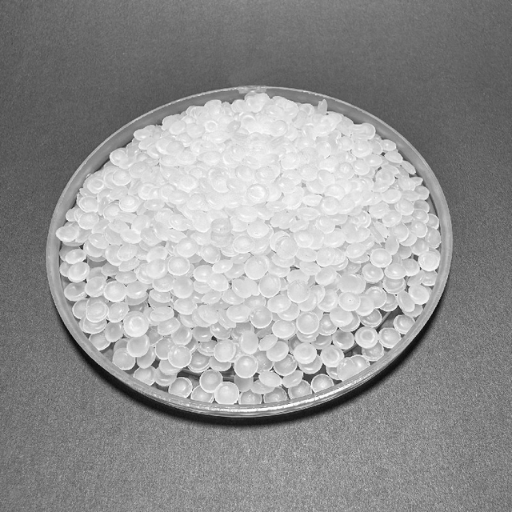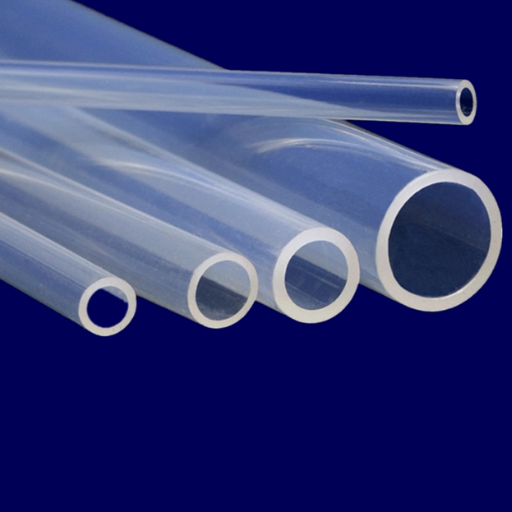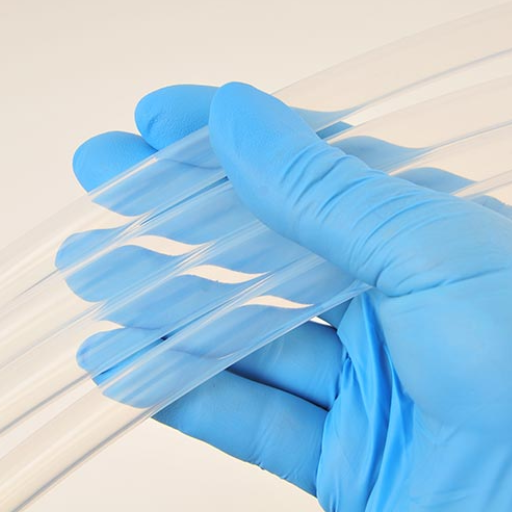
PMMA acrylic pellets are solid granules of polymethyl methacrylate, an amorphous transparent thermoplastic that melts and molds into glass-clear parts with excellent UV stability and scratch resistance.
Every illuminated sign, LED light guide, and automotive headlamp lens on the road begins as a pellet of polymethyl methacrylate, the clearest engineering thermoplastic you can mold.
In March, Chen Wei, a production manager at a Guangzhou LED lighting plant, ordered a fresh batch of PMMA acrylic pellets for a light-guide plate contract. The supplier had quoted a price 20% below market. The pellets looked flawless in the bag: uniform, glass-clear granules. On the first trial run, haze appeared across every single plate.
The batch failed the customer’s 1% haze specification on day one. Chen’s team lost a week of production and reordered from a supplier who could provide a certificate of analysis showing light transmittance above 92%. The cheaper pellets turned out to be 30% recycled content, sold at a virgin-grade price.
That story repeats in factories around the world. PMMA acrylic pellets deliver best-in-class optical clarity and natural UV stability, but they reward buyers who understand grade selection, processing discipline, and supplier verification.
This guide covers the properties, grades, processing parameters, 2026 pricing, and quality checks that matter for PMMA acrylic pellets. You will get the exact numbers your process engineer needs and the sourcing framework your procurement team can use. No vague advice, just the pellet-level facts that keep your production line running.
What Are PMMA Acrylic Pellets?
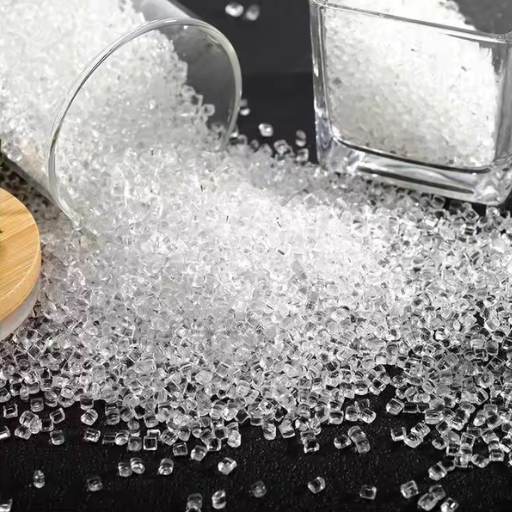
PMMA acrylic pellets are solid granules of polymethyl methacrylate, an amorphous, transparent thermoplastic melted and injected or extruded to form glass-clear parts with excellent UV stability and scratch resistance. You may know the material by its trade names: Plexiglas, Perspex, Lucite, Acrylite, Acryrex, or Acrypet. They are all PMMA.
The pellet form matters more than most buyers realize. Uniform, dust-free pellets feed consistently through the hopper, melt evenly across the barrel zones, and dose precisely shot after shot. Powder or flake feedstock can bridge in the hopper, trap air, and produce inconsistent parts.
PMMA comes in two manufacturing families. Cast acrylic pours liquid MMA monomer into molds and polymerizes it, producing the strongest and clearest sheets. Extruded acrylic melts PMMA acrylic pellets and pushes them through a die, giving more consistent thickness at lower cost. Molders and extruders almost always work from pellets.
PMMA sits alongside polycarbonate as a leading transparent thermoplastic. For a broader look at how clear polymers compare, see our engineering plastics guide.
Key Properties of PMMA Acrylic Pellets
PMMA earns its place in the material library through a specific combination of properties. The table below summarizes what matters for part design and processing.
| Property | Typical Value | Why It Matters |
|---|---|---|
| Light transmission | 92–93% (optical >92%) | Best-in-class clarity for lenses, light guides, displays |
| Haze (optical grades) | <1% | Quality signal; above 2% signals contamination or degradation |
| Tensile strength | 50–77 MPa | Rigid, dimensionally stable parts |
| Flexural modulus | 2,500–3,500 MPa | Stiffness for panels and housings |
| Izod impact | 1–3 kJ/m² (brittle) | Notch-sensitive; design with generous radii |
| Density | 1.17–1.20 g/cm³ | About 50% lighter than glass |
| HDT @1.8 MPa | 85–105°C (high-heat to ~110°C) | Sets the limit for hot environments |
| Vicat softening | 100–113°C | Upper service temperature |
| Surface hardness | Rockwell M 85–95 | Scratch-resistant without a hard coating |
| UV resistance | Excellent, natural | 10–20 years outdoors without stabilizers |
| Mold shrinkage | 0.4–0.8% | Tight-tolerance, low-warpage parts |
| Chemical resistance | Weak to solvents, acids | Avoid ketones, esters, aromatics |
The standout numbers are clarity and UV stability. Transparent grades transmit up to 93% of visible light, which exceeds most glass and polycarbonate. And unlike PC, PMMA needs no UV stabilizer package to survive years outdoors, which simplifies sourcing and lowers cost.
The trade-offs matter just as much. PMMA is brittle, with an Izod impact strength of only 1–3 kJ/m². It is notch-sensitive, so sharp corners concentrate stress and crack.
It also softens around 85–105°C, far below polycarbonate’s 130–140°C. Design for these limits, and acrylic performs superbly.
Need a grade matched to a specific optical requirement? Our engineers help buyers verify light transmittance, haze, and yellowness before they commit. Contact our technical team with your spec sheet, and we respond within 24 hours.
PMMA Acrylic Pellet Grades: How to Choose
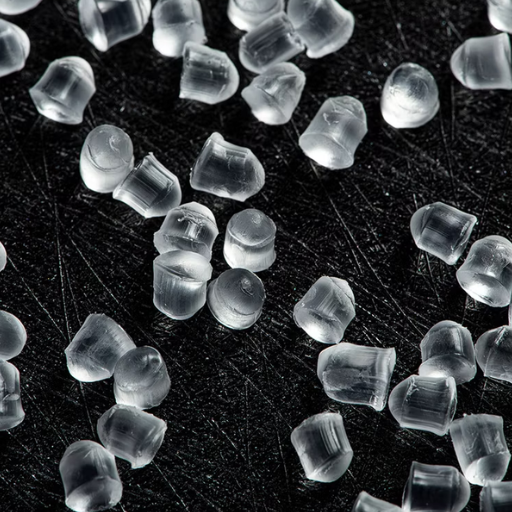
Not all PMMA acrylic pellets are the same. The right grade depends on your part geometry, clarity requirements, heat exposure, and processing method. Matching the grade to the application is the single best way to avoid an expensive mismatch.
General-Purpose and Extrusion Grades
General-purpose grades like Chimei ACRYREX CM-205 balance flow, heat resistance, and mechanical strength. CM-205 runs as an injection or extrusion grade, with a heat deflection temperature around 93–100°C and a melt flow index near 3 g/10min. Wanhua HD03 and ACRYPLAS HD03 serve similar roles. Use these for general molding, sheet and rod extrusion, and lamp housings.
High-Flow Injection Molding Grades
Complex geometries and thin walls need grades that fill the cavity before the melt cools. Chimei ACRYREX CM-211 is a low-viscosity, high-flow grade designed for intricate parts. Röhm PLEXIGLAS XF-03 offers similar flow with excellent surface hardness. These grades trade some heat resistance for easier processing.
Optical and Light-Guide Grades
Optical grades are a different class. Mitsubishi ACRYPET VH001 delivers 93% transmission with haze of just 0.3% and a heat deflection temperature of 101°C. Röhm ACRYLITE 8N is specified for display light-guide plates and precision optics.
When your part must pass a light-transmittance or haze spec, this is the grade family you need.
Heat-Resistant and Impact-Modified Grades
Automotive lighting and other warm environments demand higher HDT. LG Chem’s IH830 series (now LX MMA) reaches 95–106°C under load, with derivative grades for different flow and impact balances. Asahi Kasei Delpet offers impact-modified variants. These grades cost more but survive environments that standard acrylic cannot.
Specialty Grades
Beyond the core families, suppliers offer UV-stabilized grades for extreme outdoor exposure, flame-retardant FR-PMMA for compliance-driven industries, and light-diffusion grades for LED covers. Specialty grades command a premium, but they can be the only way to meet a requirement.
| Grade Family | Example Grades | Best For |
|---|---|---|
| General-purpose / extrusion | ACRYREX CM-205, Wanhua HD03 | General molding, sheet/rod extrusion |
| High-flow injection | ACRYREX CM-211, PLEXIGLAS XF-03 | Thin-wall, complex geometries |
| Optical / light-guide | ACRYPET VH001, ACRYLITE 8N | Light-guide plates, precision optics |
| Heat-resistant / impact | LG IH830, Delpet impact grades | Automotive lighting, warm environments |
| Specialty | UV, FR, light-diffusion grades | Outdoor, compliance, LED covers |
Grade selection is an engineering decision, not a price decision. An optical light-guide grade costs more per kilogram, but it is the only way to hit a transmittance and haze spec. A cheaper general-purpose grade fails optical validation, exactly as Chen Wei discovered on that Guangzhou production line.
If your part needs thin walls and complex geometry, choose a high-flow grade like CM-211. If it must pass an optical transmittance or haze spec, spec an optical grade like VH001. If it sits in a hot environment, pick a heat-resistant grade like LG IH830.
Applications of PMMA Acrylic Pellets
PMMA acrylic pellets feed some of the most visible parts in modern manufacturing:
- Automotive lighting: headlamp lenses, tail lamps, light-guide strips, and interior ambient-light optics
- Signage and displays: illuminated signs, light boxes, digital signage, display stands
- LED lighting: light-guide plates, diffusers, lamp covers, chandelier components
- Optics and eyewear: optical lenses, projector lenses, instrument covers
- Construction: skylights, facades, sound barriers, architectural glazing
- Medical and dental: intraocular lenses, dental prosthetics, device enclosures
- Consumer goods: cosmetics packaging, aquariums, sanitary ware, appliance panels
- Electronics: display panels, smart-lock covers, instrument housings
The automotive segment is growing fastest. Engineers use PMMA in EV sensor housings, panoramic sunroofs, and lighting components because it weighs about half as much as glass while surviving years of UV exposure. Global vehicle production reached roughly 96.4 million units in 2025, and every additional EV adds more LED and light-guide content per vehicle.
Processing PMMA Acrylic Pellets: Drying, Temperatures, and Defects
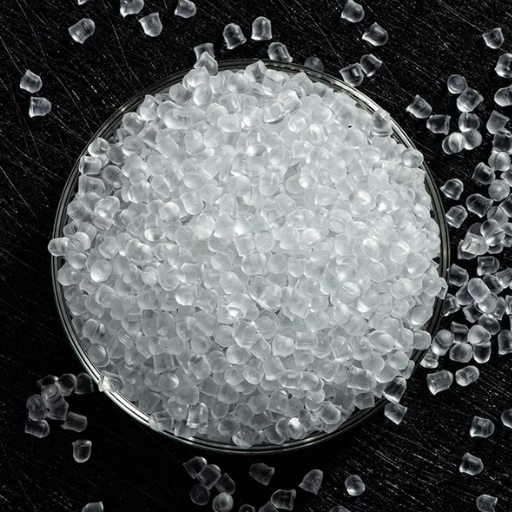
PMMA injection molding starts with dry pellets. PMMA is hygroscopic, meaning it absorbs moisture from the air. Even brief exposure in a humid factory can push pellets past their moisture limit. Processing wet pellets causes splay, silver streaks, bubbles, and reduced transparency, the exact symptoms that plagued Chen’s light-guide plates.
Drying: The Non-Negotiable First Step
Dry PMMA acrylic pellets with a dehumidifying dryer at 80–90°C for 3–4 hours, targeting a moisture content below 0.02%. Some grades run at 70–100°C depending on the manufacturer’s recommendation. Check the data sheet for your specific grade before setting parameters.
Do not over-dry. Excessive time above 90°C can degrade and yellow the resin, trading one defect for another. For a deeper look at moisture control and warehouse conditions, see our guide on how to store and dry plastic resin pellets.
Melt and Mold Temperatures
Set the melt or barrel temperature between 240°C and 260°C for most grades. Decomposition begins around 270°C, so keep residence time short and never let the melt sit in the barrel. At 260°C, limit residence to roughly 10 minutes.
Hold the mold between 35°C and 80°C. Use 60–80°C for optical parts. A hotter mold improves gloss and clarity and lets polymer chains relax, reducing flow marks and internal stress. Injection pressure should run 80–130 MPa to overcome PMMA’s high melt viscosity and poor flow.
Key Parameters
| Parameter | Recommended Range | Why It Matters |
|---|---|---|
| Drying temp/time | 80–90°C, 3–4 h (desiccant) | Prevents splay, bubbles, clarity loss |
| Moisture limit | <0.02% | Protects optical quality and molecular weight |
| Melt temp | 240–260°C | Flow vs. thermal degradation balance |
| Decomposition limit | ~270°C | Yellowing, silver streaks, black specks |
| Mold temp | 35–80°C (60–80°C for optics) | Gloss, clarity, residual stress |
| Injection pressure | 80–130 MPa | Overcomes high viscosity / poor flow |
| Injection speed | Moderate-to-slow, multi-stage | Prevents birefringence, weld lines |
| Mold shrinkage | 0.4–0.8% | Design-for-shrink allowance |
Design and Defect Notes
PMMA has high melt viscosity and poor flow, so use large gates with short land lengths and avoid wall thickness below 1 mm. Design with generous radii to manage notch sensitivity. For highly stressed parts, anneal at 70–80°C for about 4 hours to relieve internal stress.
Regrind deserves caution. Blending up to 10–20% regrind into opaque or non-optical parts is common practice. Optically clear parts should use virgin PMMA acrylic pellets only, because regrind introduces haze and reduces transmission. Common defects and their causes:
- Splay or silver streaks: wet pellets, excessive shear heat, or thermal degradation
- Bubbles and blisters: moisture above spec, or decomposition from overheating
- Weld lines: low mold temperature, poor flow, or gate placement
- Burn marks: trapped air from insufficient venting (vent depth 0.02–0.05 mm)
For the complete side-by-side with polycarbonate, including how the two resins differ in drying, melt temperature, and defect behavior, read our guide to injection molding polycarbonate pellets.
PMMA Acrylic Pellet Prices in 2026
Current acrylic resin price levels are one of the strongest reasons to evaluate PMMA acrylic pellets for new projects in 2026. Prices remain competitive against polycarbonate, and China’s position as the world’s largest producer keeps factory-direct supply available.
China domestic pricing. In August 2026, mainstream negotiated prices for PMMA pellets ranged from 11,200 to 15,600 RMB per ton, roughly 11 to 16 RMB per kilogram. East China weekly averages settled near 12,800 RMB per ton, with supply and demand balanced and MMA feedstock costs firm.
Global and export pricing. Export prices run about USD 2,000 to 3,000 per ton, or USD 2.00 to 3.00 per kilogram, under upward pressure from tight MMA feedstock. Major producers including Röhm, Trinseo, Mitsubishi Chemical, and Chi Mei announced increases of €400–420 per ton since March 2026, citing Middle East supply disruptions.
Brand-level spreads. Grade premiums are significant. Chimei CM-205 and CM-207 quote around 14,500 to 14,800 RMB per ton. Mitsubishi ACRYPET VH001, an optical light-guide grade, runs 16,000 to 16,800 RMB per ton.
High-heat LG IH830 commands 19,000 to 22,000 RMB per ton. The premium buys measurable performance.
vs. polycarbonate. PMMA typically runs 15–45% cheaper than polycarbonate in 2026. For cost-sensitive clear parts that do not need PC’s impact or heat resistance, that gap makes acrylic the default engineering choice.
What this means for buyers. Contract pricing beats spot buying in a rising market. If you quote annual volumes against a reliable supplier, you lock in today’s range instead of chasing monthly increases. And because China is the largest producer and consumer of PMMA, sourcing factory-direct from a China-based partner gives global buyers the most competitive landed cost.
How to Verify PMMA Pellet Quality and Choose a Supplier
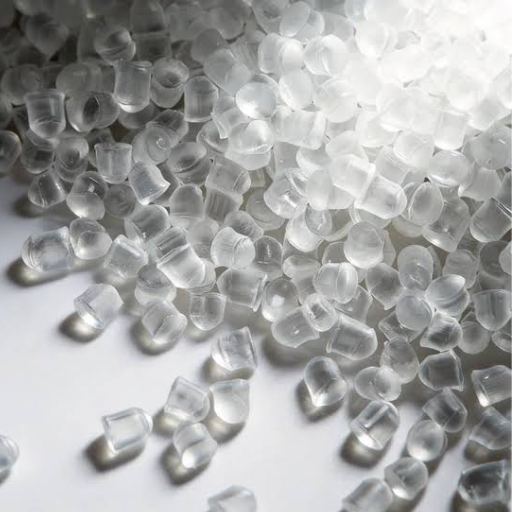
Optical properties cannot be inspected by eye. A batch of PMMA acrylic pellets can look perfectly clear in the bag and still fail transmission and haze specs after molding, as Chen’s recycled-content shipment proved. A structured verification process prevents that surprise.
- Confirm light transmittance: optical grades should exceed 92%; premium grades exceed 92.5%
- Check haze: below 1% for optical applications; above 2% signals contamination or degradation
- Verify yellowness index (YI): compare the value against the manufacturer’s datasheet
- Confirm melt flow index (MFI): must fall within the supplier’s published range
- Check moisture before molding: even sealed bags absorb moisture in transit and storage
- Request the certificate of analysis (COA): confirm virgin content for optical and medical parts
- Run a trial lot: mold on a test tool and compare clarity, color, flow, and shrinkage to a reference sample
Red flags include an off-spec MFI, high haze after molding, inconsistent color between bags, a missing COA, and low-cost material marketed as virgin that is actually recycled content. A documented case showed that pellets containing 30% recycled material transmitted only 84% of light versus the 92% specification required for the part.
A reliable supplier provides batch documentation on every shipment, answers technical questions about drying and processing, and offers samples for trial runs before you commit to volume. For a full checklist of what to audit, read our plastic pellet quality control guide.
Evaluating a supplier now? Send us the application details and volume you need. We supply batch-tested PMMA acrylic pellets with COA documentation on every shipment. Request a quote, and our engineers will recommend the right grade within one business day.
PMMA vs. Polycarbonate Pellets: When to Choose Acrylic
PMMA and polycarbonate are both transparent thermoplastics, but they answer different engineering questions. Choose PMMA when clarity, scratch resistance, UV stability, and cost matter most. Choose PC when impact strength and heat resistance are the priority.
The property gap is instructive. PMMA transmits 92–93% of visible light versus 88–91% for PC. PMMA resists scratching without a hard coating and survives outdoors for years without stabilizers.
PC, by contrast, absorbs roughly 250 times the impact energy of glass, more than 10 times PMMA, and holds its shape to 130–140°C. PMMA costs 15–45% less in 2026.
For lenses, signage, light guides, and displays, PMMA is the technical and economic winner. For safety glazing, high-impact housings, and hot environments, polycarbonate wins. Our PC vs. acrylic comparison covers the full property table and cost analysis.
The Circular Future: Chemical Recycling of PMMA
Sustainability is becoming a sourcing criterion for many procurement teams, and PMMA has a distinct advantage emerging. Unlike many polymers, PMMA can be chemically recycled back to its MMA monomer, the building block for virgin resin.
In 2026, researchers at the University of Bath reported depolymerizing consumer PMMA back to MMA at just 120–180°C under UV light, achieving over 95% conversion with more than 70% monomer yield, as published in Nature Communications. The recovered monomer repolymerizes into as-new material. This stands in sharp contrast to conventional pyrolysis, which requires 350–400°C and easily contaminates the output.
Commercial players are moving too. Companies including Lummus–Sumitomo and Röhm are integrating depolymerization into their acrylic value chains. As this capacity scales, buyers will gain access to circular acrylic that performs like virgin material, addressing the clarity loss that has always limited mechanical recycling of PMMA.
Mechanical recycling still has a role for non-optical parts. But the message for specifiers is clear: acrylic’s recyclability is improving rapidly, and suppliers that invest in circular programs will offer the most future-proof supply.
PMMA Acrylic Pellets FAQ
What is the difference between PMMA and acrylic?
None. PMMA, or polymethyl methacrylate, is the chemical name for the plastic commonly called acrylic. Trade names like Plexiglas, Perspex, and Lucite are all PMMA.
Is PMMA the same as Plexiglas?
Plexiglas is a registered trade name owned by Röhm for its PMMA products. It is a specific brand of acrylic, not a different material.
What are PMMA acrylic pellets used for?
Injection molders and extruders use them to make automotive lighting, signage, LED light-guide plates, lenses, skylights, medical devices, and consumer goods that need optical clarity, UV stability, and scratch resistance.
How long do PMMA pellets need to dry before molding?
Dry them for 3–4 hours at 80–90°C in a desiccant dryer, to a moisture content below 0.02%.
What temperature do you injection mold PMMA at?
Run the melt at 240–260°C with a mold at 35–80°C. Stay below 270°C, where PMMA begins to decompose.
Is acrylic stronger than polycarbonate?
No. Polycarbonate absorbs roughly 250 times the impact energy of glass, more than 10 times PMMA’s value. Acrylic wins on clarity, scratch resistance, and cost instead.
Can recycled PMMA pellets be used for optical parts?
Not reliably. Recycled content raises haze and lowers transmission. For optical applications, use virgin PMMA acrylic pellets and verify the certificate of analysis.
Is PMMA food safe or medical grade?
Specific grades are approved for food contact and medical use. Verify FDA, ISO 10993, or the applicable regional compliance documentation before specifying.
Conclusion
PMMA acrylic pellets solve a specific problem better than any other material: delivering glass-like clarity with UV stability, scratch resistance, and a cost profile that beats polycarbonate by 15–45%.
Five takeaways to act on:
- Match the grade to the application: general-purpose, high-flow, optical, heat-resistant, or specialty
- Dry to below 0.02% moisture at 80–90°C before processing; never run wet pellets
- Keep the melt between 240–260°C and the mold at 60–80°C for optical parts
- Verify quality on every batch: transmittance above 92%, haze below 1%, MFI, moisture, and COA
- Buy against a contract in a rising market, and source from a supplier with batch documentation
Suzhou Yifuhui supplies PMMA acrylic pellets with rigorous batch testing, competitive 2026 pricing, and export expertise from China, the world’s largest PMMA producer. We respond to every inquiry within 24 hours with grade recommendations and current pricing.
Ready to specify the right grade for your application? Contact Suzhou Yifuhui for a custom quote on PMMA acrylic pellets, or browse our PMMA acrylic pellet range to compare specifications. Our engineers will help you match the material to your production line and budget.