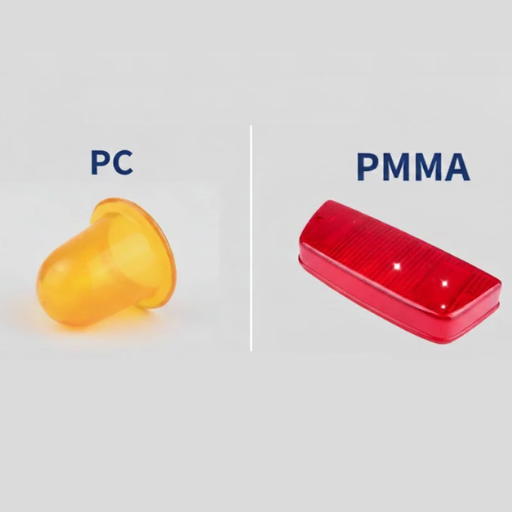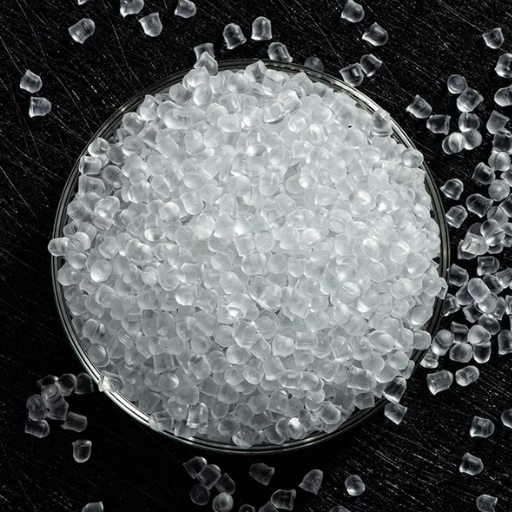
Acrylic costs less per kilo. That single sentence starts most material decisions, and it stops most of them too. The problem is that the price of a resin and the cost of a good part are not the same number.
In 2026 the polycarbonate vs acrylic cost gap is real, and it is moving. Polycarbonate (PC) spot prices have run roughly 15% to 45% above acrylic (PMMA) depending on the month and the market. But a cheaper kilo that cracks, rejects, or needs replacement is not cheaper at all.
This guide breaks down the polycarbonate vs acrylic cost comparison three ways: price per kilogram, cost per part, and total cost of ownership. You’ll get verified 2026 pricing, a worked cost model you can apply to your own part, and the procurement levers that actually lower your effective cost. As a resin supplier, we end with what to verify in the pellets themselves, because batch quality quietly changes every number in your cost sheet.
The Quick Cost Verdict
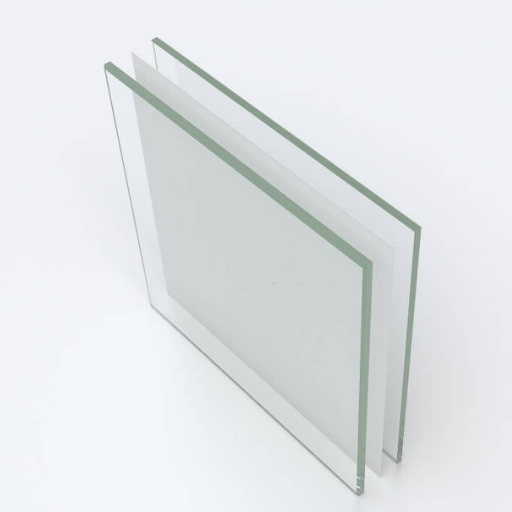
Acrylic is typically 15% to 35% cheaper than polycarbonate per kilogram, and the gap widened to roughly 45% in mid-2026 China spot markets. On sticker price alone, PMMA is the lower-cost resin.
But sticker price is not the whole decision. Once scrap, cycle time, energy, and replacement are counted, polycarbonate can become the lower cost per good part in impact-critical or high-failure applications.
- Choose acrylic when the price per kg dominates and impact risk is low. Signage, displays, lenses, and light guides fit here.
- Choose polycarbonate when cost is judged per good part. Safety glazing, machinery covers, and automotive parts punish breakage far more than the material premium.
Not sure which resin fits your application? Read our full polycarbonate vs acrylic comparison before you commit to a material.
Want to compare the two resins on your actual part geometry before you commit? Explore our polycarbonate pellet grades and our PMMA acrylic pellet range to see what we supply.
Polycarbonate vs Acrylic Price per Kg: The 2026 Numbers
The raw material market gives us the cleanest starting point. These are verified spot prices, not list prices, and they carry dates because resin prices move fast.
| Metric | Polycarbonate (PC) | Acrylic (PMMA) |
|---|---|---|
| Global spot price (May 2026) | ~2,007 USD/t | ~1,645 USD/t |
| China spot price (July 2026) | 19,800 RMB/t (~19.8 RMB/kg) | 13,650 RMB/t (~13.65 RMB/kg) |
| Typical PC premium over PMMA | 15% to 35% | Widened to ~45% in July 2026 |
| Sheet retail (US) | ~5to5to10 per sq ft | ~3to3to6 per sq ft |
| Sheet retail (India) | ~₹150 to ₹300 per sq ft | ~₹80 to ₹150 per sq ft |
Two patterns jump out. The first is that polycarbonate carries a real and persistent premium. The second is that the premium itself moves, which matters when you plan a purchase.
Why Polycarbonate Costs More
Polycarbonate is more expensive to make, and it buys properties you pay for. The resin starts from a more complex manufacturing route involving bisphenol A and phosgene. The finished polymer then delivers impact resistance roughly 250 times that of glass, a heat deflection temperature near 130°C, and the toughness to survive drops that shatter acrylic. You’re paying for engineering, not markup.
Grade and Brand Price Tiers
Within each resin, grade drives price. In May 2026, Jiangyin supplier quotes for PMMA ranged from 12,800 to 20,000 RMB/t depending on brand: Chimei CM-207 around 12,800, Mitsubishi MF001 around 14,600, and Shuangxiang SX-306 around 20,000. Premium imported PC grades like Makrolon and LEXAN sit higher still than generic equivalents.
The lesson for buyers is simple. When you see a “polycarbonate vs acrylic cost” comparison online, check whether it compares like-for-like grades and current dated prices. Most published numbers blend markets, months, and grades.
Polycarbonate vs Acrylic Cost: Sheet Price Comparison for Fabricators
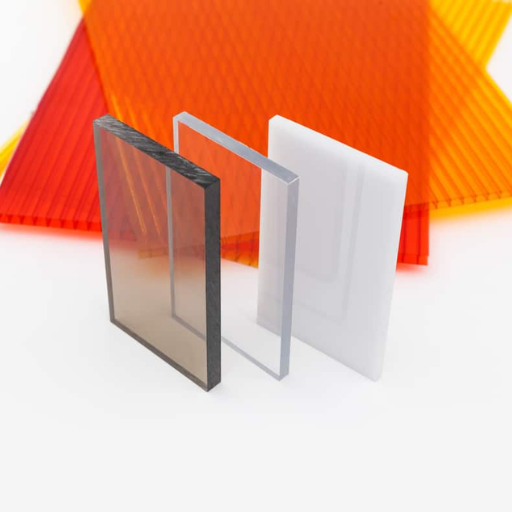
If you buy sheet rather than pellets, the gap looks similar and the numbers are easier to find. Acrylic sheet typically runs 30% to 50% cheaper than polycarbonate of the same thickness. A 4 x 8 foot sheet of 6 mm acrylic sells for roughly $80 to $130 CAD, while the equivalent polycarbonate runs $110 to $180 CAD.
Coatings widen the gap. UV-stabilized polycarbonate costs more than bare sheet because the coating adds a production step. Acrylic is naturally UV stable, so it skips that cost entirely.
This matters most at high volume. A sign shop cutting hundreds of sheets a month sees the 30% to 50% gap compound into a real budget line. A molder buying resin by the ton should run the same math on cost per part, which is where the model in the next section comes in.
Polycarbonate vs Acrylic Total Cost of Ownership: The Model That Changes the Verdict
Here is where most comparisons stop, and where the honest answer lives. Let us walk through a real worked example so you can see the arithmetic, then steal the method for your own part.
Consider an industrial enclosure viewing panel, 300 x 200 x 6 mm, produced at 500 units. The machining numbers below come from documented CNC work on both materials.
| Cost Component | Acrylic (PMMA) | Polycarbonate (PC) |
|---|---|---|
| Material per part | $6.90 | $8.40 |
| Machining per part | $12.50 | $15.80 |
| Finishing per part | $4.20 (flame polish) | $6.50 (vapor polish) |
| Part cost | $23.60 | $30.70 |
| Field failure rate | 8.5% | 0.8% |
| Replacement cost (annual) | ~$991 (42 parts) | ~$123 (4 parts) |
| Annual total (500 + replacements) | ~$12,791 | ~$15,472 |
Read the model carefully. Acrylic is about 23% cheaper per part at $23.60 versus $30.70. But acrylic fails roughly ten times more often in this application, at 8.5% versus 0.8%. When you add replacements, the annual totals land at about $12,791 for PMMA and $15,472 for PC.
Polycarbonate costs 21% more per year here. It also eliminates about 90% of field failures. For a viewing window on a machine that runs production, that reliability is the point.
Injection Molding Shifts the Model Again
The viewing panel is machined. In injection molding the numbers move differently. PMMA runs 20% to 30% shorter cycles than PC and molds about 60°C cooler, which cuts energy per part. That’s a genuine cost advantage.
But PC’s toughness reduces rejects in the mold and in service. A high reject rate from handling or stress cracking erases PMMA’s material savings fast. For a detailed side-by-side on temperatures, drying, and defects, see our PC vs PMMA injection molding process guide.
The rule holds across both processes: the only honest comparison is cost per good part, not price per kilo. This is the core of any serious polycarbonate vs acrylic total cost of ownership analysis.
Ready to see the math on your own part? Request a current quote and our engineers will help you compare cost per good part for your specific geometry and volume.
2026 Market Drivers: Why the Price Gap Moves
The premium you pay for polycarbonate isn’t fixed. Four forces are moving it right now, and understanding them improves your buying timing.
Volatility is elevated. In Q1 2026, PC and PMMA spot prices swung by more than 30% in a single quarter, tracking crude oil and supply disruptions. In January, European PC prices fell sharply as producers failed to pass through higher benzene costs into a weak demand market.
China PMMA is in oversupply. More than 1 million tons of new Chinese PMMA capacity has come online, including Rongsheng’s 180,000-ton line and Shandong Zhemai’s 160,000-ton line. Utilization sits around 50% to 60%, which keeps persistent downward pressure on acrylic prices.
PC supply is concentrated. China now accounts for roughly 58% of global PC capacity, about 3.81 million tons by end-2024. Concentrated supply means policy moves or plant outages in one region move the global PC price.
BPA regulation adds long-term PC risk. Regulatory pressure on bisphenol A raises the cost and compliance burden for polycarbonate producers, a structural factor that keeps the PC premium from shrinking to zero.
The global polycarbonate resin market was valued around $15.1 billion in 2024 and is projected to reach about $20.1 billion by 2029, according to Grand View Research. Demand growth coexists with price pressure.
What This Means for Buyers
Contract pricing locks in the gap. Spot buying rides it. If your part can tolerate PMMA’s brittleness, the unusually wide 2026 gap justifies a re-spec conversation with your engineering team. If it cannot, the premium you pay for PC is insurance against a failure you can price precisely.
When Acrylic’s Cheap Price Actually Costs More
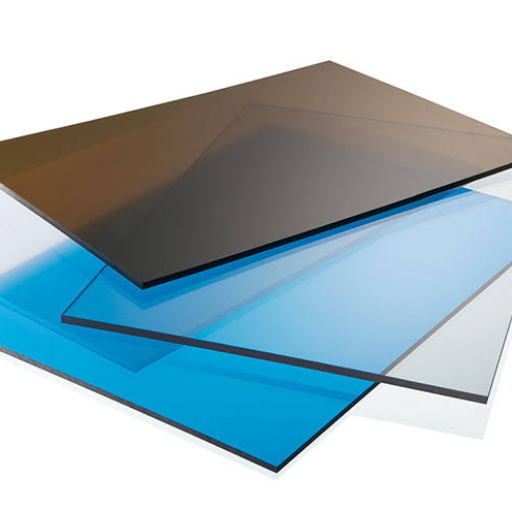
The sticker-price advantage of acrylic is real in low-risk applications and an illusion where failure is expensive. Understanding your own failure cost is the entire game.
Acrylic is brittle. It cracks during drilling, chips at fastener points, and stress-cracks under thermal cycling. Polycarbonate scratches more easily but bends and absorbs impact instead of shattering.
Consider what a single field failure costs in your operation. Replacement part, yes. But also downtime, labor, warranty claims, and the customer relationship. When a 42-cent-per-part difference in material leads to an $8,000 downtime event, the cheap material was never cheap.
A smart approach many manufacturers use is hybrid. Acrylic for viewing windows and aesthetic surfaces where clarity and budget win, polycarbonate for structural and impact zones. The combination optimizes cost against performance instead of forcing one material to do both.
Procurement Checklist: Cutting Your Effective Resin Cost
The price per kilo is a fact. Your effective cost is a choice. Here is the checklist our procurement customers use to lower the number that actually hits their P&L.
- Negotiate volume tiers. Per-kg price drops with annual volume. Ask for tiered pricing across your forecast, not a single flat quote.
- Compare contract versus spot. In a volatile market, a contract locks your resin cost; spot rides the swings. Decide which risk you want to own.
- Set a controlled regrind ratio. Adding clean regrind lowers effective cost per part. Know the ratio your part tolerates before you commit.
- Calculate landed cost. Freight, duties, and payment terms change the real price. A lower quote with longer lead time or higher minimums can cost more overall.
- Verify batch quality. A wet or off-spec batch raises rejects and silently inflates cost per good part. Check the COA, MFI, and moisture below 0.02%. See our guide on how to verify plastic pellet quality and proper storage and drying of plastic resin pellets.
- Consolidate suppliers. Sourcing PC and PMMA from one supplier locks pricing across both resins and cuts freight, labeling, and administrative overhead.
Recycled pellets offer a separate lever for budget programs. In China’s spring 2026 market, recycled PMMA ranged from about 11,400 to 12,000 RMB/t for first-grade transparent down to 6,000 to 6,500 RMB/t for mixed-color opaque. Recycled material is viable for non-optical parts, provided you verify quality the same way.
Polycarbonate vs Acrylic Cost FAQ
Is polycarbonate more expensive than acrylic?
Yes. Polycarbonate typically runs 15% to 35% more expensive than acrylic per kilogram, widening to roughly 45% in mid-2026 China spot markets. The premium reflects PC’s complex manufacturing and its impact and heat performance.
How much cheaper is acrylic?
Acrylic is roughly 30% to 50% cheaper as sheet and 15% to 35% cheaper per kilogram of resin. In July 2026, China spot prices put PC at 19,800 RMB/t versus PMMA at 13,650 RMB/t.
Why is polycarbonate so expensive?
Polycarbonate uses a more complex manufacturing route based on bisphenol A and phosgene, and it delivers impact resistance roughly 250 times that of glass. You pay for engineering, not markup.
Is acrylic cheaper to machine than polycarbonate?
Yes in labor, no in risk. Acrylic flame-polishes and cuts cleanly, but its brittleness raises scrap and rework. Polycarbonate is tougher to finish but far more forgiving in the field.
Is acrylic cheaper in the long run?
Only if your failure rate stays low. In high-failure applications, acrylic’s replacement costs can exceed polycarbonate’s upfront premium.
Can recycled acrylic or polycarbonate save money?
Yes. Recycled PMMA in China’s spring 2026 market ranged from about 6,000 to 12,000 RMB/t depending on grade and color. Verify quality for non-optical parts.
Which resin is cheaper for injection molding?
PMMA has cheaper material, shorter cycles, and lower energy. PC costs more to mold but cuts rejects. Cost per good part decides which is truly cheaper for your mold.
Conclusion
The polycarbonate vs acrylic cost comparison has three layers, and the answer changes at each one.
At the per-kg layer, acrylic wins clearly. It’s 15% to 35% cheaper, a gap that reached about 45% in mid-2026. At the cost-per-part layer, the gap narrows, because PMMA’s brittleness raises scrap and replacement. At the cost-per-good-part layer, polycarbonate can win outright in impact-critical applications.
The material that makes a good part on the first shot, every time, is the cheapest material. Run the total cost of ownership math on your own geometry before you choose, and treat any price comparison that stops at the per-kilo number with caution.
As a China-based engineering plastics supplier, Suzhou Yifuhui supplies both injection-grade polycarbonate and PMMA acrylic pellets with transparent volume-tier pricing, rigorous batch testing, and COAs. We supply both resins, so you can compare cost per good part and consolidate sourcing in one conversation.
Request a current polycarbonate vs acrylic price quote and we will respond within 24 hours. Our engineers will help you match the right grade and the right cost model to your part and volume.