A bag of plastic pellets can leave the supplier’s plant in spec and arrive two grades worse. Melt flow index can drift, moisture can climb, and contamination can hide inside a pellet that looks perfectly clean. Every one of those failures shows up downstream as scrap, rejects, and lost shifts unless you verify before you run.
Most procurement teams already know this. They also know that a 25-ton order cannot be tested by eyeballing a single handful of pellets. What they often lack is a repeatable plastic pellet quality control framework: which tests matter, what thresholds to hold, and how to turn a supplier’s certificate of analysis into an acceptance decision.
This guide walks you through plastic pellet quality control end to end as part of our complete guide to plastic resin pellets. You’ll learn the core tests, the numbers to watch, how to read a COA, and how to build an incoming inspection procedure your quality team can run on every lot. By the end, you’ll have the checklist you need to approve material with confidence and keep defects out of your production line.
What Is Plastic Pellet Quality Control?
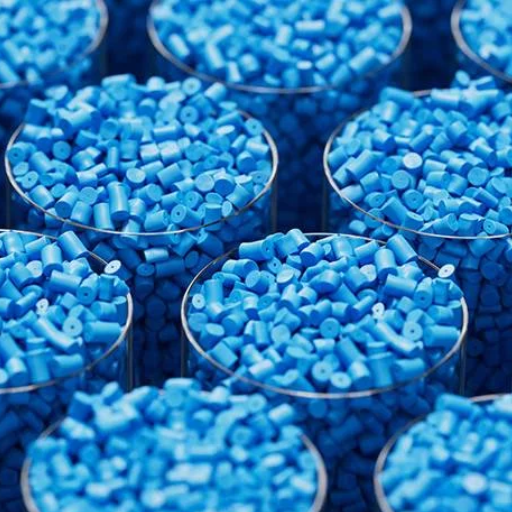
Plastic pellet quality control is the systematic testing and inspection that confirms a lot of pellets meets agreed specifications for polymer identity, purity, processability, and performance before it is approved for production. It protects your yields, your equipment, and your final product.
There are two layers to it. The supplier runs quality control at the factory, testing each batch as it is made. The buyer runs incoming quality control at the receiving dock, verifying that the lot actually matches what was ordered and what the paperwork claims. Neither replaces the other.
The supplier’s process matters. If you buy from a company that documents every batch, you start with a solid baseline. Our own guide to how plastic pellets are made explains the quality checkpoints built into production, from compounding to pelletizing. But you still verify on arrival, because material can degrade in transit, moisture can be absorbed, and paperwork can be wrong.
This guide covers both virgin and recycled pellets across commodity and engineering resins. Recycled material carries its own contamination and color challenges, which we cover in depth in our recycled plastic pellet quality control guide. Here, we build the framework that applies to every lot you receive.
Key Plastic Pellet Quality Control Tests
Seven tests cover most of what you need to verify. You won’t run all of them on every lot, but you should know what each one catches and when to require it.
Melt Flow Index (MFI) and Melt Flow Rate (MFR)
Melt flow index is the most practical processability test for plastic pellets in the industry. It measures how much melted polymer flows through a standard die in ten minutes under a set temperature and load, reported in grams per 10 minutes. It is a fast proxy for molecular weight and viscosity.
Standards: ASTM D1238, ISO 1133, and GB/T 3682. Test conditions matter, so the COA must state them. A typical condition is 190°C with a 2.16 kg load for PE and PP.
MFI tells you how the resin will behave on your machine. Injection molding grades run at high MFI so they fill a mold quickly. Extrusion grades run at low MFI so they keep melt strength. If the MFI drifts outside the agreed band, expect cycle time shifts, flash, short shots, or dimensional drift.
The industry tolerance is usually within plus or minus 10 to 20 percent batch to batch. Write that band into your purchase specification, not your COA.
Moisture Content
Moisture is the second most important test, and the one most often skipped. Hygroscopic resins such as nylon, polycarbonate, PET, PBT, and POM absorb moisture internally. Water turns to steam in the melt, causing splay, bubbles, voids, and hydrolysis that permanently weakens parts.
Standards: loss-on-drying per ASTM D6980, or Karl Fischer titration per ISO 15512. Typical limits are below 0.1 percent for most applications, tighter at 0.05 to 0.10 percent for PET and nylon, and below 0.02 percent for PLA before extrusion.
The catch is that pellets can reabsorb moisture in transit. A COA measured at the factory may not reflect what arrived on your dock. This is why the receiving moisture check matters, especially for hygroscopic resins.
Density and Specific Gravity
Density confirms the resin is what the paperwork claims. It is a cheap check that catches gross contamination or a wrong grade. Bulk density, a separate measurement, matters for hopper feeding and bag fill. Standards: ASTM D792 and ISO 1183.
Visual Appearance and Pellet Uniformity
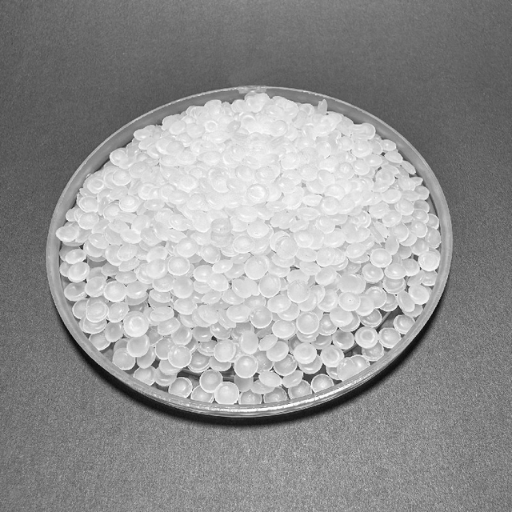
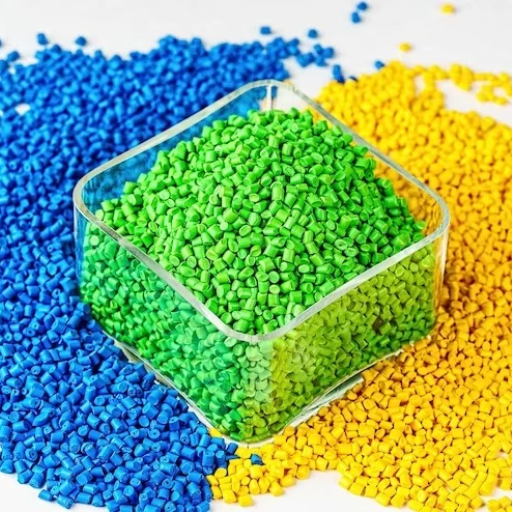
Look at the pellets. Uniform 3 to 5 mm size, clean cuts, consistent color, and no tails, angel hair, agglomerates, or black specks are the baseline. Even slight discoloration can signal thermal degradation during pelletizing. Note any unusual odor.
Contamination and Purity
Black specks, gels, metal fragments, other polymers, and fillers all count as contamination. Plastic pellet contamination testing starts with ash content, measured in a muffle furnace, which reveals inorganic fillers and contaminants. For black specks and gels, use a plaque count per area or per weight and agree on a maximum with your supplier.
Thermal and Compositional Analysis
Differential scanning calorimetry (DSC) measures melting point, crystallization, and can flag a contaminating polymer. FTIR and Raman spectroscopy identify the polymer itself. Require these for a new supplier, for recycled content, or for flame-retardant grades where the additive package matters.
Mechanical Properties
Tensile strength, elongation at break, flexural modulus, and notched Izod impact verify that a lot matches the datasheet. Require mechanical data for engineering grades and structural applications, not for commodity fill or packaging resin.
| Test | Standard | What It Catches | Typical Acceptance |
|---|---|---|---|
| Melt flow index | ASTM D1238 / ISO 1133 | Molecular weight drift, blending changes | Within +/-10-20% of spec |
| Moisture content | ASTM D6980 / ISO 15512 | Water pickup, drying failures | Below 0.1%; 0.05-0.10% for PET/PA |
| Density | ASTM D792 / ISO 1183 | Wrong grade, gross contamination | Within spec tolerance |
| Visual inspection | In-house | Tails, angel hair, black specks, gels, color | Agreed limit sample |
| Ash content | Muffle furnace | Fillers, inorganic contaminants | Within spec |
| DSC / FTIR | Lab methods | Polymer identity, additive package | Matches declared grade |
| Mechanical | Tensile, Izod | Property retention | Matches datasheet |
Curious what quality documentation we ship with every lot? Request a COA sample and full specifications from our team, and we will walk you through how each result is measured.
How to Test Plastic Pellet Quality at Receiving
Turn the tests above into a repeatable receiving procedure. Here is a plastic pellet quality control sequence that works across commodity, engineering, and recycled pellets.
- Verify documents first. Confirm the lot number on the label matches the COA and the delivery documents. Check that the COA reports actual results for this lot, not generic ranges.
- Inspect packaging. Look for punctures, tears, water stains, and condensation. Damaged packaging can introduce moisture and contamination before you even open a bag.
- Sample per a plan. Do not grab from one bag. Use a statistical sampling plan such as ISO 2859-1 and pull from multiple bags or silo compartments.
- Run the visual check. Assess color, pellet size, shape, tails, black specks, gels, and odor against your limit sample.
- Check moisture for hygroscopic resins. Measure moisture on arrival, especially for nylon, PC, PET, and PBT. Don’t trust the label.
- Spot-check MFI. Verify melt flow against the COA. This catches molecular weight drift before it causes process problems.
- Quarantine before release. Hold the lot while you complete testing. Never let material onto the floor before it is approved.
- Classify the result. Release conforming lots, quarantine and investigate anything non-conforming, and document every outcome.
- Record everything. Log supplier, lot number, receiving date, test results, and inspector. This becomes your audit trail and your supplier scorecard.
For in-plant quick checks, visual inspection plus a moisture analyzer and an MFI tester covers most of the risk without a full lab. Screen pack life during processing is also a useful health indicator: if your screen packs clog faster than usual, contamination is the likely cause.
When you need more than your own equipment can do, outsource to a testing laboratory accredited to ISO/IEC 17025. That accreditation means the lab’s results are independently verified, which makes them much harder for a supplier to argue with.
Plastic Pellet Quality Control Parameters: Thresholds by Resin
Thresholds are not one-size-fits-all. The table below shows representative plastic pellet specifications for common resins. Always use your supplier’s technical data sheet and your own process requirements as the final word.
| Resin | Typical MFI (g/10 min) | Moisture Limit | Density (g/cm3) | Key Checks |
|---|---|---|---|---|
| PP (injection) | 10-25 | Below 0.1% | 0.90-0.91 | MFI, impact balance |
| HDPE (blow molding) | 0.3-1.5 | Below 0.1% | 0.95-0.96 | MFI, odor (recycled) |
| ABS | 10-30 | Below 0.1% | 1.04-1.06 | Mechanicals, color |
| Polycarbonate | 6-20 | Below 0.02% | 1.19-1.20 | Moisture, transparency |
| PA66 | 10-50 | Below 0.2% | 1.13-1.15 | Moisture, viscosity |
| POM | 9-30 | Below 0.1% | 1.41-1.42 | Moisture, MFI |
| PMMA | 2-20 | Below 0.1% | 1.17-1.20 | Transparency, moisture |
| PET (bottle grade) | 20-30 | Below 0.02% | 1.33-1.38 | Intrinsic viscosity, moisture |
Two rules apply across every row. First, additives change the game. Glass-filled, flame-retardant, and impact-modified grades are more moisture-sensitive than their base resin because the fillers absorb water. Second, recycled pellets carry more variability, so tighten your sampling and your Cpk requirements rather than loosening them.
For grade-specific depth, our team has published dedicated guides for PA66 nylon pellets, PET pellets, polycarbonate pellets, and ABS plastic pellets.
How to Read and Verify a Certificate of Analysis (COA)
The plastic pellet COA is your primary acceptance document, and most buyers underuse it. A good COA is a quality contract. A bad one is a sales sheet with a letterhead.
What a COA Should Include
- Lot or batch number and production date
- Polymer identification and grade
- MFI with the exact test condition and tolerance band
- Density, moisture, and ash content
- Color values and a visual assessment
- Mechanical properties for engineering grades
- Certification references (ISO 9001, REACH, RoHS, FDA, IATF 16949 as applicable)
- Actual lot-specific results, not generic specification ranges
The last point is the one that matters most for plastic pellet quality control. Generic ranges tell you what the supplier hopes to make. Lot-specific results tell you what you are actually receiving. If the COA only lists ranges, ask for the actual measurements for that batch.
Red Flags to Watch For
- No test conditions or standards listed
- Wide MFI ranges with no explanation
- No lot traceability
- Photocopied, undated, or unsigned documents
- Inconsistent units or vague test methods
- No signatory or quality manager approval
A COA that cannot be traced to a specific lot is not evidence of quality. It is an aspiration.
How to Challenge a COA
When a result looks off, don’t accept it silently. Request process capability data, known as Cpk, for the key properties. A Cpk of 1.33 or higher shows the supplier’s process is consistent, not just in spec by luck. Ask for limit samples you can hold as reference standards, and for accredited lab results if you are challenging a critical value. If drift repeats, issue a formal corrective action request and track the supplier’s response.
When Elena, a quality engineer at an electronics manufacturer, received a polycarbonate ABS blend that kept producing dimensional rejects, she checked the COA and found the MFI was within the wide listed range but sat at the very edge. She asked the supplier for Cpk data on the last ten lots. The data showed the process had drifted for months. Armed with that, she negotiated a tighter spec and a supplier corrective action plan. Reject rates returned to normal within six weeks. One document request fixed what looked like a molding problem.
Incoming Inspection SOP for Plastic Pellets
A standard operating procedure turns this into something your team can run the same way every time. Here is a practical plastic pellet incoming inspection checklist, formatted as an SOP you can adapt.
At Receiving
- Verify packaging integrity, labeling, and lot number against the COA and packing list.
- Check for water damage, punctures, and condensation.
- Sample per ISO 2859-1. For a typical lot, pull from multiple bags rather than one, and take enough material for both quick checks and any lab work.
During Testing
- Run the visual inspection against your limit sample.
- Measure moisture, especially for hygroscopic resins.
- Spot-check MFI against the COA.
- Send material for DSC, FTIR, ash, or mechanical testing when the grade or application requires it.
Classification and Release
Classify defects in three tiers. Critical defects, such as the wrong polymer or non-food-grade material for a food-contact application, mean automatic lot rejection. Major defects above your acceptable quality level (AQL), such as MFI outside the band, mean rejection or 100 percent sorting. Minor defects, such as a slight color variation, can be accepted with buyer approval or a downgrade.
Quarantine any non-conforming lot immediately, notify the supplier, and document the hold. Track repeat issues. If the same supplier keeps failing the same check, escalate to a formal corrective action and consider a sourcing change.
Supplier Quality Audit Checklist

Your incoming inspection is only as good as the supplier behind it. For plastic pellet quality control to hold across every lot you receive, audit your key suppliers against this checklist before you commit to a large order.
- Current, valid ISO 9001 certification, and the audit scope actually covers pellet production.
- A testing lab accredited to ISO/IEC 17025, or documented use of an accredited third-party lab.
- Cpk of 1.33 or higher for key properties such as MFI and density.
- Documented test methods, sampling plans, and tolerance bands.
- Lot-specific COAs with traceability, not generic ranges.
- Limit samples available on request.
- Willingness to run a qualification trial before a large order.
- Compliance documentation for REACH, RoHS, FDA, or IATF 16949 as your application requires.
The audit is not about paperwork. It is about whether the supplier can describe how they measure quality and show evidence it works. A supplier who cannot explain their test methods or sampling plan does not have a controllable grade. They have a material stream.
Qualification Trials: The Highest-Leverage Verification Step
No document beats running the material. In plastic pellet quality control, a qualification trial is the single most effective check you can do, because it tests the pellet exactly the way you will use it.
Run a sample through your actual production machinery, not a test machine. Kitech’s buying guide recommends starting with roughly 25 kilograms. Watch how the material feeds, dries, injects or extrudes, and check the dimensional and visual properties of the test parts.
Research published in IRE Journals found that processing simulation identifies defects in 12 to 15 percent of batches that pass visual and physical testing alone. That is a substantial share of problems hiding behind clean-looking pellets and good paperwork. A qualification trial catches them before you commit to a large volume.
Marcus, a production manager at a packaging converter, planned a large order of a new recycled PP grade. The COA and visuals looked fine. He ran a 25 kilogram qualification through his injection machine and discovered the material filled poorly at his standard cycle settings. A quick call to the supplier revealed a mislabeled MFI grade. Catching that before the full order saved Marcus three weeks of production disruption and a costly batch of rejected caps.
The Cost of Skipping Plastic Pellet Quality Control
Quality control has a price, but skipping it has a bigger one. Run the math for one non-conforming lot. Add the cost of the scrapped parts, the lost production hours, the labor to investigate, and the risk to your customer relationship. A single rejected lot can exceed the entire annual cost of a basic inspection program.
The pattern holds at every scale. Moisture in a hygroscopic lot causes splay and weak parts across an entire run. MFI drift forces you to re-tune your process and still produces inconsistent dimensions. Contamination fouls a barrel and generates black specks on thousands of parts. Each of these traces back to a decision made at receiving.
An incoming program doesn’t need to be expensive to start. Visual inspection, a moisture analyzer, and an MFI tester, plus a documented procedure, capture most of the risk. Add lab testing and qualification trials for new suppliers and critical grades. In every case, verify before you run.
FAQ
What is plastic pellet quality control?
Plastic pellet quality control is the systematic testing and inspection that confirms a lot of pellets meets specifications for polymer identity, purity, processability, and performance before it is approved for production.
How do you test plastic pellet quality?
Test melt flow index, moisture content, density, visual appearance, contamination, and mechanical properties. Run a visual check and MFI and moisture spot-checks at receiving, and use lab methods such as DSC, FTIR, and ash content for new or critical suppliers.
What should a Certificate of Analysis include for plastic pellets?
A COA should include the lot number, production date, polymer identity, MFI with test conditions, density, moisture, ash content, color values, mechanical properties for engineering grades, and lot-specific results rather than generic ranges.
What MFI tolerance is acceptable for plastic pellets?
The industry tolerance is usually within plus or minus 10 to 20 percent batch to batch. Write the band into your purchase specification and verify the COA states the exact test condition.
How much moisture can plastic pellets contain before processing?
Most applications target below 0.1 percent. PET and nylon require 0.05 to 0.10 percent, and PLA needs below 0.02 percent before extrusion. Hygroscopic resins must be re-tested on receipt because they reabsorb moisture in transit.
What causes black specks in plastic pellets?
Black specks come from thermal degradation, contamination, or poor filtration during pelletizing. Use a plaque count per area or weight and agree on a maximum with your supplier.
How do I inspect plastic pellets at receiving?
Verify documents, inspect packaging, sample per a statistical plan, run a visual check, measure moisture for hygroscopic resins, spot-check MFI, and quarantine the lot until testing is complete.
Do I need to test virgin and recycled pellets the same way?
Use the same framework for both. Recycled pellets carry more variability in contamination, color, and properties, so tighten your sampling and require stronger process capability data from the supplier.
Conclusion
Plastic pellet quality control is not a luxury. It is the difference between a predictable production line and a stream of defects you chase all month. Define what good looks like before the lot arrives, measure it consistently, and hold your suppliers to it.
The key takeaways from this guide:
- Test MFI, moisture, density, and visual appearance on every incoming lot.
- Verify the COA reports lot-specific results, not generic ranges.
- Sample statistically, quarantine before release, and document everything.
- Require Cpk data and a qualification trial from new or critical suppliers.
- Treat a non-conforming lot as a supplier problem, not a production problem.
At Suzhou Yifuhui New Material Co., Ltd., we test every batch, ship a certificate of analysis tied to a specific lot, and back our materials with engineering support. We publish dedicated guides to plastic pellets for injection molding and how to store plastic resin pellets, so you can keep your material verified from dock to hopper. Contact our team today for a COA sample and specifications, and we will respond within 24 hours with the documentation and guidance you need to approve your next order with confidence.