A 316L stainless steel impeller handling hot hydrochloric acid typically fails within months. The same impeller, coated in PFA, runs for years. That gap is why PFA coating appears on so many chemical, food, and semiconductor drawings, and why specifying it correctly carries real money.
PFA coating is a protective fluoropolymer film applied to a metal or glass substrate and fused in an oven. It combines the chemical resistance and 260 °C service temperature of PTFE with a smooth, non-porous surface that PTFE coatings struggle to match.
This guide covers what PFA coating is, what the abbreviation stands for, how it is applied and cured, how thick it builds, how it compares to PTFE, and whether it is food safe. It also explains where the coating comes from, because every PFA coating starts life as PFA resin.
If you specify, apply, or buy coated parts, keep this reference open.
What Is PFA Coating?
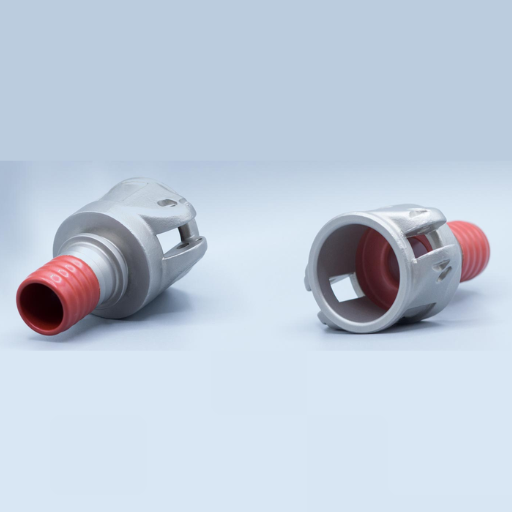
PFA coating is a protective film of perfluoroalkoxy alkane, a melt-processable fluoropolymer applied as powder or aqueous dispersion and fused in an oven. Because PFA flows during cure, it forms a continuous, pinhole-free layer with the chemical resistance of PTFE and a continuous service temperature of 260 °C.
The substrate is almost always metal or glass, not plastic. Steel, stainless steel, aluminium, and copper are the common bases. The coating protects the metal from the process fluid, and the metal gives the part its strength.
PFA belongs to the same fluoropolymer family as PTFE, FEP, and ETFE. It is a copolymer of tetrafluoroethylene and a perfluorinated alkyl vinyl ether. Those perfluoroalkoxy side groups are what separate it from PTFE, and they do more than tweak the chemistry.
Because only a small fraction of the chain carries side groups, the backbone stays close to PTFE’s fully fluorinated structure. You keep PTFE-level inertness and heat resistance. The side groups disrupt crystallinity just enough to drop the melt viscosity into a range standard equipment handles. That is why PFA is a coating material at all.
PFA Coating Full Form: What Does PFA Stand For?
In coatings, PFA stands for perfluoroalkoxy alkane, also written perfluoroalkoxy or perfluoroalkoxy polymer. The name describes the polymer structure: a fully fluorinated carbon backbone carrying ether-based alkoxy side groups.
One clarification saves confusion. PFA is also used as an abbreviation for polyfurfuryl alcohol, a bio-based resin used in some anti-corrosion coatings. That material is unrelated to perfluoroalkoxy. If a supplier quotes “PFA coating” for a food-contact or high-purity job, confirm which polymer they mean.
Why PFA Coats Differently from PTFE
Both polymers resist chemicals and handle 260 °C. The difference is what happens in the oven.
PTFE does not flow when it melts. A PTFE film therefore forms by sintering: particles fuse at their contact points but leave voids between them. Those voids become pinholes, and a pinhole in a chemical barrier is a failure point waiting for the right fluid.
PFA melts and flows. During cure it wets out and closes into a continuous film, with no porosity for a process chemical to work through. That is why PFA is the default choice when the coating must act as a barrier, not just a release surface.
The trade-off is cost. PFA systems typically run 30% to 50% more than an equivalent PTFE system.
For the resin side of this picture, our PFA fluoropolymer range lists the grades we supply to compounders and coating manufacturers.
How PFA Coating Is Applied
Four methods cover almost every industrial PFA coating. They differ in the form of PFA used, the film build achieved, and the parts they suit.
Electrostatic Powder Spraying
A charged PFA powder is sprayed onto a preheated, grounded substrate. The powder melts on contact and adheres. Operators repeat the pass to build film, then sinter the part. It is the most common method for accessible geometry.
Fluidised Bed Coating
The preheated part is immersed in a bed of fluidised PFA powder, which melts onto the hot surface. Dip time and substrate temperature control film thickness, and repeated dips build heavier coats. Fluidised bed suits parts a spray gun cannot reach.
Aqueous Dispersion Coating
PFA dispersion is a water-based system containing surfactant, sprayed or flow-coated onto the part and then cured in stages. It is the only method that reliably produces films below 25 µm.
Rotational Moulding and Lining
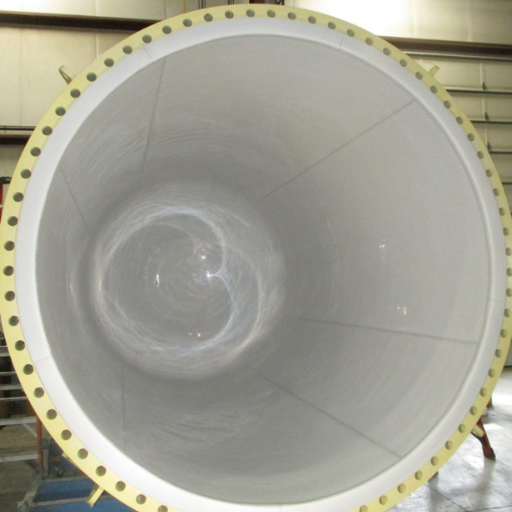
For heavy linings on vessels, pipe, and large fittings, PFA powder is charged into the part and the part is rotated while heated. This produces the thickest films of any method and is the standard route for chemical process vessels.
PFA Coating Thickness: How Thick Can You Build?
| Method | Typical film build per pass | Practical maximum |
|---|---|---|
| Electrostatic powder spray | 30 to 100 µm | ~1,000 µm with multiple passes |
| Fluidised bed | 50 to 300 µm per dip | ~1,000 µm with multiple dips |
| Aqueous dispersion | 10 to 15 µm crack-free per pass | 100 to 300 µm |
| Rotational moulding or lining | 500 to 1,000 µm | 5,000 µm |
The comparison matters. A standard PTFE non-stick system runs 25 to 75 µm, and even a high-build PTFE system rarely exceeds 205 µm. PFA can be built past 500 µm, and that extra thickness carries mechanical wear and resists permeation over a long service life.
Thin films are the harder problem. PFA resists application below 25 µm, so if your specification calls for a 10 µm barrier, confirm your coater works in dispersion rather than powder.
The PFA Cure and Sintering Schedule
Cure is where a PFA coating succeeds or fails. The temperatures are high and the window is not generous.
| Stage | Temperature | Purpose |
|---|---|---|
| Dry-off | ~120 °C (250 °F) | Remove water from dispersion systems |
| Surfactant burn-off | 250 to 290 °C (482 to 554 °F) | Decompose wetting agents and surfactants |
| Consolidation | Above 305 °C (581 °F) | Melt point is crossed, film flows and pores close |
| Final sinter | 320 to 340 °C (608 to 644 °F) for 1 to 3 hours | Complete fusion into a non-porous film |
The equipment maker Daikin specifies a final sintering range of 320 to 340 °C for 1 to 3 hours for its NEOFLON PFA coating powders, with processing possible across 320 to 360 °C depending on grade.
A worked powder cycle for a steel part: preheat the part 30 minutes at 380 °C, dip 1 minute per dip, intermediate sinter 15 minutes at 360 °C, then final sinter 120 minutes at 350 °C.
Why Two Published PFA Cure Temperatures Both Look Right
Search for a PFA cure temperature and you will find 320 to 340 °C from powder datasheets and 380 to 390 °C from coating applicators. The numbers disagree, but neither is wrong. They measure different things.
The 320 to 340 °C figure is the fusion temperature the polymer needs to flow out. The 380 to 390 °C figure is the preheat temperature the substrate carries into the powder bed, which has to exceed the melt point because the part loses heat the moment it meets cold powder. A third figure, 337 °C, is the peak that maximises adhesion when PFA goes over a PTFE base coat.
One hard limit applies to all of them. Do not hold PFA above roughly 370 °C for extended periods. Thermal degradation starts there, and a scorched film loses both colour and mechanical performance.
Marcus, a coating line supervisor at a component plant in northern Italy, found that limit the expensive way. A thermocouple drifted 20 °C low, so the controller held his sintering oven at 392 °C to hit a 372 °C setpoint. The first batch looked acceptable.
By the third week, coated valves were failing a solvent rub test and the film had discoloured. The fix was a 400 euro thermocouple. The cost of finding it late was nine scrapped batches.
Substrate Preparation: Where PFA Coatings Actually Fail
Most PFA coating failures are adhesion failures, and adhesion is decided before the first coat goes on.
A qualified process runs in this order:
- Inspect the substrate for condition, geometry, and defects that will telegraph through the film.
- Degrease to remove oil, grease, and cutting fluid residue.
- Mask areas that must stay uncoated, including threads and sealing faces.
- Heat to burn off residual organics and volatiles.
- Blast to a defined anchor profile, typically Ra 2.5 to 3.5 µm.
- Apply a compatible primer, then build the PFA topcoat to the target film.
- Cure to schedule, then verify film build and coverage.
Skipping the primer is the most common shortcut, and the one that fails in service rather than on the bench. PFA does not bond directly to bare steel well enough to survive thermal cycling.
Contamination is the second most common cause. A part blasted correctly and then handled with bare hands carries enough skin oil to wreck adhesion on the contact area.
PFA Coating Properties and Performance Limits
| Property | Value | Notes |
|---|---|---|
| Continuous service temperature | 260 °C (500 °F) | Intermittent excursions to roughly 290 °C |
| Melting point | 302 to 313 °C | Grade dependent |
| Dielectric strength | ~2,000 V/mil (~80 V/µm) | Excellent electrical insulation |
| Coefficient of friction | 0.10 kinetic | Non-stick and low drag |
| Water absorption | <0.03% in 24 hours | Effectively non-absorbent |
| Specific gravity | ~2.15 | Higher than most commodity plastics |
| Chemical resistance | Inert to nearly all industrial chemicals | Attack limited to molten alkali metals and reactive fluorinating agents |
One row deserves a warning. Continuous service temperature, intermittent peak, and melting point are three different numbers, and engineers mix them up constantly. A part rated for 260 °C continuous does not become a 302 °C part because the melting point is higher. Design to the continuous figure.
For the full material datasheet behind these values, see our PFA material guide.
PFA Coating vs PTFE Coating: How to Choose
| Factor | PTFE coating | PFA coating |
|---|---|---|
| Continuous service temperature | 260 °C | 260 °C |
| Substrate preheat range | 370 to 435 °C | 380 to 390 °C |
| Film build | 25 to 75 µm, up to 205 µm | 35 to 500 µm |
| Chemical and permeation barrier | Good | Excellent |
| Porosity | Prone to pinholes | Pinhole-free |
| FDA food contact | Yes | Yes, grade dependent |
| Relative cost | Standard | 30% to 50% higher |
Choose PTFE Coating When
Release is the main requirement and chemical exposure is mild. Bakeware, dough handling equipment, and general non-stick work rarely need the barrier performance that justifies PFA pricing. PTFE also holds the lowest coefficient of friction, so where slip matters most, it wins.
Choose PFA Coating When
The coating has to resist aggressive chemistry, act as a permeation barrier, or survive repeated scraping and aggressive cleaning. Acids, caustics, solvents, and pharmaceutical or semiconductor duty all point to PFA. So does any application where metal-ion leaching is a concern, because a thick, non-porous film keeps the process fluid away from the substrate.
The common mistake runs in one direction. Buyers specify PTFE into chemically aggressive duty to save 40%, then pay far more in rework, downtime, and scrapped product when the film fails early. Over-specifying PFA where PTFE would meet the requirement simply adds cost without adding life.
Is PFA Coating Food Safe?
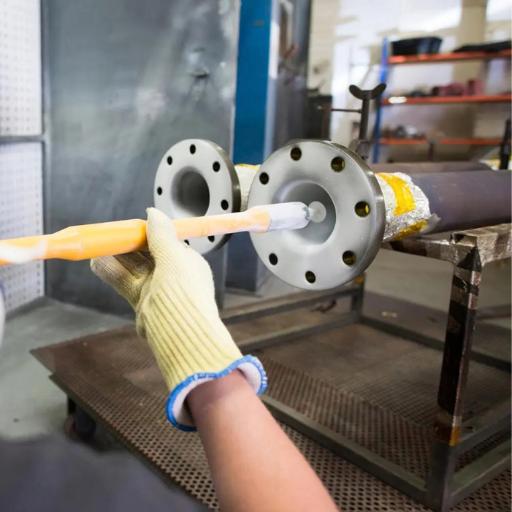
PFA coating is approved for direct food contact under 21 CFR 177.1550, the FDA regulation covering perfluorocarbon resins.
Compliance is not automatic. It depends on the grade, the coating formulation, and whether the cure cycle was executed correctly. A supplier that states “FDA compliant” as a blanket property of PFA is glossing over that. Ask for the compliance statement for the system being applied.
PFA coating is also manufactured PFOA-free. Perfluorooctanoic acid has not been used in fluoropolymer production in the US and Europe for years.
The PFAS Question Buyers Are Actually Asking
Since 2023, the question behind most PFA inquiries has shifted from “what does it cost” to “will I still be able to buy it.”
The honest answer today is that no restriction currently bans PFA. The EU’s universal PFAS restriction is a proposal under review, not adopted law. Industry is pressing for fluoropolymers to be treated as a distinct category with their own risk assessment, and the semiconductor sector wants a long derogation. Current direction points to a multi-year transition rather than an immediate cutoff.
Three practical points for buyers:
- No 2026 compliance deadline currently applies to PFA parts.
- Qualify a second source and a second grade before you need one, not during a supply interruption.
- Document the grade and compliance status of every PFA part you buy.
Stating the situation plainly is more useful than alarm. For a related look at how food-contact approvals work for other polymers, see our guide to food-contact material safety.
PFA Coating Applications by Industry
Chemical Processing
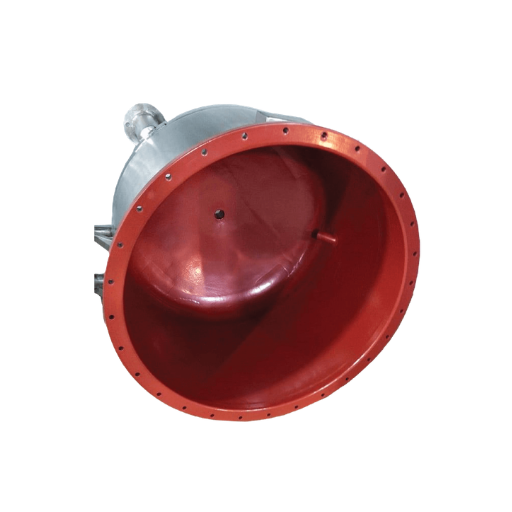
PFA-coated vessels, pump internals, valve bodies, agitators, and pipe sections handle acids, caustics, and solvents that would corrode stainless steel. Rotational-moulded thick linings suit large vessels; electrostatic coatings cover smaller hardware.
Food Processing and Bakeware
PFA’s release properties plus its FDA status suit contact parts that must release product and clean down hard between runs. Dough hoppers, bakeware, mixing equipment, and chutes are common.
Semiconductor Manufacturing
Plasma-facing chamber components and wet-process hardware use PFA coatings where metallic contamination measured in parts per billion affects yield. This is the highest-value, strictest-purity application for the material.
Pharmaceutical and Medical
Cleanable, non-absorbent, chemically inert surfaces suit pharmaceutical processing equipment and some medical components. The low extractables profile matters more here than raw temperature performance.
Where PFA Coating Starts: The Resin Behind the Film
Every PFA coating begins as PFA resin.
Coating powders are ground from PFA resin grades, and aqueous dispersions are made from PFA resin and surfactant systems. The melt flow rate and molecular weight distribution of that resin decide whether the powder flows out into a pinhole-free film or leaves a weak, porous coat.
That is where we work. Suzhou Yifuhui New Material supplies Teflon PFA 340 resin and related PFA grades to compounders, powder producers, and coating manufacturers. If you are formulating a PFA coating system rather than buying the coating service, request a quote and we will confirm the grade and supply terms within 24 hours.
Frequently Asked Questions
What is PFA coating full form?
PFA coating full form is perfluoroalkoxy alkane, also written perfluoroalkoxy or perfluoroalkoxy polymer. Note that PFA is also an abbreviation for polyfurfuryl alcohol, an unrelated bio-based coating resin.
What is the difference between PFA and PTFE coating?
PTFE does not flow when it melts, so it sinters into a film with pinholes and a film build of 25 to 75 µm. PFA melts and flows, forming a pinhole-free film that can be built to 500 µm or more. PFA also gives a better chemical and permeation barrier, at 30% to 50% higher cost.
What temperature does PFA coating cure at?
Powder systems fuse at 320 to 340 °C for 1 to 3 hours. Dispersion systems cure in stages: about 120 °C to dry, 250 to 290 °C to burn off surfactant, and above 305 °C to consolidate the film. Coating applicators often quote 380 to 390 °C, which is substrate preheat, not fusion temperature.
How thick can PFA coating be applied?
Electrostatic powder spray builds 30 to 100 µm per pass, up to about 1,000 µm across multiple passes. Rotational moulding produces 500 to 5,000 µm. Aqueous dispersion is limited to 10 to 15 µm crack-free per pass, with a practical maximum near 300 µm.
Is PFA coating the same as Teflon coating?
No. Teflon is a brand name covering several fluoropolymers, including PTFE, FEP, and PFA. A “Teflon coating” is often PTFE, which has different barrier and film-build properties. Ask which polymer the coating actually contains.
Is PFA coating food safe?
PFA coating is approved for direct food contact under 21 CFR 177.1550, subject to grade and system. Compliance depends on the grade, the coating formulation, and correct curing. Request the compliance statement for the exact system.
How long does a PFA coating last?
Service life depends on the chemical environment, temperature, mechanical abuse, and film build. A correctly prepared and cured thick-film PFA coating routinely outlasts the metal part it protects in aggressive chemical duty. Adhesion failures, not polymer degradation, cause most early failures.
Conclusion
PFA coating is a melt-fused fluoropolymer film that gives a metal or glass substrate the chemical resistance and 260 °C service temperature of PTFE, plus a non-porous surface PTFE coatings cannot match. Four points carry most of the practical value:
- PFA stands for perfluoroalkoxy alkane, and it is not the same polymer as PTFE or polyfurfuryl alcohol.
- PFA flows during cure, so the film is pinhole-free and can be built past 500 µm.
- Powder systems cure at 320 to 340 °C for 1 to 3 hours, with substrate preheat near 380 °C.
- Most failures are adhesion failures, decided at blasting and priming, not during cure.
If you are specifying a PFA coating, confirm the grade, the cure schedule, and the food-contact statement before the parts are made. If you are sourcing the resin behind that coating, our team can match a PFA grade to your application.
Contact our engineering team for a grade recommendation and a quote based on your volume requirements.