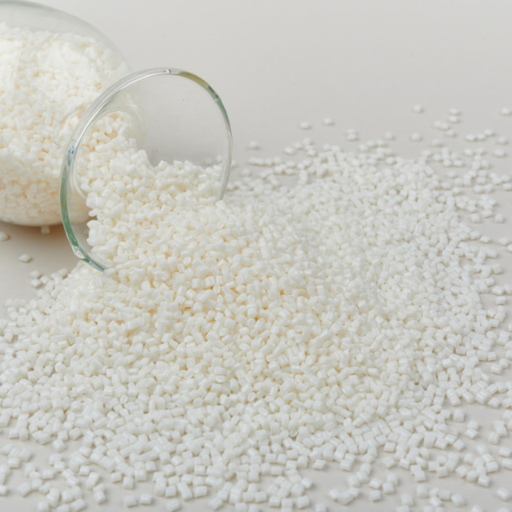
To dry PA66 pellets before molding, follow the exact grade’s drying instructions, verify residual moisture using a suitable agreed test method, and protect the resin during transfer to the machine. A completed dryer cycle records what happened to the material; a moisture measurement helps establish whether it meets the applicable requirement.
The practical question is how to dry PA66 pellets and demonstrate readiness at the point of use. That requires a traceable connection between the grade document, drying record, sample, test result and production decision.
Key takeaways:
- Use the full producer grade designation to find the applicable drying and moisture recommendations.
- Keep dryer temperature, drying-air condition and measured pellet moisture as separate records.
- Connect each result to an identified batch and documented sampling procedure.
- Protect dried resin from moisture uptake, and reassess when handling or operating conditions change.
1. Start with the exact PA66 grade
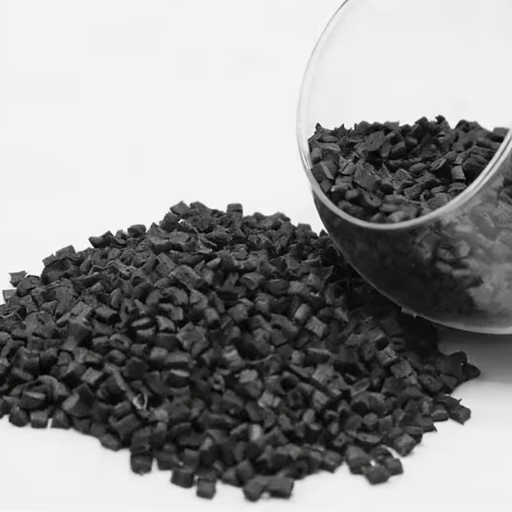
Record the producer, complete grade name, reinforcement or additives, lot number and packaging condition. “PA66” or “nylon 66” identifies a polymer family, not a complete processing specification. For broader purchasing context, see our PA66 nylon pellets guide.
Obtain the current processing document for that exact material. Identify three separate items:
- The recommended moisture condition before processing.
- The drying equipment and operating conditions to which the recommendation applies.
- The applicable water-content test method or a reference to the agreed laboratory procedure.
Also record the document revision. If the moisture criterion or method is unclear, ask the producer and the responsible quality team to clarify it before setting the batch acceptance rule. An equilibrium water-absorption value in a property table is not a substitute for a pre-molding moisture requirement.
A grade-specific example, not a universal recipe
The September 2026 BASF Ultramid A3EG3 processing data sheet, identifying the material as PA66-GF15, gives these recommendations:
| Item | A3EG3 recommendation in that document |
|---|---|
| Moisture before processing | 0.03–0.06% |
| Dryer | Dry-air dryer |
| Drying temperature | 80°C |
| Drying time | 4 hours, subject to the conditions below |
The sheet makes drying duration dependent on incoming moisture, drying temperature and drying-air dew point. It notes that improper storage, including opened packaging, may require a longer cycle. It also warns that excessive drying can increase melt viscosity. These conditions belong with the numbers whenever the example is used.
Use this example to see how a grade document connects a material, a moisture recommendation and drying conditions. Do not transfer the values to another PA66 grade or assume that a four-hour cycle proves the result. This example does not establish availability of A3EG3 from Yifuhui.
2. Why dryer time alone does not confirm readiness
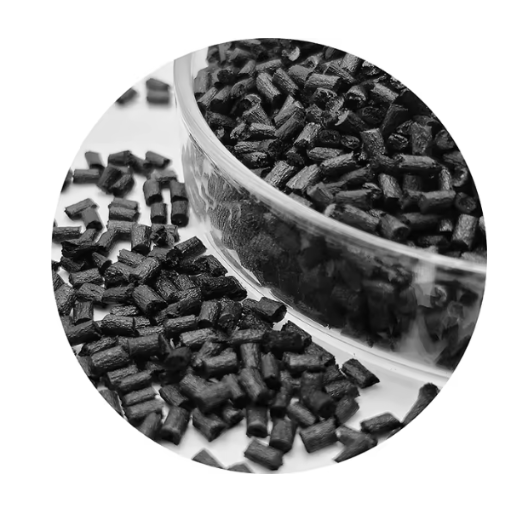
Nylon pellets absorb moisture from surrounding air. Toray’s AMILAN guidance explains that uptake depends on factors including nylon type, reinforcement, pellet shape, temperature and humidity. It also describes how humid intake air can limit ordinary hot-air drying. A temperature setting alone therefore leaves out part of the drying conditions.
Keep these records distinct:
| Record | What it describes |
|---|---|
| Dryer temperature and time | Thermal conditions and duration recorded for the drying process |
| Drying-air condition, including dew point where applicable | The air used by the drying equipment |
| Pellet water-content result | The tested sample’s measured moisture under the stated method |
Air dew point is not a pellet water-content measurement. Likewise, a timer reaching its endpoint does not resolve unknown incoming moisture or undocumented exposure after drying.
Toray describes possible appearance and property problems when nylon is processed with excessive moisture. However, use the agreed moisture test for the material decision: do not treat an acceptable-looking part as a replacement for that test, or assume every molding defect has a moisture cause.
3. Set up and document the drying process
Use equipment suitable for the grade instructions and confirm its operating condition under the equipment manufacturer’s procedure. Where the grade specifies dry-air drying, a heated-air temperature setting by itself does not establish that the specified air conditions are being provided.
Before starting, record the material quantity, dryer identity, intended operating conditions and packaging history. Note whether the bag was newly opened, partially used, damaged or exposed during a stoppage. Follow the producer’s precautions for cold packaging: the A3EG3 sheet, for example, advises bringing cold-stored containers to ambient temperature before opening to avoid condensation.
During drying, record the relevant operating values rather than only the selected setpoint. Include temperature, air condition or dew point where applicable, timing, material flow or throughput, and interruptions. For continuous operation, document material residence according to the validated process and equipment instructions; elapsed time since switching on the dryer is not a residence record for each batch.
If operating conditions change, record the change and follow the established response procedure. Avoid treating extra heat or an indefinitely longer cycle as the default correction. The A3EG3 footnotes illustrate why both insufficient and excessive treatment need consideration within the grade’s instructions.
4. Sample and verify PA66 moisture content
Agree on a suitable measurement method
The public abstract of ISO 15512:2019, Plastics: Determination of water content, describes several water-content methods, including approaches using oven or vaporization steps with Karl Fischer measurement. Its scope distinguishes water-content determination from water absorption testing under ISO 62. It does not supply a universal acceptable PA66 moisture value.
Use an agreed, validated method suited to the formulation and the moisture level at which the decision must be made. Have the responsible laboratory define the sample preparation, instrument settings, checks and reporting procedure. An instrument described as a “moisture analyzer” does not, by that description alone, demonstrate suitability; nor does naming Karl Fischer establish that any particular setup is valid for the sample.
This article is a production-record guide, not a laboratory method. Use the applicable procedure for sample mass, temperature, timing and instrument checks rather than filling those gaps with a generic PA66 recipe.
Preserve sample identity and handling history
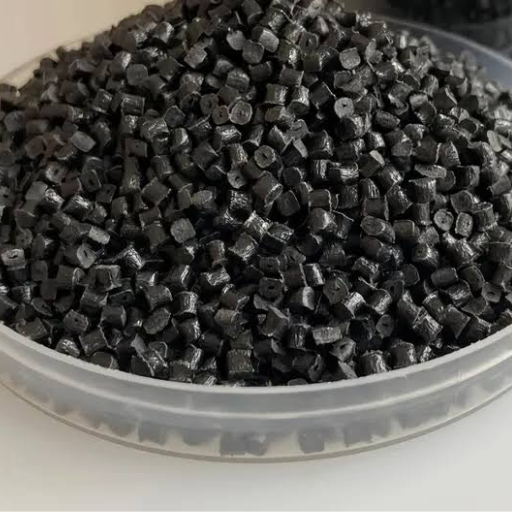
Collect and handle the sample under the agreed laboratory procedure. Document the grade and lot, sampling location, collection time, container, exposure during handling and time of measurement. Use the specified sealed container and handling precautions so the record can be interpreted alongside the material’s moisture-uptake risk.
Choose a sampling point that represents the production decision. A result from the dryer outlet and a result from resin held in an open container refer to different handling histories. Keep that distinction visible instead of labeling both simply “batch moisture.”
Compare the result with the applicable criterion
Record the measured value and units, the method reference and the criterion used. Apply the responsible quality team’s decision rule, including measurement uncertainty where relevant. Record whether the material is released, held or requires further investigation, and who made that decision.
If a result does not meet the requirement, hold the affected material and investigate both the measurement and the drying/handling record. Obtain grade-specific guidance before further treatment. Do not present another drying cycle as proof that contaminated or degraded material has been restored.
For other batch checks, use our plastic pellet quality-control guide. Keep broader inspection records alongside the point-of-use moisture record, with their different purposes clearly identified.
5. Protect the measured condition through transfer and restart
Plan protected transfer before drying finishes. The A3EG3 sheet recommends closed conveying, while Toray advises limiting atmospheric exposure and protecting leftover pellets. Follow the applicable producer and equipment instructions for the route from dryer to machine.
Record what happens after sampling: any holding container, transfer arrangement, open handling and interruption. A result obtained before later exposure may no longer represent the resin reaching the feed point. Our resin pellet storage guide provides broader storage context.
Set reassessment triggers within the validated production procedure. Examples to consider include an opened holding container, a dryer alarm, an unplanned shutdown, a material change or a change in feed conditions. The appropriate response and testing frequency depend on the grade and process; do not impose one universal exposure-time limit on every PA66 operation.
6. A practical drying and verification record
Use the following blank template to connect the process and material records. It is an editorial worksheet to adapt to your procedures, not an ISO form or an acceptance specification.
| Field | Entry to complete |
|---|---|
| Material identity | Producer, full grade, formulation identifier and lot |
| Source document | Processing document title, revision/date and applicable section |
| Acceptance basis | Moisture criterion, units, method and approved decision rule |
| Incoming condition | Packaging condition, opening time and known exposure history |
| Drying equipment | Dryer identity and applicable operating procedure |
| Operating record | Temperature, air condition/dew point where applicable, time and material flow |
| Exceptions | Interruptions, alarms, changes and actions taken |
| Sample traceability | Sampling point, collection time, container and handling history |
| Measurement | Method/settings reference, test time, result and units |
| Decision | Release, hold or investigate; responsible person and time |
| Transfer and restart | Protected feed arrangements and reassessment triggers |
Complete the entries with actual production and laboratory records. Keep the test result linked to the material it represents, and preserve any exceptions that affected the decision.
Frequently asked questions
Can I mold PA66 straight from an unopened bag?
Follow the exact producer and grade instructions. Toray describes conditions in which its sealed material can be used immediately after opening without pre-drying; the A3EG3 sheet recommends pre-drying regardless of storage conditions. These are material-specific instructions, so neither supports a rule for every unopened PA66 bag.
Where do I find the right moisture limit before molding?
Start with the current exact-grade processing document and the agreed production specification. If they do not define a clear criterion and method, seek clarification. Do not substitute a generic nylon limit or an equilibrium absorption property.
Can I simply dry PA66 for longer?
Only within grade-specific guidance and the established process. Initial moisture and storage history can affect the required duration, but the A3EG3 sheet also warns about excessive drying. Investigate the reason for a failed check before changing the cycle.
Does the absence of splay mean the pellets are dry enough?
Use the applicable moisture criterion and test result to make that decision. A visual check does not provide the same information as a documented water-content measurement.
Is post-molding moisture conditioning the same as pellet drying?
No. Pellet drying addresses the material condition before melt processing. Post-molding conditioning concerns moisture uptake in the finished part. Keep the two operations and their requirements separate.
To discuss PA66 sourcing with Yifuhui, visit our PA66 material category and provide the full grade designation, application and documentation requirements with your inquiry. Confirm the applicable processing information before applying a drying procedure to a production batch.