A single batch of the wrong low-density polyethylene resin can shut down a blown film line for hours. That was the reality for Marcus Chen, a procurement manager at a Midwest packaging converter, after he accepted a “too-good-to-be-true” LDPE pellet quote in early 2025. The material looked fine in the sample bag, but its melt flow index was 40% higher than his line expected. The result was bubble instability, neck-in variation, and 2.3 tons of scrap film before his team traced the problem to an off-spec resin delivery.
Stories like Marcus’s are common because LDPE pellets sit at the intersection of chemistry, processing, and supply-chain risk. Buyers need more than a low price.
They need the right density. They need the right melt flow. They need the right grade. And they need a supplier who can document every batch.
This guide gives manufacturing procurement managers, engineers, and plant managers a practical framework for sourcing LDPE pellets. You will learn what makes LDPE different from HDPE and LLDPE. You will see which grades match common processes. You will understand how pricing works and what to verify before you sign a purchase order.
If you need a specific grade or a competitive quote, contact our materials team and we will respond within 24 hours.
What Are LDPE Pellets?
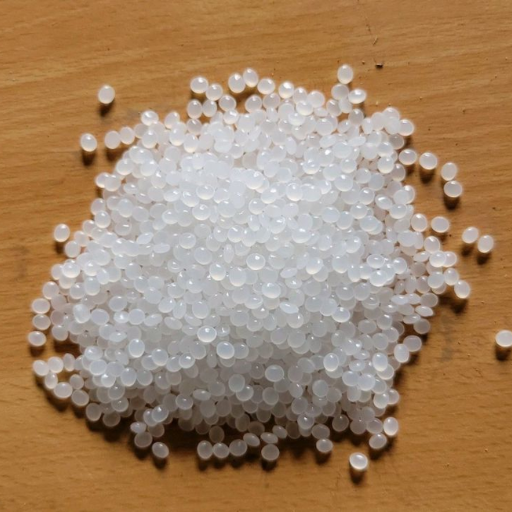
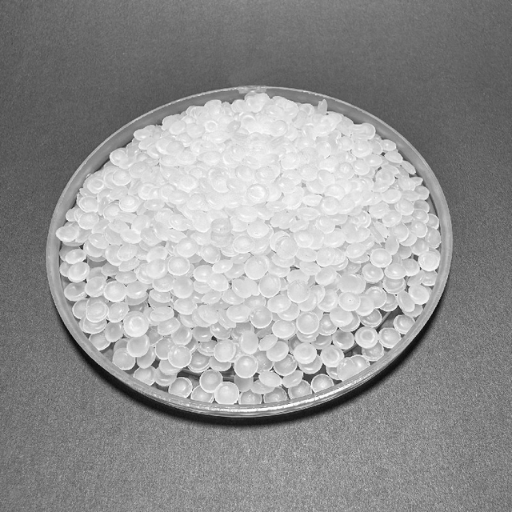
LDPE pellets are small cylindrical or spherical granules of low-density polyethylene, a thermoplastic polymer produced by high-pressure free-radical polymerization of ethylene. The long, branched molecular chains give LDPE its characteristic flexibility, low crystallinity, and easy processability. Pellets are the standard feedstock form delivered to converters because they flow consistently through hopper loaders, extruders, and injection molding machines.
LDPE Pellets vs. Granules vs. Regrind
Converters sometimes use the terms interchangeably, but the forms differ:
- Pellets are uniform, extruded, cooled, and cut to a controlled size. They deliver predictable melt behavior and consistent feeding.
- Granules are irregular fragments, often produced by shredding or grinding without remelting. They cost less but vary in size and melt performance.
- Regrind is ground scrap or off-spec material. It is suitable for low-performance applications but rarely matches virgin pellet consistency.
For high-speed film lines, tight-tolerance injection molds, or food-contact extrusion coatings, virgin LDPE pellets are the safer choice. Recycled LDPE pellets can work well for non-food packaging, agricultural film, and industrial liners when sourced from a qualified supplier.
How LDPE Differs from HDPE and LLDPE
LDPE, HDPE, and LLDPE are all polyethylene resins, but their molecular structures create very different processing windows and end-use properties.
| Property | LDPE | LLDPE | HDPE |
|---|---|---|---|
| Density (g/cm³) | 0.910–0.940 | 0.915–0.940 | 0.941–0.970 |
| Branching | High long-chain branching | Short uniform branches | Mostly linear |
| Flexibility | Very high | High | Low |
| Clarity | Good | Good/Translucent | Opaque |
| Melt strength | High | Moderate | Moderate |
| Typical processes | Blown film, extrusion coating | Film, stretch wrap | Blow molding, pipe, injection |
| Packaging share | ~28% of polyethylene | ~32% of polyethylene | ~36% of polyethylene |
LDPE’s high long-chain branching prevents tight chain packing. That lowers density and crystallinity, which is why LDPE films feel soft, clear, and easy to heat-seal. LLDPE has better puncture and tear resistance for demanding films, while HDPE delivers rigidity and strength for bottles, pipes, and containers. Many converters blend LDPE with LLDPE to combine LDPE’s processability with LLDPE’s toughness. If you want to see exactly how these resins behave on the line, our HDPE vs LDPE Processing: Injection Molding, Extrusion & Blow Molding Guide breaks down the differences across each major conversion method.
Key Properties of LDPE Pellets
Understanding the numbers on a technical data sheet is the first step to avoiding a batch mismatch. The most important LDPE pellet properties are density, melt flow index, mechanical performance, and thermal behavior.
Density
LDPE density typically falls between 0.910 and 0.940 g/cm³, with common film grades near 0.915–0.925 g/cm³. Lower density means lower crystallinity, softer feel, and better clarity. Higher-density LDPE grades trade some flexibility for improved stiffness and chemical resistance.
Melt Flow Index (MFI)
Melt flow index, also called melt flow rate (MFR), measures how easily the resin flows when melted. LDPE grades range from 0.1 to 30 g/10 min under standard ASTM D1238 conditions (190°C, 2.16 kg load). The MFI you choose depends on the process:
- Low MFI (0.2–2.0): Blown film, heavy-duty bags, and applications needing melt strength.
- Medium MFI (2.0–7.0): General film, extrusion coating, and laminating.
- High MFI (7.0–20+): Injection molding, thin-wall parts, and fast-cycle caps.
Lower MFI resins are tougher and more viscous. Higher MFI resins fill molds faster but produce weaker films if used in the wrong application.
Mechanical and Thermal Properties
Typical values for general-purpose LDPE pellets include:
- Melting point: 105–115°C
- Tensile strength: 7.6–14 MPa
- Elongation at break: Very high, often 400–600%
- Chemical resistance: Excellent to water, acids, alkalis, and alcohols
- Moisture absorption: Very low
- Electrical insulation: Excellent
- Heat sealability: Excellent
These properties explain why LDPE dominates flexible packaging. It seals quickly, stretches without tearing, and resists moisture. It is also why LDPE is widely used for wire and cable insulation, squeeze bottles, and protective films.
LDPE Pellet Grades and Applications
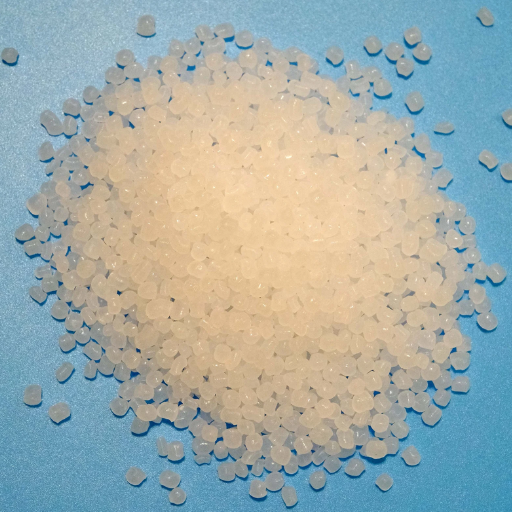
Not all LDPE pellets are interchangeable. Suppliers classify grades by the process and end use they are optimized for. Choosing the wrong grade is one of the fastest ways to create scrap.
Film Grade LDPE Pellets
Film grade is the largest LDPE segment, representing roughly 57% of LDPE consumption. Typical MFI ranges from 0.25 to 2.4 g/10 min, with density around 0.918–0.923 g/cm³. These grades prioritize clarity, gloss, dart impact strength, and elongation.
Common applications include:
- Food packaging films and bags
- Shrink film and stretch film
- Heavy-duty sacks and refuse bags
- Agricultural and greenhouse films
- Surface protection films for electronics and glass
- Liners for woven bags
Representative grades include LDPE 2426F and 2426H, which are widely used for high-clarity blown film. When Maria Lopez switched her bread-bag line to a lower-MFI film-grade LDPE, she eliminated the pinholes that had been causing leakers. The line ran 12% faster because the bubble was more stable.
Extrusion Coating Grade LDPE Pellets
Extrusion coating grades need high flow and excellent adhesion to substrates like paper, paperboard, aluminum foil, and polyester film. MFI typically runs from 4 to 12 g/10 min, with density near 0.918 g/cm³. Key requirements include low neck-in, high drawdown speed, and good organoleptic properties for food-contact applications.
Common applications include:
- Milk and juice carton coatings
- Laminated flexible packaging
- Paper cup and plate coatings
- Waterproof fabrics and tarpaulins
- Industrial underlayment
Grade LDPE 1C7A is a well-known coating grade used for paperboard lamination. If your line runs thin coatings at high speed, this category is likely the right choice.
Injection Molding Grade LDPE Pellets
Injection molding LDPE needs high flow to fill complex molds quickly. MFI usually ranges from 7 to 20+ g/10 min. These grades offer good gloss, fast cycle times, and adequate flexibility for caps, closures, and small containers.
Common applications include:
- Caps, closures, and lids
- Squeeze bottles and flexible containers
- Food storage containers
- Medical components such as droppers and tubing connectors
- Toys and housewares
- Wire and cable protective coatings
A medical device molder we work with chose a high-MFI LDPE for a compressible bottle because it filled thin-wall sections consistently without flash. That decision cut reject rates from 4% to under 1%.
Blow Molding Grade LDPE Pellets
Blow molding grades balance melt strength with processability. MFI typically ranges from 0.25 to 2.0 g/10 min. These grades need enough melt elasticity to support the parison during blow molding without sagging.
Common applications include:
- Bottles and hollow containers
- Flexible bottles and pouches
- Blow-molded industrial parts
Wire and Cable Grade LDPE Pellets
LDPE’s excellent electrical insulation makes it ideal for cable jackets and wire coatings. These grades emphasize dielectric strength, chemical resistance, and long-term thermal stability. Density can be slightly higher, up to 0.935 g/cm³, depending on the voltage and environmental requirements.
Recycled LDPE (rLDPE) Pellets
Recycled LDPE pellets are made from post-industrial or post-consumer film scrap. The global recycled LDPE market reached approximately USD 5.74 billion in 2025 and is projected to grow at a 6.2% CAGR through 2035. rLDPE typically costs 30–50% less than virgin resin and offers a 65–80% lower carbon footprint.
Common rLDPE applications include:
- Refuse bags and can liners
- Agricultural films
- Industrial stretch and shrink films
- Non-food packaging
- Construction films and underlayment
Quality varies significantly by source. Always request a certificate of analysis, contamination report, and certification status such as GRS, OceanCycle, or ISCC PLUS when specifying rLDPE. If you are weighing recycled polyethylene options, our rHDPE vs rLDPE Pellets: How to Choose the Right Recycled Polyethylene guide can help you match the right recycled resin to your application.
How LDPE Pellets Are Manufactured
LDPE production relies on high-pressure polymerization, a process fundamentally different from the low-pressure catalytic processes used for HDPE and LLDPE.
High-Pressure Free-Radical Polymerization
The manufacturing process follows these steps:
- Ethylene purification: Ethylene feedstock is compressed and purified.
- Compression: Ethylene gas is compressed to 1,000–3,000 bar and heated to 150–350°C.
- Polymerization: Organic peroxides generate free radicals that link ethylene monomers into long, branched polymer chains.
- Separation: Unreacted ethylene is removed and recycled.
- Extrusion and pelletizing: Molten LDPE is extruded into strands, cooled in water or air, and cut into uniform pellets.
- Additives and blending: Antioxidants, slip agents, UV stabilizers, and color masterbatch are added as needed.
- Quality testing and packaging: Each lot is tested for MFI, density, moisture, and appearance before shipment.
The high-pressure process creates the long-chain branching that gives LDPE its unique flexibility and clarity. Lower-pressure processes cannot replicate this structure, which is why LDPE remains a distinct material despite the rise of metallocene LLDPE.
LDPE Pellets Pricing and Cost Factors
Pricing for LDPE pellets depends on grade, origin, volume, certifications, and crude oil trends. Understanding these factors helps buyers evaluate quotes accurately.
Prices move with feedstock costs. They also move with global capacity and seasonal demand. A quote that looks cheap in January can become expensive by June if crude oil rises or if the supplier has weak logistics.
Current Price Benchmarks
As of 2025, approximate bulk pricing per metric ton is:
| Grade/Origin | Price Range (USD/ton) |
|---|---|
| Virgin film-grade LDPE, Asian bulk | 800–800–1,300 |
| Virgin film-grade LDPE, European premium | 1,500–1,500–2,000 |
| Coating grade LDPE | 900–900–1,400 |
| Injection molding grade LDPE | 850–850–1,350 |
| Recycled LDPE film grade | 600–600–900 |
| Post-industrial natural rLDPE | 610–610–650 |
Small-lab or specialty orders can cost significantly more per kilogram than full-truckload or container volumes. MOQs from major producers typically start at one 20-ton container, while distributors may offer 1-ton minimums at a premium.
Factors Affecting Price
- Crude oil and naphtha costs: LDPE is derived from ethylene, so energy feedstock prices directly affect resin cost.
- Grade and additives: Food-contact, medical, and UV-stabilized grades command premiums.
- Origin and logistics: Asian and Middle Eastern producers often have cost advantages from integrated petrochemical complexes.
- Volume and contract terms: Annual contracts usually beat spot pricing, but they require volume commitments.
- Certifications: FDA, REACH, RoHS, and food-contact documentation add cost but reduce regulatory risk.
Virgin vs. Recycled LDPE Cost Comparison
Virgin LDPE offers consistent MFI, density, and color. Recycled LDPE saves money and lowers carbon footprint but requires stronger incoming inspection. Many converters use a virgin cap layer with a recycled core for flexible packaging to balance performance and sustainability.
How to Choose the Right LDPE Pellets
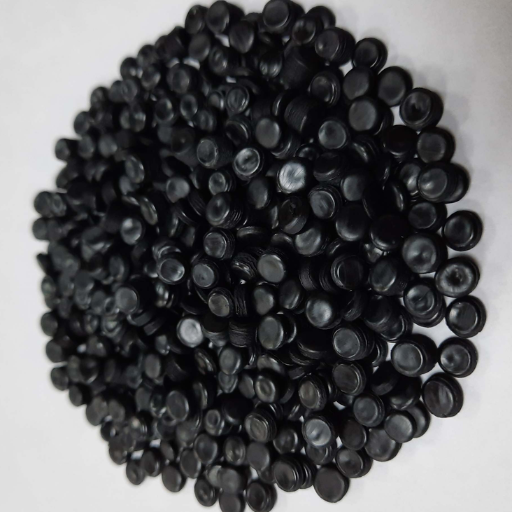
The right LDPE pellet selection comes down to matching process requirements, end-use performance, and supplier reliability.
Match MFI to the Process
Use this simple framework:
| Process | Recommended MFI Range | Why |
|---|---|---|
| Blown film | 0.3–2.0 | High melt strength for bubble stability |
| Cast film | 2.0–7.0 | Good flow for thin, even films |
| Extrusion coating | 4.0–12.0 | Low neck-in and fast coating speeds |
| Injection molding | 7.0–20+ | Fast mold filling and short cycles |
| Blow molding | 0.25–2.0 | Parison support and wall uniformity |
| Wire and cable | Varies by spec | Dielectric and thermal stability |
Match Density to Application Requirements
Lower-density grades feel softer and clearer. Higher-density grades add stiffness and chemical resistance. For food-display films, choose low-density, high-clarity grades. For industrial liners, a slightly higher density may improve toughness.
Verify Certifications and Compliance
Request these documents before placing an order:
- Technical data sheet (TDS) with MFI, density, melting point, and mechanical properties
- Certificate of analysis (COA) for the specific batch
- Safety data sheet (SDS)
- Food-contact compliance such as FDA or EFSA statements
- RoHS, REACH, and TSCA compliance for regulated markets
- ISO 9001 or IATF 16949 quality system certification from the supplier
Supplier Evaluation Checklist
A reliable LDPE pellet supplier should demonstrate:
- Consistent batch-to-batch MFI and density
- Transparent pricing with no hidden fees
- Fast response to technical questions
- Flexible MOQs and reliable lead times
- Strong packaging and moisture protection
- Documented quality control and testing protocols
At Suzhou Yifuhui New Material Co., Ltd., we test every batch of LDPE pellets for MFI, density, moisture content, and pellet uniformity before release. Our logistics team packs material in sealed, moisture-resistant packaging to protect pellet quality during ocean and overland transit.
LDPE Pellet Quality Control and Handling
Even the right grade can fail if it arrives contaminated, wet, or degraded. Proper handling protects your investment.
Incoming Inspection Checklist
When a shipment arrives, check:
- Pellet appearance: Uniform color, no fines, no foreign particles
- Moisture content: Should be very low; wet pellets cause bubbles and splay
- MFI verification: Compare the COA to your incoming test or supplier spec
- Packaging integrity: Tears or punctures allow moisture and contamination
- Documentation: TDS, COA, and SDS should match the lot number
Storage and Moisture Control
Store LDPE pellets in a dry, covered area away from direct sunlight. Pellets can absorb moisture if left in humid conditions, especially in tropical climates. Use sealed silos or Gaylord boxes with desiccant liners for long-term storage.
Common Quality Issues and How to Avoid Them
- Gels or fisheyes: Often caused by degraded or cross-linked resin. Source from suppliers with strict temperature control during pelletizing.
- High moisture: Leads to voids and weak seals. Inspect packaging and pre-dry if necessary.
- MFI drift: Causes process instability. Always verify the COA and reject off-spec lots.
- Color variation: Indicates inconsistent regrind blending in recycled grades. Specify color tolerance in your purchase order.
LDPE Pellets vs. HDPE and LLDPE Pellets
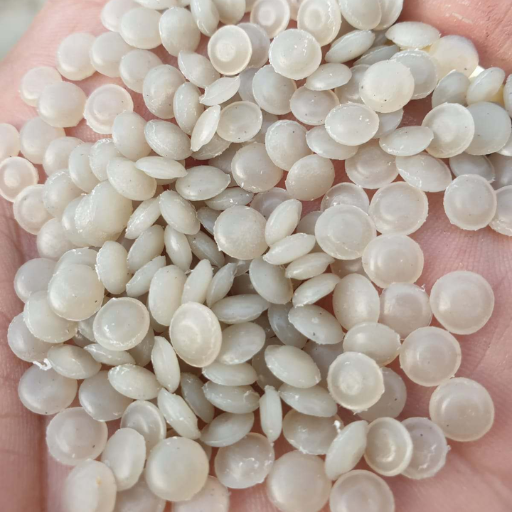
If you are unsure whether LDPE is the right polyethylene, compare the three main options side by side.
| Property | LDPE Pellets | LLDPE Pellets | HDPE Pellets |
|---|---|---|---|
| Density | 0.910–0.940 g/cm³ | 0.915–0.940 g/cm³ | 0.941–0.970 g/cm³ |
| Flexibility | Very high | High | Low |
| Clarity | Good | Good | Opaque |
| Tear strength | Moderate | High | Moderate |
| Puncture resistance | Moderate | Excellent | Good |
| Heat sealability | Excellent | Good | Poor |
| Best for | Flexible films, coatings | Stretch film, heavy bags | Bottles, pipes, rigid containers |
| Recycling rate | ~18% | ~22% | ~31% |
Choose LDPE when you need softness, clarity, and easy heat sealing. Choose LLDPE when puncture and tear resistance matter more. Choose HDPE when rigidity, chemical resistance, and load-bearing strength are required. Many film converters blend LDPE with LLDPE to get the best of both materials.
For a deeper comparison, read our guides on HDPE pellets and HDPE vs LDPE.
Sustainability and Recycled LDPE Pellets
Sustainability is reshaping LDPE demand. Brands are setting recycled-content targets, and regulations in Europe, North America, and parts of Asia are pushing converters toward post-consumer recycled (PCR) materials.
rLDPE Market Growth
The global LDPE market was valued at approximately USD 45.23 billion in 2024 and is projected to grow at a 4.7–4.8% CAGR through the early 2030s. Within that, recycled LDPE is growing faster than virgin resin. Major resin producers including SABIC, Braskem, and others have expanded circular-economy product lines and certifications.
Certifications to Know
- GRS (Global Recycled Standard): Verifies recycled content and chain of custody.
- OceanCycle: Certifies ocean-bound or coastal plastic collection.
- ISCC PLUS: Covers mass-balance recycled and bio-based materials.
- FDA or EFSA food-contact approvals: Required for direct food-contact recycled LDPE in many markets.
Carbon Footprint Comparison
Virgin LDPE carries an estimated 1.9–2.5 kg CO₂e per kg of resin. Recycled LDPE typically ranges from 0.5–0.8 kg CO₂e per kg. That 65–80% reduction is why many consumer brands now specify rLDPE for secondary packaging and non-food films.
If your sustainability program calls for recycled content, our team can help you evaluate recycled plastic pellets and virgin vs recycled plastic pellets for your application.
Conclusion
LDPE pellets are the workhorse resin behind flexible packaging, protective films, extrusion coatings, and countless molded parts. The key to sourcing them well is not just price. It is matching the right grade, MFI, and density to your process, verifying supplier quality systems, and protecting pellets from moisture and contamination after delivery.
Here are the five takeaways to remember:
- Match MFI to the process: Low MFI for film and blow molding, high MFI for injection molding and coating.
- Understand density trade-offs: Lower density gives softness and clarity; higher density adds stiffness.
- Request full documentation: TDS, COA, SDS, and compliance certificates should arrive with every lot.
- Evaluate suppliers on consistency: Batch-to-batch stability matters more than the lowest spot price.
- Consider recycled options carefully: rLDPE saves cost and carbon, but quality varies; verify certifications and incoming properties.
At Suzhou Yifuhui New Material Co., Ltd., we supply film-grade, coating-grade, injection-grade, and recycled LDPE pellets with full documentation and reliable logistics. Whether you need a sample for testing or a bulk quote for your next production run, contact our team today. We will help you select the right LDPE pellets for your process and deliver them on schedule.