Two PFA datasheets can both be correct and still disagree by 50%. One reports a tensile strength of 24 MPa. The other reports 36 MPa. Same polymer family, same units, different numbers, and neither supplier is lying.
The reason is that “PFA properties” is not one set of numbers. It is a family of values that shift with grade, test method, and test temperature. An engineer who designs from a single figure found in a search result is working from a number that may not describe the material they will actually receive.
This reference puts the numbers in one place. Every value carries its unit and its test standard. The mechanical properties are shown at both room temperature and 250 °C, because that is where the design decision usually turns. And the last technical section explains why the sources disagree, which matters more than any single value on the page.
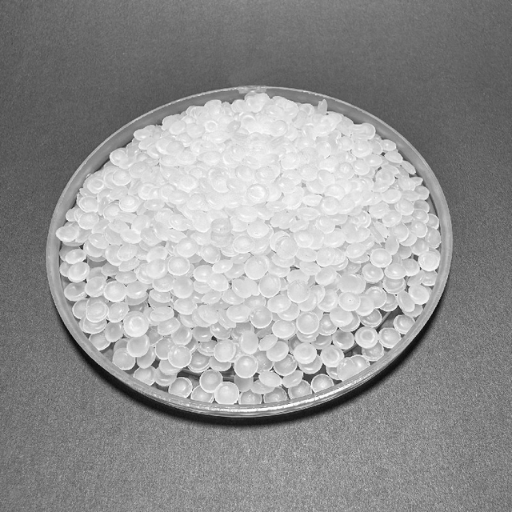
PFA is the melt-processable member of the PTFE family, and its base material story is covered in full in our PFA material guide. This page keeps to the data.
What Are the Key PFA Properties?
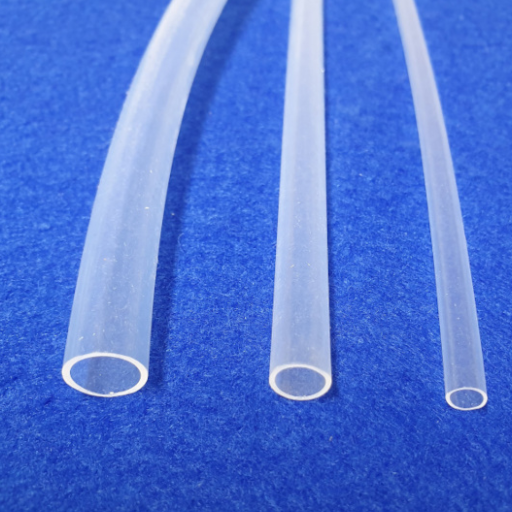
PFA is a semi-crystalline fluoropolymer with a density of 2.12 to 2.17 g/cm³, a continuous service temperature of 260 °C, and a melting point of roughly 302 to 310 °C. It resists nearly all industrial chemicals, has a dielectric constant near 2.0, a coefficient of friction as low as 0.04, and water absorption under 0.03%. Its mechanical strength falls by about half between 23 °C and 250 °C.
That paragraph is the short version. The table below is the reference version, with a test basis against every value.
| Property | Typical value | Test basis |
|---|---|---|
| Density / specific gravity | 2.12 to 2.17 g/cm³ | ASTM D792 |
| Melting point | 302 to 310 °C (some grades to 316 °C) | DSC |
| Continuous service temperature | 260 °C (500 °F) | Supplier rating |
| Useful low-temperature limit | −196 °C (−320 °F) | Supplier rating |
| Tensile strength at 23 °C | ≈ 25 MPa (3,600 psi) | ASTM D638 |
| Tensile strength at 250 °C | ≈ 12 MPa (1,800 psi) | ASTM D638 |
| Ultimate elongation at 23 °C | ≥ 300% | ASTM D638 |
| Ultimate elongation at 250 °C | ≈ 480% | ASTM D638 |
| Flexural modulus at 23 °C | ≈ 590 MPa (85,000 psi) | ASTM D790 |
| Flexural modulus at 250 °C | ≈ 55 MPa (8,000 psi) | ASTM D790 |
| Hardness | Shore D 55 to 60 | ASTM D2240 |
| Water absorption, 24 hours | ≤ 0.03% | ASTM D570 |
| Dielectric strength | 55 to 80 kV/mm | ASTM D149 |
| Dielectric constant, 50 Hz to 1 MHz | 2.0 to 2.1 | ASTM D150 |
| Dissipation factor | 0.0002 to 0.0003 | ASTM D150 |
| Volume resistivity | > 10¹⁷ Ω·cm | ASTM D257 |
| Coefficient of friction | 0.04 to 0.20 static to kinetic | ASTM D1894 |
| Limiting oxygen index | 95% | ASTM D2863 |
| Flammability rating | UL 94 V-0 | UL |
Read the ranges as ranges, not as imprecision. PFA tensile strength genuinely varies from about 24 to 36 MPa across commercial grades, and melting point genuinely spans 285 to 316 °C. The section “Why PFA Properties Differ Between Datasheets” explains each cause in turn.
A Note on How These Values Are Measured
Every mechanical figure on a PFA datasheet comes from a test coupon, not from a finished part. That distinction explains most of the confusion buyers run into.
An ASTM D638 tensile coupon is a moulded bar of defined shape, pulled at a defined rate at a defined temperature. Change any one of those and the number moves. Publication of the standard itself has been updated several times, and older datasheets are often still quoted from earlier editions.
If you need the value for a design calculation, confirm it against the datasheet for the grade you will buy, not against a category table like this one. This page tells you what range to expect and why. The grade datasheet tells you what you are getting.
Independent compilations such as eFunda’s PFA datasheet are useful cross-checks for property values, but they carry the same caveat. They report numbers without the grade or temperature conditions behind them.
Mechanical Properties of PFA, and How They Change With Temperature
PFA’s room-temperature strength is unremarkable. Its value lies in how much of that strength survives heat.
| Property | At 23 °C | At 250 °C | Change |
|---|---|---|---|
| Tensile strength | ≈ 25 MPa (3,600 psi) | ≈ 12 MPa (1,800 psi) | −52% |
| Ultimate elongation | ≥ 300% | ≈ 480% | +60% |
| Flexural modulus | ≈ 590 MPa (85,000 psi) | ≈ 55 MPa (8,000 psi) | −91% |
| Tensile yield strength | ≈ 13.8 MPa (2,000 psi) | Above the useful service band | n/a |
| Hardness | Shore D 55 to 60 | Softens markedly | n/a |
The stiffness result is the one that catches people out. PFA loses roughly nine-tenths of its flexural modulus between room temperature and 250 °C. A part that looks rigid on the bench becomes compliant in service.
That is not a defect. A polymer above its glass transition is a soft, tough material, and PFA’s glass transition sits near 85 to 90 °C. Above that point the amorphous regions are mobile, so the material yields rather than fractures.
That behaviour is why elongation rises to nearly 480% at 250 °C while tensile strength halves. PFA fails by stretching rather than snapping, which is exactly why it holds up in flexing tube and flexible liners.
Consider what that means for a support bracket. A design engineer specified a PFA component at 230 °C from a room-temperature flexural modulus of 590 MPa. His deflection calculation passed with margin. In service the part sagged, because the modulus at his operating temperature was closer to 60 MPa, an order of magnitude below what he had used.
The fix was not a thicker bracket. It was designing to the modulus at the service temperature, which the grade datasheet supplied.
Creep and Stress Relaxation: PFA’s Advantage Over PTFE
The property that most separates PFA from PTFE is creep resistance, and it is also the most inconsistently reported value in the literature.
Creep is slow deformation under a sustained load. Stress relaxation is the related loss of sealing force in a compressed part over time. Both matter in gaskets, liners, and any component held under load at temperature.
Some sources state plainly that PFA resists creep better than PTFE, mainly because PFA is a higher-molecular-weight material and its perfluoroalkoxy side chains resist chain slippage. Others publish data showing PFA with a higher creep rate than PTFE at certain temperatures and stress levels.
Both can be right. Creep is a function of temperature, stress level, and duration, and the comparisons being published are not always made at the same three conditions. A test run at 100 °C for 1,000 hours answers a different question from one run at 200 °C for 100 hours.
For a sealing or load-bearing application, don’t resolve this from a comparison article. Ask the supplier for creep data at your actual temperature and stress, and if it can’t be supplied, test it. This is the one place on the page where a category answer isn’t good enough.
Thermal Properties
| Property | Value | Notes |
|---|---|---|
| Continuous service temperature | 260 °C (500 °F) | Design limit for sustained service |
| Melting point | 302 to 310 °C | Some grades to 316 °C |
| Useful low-temperature limit | −196 °C (−320 °F) | Remains flexible at cryogenic temperatures |
| Glass transition temperature | 85 to 90 °C | Above this the material softens and toughens |
| Heat deflection temperature | ≈ 73 °C at 0.45 MPa | Low, because stiffness drops early |
| Thermal stability | 420 to 440 °C, 1% weight loss in air | Onset of decomposition; do not approach |
| Thermal conductivity | 0.15 to 0.25 W/m·K | A thermal insulator, not a conductor |
| Specific heat | 0.9 to 1.1 J/g·K | |
| Coefficient of linear expansion | 120 to 200 ×10⁻⁶/K | High; allow for expansion in linings and pipe |
| Moulding shrinkage | 3 to 5% | Plan tooling accordingly |
Three temperatures get conflated constantly, and the confusion is expensive.
Continuous service temperature is 260 °C. That is the figure to design to for sustained duty. Melting point is 302 to 310 °C, and it describes the temperature at which the crystal structure breaks down, not a temperature the material can be used at. Decomposition begins much higher, around 420 °C, and above roughly 400 °C the melt starts to break down and release hydrogen fluoride.
A part rated for 260 °C continuous does not become safer to run at 300 °C because its melting point is 310 °C. Between those two figures the material has no useful mechanical strength. Design to the service rating.
The high coefficient of linear expansion is the other number worth flagging. PFA expands and contracts far more than steel across the same temperature swing. In a lined vessel or a long pipe run, that difference has to be designed in, or the PFA will be the part that fails.
Electrical, Barrier and Surface Properties
| Property | Value | Notes |
|---|---|---|
| Dielectric constant | 2.0 to 2.1 | Essentially flat from 50 Hz to 1 MHz |
| Dissipation factor | 0.0002 to 0.0003 | Very low loss |
| Volume resistivity | > 10¹⁷ Ω·cm | Excellent insulator |
| Dielectric strength | 55 to 80 kV/mm | Thickness and grade dependent |
| Water absorption, 24 hours | ≤ 0.03% | Effectively non-absorbent |
| Coefficient of friction | 0.04 to 0.20 | Static to kinetic; grade dependent |
| Limiting oxygen index | 95% | Does not sustain combustion |
| Permeability, N₂ | 291 cc·mil per 100 in²·24 h·atm | Low gas transmission |
| Permeability, O₂ | 881 cc·mil per 100 in²·24 h·atm | |
| Permeability, CO₂ | 2,260 cc·mil per 100 in²·24 h·atm | Highest of the three gases |
The interesting electrical feature is the flat dielectric constant. Many polymers shift their dielectric constant and dissipation factor as frequency rises, which complicates high-frequency design. PFA holds near 2.0 from 50 Hz to 1 MHz. That stability, not the absolute value, is why the material appears in wire and cable insulation and in RF components.
The permeability numbers matter in a different direction. PFA transmits gases, and it transmits carbon dioxide roughly eight times as readily as nitrogen. For a fluid line where dissolved gas must not migrate through the wall, or for a high-purity gas line, that ordering tells you which gas to worry about. It is also why some gas-sensitive duty uses a dual-wall construction. Published transmission values vary by test method; Thermo Fisher lists them for nitrogen, oxygen, and carbon dioxide.
Low extractables deserve a mention here because it is a surface and barrier property in practice. PFA contributes very little to the fluid it carries, which is why the same material that resists chemicals also suits high-purity fluid handling. Our guide to PFA tubing covers extractables testing in detail.
If your interest is PFA applied as a surface film rather than as a solid part or tube, PFA coating covers the application and cure side.
Why PFA Properties Differ Between Datasheets
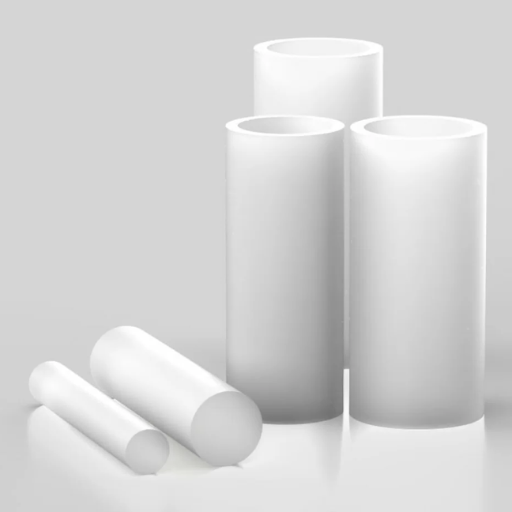
This is the section the aggregator sites skip, and it is the one that saves the most money.
| Property | Range seen across sources | Why the range exists |
|---|---|---|
| Tensile strength, 23 °C | 24 to 36 MPa | Grade (molecular weight, filler) plus test rate |
| Melting point | 285 to 316 °C | Grade, and DSC scan conditions |
| Dielectric strength | 55 kV/mm to 80 kV/mm | Specimen thickness and grade |
| Flexural modulus, 23 °C | 586 to 700 MPa | Grade; one source shows 90,000 psi against PTFE at 27,000 psi |
| Creep resistance | PFA better than PTFE / PFA worse than PTFE | Test temperature, stress, and duration differ |
| Density | 2.12 to 2.17 g/cm³ | Grade and crystallinity |
Four causes account for essentially all of it.
Grade. PFA is sold in a melt-flow ladder. A high-flow grade extrudes easily and has lower molecular weight. A low-flow grade is tougher and resists stress cracking better. Teflon PFA 340, 345, and 350 sit at different points on that ladder, and their property values move with it.
Test method. ASTM and DIN methods are not identical. ASTM D638 and DIN 53455 both measure tensile strength and do not produce the same number, because specimen geometry and pull rate differ. A datasheet built on DIN values will not match one built on ASTM values, and neither is wrong.
Test condition. Temperature and specimen conditioning shift results. The temperature effect is the large one, as the mechanical table above shows. A number quoted without a temperature is only half a specification.
Coupon processing history. A test bar moulded and a test bar machined from a larger part can have different crystallinity and therefore different measured properties. Two suppliers can test the same grade and report different figures.
The practical rule that falls out of all four: never design from a category value. Use the table on this page to know what range to expect, then get the datasheet for the specific grade, and confirm the temperature at which each value was measured.
PFA vs PTFE vs FEP: A Compact Comparison
| Property | PTFE | PFA | FEP |
|---|---|---|---|
| Continuous service temperature | 260 °C | 260 °C | 200 °C |
| Melting point | ~327 °C | 302 to 310 °C | 260 to 280 °C |
| Melt processable | No | Yes | Yes |
| Chemical resistance | Excellent | Excellent | Very good |
| Flex life | Moderate | Best of the three | Good |
| Optical clarity | Opaque | Translucent | Clearest |
| Relative cost | Low | High | Medium |
PFA and PTFE match on chemical resistance and thermal rating. The difference is processing: PTFE is not melt-processable, so it is shaped by paste extrusion, compression moulding, or skiving. PFA flows, so it can be extruded and injection moulded.
On flex life, PFA is the strongest of the three, which is why it is the standard choice for tubing and liners that see repeated movement. On cost it is the most expensive, typically 30 to 50% above PTFE.
A full three-way selection guide is the subject of its own article in this cluster. The short rule here: choose PFA when you need PTFE-grade performance in a melt-processed shape, choose PTFE for machined and skived parts where a porous surface is acceptable, and choose FEP when clarity or cost matters more than the extra 60 °C. For the basic chemistry behind the family, Wikipedia’s perfluoroalkoxy alkane entry is a useful primer.
Is PFA an Elastomer? Property Misconceptions to Avoid
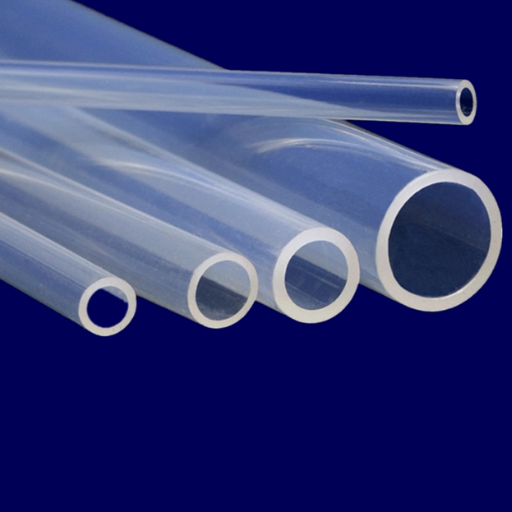
PFA isn’t an elastomer. It’s a semi-crystalline thermoplastic.
That distinction matters because the two behave differently under load. An elastomer recovers its shape after large strain, which is why rubbers are used for dynamic seals. PFA deforms permanently past its yield point, like any thermoplastic, and it has a defined melting point rather than the decomposition-only behaviour of a thermoset rubber.
The confusion is understandable. “Fluoropolymer” reads close to “fluoroelastomer,” and FKM and Viton fill the same aisles in a catalogue. But a perfluoroalkoxy resin and a fluoroelastomer are different materials with different design rules.
Two other misconceptions are worth clearing up on the way past.
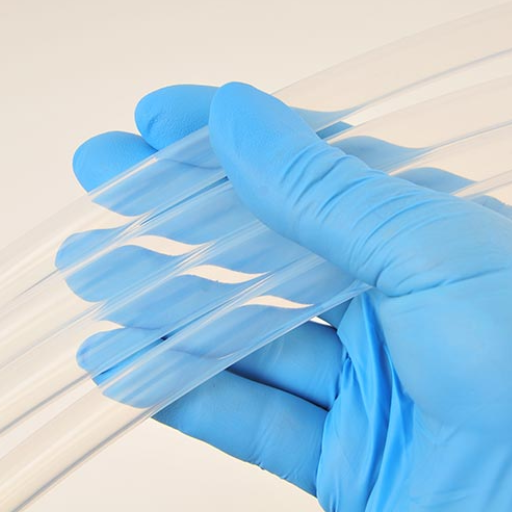
Translucent is not transparent. PFA is naturally translucent, and it becomes clearer as wall thickness drops. FEP is optically clearer. If through-wall bubble detection depends on seeing inside the line, that difference decides the material.
Flame resistant is not fireproof. PFA carries a limiting oxygen index of 95% and a UL 94 V-0 rating. It does not sustain combustion in normal air. It will still degrade if you put it in a fire, and at temperatures above about 400 °C it releases hydrogen fluoride, which is why melt processing needs local exhaust ventilation.
Specifying a PFA Grade: Putting the Data to Work
The property values on this page describe a family. The grade datasheet describes your material. The bridge between them is three selection levers.
Melt flow rate sets how the polymer processes. High-flow grades extrude and mould more easily. Low-flow grades carry the higher molecular weight that improves creep and stress-crack resistance.
Molecular weight drives toughness, creep resistance, and flex life. This is the lever behind PFA’s advantage over PTFE in dynamic service, and behind the creep disagreement discussed above.
Purity class sets how little the material contributes to extractables. Ultra-high-purity grades such as Chemours Teflon PFA 450HP and 951HP, Daikin AP-231SH, and 3M Dyneon UHPZ exist for semiconductor and pharmaceutical duty, and they cost more than general-purpose PFA.
That is where we work. Suzhou Yifuhui New Material supplies Teflon PFA 340 resin and related grades to compounders, extruders, and moulders. If you are selecting a resin against a property spec, request a quote and we will confirm the grade, the datasheet, and the supply terms. Our PFA fluoropolymer range lists what we stock.
Frequently Asked Questions
What are the main properties of PFA?
PFA properties combine PTFE-grade chemical resistance and a 260 °C continuous service temperature with melt processability. Its density is 2.12 to 2.17 g/cm³, its tensile strength is about 25 MPa at 23 °C, its dielectric constant is near 2.0, and its water absorption is under 0.03%. Mechanical strength falls by roughly half between 23 °C and 250 °C.
What are PFA material properties at high temperature?
At 250 °C, PFA tensile strength falls to about 12 MPa, flexural modulus drops to about 55 MPa, and ultimate elongation rises to nearly 480%. The material stays tough and resistant rather than becoming brittle. Design calculations must use the value at the service temperature, not the room-temperature figure.
Is PFA an elastomer?
No. PFA is a semi-crystalline thermoplastic, not an elastomer. It has a defined melting point around 302 to 310 °C and deforms permanently past yield, unlike a rubber, which recovers after large strain. Fluoroelastomers such as FKM are a different material family.
What is the tensile strength of PFA?
PFA tensile strength typically falls between 24 and 36 MPa at 23 °C depending on grade and test method, with about 25 MPa being representative. At 250 °C it drops to roughly 12 MPa. Values are measured to ASTM D638 or the comparable DIN method, which do not give identical results.
How does PFA perform at high temperature?
PFA holds mechanical and chemical performance up to 260 °C continuous. Its glass transition is around 85 to 90 °C, so it softens above that point but keeps useful strength and toughness. Melting occurs at 302 to 310 °C, and decomposition begins near 420 °C. Design to the 260 °C service rating.
What is the dielectric strength of PFA?
Dielectric strength ranges from about 55 to 80 kV/mm depending on specimen thickness and grade. Dielectric constant is about 2.0 to 2.1 and stays essentially flat from 50 Hz to 1 MHz, and volume resistivity exceeds 10¹⁷ Ω·cm.
What is PFA density?
PFA density is 2.12 to 2.17 g/cm³, measured to ASTM D792. That is roughly twice the density of polyethylene and higher than most commodity plastics, reflecting the fluorine content of the polymer.
What is the thermal conductivity of PFA?
PFA thermal conductivity is about 0.15 to 0.25 W/m·K, which makes it a thermal insulator rather than a conductor. It is used in heat-tracing and insulation duty where low thermal transfer is the goal.
Is PFA food safe?
PFA grades intended for food contact comply with FDA regulation 21 CFR 177.1550, but compliance is grade-dependent and formulation-dependent, not a property of “PFA” as a category. Request the compliance statement for the specific grade. Our guide to food-contact material safety explains how these approvals work for other polymers.
Conclusion
PFA properties are a family of values, not a single set, and the four points that carry the most practical weight are these:
- PFA combines PTFE-grade chemical and thermal performance with melt processability, at a density of 2.12 to 2.17 g/cm³ and a 260 °C service rating.
- Mechanical properties are temperature-dependent. Tensile strength halves and flexural modulus falls by about nine-tenths between 23 °C and 250 °C. Design from the value at your service temperature.
- Every published figure should carry a test standard and a temperature. A number without either is half a specification.
- The same property is reported across a wide range by different suppliers, and the causes are grade, test method, test condition, and coupon history. None of them is an error.
The practical takeaway is to use a category table to know what range to expect, then confirm against the grade datasheet, then confirm the temperature at which each value was measured. That sequence avoids the two most common and most expensive mistakes in PFA design: building to a room-temperature strength that will halve in service, and trusting a number that describes a different grade.
If you are sourcing the resin behind those properties, contact our engineering team for a grade recommendation and a quote based on your volume requirements.