
Last updated:
A useful plastic resin pellets price is a dated quotation for a specified grade, quantity and delivery basis. A polymer name and a price per kilogram alone cannot tell you which offer costs less for your purchase.
Two suppliers can write “nylon pellets” and quote different purchases. One may offer a named prime grade delivered to a destination; another may list an unspecified lot with freight excluded. Comparing their headline numbers would hide the decision you need to make.
This guide helps you build a comparable quotation sheet, calculate delivered material cost and prepare a request for quotation (RFQ). It also shows how to assess the November 2026 Celanese Asia announcement against your own shipment. It does not provide a verified current price list across all resin families. Start with the plastic resin pellets guide if you still need to identify the material.
Key takeaways
- Match the exact grade, condition, quantity, date and commercial terms before comparing numbers.
- Separate a budget indication, a seller’s asking price and a written offer with validity conditions.
- Add only excluded delivery costs, then define the accepted-material denominator.
- Check a producer notice against the named product, region, shipment date and contract exceptions.
- Request a revised offer whenever a missing field could change your purchasing decision.
How to Compare a Plastic Resin Pellets Price

Build one comparison sheet before negotiating. Put each supplier’s reply in a separate column and keep unknown fields visible. Do not fill blanks with assumptions from a marketplace listing or a previous order.
Separate indications, asking prices and firm offers
A budget indication helps estimate a project; it needs reconfirmation before ordering. An asking price describes what a seller requests for a lot. A written offer should identify what is offered, its validity and the conditions under which the supplier will accept an order. Confirm availability and order acceptance separately.
Use these fields to expose mismatches:
| Comparison field | What to record | Reason to pause |
|---|---|---|
| Material identity | Producer, brand, exact grade and specification revision | Only a resin-family name is supplied |
| Condition | Prime, recycled, off-grade or other declared condition; colour and formulation | Condition or substitution is unclear |
| Commercial scope | Quote date, validity, quantity and delivery schedule | Different periods or order sizes |
| Price basis | Currency, price unit and net material mass | Gross packing mass or ambiguous “ton” |
| Delivery basis | Incoterm, named place and version; included costs | Different destinations or missing exclusions |
| Acceptance | Required documents, lot checks and release owner | Evidence does not address the requirement |
Illustrative scenario A: A buyer receives a prime branded PA66 offer and a lower-priced “nylon” listing. The second offer lacks a grade and material-condition declaration. The buyer cannot calculate a defensible saving yet. The next action is to request those fields, not to treat the cheaper number as equivalent.
Complete this sheet before asking suppliers to improve their offers. It gives them a clear requirement to price and gives you a record of each exception.
Normalize units without changing the market basis
For a metric tonne, multiply a price per kilogram by 1,000; divide a per-metric-tonne figure by 1,000 for the reverse conversion. Confirm that “ton” means a metric tonne before applying that arithmetic. Record a currency conversion’s source and date if conversion is necessary.
Unit conversion does not turn a regional reference into an offer for your grade. PIE/KI’s methodology distinguishes price populations by factors including material, region, volume and period. Read a benchmark’s definition before comparing it with your quote. A page accessed today can still describe an older reference period.
What Changes a Resin Pellet Quote?
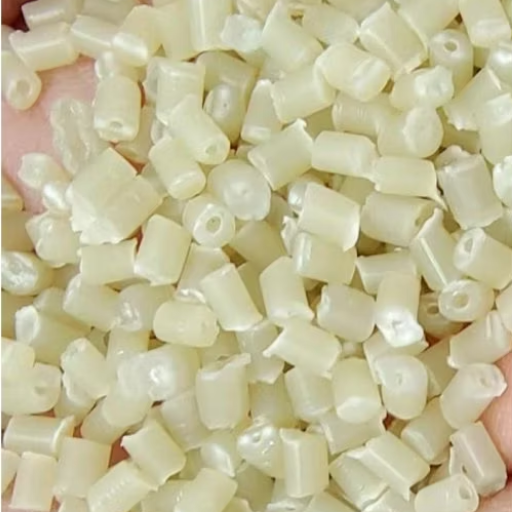
Treat quote differences as questions to resolve. Ask what changed in the offered material, order or terms before attributing the difference to the market. This keeps the discussion tied to evidence you can compare.
Grade, condition and documentation
A resin family is only the starting description. Specify the producer and grade, reinforcement or filler, additive package, colour and required material condition. Ask whether an alternative is the identical grade, a proposed equivalent or an off-specification lot. These answers belong in separate fields.
For a nylon purchase, the PA66 pellets guide provides the related grade-selection context. Keep this pricing exercise narrower: identify the requirement, establish which offered material meets it and list any approval still needed. Do not accept a different formulation merely because its family name matches.
Ask for the technical data sheet (TDS), safety data sheet (SDS) and relevant lot certificate of analysis (COA). Identify which document answers which requirement. A general data sheet does not report the results of every delivered lot. A management-system certificate also does not show, by itself, that a grade is suitable for your application.
Quantity, packing and reset terms
Request prices for your actual first order and repeat-order schedule. State pack type, net mass and any handling constraints. Ask suppliers to identify quantity breaks rather than assuming a universal pallet or container discount. There is no verified Yifuhui minimum order or discount ladder in this guide.
An annual requirement and a single release are different commercial inputs. Ask whether a quoted tier depends on a binding annual commitment, one shipment or a scheduled release. Include payment terms and responsibility for storage or delayed collection in the comparison if they affect the offer.
Feedstock, demand and freight information can explain a supplier’s pricing discussion. They do not mechanically establish the change on your invoice. Request the applicable pricing clause or a revised quotation instead of applying a fixed oil-to-resin percentage.
Return to illustrative scenario A: once both replies name the same approved grade, condition, quantity and delivery basis, the buyer can compare the commercial differences. If the cheaper offer remains a substitute, keep it in a qualification track rather than in the approved-grade price ranking.
Compare Landed Cost, Contract Terms and Usable Yield

Separate the material invoice from the cost of bringing that material to the agreed destination. Then decide whether your calculation concerns delivered pellets, accepted material or finished parts. Those denominators answer different questions.
Normalize delivered cost
Use this worksheet formula:
Delivered material cost per net kg = (material invoice + costs excluded from the selected delivery basis) / net kilograms received.
List freight, insurance, destination handling, applicable import charges and inland transport separately where relevant. Check each line against the offer before adding it. Do not add freight again when it is already included in the quoted basis. Ask a broker to confirm applicable charges; do not assume a tariff rate from the polymer name alone.
The ICC’s Incoterms explanation describes how the rules allocate obligations, costs and risks. Record the rule, named place and version. Also read the contract for payment, quality acceptance and other matters beyond the delivery term. A delivery label alone is not a complete purchase agreement.
Illustrative scenario B: Assume two invented offers for 1,000 net kg of an already qualified material. Offer A has a USD 2,000 material invoice and USD 200 of excluded delivery costs. Offer B is USD 2,150 delivered to the same point, with no further costs in this simplified model. Their delivered costs are USD 2.20/kg and USD 2.15/kg.
The lower material invoice does not produce the lower delivered figure.
Check accepted output and contract resets
Now assume a controlled comparison yields 950 accepted kg from A and 980 accepted kg from B. The material-cost contributions become USD 2,200 / 950 = about USD 2.32 per accepted kg and USD 2,150 / 980 = about USD 2.19. These are hypothetical inputs, not supplier results or expected yields.
Define accepted mass, reject handling and any scrap-recovery credit consistently. This calculation excludes processing labour, machine time and other production costs; it is not total finished-part cost. Use the pellet quality-control guide to frame the evidence and acceptance checks behind the denominator.
For contract purchases, record the base price, adjustment reference, reset date, notice period and grade exceptions. Does the increase change the base price or a surcharge? Ask for each changed line. Keep both offers so you can check the sums later.
Audit the November 2026 Celanese Asia Notice
An announced increment is not the full price of a shipment. Use the Celanese notice published November 4, 2026 as a specific applicability check. It describes selected products sold in Asia, with shipments from November 9, 2026 subject to contract provisions. Individual grades may receive larger increases.
| Listed product scope | Announced Asia increment |
|---|---|
| PA6: Zytel, Frianyl, Celanyl, Minlon, CoolPoly and Ecomid | USD 0.30/kg |
| PA66: the same listed brand group | USD 0.20/kg |
| Crastin PBT and Celanex PBT | USD 0.30/kg |
| Rynite PET | USD 0.30/kg |
These figures are the notice’s increments, not total prices or verified settled transactions. They do not establish an increase for every supplier, PP, PE, POM or bottle-grade PET. The notice also does not establish Yifuhui’s stock, distribution authorization or commercial relationship with the producer.
Match product, region and shipment date
Check the offered producer, exact grade and sales region first. Then identify the shipment date used by the supplier and the contract provision governing the order. The stated shipment threshold is not an order-date rule. A purchase placed earlier still needs its own contractual applicability check.
Ask the supplier to identify any grade exception and provide the original and revised offer on the same delivery basis. If the reply changes grade, currency, quantity or freight terms as well as price, separate those changes before calculating the announcement’s contribution.
Reconcile the notice with your quotation
Illustrative scenario C: Assume a 5,000 kg PA66 shipment is within the named scope and its contract permits the stated USD 0.20/kg increment. Multiplying those inputs gives USD 1,000 of indicated material-price exposure. This is only the indicated increment. To work out the new invoice, confirm the original price, any grade exception and whether the notice applies to this shipment.
If a revised offer differs from that calculation, ask for the line-by-line explanation. A difference is a reason to investigate the terms, not proof of overcharging. Keep any logistics or currency changes outside the producer-increment line so each has a traceable basis.
Use this example as a document-reconciliation method. It does not support a forecast for the next month, a market-wide increase or a recommendation to purchase before an invented deadline.
Virgin vs Recycled: Compare Qualified Grades

A lower-priced recycled candidate is useful only if it can meet the specified application. Keep price comparison and material qualification connected, with approval responsibilities stated. Do not assume a standard recycled discount or a fixed performance-retention percentage.
Match history and acceptance requirements
Ask for the declared material source, condition and recycled content, plus the evidence supporting those declarations. Record batch identity and traceability. Pellet colour or a photograph does not establish recycled content, resin identity or application approval.
Define the tests and acceptance limits that matter to the part. Ask whether the supplied evidence uses the required test method and conditions and whether it represents the offered grade or lot. Does the drawing or customer approval name a material? If so, get approval before treating a replacement as interchangeable.
The virgin versus recycled pellets comparison covers that broader selection decision. Here, use its subject as a boundary: the pricing sheet should record qualification status, not attempt to replace a full material or regulatory assessment. No blanket food-contact suitability follows from a low price, recycled-content statement or general certificate.
Model the candidate without promising savings
You can repeat illustrative scenario B for a recycled candidate, but only after choosing comparable acceptance conditions. Enter measured results when available and label planning assumptions until then. Do not transfer the invented yields in that example to recycled material.
Include qualification costs as separately identified project costs if they are relevant to your decision. Obtain the actual testing or trial quotation; this guide does not set a sample quantity, testing fee or approval duration. Agree who releases the trial result and what evidence the production purchase will require.
If the candidate fails a required property, mark it unsuitable for this requirement rather than hiding the failure inside a lower cost estimate. If evidence is incomplete, mark the saving unconfirmed. This leaves a clear distinction between a qualified purchasing alternative and an idea that still needs engineering work.
Build an RFQ That Produces Comparable Prices
A useful RFQ gives suppliers the same question and asks them to expose exceptions. Send the specification with the request and identify which requirements cannot change. Leave room for an alternative proposal, but require it to be quoted separately.
Copy the buyer request fields
Use this template with your own values:
| Buyer field | Information to supply |
|---|---|
| Material | Producer, exact grade, specification revision and required condition |
| Application | Process, part requirement and fixed drawing or approval constraints |
| Formulation | Filler, additives, colour and permitted variation |
| Quantity | First order, repeat releases, net mass and packaging |
| Delivery | Destination, proposed Incoterm, named place, version and ship window |
| Commercial basis | Currency, price unit, requested validity and payment terms |
| Evidence | TDS, SDS, relevant COA and required tests or declarations |
| Acceptance | Limits, methods, sampling agreement and release owner |
Add this instruction: “Please identify every exception to the requested grade, delivery basis and documentation. Quote substitutions separately and state whether the price is budgetary or a written offer available for order acceptance.”
Supply actual purchasing quantities even if the annual forecast is uncertain. State whether that forecast is a planning estimate or a commitment. This prevents a price conditional on a full-year purchase from being mistaken for a single-release offer.
Read the supplier reply and exceptions
Ask the supplier to return the offered producer and grade, material condition, net mass, pack format, currency and unit price. The reply should also state inclusions, exclusions, validity, lead time, payment terms and documentation gaps. Ask what must happen before the supplier confirms the order and shipment schedule.
Review the reply against your original fields, not just against another supplier’s price. A missing COA commitment, changed destination or unapproved colour is a visible exception requiring a decision. Keep a clarification log with the question, reply and revised quote reference.
For illustrative scenario C, the clarification asks whether the specific grade and shipment fall within the notice and whether the contract permits the increment. The buyer requests written confirmation instead of challenging the increase with an unrelated polymer index.
Send the completed RFQ with the evidence requirements that follow from your quality-control plan. Ask for missing information before accepting a price. This request does not imply a free sample, a guaranteed approval outcome or a response-time promise.
Choose the Next Purchasing Action

Close the comparison with a short decision record. Name the chosen offer or unresolved question, the quote revision, the acceptance owner and the next action. Keep the material specification and commercial basis attached to that record.
If the offers are comparable and valid, proceed through your normal approval process. If a term is missing, request a revised offer. If a candidate changes the required material, route it for qualification. The three illustrative scenarios lead to those actions without assuming a saving or forecasting the market.
What if only a budget indication is available?
Record its assumptions and reconfirm before ordering. Do not present it as a firm procurement cost. A plastic resin pellets price per metric tonne can be converted to a per-kilogram figure, but conversion cannot resolve an unknown grade, expired validity or excluded freight.
What should you do before accepting an increase?
Match the producer notice to the offered grade, region, shipment and contract. Ask for the original and revised quotation with separately stated changes. An announced increment is only one input to that reconciliation.
Does a larger order guarantee a lower price?
Ask for quantity-specific offers and compare their commitments, packing and delivery costs. There is no universal discount schedule that can replace those replies.
Review the plastic pellets catalogue, identify the exact material requirement and prepare the RFQ above. A clear specification and a traceable quote provide a stronger purchasing basis than an unsupported general price range.